

Synopsis
Covers the whole plot, including the ending.
- Difficulty
- Easy
- Pacing
- Moderate
- Mood
- Hopeful, Reflective, Romantic, Emotional
- Read it if
- You enjoy 'sliding doors' narratives, young adult romance, and stories about family bonds and self-discovery.
- Skip it if
- You dislike parallel universe plots or want a story with a single, linear timeline.
Just Like Fate Plot Summary
Covers the whole plot, including the ending.
The Crossroads
Caroline's grandmother, Gram, has had a stroke, leaving her family worried. Caroline feels overwhelmed by the loss and family tension, wanting to escape. Her best friend, Nancy, offers a party on Friday night. Caroline faces a difficult choice: stay with Gram or get a break from the grief, even if it means leaving her family for a short time. This choice splits Caroline's life into two different timelines.
The 'Stay' Path: Gram's Side
In this timeline, Caroline stays at the hospital with her family. This allows her more time with Gram, sharing private moments and hearing stories about her grandmother's past. The shared grief also brings Caroline closer to her family, especially her mother, as they deal with the difficult emotions. Staying also gives her more chances to see Joel, her long-time crush and a close family friend. Their talks become more personal, and a subtle romance starts between them, fueled by their shared experiences during this hard time.
The 'Stay' Path: Joel's Confession
As Gram's health changes, Caroline finds comfort in Joel. Their late-night talks and shared worries about Gram create a deep bond. Joel, who has liked Caroline for a long time, tells her how he feels. This is a big moment for Caroline, as she feels the same way. Their new romance brings much-needed hope and happiness amid the family's sadness. Their relationship grows, offering Caroline comfort and a sense of normal life in an otherwise chaotic and emotional time.
The 'Stay' Path: Gram's Last Wish
In the 'stay' path, Gram, in a clear moment, shares a memory or a last wish with Caroline. This often involves Gram's own past regrets or dreams, gently guiding Caroline to embrace life and follow her own desires. Gram encourages Caroline to live fully and not be afraid to take chances. This conversation affects Caroline deeply, shaping her view on life, love, and taking opportunities. It strengthens her commitment to Joel and her new appreciation for her family.
The 'Go' Path: The Party and Chris
In this other timeline, Caroline goes to the party with Nancy. The party is a wild but exciting escape from her family's grief. There, she meets Chris, a charming college student. Chris is a welcome distraction, showing Caroline a different world outside her current worries. Their first interactions are fun and flirtatious, quickly turning into a strong mutual attraction. Chris represents excitement and new possibilities, a clear contrast to the heavy mood at home. Caroline is drawn to his carefree attitude and how easy it is to connect with him.
The 'Go' Path: A New Romance
Caroline and Chris's relationship quickly gets serious. They spend a lot of time together, exploring new places and enjoying a new romance. Chris introduces Caroline to his friends and college life, giving her a taste of independence and adventure. This new relationship distracts Caroline from her grandmother's illness. While she still worries about Gram, her attention is increasingly split between her family and her exciting new connection with Chris. She is very infatuated with Chris, thinking he is the person she has always wanted.
The 'Go' Path: Family Tensions
Caroline's choice to go to the party and her time with Chris leads to misunderstandings and tension with her family. Her mother, especially, feels ignored and hurt by Caroline's seeming indifference to Gram's condition. Arguments happen, and Caroline feels more and more torn between her desire for personal happiness and her family's expectations. The guilt of being away from Gram's side is always there, even as she enjoys her time with Chris. This path shows the sacrifices and emotional costs of her choice.
Converging Realities: Gram's Passing
In both timelines, Gram eventually dies. This event is a strong reminder for Caroline of the reality she cannot escape. While the details of Gram's death might differ slightly in each path (e.g., who is present), the deep grief and the finality of the loss are the same. This shared tragedy makes Caroline in both realities face her emotions and the impact of her choices. It also brings her family together, though with different levels of existing tension or closeness depending on her previous actions.
The Aftermath: Reflection and Realization
After Gram's funeral, Caroline in both timelines starts to think seriously about the paths she has taken. In the 'stay' path, she values the memories made with Gram and the stronger bonds with her family and Joel. In the 'go' path, she deals with the guilt of her absence and the strained relationships with her family, even as she enjoys her time with Chris. She begins to figure out what truly matters to her and which path has brought her closer to real happiness. This time of reflection is important for her personal growth.
The Weighing of Hearts
As the two timelines continue, Caroline finds herself comparing her feelings for Joel and Chris. In the 'stay' path, her love for Joel is a comfortable, deep affection, built on shared history and emotional support during a hard time. In the 'go' path, her attraction to Chris is thrilling and new, representing freedom and excitement. She considers the different kinds of love they offer and what each relationship means for her future. This internal struggle helps her understand what she wants and her priorities in a romantic partner.
The 'Stay' Path: A Future with Joel
In the 'stay' path, Caroline's relationship with Joel grows into a committed partnership. They handle grief together, and their shared experiences create a strong bond. Caroline realizes that Joel offers stability, understanding, and a love that feels like home. She sees a future with him built on mutual respect and a deep emotional connection. This path highlights the value of long-standing relationships and the comfort of love that has grown naturally through shared life events.
The 'Go' Path: Chris's True Nature
In the 'go' path, as the initial excitement of her romance with Chris fades, Caroline starts to notice less appealing parts of his personality. Maybe he becomes less caring, or she realizes their values don't match as well as she first thought. His carefree attitude might start to seem irresponsible, or she might feel a lack of real emotional depth in their connection. This realization creates growing doubt and disappointment for Caroline, making her question if Chris is truly everything she believed.
The 'Go' Path: Reconnecting with Family
After Gram's death, Caroline in the 'go' path works hard to fix her strained relationships with her family. She acknowledges the pain her absence caused and asks for forgiveness, especially from her mother. This path involves hard conversations and a conscious effort to rebuild trust and understanding. While challenging, this process shows Caroline's growth and her realization of how important family is, even if it affects her romantic life with Chris.
The Convergence Point and Resolution
Ultimately, Caroline understands that while her first choice split her life, the main lessons and her personal growth are most important. She realizes that happiness isn't just about outside things or who she is with, but about her own choices, values, and the connections she builds. The novel ends with Caroline embracing the path that leads to her true happiness, which involves a deep family connection and a love that feels right for her, reflecting on how both paths, despite their differences, helped her discover herself.
Principal Figures
Caroline
Protagonist
A young woman at a crossroads, navigating grief, family, and first love.
Caroline is an empathetic and introspective teenager, deeply devoted to her grandmother, Gram. She feels the weight of family responsibility and the emotional toll of Gram's illness, leading her to crave an escape. She is thoughtful, sometimes indecisive, and highly susceptible to the influence of her relationships. Her journey is defined by her exploration of duty, desire, and the complex nature of choice. She values genuine connection and seeks a love that feels authentic.
Relationships: Gram (Beloved grandmother, source of comfort and wisdom); Nancy (Best friend, provides distraction and support); Joel (Longtime crush, potential romantic interest, family friend); Chris (New romantic interest, represents excitement and new experiences); Mother (Strained but loving relationship, represents family duty)
Gram
Supporting
Caroline's wise and loving grandmother, whose illness triggers the central conflict.
Gram is the emotional anchor of Caroline's family. Despite her illness, she exudes warmth, wisdom, and a deep understanding of life. Her impending death forces Caroline to confront difficult choices and imparts valuable life lessons. She represents unconditional love, family history, and the quiet strength of matriarchs. Her stories and presence, even in her weakened state, profoundly influence Caroline's decisions and personal growth.
Relationships: Caroline (Granddaughter, close bond, confidante); Family (Matriarch, central figure whose illness unites/strains them)
Joel
Supporting
Caroline's longtime crush and a stable, caring presence in her life.
Joel is a kind, dependable, and emotionally mature young man. He has been a consistent presence in Caroline's life, connected through their families. He harbors deep, genuine feelings for Caroline and offers her unwavering support and understanding, especially during her family's crisis. He represents a familiar, comforting, and deeply rooted love, contrasting with the newness and excitement of Chris. Joel embodies reliability and true emotional connection.
Relationships: Caroline (Longtime crush, potential boyfriend, close friend); Family (Close family friend)
Chris
Supporting
A charming college boy who offers Caroline an exciting new romance.
Chris is charismatic, spontaneous, and represents a world of excitement and new experiences for Caroline. He is a college student, exuding confidence and a carefree attitude. His initial appeal lies in his ability to distract Caroline from her worries and offer a thrilling, fresh perspective. He embodies the allure of the unknown and the excitement of a whirlwind romance, but his depth of character and long-term compatibility with Caroline are later questioned.
Relationships: Caroline (New romantic interest, represents escape); Nancy (Acquaintance through the party)
Nancy
Supporting
Caroline's best friend, who encourages her to seek distraction and fun.
Nancy is Caroline's loyal and outgoing best friend. She is practical and believes in living in the moment, often encouraging Caroline to step outside her comfort zone. It is Nancy who invites Caroline to the party, inadvertently setting the initial choice in motion. She represents the desire for normalcy and youthful experiences amidst difficult circumstances. Nancy provides comic relief and a sounding board for Caroline's dilemmas.
Relationships: Caroline (Best friend, confidante); Chris (Introduces Caroline to him at the party)
Caroline's Mother
Supporting
Stressed and grieving, she represents the family's expectations and emotional center.
Caroline's mother is deeply affected by Gram's illness, making her emotionally vulnerable and sometimes demanding. She represents the traditional expectations of family duty and struggles to cope with her own grief while trying to hold the family together. Her relationship with Caroline becomes strained in the 'go' path but is strengthened in the 'stay' path, highlighting the impact of Caroline's choices on family dynamics. She is a loving but sometimes overwhelmed parent.
Relationships: Caroline (Mother-daughter relationship, sometimes strained); Gram (Daughter, deeply grieving)
Themes & Insights
The Nature of Fate vs. Choice
The main theme explores whether our lives are set or if our decisions truly shape our future. Caroline's choice to 'stay' or 'go' creates two different realities, letting the story directly compare the results. This shows how even small decisions can lead to very different experiences, relationships, and personal growth. However, the eventual meeting of some events (like Gram's death) suggests that some parts of fate are unavoidable, making Caroline wonder if her 'happy ending' comes from a specific path or her inner growth. The book suggests that while choices matter, how we understand and accept these choices defines our happiness.
“Maybe it wasn't about the choice, but about what I learned from each path.”
Grief and Loss
Gram's illness and death start the entire story and provide a strong emotional background. Both timelines force Caroline to deal with grief, but her journey through it differs based on her first choice. In the 'stay' path, she handles it more directly with her family, finding comfort and strengthening bonds. In the 'go' path, she first tries to avoid it, leading to guilt and later, a more solitary way of coping. The theme looks at different ways to deal with loss and highlights the importance of family support and processing emotions for healing. Gram's death is a constant, showing that loss is unavoidable.
“Grief was a river, and I was trying to dam it with a single pebble.”
The Definition of Love
Caroline has two very different romantic relationships, letting the novel compare types of love. Her connection with Joel represents a deep, familiar, and comforting love built on shared history, emotional support, and real understanding. Her relationship with Chris, on the other hand, shows the excitement and passion of a new, more superficial attraction. Through these experiences, Caroline learns to tell the difference between temporary infatuation and lasting affection, ultimately understanding what she truly values in a partner and what makes a fulfilling and sustainable love. This theme questions if 'love at first sight' is as meaningful as love that grows over time.
“One love was like a comfortable, worn-in sweater; the other, a dazzling, brand-new outfit.”
Family Duty vs. Personal Desire
Caroline's first problem directly shows this theme. She is torn between her duty to her sick grandmother and her desire for personal escape and fun. In the 'stay' path, she puts family first, leading to stronger bonds but possibly giving up immediate pleasure. In the 'go' path, she chooses personal desire, which at first brings excitement but also strains family relationships and brings guilt. The novel explores the complex balance between these two forces, suggesting that real happiness often means combining both, and that ignoring one for the other can have big emotional effects. Caroline learns to value family while also asserting her own needs.
“Sometimes, the hardest choices were the ones that pulled you in two different directions, both equally valid.”
Plot Devices & Literary Techniques
Parallel Timelines/Multiverse
A single choice splits the narrative into two distinct, simultaneously unfolding realities.
This is the core plot device of the novel. Caroline's decision to either 'stay' with her grandmother or 'go' to the party creates two separate, yet equally real, timelines. The narrative alternates between these two paths, allowing the reader to observe the direct consequences of her initial choice. This device is crucial for exploring the themes of fate versus free will, comparing different romantic relationships, and showcasing Caroline's varied emotional and personal development based on her actions. It directly answers the 'what if?' question, providing a unique perspective on decision-making.
The Crossroads Decision
A pivotal, singular choice that branches the protagonist's life.
The specific moment when Caroline must choose between staying at Gram's bedside or going to the party serves as the 'crossroads.' This device is a narrative trigger, initiating the parallel timelines. It highlights the weight of seemingly small decisions and their profound, far-reaching impact. The choice itself isn't trivial; it's emotionally charged, reflecting Caroline's internal conflict between duty, love, and personal desire. This moment sets up the entire premise and allows for the exploration of divergent character arcs and plot developments.
The 'Happy Ending' Paradox
The narrative promises only one happy ending despite two paths, creating suspense.
The book description explicitly states that 'though there are two distinct ways for her fate to unfold, there is only one happy ending.' This creates a unique form of dramatic irony and suspense. The reader is constantly evaluating which path will lead to Caroline's ultimate happiness, or if 'happiness' itself is redefined. It encourages active engagement with the themes of choice and consequence, making the reader question if the 'happy ending' is about the destination (who she ends up with) or the journey (her personal growth and understanding of herself). This device keeps the reader invested in both timelines until the very end.
The Catalyst of Grief
A significant loss or impending loss that drives character development and plot.
Gram's stroke and subsequent illness act as the primary catalyst for the entire plot. It is the emotional pressure and the fear of loss that push Caroline to her initial crossroads. Grief, both impending and actual, forces Caroline to mature, re-evaluate her priorities, and confront difficult emotions. It is a constant, underlying force that shapes her decisions and relationships in both timelines, ultimately leading to her personal growth and understanding of what truly matters in life. The shared experience of grief also highlights the importance of family and support systems.
Just Like Fate Quotes
“Sometimes, the hardest choices are the ones you have to make for yourself, even when it means disappointing someone you love.”
“What if fate isn't a single path, but a branching tree of possibilities, and we're the ones who choose which branch to take?”
“It's easy to wish for a different life, but it's much harder to actually live it.”
“Every choice you make, no matter how small, sends ripples through time.”
“Love isn't about avoiding pain; it's about finding someone worth feeling it for.”
“You can't truly know what you want until you've experienced what you don't.”
“Maybe the real magic isn't in knowing the future, but in having the courage to create it.”
“Sometimes, the most important journey is the one that brings you back to yourself.”
“The past isn't a prison; it's a map. And you get to decide where you go next.”
“It's not about making the 'right' choice, but making a choice and making it right.”
“Even the smallest decision can change everything, in ways you can't possibly imagine.”
“You don't need a map to find your way home, just a heart that knows where it belongs.”
“The hardest part isn't choosing, it's living with the choices you've made.”
“Maybe fate isn't something that happens to you, but something you create, one step at a time.”
Quiz
10 questions on the plot and the characters. Each answer comes with a short explanation.
Question 1
What is the initial dilemma Caroline faces that splits her fate into two paths?
- Whether to go to college or take a gap year.
- Whether to stay by her grandmother's bedside or go to a party with her best friend.
- Whether to move to a new town or stay where she is.
- Whether to break up with her boyfriend or stay with him.
Show answer
B. Whether to stay by her grandmother's bedside or go to a party with her best friend. Caroline's central conflict at the beginning of the story is choosing between staying with her ailing grandmother or attending a party.
Question 2
Who is Caroline's longtime crush mentioned in the 'stay' path?
- Chris
- Joel
- Her best friend
- Her grandmother's doctor
Show answer
B. Joel The synopsis states that if Caroline stays, her longtime crush, Joel, might finally notice her.
Question 3
What significant event has happened to Caroline's grandmother?
- She has been diagnosed with a terminal illness.
- She has had a stroke.
- She broke her leg in an accident.
- She is suffering from severe memory loss.
Show answer
B. She has had a stroke. The summary clearly states that Caroline's grandmother is sick, maybe dying, and has been at Gram's bedside since her stroke.
Question 4
What is the primary genre combination of 'Just Like Fate'?
- Mystery and Thriller
- Historical Fiction and Drama
- Fantasy, Science Fiction, Young Adult, Romance
- Horror and Comedy
Show answer
C. Fantasy, Science Fiction, Young Adult, Romance The provided book description explicitly lists the genres as 'Fantasy, Science Fiction, Young Adult, Romance'.
Question 5
In the 'go to the party' path, who does Caroline potentially meet?
- Joel
- Her best friend's cousin
- Chris, the charming college boy
- A new family member
Show answer
C. Chris, the charming college boy The description states that if Caroline goes to the party, Chris, the charming college boy, might prove to be everything she's ever wanted.
Question 6
What is the overarching narrative device used in 'Just Like Fate'?
- A time-traveling protagonist altering past events.
- Parallel universes where a single decision creates two distinct timelines.
- Flashbacks and flashforwards to show different outcomes.
- Multiple character perspectives on the same event.
Show answer
B. Parallel universes where a single decision creates two distinct timelines. The core premise of the book is that Caroline's single decision 'will split Caroline's fate into two separate paths--and she's about to live them both,' indicating a parallel universe or alternate timeline structure.
Question 7
What is Caroline's primary motivation for wanting to escape her current situation?
- She dislikes her family and wants to move away permanently.
- She is overwhelmed by her family and the reality of her grandmother's failing health.
- She is bored and seeks new adventures away from home.
- She has a major fight with her best friend and wants to avoid her.
Show answer
B. She is overwhelmed by her family and the reality of her grandmother's failing health. The text states, 'With the pressure building, all Caroline wants to do is escape--both her family and the reality of Gram's failing health.'
Question 8
Despite the two distinct paths, what does the book suggest about the ultimate outcome?
- Both paths lead to equally happy endings.
- Only one path leads to a truly happy ending.
- Neither path results in a happy ending for Caroline.
- The ending is left ambiguous, with no clear happy resolution.
Show answer
B. Only one path leads to a truly happy ending. The final sentence of the synopsis explicitly states, 'Though there are two distinct ways for her fate to unfold, there is only one happy ending...'
Question 9
What kind of relationships are tested and built as Caroline navigates her two fates?
- Only romantic relationships with Joel and Chris.
- Friendships, family drama, and new relationships.
- Professional relationships and career choices.
- Relationships with teachers and school counselors.
Show answer
B. Friendships, family drama, and new relationships. The text mentions 'Friendships are tested and family drama hits an all-new high as Caroline attempts to rebuild old relationships, and even make a few new ones,' indicating a broad scope of relationships.
Question 10
What is the central theme explored by the novel's premise of living two separate paths?
- The importance of avoiding difficult decisions.
- The idea that every choice, no matter how small, has significant and branching consequences.
- That fate is predetermined and choices don't truly matter.
- The superiority of one decision over another in all circumstances.
Show answer
B. The idea that every choice, no matter how small, has significant and branching consequences. The book's core concept, where a single decision splits Caroline's fate, directly explores the profound and branching consequences of choices, a common theme in parallel universe narratives.
Just Like Fate FAQ
What is the central premise of 'Just Like Fate'?
The book explores two parallel realities stemming from a single decision Caroline makes: whether to stay by her ailing grandmother's bedside or go to a party with her best friend, Siya. Readers follow both paths simultaneously, witnessing the divergent outcomes of this pivotal choice.
Who are the key romantic interests Caroline encounters in her split fates?
If Caroline stays with her grandmother, she has the opportunity to develop a relationship with Joel, her longtime crush who is also present at the hospital. If she goes to the party, she meets Chris, a charming college boy who offers a new and exciting romantic possibility.
What is the significance of Caroline's grandmother (Gram) in the story?
Gram's illness, a stroke that leaves her critically ill, is the catalyst for Caroline's initial difficult choice. Her health crisis creates the emotional pressure and the crossroads moment that splits Caroline's fate, and her well-being remains a central concern in both timelines.
How does Caroline's best friend, Siya, influence the initial decision?
Siya is the one who invites Caroline to the party on that fateful Friday night, offering her an escape from the stressful hospital environment. Siya's invitation directly presents Caroline with the choice that ultimately bifurcates her reality.
What kind of family drama does Caroline face in the book?
In both timelines, Caroline grapples with the emotional toll of Gram's illness on her family, including her parents and possibly other relatives. Tensions rise due to the stress of the situation, and Caroline often feels overwhelmed by the expectations and grief surrounding her.
Are there subtle clues or recurring motifs that link the two parallel timelines?
Yes, while the events diverge significantly, there are often subtle echoes or thematic parallels between the two paths, such as Caroline's internal struggles with guilt or responsibility. Sometimes, characters from one path might be mentioned or briefly encountered in the other, albeit in different contexts, creating a sense of underlying connection.
How does the author differentiate between the two realities for the reader?
The author often uses clear chapter headings or distinct narrative styles/fonts to indicate which timeline the reader is currently experiencing. This structural device helps to keep the separate paths distinct and prevents confusion, allowing the reader to follow both narratives clearly.
Are there any 'what if' moments within each individual timeline that mirror the overarching premise?
Within each major timeline, Caroline often faces smaller, yet significant, choices that could have minor ripple effects on her immediate circumstances. These smaller 'what if' moments serve to reinforce the novel's central theme of decision and consequence, even if they don't create entirely new realities.
What psychological impact does Gram's illness have on Caroline?
Gram's illness creates immense emotional pressure and guilt for Caroline, forcing her to confront mortality and family duty. She experiences internal conflict over her desire for personal freedom versus her obligation to her family, leading to significant stress and self-doubt in both realities.
How does Caroline's personality evolve differently in each of the two fates?
In the 'stay' path, Caroline might become more introspective and responsible, deeply involved in family dynamics. In the 'go' path, she might initially feel more carefree and adventurous, but could also face new challenges that force her to mature in different ways, leading to distinct emotional growth.
Does Caroline struggle with regret or second-guessing her choices in either timeline?
Caroline frequently grapples with the 'what ifs' in both realities, wondering if she made the 'right' choice or if the other path would have been better. This internal struggle highlights her anxieties and the difficulty of navigating significant life decisions, even when she's living both outcomes.
How do the relationships with Joel and Chris challenge Caroline's self-perception?
Joel, her longtime crush, might challenge Caroline to be more vulnerable and honest about her feelings, pushing her past her comfort zone in a familiar setting. Chris, the new college boy, could encourage her to embrace spontaneity and explore a different side of herself, perhaps one she didn't know existed.
The synopsis mentions 'only one happy ending.' How should readers interpret this statement?
This suggests that despite experiencing two distinct paths, there might be a convergence of sorts, or perhaps one path ultimately leads to a more fulfilling resolution for Caroline than the other. It could also imply that 'happiness' is defined not by external circumstances, but by Caroline's internal growth and acceptance of her choices.
Does the book imply that fate is predetermined, or that individual choices truly shape destiny?
The novel strongly leans into the idea that individual choices are paramount, as Caroline's single decision directly branches her reality. However, the concept of 'only one happy ending' might suggest a subtle interplay, where certain underlying truths or personal growth are destined to occur, regardless of the path taken.
What message does the dual narrative structure convey about life's pivotal moments?
The dual narrative emphasizes the immense weight and potential impact of seemingly small decisions, showing how one moment can irrevocably alter a life's trajectory. It highlights the complexity of choices and the myriad possibilities that lie beyond each one, making readers ponder their own 'what ifs.'
Could the 'happy ending' be subjective, or is it a definitive resolution for Caroline?
While the book aims for a definitive 'happy ending' for Caroline, the reader's interpretation of what constitutes 'happiness' might still be subjective. It could be a resolution that brings her peace, self-understanding, or a specific romantic outcome, but the emotional journey to get there is key.
Does the book explore the idea of parallel universes or more of a metaphorical 'what if' scenario?
The narrative presents the two paths as literal, simultaneously unfolding realities, suggesting a parallel universe or multiverse concept within the story's framework. It's not merely a metaphorical exploration of choices, but a concrete depiction of divergent timelines.
Similar books
- Maybe Someday
Colleen Hoover
4.3 (169k) average on GoodreadsYoung AdultExplores complex relationships and emotional depth in a young adult context.
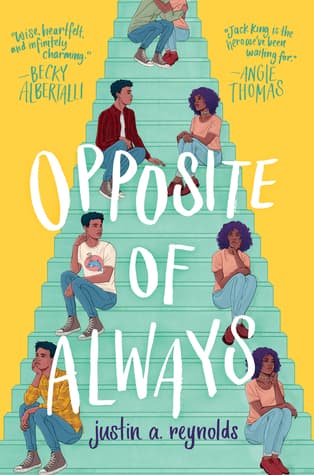
- Opposite of Always
Justin A. Reynolds
3.7 (13k) average on GoodreadsFantasyFeatures a time-loop element with a focus on love, loss, and making the right choices.
- The Midnight Library
Matt Haig
Explores alternate lives and the impact of different choices, though with an adult protagonist.
- Before I Fall
Lauren Oliver
3.9 (295k) average on GoodreadsFantasyBefore I Fall explores choice and consequence through a time loop, where the protagonist relives the same day multiple times to understand her impact on others. While both novels deal with the ramifications of decisions, Patrick's Just Like Fate directly presents two parallel, diverging timelines, offering a comparative analysis of 'what if' outcomes, whereas Oliver's novel focuses on redemption and self-discovery within a single, repetitive timeline.
- Harry Potter and the Sorcerer's Stone
J.K. Rowling
4.5 (7M) average on GoodreadsFantasyRescued from a miserable life under the stairs, an orphaned boy discovers he's a wizard destined for a magical school, where he uncovers a dangerous secret tied to the dark wizard who murdered his parents.
- The Hunger Games
Suzanne Collins
4.3 (6.4M) average on GoodreadsFantasyIn a future where children fight to the death on live television, Katniss Everdeen volunteers for the arena, turning a death sentence into a fight for survival and a spark of rebellion.





Enjoyed the summary?
A summary gives you the shape of the book. The book itself has the detail, the examples and the voice.
Find Just Like Fate on AmazonAs an Amazon Associate, BookBrief earns from qualifying purchases. How we're funded