

Synopsis
Covers the whole plot, including the ending.
- Difficulty
- Medium
- Pacing
- Moderate
- Mood
- Darkly satirical, Thought-provoking, Apocalyptic, Philosophical
- Read it if
- You enjoy speculative fiction that blends spiritual themes with a dark, satirical look at humanity's self-destructive tendencies and the allure of charismatic leaders.
- Skip it if
- You prefer optimistic narratives or are sensitive to themes of global catastrophe and forced societal restructuring.
Kalki Plot Summary
Covers the whole plot, including the ending.
The Interview with Theodore
The story begins with Theodore 'Teddy' Ottinger, a former U.S. Marine and Vietnam veteran who now writes children's books, living in Los Angeles. A representative from 'The Kalki Foundation' offers him a large sum to travel to Kathmandu, Nepal, and interview a man believed to be Kalki, the tenth avatar of Vishnu. Teddy, curious about the offer and his own underlying cynicism, accepts. He learns about Kalki's teachings, which predict an end to the current world and the start of a new age, and begins to prepare for his trip, unaware of Kalki's full plans.
Arrival in Kathmandu and First Impressions
Teddy arrives in Kathmandu and meets Kalki's inner circle. He meets G.G., Kalki’s efficient and somewhat intimidating American chief of staff, who handles all logistics. He also meets Lakshmi, a beautiful and calm young woman, presented as Kalki's main partner and a spiritually important figure. Teddy is struck by the mix of ancient spiritualism and modern efficiency around Kalki. He finds himself drawn to Lakshmi, despite his initial skepticism about the whole project. The atmosphere is one of deep respect and an unsettling certainty in Kalki's divine mission.
Kalki's Teachings and Charisma
Teddy starts his interviews with Kalki, a charismatic and articulate man who presents himself as a direct descendant of Vishnu. Kalki calmly explains his belief that humanity has become too corrupt and destructive, making current civilization beyond saving. He details his plan to cleanse the world with a global plague, after which a select group of survivors, chosen for their genetic purity and spiritual enlightenment, will repopulate the Earth. Kalki's logic, though horrifying, is presented with an almost hypnotic conviction that starts to break down Teddy's skepticism. He struggles to reconcile Kalki's kind demeanor with his genocidal intentions.
The Nature of the Plague
During one interview, Kalki explains the nature of the plague he plans to unleash. He says it will be a genetically engineered virus, very contagious and deadly, designed to target specific genetic markers in most of the human population. Only a carefully chosen group, including Kalki himself, his partners, and a few selected individuals, will have natural immunity. This news deeply disturbs Teddy, as it confirms Kalki's plans are not just philosophical but real and soon. The sheer scale and cold precision of the plan are chilling, further solidifying Kalki's image as a god of destruction.
Teddy's Growing Involvement
As Teddy continues his work, he becomes more involved in Kalki's world. He develops an intimate relationship with Lakshmi, which complicates his journalistic objectivity and personal feelings. He also learns more about G.G.'s past as a former CIA agent, hinting at the sophisticated organization behind Kalki's spiritual appearance. Teddy begins to question his own morals and the ethics of documenting such a destructive plan without intervening. He struggles with the appeal of belonging to a chosen few, even as the implications of their survival weigh heavily on his conscience. His initial cynicism starts to give way to a complex mix of fear, fascination, and reluctant belief.
The Release of the Plague
The moment of truth arrives when Kalki releases the plague. Through a carefully planned global operation, the genetically engineered virus spreads across the world. News reports begin to come in, detailing the rapid spread of a mysterious and deadly illness, confirming Kalki's prophecy. Panic erupts globally as governments and medical institutions are overwhelmed. Teddy, now an eyewitness to the unfolding apocalypse, must face the horrifying reality of Kalki's vision. He watches the initial stages of the world's end from the relative safety of Kalki's compound, a chilling sign of the avatar's power and resolve.
The Aftermath and Global Collapse
The plague sweeps across the globe with deadly efficiency. Billions die, and within a short time, human civilization as it was known collapses. Cities become empty, infrastructure fails, and the few remaining survivors struggle in a completely changed world. Teddy, Lakshmi, G.G., and Kalki, along with their small, immune group, are among the very few left. The silence of the world outside their protected sanctuary is deep, a stark contrast to the busy planet that once was. The full horror of Kalki's plan becomes undeniably real, as the Earth is cleared of its human inhabitants, except for the chosen few.
Life in the New World Order
After the plague, Kalki's small group of survivors begins a new way of life. They strictly follow Kalki's teachings, focused on spiritual purity, genetic integrity, and the careful breeding of a new human race. Teddy observes the strict rules and rituals put in place, designed to prevent past mistakes and ensure the success of Kalki's vision. He grapples with being part of this new, incredibly small, and carefully controlled society, understanding that his freedom, and that of others, now depends entirely on Kalki's will. The new world is one of stark beauty and deep emptiness.
The Revelation of Kalki's True Nature
Teddy, still having doubts and curiosity, begins to investigate Kalki's background more thoroughly. Through subtle clues and conversations, he uncovers the shocking truth: Kalki is not a divine avatar but a highly intelligent, psychopathic human being who, along with G.G. (revealed to be his former lover and co-conspirator), carefully planned and carried out the global plague. The 'divine' inspiration was a carefully built facade to legitimize their genocidal ambitions. The plague was not a natural disaster but a man-made weapon. This revelation shatters Teddy's remaining illusions and forces him to confront the horrifying reality of his situation.
The Confrontation and Aftermath
Armed with the truth, Teddy confronts Kalki. The confrontation is tense and violent, showing Kalki's complete lack of remorse and his cold, calculating nature. In the struggle, Kalki is killed, likely by G.G. or Teddy himself in self-defense. The small group of survivors, now without a leader, is left to deal with the devastating implications of Kalki's deception and the future of their new community. Teddy, Lakshmi, and G.G. are among the few remaining, facing the difficult task of rebuilding humanity without Kalki's guiding, though tyrannical, hand. The question remains: can humanity truly start anew, or are they doomed to repeat past mistakes, even in this desolate new world?
Principal Figures
Theodore 'Teddy' Ottinger
Protagonist
A cynical, bisexual Vietnam veteran and children's book author tasked with interviewing Kalki.
Teddy is a jaded intellectual, haunted by his experiences in Vietnam and disillusioned with modern society. He possesses a sharp wit and a deep-seated nihilism, which initially makes him receptive to Kalki's apocalyptic vision. Despite his cynicism, he maintains a moral compass that eventually compels him to question and investigate Kalki's true motives. His bisexuality is a notable aspect of his identity, contributing to his outsider perspective. He is a keen observer, often providing internal monologues that reflect the philosophical and ethical dilemmas presented by Kalki's plan.
Relationships: Kalki (Interviewer/subject, later antagonist); Lakshmi (Lover, fellow survivor); G.G. (Acquaintance, later co-conspirator with Kalki, then fellow survivor)
Kalki
Antagonist
The charismatic, enigmatic leader who claims to be the tenth avatar of Vishnu, planning humanity's destruction.
Kalki is presented as a compelling and highly intelligent figure, possessing an almost hypnotic charisma. He is articulate, calm, and utterly convinced of his divine mission to cleanse the Earth of its corrupt human population. Beneath his spiritual facade lies a cold, calculating, and psychopathic mind. He is a master manipulator, capable of inspiring devotion and fear in equal measure. His motivations are rooted in a profound disdain for humanity and a desire to engineer a 'perfect' new race, free from the perceived flaws of the past. He represents a terrifying blend of religious zealotry and scientific precision.
Relationships: Teddy Ottinger (Subject/interviewer, later victimizer); Lakshmi (Consort, part of his chosen few); G.G. (Chief of staff, former lover, co-conspirator)
Lakshmi
Supporting
One of Kalki's beautiful and serene consorts, who forms a relationship with Teddy.
Lakshmi is depicted as a beautiful, calm, and deeply spiritual young woman, seemingly devoted to Kalki and his mission. She embodies the ideal of the 'new' humanity Kalki envisions. Her serenity, however, masks a quiet intelligence and perhaps a deeper understanding of the complexities of their situation. She becomes Teddy's lover, offering him a sense of connection and humanity amidst the desolation. Her relationship with Teddy is a significant emotional anchor in the narrative, highlighting the human need for intimacy even in the face of apocalypse.
Relationships: Kalki (Consort, spiritual follower); Teddy Ottinger (Lover, fellow survivor)
G.G.
Supporting
Kalki's efficient and ruthless chief of staff, a former CIA agent and his co-conspirator.
G.G. is a highly competent and pragmatic individual, serving as Kalki's chief of staff and managing the practical aspects of his global plan. She is revealed to be a former CIA agent, highlighting the sophisticated, almost governmental, level of organization behind Kalki's operation. Her efficiency and lack of overt emotion make her a formidable figure. She is Kalki's former lover and a key co-conspirator, demonstrating a shared, albeit perhaps more cynical, commitment to the plan. She represents the cold, logistical side of the apocalypse, contrasting with Kalki's spiritual pronouncements.
Relationships: Kalki (Chief of staff, former lover, co-conspirator); Teddy Ottinger (Acquaintance, fellow survivor)
Themes & Insights
Humanity's Self-Destruction and Rebirth
The main theme is that humanity is flawed and destined for self-destruction, requiring a complete reset. Kalki's entire philosophy rests on this idea, arguing that war, pollution, and moral decay have made the current species beyond saving. The plague is presented as a 'cleansing' mechanism, allowing for the rebirth of a 'purer' human race. This theme is explored through Kalki's clear justifications for genocide and Teddy's initial cynical agreement with humanity's failures, contrasting with the horror of witnessing the actual apocalypse. The question of whether the 'new' humanity can truly escape the flaws of the old is left unanswered.
“'The world is too much with us; late and soon, / Getting and spending, we lay waste our powers...'”
The Allure and Danger of Charismatic Leadership
The novel strongly examines how charismatic leaders, even those with destructive plans, can attract and manipulate followers. Kalki's ability to present his genocidal plan as a divine mission, along with his calm demeanor and intellectual arguments, highlights the danger of unquestioning devotion. Teddy, despite his cynicism, finds himself partly swayed by Kalki's presence and logic. The theme explores how people can be drawn to figures who offer radical solutions to complex problems, even when those solutions are horrifying. It also questions the responsibility of those who witness such leadership, as seen in Teddy's struggle between documenting and intervening.
“He had the gift of making the most monstrous proposition sound entirely reasonable, even inevitable.”
The Nature of Belief and Deception
This theme explores the fine line between true spiritual belief and deliberate deception, especially when used to gain power or justify terrible acts. Kalki carefully creates a persona as a divine avatar, using ancient prophecies and spiritual talk to hide his true identity as a human psychopath. The story constantly challenges the reader, and Teddy, to tell what is real from what is made up. The eventual revelation of Kalki's human origins forces a re-evaluation of all his statements, showing how easily faith can be exploited and how difficult it is to separate the message from the messenger when the stakes are so high.
“Truth, like beauty, is in the eye of the beholder, particularly when the beholder is convinced he is a god.”
Survival and the Ethics of a New Beginning
Once the plague has wiped out humanity, the novel shifts its focus to the ethical problems faced by the few survivors. The question arises: what kind of world should be built, and at what cost? Kalki's vision for a new humanity is based on strict control, genetic purity, and the elimination of past 'mistakes.' This raises deep questions about free will, diversity, and what makes a 'better' society. Teddy's presence among the survivors highlights the moral complexities of being part of a chosen few, especially when that choice was based on the mass extinction of others. The theme explores the responsibility that comes with being the last remnants of a species.
“We are the last, and therefore the first. What we do now will define all that comes after.”
Plot Devices & Literary Techniques
The Unreliable Narrator (partially)
Teddy Ottinger's cynical and often detached perspective shapes the reader's understanding of events.
While not entirely unreliable, Teddy Ottinger's narrative voice is deeply colored by his personal cynicism, bisexuality, and past traumas (Vietnam). His initial openness to Kalki's apocalyptic theories, born from his disillusionment, influences how the reader processes Kalki's arguments. His internal monologues often question the nature of reality and human morality, leading the reader to doubt and speculate alongside him. This device allows Vidal to explore complex philosophical questions through a character who is both participant and observer, making the eventual revelation of Kalki's deception more impactful as Teddy's perspective shifts.
The Deus ex Machina (inverted)
Kalki as a 'divine' figure who brings about destruction rather than salvation.
This device is used in an inverted sense. Instead of a benevolent 'god from the machine' intervening to resolve conflict, Kalki presents himself as a divine avatar (Kalki, the tenth avatar of Vishnu) whose purpose is to *cause* the ultimate conflict and destruction of the world. He is the 'god' who brings about the end, not the salvation, of humanity. This inversion subverts traditional expectations of divine intervention in storytelling, making Kalki a figure of cosmic judgment and engineered apocalypse rather than a savior, until his true human nature is revealed.
The Global Pandemic
A genetically engineered plague serves as the primary mechanism for the world's destruction.
The global pandemic is the central plot device driving the apocalypse. It is not a natural disaster but a meticulously designed, genetically engineered virus created by Kalki and his team. This detail transforms the catastrophe from an act of God or nature into a deliberate act of human will, underscoring Kalki's calculated malevolence. The plague's swift and indiscriminate spread highlights humanity's vulnerability and the chilling effectiveness of Kalki's plan. It serves as a stark, visceral manifestation of the novel's themes of humanity's self-destruction and the control over life and death.
The Chosen Few
A small, genetically screened group destined to survive and repopulate the Earth.
The concept of 'the chosen few' is a critical plot device, representing Kalki's ultimate goal for a 'purified' humanity. This group, selected for their genetic immunity to the plague and adherence to Kalki's ideals, provides the framework for the post-apocalyptic narrative. It raises questions about eugenics, control, and the ethics of survival. The existence of this group creates a microcosm of a new society, allowing the novel to explore the challenges and potential pitfalls of starting over, free from the 'flaws' of the old world but under the strictures of a new, equally controlling ideology.
Kalki Quotes
“Each of us is a book, and a good book, too, though we may be a bit dog-eared and smudged from time to time.”
“The world is always ending, and always beginning. It's just a matter of scale.”
“Ignorance is not bliss. Ignorance is a virus, and it’s highly contagious.”
“History is not what happened. History is what is told.”
“To be truly free, one must first be free of desire.”
“The greatest illusion is the belief that we are separate.”
“Every man creates his own heaven and hell within himself.”
“Love is not an emotion; it is a state of being.”
“The future is not fixed; it is a tapestry woven by our choices.”
“To conquer fear, one must embrace the unknown.”
“Perfection is not the absence of flaws, but the acceptance of them.”
“The only true revolution is the one that happens within the individual.”
“We are all actors on a grand stage, playing roles we ourselves have chosen.”
“The ultimate reality is not something to be found, but something to be realized.”
Quiz
10 questions on the plot and the characters. Each answer comes with a short explanation.
Question 1
Who does James J. Kelly initially believe Kalki to be, before meeting him?
- A charismatic spiritual leader from India
- A sophisticated con artist with a large following
- The actual tenth avatar of Vishnu
- A disillusioned former U.S. military officer
Show answer
B. A sophisticated con artist with a large following Kelly, a cynical American, initially views Kalki as a highly successful charlatan, not a genuine spiritual figure or deity.
Question 2
What is the primary method Kalki uses to 'destroy' the world, as revealed in the novel?
- A global nuclear war orchestrated by his followers
- A series of natural disasters triggered by advanced technology
- A highly virulent, genetically engineered plague
- Mass psychological manipulation leading to societal collapse
Show answer
C. A highly virulent, genetically engineered plague Kalki's plan involves releasing a deadly, engineered plague that wipes out almost all of humanity, rather than conventional warfare or natural disasters.
Question 3
What is the stated philosophical reason behind Kalki's decision to destroy the world and restart humanity?
- To punish humanity for its sins and lack of faith
- To achieve a perfect, utopian society free from conflict and suffering
- To correct the genetic and spiritual 'mistakes' of human evolution
- To demonstrate his divine power as the ultimate avatar
Show answer
C. To correct the genetic and spiritual 'mistakes' of human evolution Kalki believes humanity has gone astray genetically and spiritually, and a 'reset' is necessary to guide evolution back to a more perfect path, as dictated by his 'Buddha' principles.
Question 4
Who is Teddy Ottinger in relation to Kalki's inner circle?
- Kalki's chief spiritual advisor
- The main protagonist and skeptical journalist
- Kalki's American wife and former 'Flower Child'
- The leader of the opposition movement against Kalki
Show answer
C. Kalki's American wife and former 'Flower Child' Teddy Ottinger is Kalki's American wife, who plays a significant role in his public image and the initial stages of his plan.
Question 5
What is the specific role assigned to the 'chosen few' in Kalki's ultimate world?
- To serve as spiritual leaders and teachers for the new race
- To rebuild infrastructure and technology for the new civilization
- To be the sole progenitors of a genetically 'pure' new human race
- To document the history of the old world for future generations
Show answer
C. To be the sole progenitors of a genetically 'pure' new human race The 'chosen few' are selected for their genetic suitability to breed a new, 'improved' human race, free from the perceived flaws of the previous one.
Question 6
How does James J. Kelly, the narrator, survive the global plague unleashed by Kalki?
- He is naturally immune to the virus
- He receives a secret vaccine developed by a resistant group
- He is part of Kalki's selected group who were pre-vaccinated
- He isolates himself in a remote, uninfected location
Show answer
C. He is part of Kalki's selected group who were pre-vaccinated Kelly survives because he is one of the few individuals chosen by Kalki to be part of the post-apocalyptic breeding program, and thus was given the antidote/vaccine.
Question 7
What is the significance of the 'Buddha' in Kalki's ideology and his claims?
- Kalki claims to be the reincarnation of Gautama Buddha
- Kalki believes he is fulfilling a prophecy made by the Buddha
- Kalki asserts he is the 'Fifth Buddha' who will guide humanity to its next evolutionary stage
- The Buddha is a figure of reverence, but not directly linked to Kalki's mission
Show answer
C. Kalki asserts he is the 'Fifth Buddha' who will guide humanity to its next evolutionary stage Kalki presents himself as the 'Fifth Buddha', signifying a new era and a radical departure from previous spiritual teachings, justifying his drastic actions.
Question 8
What is the ultimate fate of Kalki himself, according to the narrative?
- He rules the new world as its immortal deity
- He dies, but his teachings live on through his followers
- He reveals his true identity as an extraterrestrial being and departs Earth
- He is revealed to be a genetic construct and eventually 'expires' or is dismantled
Show answer
D. He is revealed to be a genetic construct and eventually 'expires' or is dismantled It is revealed that Kalki is not a divine being but a sophisticated, genetically engineered construct, designed with a limited lifespan for his specific purpose.
Question 9
How does Gore Vidal use the character of James J. Kelly to explore the themes of the novel?
- Kelly's unwavering faith provides a moral compass for the reader
- Kelly's cynical, detached perspective allows for critical commentary on Kalki's ideology and humanity's flaws
- Kelly represents the common man who slowly comes to accept Kalki's divinity
- Kelly's heroic actions lead to the eventual overthrow of Kalki
Show answer
B. Kelly's cynical, detached perspective allows for critical commentary on Kalki's ideology and humanity's flaws Kelly's skepticism and detached observation serve as a lens through which Vidal critiques both the absurdity of Kalki's claims and the underlying issues of human nature that make such a figure appealing.
Question 10
The novel's ending, particularly regarding the 'new human race,' suggests what about Kalki's ultimate success or failure?
- Kalki successfully creates a perfect, harmonious new world
- The new race quickly devolves into the same conflicts as the old world
- The 'new human race' is revealed to be sterile or otherwise flawed, ultimately dooming Kalki's plan
- Humanity is left with a difficult but hopeful path towards genuine self-improvement
Show answer
C. The 'new human race' is revealed to be sterile or otherwise flawed, ultimately dooming Kalki's plan The ironic and dark ending reveals that the 'chosen few' are largely infertile, meaning Kalki's grand plan for a new, pure human race is ultimately a failure, highlighting the futility of such radical intervention.
Kalki FAQ
Who is Kalki, and what is his primary objective in the novel?
Kalki is the self-proclaimed tenth avatar of Vishnu, a figure from Hindu mythology prophesied to appear at the end of the Kali Yuga to destroy evil and usher in a new age. In the novel, he is an American ex-GI named Kelly who believes he is the actual Kalki, and his objective is to purify the world through a devastating plague, leaving only a select few to repopulate a 'perfect' human race.
What role does the protagonist, Teddy Ottinger, play in Kalki's plans?
Teddy Ottinger, a former drug dealer and Vietnam veteran, is initially hired by Kalki's organization to write Kalki's autobiography. He becomes an unwitting chronicler and observer of Kalki's rise and the unfolding of his apocalyptic plan, eventually being chosen as one of the 'survivors' due to his unique genetic makeup.
Who are G.B. and Lakshmi, and what is their relationship to Kalki?
G.B. is Kalki's enigmatic and powerful female associate, often seen as his chief strategist and enforcer. Lakshmi is Kalki's young, beautiful, and seemingly innocent wife, who also plays a significant role in his organization, particularly in the selection of the new human race. Both are deeply committed to Kalki's vision and are central to its execution.
What is the nature of the 'plague' Kalki unleashes, and how does it achieve his goal?
Kalki unleashes a genetically engineered plague that selectively targets and sterilizes almost the entire human population, preventing reproduction. This widespread infertility effectively ends the current human era, allowing Kalki to fulfill his prophecy of cleansing the world and starting anew with his chosen fertile few.
What is the significance of the city of Kathmandu in Kalki's narrative?
Kathmandu serves as Kalki's spiritual and operational base, the place where he establishes his headquarters and where many of his followers gather. It is presented as a mystical and ancient location, fitting for a figure claiming divine status and preparing for a global reset.
How does the novel subtly hint at Kalki's American origins before his identity is fully revealed?
The novel drops clues such as Kalki's surprisingly fluent, unaccented English, his understanding of American cultural nuances, and his pragmatic, almost business-like approach to his divine mission. These details subtly foreshadow his true identity as Kelly, the American ex-GI, rather than an ancient mystical being.
What is the underlying connection between the drug culture of the 1960s and Kalki's philosophical justification for his actions?
The novel draws a connection by presenting Kalki's followers as often disillusioned or seeking transcendence, much like those drawn to the counterculture and drug use of the era. Kalki offers a radical 'solution' to perceived societal decay, mirroring the escapism and desire for transformation that fueled the drug culture, but on a global, apocalyptic scale.
Are there any subtle allusions to Vidal's own political or social criticisms embedded in Kalki's rhetoric or the world he critiques?
Yes, Vidal often uses Kalki's pronouncements and the state of the world he seeks to destroy as a vehicle for his own criticisms of Western materialism, political corruption, environmental degradation, and societal decadence. Kalki's extreme solutions can be seen as a satirical amplification of Vidal's own concerns about humanity's trajectory.
How does the novel explore the psychology of charisma and belief through Kalki's character?
Kalki's character is a masterclass in charismatic manipulation. He leverages ancient prophecies, offers a radical solution to perceived global problems, and projects an aura of certainty and divine authority, attracting a diverse following. The novel examines how people, even intelligent ones like Teddy, can be drawn into believing in extraordinary claims when presented with compelling narratives and a sense of belonging.
What psychological factors contribute to Teddy Ottinger's eventual, albeit reluctant, acceptance of Kalki's plan?
Teddy's past as a disillusioned veteran and drug dealer leaves him cynical but also searching for meaning. His initial skepticism gives way to a survival instinct, the promise of a future, and perhaps a Stockholm Syndrome-like attachment to his captors/saviors, especially after he learns he is one of the chosen few. The sheer scale and inevitability of Kalki's plan also psychologically overwhelm him.
How does the novel delve into the psychological concept of 'divine madness' or megalomania?
Kalki embodies divine madness, genuinely believing he is a god destined to reshape the world. His actions, though horrifying, stem from a coherent, albeit delusional, internal logic. The novel explores the dangerous implications of such megalomania when combined with immense resources and the ability to command unwavering loyalty, highlighting the fine line between spiritual leader and pathological dictator.
What is the psychological impact of the 'end of the world' scenario on the surviving characters?
The survivors experience profound psychological trauma, including grief for lost humanity, the immense burden of being the last of their kind, and the pressure to fulfill Kalki's vision. They grapple with loneliness, the strangeness of their new reality, and the ethical implications of their survival, often leading to a sense of detachment or a forced adaptation to their new roles as progenitors.
Is Kalki truly a villain, or does the novel present a more nuanced view of his actions and motivations?
While Kalki's actions are undeniably genocidal, the novel invites a nuanced interpretation. He genuinely believes he is saving humanity from itself by destroying its corrupt form. Vidal often uses Kalki to critique societal ills, suggesting that perhaps Kalki's extreme solution is a dark reflection of humanity's own destructive tendencies, making him a complex antagonist rather than a purely evil one.
How does the ending challenge or reinforce traditional notions of utopia and dystopia?
The ending presents a deeply ambiguous 'utopia' where a perfect, genetically selected race is meant to thrive in a purified world. However, this utopia is built on unimaginable dystopia – the extermination of billions. It challenges traditional notions by showing a 'perfect' world achieved through horrific means, forcing readers to question if such an outcome, regardless of its idyllic appearance, can ever truly be considered good or desirable.
What is the significance of the novel's blend of science fiction, fantasy, and historical fiction elements?
The blend allows Vidal to explore complex themes from multiple angles. Science fiction (the plague, genetic engineering) provides the means for Kalki's plan. Fantasy (the avatar prophecy) provides his justification and allure. Historical fiction (the 1960s setting, Vietnam War context) grounds the narrative in a recognizable reality, critiquing contemporary society and giving Kalki's rise plausibility within a specific cultural moment.
Does the novel ultimately endorse or condemn Kalki's vision for humanity's future?
The novel overwhelmingly condemns Kalki's methods, showcasing the horrific cost of his vision. While it critiques the societal problems Kalki seeks to 'solve,' it does not endorse his genocidal approach. The ultimate fate of the new race and the ambiguous nature of their 'perfection' serve as a cautionary tale, suggesting that even a seemingly ideal future achieved through such means is inherently flawed and morally bankrupt.
How does Teddy Ottinger's role as a writer contribute to the novel's themes about narrative and truth?
Teddy's role as Kalki's biographer highlights how narratives can be constructed and manipulated to serve specific agendas, even divine ones. He is tasked with creating a 'truth' for Kalki, demonstrating how history and legend can be shaped. His own internal struggle with the reality of Kalki's actions versus the story he is forced to tell explores the power and danger of authorship in shaping perception and belief.
About the author
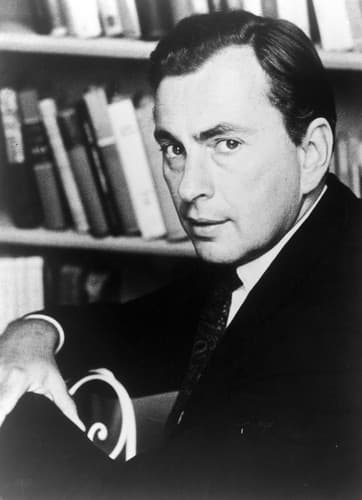
Eugene Luther Gore Vidal was an American writer and public intellectual known for his epigrammatic wit. His novels and essays interrogated the social and cultural sexual norms he perceived as driving American life. Beyond literature, Vidal was heavily involved in politics. He unsuccessfully sought office twice as a Democratic Party candidate, first in 1960 to the U.S. House of Representatives, and later in 1982 to the U.S. Senate.
Similar books
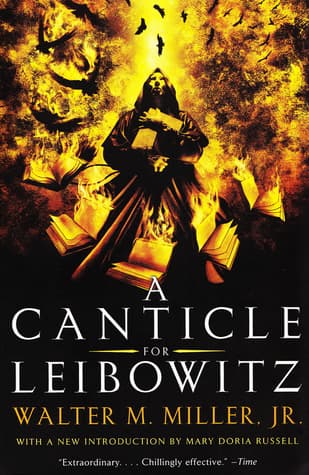
- A Canticle for Leibowitz
Walter M. Miller Jr.
4.0 (93k) average on GoodreadsFantasyExplores humanity's cycle of destruction and rebirth post-apocalypse with religious undertones.
- Brave New World
Aldous Huxley
4.0 (1.4M) average on GoodreadsFantasyFeatures a dystopian society built on genetic engineering and controlled reproduction.
- The Road
Cormac McCarthy
4.0 (716k) average on GoodreadsScience FictionDepicts a bleak, post-apocalyptic world and the struggle for survival and meaning.
- Oryx And Crake
Margaret Atwood
4.0 (221k) average on GoodreadsFantasyWhile both 'Kalki' and 'Oryx and Crake' feature a global plague and a critique of scientific hubris, Atwood's novel delves deeper into the psychological landscape of its survivors and the ethical implications of genetic engineering. Vidal's 'Kalki' has a broader focus on geopolitical and spiritual manipulation, with less emphasis on individual survival narratives and more on the grand, terrifying logic of the world's end.
- Harry Potter and the Sorcerer's Stone
J.K. Rowling
4.5 (7M) average on GoodreadsFantasyRescued from a miserable life under the stairs, an orphaned boy discovers he's a wizard destined for a magical school, where he uncovers a dangerous secret tied to the dark wizard who murdered his parents.
- The Hunger Games
Suzanne Collins
4.3 (6.4M) average on GoodreadsFantasyIn a future where children fight to the death on live television, Katniss Everdeen volunteers for the arena, turning a death sentence into a fight for survival and a spark of rebellion.





Enjoyed the summary?
A summary gives you the shape of the book. The book itself has the detail, the examples and the voice.
Find Kalki on AmazonAs an Amazon Associate, BookBrief earns from qualifying purchases. How we're funded