

Synopsis
Covers the whole plot, including the ending.
- Difficulty
- Medium
- Pacing
- Slow
- Mood
- Atmospheric, Melancholy, Philosophical, Sensual, Wry
- Read it if
- You appreciate poetic, philosophical graphic novels with themes of love, loss, and urban alienation, and enjoy unique art styles.
- Skip it if
- You prefer straightforward narratives, fast-paced action, or lighthearted stories.
Kari Plot Summary
Covers the whole plot, including the ending.
The Jump and the Aftermath
The story begins with Kari recounting the day she and Ruth, her lover, tried to die by jumping from a building. Ruth, saved by safety nets, is taken away by her parents and leaves Smog City, disappearing from Kari's life. Kari, landing in a sewer, survives and emerges into a changed world. This event leaves a scar on Kari, shaping her life in the city and her search for connection and meaning. The memory of Ruth, her 'absentee Other,' stays with her, influencing Kari's perceptions and her understanding of love and loss.
Life in Smog City and the Day Job
Kari works a dull job writing ad copy for hair products and lingerie at an agency in Smog City. This work contrasts with her inner world, filled with philosophical thoughts and Ruth's lingering presence. Her daily commute and interactions show her the city's oddities and its marginalized people. Kari often feels disconnected from her professional life, using her observations of the city's hidden corners and its diverse population to cope with loneliness and unresolved trauma.
Kari's Alter Ego: Danger Chhori
Driven by a need to connect with the city's underbelly and neglected infrastructure, Kari creates an alter ego: Danger Chhori. Dressed in a PVC suit, Danger Chhori goes into Smog City's sewers, not only to unclog them but also to observe the secret lives of people and even fruit. This secret activity allows Kari to explore decay, hidden beauty, and the interconnectedness of urban life, offering a unique view of the city that most people miss. Danger Chhori represents Kari's desire for purpose and her unusual way of processing her trauma and loneliness.
Encounters and Connections
Kari's life in Smog City is enriched by unusual encounters and connections. She develops affection for stray cats and roadside children, finding kinship in their resilience and vulnerability. She also befriends a diverse group, including Angel, a philosophical figure; Lazarus, a man who has had multiple near-death experiences; and the 'girls of Crystal Palace,' a group of women who offer a sense of community. These relationships, though often brief or unconventional, give Kari moments of comfort, understanding, and shared humanity in her otherwise solitary existence.
The Quest for Ruth
Despite time passing and her new life in Smog City, Kari's memory of Ruth is clear and strong. Her experiences, observations, and even relationships are often filtered through her longing for Ruth, her 'absentee Other.' Kari's internal thoughts often return to their shared past, their intense connection, and the unanswered questions about Ruth's departure. This search for Ruth, though often unspoken, drives much of Kari's story, shaping her view of love, loss, and memory. The city becomes a canvas for her internal exploration of this absence.
Love and Other Adventuresses
In Ruth's absence, Kari has brief romantic encounters, often with 'adventuresses' she meets in various places, like restaurants. These relationships offer temporary companionship and intimacy, but they do not fill the void left by Ruth. They highlight Kari's ongoing search for connection and her struggle to balance her past love with the possibility of new ones. These encounters also explore the complexities of queer love and relationships in Smog City, showing Kari's vulnerability and her resilience in seeking emotional fulfillment despite her lingering grief.
The Philosophical Undercurrents
Throughout her journey, Kari grapples with questions about life, death, loneliness, and existence. Her observations of Smog City, its inhabitants, and its hidden spaces often include wry comments and introspective thoughts. The sewers, in particular, become a metaphor for the subconscious and the unseen aspects of life. Kari's internal narrative explores the cycles of decay and renewal, the resilience of the human spirit, and the search for beauty and meaning in unexpected places, all informed by her traumatic past.
The Chorus of Smog City
Angel, Lazarus, and the 'girls of Crystal Palace' act as a chorus to Kari's story, their individual stories and perspectives adding to the larger narrative of Smog City. These characters, each with their own struggles and philosophies, reflect different facets of urban life and human resilience. They provide Kari with a sense of community and act as sounding boards for her thoughts and feelings. Their collective presence emphasizes the theme of interconnectedness and the shared human experience of navigating loneliness, hope, and the search for meaning in a busy, often indifferent, city.
The Dark Heart of Smog City
Kari's exploration of Smog City shows its 'dark heart' – the pervasive loneliness, the presence of death, and the unseen struggles of its inhabitants. The sewers, forgotten corners, and marginalized figures she meets all contribute to this understanding. Despite the city's grime and despair, Kari also finds moments of unexpected beauty and resilience. Her journey is not just an observation but an immersion into these darker aspects, allowing her to confront her own trauma and the universal themes of human vulnerability and the search for connection amidst urban alienation.
Memory and Absence
The memory of Ruth and her absence is the center around which Kari's life revolves. Even as she builds a new existence, forms new connections, and explores the city, Ruth's presence is felt in every thought and action. The narrative often returns to their shared past, showing the lasting power of first love and the impact of loss. Kari's journey is an exploration of how one navigates life after a foundational absence, finding ways to carry grief while still seeking joy and meaning in the present. Ruth's memory is both a burden and a guide.
Principal Figures
Kari
Protagonist
A survivor of a suicide attempt, navigating Smog City and the memory of her lost love.
Kari is a complex, introspective, and resilient woman haunted by the past but determined to find meaning in the present. She works a mundane advertising job but finds solace and purpose in her secret identity as Danger Chhori, exploring the city's hidden depths. Driven by the lingering memory of Ruth, her 'absentee Other,' Kari constantly seeks connection, understanding, and a resolution to her unresolved grief. She possesses a keen observational eye, a philosophical mind, and a deep empathy for the marginalized, often expressing herself through wry commentaries and poetic musings.
Relationships: Ruth (Former lover, the central absence in Kari's life.); Angel (Philosophical friend, a source of guidance and companionship.); Lazarus (Friend who has experienced multiple near-death encounters, symbolizing resilience.); The girls of Crystal Palace (A group of women who provide community and a sense of belonging.)
Ruth
Mentioned/Absentee Other
Kari's former lover, whose sudden departure after a shared suicide attempt profoundly impacts Kari.
Ruth is the 'absentee Other,' a powerful and defining presence in Kari's life despite her physical absence. She is remembered as Kari's intense and inseparable lover, whose shared suicide attempt with Kari forms the traumatic genesis of the story. Saved by safety nets, Ruth is whisked away by her family, leaving Kari to navigate the aftermath alone. Her memory acts as both a wound and a compass for Kari, shaping her perceptions of love, loss, and the very fabric of her existence in Smog City. Ruth represents the idealized past and the profound impact of unresolved grief.
Relationships: Kari (Former lover, the central relationship and source of Kari's trauma and longing.)
Angel
Supporting
A philosophical and enigmatic friend who offers Kari companionship and unique perspectives.
Angel is one of Kari's closest companions in Smog City, often appearing as a source of quiet wisdom and philosophical insight. Described as enigmatic, Angel seems to possess a deeper understanding of life's complexities and offers Kari a sounding board for her thoughts and feelings. Their conversations often delve into existential themes, providing Kari with a sense of connection and intellectual stimulation. Angel represents the kind of unconventional friendships Kari cultivates, offering solace and understanding without judgment, and contributing to the 'chorus' of voices in Kari's urban landscape.
Relationships: Kari (Close philosophical friend and confidante.)
Lazarus
Supporting
A man who has experienced multiple near-death incidents, symbolizing resilience and the thin veil between life and death.
Lazarus is a unique character in Kari's circle, notable for his multiple near-death experiences. His resilience and his intimate acquaintance with the edge of mortality provide a fascinating counterpoint to Kari's own brushes with death. Lazarus embodies the theme of survival and the cyclical nature of life and rebirth, even in the grimy urban setting of Smog City. His presence offers Kari a different perspective on trauma and recovery, reminding her of the enduring human capacity to bounce back from the brink, much like his biblical namesake.
Relationships: Kari (Friend and fellow survivor, sharing an understanding of life's precariousness.)
The girls of Crystal Palace
Supporting
A group of women who provide Kari with a sense of community and shared experience.
The 'girls of Crystal Palace' represent a broader community and a sense of belonging for Kari. While not individually named or deeply explored, their collective presence offers Kari a space of camaraderie and shared female experience within the often isolating Smog City. They form part of the 'chorus' that accompanies Kari's journey, providing a backdrop of diverse lives and perspectives. They symbolize the informal networks and unexpected sources of comfort that individuals can find in urban environments, contributing to Kari's gradual reintegration into the world after her trauma.
Relationships: Kari (Friends, part of her social circle in Smog City.)
Danger Chhori
Alter Ego
Kari's secret identity, a PVC-suit-clad sewer explorer and urban observer.
Danger Chhori is Kari's alter ego, a persona she adopts to explore the hidden and often repulsive parts of Smog City – specifically its sewers. Dressed in a PVC suit, Danger Chhori not only unclogs drains but also acts as an anonymous observer of the city's secret life, from discarded objects to the lives of fruit. This identity allows Kari to externalize her internal search for meaning and connection, transforming her grief and loneliness into a unique form of urban exploration and philosophical inquiry. Danger Chhori represents Kari's unconventional resilience and her desire to find beauty and purpose in decay.
Relationships: Kari (The secret identity of Kari.)
Themes & Insights
Loneliness and Connection
Loneliness is a pervasive theme in Kari's life in Smog City, stemming from the traumatic loss of Ruth. She navigates the bustling city, often feeling isolated despite being surrounded by people. This loneliness drives her to seek connection in unusual ways: through her alter ego Danger Chhori, exploring forgotten parts of the city; through her affinity for stray animals and roadside children; and through her unique friendships with Angel, Lazarus, and the girls of Crystal Palace. These connections, though sometimes brief, offer Kari moments of comfort and shared humanity, highlighting the universal need to belong and be understood amidst urban alienation.
“Smog City is a place where you can be utterly alone, even when surrounded by millions.”
Memory and Absence
The memory of Ruth and her absence is the central emotional core of the novel. Ruth is not physically present, yet her presence is felt on every page, influencing Kari's thoughts, actions, and perceptions. The narrative constantly returns to their shared past, exploring how loss shapes identity and how one carries grief. Kari's journey shows the lasting power of memory, demonstrating how a foundational absence can define a life, leading to an ongoing search for resolution and understanding. The city itself becomes a canvas for Kari's internal exploration of this unresolved loss.
“Ruth was the axis around which my world spun. Without her, I was a planet unmoored.”
Urban Decay and Hidden Beauty
Smog City is a place of grime, decay, and forgotten spaces, yet Kari, especially as Danger Chhori, finds unexpected beauty and meaning within it. The sewers, often seen as repulsive, become a site of observation and a kind of spiritual exploration. Kari's ability to see resilience in stray cats, stories in discarded objects, and life in the city's underbelly reflects a deeper theme: that beauty and meaning can be found in overlooked and unconventional places. This theme challenges conventional ideas of aesthetics and highlights the interconnectedness of all urban elements, both pleasant and unpleasant.
“The sewers hold more secrets, more life, more truth than the polished streets above.”
Identity and Alter Egos
Kari's creation of Danger Chhori is central to her exploration of identity. While her day job is mundane and unfulfilling, her alter ego allows her to express a deeper, more adventurous, and philosophical part of herself. Danger Chhori is not just a costume but a manifestation of Kari's need to engage with the city on her own terms, to find purpose beyond her trauma, and to process her emotions anonymously. This duality highlights the multifaceted nature of identity, especially in response to trauma and loss, and how individuals create spaces for self-expression and resilience.
“Sometimes, you need a different skin to truly see what's beneath the surface.”
Plot Devices & Literary Techniques
The Absentee Other (Ruth)
Ruth's physical absence serves as the driving force and emotional core of Kari's narrative.
The character of Ruth functions as an 'absentee other,' a significant person who is no longer physically present but whose memory and impact profoundly shape the protagonist's journey. Ruth's departure after the shared suicide attempt is the inciting incident that sets Kari's story in motion. Her absence creates a void that Kari constantly tries to fill or understand, driving her explorations of Smog City, her relationships, and her philosophical musings. This device allows the author to explore themes of grief, memory, and the lasting impact of love without Ruth needing to be an active participant in the present narrative.
Alter Ego (Danger Chhori)
Kari's secret identity allows her to explore the city's hidden depths and her own psyche.
The creation of Danger Chhori serves as a powerful plot device, enabling Kari to engage with the world in ways her everyday self cannot. This alter ego provides a means for Kari to physically and metaphorically descend into the 'dark heart' of Smog City, exploring its sewers and forgotten spaces. It allows for a literal and symbolic exploration of the subconscious, decay, and hidden beauty. Danger Chhori also functions as a coping mechanism for Kari, providing an outlet for her grief, curiosity, and need for purpose beyond her traumatic past and mundane job.
Smog City as a Character
The city itself acts as a living, breathing entity that mirrors and influences Kari's internal state.
Smog City is more than just a setting; it is a character in its own right, reflecting Kari's internal landscape and providing the backdrop for her existential journey. Its grime, decay, and hidden beauty mirror Kari's own struggles with trauma and her search for meaning. The city's diverse inhabitants, its forgotten corners, and its bustling anonymity all contribute to Kari's experiences and observations. The city's 'dark heart' of loneliness and death is also Kari's, making the urban environment an active participant in her emotional and philosophical development.
Internal Monologue and Philosophical Musings
Kari's rich inner thoughts and reflections provide deep insight into her character and the novel's themes.
The narrative heavily relies on Kari's internal monologue and philosophical musings, which serve as a primary window into her mind and the novel's thematic concerns. These reflective passages allow the author to explore complex ideas about life, death, love, and loneliness directly through Kari's perspective. This device creates an intimate connection between the reader and Kari, allowing for a profound understanding of her grief, her observations of the world, and her unique way of processing her experiences. It elevates the story beyond a simple plot, imbuing it with depth and intellectual resonance.
Kari Quotes
“The city is a lover. It will take you in, chew you up, and spit you out, but it will never let you go.”
“Memory is a strange beast. It can be a comfort, a torment, or a trickster.”
“Sometimes, the only way to move forward is to look back, even if it hurts.”
“We are all made of stories, some we tell, some we keep hidden.”
“Love is not a straight line. It bends, it breaks, it finds new paths.”
“The silence between words can speak louder than any utterance.”
“To be truly seen is a rare and precious thing.”
“Grief is not a weakness. It is the price of love.”
“The edges of things are often the most interesting.”
“You can't erase the past, but you can choose how you carry it.”
“The city breathes with a thousand different stories, all at once.”
“Some wounds heal into scars that tell their own tales.”
“Finding your voice is not about shouting, but about knowing what you have to say.”
Quiz
10 questions on the plot and the characters. Each answer comes with a short explanation.
Question 1
What is the primary difference in how Kari and Ruth survive their fall?
- Kari is saved by a safety net, Ruth by a sewer.
- Kari is saved by a sewer, Ruth by safety nets.
- Both are saved by safety nets but in different locations.
- Both are saved by sewers but are found by different people.
Show answer
B. Kari is saved by a sewer, Ruth by safety nets. The synopsis clearly states that Ruth is saved by safety nets and Kari by a sewer, leading to their divergent paths.
Question 2
What kind of work does Kari do after her survival?
- She becomes a professional sewer cleaner.
- She writes ad copy for hair products and lingerie.
- She works as a private detective, observing people.
- She opens a cat rescue shelter.
Show answer
B. She writes ad copy for hair products and lingerie. The text states Kari 'writes ad copy for hair products and ill-fitting lingerie' as part of her return to living.
Question 3
Who is 'Danger Chhori' in the story?
- A rival character who also cleans sewers.
- Kari's PVC-suit-clad alter ego who unclogs sewers.
- A character who represents the 'absentee Other'.
- One of the girls from Crystal Palace.
Show answer
B. Kari's PVC-suit-clad alter ego who unclogs sewers. Danger Chhori is described as Kari's 'PVC-suit-clad alter ego' who 'unclogs sewers and observes the secret lives of people and fruit'.
Question 4
What is 'Smog City' a metaphor for in Kari's journey?
- A literal city with high pollution levels where most of the action takes place.
- The dark, complex, and often isolating urban environment that Kari navigates.
- The name of the sewer system Kari frequently explores.
- A fictional city where Ruth eventually settles down.
Show answer
B. The dark, complex, and often isolating urban environment that Kari navigates. Smog City is presented as the setting where Kari 'explores the dark heart' of loneliness, sewers, and death, suggesting it's a symbolic representation of her urban experience.
Question 5
Besides Ruth, who else constitutes the 'chorus' to Kari's song?
- Only cats and roadside urchins.
- Angel, Lazarus, and the girls of Crystal Palace.
- Various adventuresses in restaurants.
- Only the people she observes through her alter ego.
Show answer
B. Angel, Lazarus, and the girls of Crystal Palace. The synopsis explicitly states: 'And with Angel, Lazarus, and the girls of Crystal Palace forming the chorus to her song'.
Question 6
Which of the following emotions or states is explicitly mentioned as being explored by Kari in Smog City?
- Joy, community, and prosperity.
- Ambition, rivalry, and fame.
- Loneliness, sewers, sleeper success, death.
- Love, friendship, and adventure.
Show answer
C. Loneliness, sewers, sleeper success, death. The synopsis lists 'loneliness, sewers, sleeper success, death' as the elements Kari explores in the 'dark heart of Smog City'.
Question 7
How does the book's description characterize its contribution to Indian graphic fiction?
- It is the first graphic novel ever published in India.
- It gives a new voice to graphic fiction in India.
- It introduces a completely new art style to the genre.
- It revives traditional Indian storytelling methods in graphic form.
Show answer
B. It gives a new voice to graphic fiction in India. The final sentence of the synopsis states, 'Kari gives a new voice to graphic fiction in India,' highlighting its impact.
Question 8
What specific aspect of Kari's past haunts her in Smog City?
- Her failure to achieve 'sleeper success'.
- The memory of her absentee Other (Ruth).
- The trauma of unclogging too many sewers.
- Her inability to find stable employment.
Show answer
B. The memory of her absentee Other (Ruth). The synopsis states Kari explores Smog City '– and the memory of her absentee Other,' referring to Ruth.
Question 9
The phrase 'sleeper success' in the context of Smog City likely refers to:
- Kari's secret ambition to become a famous writer.
- The unexpected or understated achievements found in the city's hidden corners or by its overlooked inhabitants.
- The success of finding a comfortable place to sleep in a harsh city.
- A specific advertising campaign Kari worked on that became unexpectedly popular.
Show answer
B. The unexpected or understated achievements found in the city's hidden corners or by its overlooked inhabitants. Given the themes of loneliness, sewers, and observing secret lives, 'sleeper success' within Smog City implies an uncelebrated or hidden form of achievement, aligning with the idea of overlooked triumphs in an urban environment.
Question 10
Which descriptive elements are highlighted as key features of the book's style?
- Monochromatic illustrations and tragic commentaries.
- Sensuously illustrated and livened by wry commentaries.
- Minimalist illustrations and straightforward prose.
- Abstract illustrations and philosophical dialogues.
Show answer
B. Sensuously illustrated and livened by wry commentaries. The synopsis concludes by stating the book is 'Sensuously illustrated and livened by wry commentaries on life and love'.
Kari FAQ
What is the central premise of 'Kari'?
'Kari' centers on Kari, one of two women who jumped from a building. While Ruth, the other woman, leaves the city, Kari survives by falling into a sewer and re-enters the mundane yet surreal life of Smog City, grappling with her past and present while searching for meaning and connection.
Who are Kari and Ruth, and what is their relationship?
Kari and Ruth were once 'inseparable,' implied to be lovers, whose relationship culminates in a suicide attempt. Ruth is saved by safety nets and leaves Smog City, while Kari's survival via a sewer forces her to confront life without her 'absentee Other,' Ruth.
What is 'Danger Chhori' and how does she relate to Kari?
Danger Chhori is Kari's PVC-suit-clad alter ego. In this persona, Kari unclogs sewers and observes the secret lives of others, allowing her to process her own experiences and detach from her personal pain while engaging with the city's hidden underbelly.
What kind of work does Kari do, and what does it reveal about her?
Kari writes ad copy for hair products and ill-fitting lingerie, a job that is mundane and somewhat ironic given her complex inner world. This work highlights the disjunction between her artistic, philosophical mind and the commercial demands of her daily life in Smog City.
Who are Angel and Lazarus, and what role do they play in Kari's life?
Angel and Lazarus are characters who, along with the 'girls of Crystal Palace,' form a 'chorus' to Kari's song. They represent a community or group of confidantes who witness and participate in Kari's exploration of Smog City's 'dark heart,' offering companionship and perspective.
What is the significance of sewers in Kari's narrative?
Sewers are profoundly significant; Kari survives her suicide attempt by falling into one, and as Danger Chhori, she actively unclogs them. They symbolize hidden depths, the discarded, the forgotten, and the interconnectedness of life beneath the surface, mirroring Kari's own journey through trauma and recovery.
How does the 'memory of her absentee Other' influence Kari's actions?
The memory of Ruth, her 'absentee Other,' is a constant presence for Kari. It drives her search for connection, shapes her understanding of loneliness, and influences her interactions with new lovers and the city itself, serving as both a wound and a catalyst for her journey.
What is the meaning behind Kari falling for 'cats and roadside urchins'?
Kari's affection for cats and roadside urchins suggests her empathy for the marginalized and overlooked. These connections are often fleeting and non-committal, reflecting her own rootlessness and her ability to find beauty and connection in unexpected, often transient, places.
How does the 'Crystal Palace' function within the story?
The 'girls of Crystal Palace' act as a 'chorus,' implying they are a group that provides commentary, support, or a sense of community for Kari. The name 'Crystal Palace' might evoke a sense of fragile beauty or a place of observation, contrasting with the grittiness of Smog City.
How does Kari''s survival by sewer impact her psychological state?
Surviving via a sewer leaves Kari with a unique perspective, a sense of having returned from the brink, and a deep connection to the city's underbelly. Psychologically, it might imbue her with a feeling of being 'othered' or a survivor's guilt, shaping her detachment and observational tendencies.
What role does loneliness play in Kari's character development?
Loneliness is a core theme and a driving force for Kari, stemming from the loss of Ruth and her solitary existence. Her explorations of Smog City and her transient relationships are often attempts to navigate or alleviate this pervasive loneliness, informing her observations and actions.
How does Kari use her alter ego, Danger Chhori, as a coping mechanism?
Danger Chhori allows Kari to externalize her pain and engage with the world from a detached, empowered position. It's a coping mechanism that transforms her vulnerability into strength, enabling her to observe and 'unclog' the city's metaphorical and literal blockages without fully exposing her own emotional wounds.
In what ways does Kari's attraction to 'occasional adventuresses' reflect her internal state?
Kari's attraction to 'occasional adventuresses' suggests a yearning for excitement, novelty, and perhaps a reflection of her own adventurous spirit. These relationships are often transient, mirroring her difficulty forming lasting bonds and her pursuit of intense, yet fleeting, connections.
What is the significance of 'Smog City' as a setting?
Smog City is not just a backdrop but an active character, reflecting Kari's internal landscape. Its 'dark heart' of loneliness, sewers, and death mirrors her trauma and her journey through the grittier aspects of life, while also offering unexpected beauty and connection.
Is 'Kari' primarily a story of healing or of perpetual searching?
'Kari' can be interpreted as both. While Kari certainly embarks on a journey of psychological recovery from trauma, the narrative also emphasizes a perpetual searching for meaning, connection, and understanding in a complex world, suggesting that healing is an ongoing process rather than a definitive endpoint.
How does the 'sensuously illustrated' aspect contribute to the narrative?
The 'sensuously illustrated' nature of the graphic novel enhances the narrative by visually conveying Kari's emotional states, the atmosphere of Smog City, and the surreal elements of her experiences. The illustrations provide a rich, multi-layered interpretation of her internal and external worlds, deepening the reader's engagement.
What does 'sleeper success' mean in the context of Smog City?
'Sleeper success' in Smog City might refer to unexpected achievements or hidden triumphs that emerge from unlikely places, much like Kari herself. It could also allude to the quiet, unacknowledged victories of marginalized individuals or the city's capacity for growth despite its apparent decay.
How does the book explore themes of sexuality and identity?
The book explores themes of sexuality through Kari's past relationship with Ruth and her present attractions to 'adventuresses,' implicitly portraying queer relationships. Her identity is deeply intertwined with her trauma, her alter ego Danger Chhori, and her ongoing search for self in the wake of significant loss.
What is the overall message or takeaway from 'Kari'?
The overall message of 'Kari' is multifaceted, suggesting resilience, the search for connection in a disconnected world, and the complex process of healing from trauma. It emphasizes finding beauty and meaning in the mundane, the overlooked, and even the grotesque, while embracing the fluidity of identity and sexuality.
About the author

Amruta Patil is an Indian author and artist known for her graphic novels. Her debut novel, 'Kari,' was critically acclaimed for its poignant exploration of female friendship and identity in contemporary India. Patil's work often blends visual storytelling with introspective narratives, earning her recognition in the Indian literary scene.
Similar books
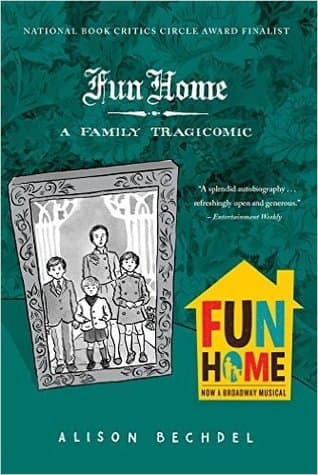
- Fun Home: A Family Tragicomic
Alison Bechdel
4.1 (130k) average on GoodreadsBiographyExplores complex relationships and identity through graphic memoir, with deep emotional introspection.
- Persepolis: The Story of a Childhood
Marjane Satrapi
4.3 (158k) average on GoodreadsBiographyOffers a unique perspective on personal and societal struggles through distinctive black-and-white graphic art.
- Blankets
Craig Thompson
4.0 (95k) average on GoodreadsSpiritualityFocuses on first love, loss, and self-discovery with a poignant, reflective tone and expressive artwork.
- Nineteen Eighty-Four
George Orwell
4.2 (5.5M) average on GoodreadsFictionWinston Smith dreams of truth and rebellion in a world where Big Brother watches all, but he confronts the terrifying power of a regime that controls not just actions, but thoughts.
- The Frozen River
Ariel Lawhon
4.4 (600k) average on GoodreadsFictionIn 1789 Maine, a heroic midwife's diary helps her expose a murder and get justice in a town that wants to silence her.
- A Man Called Ove
Fredrik Backman
4.4 (569k) average on GoodreadsFictionA stubborn widower, who lives by strict rules, finds his quiet world changed by a lively new family next door, making him face his past and find happiness in human connection.





Enjoyed the summary?
A summary gives you the shape of the book. The book itself has the detail, the examples and the voice.
Find Kari on AmazonAs an Amazon Associate, BookBrief earns from qualifying purchases. How we're funded