

Synopsis
Covers the whole plot, including the ending.
- Difficulty
- Medium
- Pacing
- Moderate
- Mood
- Thought-provoking, Emotional, Spiritual, Dramatic, Hopeful
- Read it if
- You enjoy thought-provoking stories that blend family drama with spiritual and ethical dilemmas, and don't mind a deep dive into questions of faith and miracles.
- Skip it if
- You prefer secular narratives, are uncomfortable with religious themes, or dislike courtroom dramas as a central plot device.
Keeping Faith Plot Summary
Covers the whole plot, including the ending.
The First Miracle and the Media Storm
Mariah White, a recently divorced architect in New Hampshire, struggles with her personal life and a custody battle over her seven-year-old daughter, Faith. One day, while Mariah is distracted, Faith falls from a tree house. She floats down unharmed instead of hitting the ground. This impossible event, witnessed by Mariah and her ex-husband Colin, escalates quickly when Faith shows more inexplicable abilities. She heals a bird, speaks an ancient language, and exhibits stigmata. The media descends upon their small town, along with religious zealots and skeptics, turning Mariah's life upside down as some hail Faith as a modern-day messiah.
The Vatican's Intervention and Matt Royston
The Vatican learns of Faith's alleged miracles and sends Matt Royston, a former priest and now an investigator specializing in religious phenomena, to assess the events. Matt, a man of science and logic, approaches the case skeptically, meticulously documenting every detail. At the same time, Mariah, overwhelmed by public scrutiny and the growing demands on Faith, consults a lawyer, Jordan McAfee, to protect her daughter from exploitation. Jordan advises Mariah on the legal implications of Faith's public profile, especially regarding the separation of church and state, and the potential for a custody battle with Colin, who now sees Faith's abilities as a path to fame and fortune.
Faith's Growing Powers and Public Fascination
As Matt Royston conducts his investigation, Faith's extraordinary abilities continue to appear, challenging his scientific framework. She performs healing acts, speaks in tongues, and shows knowledge beyond her years, often relaying messages that seem to come from a divine source. Public fascination grows, with pilgrims flocking to Mariah's home seeking blessings and cures. Mariah tries to shield Faith from the overwhelming attention, but the child seems to embrace her role, though innocently. The local church, initially cautious, begins to see Faith as a potential sign of divine intervention, further complicating Mariah's efforts to maintain a normal life for her daughter.
The Custody Battle and Colin's Ambition
Colin White, Faith's estranged father, sees his daughter's newfound celebrity as an opportunity. He files for full custody, arguing that Mariah is an unfit mother unable to nurture Faith's spiritual gifts. Colin, motivated by a mix of genuine belief and a desire for financial gain and fame, sees Faith as a path to a better life for himself. Mariah, with Jordan McAfee's help, prepares for a grueling custody battle, emphasizing Faith's need for a normal childhood away from the circus of religious fanatics and media. The court proceedings become a public spectacle, forcing Mariah to defend her parenting decisions and Faith's best interests against a backdrop of divine claims.
Matt's Internal Conflict and Connection with Mariah
During his investigation, Matt Royston finds himself drawn to Mariah, admiring her strength and devotion to Faith. He also begins to question his own rigid skepticism and the reasons he left the priesthood. Spending time with Mariah and observing Faith's inexplicable abilities forces Matt to confront the limitations of his scientific understanding and the possibility of genuine miracles. He struggles with his professional duty to remain objective and his growing personal feelings for Mariah, which complicate his investigation and challenge his long-held beliefs about faith, reason, and the divine. Their shared concern for Faith creates a bond between them.
The Trial and Expert Testimonies
The custody trial for Faith becomes a battleground of science versus faith. Colin's lawyers present testimonies from religious leaders and individuals who claim to have witnessed Faith's miracles, portraying her as a divine child. Mariah's legal team, led by Jordan McAfee, brings in psychologists and medical experts who try to explain Faith's phenomena through psychological or physiological means, suggesting potential delusions or mass hysteria. Matt Royston is called to testify, providing his objective, yet increasingly conflicted, observations. The court struggles to reconcile the tangible evidence with the intangible claims of divinity, making a fair judgment incredibly difficult.
Faith's Revelation and the Angel
In a key moment during the trial, Faith herself explains her abilities. She reveals she is not God, but a vessel for an angel named Archangel Michael, who has taken refuge within her. This angel, Faith explains, was cast out of heaven and seeks redemption by performing good deeds through her. This revelation adds another layer of complexity to the already bewildering situation, challenging everyone's understanding of her powers and identity. The court, the media, and even Mariah are left to grapple with this extraordinary claim, which further blurs the lines between mental illness, divine intervention, and a child's imagination.
Mariah's Doubt and Acceptance
Mariah initially struggles deeply with Faith's claim of being possessed by an angel. Her rational mind resists such an unbelievable explanation, fearing it's a sign of mental distress or a coping mechanism for the immense pressure Faith is under. She desperately wants to protect her daughter from ridicule and potential harm. However, as she witnesses more inexplicable events and sees the genuine conviction in Faith's eyes, Mariah begins to question her own skepticism. Ultimately, driven by her unconditional love, Mariah chooses to believe and accept her daughter's extraordinary reality, whether it's truly divine or a profound psychological phenomenon.
The Verdict and Its Aftermath
The court delivers a complex verdict, attempting to navigate the unprecedented circumstances of Faith's case. Recognizing the potential for exploitation, but also the love Faith has for her mother, the judge grants Mariah custody, with strict conditions regarding Faith's public appearances and the involvement of religious groups. The verdict emphasizes Faith's right to a normal life and protection from undue influence. The decision brings temporary relief to Mariah, but the underlying questions about Faith's identity and abilities remain. The media frenzy slowly dissipates, but the family is left to rebuild their lives in the shadow of Faith's extraordinary past.
A New Beginning and Lingering Questions
After the trial, Mariah, Faith, and Matt Royston try to build a new, quieter life together. Matt, having reconciled his faith and reason, decides to stay with Mariah, offering support and stability. They move to a secluded location, hoping to give Faith the normalcy she deserves. While the immediate pressure subsides, the mystery of Faith's abilities is never fully resolved. Occasional subtle signs suggest that the 'angel' or some extraordinary force may still be present within Faith, leaving Mariah and Matt to ponder the true nature of miracles, faith, and the impact Faith has had on their lives and beliefs. The ending offers peace but acknowledges that some questions may never have definitive answers.
Keeping Faith Characters
Mariah White
Protagonist
Faith's mother, struggling to protect her daughter from religious exploitation and public scrutiny.
Mariah is a divorced architect, intelligent, fiercely protective, and initially very pragmatic. She is grounded in logic and reason, which makes her daughter Faith's miraculous abilities deeply unsettling and challenging to her worldview. Her primary drive is to shield Faith from the overwhelming media attention, religious zealots, and her ex-husband's opportunistic motives. She is torn between her love for Faith and her fear of what Faith is becoming or represents.
Relationships: Faith White (Mother-daughter; Mariah is fiercely protective and loving.); Colin White (Estranged ex-husband, in a bitter custody battle.); Matt Royston (Develops a romantic relationship; initially professional, then supportive and loving.); Jordan McAfee (Lawyer and trusted advisor.)
Faith White
Central Figure
A seven-year-old girl who exhibits miraculous powers and claims to be possessed by an angel.
Faith is an innocent, sensitive, and profoundly unusual seven-year-old girl. Initially a normal child, she develops inexplicable abilities like healing, speaking ancient languages, and floating. She claims to be a vessel for Archangel Michael, who is seeking redemption. Her character embodies the central mystery of the book, forcing others to confront the nature of faith, miracles, and the divine. She is loving and observant, often acting as a catalyst for change in those around her.
Relationships: Mariah White (Daughter; relies on her mother for protection and love.); Colin White (Daughter; he sees her as a means to fame and fortune.); Archangel Michael (Claims to be a vessel for the angel, a spiritual host.)
Matt Royston
Supporting Character
A former priest and Vatican investigator, torn between skepticism and a reawakening of faith.
Matt is a former Catholic priest who left the church after a crisis of faith and now works for the Vatican investigating alleged miracles. He is highly intelligent, analytical, and initially deeply skeptical, approaching Faith's case with scientific rigor. However, as he spends more time with Faith and Mariah, his logical worldview is challenged. He is a man grappling with his past, his lost faith, and his growing feelings for Mariah, which further complicate his professional objectivity.
Relationships: Mariah White (Develops a romantic relationship and becomes a supportive partner.); Faith White (Observes and investigates her, becoming protective.); The Vatican (His employer, for whom he conducts investigations.)
Colin White
Antagonist
Faith's opportunistic father, seeking custody and fame through his daughter's alleged divinity.
Colin is Mariah's estranged ex-husband and Faith's father. He is a charming but manipulative and self-serving individual. He sees Faith's miraculous abilities not as a spiritual phenomenon, but as a golden ticket to fame and financial gain. He uses the religious fervor surrounding Faith to bolster his custody case against Mariah, portraying himself as the more spiritually attuned parent. His actions are driven by ambition and a desire for public recognition, rather than genuine concern for Faith's well-being.
Relationships: Mariah White (Estranged ex-husband, engaged in a bitter custody battle.); Faith White (Father; views her as a means to achieve fame and fortune.)
Jordan McAfee
Supporting Character
Mariah's pragmatic and insightful lawyer.
Jordan McAfee is Mariah's lawyer, a recurring character in Picoult's novels. He is intelligent, ethical, and provides Mariah with sound legal advice and emotional support. He navigates the complex legal landscape of the custody battle, which is complicated by the religious and supernatural claims surrounding Faith. Jordan represents a voice of reason and practical strategy amidst the chaos, always prioritizing Faith's best interests while defending Mariah's parental rights.
Relationships: Mariah White (Lawyer and trusted friend/advisor.); Faith White (Acts as her legal protector through Mariah.)
Archangel Michael
Mentioned/Spiritual Entity
The angelic entity Faith claims to host, seeking redemption.
Archangel Michael, as described by Faith, is an angel cast out of heaven who has taken refuge within Faith's body. He uses Faith as a vessel to perform miracles and good deeds, believing this is his path to redemption. This entity is the source of Faith's extraordinary powers and the catalyst for the entire narrative. He represents the divine, the miraculous, and the inexplicable, challenging human understanding of good and evil, and the nature of salvation. His motivations are revealed through Faith's explanations.
Relationships: Faith White (Spiritual host/vessel; the angel operates through her.); God (His creator, from whom he was cast out and seeks redemption.)
Keeping Faith Themes
Faith vs. Reason
This is the central conflict of the novel, explored through Mariah's skepticism and Matt's scientific investigation confronting Faith's undeniable miracles. Mariah, an architect, relies on logic and tangible evidence, initially dismissing Faith's abilities as psychological or coincidental. Matt, a former priest and Vatican investigator, uses scientific methods to authenticate or debunk miracles, yet finds his own beliefs challenged. The book forces characters and readers to question the line between the explainable and the miraculous, and whether belief requires proof or simply acceptance. For instance, Matt's internal struggle after witnessing Faith heal the bird directly confronts his scientific training.
“Maybe what we believe is all that matters. Not what's real.”
The Nature of Miracles and Divinity
The novel explores what constitutes a miracle and whether divinity can appear in a modern, secular world. Faith's unexplained abilities — floating, healing, speaking ancient languages, and stigmata — are presented as undeniable phenomena, yet the characters offer various interpretations: divine intervention, psychological delusion, or even demonic possession. The story challenges traditional religious definitions, particularly when Faith claims she is merely a vessel for an exiled angel seeking redemption, rather than a direct manifestation of God. This theme is explored in the courtroom scenes where experts debate the source of Faith's powers.
“How can you be a miracle, when you're just a little girl?”
Parental Protection and Exploitation
Mariah's strong determination to protect Faith from public scrutiny and exploitation is a driving force. She battles her ex-husband, Colin, who sees Faith's 'gifts' as a way to fame and fortune, and fights against religious groups eager to claim Faith as their own. The theme highlights the struggle of parents to safeguard their children's innocence and well-being when external forces, whether media, religion, or personal ambition, threaten to consume them. Mariah's efforts to provide Faith with a normal childhood amidst extraordinary circumstances are central to this theme, such as when she tries to limit Faith's public appearances.
“My job is to protect her, not to parade her.”
Redemption and Forgiveness
The theme of redemption is embodied by Archangel Michael, who, through Faith, seeks to atone for past transgressions and regain entry into heaven. This struggle for redemption extends to human characters as well. Matt Royston, a former priest, grapples with his own past and the reasons he left the church, finding a new form of faith and purpose through his relationship with Mariah and Faith. The novel suggests that redemption is not always about grand gestures but can be found in acts of love, protection, and personal growth, such as Matt finding peace in his new life with Mariah and Faith.
“To err is human. To forgive, divine.”
The Search for Meaning and Belonging
Many characters in the novel seek meaning, whether through religious belief, scientific understanding, or personal connection. Mariah, divorced and struggling, seeks to define her purpose as a mother. Matt, adrift after leaving the priesthood, searches for a new framework for his life. Even the crowds of people who flock to Faith are searching for hope, healing, or a sign of something greater than themselves. Faith, an embodiment of the inexplicable, makes everyone confront their deepest questions about life, death, and their place in the universe, ultimately finding a form of belonging in their shared humanity and love.
“We all want to believe in something that makes sense of the senseless.”
Plot Devices & Literary Techniques
The Unreliable Narrator (Ambiguity of Faith's 'Angel')
The true nature of Faith's abilities and the 'angel' is left open to interpretation.
While Faith claims to be a vessel for Archangel Michael, the narrative never definitively confirms this. Her 'revelation' could be interpreted as a child's coping mechanism, a deep psychological manifestation, or genuine divine intervention. This ambiguity forces the reader to engage with the central theme of faith vs. reason, mirroring the characters' struggles. It prevents the story from becoming a purely supernatural tale, allowing for multiple interpretations of the events and keeping the 'miracles' grounded in a realm of possible, albeit extraordinary, human experience.
The Custody Battle as a Metaphor
The legal dispute over Faith mirrors the larger philosophical debate about her nature.
The legal custody battle between Mariah and Colin serves as a powerful metaphor for the larger societal and philosophical debate surrounding Faith's alleged divinity. The courtroom becomes an arena where science (Mariah's defense, Jordan McAfee's pragmatism) clashes with faith (Colin's claims, religious testimonies). The judge's struggle to render a decision reflects humanity's difficulty in reconciling the tangible with the intangible, the rational with the miraculous. It frames the central conflict in a concrete, high-stakes scenario, making the abstract questions profoundly personal.
The Skeptic-Turned-Believer Arc (Matt Royston)
A character whose initial skepticism is gradually eroded by undeniable evidence.
Matt Royston's character arc embodies the classic skeptic-turned-believer trope. As a former priest and Vatican investigator, he is initially the voice of reason and scientific inquiry. His meticulous documentation and logical approach are meant to debunk the miracles. However, by placing him in close proximity to Faith and allowing him to witness events firsthand, the narrative systematically challenges his rigid worldview. His transformation serves to validate the extraordinary nature of Faith's abilities for the reader, as if to say, 'If even this hardened skeptic is moved, there must be something real here.'
Stigmata and Ancient Languages
Specific religious symbols and phenomena used to authenticate Faith's claims.
The inclusion of specific, historically recognized religious phenomena like stigmata (spontaneous wounds mimicking Christ's crucifixion injuries) and xenoglossia (speaking in an ancient, unlearned language) serves as powerful plot devices. These aren't vague 'powers' but highly specific manifestations that resonate within a religious context. They lend a sense of authenticity and gravity to Faith's claims, making it harder for characters (and readers) to dismiss her abilities as mere tricks or delusions. These details anchor the story in a tradition of miraculous events, enhancing the central mystery.
Keeping Faith Quotes
“Sometimes the only way to find yourself is to get lost.”
“Miracles are not contrary to nature, but only contrary to what we know about nature.”
“Faith is not about seeing to believe. It's about believing to see.”
“Love is not a feeling, it's a decision.”
“How do you explain something that defies all explanation?”
“Perhaps the greatest miracles are the ones we don't even recognize.”
“Grief is like the ocean; it comes in waves, ebbing and flowing. Sometimes the water is calm, and sometimes it is overwhelming. All we can do is learn to swim.”
“Sometimes the greatest act of faith is to let go.”
“The hardest part of loving someone is knowing when to hold on, and when to let go.”
“You can't choose what you believe, but you can choose how you act on it.”
“What if God isn't a person, but a force, a feeling, a connection?”
“Every parent wants to protect their child, but sometimes the best protection is to allow them to be who they are.”
“Even the most ordinary life can hold extraordinary moments.”
Quiz
10 questions on the plot and the characters. Each answer comes with a short explanation.
Question 1
What is the name of the eight-year-old girl who claims to see God and perform miracles?
- Faith White
- Maria Sanchez
- Sarah Miller
- Jessica Brown
Show answer
A. Faith White The central character whose experiences drive the plot is eight-year-old Faith White.
Question 2
Who is Mariah White's ex-husband and Faith's father, who initiates the custody battle?
- Jordan McAfee
- Colin White
- Ian Fletcher
- Michael O'Connell
Show answer
B. Colin White Colin White is Mariah's ex-husband and Faith's father, who files for custody, claiming Mariah is an unfit mother due to Faith's unusual behavior.
Question 3
What is the profession of Ian Fletcher, the former priest hired by Mariah to investigate Faith's claims?
- Lawyer
- Journalist
- Theologian and expert in religious phenomena
- Psychologist
Show answer
C. Theologian and expert in religious phenomena Ian Fletcher is a defrocked priest and a scholar of religion, hired by Mariah to provide a secular perspective on Faith's alleged miracles.
Question 4
What specific 'miracle' does Faith perform early in the book that gains significant attention?
- Healing a sick pet
- Making a withered plant bloom
- Predicting a major weather event
- Multiplying food for her classmates
Show answer
B. Making a withered plant bloom One of the first and most striking 'miracles' Faith performs is causing a dead plant to bloom, which draws initial public and media attention.
Question 5
What is the primary reason Colin White uses Faith's 'visions' and 'miracles' against Mariah in the custody hearing?
- He believes Faith is possessed by a demon.
- He argues Faith is mentally unstable and Mariah is fostering delusions.
- He thinks Mariah is using Faith for financial gain.
- He wants Faith to join a religious cult.
Show answer
B. He argues Faith is mentally unstable and Mariah is fostering delusions. Colin's legal strategy is to portray Faith's behavior as a sign of mental instability, arguing that Mariah is either complicit or unable to provide a stable environment.
Question 6
What is the ultimate fate of the 'God' figure that Faith sees and communicates with?
- He remains a constant presence in Faith's life.
- He is revealed to be a figment of Faith's imagination.
- He is revealed to be a manifestation of Mariah's deceased mother.
- He is proven to be an actual divine being.
Show answer
C. He is revealed to be a manifestation of Mariah's deceased mother. The twist ending reveals that the 'God' Faith sees is a manifestation of Mariah's deceased mother, who Faith had never met but communicates with through a shared spiritual connection.
Question 7
Which of the following themes is most central to 'Keeping Faith'?
- The pursuit of fame and fortune
- The conflict between science and religion, and the nature of belief
- The dangers of social media
- The importance of material possessions
Show answer
B. The conflict between science and religion, and the nature of belief The core of the novel explores the tension between rational explanation and spiritual belief, forcing characters and readers to question the nature of God, miracles, and faith itself.
Question 8
What significant personal loss did Mariah experience that deeply impacts her and creates a complex relationship with spirituality?
- The death of her father
- The death of her mother when Mariah was young
- A miscarriage
- The loss of her job
Show answer
B. The death of her mother when Mariah was young Mariah's mother died when Mariah was very young, a loss that shaped her skepticism towards traditional religion and makes the ending's revelation particularly poignant.
Question 9
How does Ian Fletcher's personal history as a defrocked priest influence his perspective on Faith's alleged miracles?
- He is immediately skeptical and seeks to debunk everything.
- He is overly credulous, hoping to regain his own faith.
- He approaches the situation with a nuanced blend of intellectual curiosity and personal yearning for belief, having lost his own faith.
- He tries to use Faith's story to start his own new religion.
Show answer
C. He approaches the situation with a nuanced blend of intellectual curiosity and personal yearning for belief, having lost his own faith. Ian's past as a priest who lost his faith gives him a unique and complex perspective, allowing him to be both analytical and emotionally invested in the possibility of genuine spiritual phenomena.
Question 10
What is the primary role of the media in the narrative of 'Keeping Faith'?
- To accurately report on the events as they happen.
- To sensationalize Faith's story, turning her into a global phenomenon and influencing public opinion.
- To suppress information about Faith's abilities.
- To provide a platform for theological debate among scholars.
Show answer
B. To sensationalize Faith's story, turning her into a global phenomenon and influencing public opinion. The media plays a crucial role in amplifying Faith's story, turning her into a celebrity and creating a circus around her alleged miracles, which complicates the custody battle and public perception.
Keeping Faith FAQ
What is the central premise of 'Keeping Faith'?
The novel centers on Mariah White, whose seven-year-old daughter, Faith, begins to exhibit stigmata and speak with the voice of God. This leads to a highly publicized court case when Mariah's estranged husband, Colin, seeks custody, claiming Mariah is mentally unstable and exploiting Faith's condition for attention. The story explores themes of faith, miracles, and the legal system's struggle to define the unexplainable.
Who is Faith White and what unusual abilities does she display?
Faith White is the seven-year-old daughter of Mariah and Colin White. She starts bleeding from her hands and feet, consistent with stigmata, and claims to communicate directly with God. These manifestations become the core of the legal battle and the public's fascination, raising questions about whether she is a prophet, a victim, or a child with a psychological condition.
What role does the legal system play in the story?
The legal system is central to the narrative, as Colin sues Mariah for custody of Faith, alleging parental unfitness due to Mariah's belief in Faith's divine connection. This forces a courtroom drama where medical experts, religious scholars, and psychologists debate the nature of Faith's stigmata and her claims of speaking with God. Mariah hires a cynical lawyer, Matt, to defend her.
Who is Matt and what is his initial stance on Faith's experiences?
Matt is the lawyer Mariah hires to represent her in the custody battle. Initially, he is a skeptical, non-believing individual who approaches Faith's case with a purely rational and legal mindset. His journey throughout the trial involves a gradual reevaluation of his own beliefs as he witnesses the inexplicable events surrounding Faith.
What is the significance of the character Ian Hunter?
Ian Hunter is a disgraced ex-priest and religious scholar who becomes involved in Faith's case. He offers a theological perspective on Faith's stigmata and divine claims, providing context and challenging the purely scientific or psychological explanations. His own past struggles with faith and the Church add depth to the spiritual discussions.
Does the book ever definitively confirm or deny the divine origin of Faith's abilities?
The book deliberately leaves the ultimate explanation ambiguous, allowing readers to draw their own conclusions. While there are medical and psychological theories presented in court, such as psychogenic stigmata, the narrative also provides compelling moments that defy purely rational explanation, encouraging a personal interpretation of Faith's experiences. The focus is more on the impact of belief than on proving a miracle.
What is the true nature of the relationship between Mariah and Ian Hunter?
Mariah and Ian develop a deep, complex relationship rooted in their shared struggle with faith and their connection to Faith's unique situation. While there's an undeniable emotional and intellectual intimacy, it's not explicitly portrayed as a conventional romance, but rather a profound bond formed through mutual understanding and spiritual searching. Their connection allows them to support each other through intense scrutiny.
Are there any subtle clues about Faith's true nature or the source of her stigmata that readers might miss?
The novel subtly hints at Faith's deep empathy and connection to the suffering of others, which could be interpreted as a psychological root for her stigmata, a condition sometimes associated with intense emotional states or identification with Christ's suffering. Additionally, her childlike innocence often juxtaposes with the profound wisdom she expresses, leaving room for both natural and supernatural explanations.
How does the author explore the concept of faith through different characters?
Jodi Picoult explores faith through a spectrum of characters: Mariah's unwavering, almost desperate, belief; Colin's complete lack of belief and scientific rationalism; Matt's initial skepticism evolving into questioning; and Ian's nuanced, often tortured, understanding of religious doctrine. Each character's journey challenges and redefines what faith means to them, whether it's in God, humanity, or themselves.
What psychological impact does Faith's condition have on Mariah?
Mariah experiences immense psychological strain, grappling with public scrutiny, the legal battle, and the profound implications of her daughter's condition. She is torn between protecting Faith, believing in her, and questioning her own sanity. Her emotional state is a roller coaster of hope, fear, and isolation as she defends her daughter's miraculous experiences against a skeptical world.
How does the book portray the psychological effects of fame and public scrutiny on a child like Faith?
Faith, despite her young age, is subjected to intense media attention, medical examinations, and courtroom interrogations, which would be psychologically overwhelming for any child. The book subtly shows her struggle to reconcile her private experiences with the public's demands and expectations, highlighting the loss of her normal childhood and the burden of being a perceived 'miracle child.'
What is the significance of the ending of 'Keeping Faith'?
The ending of 'Keeping Faith' is deliberately open-ended, offering no definitive scientific or religious conclusion to Faith's stigmata. It focuses instead on the personal transformations of the characters, particularly Matt's shift in perspective and Mariah's commitment to her daughter. The ambiguity reinforces the novel's central theme that some mysteries are beyond human understanding and that faith is often a personal journey.
About the author
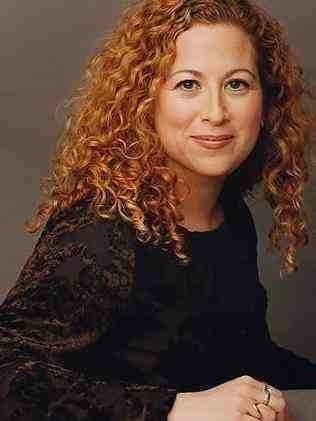
Jodi Picoult is an American author known for her thought-provoking fiction that often explores complex moral dilemmas. Her notable works include My Sister's Keeper, Nineteen Minutes, Small Great Things, Plain Truth, Leaving Time, and The Tenth Circle. Picoult's writing frequently delves into themes of family, justice, and the human experience.
Similar books
- The Shack
Young, William Paul Young
3.8 (538k) average on GoodreadsSpiritualityExplores profound spiritual questions through a personal, emotional journey.
- A Spark of Light
Jodi Picoult
3.7 (97k) average on GoodreadsFictionAnother Picoult novel tackling a complex ethical issue with multiple perspectives and a dramatic climax.
- The Da Vinci Code
Dan Brown
3.9 (1.9M) average on GoodreadsThrillerFeatures a mystery intertwined with religious institutions and a quest for truth.
- Year of Wonders
Geraldine Brooks
4.0 (138k) average on GoodreadsHistorical FictionWhile both explore faith in crisis, Brooks' novel is historical, focusing on community resilience during a plague. Picoult's is contemporary, examining individual belief within modern legal and media contexts. Picoult's narrative is more focused on legal drama and personal spiritual struggle, whereas Brooks emphasizes collective human endurance.
- Gilead (Oprah's Book Club)
Marilynne Robinson
3.9 (126k) average on GoodreadsFictionRobinson's novel is a deeply introspective, theological meditation on faith and doubt from a pastor's perspective, rich in philosophical depth. Picoult's Keeping Faith is more external, dramatic, and plot-driven, using a courtroom setting to explore spiritual themes for a broader audience, with less emphasis on profound theological discourse.
- Eat, Pray, Love
Elizabeth Gilbert
3.6 (1.5M) average on GoodreadsLifestyleA heartbroken writer leaves her conventional life for a year-long global search for pleasure in Italy, spiritual devotion in India, and unexpected love and balance in Bali.






Enjoyed the summary?
A summary gives you the shape of the book. The book itself has the detail, the examples and the voice.
Find Keeping Faith on AmazonAs an Amazon Associate, BookBrief earns from qualifying purchases. How we're funded