

Synopsis
Covers the whole plot, including the ending.
- Difficulty
- Medium
- Pacing
- Moderate
- Mood
- Suspenseful, Gritty, Determined, Emotional
- Read it if
- You enjoy police procedurals with a strong, no-nonsense female lead, a futuristic setting, and a focus on psychological cat-and-mouse games.
- Skip it if
- You prefer fantasy or historical fiction, or dislike graphic crime scene descriptions.
Kindred in Death Plot Summary
Covers the whole plot, including the ending.
A Family's Worst Nightmare
NYPSD Captain Dennis Mira and his wife, Anna, return home a day early from vacation, eager to see their sixteen-year-old daughter, Deena. Instead, they find a crime scene: Deena has been murdered in her bedroom. The scene is gruesome, suggesting a personal and violent attack. Overwhelmed with grief, Captain Mira, a colleague of Lieutenant Eve Dallas, asks her to lead the investigation. Eve arrives with her team—Detective Peabody, Medical Examiner Morris, and forensic tech McNab—and immediately begins processing the scene. It is meticulously clean of standard forensic evidence, suggesting a clever killer.
Initial Investigation and Frustration
Eve and her team begin the investigation, interviewing the Miras and their neighbors. They learn Deena was a bright, popular, and well-adjusted teenager with no known enemies. The lack of forced entry, the extreme violence, and the absence of forensic traces puzzle Eve. She realizes this is not a random act but a targeted, intimate murder. The killer left no fingerprints, DNA, or obvious weapons, showing a level of planning and expertise that frustrates the detectives. Eve feels the weight of her friend's trust and the urgency to find justice for Deena.
Unraveling Deena's Digital Life
McNab starts analyzing Deena’s personal comm unit and computer, hoping to find any digital trace of her last days. He uncovers a series of anonymous, increasingly obsessive messages sent to Deena through various online platforms. These messages, initially appearing as fan mail, become possessive and threatening when Deena does not respond to the sender's interest. The sender, using multiple aliases and masked IP addresses, becomes the main suspect. This digital trail provides the first real lead, pointing to a stalker who knew Deena's online presence.
The Stalker's Escalation
As Eve's team looks deeper into Deena's online interactions, the anonymous stalker, now called 'The Ghost,' begins sending encrypted messages directly to Eve. These taunting communications show an intimate knowledge of police procedures and Eve's investigation, implying the killer is watching their every move. The messages mock and challenge Eve, asserting the killer's intelligence and control. This direct engagement angers Eve, making the case even more personal. She recognizes the killer's psychological profile: a narcissist driven by a need for control and validation, who sees the police as part of a twisted game.
A Web of Aliases
Peabody and McNab work to trace the many online aliases used by The Ghost. They discover a complex web of fake profiles, burner comm units, and untraceable IP addresses, all designed to hide the killer's true identity. The perpetrator shows an advanced understanding of cybersecurity and anonymity, making it hard to find a single person. This careful planning suggests a professional or someone with significant technical skills, broadening the suspect pool beyond a simple teenage admirer. The team realizes they are dealing with a highly intelligent and resourceful enemy who has gone to great lengths to stay hidden.
The First Breakthrough
Through careful cross-referencing of online habits, linguistic patterns in the messages, and a subtle mistake in one of the encrypted communications, Eve and McNab finally get a solid lead. They link a specific online persona to a real person: Nolan Thrush, a brilliant but socially awkward computer programmer who works for a tech firm that provides services to the NYPSD. Thrush fits the profile of someone with the technical expertise and psychological detachment to commit such a complex and brutal crime. This breakthrough gives a name and face to The Ghost, bringing Eve closer to justice for Deena.
The Trap is Set
Knowing Thrush's narcissistic need for control and desire to play games, Eve plans to draw him out. She leaks carefully constructed false information, designed to provoke Thrush and make him believe he is still ahead. Her strategy relies on his overconfidence and inability to resist a challenge. The bait works, and Thrush, believing he can outsmart Eve, makes a move. He tries to infiltrate a police network, leaving a digital signature that confirms his identity and location. This allows Eve to track him, setting the stage for a physical confrontation rather than a purely digital one.
Confrontation and Capture
Eve and her team track Nolan Thrush to his organized apartment, which also serves as his command center. The confrontation is tense; Thrush, a slight and unassuming man, shows a chilling lack of remorse and a twisted justification for his actions. He tries to manipulate Eve with psychological games, but Eve, hardened by years of dealing with disturbed individuals, remains firm. After a standoff where Thrush tries to escape or further taunt Eve, he is subdued and arrested. His capture brings relief, but also sadness for the senseless loss of Deena's life.
Aftermath and Closure
With Thrush in custody, the Miras begin the slow, painful process of grieving and healing. Captain Mira expresses his deep gratitude to Eve, acknowledging her dedication. The case's resolution, while bringing justice, affects Eve. She considers the nature of evil and how it can appear in ordinary people. The case strengthens her belief in empathy, even when faced with such depravity, and her commitment to fighting for victims. The team also finds some closure, having completed a complex and emotionally draining investigation.
Principal Figures
Lieutenant Eve Dallas
Protagonist
A tough and intuitive homicide detective for the NYPSD.
Eve Dallas is a highly skilled and often brutally direct homicide lieutenant. Haunted by a traumatic past, she channels her personal demons into an unwavering dedication to justice. She possesses a sharp analytical mind, an innate ability to read people, and a relentless drive to solve cases, especially those involving children or extreme violence. Despite her tough exterior, she deeply cares for her team and her husband, Roarke, and feels a profound sense of responsibility to the victims.
Relationships: Roarke (Husband, confidant, and partner in life.); Detective Delia Peabody (Partner and close friend.); Captain Dennis Mira (Colleague and friend, whose daughter's murder she investigates.)
Roarke
Supporting
Eve's billionaire husband, with a mysterious past and vast resources.
Roarke is a self-made billionaire with a shadowy past, often using his immense wealth, technological expertise, and global connections to assist Eve in her investigations. He is deeply devoted to Eve, providing emotional support, practical help, and a safe haven from the horrors she faces daily. His intelligence and calm demeanor complement Eve's intensity, making them a formidable team. He is fiercely protective of Eve and anyone she cares about.
Relationships: Lieutenant Eve Dallas (Husband, confidant, and partner in life.); Nadine Furst (Professional acquaintance through news.)
Detective Delia Peabody
Supporting
Eve's loyal and increasingly skilled partner.
Peabody is Eve's junior partner, known for her quirky personality, growing investigative skills, and unwavering loyalty. She often provides a much-needed lighter touch to Eve's intensity but is equally dedicated to justice. Throughout the series, she matures into a competent and intuitive detective, learning from Eve's methods and developing her own insights. She is a vital part of Eve's team, handling much of the grunt work and offering emotional support.
Relationships: Lieutenant Eve Dallas (Partner and close friend.); Ian McNab (Boyfriend and colleague.)
Captain Dennis Mira
Supporting
A respected NYPSD captain and the grieving father of the victim.
Captain Dennis Mira is a seasoned and well-regarded officer within the NYPSD, a colleague and friend of Eve Dallas. He is a man of integrity and professionalism, but his world is shattered by the brutal murder of his sixteen-year-old daughter, Deena. His grief is profound, yet he maintains a dignified composure, trusting Eve implicitly to find his daughter's killer. His personal connection to the victim adds an extra layer of urgency and emotional weight to Eve's investigation.
Relationships: Lieutenant Eve Dallas (Colleague and friend.); Anna Mira (Wife and mother of Deena.)
Nolan Thrush (The Ghost)
Antagonist
A brilliant but psychopathic computer programmer and Deena Mira's killer.
Nolan Thrush is the antagonist, a highly intelligent and technologically adept computer programmer with a severe personality disorder. He operates under the alias 'The Ghost,' stalking Deena Mira and ultimately murdering her when she fails to reciprocate his obsessive affection. Thrush is a classic narcissist, driven by a need for control, validation, and intellectual superiority. He meticulously plans his crimes and delights in taunting the police, believing himself to be untouchable. His lack of empathy and calculated cruelty make him a chilling villain.
Relationships: Deena Mira (Obsessive stalker and killer.); Lieutenant Eve Dallas (Antagonist, engaging in a psychological cat-and-mouse game.)
Deena Mira
Mentioned
The sixteen-year-old victim whose murder drives the plot.
Deena Mira was the sixteen-year-old daughter of Captain Dennis and Anna Mira. She is portrayed as a bright, vivacious, popular, and well-adjusted teenager, with a loving family and a promising future. Her brutal and senseless murder is the catalyst for the entire investigation. Though she is only seen through memories and the aftermath of the crime, her character is central to the emotional core of the story, representing innocent life tragically cut short.
Relationships: Captain Dennis Mira (Father.); Anna Mira (Mother.); Nolan Thrush (Unwitting victim of his obsession.)
Ian McNab
Supporting
A skilled forensic tech and Peabody's boyfriend.
Ian McNab is a brilliant and often irreverent forensic technician, specializing in digital forensics. His expertise in computers and online investigation is crucial to Eve's cases, particularly in a future where technology plays such a significant role in crime. He is Peabody's boyfriend, and their playful banter often provides comic relief. Despite his casual demeanor, McNab is highly dedicated and takes his work seriously, especially when it involves helping Eve.
Relationships: Detective Delia Peabody (Boyfriend and colleague.); Lieutenant Eve Dallas (Colleague, part of her team.)
Themes & Insights
The Insidiousness of Obsession and Narcissism
The novel shows how unchecked obsession can become dangerous psychopathy, driven by narcissism. Nolan Thrush's 'love' for Deena is not true affection but a possessive desire for control and admiration. When she doesn't fit his ideal image, his wounded ego leads to extreme violence. His elaborate planning and taunting of Eve highlight his narcissistic need to feel superior and powerful, seeing the investigation as a personal game. This appears in the anonymous messages escalating to threats and the carefully designed crime scene.
“He didn’t love her. He loved the idea of her loving him. And when she didn’t, he broke her.”
Technology as a Double-Edged Sword
The future setting allows for an exploration of technology's role in crime. While advanced forensics and digital tracking help Eve's investigation (McNab's ability to trace IP addresses, comm unit analysis), the same technology empowers the killer. Thrush uses encrypted communications, multiple fake identities, and sophisticated hacking skills to stalk Deena and avoid capture. This duality shows how technology can both enable crimes and provide means for justice, creating a complex cat-and-mouse game in the digital world, as seen in The Ghost's taunting messages to Eve.
“In this day and age, you can vanish, or you can leave a trail a mile wide. He chose both.”
Grief, Justice, and Healing
The deep grief of Captain Dennis and Anna Mira forms the emotional center of the story, showing the devastating impact of violent crime on victims' families. Eve, having experienced her own trauma, understands this pain and is driven to bring justice, not just for the Miras, but for Deena. The pursuit of the killer is a crucial step in the healing process, allowing the family to move from despair to a place where they can begin to mourn. The case's resolution, while not erasing the pain, provides closure and the possibility of future healing.
“Justice doesn’t bring them back, but it gives the living a chance to breathe again.”
The Nature of Evil and Humanity's Dark Side
The novel looks at the darkest parts of human nature, showing how evil can exist in seemingly ordinary people. Thrush is not a monstrous figure in appearance, but his actions are monstrous. Eve struggles to understand the reasons behind such depravity, often finding an emptiness where normal human empathy should be. This theme is explored through Eve's thoughts and her discussions with Roarke and Peabody, as they try to understand how someone could commit such a brutal act against an innocent girl, reinforcing the idea that evil isn't always obvious.
“There’s no sense to it. No reason. Just… darkness.”
Plot Devices & Literary Techniques
Red Herring
Misleading clues or suspects to divert the investigation.
Early in the investigation, the team considers multiple possibilities for Deena's killer, including a jilted boyfriend or a jealous peer. These initial avenues of inquiry, while seemingly plausible, are designed to mislead both the characters and the reader, creating suspense and highlighting the killer's cunning. The meticulous nature of the crime scene, initially suggesting a professional hit, also serves as a red herring, diverting attention from the true nature of the killer's psychological motivation and technical prowess.
Cat-and-Mouse Game
The killer directly engages and taunts the detective.
The 'Ghost' (Nolan Thrush) actively engages Eve Dallas in a psychological battle, sending her encrypted messages that reveal his knowledge of the investigation and mock her progress. This device intensifies the personal stakes for Eve, as she feels directly challenged and provoked. It allows the author to showcase the killer's narcissistic personality and intellectual arrogance, while also demonstrating Eve's relentless determination and strategic thinking as she uses his own ego against him to draw him out.
Foreshadowing (Digital Clues)
Subtle hints within digital data that predict later revelations.
The early discovery of anonymous online messages sent to Deena, initially dismissed as harmless fan mail, foreshadows the killer's obsessive nature and his use of technology to stalk his victim. As the messages grow more possessive and threatening, they hint at the escalating danger and the personal connection of the killer to Deena, even before his identity is known. This device builds suspense and allows the reader to piece together clues alongside the detectives.
Technological Deus Ex Machina (Controlled)
Advanced technology providing a crucial, but earned, solution.
While Roarke's vast technological resources and McNab's forensic expertise are vital to solving the case, they are not presented as unearned, sudden solutions. Instead, they represent the advanced capabilities of the future setting, and their application requires immense skill, effort, and strategic thinking from the characters. For example, the complex process of tracing Thrush's myriad of digital aliases and encrypted communications is a testament to McNab's dedication, not a simple 'magic button' solution. This device allows for complex plots while grounding the technological solutions in the established world.
Kindred in Death Quotes
“She had thought she’d seen it all, but the human capacity for depravity never ceased to amaze her.”
“Love didn't make you weak. It made you strong. Strong enough to fight for what you believed in, for who you loved.”
“Every victim had a story, and it was her job to make sure that story was heard, even if they couldn't tell it themselves.”
“The past was a sneaky bastard. It always found a way to creep up on you, no matter how much you tried to bury it.”
“There was a fine line between genius and madness, and sometimes, the only difference was who was holding the scalpel.”
“Sometimes, the only way to heal was to acknowledge the wound, no matter how deep it was.”
“Roarke’s smile was a dangerous weapon, capable of disarming anyone, including her.”
“The city never slept, and neither did its demons.”
“You couldn't save everyone, but you could damn well try to save someone.”
“Trust was a fragile thing, easily broken, and incredibly hard to rebuild.”
“It wasn't about the technology; it was about the twisted mind behind it.”
“She was a cop first, last, and always. It was in her bones, in her blood.”
“The truth had a way of coming out, no matter how many layers of lies you buried it under.”
Quiz
10 questions on the plot and the characters. Each answer comes with a short explanation.
Question 1
Who specifically requested Lieutenant Eve Dallas to investigate the murder of Deena?
- Commander Whitney
- Captain Howard
- Detective Peabody
- Roarke
Show answer
B. Captain Howard The newly promoted captain of the NYPSD, Captain Howard, and his wife were Deena's parents, and he specifically requested Eve Dallas for the investigation.
Question 2
What was the relationship of the victim, Deena, to the captain of the NYPSD?
- She was his niece.
- She was his sister.
- She was his daughter.
- She was his wife.
Show answer
C. She was his daughter. Deena was the bright and vivacious sixteen-year-old daughter of the newly promoted captain and his wife.
Question 3
Where was Deena's body found?
- In the living room
- In the kitchen
- In her bedroom
- In the garage
Show answer
C. In her bedroom Deena was found brutally murdered in her bedroom, a scene that horrified even the toughest cops.
Question 4
What specific characteristic of the killer's actions is highlighted in the description?
- Their use of advanced technology.
- Their tendency to leave detailed notes.
- Their use of a variety of identities to tease and taunt.
- Their focus on only male victims.
Show answer
C. Their use of a variety of identities to tease and taunt. The perpetrator went to great lengths to tease and taunt Dallas and her team by using a variety of identities.
Question 5
What was the initial expectation of Dallas and her team regarding the arrest of the perpetrator?
- They believed the case would be impossible to solve.
- They thought they were close to making an arrest.
- They were waiting for more victims to appear.
- They suspected the parents were involved.
Show answer
B. They thought they were close to making an arrest. The description states, 'When the evidence starts to pile up, Dallas and her team think they are about to arrest their perpetrator.'
Question 6
What is the primary danger mentioned for Dallas in her pursuit of justice?
- Physical harm from the perpetrator.
- Bureaucratic interference from her superiors.
- Making a careless mistake due to overconfidence.
- Lack of resources for the investigation.
Show answer
C. Making a careless mistake due to overconfidence. The text warns, 'Overconfidence can lead to careless mistakes. But for Dallas, one mistake might be all she needs to bring justice.'
Question 7
How old was Deena when she was murdered?
- Thirteen
- Sixteen
- Eighteen
- Twenty-one
Show answer
B. Sixteen Deena is described as a 'bright and vivacious sixteen-year-old daughter'.
Question 8
What kind of reaction did Deena's body show that was notable even to tough cops?
- Signs of poisoning.
- Signs of a struggle.
- Signs of trauma that horrified them.
- Signs of a ritualistic killing.
Show answer
C. Signs of trauma that horrified them. The text states, 'Deena's body showed signs of trauma that horrified even the toughest of cops.'
Question 9
What was the captain and his wife looking forward to before discovering the crime scene?
- A surprise party for Deena.
- A quiet evening alone.
- Spending time with their daughter Deena.
- Going back to work early.
Show answer
C. Spending time with their daughter Deena. Upon returning a day early from vacation, they 'were looking forward to spending time with their bright and vivacious sixteen-year-old daughter who had stayed behind.'
Question 10
The description implies a central theme about the investigation. What is it?
- The importance of teamwork in solving complex cases.
- The psychological battle between investigator and perpetrator.
- The struggle against political corruption within the police force.
- The impact of advanced forensic technology on crime-solving.
Show answer
B. The psychological battle between investigator and perpetrator. The killer's actions of using 'a variety of identities' to 'tease and taunt' Dallas, and the warning about 'overconfidence' leading to 'careless mistakes' for Dallas, strongly suggest a psychological battle.
Kindred in Death FAQ
What is the central mystery in 'Kindred in Death'?
The central mystery revolves around the brutal murder of sixteen-year-old Deena MacRae, daughter of newly promoted NYPSD Captain MacRae. Lieutenant Eve Dallas is tasked with uncovering the identity of Deena's killer, who has left a horrific crime scene and seems intent on taunting the police.
Who is the victim in 'Kindred in Death' and what is her significance?
The victim is Deena MacRae, the sixteen-year-old daughter of Captain MacRae and his wife. Her significance is that her father is a high-ranking officer in the NYPSD, making the case deeply personal for the department and putting immense pressure on Eve Dallas to solve it quickly and justly.
Why does Captain MacRae specifically request Lieutenant Eve Dallas for the investigation?
Captain MacRae requests Eve Dallas due to her renowned reputation for solving difficult and high-profile murder cases, especially those involving particularly brutal violence. He trusts her tenacity and skill to navigate the complexities of a case that hits so close to home for the police department.
What makes the killer in 'Kindred in Death' particularly challenging for Eve Dallas?
The killer is particularly challenging because they employ multiple identities and go to great lengths to tease and taunt the investigative team. This strategy makes it difficult for Dallas and her squad to pin down a single suspect, creating a complex web of deception that constantly shifts.
How does the killer's method of operation evolve throughout the investigation?
Initially, the killer's method involves leaving a horrific scene, but it quickly evolves into a sophisticated game of cat and mouse using multiple aliases and carefully planted false leads. This escalation is designed to frustrate and mislead the police, showcasing the killer's meticulous planning and psychological manipulation.
Are there any subtle clues early in the narrative that point towards the killer's unique modus operandi?
Early in the narrative, the sheer brutality and the meticulous staging of Deena's murder, combined with a lack of immediate, clear-cut motives, hint at a killer who is not just impulsive but calculating. The way evidence is presented or withheld suggests a deliberate attempt to control the investigation's direction.
How does the title 'Kindred in Death' relate to the killer or the victims beyond the obvious?
The title 'Kindred in Death' subtly suggests a deeper connection or twisted affinity between the killer and their victims, or perhaps even a dark reflection of societal bonds. It might imply that the killer seeks a form of 'kinship' through their violent acts, or that their victims share an unspoken commonality exploited by the perpetrator.
What role do technology and futuristic elements play in uncovering the killer's true identity?
Advanced forensic technology, such as sophisticated data analysis and identity verification systems, are crucial in sifting through the killer's multiple aliases and digital footprints. Without these futuristic tools, the killer's elaborate deceptions would be nearly impossible for Eve and her team to unravel, highlighting the future setting's impact.
How does Lieutenant Eve Dallas's past trauma influence her approach to Deena MacRae's murder?
Eve Dallas's own traumatic childhood, marked by abuse and loss, makes her particularly empathetic to child victims and their families. This personal history fuels her relentless pursuit of justice for Deena, making her even more determined to bring down a killer who preys on vulnerability.
What psychological profile can be inferred about the killer based on their actions?
The killer exhibits traits of extreme narcissism, a need for control, and a deep-seated desire to psychologically torment their adversaries, the police. Their use of multiple identities and taunting suggests a highly intelligent and manipulative individual who derives pleasure from outsmarting others and witnessing their frustration.
How does the pressure from Captain MacRae and the NYPSD hierarchy affect Eve's psychological state during the investigation?
The immense pressure from Captain MacRae and the entire NYPSD hierarchy weighs heavily on Eve, amplifying her usual intensity and self-imposed demands. It pushes her to her limits, forcing her to confront her own vulnerabilities while maintaining an unyielding facade of competence and control for her team and the department.
In what ways does Roarke provide psychological support or challenges for Eve during this particularly gruesome case?
Roarke provides crucial psychological support by being a stable anchor and a safe space for Eve to process the horrors of the case. He also subtly challenges her when her dedication borders on self-destruction, reminding her to maintain balance, offering unique perspectives, and ensuring she doesn't lose herself completely to the darkness of the investigation.
What is the significance of the killer's 'overconfidence' mentioned in the synopsis, and how does it lead to their downfall?
The killer's overconfidence is their fatal flaw, stemming from their belief in their own superior intellect and ability to manipulate. This hubris leads them to make a crucial 'mistake' – perhaps revealing a signature detail, a pattern, or underestimating Eve's tenacity – which provides Dallas with the single thread she needs to unravel their intricate web of deception and ultimately apprehend them.
Could the initial 'evidence' that makes Dallas's team think they are about to arrest their perpetrator be a deliberate plant by the killer?
It is highly probable that the initial 'evidence' is a deliberate plant, designed to mislead and taunt Dallas and her team. This tactic aligns with the killer's psychological profile of enjoying a game of cat and mouse, aiming to make the police feel close to a solution only to snatch it away, further demonstrating their control.
How does the theme of 'justice' in 'Kindred in Death' compare to other books in the series, particularly regarding personal vs. institutional justice?
'Kindred in Death' emphasizes the relentless pursuit of institutional justice through Eve's role, but it also touches on the profound personal justice sought by Deena's parents. The case highlights the tension between the methodical process of law and the visceral need for retribution, a common thread in the series but intensified here by the victim's age and her father's position.
What broader societal commentary might the author be making through the killer's use of multiple identities and manipulation?
The author might be commenting on the increasing ease with which individuals can create and maintain false identities in a technologically advanced society, highlighting vulnerabilities in digital security and identity verification. It could also reflect on how easy it is to manipulate public perception and sow confusion in an information-rich but often superficial world.
Is there a moral or ethical dilemma Eve faces due to Captain MacRae's personal involvement in the case?
Eve faces a significant moral and ethical dilemma. While she must remain impartial, the personal request from a superior officer, coupled with the emotional weight of the case, could tempt her to cut corners or prioritize speed over due process. Her integrity is tested as she navigates the need for justice while upholding the law, especially when dealing with a grieving father who is also a colleague.
About the author

J.D. Robb is a pseudonym for author Nora Roberts, known for her work in the romance and suspense genres. She is particularly recognized for the "In Death" series, which includes titles such as "Naked in Death," "Glory in Death," "Immortal in Death," "Rapture in Death," "Ceremony in Death," and "Holiday in Death." These novels blend elements of crime fiction with futuristic settings and strong character development.
Similar books
- Naked in Death
J.D. Robb
4.1 (167k) average on GoodreadsThrillerFirst book in the same series, establishing characters and world.
- The Silent Patient
Alex Michaelides
4.1 (507k) average on GoodreadsThrillerFeatures a psychological thriller with a focus on uncovering hidden truths.
- Still Life
Louise Penny
3.9 (2k) average on GoodreadsLiterary FictionPolice procedural with a strong sense of place and character-driven investigation.
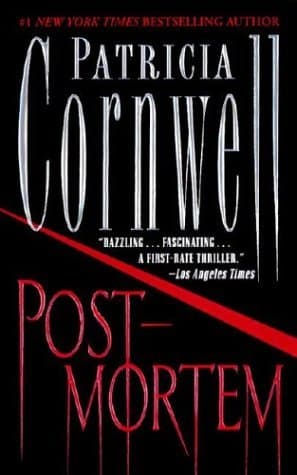
- Postmortem
Patricia Cornwell
4.0 (212k) average on GoodreadsThrillerCornwell's Postmortem focuses heavily on forensic science and detailed autopsy procedures, offering a more grounded, realistic crime investigation. Robb's "Kindred in Death," while also procedural, uses its futuristic setting to explore technological advancements in crime solving and the broader societal implications of digital life, giving it a distinct speculative edge that Cornwell's work lacks. While both feature strong female protagonists, Scarpetta is more analytical and less prone to the emotional outbursts characteristic of Dallas.
- The Black Echo
Michael Connelly
4.1 (155k) average on GoodreadsThrillerConnelly's The Black Echo is a classic hard-boiled detective novel, deeply rooted in the gritty, realistic police work of contemporary Los Angeles. His focus is on the moral ambiguities and personal toll of police work. In contrast, "Kindred in Death" operates within a futuristic, technologically advanced New York, allowing Robb to explore crimes and investigative techniques that are beyond current capabilities. While both authors excel at creating compelling mysteries, Robb's work offers a more imaginative, sci-fi tinged vision of crime and justice compared to Connelly's more grounded realism.
- Angels & Demons
Dan Brown
3.9 (2.7M) average on GoodreadsThrillerA Harvard symbologist races through Rome's ancient sites, deciphering cryptic clues to unmask the Illuminati and stop a vengeful plot to destroy the Vatican with a stolen antimatter weapon.





Enjoyed the summary?
A summary gives you the shape of the book. The book itself has the detail, the examples and the voice.
Find Kindred in Death on AmazonAs an Amazon Associate, BookBrief earns from qualifying purchases. How we're funded