

Synopsis
Covers the whole plot, including the ending.
- Difficulty
- Easy
- Pacing
- Moderate
- Mood
- Humorous, Cynical, Reflective, Quirky
- Read it if
- You enjoy quirky coming-of-age stories with a strong sense of humor, a love for punk rock, and a mystery that's more about self-discovery than solving a crime.
- Skip it if
- You prefer fast-paced, high-stakes mysteries with clear resolutions, or dislike cynical teenage protagonists and meandering plotlines.
King Dork Plot Summary
Covers the whole plot, including the ending.
The Discovery of the Green Box
Tom Henderson, an awkward and unpopular high school student, navigates school with his best friend, Sam Hellerman. They share a love for punk rock and their band, 'The Little Lord Fauntleroys.' Tom's father died when he was young, leaving many unanswered questions. One day, Tom finds a hidden green metal box among his father's old things. Inside, he finds a copy of J.D. Salinger's 'The Catcher in the Rye,' heavily annotated by his father, along with a cryptic note and a photograph. This discovery makes Tom curious about his father's secret life and starts his quest to understand it.
The Catcher in the Rye Code
Fascinated by the green box, Tom studies his father's copy of 'The Catcher in the Rye.' The book has underlined passages, notes in the margins, and cryptic symbols Tom struggles to understand. He suspects his father, a seemingly ordinary man, was involved in something more complex than he imagined. Tom sees the annotations as a code, a puzzle for him. His attempts to decipher the underlined phrases and handwritten notes consume his thoughts, drawing him deeper into his father's past and the book itself.
The 'King Dork' Nickname
Throughout high school, Tom is called 'King Dork,' a cruel nickname from his peers. This constant reminder of his social standing fuels his feelings of alienation. He resents the label but also, in a strange way, uses it as a shield. The nickname reinforces his outsider status and his view of himself as different from everyone else. This internal struggle with his identity and the external pressure of the 'King Dork' label are central to his character and narrative voice, often leading to his cynical observations.
Sam's Girlfriend Troubles and the Band
Tom's best friend, Sam Hellerman, is often in complex and disastrous romantic relationships, especially with a girl named Lisa. Sam's romantic problems frequently distract him and create tension between the two friends, as Tom often finds Sam's obsession with girls baffling. Meanwhile, their band, 'The Little Lord Fauntleroys,' struggles to get noticed. They practice regularly, writing their own punk rock songs, but their ambitions clash with their lack of talent and the indifference of their schoolmates. Their shared musical passion is a core part of their friendship, but it also highlights their shared outsider status.
Encountering Mr. Kerouac
Tom's English class, particularly a discussion about 'The Catcher in the Rye,' becomes a significant place for his internal and external conflicts. His teacher, Mr. Kerouac, is well-meaning but detached, trying to engage students in literary analysis. Tom's deep, personal connection to the book, from his father's annotations, makes him both defensive and intensely observant during these discussions. He often disagrees with the conventional interpretations in class, feeling his unique understanding of the book, through his father's lens, is superior or more authentic. This leads to awkward but revealing interactions between Tom and Mr. Kerouac.
The Mysterious Letters and the 'Stumps'
As Tom investigates, he uncovers more of his father's past. He finds letters and notes that point to a secret group his father was involved with, called the 'Stumps.' This adds another layer of intrigue, suggesting his father's life was more complex than Tom imagined. The 'Stumps' appear to be a group connected by shared experiences and possibly by something significant. Tom pieces together the fragments, slowly building a picture of his father's secret activities and the true meaning of the annotations in 'The Catcher in the Rye.'
The Connection to the School
Tom notices parallels between the clues in his father's book and his own school experiences. He realizes certain teachers, students, and even locations in the school might connect to his father's past and the 'Stumps.' This revelation deepens the mystery and brings it uncomfortably close, blurring the lines between his father's secrets and his present. He starts to view his surroundings with a new, suspicious eye, wondering who else might be involved or aware of the hidden connections. The school, once a place of everyday suffering, becomes a key to understanding his father.
Confrontation with Mrs. Kerouac
Tom discovers that Mrs. Kerouac, his English teacher's wife, had a significant, undisclosed connection to his father. This is a major turning point. Tom, driven by his search for truth, confronts Mrs. Kerouac, who is reluctant to share information. The confrontation is tense and emotional, as Mrs. Kerouac faces her past and the secrets she has kept. Her confession provides crucial pieces of the puzzle, explaining his father's involvement with the 'Stumps' and the true nature of the code in 'The Catcher in the Rye.'
The Truth About the 'Stumps' and the Book
Tom's detective work reveals that the 'Stumps' were not a grand secret society, but a support group for people with social anxiety and feelings of inadequacy, much like Tom. His father's annotations in 'The Catcher in the Rye' were not a complex spy code, but his personal reflections, coping mechanisms, and attempts to find meaning and connection in the text. The 'code' was his father's way of processing his anxieties and finding solace in literature. This deeply personal revelation initially disappoints Tom but ultimately helps him understand his father.
The Band's Small Triumph
Amidst his personal revelations, Tom and Sam's band, 'The Little Lord Fauntleroys,' has a small but meaningful triumph. They get a chance to perform, perhaps at a school event. While not a massive success, their performance is a moment of genuine connection and accomplishment for Tom and Sam. It shows their shared passion and ability to create something meaningful together, regardless of external validation. This minor victory for the band balances Tom's more serious journey, highlighting the importance of friendship, creativity, and finding joy in small successes.
Acceptance and Moving Forward
With the mysteries about his father mostly resolved, Tom accepts the truth. He realizes his father was not a secret agent, but a complex person who struggled with similar feelings of being an outsider and finding his place. This understanding helps Tom feel a deeper connection to his father, seeing him not as a distant, enigmatic figure, but as someone he can relate to. He starts to accept his 'King Dork' identity, not as a label of shame, but as part of who he is. The journey helps him find his own voice and begin to move forward, more confident and self-aware.
The Enduring Power of Books and Friendship
The story ends with Tom reflecting on how his father's book, 'The Catcher in the Rye,' affected his self-discovery. He recognizes literature's power to connect people across time and offer solace and understanding. More importantly, he appreciates Sam Hellerman's unwavering friendship, who stood by him through his eccentric investigations and band practices. Tom understands that while the grand mystery wasn't what he expected, the true treasures were the insights into his father, the stronger bond with Sam, and a new acceptance of himself. He finds a quiet sense of peace and a path to embrace his unique identity.
Principal Figures
Tom Henderson
Protagonist
A cynical, self-deprecating high school 'loser' obsessed with punk rock and solving his father's mystery.
Tom is the quintessential outsider, intelligent and observant but socially awkward and constantly battling the 'King Dork' label. He possesses a sharp, sarcastic wit that he uses as a defense mechanism against the world. His love for punk rock and his band, The Little Lord Fauntleroys, are central to his identity. He is driven by a deep-seated need to understand his deceased father, which propels him into a detective-like quest. Despite his cynicism, he yearns for connection and understanding.
Relationships: Sam Hellerman (Best friend and bandmate, a constant source of support and exasperation.); Mr. Henderson (Father) (Deceased father, whose mysterious past and annotated book drive Tom's quest.); Mr. Kerouac (English teacher, a figure of authority and a source of literary discussion.); Mrs. Kerouac (English teacher's wife, who holds a secret connection to Tom's father.)
Sam Hellerman
Supporting
Tom's loyal, often girl-obsessed, best friend and bandmate.
Sam is Tom's steadfast companion, sharing his love for punk rock and his outsider status. He is less introspective than Tom, often preoccupied with romantic entanglements and the mundane dramas of high school life. While sometimes a source of frustration for Tom, Sam's unwavering loyalty and shared sense of humor are crucial to Tom's emotional support system. He is the grounding force in Tom's often chaotic internal world, offering a sense of normalcy and friendship.
Relationships: Tom Henderson (Best friend and bandmate, a deep and enduring friendship.); Lisa (On-again, off-again girlfriend, a source of romantic drama.)
Mr. Henderson (Tom's Father)
Mentioned/Catalyst
Tom's deceased father, whose mysterious past and annotated book spark the central mystery.
Tom's father is a largely unseen but profoundly influential character. Through Tom's investigation, he is revealed to be a complex individual who, despite appearing ordinary on the surface, struggled with social anxiety and a sense of being an outsider. His heavily annotated copy of 'The Catcher in the Rye' and his involvement with the 'Stumps' reveal a man who sought meaning and connection through literature and a support group. He serves as a mirror for Tom, reflecting many of Tom's own struggles and anxieties.
Relationships: Tom Henderson (Son, to whom he inadvertently leaves a legacy of self-discovery.); Mrs. Kerouac (Former acquaintance/member of the 'Stumps' with a shared past.)
Mr. Kerouac
Supporting
Tom's English teacher, a well-meaning but somewhat detached figure.
Mr. Kerouac is Tom's English teacher, a dedicated educator who attempts to engage his students with literature, particularly 'The Catcher in the Rye.' He represents the conventional, academic interpretation of the text, often clashing subtly with Tom's more personal and intuitive understanding. He is a seemingly ordinary figure in Tom's school life, unaware of the deeper connections his wife and the book hold to Tom's father's past. He is a symbol of the adult world's often-misunderstood attempts to connect with teenagers.
Relationships: Tom Henderson (Student, with whom he has intellectual, sometimes challenging, interactions.); Mrs. Kerouac (Wife, whose past is unbeknownst to him.)
Mrs. Kerouac
Supporting
Mr. Kerouac's wife, who holds a crucial secret about Tom's father and the 'Stumps'.
Mrs. Kerouac initially appears as a peripheral character, but she becomes pivotal to solving the central mystery. She is revealed to have been a member of the 'Stumps' and an acquaintance of Tom's father. She carries the burden of past secrets, which she is reluctant to share until confronted by Tom. Her character represents the hidden complexities and untold stories that lie beneath the surface of seemingly ordinary lives, and her confession provides the ultimate key to understanding Tom's father's motivations.
Relationships: Mr. Kerouac (Husband, to whom she has kept her past secret.); Mr. Henderson (Father) (Former acquaintance and fellow member of the 'Stumps'.); Tom Henderson (The son who uncovers her secret and receives her confession.)
Lisa
Supporting
Sam's on-again, off-again girlfriend, a source of romantic drama.
Lisa is primarily seen through Sam's perspective, serving as the catalyst for much of his romantic angst and distraction. She represents the typical high school girlfriend, prone to drama and emotional turbulence. Her presence highlights the contrast between Tom's more introspective and solitary pursuits and Sam's more conventional teenage concerns. While not deeply developed, her role is significant in shaping Sam's character and providing a realistic backdrop of teenage social life.
Relationships: Sam Hellerman (On-again, off-again girlfriend, a source of romantic conflict.)
The 'Stumps'
Mentioned/Collective
A mysterious secret society that Tom's father was involved with.
The 'Stumps' are initially presented as a cryptic and potentially sinister secret society, fueling Tom's detective fantasies. However, they are ultimately revealed to be a support group for individuals who, like Tom's father, struggled with social anxiety, feelings of inadequacy, and a sense of being 'stumped' by life. Their true nature challenges Tom's romanticized notions of his father's secret life, replacing grand conspiracy with a more poignant reality of human vulnerability and the search for connection.
Relationships: Mr. Henderson (Father) (Former member.); Mrs. Kerouac (Former member.)
Themes & Insights
The Search for Identity and Belonging
Tom's journey is a quest to understand who he is, both in relation to his deceased father and as an individual. He deals with the 'King Dork' label, his perceived social inadequacy, and his desire to find a place where he belongs. His father's secret life mirrors Tom's feelings of being an outsider, showing the universal struggle to define oneself and find connection in a world that often feels alienating. This theme appears in Tom's introspective monologues, his attachment to punk rock as an expression of individuality, and his ultimate acceptance of his 'dork' status as part of his unique identity.
“I was a king dork, and I knew it. But at least I was *my* king dork.”
The Power of Literature and Interpretation
'The Catcher in the Rye' is not just a plot device but a central theme. The novel explores how literature can be a personal experience, open to multiple interpretations, and a way to understand oneself and others. Tom's father's annotations turn the book into a personal diary and a coded message, showing how texts can hold profound, private meaning. The discussions in Mr. Kerouac's class highlight the contrast between academic analysis and personal connection, showing how books can both unite and divide, and how their meaning changes with the reader's own life experiences.
“That's the thing about books. They let you travel without moving your feet.”
The Nature of Secrets and the Past
The novel explores how secrets, especially those of deceased loved ones, can shape the present. Tom's father's hidden life and the mysterious green box create a compelling mystery that drives the plot. The story suggests that people often have hidden depths and pasts that are more complex than they appear. The revelation that the 'Stumps' were a support group, not a grand conspiracy, shows that often, the most profound 'secrets' are simply the private struggles and vulnerabilities people carry. This can be both anticlimactic and deeply humanizing when finally revealed.
“Everyone has secrets. Some are just better at keeping them than others.”
Friendship and Loyalty
Despite Tom's cynical outlook, his friendship with Sam Hellerman is a cornerstone of the novel. Sam's unwavering loyalty, even when Tom is difficult or obsessed with his father's mystery, provides a crucial emotional anchor. Their shared love for punk rock and their band, 'The Little Lord Fauntleroys,' strengthens their bond. The theme highlights the importance of having a true friend who accepts you, flaws and all, and who shares your passions, even if those passions are niche. Their friendship provides a sense of belonging and stability amidst Tom's internal turmoil and external struggles.
“Sam was my best friend. He was also a total idiot sometimes, but he was *my* total idiot.”
Plot Devices & Literary Techniques
The Annotated Book
Tom's father's copy of 'The Catcher in the Rye' filled with cryptic notes and underlining.
This is the central MacGuffin and plot driver. The annotated book serves as a literal and metaphorical map to Tom's father's past. Initially perceived as a coded message for a grand conspiracy, it is ultimately revealed to be a deeply personal journal of his father's struggles and reflections. This device allows Tom to connect with his deceased father in an intimate way, fostering both his detective instincts and his emotional growth. It also grounds the mystery in a literary context, reflecting the novel's themes about the power of books.
The 'King Dork' Nickname
A pervasive and cruel nickname that defines Tom's social standing.
This epithet acts as a constant external and internal conflict for Tom. It's a symbol of his alienation and perceived failure in the social hierarchy of high school. The nickname not only influences how others treat him but also how he sees himself, fueling his cynicism and self-deprecating humor. Its eventual acceptance, rather than rejection, marks a significant point in Tom's character arc, transforming a source of shame into a part of his unique identity. It's a classic underdog trope, but with a nuanced, self-aware twist.
The Secret Society ('The Stumps')
A seemingly mysterious group Tom's father was involved with.
This device creates immediate intrigue and sets up the 'mystery' aspect of the novel. It plays on the protagonist's (and reader's) expectations of a grand, perhaps dangerous, secret. The eventual revelation that 'The Stumps' were a support group for socially awkward individuals serves as an effective anti-climax, subverting genre expectations and shifting the focus from external thrills to internal, character-driven revelations. It highlights the often mundane and relatable nature of human struggles, contrasting with Tom's initial fantastical assumptions about his father's secret life.
First-Person, Cynical Narration
Tom's distinctive, sarcastic, and self-aware narrative voice.
The entire story is filtered through Tom's highly opinionated, often hilarious, and deeply cynical first-person perspective. This narrative style allows the reader to intimately understand Tom's internal struggles, his observations about the absurdities of high school life, and his emotional journey. His voice is a key element of the book's comedic and emotional impact, giving insight into his intelligence, his insecurities, and his eventual growth. It also enables the author to comment on literary tropes and the nature of storytelling itself through Tom's lens.
King Dork Quotes
“I'm not trying to be a hero. I'm just trying to be a person. And sometimes that's the hardest thing.”
“The thing about being a dork is that you’re always a dork. It’s not something you can just turn off.”
“That’s the thing about secrets. They’re like a disease. They get inside you and they fester.”
“Sometimes the most obvious things are the hardest to see.”
“Music is the only thing that makes any sense in this messed up world.”
“It’s not about being popular. It’s about being real.”
“The past is never really dead. It’s not even past.”
“You can’t just wait for things to happen. You have to make them happen.”
“Being smart doesn’t make you immune to being stupid.”
“Sometimes you have to break the rules to find out what the rules really are.”
“The world is full of people who think they know everything, but they don’t know anything.”
“It’s amazing how much you can miss when you’re not really looking.”
“Every family has its secrets. Some are just bigger than others.”
“Being a weirdo is like having a superpower, if you know how to use it.”
Quiz
10 questions on the plot and the characters. Each answer comes with a short explanation.
Question 1
What is the name of Tom Henderson's best friend and bandmate?
- Sam Hellerman
- Chipocalypse
- Matt Henderson
- Mr. Henderson
Show answer
B. Chipocalypse Chipocalypse (real name Sam Hellerman) is Tom's best friend and the drummer for their band, 'The Psycho Sonics'.
Question 2
What book does Tom Henderson find among his deceased father's belongings that sparks the central mystery?
- To Kill a Mockingbird
- Lord of the Flies
- The Catcher in the Rye
- Of Mice and Men
Show answer
C. The Catcher in the Rye Tom finds his father's copy of J.D. Salinger's 'The Catcher in the Rye', which contains mysterious annotations and clues.
Question 3
What is the name of Tom's band?
- The Teenage Rebels
- The Psycho Sonics
- King Dork and the Losers
- The High School Dropouts
Show answer
B. The Psycho Sonics Tom and Chipocalypse's band is called 'The Psycho Sonics', a name Tom is not entirely thrilled with.
Question 4
What is the significance of the mysterious symbol Tom finds in his father's book and elsewhere?
- It's a symbol for a local gang.
- It's a code for a secret society related to his father's past.
- It's a doodle his father made during high school.
- It represents a hidden treasure map.
Show answer
B. It's a code for a secret society related to his father's past. The symbol is a key element of the mystery, pointing to a secret society and a conspiracy connected to his father's past.
Question 5
What is Tom's primary motivation for pursuing the mysteries surrounding his father's death?
- To gain popularity at school.
- To prove his own intelligence to his peers.
- To understand his father better and find closure.
- To write a song about the experience.
Show answer
C. To understand his father better and find closure. While Tom has many internal struggles, his core drive in solving the mystery is to connect with his deceased father and understand who he truly was.
Question 6
Which character serves as a romantic interest for Tom, despite his initial awkwardness?
- Brenda
- Fiona
- Stacy
- Veronica
Show answer
B. Fiona Fiona is a quirky girl who becomes a significant romantic interest for Tom, adding another layer to his high school experience.
Question 7
What is the primary way Tom expresses his feelings and observations about the world around him?
- Through his photography hobby.
- By writing songs for his band.
- By drawing comics in his notebook.
- Through a secret blog he maintains.
Show answer
B. By writing songs for his band. Tom is constantly writing song lyrics and creating music, using his band as an outlet for his frustrations and insights.
Question 8
What is the unexpected connection Tom discovers between his father's past and the local high school's administration?
- His father was a secret benefactor of the school.
- Key faculty members were involved in the same secret society as his father.
- His father left a hidden will with the principal.
- The school was built on land owned by his father.
Show answer
B. Key faculty members were involved in the same secret society as his father. Tom uncovers that several members of the high school's staff, including the principal, were part of the mysterious 'Chum League' along with his father.
Question 9
How does Tom's perception of his father change as he uncovers more about the mysteries?
- He becomes more resentful of his father's secrets.
- He realizes his father was a simpler, less complicated man than he thought.
- He discovers his father was more complex and flawed, but also more interesting than he imagined.
- He idealizes his father even more, seeing him as a perfect hero.
Show answer
C. He discovers his father was more complex and flawed, but also more interesting than he imagined. Tom initially sees his father as a somewhat distant figure, but through the mystery, he learns about his father's secret life, his struggles, and his involvement in the 'Chum League', leading to a more nuanced and realistic understanding.
Question 10
What is the ultimate revelation regarding the 'Da Vinci Code-style' conspiracy Tom investigates?
- It was all a figment of his imagination.
- It was a complex prank orchestrated by his father's friends.
- It was a real, albeit somewhat absurd, conspiracy involving a secret society and their bizarre activities.
- It was a cover-up for a serious crime committed by his father.
Show answer
C. It was a real, albeit somewhat absurd, conspiracy involving a secret society and their bizarre activities. The conspiracy is real within the context of the book, revealing a secret society ('The Chum League') and their strange, often misguided, activities that his father was involved in, rather than a simple misunderstanding or prank.
King Dork FAQ
What is the central mystery Tom Henderson stumbles upon after finding his father's copy of 'The Catcher in the Rye'?
Tom discovers cryptic annotations in his father's copy of 'The Catcher in the Rye', which seem to point to a hidden code or message. This discovery leads him to believe his father's death, ruled an accident, might have been something more sinister, initiating his amateur investigation into a series of interlocking mysteries related to his family's past and the book itself.
Who are the key members of Tom's band, 'King Dork', and what is their musical style?
Tom Henderson (guitar/vocals) and his best friend, Sam Hellerman (bass), are the core members of 'King Dork'. Their musical style is generally described as punk rock or garage rock, characterized by its raw energy, sarcastic lyrics, and a DIY aesthetic that reflects their outsider status and adolescent angst.
How does Tom's relationship with his father, despite his father's absence, influence Tom's actions and identity throughout the book?
Tom's relationship with his deceased father is central to his identity, as he grapples with his father's legacy and the mysteries surrounding his life and death. His father's love for 'The Catcher in the Rye' and his cryptic notes become a driving force for Tom's investigation, shaping his perceptions of himself and his place in the world, and inspiring his own creative and rebellious spirit.
What role does the character of Fiona play in Tom's life and the unfolding mysteries?
Fiona is Tom's ex-girlfriend and a complex character who initially seems to be a source of teenage angst and romantic frustration. However, she becomes unexpectedly entangled in Tom's investigations, revealing hidden connections to his father's past and the broader conspiracies. Her own family history and secrets shed new light on the events Tom is trying to unravel.
What is the significance of the recurring motif of 'The Catcher in the Rye' beyond its initial role as a plot device?
'The Catcher in the Rye' serves as a multi-layered motif, representing adolescent alienation, rebellion against phoniness, and the search for authenticity. Beyond being a literal clue, it mirrors Tom's own struggles with identity, conformity, and his cynical worldview, allowing him to connect with his father's past and understand his own present through the lens of Holden Caulfield's experiences.
What is the true nature of the 'secret society' or group that Tom's father was allegedly involved with?
The 'secret society' that Tom's father was involved with is revealed to be a group of individuals who shared a fascination with 'The Catcher in the Rye' and believed it contained a hidden philosophical or political message. They formed a loose collective to interpret and discuss these perceived codes, which eventually led them down a path of paranoia and unintended consequences, rather than a truly nefarious organization.
How does the school's social hierarchy, particularly the 'popular kids,' contribute to Tom's sense of alienation and his development?
The entrenched social hierarchy of Tom's high school, dominated by the popular jocks and cheerleaders, intensely amplifies his feelings of alienation and fuels his cynical worldview. This constant friction pushes Tom further into his own creative pursuits and his friendship with Sam, reinforcing his outsider identity and motivating his rebellious acts, including his music.
What is the connection between Tom's father's past and Mr. Henderson, the school principal?
Mr. Henderson, the school principal, is revealed to have been a contemporary and acquaintance of Tom's father, sharing a connection through their mutual interest in 'The Catcher in the Rye' and the group that formed around it. His past involvement with Tom's father's activities makes him a key, albeit reluctant, source of information and an enigmatic figure in Tom's investigation, initially appearing to be an antagonist.
What specific clues or annotations in 'The Catcher in the Rye' did Tom find that first hinted at a larger mystery?
Tom found a series of underlined passages, circled words, and cryptic handwritten notes, including dates and seemingly random symbols, scrawled in the margins of his father's copy of 'The Catcher in the Rye'. These annotations, particularly their non-obvious context, strongly suggested a coded message or a deeper meaning beyond simple literary appreciation, sparking his initial curiosity and suspicion.
How does Tom's experience with the mysteries impact his musical output and the themes of 'King Dork's' songs?
Tom's immersion in the mysteries surrounding his father profoundly influences his songwriting, injecting themes of conspiracy, betrayal, adolescent frustration, and the search for truth into 'King Dork's' music. His lyrics become more pointed and reflective of his personal struggles, transforming the band's songs from mere teenage angst into a narrative of his unfolding discoveries and emotional journey.
Is there a definitive resolution to all the mysteries, or does the book leave some ambiguities for the reader?
While many of the central mysteries are ultimately unraveled, providing explanations for Tom's father's death and the 'secret society,' the book intentionally leaves some ambiguities. It suggests that truth can be subjective and interpretations vary, allowing readers to ponder the lingering psychological impacts and the complex nature of human motivations, rather than delivering a perfectly neat resolution.
What role do other literary references, besides 'The Catcher in the Rye,' play in the book's narrative or themes?
While 'The Catcher in the Rye' is paramount, the book subtly incorporates other literary references, often through Tom's cynical observations or his band's allusions. These references, though less prominent, reinforce the themes of adolescent angst, the search for meaning, and the subversion of conventional narratives, contributing to the novel's intellectual and rebellious spirit.
How does Tom's perception of 'phoniness' evolve throughout his investigation, mirroring or diverging from Holden Caulfield's?
Tom's initial perception of 'phoniness' largely mirrors Holden Caulfield's, applying it broadly to adults, institutions, and popular culture. However, as he delves deeper into the mysteries, his understanding evolves, recognizing that 'phoniness' can also stem from fear, misunderstanding, or the desperate attempt to protect others, leading to a more nuanced and less absolute view of human deceit and authenticity.
What is the ultimate fate or revelation regarding Tom's father's death?
Tom's father's death, initially ruled an accident, is revealed to be a complex event tied to his involvement with the 'Catcher in the Rye' group and a tragic misunderstanding. While not a deliberate murder in the conventional sense, it was a direct consequence of the paranoia and escalating tensions within the group, making it far from the simple accident the authorities concluded.
How does the book blend elements of a 'Da Vinci Code-style' mystery with a coming-of-age narrative?
The book masterfully blends the intricate, clue-driven 'Da Vinci Code-style' mystery with a classic coming-of-age narrative by making Tom's personal growth and identity formation inextricably linked to his investigation. The search for external truths about his father simultaneously forces him to confront internal truths about himself, his friendships, and his place in the world, ensuring the mystery serves his maturation.
What is the underlying message about conformity versus individuality that the novel conveys?
The novel strongly champions individuality and critiques the pressures of conformity, particularly within the high school setting and broader societal expectations. Through Tom's experiences, his band's rebellious music, and the eventual unraveling of the 'secret society's' misguided conformity, the book argues for the importance of critical thinking, self-expression, and forging one's own path, even if it means being an outsider.
How does Tom's friendship with Sam Hellerman develop and support him through his personal and investigative challenges?
Sam Hellerman serves as Tom's loyal best friend and comedic foil, providing unwavering support and a grounding presence amidst Tom's increasingly complex investigations and emotional turmoil. Their friendship, built on shared musical passion and mutual understanding of their outsider status, offers Tom a crucial outlet for his frustrations and a constant source of camaraderie, helping him navigate both personal and plot challenges.
What is the significance of the town of 'Hillmont' as a setting?
Hillmont functions as a quintessential suburban setting, representing the mundane, often suffocating environment against which Tom's rebellious spirit and extraordinary discoveries are contrasted. Its seemingly ordinary facade belies the hidden histories and secrets that Tom uncovers, highlighting how even the most unassuming places can harbor profound mysteries and complex human stories.
About the author

Frank Portman is an author known for his work in young adult fiction. His notable book, "King Dork," explores themes of adolescence and identity through the lens of a high school experience. Portman's writing often incorporates humor and a punk rock sensibility.
Similar books
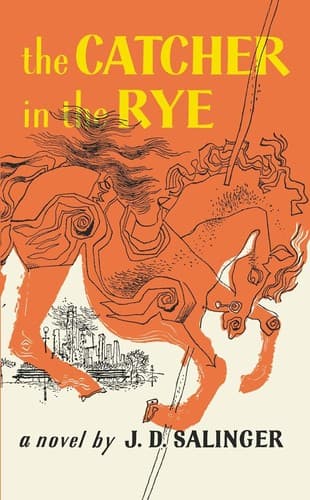
- The Catcher in the Rye
J.D. Salinger
3.8 (2.7M) average on GoodreadsYoung AdultExplores themes of teenage alienation and uses 'The Catcher in the Rye' as a central plot device.
- The Perks of Being a Wallflower
Stephen Chbosky
4.2 (1.3M) average on GoodreadsPsychologyFeatures an introspective, outsider protagonist navigating high school and personal trauma.
- Looking for Alaska
John Green
4.0 (1.1M) average on GoodreadsMysteryBoth King Dork and Looking for Alaska feature a male protagonist who is an intellectual outsider, engaging with a central mystery and exploring themes of friendship, first love, and the search for meaning. However, Green's novel often leans into a more romanticized and philosophical portrayal of adolescence, with profound pronouncements and a more tightly structured mystery. Portman's approach is more gritty, self-deprecating, and less overtly sentimental, offering a less polished, more 'real' depiction of teenage awkwardness and confusion, and its mystery serves more as a character-driven catalyst than a plot-driven puzzle.
- Angels & Demons
Dan Brown
3.9 (2.7M) average on GoodreadsThrillerA Harvard symbologist races through Rome's ancient sites, deciphering cryptic clues to unmask the Illuminati and stop a vengeful plot to destroy the Vatican with a stolen antimatter weapon.
- Gone Girl
Gillian Flynn
4.1 (2.3M) average on GoodreadsThrillerA wife's sudden disappearance on her fifth anniversary reveals a web of lies and psychological warfare, exposing the secrets within a seemingly perfect marriage.
- The Girl on the Train
Paula Hawkins
3.9 (2.1M) average on GoodreadsThrillerA woman’s fascination with a seemingly perfect couple she watches from her daily train commute leads her into a dark investigation when she witnesses something that shatters their idyllic image.





Enjoyed the summary?
A summary gives you the shape of the book. The book itself has the detail, the examples and the voice.
Find King Dork on AmazonAs an Amazon Associate, BookBrief earns from qualifying purchases. How we're funded