

Synopsis
Covers the whole plot, including the ending.
- Difficulty
- Medium
- Pacing
- Moderate
- Mood
- Gritty, Intense, Psychological, Morally ambiguous
- Read it if
- You enjoy intense historical fiction set in WWII POW camps, exploring complex moral dilemmas and the darker side of human nature.
- Skip it if
- You prefer lighthearted stories or are sensitive to graphic depictions of suffering and exploitation.
King Rat Plot Summary
Covers the whole plot, including the ending.
Struggling for Survival in Changi
Peter Marlowe, a young British flying officer, arrives at Changi Prison Camp, Singapore, after being captured by the Japanese. He quickly sees the harsh conditions: starvation, disease, and the constant threat from Japanese guards. Food is scarce, hygiene is absent, and morale is low. Marlowe, an idealist, tries to keep his dignity and follow rules, but he soon sees the desperate actions men take to survive. He notices the clear social order in the camp, where rank offers little protection from hardships, and unofficial economies start, run by the most resourceful prisoners.
Introduction to King
Marlowe soon learns about Corporal King, an American prisoner from Brooklyn, who stands out because of his good health and access to goods. King runs a complex black market, trading with guards and local Malays for food, medicine, and other luxuries. Some call him 'King Rat,' a figure of both anger and respect. Marlowe is at first disgusted by King's apparent lack of morals and his willingness to use other prisoners' desperation, but he cannot deny King's success in the camp's harsh environment. King's ability to get items like fresh eggs and even liquor makes him a powerful, almost untouchable figure.
The Art of the Deal
King's business sense is clear when he gets a skinny dog from a Japanese guard. He carefully fattens it using valuable camp rations and secret deals, which many officers find disgusting because they see it as a waste. His plan is to sell the dog for its meat, a valuable item in the starving camp. Marlowe watches this with both interest and horror. King eventually sells the dog to Australian prisoners for a lot of money, showing his sharp understanding of supply and demand, and his ability to profit from anything, even life.
Marlowe's Desperation and King's Offer
As conditions in Changi worsen, Marlowe, like many others, gets malaria and malnutrition. Weak and confused, he faces death. At this time, King approaches him, offering real help—better food, quinine, and even a mosquito net—in exchange for Marlowe's language skills and his 'officer' status for certain deals. Marlowe, realizing his ideals alone cannot save him, reluctantly agrees. This changes their relationship, as Marlowe starts to see King not just as a profiteer, but as a complex survivor whose methods, while questionable, work.
Forging an Unlikely Alliance
Marlowe, recovering under King's care, becomes an unofficial part of King's group. He helps King with English letters to Malay contacts and acts as a respectable front for some of King's bolder plans. Through this, Marlowe better understands King's reasons and the complex network he has built. He sees King's calculated risks, his charm, and his efficient ruthlessness. Their partnership, born of need, starts to become a strange friendship, with Marlowe dealing with the moral compromises he makes while recognizing King's clear ability to provide. He sees the complicated nature of survival.
The Officer's Council and the Challenge to King
Colonel Smedley-Taylor, a British officer focused on keeping military discipline, becomes worried about King's influence and the widespread black market. He sees King's operations as harming morale and traditional authority. Smedley-Taylor tries to stop the illegal trading, seeing King as a direct challenge to his command. This creates tension between the 'official' hierarchy and King's 'unofficial' power. Smedley-Taylor's efforts mostly fail, as King's network is too deep and too important for many prisoners' survival, showing how traditional rules fail in extreme situations.
The Rice Scam and Betrayal
King, always seeking bigger gains, plans a bold operation to divert a large amount of rice from Japanese supplies meant for the camp. He involves several trusted contacts, including some Japanese guards he has befriended. The plan is risky and complex, needing exact timing and coordination. However, one of King's partners, driven by greed or fear, betrays part of the operation. While King manages to save some of the rice, the betrayal makes him more cautious and shows the constant danger of working in such a high-risk environment where trust is fragile. The incident also shows the limits of King's control.
The End of the War and King's Fate
Rumors of the war's end begin to spread, at first met with doubt but soon confirmed by Allied planes dropping supplies. The camp explodes in joy and chaos. For most prisoners, freedom means returning to normal life. However, for King, the war's end means the end of his rule. His power and influence depended entirely on the unique conditions of the POW camp. With the return of regular authority and the end of the black market, King's network falls apart. He is no longer 'King Rat' but just an American corporal, without his context and power.
The Last Encounter
Immediately after liberation, Marlowe finds King, who is now just another prisoner waiting to go home. King is quiet, his usual confidence gone. He understands that his unique skills, so valuable in Changi, are useless outside. They have a final, thoughtful conversation where King admits the random nature of his power and the moral compromises he made. Marlowe, having seen King's change and his own, feels a complex mix of respect and pity. Their parting is bittersweet, marking the end of an unusual time and the realization that the man who was 'King' in Changi will likely be an ordinary man outside.
Reversal of Fortune
As Allied forces bring order to the freed camp, investigations begin into the illegal activities during captivity. King, despite helping many prisoners survive, is arrested and faces charges related to his black market operations and his dealings with the Japanese. The very system he used to survive now calls him a criminal. Meanwhile, officers like Colonel Smedley-Taylor, who struggled to keep authority during internment, regain their pre-war status and help restore military discipline. This clear reversal shows the random nature of justice and the return to usual morality.
King Rat Characters
Corporal King
Protagonist/Anti-hero
The cunning American POW who dominates Changi's black market.
Corporal King is an American POW, a shrewd and pragmatic survivor from Brooklyn. He possesses an extraordinary understanding of human nature, which he uses to manipulate both fellow prisoners and Japanese guards. King is a master of the black market, capable of procuring almost any item, from food to medicine, by exploiting every opportunity. He is amoral in his methods, driven by a primal need for survival and a desire to maintain a level of comfort and power in the brutal environment of Changi. He is charismatic, intelligent, and utterly ruthless when necessary, earning him the moniker 'King Rat.'
Relationships: Peter Marlowe (Unlikely alliance and friendship, mentor/protégé dynamic); Colonel Smedley-Taylor (Antagonistic, representing opposing ideologies of order and survival); Lieutenant Grey (Subordinate and accomplice in black market activities)
Peter Marlowe
Protagonist/Observer
A young, idealistic British officer who becomes King's confidant.
Peter Marlowe is a British flying officer, initially naive and idealistic, clinging to pre-war notions of honor and military conduct. He arrives in Changi appalled by the conditions and King's methods, but his experiences force him to confront the harsh realities of survival. Marlowe is intelligent, observant, and possesses a strong moral compass, though it is tested repeatedly. He acts as the reader's entry point into King's world, gradually understanding the complexities of King's character and the compromises necessary for survival. He is a sensitive and reflective character, often grappling with the moral ambiguities of the camp.
Relationships: Corporal King (Unlikely alliance and friendship, mentee to King's pragmatism); Lieutenant Grey (Fellow officer, initially disapproving of King but later complicit)
Colonel Smedley-Taylor
Antagonist/Supporting
A rigid British officer who tries to uphold traditional military order.
Colonel Smedley-Taylor is a British officer who represents the entrenched military hierarchy and adherence to traditional rules and discipline. He is obsessed with maintaining order, rank, and a semblance of military conduct within the chaotic environment of Changi. He views King's black market activities as a direct threat to his authority and the integrity of the officer corps. Smedley-Taylor is well-meaning but ultimately ineffective in controlling the camp's unofficial economy, as his rigid worldview is ill-suited to the extreme conditions. He is a symbol of old-world order struggling against new-world pragmatism.
Relationships: Corporal King (Antagonistic, representing opposing forces of order vs. survival); Peter Marlowe (Commanding officer, initially a figure of authority)
Lieutenant Grey
Supporting
An Australian officer who becomes King's accomplice and friend.
Lieutenant Grey is an Australian officer who, despite his rank, finds himself drawn into King's orbit. He is more pragmatic than many of his fellow officers and quickly recognizes King's unique talents for survival. Grey becomes a key accomplice in King's black market schemes, benefiting from the better food and conditions King provides. He is a loyal friend to King, often acting as a buffer or intermediary in deals. Grey represents the officers who, out of necessity, compromised their principles to survive, finding common ground with King despite their differing backgrounds.
Relationships: Corporal King (Friend and accomplice); Peter Marlowe (Fellow officer and sometimes co-conspirator)
The Japanese Guards
Antagonists/Supporting
The often brutal and corrupt captors of Changi.
The Japanese guards are the external oppressors of the POWs, enforcing the harsh conditions of Changi. They are portrayed with varying degrees of brutality, sadism, and occasional, surprising humanity. Crucially, many are also shown to be corruptible, willing to trade with King for profit, thus becoming unwitting participants in his black market. They represent the ultimate power structure, but their human flaws – greed, boredom, and a desire for small luxuries – are expertly exploited by King. Their presence creates the constant threat and desperation that defines life in the camp.
Relationships: Corporal King (Trading partners, often adversarial but mutually beneficial); All POWs (Captors and oppressors)
Captain McCabe
Supporting
A British officer who represents the breakdown of traditional military values.
Captain McCabe is a British officer whose character exemplifies the corrosive effects of prolonged captivity and starvation. He is often depicted as weak, sickly, and morally compromised, struggling to maintain any semblance of his former self. Unlike King, he lacks the resourcefulness to thrive, and unlike Smedley-Taylor, he lacks the rigid adherence to rules. He is a poignant example of a man broken by the camp, highlighting the vulnerability of even officers when faced with extreme deprivation and the loss of dignity.
Relationships: Colonel Smedley-Taylor (Subordinate, representing the failing officer class); Corporal King (Recipient of King's 'charity' or goods, often unknowingly)
The Malays
Mentioned/Supporting
Local inhabitants who are crucial to King's black market operations.
The Malays are the local population living outside the camp, with whom King establishes illicit trading networks. They are never fully developed characters but represent the external world and the source of the goods King procures. Their willingness to trade with King highlights the pervasive corruption and the blurred lines between captor, captive, and local civilian in wartime. They are essential to King's ability to maintain his power and provide for himself and his associates.
Relationships: Corporal King (Trading partners)
King Rat Themes
Survival at Any Cost
The novel shows how far people will go to survive in extreme conditions. Changi removes social rules, revealing a basic drive for self-preservation. King represents this, using his cleverness to get food, medicine, and comfort, even at others' expense. Scenes like King fattening and selling the dog, or Marlowe accepting King's illegal help, show the moral compromises made when facing starvation and disease. The story questions if morality can exist in such a brutal place, suggesting that survival often means letting go of usual ethics.
“In Changi, the only rule was to survive. Everything else was commentary.”
The Nature of Power and Authority
The book explores how power changes and appears in a lawless environment. Traditional military rank and authority, shown by Colonel Smedley-Taylor, become largely unimportant in Changi. Instead, power goes to those who can provide for others, like King, whose control over the black market gives him great influence. His power is unofficial, earned through resourcefulness and exploitation, not given by rank. The conflict between Smedley-Taylor's attempts to create order and King's actual rule shows how fragile traditional authority is when basic needs are not met. This theme shows how need redefines leadership.
“King ruled by supply and demand, not by rank.”
Moral Ambiguity and Compromise
King Rat looks at the complex parts of morality, making characters and readers question what is 'right' when survival is at risk. King is an anti-hero whose actions, while often selfish, also save lives and offer hope. Marlowe's internal struggle, as he slowly joins King's plans, shows this theme. The novel suggests that extreme situations blur the lines between good and bad, and that 'bad' actions can come from a strong will to live. The book challenges simple moral judgments, showing characters as complex results of their environment.
“He was a rat, a king rat, and in this stinking cage, a rat was king.”
Class and Social Hierarchy
Despite the shared suffering of the POWs, class differences and social structures remain, and are even reversed, in Changi. British officers, used to privilege, find their status reduced and their traditional values challenged. American enlisted men, like King, who are more used to a system based on merit or business, become important. The novel shows the tension between the 'gentlemen' officers and the 'common' men, especially the anger directed at King by those who feel their social standing is threatened. This theme explores how crisis can show the superficiality of inherited status.
“Rank meant nothing when you were starving. Only food mattered.”
Plot Devices & Literary Techniques
The Black Market
The unofficial economy that sustains life and power in Changi.
The black market is the central plot device, driving much of the narrative and King's actions. It is the lifeblood of Changi, providing essential goods like food, medicine, and even small luxuries that the Japanese captors deny the prisoners. It allows King to establish his power, manipulate both prisoners and guards, and ultimately survive. The black market serves as a microcosm of capitalism in its most raw form, where resourcefulness, risk-taking, and exploitation dictate success. Its existence highlights the failure of official systems and the ingenuity of individuals under duress.
The Dog
A symbol of King's cunning and the camp's moral degradation.
The dog is a potent symbol in the novel. Initially a scrawny, unwanted creature, King's decision to acquire, fatten, and then sell it for meat is a masterstroke of his entrepreneurial spirit. It symbolizes King's ability to turn anything into profit and highlights the extreme hunger and moral compromises of the camp. The dog's transformation from pet to commodity underscores the dehumanizing conditions of Changi, where even animal life is valued solely for its caloric content, reflecting the prisoners' own struggle for survival.
The Contrast between King and Smedley-Taylor
A thematic juxtaposition of pragmatism versus traditional order.
The stark contrast between Corporal King and Colonel Smedley-Taylor serves as a crucial plot device to explore the novel's central themes. King embodies raw, amoral pragmatism and effective leadership in extreme circumstances, while Smedley-Taylor represents rigid adherence to traditional military hierarchy and outdated ideals. Their ongoing conflict, though often indirect, highlights the breakdown of conventional authority and the emergence of a new power structure based on survival skills. This duality allows Clavell to critically examine different approaches to leadership and morality when faced with absolute desperation.
Marlowe's Perspective
The narrative lens through which the reader experiences Changi and King.
Peter Marlowe serves as the primary point-of-view character, allowing the reader to experience the horrors of Changi and the complexities of King's character through a relatively innocent and morally conflicted lens. His initial idealism and subsequent disillusionment provide a relatable emotional arc. Marlowe's observations and internal monologues guide the reader through the moral ambiguities of the camp, making King's actions more comprehensible, if not always palatable. This device allows for a gradual unveiling of the camp's brutal realities and King's unique genius, fostering a deeper understanding of the survival theme.
King Rat Quotes
“There’s no justice in the jungle—there’s only expediency.”
“Money's not important. What's important is what money can buy.”
“Hope is a good breakfast but a poor supper.”
“The only thing that matters is not to die. Everything else is secondary.”
“The greater the risk, the greater the profit.”
“You can always tell a man by the way he treats those who can do nothing for him.”
“Fear is a powerful weapon, and it's always in your own mind.”
“In a world without rules, the only rule is to survive.”
“The worst part of being a prisoner is not the lack of freedom, but the loss of dignity.”
“Every man has his price, you just have to find it.”
“Food is power. And power is life.”
“When you have nothing, you have nothing to lose.”
“The jungle doesn't care who you are, only what you can do.”
“The war isn't over when the fighting stops, it's over when the memories stop.”
Quiz
10 questions on the plot and the characters. Each answer comes with a short explanation.
Question 1
What is King Rat's real name?
- Peter Marlowe
- Corporal John Marlowe
- Corporal King
- The novel never reveals his real name
Show answer
D. The novel never reveals his real name King Rat's true name is never explicitly revealed in the novel, adding to his enigmatic and almost mythical status within the camp.
Question 2
What is King Rat's primary method for obtaining goods and power within the Changi prison camp?
- Directly stealing from the Japanese guards
- Trading and black market operations, often involving rats
- Gambling with the Japanese officers
- Organizing mass prisoner revolts to seize supplies
Show answer
B. Trading and black market operations, often involving rats King Rat establishes a sophisticated black market system, most famously trading 'rat meat' as a delicacy to officers and using his network to acquire and distribute goods for profit and influence.
Question 3
Which character serves as King Rat's main confidant and, at times, his conscience, despite being British?
- Lieutenant Grey
- Colonel Smedley
- Peter Marlowe
- Major McCoy
Show answer
C. Peter Marlowe Peter Marlowe, a British officer, becomes King Rat's closest associate and the primary lens through which the reader observes King Rat's operations and motivations.
Question 4
What significant event marks the beginning of the end for King Rat's dominance and the established camp hierarchy?
- A successful escape attempt by a group of prisoners
- The arrival of new, stricter Japanese guards
- The dropping of the atomic bomb and the end of the war
- A major disease outbreak that decimates the camp
Show answer
C. The dropping of the atomic bomb and the end of the war The sudden end of World War II, brought about by the atomic bombs, renders King Rat's carefully constructed empire and black market obsolete, as liberation means an end to the conditions that allowed him to thrive.
Question 5
What is Lieutenant Grey's primary role and motivation in the camp, particularly concerning King Rat?
- He is a fellow black marketeer working with King Rat.
- He is a medical officer trying to improve health conditions.
- He represents the traditional British officer class and despises King Rat's lack of decorum and common rank.
- He is a Japanese spy embedded within the prisoner population.
Show answer
C. He represents the traditional British officer class and despises King Rat's lack of decorum and common rank. Lieutenant Grey embodies the rigid class structure and moral code of the British military, viewing King Rat's entrepreneurship and American informality with disdain and a sense of moral outrage.
Question 6
What symbolic importance do the 'rats' hold in the novel's narrative and King Rat's operations?
- They are a direct source of food for all prisoners.
- They represent the filth and disease of the camp.
- They are a high-value commodity, traded as exotic meat to Japanese officers, symbolizing King Rat's ability to profit from desperation.
- They are pets kept by some prisoners for companionship.
Show answer
C. They are a high-value commodity, traded as exotic meat to Japanese officers, symbolizing King Rat's ability to profit from desperation. Rats are central to King Rat's black market, particularly his trade of 'rat meat' as a delicacy to the Japanese. This symbolizes his cunning and ability to turn even the most abject circumstances into profit and power.
Question 7
How does King Rat primarily view the concept of 'rank' and 'officer class' within the prison camp?
- He respects it and tries to uphold traditional military discipline.
- He sees it as an outdated and irrelevant construct, often exploiting its weaknesses for his own gain.
- He attempts to gain officer rank himself to legitimize his power.
- He uses it as a tool to gain favor with the Japanese guards.
Show answer
B. He sees it as an outdated and irrelevant construct, often exploiting its weaknesses for his own gain. King Rat largely dismisses traditional military rank as meaningless in the brutal environment of the prison camp, viewing it as an artificial construct that he can manipulate or disregard to serve his own pragmatic interests and power accumulation.
Question 8
What is the ultimate fate of King Rat at the end of the novel, immediately after the war's conclusion?
- He is executed by the Japanese for his black market activities.
- He is promoted to a high rank for his leadership during captivity.
- He is freed, but his power and influence vanish, leaving him a mere corporal once more.
- He decides to remain in Southeast Asia and continue his trading empire.
Show answer
C. He is freed, but his power and influence vanish, leaving him a mere corporal once more. With the war's end, King Rat's empire collapses. He is simply a corporal again, his extraordinary power and influence evaporating as the conditions that enabled them disappear, leaving him with a sense of loss and uncertainty.
Question 9
The novel explores the theme of 'survival' in extreme conditions. How does King Rat's approach to survival differ fundamentally from that of characters like Lieutenant Grey or most British officers?
- King Rat prioritizes physical survival through any means, while others focus on maintaining dignity and moral codes.
- King Rat focuses on collective survival, while others are purely selfish.
- King Rat relies on spiritual faith, while others are atheists.
- King Rat seeks to escape, while others resign themselves to captivity.
Show answer
A. King Rat prioritizes physical survival through any means, while others focus on maintaining dignity and moral codes. King Rat's survival strategy is purely pragmatic and amoral, focused on physical well-being and power through exploitation. In contrast, many British officers, like Grey, prioritize maintaining their class distinctions, dignity, and a sense of 'Englishness' even at the cost of physical comfort or life.
Question 10
What specific type of animal does King Rat breed in secret to sell to the Japanese officers?
- Chickens
- Pigs
- Dogs
- Rabbits
Show answer
D. Rabbits Beyond the symbolic 'rat meat,' King Rat also secretly breeds rabbits, presenting them as a rare delicacy (often disguised as chicken or other meats) to Japanese officers, further demonstrating his entrepreneurial cunning.
King Rat FAQ
What is the core premise of 'King Rat' and where is it set?
'King Rat' is set in a brutal Japanese prisoner-of-war camp in Malaya during World War II. It explores the struggle for survival and dominance among the Allied prisoners, focusing on an American corporal who rises to power through his cunning and exploitation of the camp's desperate conditions.
Who is the 'King Rat' and what makes him so powerful in the camp?
The 'King Rat' is Corporal King, an American prisoner. He gains immense power by mastering the black market, trading in goods like food, medicine, and even diamonds, which he acquires through various illicit means and connections with the Japanese guards and local villagers. His ability to provide luxuries and necessities gives him influence over both prisoners and captors.
Who is Peter Marlowe and what is his relationship with Corporal King?
Peter Marlowe is a young, idealistic British officer, initially naive to the camp's harsh realities. He becomes King's closest confidant and assistant, initially viewing King with admiration and later with a complex mix of respect, fascination, and moral unease as he witnesses King's ruthlessness.
What role does Lieutenant Grey play in the narrative?
Lieutenant Grey is a rigid and morally upright British officer who despises King and views him as a corrupting influence. He represents the traditional military hierarchy and moral code, constantly trying to expose and undermine King's operations, leading to significant conflict.
How do the Japanese guards impact the prisoners' lives beyond direct brutality?
The Japanese guards, particularly Sergeant Goro, are often corruptible and willing to participate in King's black market schemes for personal gain. This complicity not only facilitates King's power but also highlights the moral decay affecting all parties within the camp's desperate environment, blurring lines between captor and captive.
Are there any subtle indications of King's past that contribute to his current mindset?
While King's past is largely shrouded in mystery, there are hints that he comes from a background of poverty and hardship in the United States, possibly involving criminal activities. This background likely instilled in him the survival instincts and moral flexibility that he so effectively employs in the camp.
What is the significance of the 'rat' motif throughout the book?
The 'rat' motif is multifaceted. It refers literally to the rats the prisoners eat for survival, highlighting their desperation. Metaphorically, King is the 'King Rat' – a survivor thriving in the filth and darkness, exploiting others like a rat, but also a provider for his 'colony' in a perverse way. It also symbolizes the dehumanization of the prisoners.
Is there a specific scene or interaction that foreshadows King's ultimate fate or the end of his reign?
The arrival of the Allied forces and the impending liberation of the camp gradually foreshadow King's loss of power. His black market empire relies on the unique conditions of the POW camp, and as those conditions change, his influence wanes, leading to his inevitable return to anonymity and the dismantling of his carefully constructed world.
How does Corporal King manipulate the psychological needs of the prisoners?
King masterfully manipulates the prisoners' most basic psychological needs: the need for food, medicine, and a semblance of comfort or hope. By being the sole provider of these scarce resources, he creates a dependency that allows him to exert control and command loyalty, even from those who morally object to his methods.
What psychological impact does the camp environment have on Peter Marlowe?
The camp profoundly impacts Peter Marlowe, stripping away his youthful innocence and forcing him to confront the moral ambiguities of survival. He experiences a psychological journey from naive idealism to a more cynical, yet understanding, view of human nature, shaped by his close observation of King.
How does Lieutenant Grey's rigid morality function as both a strength and a weakness in the camp's context?
Lieutenant Grey's rigid morality provides him with a strong sense of purpose and integrity, allowing him to resist King's corrupting influence. However, it also makes him inflexible and unable to adapt to the extreme conditions, isolating him and making him less effective in the practical struggle for survival and prisoner welfare.
In what ways does King's leadership style differ from traditional military leadership, and why is it effective in this unique setting?
King's leadership is not based on rank or official authority but on his ability to provide and protect through illicit means. Unlike traditional military leadership, which relies on established hierarchy and rules, King's effectiveness stems from his pragmatism, ruthlessness, and understanding that in a lawless environment, survival dictates its own morality.
Is King ultimately a villain or a necessary evil for the survival of some prisoners?
This is a central debate. King is undeniably ruthless and exploits others for personal gain, making him a villain in traditional terms. However, his black market operations also provide vital food, medicine, and hope, arguably saving lives where official channels failed. He represents a necessary evil, thriving in a morally bankrupt system.
Does the novel suggest that all human beings would resort to King's methods under similar circumstances?
The novel doesn't suggest that *all* would, as evidenced by characters like Grey and Marlowe who resist or struggle with King's methods. However, it strongly implies that extreme circumstances reveal the darker, more pragmatic aspects of human nature and that survival often necessitates compromising conventional morality, highlighting the fragility of civilization.
What is the broader message about war and humanity that 'King Rat' conveys?
'King Rat' conveys a bleak message about war's dehumanizing effects, showing how it strips away societal norms and forces individuals to confront their most primal instincts. It argues that war doesn't just kill, but corrupts, revealing the capacity for both extraordinary resilience and profound moral compromise in the human spirit.
How does the ending, with the arrival of the Allies, impact the reader's perception of King?
The ending, where King loses his power and becomes just another man as the camp is liberated, underscores the ephemeral nature of his empire. It forces the reader to see him outside the unique context of the camp, questioning whether his skills are transferable or if he was merely a product of extreme circumstances, leaving his true character open to final judgment.
What is the symbolic significance of King giving Peter Marlowe his last diamond?
King giving Marlowe his last diamond is a complex gesture. It could symbolize a final act of friendship or gratitude for Marlowe's loyalty, a passing of the torch of 'survival wisdom,' or perhaps a recognition of Marlowe's innate goodness that King himself, for all his power, could not fully corrupt. It's a parting gift from one who understood the value of such a thing in a world where it meant everything.
About the author
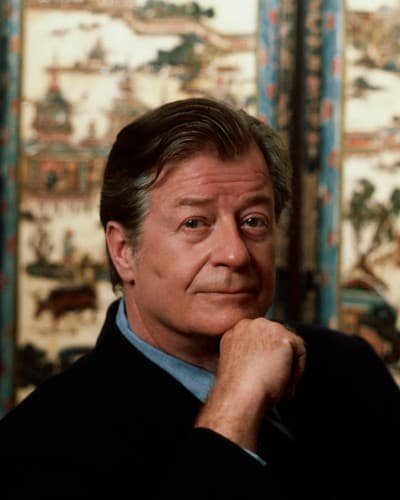
James Clavell was a British author and screenwriter known for his historical fiction set in Asia. His notable works include "Shōgun," a sweeping epic about a British navigator in feudal Japan, and "King Rat," which explores life in a Japanese POW camp during World War II. Clavell's writing often reflects his experiences as a prisoner of war and his interest in Eastern culture.
Similar books
- Unbroken: A World War II Story of Survival, Resilience and Redemption
Laura Hillenbrand
4.4 (767k) average on GoodreadsBiographyBiographical account of extreme endurance and suffering as a WWII POW.
- Catch-22
Joseph Heller
4.0 (723k) average on GoodreadsHistorical FictionExplores the absurdities and moral compromises of war, with a focus on survival.
- Harry Potter and the Sorcerer's Stone
J.K. Rowling
4.5 (7M) average on GoodreadsFantasyRescued from a miserable life under the stairs, an orphaned boy discovers he's a wizard destined for a magical school, where he uncovers a dangerous secret tied to the dark wizard who murdered his parents.
- The Hunger Games
Suzanne Collins
4.3 (6.4M) average on GoodreadsFantasyIn a future where children fight to the death on live television, Katniss Everdeen volunteers for the arena, turning a death sentence into a fight for survival and a spark of rebellion.
- 1984
George Orwell
4.2 (3.1M) average on GoodreadsPoliticsIn a future where surveillance and thought control are absolute, a man's search for truth clashes with the Party, showing that hope can be a form of rebellion.
- Divergent
Veronica Roth
4.2 (2.9M) average on GoodreadsFantasyIn a society divided by virtues, a sixteen-year-old's difference from the norm starts a rebellion that threatens her world.





Enjoyed the summary?
A summary gives you the shape of the book. The book itself has the detail, the examples and the voice.
Find King Rat on AmazonAs an Amazon Associate, BookBrief earns from qualifying purchases. How we're funded