

Synopsis
Covers the whole plot, including the ending.
- Difficulty
- Medium
- Pacing
- Slow
- Mood
- Reflective, Contemplative, Poignant, Hopeful
- Read it if
- You enjoy allegorical tales about life's purpose, artistic creation, and the balance between personal passion and societal duty, especially if you appreciate Tolkien's philosophical side.
- Skip it if
- You prefer fast-paced plots with clear conflicts and resolutions, or are looking for a traditional fantasy adventure.
Leaf by Niggle Plot Summary
Covers the whole plot, including the ending.
Niggle's Great Painting
Niggle is an artist, not famous, obsessed with one painting. It started with a single, detailed leaf, but grew into a huge tree with many unique leaves and a vast landscape. He knows he needs to finish it because a long journey awaits him, one he does not expect to return from. Despite his strong wish to work on his art, Niggle is constantly pulled away by the small, often unimportant needs of his neighbors and daily life. His painting, a reflection of his deepest desires, stays unfinished.
The Demands of Parish
Niggle's most frequent distraction is his neighbor, Parish. Parish is a simple, practical man who is often sick and needs Niggle's help with household tasks. Parish, though grateful for Niggle's kindness, does not understand art and sees Niggle's painting supplies as just wood for repairs. Niggle, being kind, always helps Parish, whether fetching medicine or fixing a leaky roof. These acts of kindness, while good, take away from the precious time Niggle wants to spend on his masterpiece, leaving him frustrated and his painting incomplete.
The Summons
As time passes, Niggle becomes more aware of his upcoming journey. He receives a 'summons' from the Inspectors, a notice that means his time is almost up. This makes him want to finish his painting even more, but also makes him feel the weight of his unfulfilled goal. He tries to work faster, but interruptions continue, and his health starts to decline. He knows he must leave soon, but the thought of his unfinished tree, his life's work, bothers him and causes him regret.
The Workhouse
One day, two Inspectors arrive and take Niggle away. He is brought to a 'Workhouse,' a place of plainness and repetitive tasks. Here, he is given a bicycle to fix and then to ride, doing endless, monotonous loops. This place has no creative outlet, a sharp contrast to his artistic leanings. He is not unhappy, but he is not fulfilled. The Workhouse represents a period of necessary, if uninspiring, labor, where he must learn to be useful and efficient, free from his artistic worries and distractions.
A Period of Reflection
After some time in the Workhouse, Niggle moves to a small cottage in a quiet, natural setting. Here, he does simple tasks like digging and weeding, and he feels a deep sense of peace and healing. The air is clean, the sun is warm, and the work is simple and satisfying. This time allows him to recover from the exhaustion and frustration of his old life. It is a time of quiet thought, where he can process his past and prepare for what comes next, free from the pressures of his art and the demands of others.
The Journey Continues
Niggle continues his journey, riding a train through a vast, green landscape. As he looks out the window, he starts to recognize parts of the scenery. The trees, the hills, the very light—it all feels strangely familiar, as if he has seen it before. There is a sense of expectation and wonder as he realizes he is nearing something important. The journey is not just physical; it is a spiritual progress, bringing him closer to his deepest artistic visions.
The Tree and the Mountain
The train stops, and Niggle steps out into a beautiful landscape. Before him is a magnificent Tree, huge and glorious, with every leaf perfectly formed and shining. Beyond the Tree, a grand Mountain rises, covered in snow and mist. To his surprise, Niggle realizes this is the world he tried to paint, but now it is real, complete, and perfect. He recognizes individual leaves and branches, and the whole scene matches his artistic vision, but with a grandeur he could only dream of.
Meeting Parish Again
To Niggle's surprise, Parish is also there. Parish is no longer frail or demanding; he is healthy, energetic, and eager to help. Together, they work on the Tree, not painting it, but caring for it, clearing weeds, and ensuring its health. Parish's practical skills, once a distraction, are now valuable in keeping the living masterpiece well. Their roles have changed; Parish, who once relied on Niggle, now helps care for Niggle's vision, showing a new understanding and appreciation for the beauty before them. They work in harmony, each adding their unique strengths.
The Further Country
After working on the Tree with Parish for a while, Niggle feels a sense of completion and readiness. The Tree is perfect, and he has helped maintain it and understand it. He hears a gentle, inviting voice suggesting it is time for him to move on to the 'Further Country.' This means a new stage in his journey, moving beyond the beautiful landscape he helped create. He leaves with a sense of peace and fulfillment, knowing his work has found its true expression and purpose, and that he is now ready for new experiences.
The Tree's Legacy
The Tree and the Mountain remain, becoming an important landmark for other travelers. It is a place of rest, beauty, and inspiration. The beauty that Niggle had only imagined, and Parish had only seen as practical, now brings comfort and joy to many others. It becomes known as 'Niggle's Parish,' showing the combined efforts and eventual agreement of the artist and the practical man. The story ends with the understanding that Niggle's true masterpiece was not just his painting, but the lasting beauty and benefit it gave to others in the 'further country.'
Principal Figures
Niggle
Protagonist
A kind-hearted, somewhat impractical artist obsessed with a grand painting.
Niggle is an artist driven by a deep, almost spiritual, desire to create a perfect painting of a tree with a vast landscape. He is kind and obliging, often putting the needs of others before his own artistic pursuits. This inherent goodness, however, frequently leads to distractions and delays in his work, causing him frustration and a sense of incompleteness. He is an idealist, seeing beauty in the smallest details, but struggles with the practicalities of life and the demands of his neighbors. His primary drive is to realize the profound vision he holds in his mind's eye before his inevitable journey.
Relationships: Parish (Neighbor who frequently interrupts Niggle; later, a fellow caretaker of the Tree.); Inspectors (Bureaucratic figures who summon Niggle for his journey.)
Parish
Supporting
Niggle's practical, often ailing neighbor who inadvertently hinders his artistic progress.
Parish is Niggle's neighbor, a simple, practical man who frequently falls ill and needs Niggle's help. He is focused on the immediate and tangible, viewing Niggle's art supplies as mere materials for repairs rather than tools for creation. While not malicious, his constant demands for assistance inadvertently pull Niggle away from his painting. He represents the everyday, mundane responsibilities that often conflict with artistic or spiritual pursuits. His motivation is survival and practicality, contrasting sharply with Niggle's idealistic drive.
Relationships: Niggle (Neighbor who receives Niggle's help; later, a companion in the 'further country'.)
The Inspectors
Mentioned
Impersonal figures representing the inevitable call of duty and the end of life.
The Inspectors are unseen, bureaucratic entities who issue Niggle's 'summons' for his journey. They represent the unavoidable forces of fate, time, and perhaps even divine judgment that dictate the course of life and the transition to the afterlife. They are not characters in the traditional sense, but rather a symbolic presence, embodying the external pressures and ultimate accountability that every individual faces. Their role is to ensure that Niggle fulfills his destiny, even if it means interrupting his cherished work.
The Voice
Mentioned
A gentle, guiding presence in the 'further country' that directs Niggle's journey.
The Voice is an unseen, benevolent entity that offers guidance and encouragement to Niggle in the 'further country.' It is a symbol of higher wisdom, compassion, and ultimate purpose. The Voice affirms Niggle's worth and the value of his work, and gently directs him towards the next stage of his spiritual journey. It represents a divine or transcendent authority that recognizes and rewards Niggle's true intentions and the goodness of his heart, providing comfort and clarity in the afterlife.
Relationships: Niggle (Offers Niggle guidance and affirmation.)
Themes & Insights
Art and Creation
The story explores the strong desire to create art and the effort to realize a grand vision. Niggle's painting is not just a hobby; it is his soul's expression, a visible form of an inner world he feels he must share. The theme covers the artistic process, the careful detail, the broad scope, and the frustration of interruptions. Ultimately, it suggests that true art goes beyond the canvas, finding its fullest form not just in painting, but in the spiritual realm where Niggle's vision becomes real and helps others. His unfinished earthly work highlights that perfect creation often lies beyond human limits.
“It began with a single leaf, a perfect leaf, and then he must needs try to paint the tree from which it came.”
Duty and Service
This theme examines the conflict between personal goals and the need to help others. Niggle's kindness and willingness to help Parish, though good, constantly pull him away from his art. The story suggests that true fulfillment might involve balancing these two parts, showing that selfless acts, even if they delay personal projects, are ultimately valuable and part of one's larger purpose. His time in the Workhouse, though ordinary, can be seen as a necessary period of learning to serve without artistic distraction, preparing him for the shared care of the Tree in the 'further country.'
“He was a very kind man, and he spent a lot of time doing things for other people.”
The Journey of Life and Death
The narrative is an allegory for life's journey, the certainty of death, and what comes next. Niggle's 'long journey' and the 'summons' from the Inspectors clearly mean death. The Workhouse and the quiet cottage represent different stages of purification or preparation after death. The 'further country' with the Tree and Mountain represents a form of afterlife or heaven, where one's true intentions and good deeds are realized and become part of a perfected reality. The story offers a hopeful view of death, showing it not as an end, but as a transition to a place where one's deepest hopes can finally be met and understood.
“He had a long journey to make, and he did not expect to return.”
Community and Interdependence
The relationship between Niggle and Parish highlights community and how people, despite their differences, are connected. Initially, their relationship is one of duty and annoyance, with Parish's practical needs hindering Niggle's art. However, in the 'further country,' their roles are balanced, and they work together to care for the magnificent Tree. This change suggests that true community involves mutual support and appreciation for different skills, where even seemingly unrelated contributions ultimately serve a greater, shared good. The Tree itself becomes a place of rest and benefit for all travelers, symbolizing the lasting positive effect of a well-cared-for community.
“It was Niggle's Parish, of course, and the Tree was Niggle's Tree, but it was also Parish's Tree, and they both knew it.”
Plot Devices & Literary Techniques
Allegory
The entire story functions as an allegorical representation of life, death, and the afterlife.
Every major element in 'Leaf by Niggle' serves a symbolic purpose. Niggle represents the artist or any individual striving for a grand purpose. His painting symbolizes one's life's work or spiritual aspirations. Parish embodies the mundane, practical duties and distractions of daily life. The 'long journey' and 'summons' are clear metaphors for death. The Workhouse and the quiet cottage represent stages of spiritual purification or reflection in an afterlife. The Tree and Mountain in the 'further country' symbolize a perfected, heavenly realm where good intentions and true art are realized. This allegorical structure allows Tolkien to explore profound theological and philosophical ideas in a concise narrative.
Symbolism of the Tree
The Tree represents Niggle's artistic vision, spiritual growth, and ultimately, a perfected reality.
The Tree is the central symbol of the story. It begins as a single, perfectly detailed leaf, reflecting Niggle's meticulous attention to beauty. As it grows into a vast, complex tree with a landscape, it symbolizes his evolving artistic vision and the grandness of his inner world. More profoundly, in the 'further country,' the Tree becomes a living, complete entity, representing a perfected reality or a form of heaven where his fragmented earthly efforts find ultimate fulfillment. Its eventual role as a resting place for other travelers signifies the lasting impact and benefit of genuine creation and service, transcending the individual artist.
The Journey Metaphor
The recurring motif of a 'journey' signifies the progression through life, death, and the afterlife.
The idea of a 'journey' is introduced early, with Niggle knowing he has 'a long journey to make.' This is a clear metaphor for the passage through life and the transition into death. His being taken to the Workhouse, then to the cottage, and finally by train to the 'further country' all represent stages of this journey. The journey highlights themes of fate, preparation, and transformation. It suggests that life is a purposeful progression, and that even after death, there are further stages of experience and growth, leading towards a greater realization of self and purpose.
Leaf by Niggle Quotes
“He was a very tiny man, and he had a very small house; but he had a large garden, and in the garden there was a tree, and in the tree there was a bird, and in the bird there was a song, and in the song there was a meaning.”
“He used to spend a whole day on one leaf, trying to get it exactly right.”
“But he never got a whole tree. It was all leaves.”
“Poor Niggle! He was not a bad man, really, but he was muddled.”
“Presently he had to get ready for his journey. It was a long journey, and there was no time to waste.”
“The only thing that really mattered was the Tree, and Niggle had to leave it.”
“He found himself in a railway carriage, with a small luggage-rack above his head, and nothing in it.”
“It was a dark place, and it was cold. But he was not afraid.”
“There were two voices. One was kind, and the other was stern. Both were just.”
“It was a real tree. It was Niggle's Tree, finished at last.”
“And with it was all the country that he had imagined.”
“He had only made a start on the journey, and the Tree was only a beginning.”
“It was a place where things were finished, but also where things went on.”
“It was part of the Great Story, which he had been trying to tell.”
“And it was a good journey, and a good ending.”
Quiz
10 questions on the plot and the characters. Each answer comes with a short explanation.
Question 1
What is Niggle's primary artistic pursuit throughout the story?
- Sculpting intricate statues
- Writing epic poems
- Painting a magnificent tree leaf by leaf
- Composing musical symphonies
Show answer
C. Painting a magnificent tree leaf by leaf Niggle is an artist who dedicates his life to painting a single, magnificent tree, adding each leaf with meticulous detail.
Question 2
What is the name of Niggle's neighbor who frequently requires his help?
- Parish
- Smith
- Brown
- Jones
Show answer
A. Parish Niggle's neighbor, Parish, is a constant source of distractions, frequently asking for help with various tasks, which pulls Niggle away from his painting.
Question 3
What specific request does Parish make of Niggle that involves his art supplies?
- To paint Parish's portrait
- To use his canvases as sails for a boat
- To help fix his leaking roof using Niggle's art supplies
- To lend him his paintbrushes for cleaning
Show answer
C. To help fix his leaking roof using Niggle's art supplies Parish asks Niggle to help mend his leaking roof, suggesting that Niggle use his art supplies for the repair, highlighting the conflict between Niggle's art and his duty to others.
Question 4
What is the primary obstacle preventing Niggle from completing his masterpiece?
- Lack of artistic skill
- A shortage of painting materials
- His kind-hearted nature and willingness to help others
- A lack of inspiration for his tree painting
Show answer
C. His kind-hearted nature and willingness to help others Niggle's inherent kindness and readiness to assist his neighbors, particularly Parish, constantly interrupt his work and prevent him from fully dedicating himself to his painting.
Question 5
What happens to Niggle when he is 'sent on a journey'?
- He goes on a vacation to the seaside.
- He is taken to a workhouse, reflecting a form of purgatory.
- He is transported to a grand art exhibition.
- He receives a prestigious award for his painting.
Show answer
B. He is taken to a workhouse, reflecting a form of purgatory. Niggle is 'sent on a journey' which leads him to a workhouse, a place of reflection and necessary toil, often interpreted as a purgatorial experience where he processes his life's deeds.
Question 6
What does Niggle eventually find in the 'country' he travels to after his time in the workhouse?
- A new, even larger canvas to start over.
- His completed tree, exactly as he had envisioned it, and even more.
- Parish, still needing his roof fixed.
- A gallery filled with other artists' masterpieces.
Show answer
B. His completed tree, exactly as he had envisioned it, and even more. After his journey and time in the workhouse, Niggle arrives in a country where he finds his tree, fully realized and even more magnificent than he could have painted it, implying a divine completion of his earthly efforts.
Question 7
What is the symbolic significance of Niggle's tree in the story?
- It represents his unfulfilled potential and failures.
- It symbolizes the fleeting nature of artistic endeavors.
- It embodies his life's purpose, his unique contribution, and his spiritual journey.
- It is merely a hobby to pass the time.
Show answer
C. It embodies his life's purpose, his unique contribution, and his spiritual journey. The tree is a central symbol, representing Niggle's life's work, his unique vision, and ultimately his spiritual journey and the lasting value of his efforts, both artistic and charitable.
Question 8
Who is the 'Second Voice' that discusses Niggle and Parish at the end of the story?
- An art critic reviewing Niggle's work.
- A historian documenting their lives.
- A divine or administrative figure assessing their lives and contributions.
- Parish's relative commenting on their friendship.
Show answer
C. A divine or administrative figure assessing their lives and contributions. The 'Second Voice' (and the 'First Voice') are implied to be higher authorities, possibly angelic or divine, who are evaluating Niggle and Parish's lives and their respective contributions, especially in how they impacted each other.
Question 9
What is the ultimate fate of Parish, according to the 'voices' at the end of the story?
- He continues to live in his old house, forever needing help.
- He joins Niggle in the 'country' and helps him tend the garden.
- He becomes a famous roof repairman.
- He is sent to a different workhouse, separate from Niggle.
Show answer
B. He joins Niggle in the 'country' and helps him tend the garden. The 'voices' reveal that Parish, after his own journey, eventually joins Niggle in the 'country' and helps him tend the garden that has grown around Niggle's tree, indicating a harmonious resolution to their earthly relationship.
Question 10
What is a major theme explored through Niggle's journey and his relationship with Parish?
- The importance of strict isolation for artistic creation.
- The conflict between personal ambition and selfless service, and their ultimate reconciliation.
- The futility of all human endeavors.
- The necessity of prioritizing material wealth over artistic expression.
Show answer
B. The conflict between personal ambition and selfless service, and their ultimate reconciliation. The story deeply explores the tension between Niggle's desire to complete his art (personal ambition) and his compassionate nature leading him to help Parish (selfless service). Ultimately, it suggests that these are not mutually exclusive but can contribute to a greater, divinely orchestrated purpose.
Leaf by Niggle FAQ
What is the central conflict Niggle faces regarding his painting and his neighbor, Parish?
Niggle's central conflict revolves around his desire to perfect his magnificent tree painting, his life's work, versus his obligations to his demanding neighbor, Parish. Parish frequently requires Niggle's assistance with mundane tasks, such as repairing his roof, which Niggle often helps with, even using his valuable art supplies, thus hindering his artistic progress and consuming his limited time.
Describe the nature of Niggle's 'masterpiece' painting. What specific elements does it contain?
Niggle's masterpiece is a vast, complex painting of a tree, initially starting with a single leaf but growing to encompass an entire forest, distant mountains, and even a glimpse of the Sea. It's not just a tree but a complete landscape, intricately detailed with countless leaves, branches, birds, and flowers, representing his unique vision of the world.
What happens to Niggle when he is 'called away' by the Inspector?
When Niggle is 'called away' by the Inspector, he is taken to a 'Workhouse' or 'Correctional Institution,' a sort of purgatorial stop where he is made to perform tedious, simple tasks. This period serves as a form of purification or preparation, forcing him to learn practical skills and prioritize, reflecting the time he spent helping Parish and neglecting his art.
How does Niggle's relationship with Parish evolve throughout the story, particularly after their time in the Workhouse?
Initially, Niggle resents Parish's constant demands, seeing him as a distraction from his art. However, after their shared experience in the Workhouse, where Parish's practical skills prove useful and Niggle learns the value of cooperation, their relationship transforms into one of mutual respect and companionship. They work together to make the 'Tree and the Country' comfortable for others.
What is the ultimate destination Niggle reaches, and what does he find there?
Niggle ultimately reaches the 'Country' where his painted Tree now stands in its full, magnificent reality. He finds his masterpiece not as a mere picture but as a living, breathing forest, complete with the mountains and beyond. This is his reward, a place he helped create through his art and where he can now wander freely.
What is the significance of the bicycle Niggle is given after leaving the Workhouse?
The bicycle represents newfound freedom, independence, and the ability to travel quickly and efficiently towards his ultimate destination. It symbolizes his readiness to move beyond the purgatorial stage and actively journey towards his reward, rather than being passively transported or delayed.
How does the 'Workhouse' experience subtly connect to Niggle's previous life and his artistic process?
The Workhouse experience subtly mirrors Niggle's life by forcing him to focus on small, repetitive, and often unappealing tasks, much like he often got bogged down in individual leaves or small details of his painting, or the tedious demands of Parish. It teaches him the discipline and practicality he lacked, which were indirectly developed through his prior helpfulness.
What is the implied fate of Parish after he joins Niggle in the Country of the Tree?
After Parish joins Niggle in the Country, he continues to exhibit his practical skills, helping to build and maintain the dwelling near the Tree. He becomes a vital partner in making the 'Country' hospitable for others, suggesting that his practical, earthly virtues are also valuable and have a place in the spiritual reward.
The story mentions 'voices' discussing Niggle at the very end. Who are these voices and what do they represent?
The 'voices' at the end of the story, particularly the 'Second Voice,' represent higher spiritual authorities or judges, possibly angels or divine beings, evaluating Niggle's journey and the 'case' of his life. They confirm the success of his journey and the value of his work and character, especially his kindness to Parish.
How does Niggle's initial desire for artistic perfection reflect a deeper psychological need?
Niggle's relentless pursuit of artistic perfection in his Tree painting reflects a deeper psychological need for meaning, permanence, and the expression of his unique inner vision. It is his attempt to capture and manifest an ideal world, a yearning for beauty and order that transcends the mundane demands of his everyday life.
Analyze Niggle's internal struggle between altruism and self-fulfillment.
Niggle's internal struggle is a classic conflict between his innate kindness and desire to help others (altruism) and his deep-seated need for personal fulfillment through his art. Psychologically, he experiences guilt when neglecting Parish but also frustration and a sense of unfulfilled potential when his art is interrupted, highlighting the tension between duty and passion.
In what ways does Niggle's journey through the 'Workhouse' contribute to his psychological growth?
Niggle's journey through the 'Workhouse' forces him to confront his unpractical nature and learn patience, humility, and the value of simple, repetitive tasks. Psychologically, it helps him shed his self-centered artistic preoccupations and develop a more balanced perspective, appreciating the practical alongside the aesthetic and preparing him for communal existence.
How does the story explore the psychological impact of impending death or a 'call' on an individual's priorities?
The story explores the psychological impact of an impending 'call' (representing death or a significant life transition) by showing how it forces Niggle to confront his unfinished work and unresolved duties. It creates a sense of urgency and regret, making him reflect on how he has spent his time and what truly matters before his journey to the unknown.
What is the primary allegorical interpretation of Niggle's Tree painting?
The primary allegorical interpretation of Niggle's Tree painting is that it represents an individual's life work, their creative endeavors, or their unique spiritual contribution. It symbolizes the pursuit of beauty and truth, often incomplete in life, but perfected and realized in an afterlife or higher realm.
How can the 'Workhouse' be interpreted allegorically in a broader spiritual or theological context?
The 'Workhouse' can be allegorically interpreted as Purgatory or a period of purification and penance in a spiritual context. It's a place where one atones for earthly shortcomings, learns necessary lessons, and is prepared for a higher state of existence, reflecting the Catholic concept of a transitional state before Heaven.
Does the story advocate for prioritizing art over responsibility, or vice versa? Discuss the nuanced message.
The story doesn't advocate for one over the other in an absolute sense. Instead, it suggests a nuanced balance. Niggle's initial imbalance (prioritizing art too much, then being overwhelmed by responsibility) leads to frustration. The ultimate reward comes from a synthesis: his art is realized, but his kindness and practical lessons learned with Parish are also integral to his final 'Country,' implying both are necessary for a complete life.
What might the 'Sea' glimpsed in Niggle's painting and in the distance beyond the Country represent?
The 'Sea' often represents the ultimate mystery, the unknown, or the divine in Tolkien's works. In 'Leaf by Niggle,' glimpsed in his painting and beyond the Country, it likely symbolizes the ultimate destination of the soul, a further spiritual journey, or perhaps even the presence of God, a realm beyond even the perfected 'Country' of the Tree.
How does 'Leaf by Niggle' reflect Tolkien's own struggles and beliefs as an artist and a Catholic?
'Leaf by Niggle' is widely seen as an allegory for Tolkien's own life and artistic process, particularly his struggles to complete his magnum opus, 'The Lord of the Rings,' amidst academic duties and life's interruptions. His Catholic faith is evident in the themes of purgatory, divine judgment, the value of good deeds, and the ultimate reward for creative endeavors and charity, reflecting his belief in sub-creation and a higher purpose.
About the author
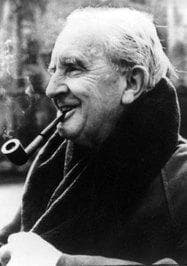
J.R.R. Tolkien was an English writer and philologist, best known for his high-fantasy works. His notable books include "The Hobbit, or There and Back Again," "The Fellowship of the Ring," and "The Return of the King," which are foundational texts in the fantasy genre. He also authored "The Silmarillion" and a boxed set featuring "The Hobbit" and "The Lord of the Rings."
Similar books
- The Last Battle
C.S. Lewis
4.0 (222k) average on GoodreadsFantasyExplores themes of an afterlife and the culmination of one's life work in a spiritual context.
- Jonathan Livingston Seagull
Richard Bach
3.8 (202k) average on GoodreadsFantasyA short, philosophical novella about pursuing one's passion and transcending limitations.
- The Great Divorce
C.S. Lewis
4.3 (109k) average on GoodreadsFantasyBoth are allegorical journeys to an afterlife exploring theological concepts. However, Lewis's work focuses more broadly on moral choices and the nature of heaven and hell, whereas Tolkien's is specifically centered on the artist's creative integrity and the spiritual disposition of their work. 'The Great Divorce' is more explicitly Christian apologetics, while 'Leaf by Niggle' is a more personal reflection on artistic vocation within a broader spiritual framework.
- The Little Prince
Antoine De Saint Exupéry
Both are short, allegorical tales with whimsical elements that convey profound truths. 'The Little Prince' uses an external observer's journey to comment on human nature, love, and loss, often through fable-like encounters. 'Leaf by Niggle,' in contrast, is an internal journey of an artist, focusing on their creative process, societal demands, and ultimate spiritual reckoning. While both use simple language, Tolkien's story is more intensely focused on the creator's personal struggle.
- Harry Potter and the Sorcerer's Stone
J.K. Rowling
4.5 (7M) average on GoodreadsFantasyRescued from a miserable life under the stairs, an orphaned boy discovers he's a wizard destined for a magical school, where he uncovers a dangerous secret tied to the dark wizard who murdered his parents.
- The Hunger Games
Suzanne Collins
4.3 (6.4M) average on GoodreadsFantasyIn a future where children fight to the death on live television, Katniss Everdeen volunteers for the arena, turning a death sentence into a fight for survival and a spark of rebellion.




Enjoyed the summary?
A summary gives you the shape of the book. The book itself has the detail, the examples and the voice.
Find Leaf by Niggle on AmazonAs an Amazon Associate, BookBrief earns from qualifying purchases. How we're funded