
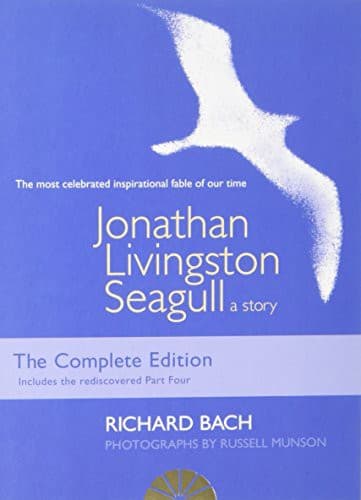
Synopsis
Covers the whole plot, including the ending.
- Difficulty
- Easy
- Pacing
- Moderate
- Mood
- Inspirational, Philosophical, Uplifting, Reflective
- Read it if
- You enjoy allegories, philosophical fables, or stories about self-discovery and pursuing one's true potential. Ideal for those looking for inspiration to break free from conventional thinking.
- Skip it if
- You prefer realistic fiction, complex character development, or intricate plots. This book is highly symbolic and less focused on conventional storytelling elements.
Jonathan Livingston Seagull Plot Summary
Covers the whole plot, including the ending.
Jonathan's Obsession with Flight
Jonathan Livingston Seagull is an unusual bird, different from the rest of his Flock. While other gulls focus only on finding food, Jonathan is interested in the art of flying itself. He spends many hours experimenting with dives, speeds, and maneuvers, pushing the limits of what a seagull can do. His parents worry, telling him to conform and prioritize eating. Despite their warnings and his own occasional hunger, Jonathan's interest in flight makes him practice constantly, often alone, trying to understand aerodynamics and achieve greater speed and control. He dreams of flying faster than any gull has flown before.
The Outcast and the Council
Jonathan's pursuit of perfect flight often makes him late for the feeding grounds and causes crashes. His behavior and disregard for the Flock's traditions lead to him being summoned before the Council of the Flock. The Elder, representing the established order, declares Jonathan an Outcast, condemning him for his irresponsibility and for violating the dignity and tradition of the Gull Family. Jonathan is cast out, forced to live alone, but even in his solitude, he continues to practice and perfect his flying, finding freedom in his banishment. He discovers the joy of high-speed flight and aerobatics, free from the Flock's expectations.
Arrival in a Higher Plane
After flying alone for a long time, Jonathan meets two bright gulls who fly with him, matching his speed and grace. They tell him they are his brothers and have come to take him home, to a place where gulls like him belong. Jonathan, tired but excited, follows them, ascending into a shimmering, brighter sky. He arrives in a new realm, a higher plane of existence, filled with gulls who share his interest in flight and self-perfection. This new Flock gives him a sense of belonging he never experienced before.
Learning from Chiang
In this new world, Jonathan continues his education, learning from wise and experienced gulls. He befriends Fletcher Lynd Seagull, a promising young student, and eventually learns from Chiang, the most respected Elder. Chiang teaches Jonathan that true flight is not just about physical speed but about understanding thought and perfection. He introduces Jonathan to instantaneous travel, teaching him to move through time and space by knowing he has already arrived. This lesson challenges Jonathan's understanding of reality, pushing him beyond physical limits into spiritual mastery.
The Call to Return
After mastering the ability to travel anywhere by thought and achieving a state of near-perfection, Jonathan realizes that his purpose is not just to learn, but to teach. He feels a strong pull to return to Earth, to his original Flock, and share the wisdom and joy he has discovered. Chiang, understanding his student's heart, encourages him, reminding him that love is the essence of true teaching. Jonathan knows he risks rejection and misunderstanding, but his desire to help others find their own path to freedom and higher purpose is stronger than any fear.
Jonathan's Return and First Student
Jonathan descends back to his original world, finding his old Flock still living by their restrictive traditions. He observes them, waiting for the right moment. Eventually, he encounters a young gull named Fletcher Lynd Seagull, who, like Jonathan once was, has been outcast for his flying. Jonathan approaches Fletcher, offering to teach him the secrets of flight and the higher purpose of existence. Fletcher, initially skeptical, is quickly convinced by Jonathan's demonstrations and belief, becoming his first dedicated student.
Gathering Disciples
As Jonathan continues to teach Fletcher, other outcast gulls, drawn by the incredible displays of flight and the promise of a different way of life, gather around them. Among them are gulls like Kirk Maynard, who had broken his wing and given up hope, and Charles-Roland, who was considered a failure. Jonathan patiently teaches them, demonstrating advanced maneuvers, explaining the principles of flight, and, more importantly, helping them believe in their own potential and the joy of breaking free from limitations. His small group of students grows, forming a new school.
The Old Flock's Reaction
The Elder of the original Flock, along with other traditionalists, notices Jonathan's growing school. They are wary and hostile, reaffirming the banishment and warning other gulls to stay away from Jonathan and his followers. They spread rumors and fear, trying to maintain their control. However, Jonathan's students, empowered by their new abilities and purpose, ignore the threats. They continue to learn and grow, their flights becoming more magnificent and their spirits more radiant, showing the truth of Jonathan's teachings through their actions.
Fletcher's Trial and Transcendence
During a flying lesson, Fletcher, demonstrating a high-speed dive, accidentally collides with a cliff, appearing to die. Jonathan immediately appears beside him, telling him not to give up and to understand that his true self is not his body. Fletcher, revived and deeply shaken, realizes the truth of Jonathan's teachings about the spirit. This experience also teaches him about the importance of forgiveness, especially for those who still cling to ignorance. Jonathan then tells Fletcher that he must now return to the original Flock and teach them, just as Jonathan had taught him.
Passing the Torch
Jonathan, having guided Fletcher through his transformation, announces that his time with the students is complete. He tells Fletcher that his own journey must continue, hinting at higher planes of learning. He passes the role of teacher to Fletcher, instructing him to continue teaching the outcasts and to eventually return to the main Flock, bringing knowledge to all. Jonathan then ascends, disappearing into the sky, leaving Fletcher to lead the growing school. Fletcher, now a wise and compassionate teacher, understands that the journey of learning and teaching is endless, and he looks forward to continuing Jonathan's legacy.
Jonathan Livingston Seagull Characters
Jonathan Livingston Seagull
Protagonist
A seagull obsessed with the art of flight and spiritual perfection.
Jonathan is a highly individualistic and passionate seagull who refuses to conform to the mundane existence of his Flock, which primarily focuses on eating. He dedicates his life to mastering flight, pushing beyond physical limitations and societal expectations. His drive for perfection leads him to be an outcast, but also to discover higher truths about existence, love, and the boundless potential of the spirit. He embodies the pursuit of self-improvement and the courage to follow one's own path, even when it means challenging tradition. His journey takes him from physical mastery to spiritual enlightenment, ultimately becoming a teacher.
Relationships: His Parents (Concerned but traditional, urging conformity); The Elder (Antagonist, representing rigid tradition and banishing Jonathan); Chiang (Mentor and spiritual guide in the higher realm); Fletcher Lynd Seagull (First and most devoted student, later his successor)
Fletcher Lynd Seagull
Supporting/Protagonist (later)
Jonathan's first and most dedicated student, who becomes a teacher himself.
Fletcher is a young, hot-headed, and talented seagull who, like Jonathan, is an outcast due to his unconventional flying and rebellious spirit. He initially struggles with anger and a lack of self-control but becomes Jonathan's most devoted student. Through Jonathan's guidance, Fletcher learns not only advanced flying techniques but also patience, forgiveness, and the profound joy of teaching. He experiences a near-death incident that deepens his understanding of spiritual truths, ultimately preparing him to take over Jonathan's role as a teacher and guide for other gulls.
Relationships: Jonathan Livingston Seagull (Mentor and profound spiritual guide); His Students (His disciples whom he teaches after Jonathan's departure)
Chiang
Supporting
The wise Elder and spiritual master in the higher plane of gulls.
Chiang is the most revered and ancient Elder in the higher realm of gulls. He serves as Jonathan's primary spiritual mentor, teaching him the deepest secrets of flight, not as a physical act, but as a manifestation of thought and perfection. Chiang guides Jonathan in understanding instantaneous travel, transcending physical limitations, and recognizing the true nature of the self. He emphasizes the importance of love and forgiveness as the ultimate expressions of advanced understanding. His calm wisdom and profound insights are crucial to Jonathan's spiritual development.
Relationships: Jonathan Livingston Seagull (His most advanced and cherished student)
The Elder (of Jonathan's original Flock)
Antagonist
The traditional leader who banishes Jonathan for nonconformity.
The Elder represents the rigid, traditional structure and limited worldview of Jonathan's original Flock. He is the voice of convention, law, and fear, prioritizing survival and conformity over individual growth and exploration. He sees Jonathan's pursuit of perfect flight as a threat to the Flock's established order and dignity, leading to Jonathan's banishment. He embodies the resistance to change and the fear of the unknown, serving as a symbolic antagonist to Jonathan's quest for freedom and enlightenment.
Relationships: Jonathan Livingston Seagull (His banisher and symbol of defiance)
Kirk Maynard Seagull
Supporting
One of Jonathan's first students, previously crippled and hopeless.
Kirk Maynard is one of the outcast gulls who joins Jonathan's school. He is initially presented as a gull who had broken his wing and given up on flying, resigned to a life of despair. Through Jonathan's patient teaching and encouragement, Maynard learns to fly again, not just physically, but spiritually, overcoming his perceived limitations. His recovery and renewed ability to fly serve as a powerful testament to the transformative power of Jonathan's teachings and belief in oneself.
Relationships: Jonathan Livingston Seagull (His teacher and source of inspiration)
Charles-Roland Seagull
Supporting
Another student of Jonathan, initially considered a failure by the Flock.
Charles-Roland is another outcast who finds his way to Jonathan's school. He is depicted as a gull who was likely deemed a failure by the main Flock, perhaps for not being adept at foraging or fitting in. Under Jonathan's guidance, Charles-Roland discovers his true potential in flight and self-expression, finding acceptance and purpose within the new community of students. He represents the many individuals who are overlooked or dismissed by society but possess hidden talents waiting to be nurtured.
Relationships: Jonathan Livingston Seagull (His teacher and mentor)
Henry Calvin Seagull
Supporting
One of the gulls who joins Jonathan's school.
Henry Calvin is another member of the growing group of outcast gulls who are drawn to Jonathan's revolutionary teachings. While not as prominently featured as Fletcher or Maynard, he represents the broader community of students who find liberation and purpose under Jonathan's guidance. His presence reinforces the idea that many gulls are yearning for more than mere subsistence and are willing to challenge the status quo for a higher truth.
Relationships: Jonathan Livingston Seagull (His teacher)
Tern
Mentioned
A type of bird mentioned in the context of flight limitations.
Tern is a type of bird mentioned in the book, primarily to highlight the perceived limitations of gulls and other birds. Jonathan often observes terns and their flying abilities, using them as a benchmark for comparison as he pushes the boundaries of what a seagull can achieve. The mention of terns serves to emphasize Jonathan's extraordinary abilities and his determination to surpass all known avian limits.
Jonathan Livingston Seagull Themes
Identity and Self-Discovery
The main theme is Jonathan's quest to understand his true self and purpose, beyond basic survival needs. He rejects the identity of a 'mere' seagull and seeks to define himself through his interest in flight and perfection. This journey of self-discovery leads him to transcend physical limitations and societal norms, finding his identity as a teacher and guide for others. His story encourages readers to look inward and define their own meaning and purpose in life.
“For most gulls it is not flying that matters, but eating. For this gull, though, it was not eating that mattered, but flight.”
Nonconformity vs. Tradition
The book contrasts Jonathan's individual pursuit of excellence with the rigid traditions and conformity of his original Flock. The Flock's Elder represents the fear of change and the insistence on maintaining the status quo, which leads to Jonathan's banishment. Jonathan, however, symbolizes the courage to challenge norms and follow one's inner calling, even at the cost of social acceptance. His eventual return and the formation of his own school show the power of nonconformity to inspire positive change.
“Why is it the hardest thing in the world to convince a bird that he is free, and that he can prove it for himself if he'd just spend a little time practicing?”
Perfection and Mastery
Jonathan's pursuit of perfect flight is a metaphor for the human desire for mastery and self-improvement in any field. He dedicates himself to understanding the physics of flight, pushing his limits, and achieving speeds and maneuvers thought impossible for a seagull. This theme goes beyond the physical, as he later seeks spiritual perfection under Chiang, learning to master thought and transcend physical reality. The book suggests that true mastery is an ongoing journey of learning and refinement, both physically and spiritually.
“You have the freedom to be yourself, your true self, here and now, and nothing can stand in your way.”
The Power of Teaching and Mentorship
Once Jonathan achieves enlightenment, his purpose shifts from learning to teaching. He returns to his old world to share his knowledge and help other gulls break free from their limitations. His relationship with Fletcher Lynd Seagull shows the impact of a dedicated mentor. Jonathan patiently guides his students, not just in flying techniques, but in believing in their own potential and understanding the spiritual aspects of existence. The cycle continues as Fletcher becomes a teacher, showing the power of passing on wisdom and love.
“Your only true obligation in any lifetime is to yourself. To become the very best you can be.”
Plot Devices & Literary Techniques
Allegory
The entire story functions as an extended metaphor for spiritual growth and self-discovery.
The story of Jonathan Livingston Seagull is an allegory, where the gulls and their actions represent human beings and their spiritual journeys. The Flock symbolizes society's conventions and limitations, while Jonathan represents the individual who seeks higher purpose and transcends mundane existence. Flight itself is a metaphor for spiritual enlightenment, self-perfection, and the freedom of the soul. The different planes of existence and the teachings of Chiang further deepen this allegorical representation of spiritual advancement and the pursuit of truth beyond material reality.
Symbolism of Flight
Flight represents freedom, knowledge, and spiritual ascension.
Flight in the book is not merely a physical act but a profound symbol. Initially, it symbolizes freedom from societal constraints and the joy of individual expression. As Jonathan progresses, it comes to represent the pursuit of knowledge, mastery, and ultimately, spiritual enlightenment and transcendence. Higher speeds and more complex maneuvers symbolize deeper understanding and a closer connection to a higher truth. The ability to fly anywhere instantly, as taught by Chiang, symbolizes the liberation of the spirit from physical limitations and the attainment of higher consciousness.
The Outcast Archetype
Jonathan embodies the hero who is rejected by society for his unique vision.
Jonathan embodies the 'Outcast' archetype, a common literary device. He is banished from his original Flock because his aspirations and methods deviate from their established norms. This ostracization is crucial to his journey, as it frees him from societal expectations and allows him to fully pursue his unique path to self-perfection. His eventual return as a teacher, attracting other outcasts, subverts the negative connotations of the archetype, demonstrating that being an outcast can be a catalyst for growth and lead to the formation of a new, enlightened community.
Mentor Figure
Chiang serves as the wise guide who facilitates Jonathan's spiritual awakening.
Chiang acts as the classic mentor figure in Jonathan's journey. He appears at a critical point in Jonathan's development, in a higher realm, to guide him from physical mastery to spiritual enlightenment. Chiang provides wisdom, challenges Jonathan's understanding of reality, and teaches him the deepest truths about the nature of thought, time, and love. His guidance is essential for Jonathan to reach his full potential and understand his ultimate purpose, which is to return and teach others.
Jonathan Livingston Seagull Quotes
“For most gulls, it is not flying that matters, but eating. For this gull, though, it was not eating that mattered, but flight.”
“Don't believe what your eyes are telling you. All they show is limitation. Look with your understanding, find out what you already know, and you'll see the way to fly.”
“You have the freedom to be yourself, your true self, here and now, and nothing can stand in your way.”
“The gull sees farthest who flies highest.”
“We can lift ourselves out of ignorance, we can find ourselves as creatures of excellence and intelligence and skill.”
“Your whole body, from wingtip to wingtip, is nothing more than your thought itself, in a form you can see. Break the chains of your thought, and you break the chains of your body, too.”
“He was not bone and feather but a perfect idea of freedom and flight, limited by nothing at all.”
“The only true law is that which leads to freedom.”
“We choose our next world through what we learn in this one. Learn nothing, and the next world is the same as this one, all the same limitations and lead weights to overcome.”
“To fly as fast as thought, to anywhere that is, you must begin by knowing that you have already arrived.”
“The price of being misunderstood, he thought, is sometimes loneliness.”
“You don't love hatred and evil, of course. You have to practice and see the real gull, the good in every one of them, and to help them see it in themselves.”
“Heaven is not a place, and it is not a time. Heaven is being perfect.”
“Overcome space, and all we have left is Here. Overcome time, and all we have left is Now.”
Quiz
10 questions on the plot and the characters. Each answer comes with a short explanation.
Question 1
What is Jonathan Livingston Seagull's primary passion that sets him apart from other gulls?
- Finding the best fishing spots
- Perfecting the art of flight
- Leading his flock to new territories
- Building elaborate nests
Show answer
B. Perfecting the art of flight While most gulls focus on eating and basic survival flight, Jonathan is obsessed with mastering flight techniques and pushing the boundaries of aerial movement, which is the central theme of the book.
Question 2
What happens to Jonathan after he refuses to conform to his flock's expectations?
- He becomes the flock's new leader
- He is banished from the flock
- The flock adopts his flying techniques
- He is given special privileges
Show answer
B. He is banished from the flock Jonathan's unconventional focus on flight rather than food threatens the flock's traditions, leading the Council of Elders to banish him for 'irresponsible behavior' and 'violating the dignity of gull life.'
Question 3
What is the primary metaphor that Richard Bach uses throughout the book?
- Eating as a symbol of greed
- Flight as a symbol of spiritual aspiration
- The ocean as a symbol of life's challenges
- Nests as symbols of security
Show answer
B. Flight as a symbol of spiritual aspiration Flight represents the pursuit of higher purpose, spiritual growth, and transcending limitations, making it the central metaphor that drives the allegorical nature of the story.
Question 4
After being banished, where does Jonathan go to continue his journey?
- A distant island with other outcast gulls
- A higher plane of existence with advanced gulls
- Back to his original flock in secret
- A human settlement to learn new skills
Show answer
B. A higher plane of existence with advanced gulls Jonathan transcends to a higher spiritual plane where he meets other enlightened gulls like Chiang, who teach him about love, kindness, and advanced flying techniques beyond physical limitations.
Question 5
What important lesson does Jonathan learn from the elder gull Chiang?
- How to fly faster than any other gull
- That true speed comes from understanding you're everywhere at once
- The secret to catching more fish
- How to avoid being banished again
Show answer
B. That true speed comes from understanding you're everywhere at once Chiang teaches Jonathan that true perfection comes from realizing that one's true nature exists beyond physical limitations, understanding that 'heaven is not a place, and it is not a time. Heaven is being perfect.'
Question 6
What does Jonathan ultimately achieve by the end of the story?
- Revenge against the flock that banished him
- Transcendence to an even higher plane of existence
- A permanent return to his original flock
- Mastery of every known flying technique
Show answer
B. Transcendence to an even higher plane of existence After learning about love, kindness, and spiritual perfection, Jonathan transcends to become a teacher himself and eventually moves beyond even the higher plane to continue his spiritual evolution.
Question 7
How does Jonathan's approach to flying differ fundamentally from other gulls?
- He focuses on flying as a means to find more food
- He sees flying as an end in itself rather than just transportation
- He only flies during storms to prove his courage
- He invents complex aerial maneuvers to impress others
Show answer
B. He sees flying as an end in itself rather than just transportation While other gulls view flight merely as transportation between food sources, Jonathan pursues flying for its own sake—seeking perfection, speed, and beauty in the act itself, representing spiritual pursuit rather than material gain.
Question 8
What philosophical concept is demonstrated when Jonathan realizes 'he was not bone and feather but a perfect idea of freedom'?
- Materialism
- Dualism
- Transcendental idealism
- Utilitarianism
Show answer
C. Transcendental idealism This moment represents transcendental idealism—the understanding that true reality exists beyond physical form in the realm of perfect ideas, which Jonathan comes to realize through his spiritual journey.
Question 9
What does Jonathan's eventual return to teach other gulls symbolize in the allegory?
- The cyclical nature of life
- The Bodhisattva ideal of enlightened beings returning to help others
- The importance of community approval
- The inevitability of conflict between generations
Show answer
B. The Bodhisattva ideal of enlightened beings returning to help others Jonathan's return as a teacher mirrors the Bodhisattva concept from Buddhism, where enlightened beings postpone their own complete liberation to help others achieve enlightenment, emphasizing compassion and service.
Question 10
Which specific flying breakthrough allows Jonathan to initially reach incredible speeds?
- Flying at night when winds are calmer
- Tucking his wings completely during dives
- Shortening his wingtips to reduce drag
- Flying in formation with other gulls
Show answer
C. Shortening his wingtips to reduce drag Early in his journey, Jonathan discovers that by flying very high and then diving with his wings tucked partially in, he can achieve remarkable speeds—a technical breakthrough that represents his initial transcendence of conventional limits.
Jonathan Livingston Seagull FAQ
What is 'Jonathan Livingston Seagull' about?
The book follows Jonathan Livingston Seagull, a seagull who rejects the mundane existence of his flock focused solely on eating and survival. He becomes obsessed with mastering flight for its own sake, pushing the limits of speed and aerobatics. After being banished for his unconventional behavior, he transcends to higher planes of existence where he learns about love, kindness, and spiritual perfection from advanced gulls, eventually returning to teach others.
Why should I read 'Jonathan Livingston Seagull'?
This short fable offers profound inspiration about pursuing personal excellence and spiritual growth despite societal pressure. Through Jonathan's journey, it explores themes of nonconformity, self-discovery, and transcendence in an accessible allegorical format. Its timeless message has motivated readers for decades to follow their passions and seek higher purpose beyond material concerns.
What is the background/setting of 'Jonathan Livingston Seagull'?
The story begins in a conventional seagull flock by the shore, representing ordinary society focused on basic survival. After Jonathan's banishment, the setting shifts to ethereal, heavenly realms where time and space operate differently. These higher planes serve as training grounds where enlightened gulls master flight and spiritual principles beyond physical limitations.
What are the most memorable quotes from the book?
Key quotes include: 'For most gulls it is not flying that matters, but eating. For this gull, though, it was not eating that mattered, but flight' (establishing Jonathan's core motivation). 'You have the freedom to be yourself, your true self, here and now, and nothing can stand in your way' (from the elder gull Chiang about spiritual liberation). 'Don't believe what your eyes are telling you. All they show is limitation. Look with your understanding' (advice about perceiving beyond physical reality).
What writing style does Richard Bach use?
Bach employs a simple, lyrical prose style that blends fable-like storytelling with philosophical dialogue. The narrative is sparse yet evocative, using flight terminology and seagull behavior as extended metaphors for spiritual concepts. The tone shifts from earthly struggle to ethereal wonder as Jonathan progresses, with dreamy illustrations by Russell Munson enhancing the allegorical quality.
What minor details add significant meaning to the story?
Small details like Jonathan practicing flight maneuvers at dawn while others sleep symbolize dedication to self-improvement. His initial focus on achieving 214 miles per hour represents measurable earthly goals before spiritual growth. The description of his feathers turning pure white in the higher realm signifies purification, while the way he learns to teleport instantly demonstrates transcending physical laws.
What are some subtle foreshadowing moments?
Early scenes where Jonathan feels 'out of place' during flock feeding rituals foreshadow his eventual banishment. His accidental discovery of high-speed diving techniques hints at untapped potential beyond conventional flight. The Elder Gull Chiang's disappearance into thin air prefigures Jonathan's own ability to transcend physical form later in the story.
What unexpected character connections exist?
Jonathan's connection with Fletcher Seagull—a young outcast he mentors—creates a teacher-student dynamic mirroring his own relationship with the Elder Gull Chiang. This cyclical pattern shows how enlightenment passes between generations. Surprisingly, even Jonathan's original flock, which banished him, becomes receptive to his teachings when he returns, suggesting hidden readiness for growth.
What are Jonathan's unspoken motivations?
Beyond his stated love of flight, Jonathan is driven by a deep yearning for meaning beyond survival—a spiritual hunger masked as physical ambition. His refusal to conform stems from an intuitive sense that his true nature exceeds flock limitations. After transcendence, his unspoken motivation shifts to compassionate service, returning to help others despite having achieved personal perfection.
What psychological complexities do characters exhibit?
Jonathan displays obsessive dedication bordering on addiction in his early flight practice, yet this transforms into disciplined spiritual pursuit. The flock exhibits herd mentality—initially rejecting Jonathan out of fear of change, yet later showing curiosity about his teachings. The Elder Gull Chiang embodies serene detachment while maintaining compassionate guidance, balancing wisdom with approachability.
What are the major emotional turning points?
Key emotional shifts include: Jonathan's despair when first banished, his awe upon reaching the higher realm, his grief when mentor Chiang disappears, his determination when choosing to return to Earth, and his joyful fulfillment when student Fletcher begins to understand. Each marks progression from isolation to connection, doubt to faith, and personal achievement to selfless teaching.
How do relationship dynamics evolve throughout the story?
Jonathan's relationship with his flock moves from conflict (rejection) to reconciliation (teaching). With mentor Chiang, it evolves from student-teacher to peer-like understanding. With Fletcher, Jonathan replicates the mentoring cycle, experiencing the fulfillment of guiding another. These dynamics illustrate how spiritual growth involves both receiving and giving wisdom across generations.
Which parts of the story remain ambiguous or open-ended?
The exact nature of the higher realms is left mystical rather than dogmatically defined. Whether Jonathan's return to Earth represents literal reincarnation or metaphorical teaching is open to interpretation. The ultimate fate of Fletcher and other students is unresolved, inviting readers to imagine their continued journeys. The story's conclusion suggests an ongoing cycle of learning without definitive closure.
What are controversial scenes or decisions in the book?
Jonathan's initial abandonment of flock responsibilities for personal pursuit raises ethical questions about individualism versus community. His banishment could be interpreted as either necessary liberation or cruel punishment. Some readers debate whether his return to teach represents genuine altruism or spiritual superiority. The emphasis on perfectionism has been both praised as aspirational and criticized as unrealistic.
How does 'Jonathan Livingston Seagull' end and what does it mean?
The story concludes with Jonathan returning to Earth as a teacher, mentoring young outcast Fletcher Seagull while other gulls gradually become curious. This ending symbolizes that spiritual enlightenment isn't an endpoint but a cycle—those who achieve growth must help others. It suggests true perfection involves compassionate service, and that even ordinary beings contain potential for extraordinary transformation.
What does flight symbolize beyond literal meaning?
Flight represents freedom from limitations—both physical and societal. Initially it symbolizes personal excellence and passion, but evolves to represent spiritual ascension, with advanced techniques like teleportation embodying transcendence of material reality. The progression from basic flying to mystical movement mirrors the soul's journey from earthly concerns to cosmic understanding.
How does the book handle themes of conformity versus individuality?
Through Jonathan's conflict with his flock, the story presents conformity as safe but soul-deadening, while individuality requires courage and risk. However, it avoids simplistic rejection of community—Jonathan eventually returns to share his discoveries, suggesting true individuality ultimately enriches rather than abandons others. The balance shows that nonconformity serves higher purpose when guided by love.
What role do the illustrations play in enhancing the allegory?
Russell Munson's dreamy black-and-white photographs of actual seagulls in flight ground the fantasy in tangible beauty, making Jonathan's extraordinary feats feel visually plausible. They emphasize the grace and freedom of flight, reinforcing the central metaphor. The contrast between earthly flock scenes and ethereal training sequences visually mirrors the spiritual journey from limitation to liberation.
About the author
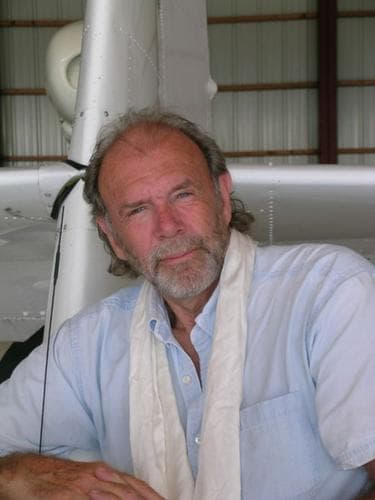
Richard David Bach is an American writer. He has written numerous works of fiction and also non-fiction flight-related titles. His works include Jonathan Livingston Seagull (1970) and Illusions: The Adventures of a Reluctant Messiah (1977), both of which were among the 1970s' biggest sellers.
Similar books
- THE ALCHEMIST
Paulo Coelho
3.6 (3k) average on GoodreadsFictionBoth are allegorical novellas about following one's dreams and finding spiritual enlightenment through a journey of self-discovery.
- Siddhartha
Hermann Hesse
4.0 (583k) average on GoodreadsHistorical FictionExplores themes of spiritual awakening, self-realization, and finding one's unique path outside of traditional teachings.
- Harry Potter and the Sorcerer's Stone
J.K. Rowling
4.5 (7M) average on GoodreadsFantasyRescued from a miserable life under the stairs, an orphaned boy discovers he's a wizard destined for a magical school, where he uncovers a dangerous secret tied to the dark wizard who murdered his parents.
- The Hunger Games
Suzanne Collins
4.3 (6.4M) average on GoodreadsFantasyIn a future where children fight to the death on live television, Katniss Everdeen volunteers for the arena, turning a death sentence into a fight for survival and a spark of rebellion.
- 1984
George Orwell
4.2 (3.1M) average on GoodreadsPoliticsIn a future where surveillance and thought control are absolute, a man's search for truth clashes with the Party, showing that hope can be a form of rebellion.
- Divergent
Veronica Roth
4.2 (2.9M) average on GoodreadsFantasyIn a society divided by virtues, a sixteen-year-old's difference from the norm starts a rebellion that threatens her world.





Enjoyed the summary?
A summary gives you the shape of the book. The book itself has the detail, the examples and the voice.
Find Jonathan Livingston Seagull on AmazonAs an Amazon Associate, BookBrief earns from qualifying purchases. How we're funded