
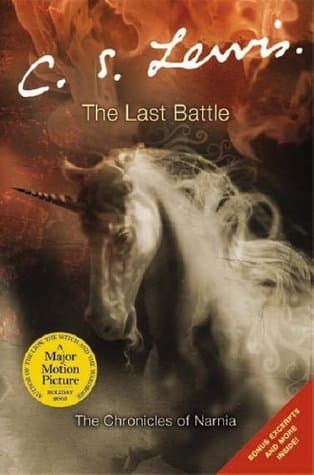
Synopsis
Covers the whole plot, including the ending.
- Difficulty
- Medium
- Pacing
- Moderate
- Mood
- Apocalyptic, Melancholy, Hopeful, Spiritual, Reflective
- Read it if
- You want to experience the poignant, spiritual conclusion to a beloved fantasy series, exploring themes of faith, deception, and the end of the world.
- Skip it if
- You prefer fantasy without overt religious allegory or are looking for a lighthearted adventure rather than a reflective, melancholic ending.
The Last Battle Plot Summary
Covers the whole plot, including the ending.
Shift's Deception and Tirian's Imprisonment
In western Narnia, the ape Shift finds a lion's skin. With the help of the donkey Puzzle, he dresses Puzzle in it to pretend to be Aslan. Shift, acting as 'Aslan's' interpreter, starts giving harsh orders to the Narnians, making them work for the Calormenes and cut down the Talking Trees. King Tirian, hiding in the woods, sees the destruction and despair. He confronts Shift and the Calormenes but is captured and tied to a tree, set for execution at dawn. He prays for help, sad about Narnia's fall and the misuse of Aslan's name.
Eustace and Jill Arrive in Narnia
As King Tirian waits for death, his prayer for help is answered. In England, Eustace Scrubb and Jill Pole, now older, are at a train station with their old headmaster, Frank, talking about Narnia's danger. They are suddenly pulled from their world and appear in the Narnian woods, brought by Aslan. They quickly find King Tirian tied up and, after a quick explanation, free him. Tirian is at first unsure about their story but soon accepts their help as they plan to expose Shift's trick and gather loyal Narnians.
The Deception Unveiled at Stable Hill
Tirian, Eustace, and Jill learn more about Shift's rule and his alliance with the Calormenes, led by Rishda Tarkaan. Shift has said Aslan and Tash are the same god, 'Tashlan,' and makes Narnians work as slaves. He plans a public event where Narnians will 'see' Aslan in a stable on Stable Hill. Tirian and his friends join the crowd, hoping to expose Puzzle. During the event, Shift's plan goes wrong when Rishda Tarkaan and the Calormenes start throwing unwilling Narnians into the stable, saying they will meet 'Tashlan' and never return, causing fear.
The Battle and the Stable Door
As things get worse on Stable Hill, Tirian, Eustace, and Jill lead a small group of loyal Narnians, including Jewel the Unicorn and Farsight the Eagle, in a fight against the Calormenes. Many Narnians, including Talking Beasts, are killed or forced into the stable. Rishda Tarkaan, trying to keep control, accidentally throws Shift into the stable, where something unseen immediately eats him. Tirian, fighting, ends up pushed into the stable's dark inside, followed by Jill, Eustace, and Jewel. The stable, which looks small outside, is surprisingly large inside.
Meeting the Old Friends and Peter's Revelation
Inside the stable, Tirian, Jill, Eustace, and Jewel find themselves in a beautiful, sunny land, much larger and brighter than the stable's outside suggested. They meet many past Narnian heroes, including High King Peter, King Edmund, Queen Lucy, Digory Kirke, and Polly Plummer. Susan Pevensie is not there, having stopped believing in Narnia. Peter tells them the truth: they are all dead. The train crash that brought Eustace and Jill to Narnia at the start of this adventure was the accident that killed all of them in their world, bringing them to the true Narnia, beyond the shadow lands.
The Last Battle and Tash's Appearance
The fight continues inside the stable. Rishda Tarkaan, scared of 'Tashlan,' tries to run but is pushed back by Emeth, a noble Calormene soldier who has questioned the Tash cult. Rishda, in his fear, accidentally calls the real, terrifying god Tash, who appears in the stable. Tash claims Rishda, while Emeth, who had worshipped Aslan through his good deeds, is welcomed by Aslan. The remaining loyal Narnians and the Pevensies fight, but this is a fight for spiritual loyalty, not physical victory. Many face Tash, and their true hearts are shown.
Aslan's Judgment and the End of Narnia
Aslan finally appears in his full power inside the stable, sending Tash back to his own place. He then begins the judgment of all creatures, Narnian and Calormene, who entered the stable. Those who loved Aslan and Narnia, no matter their species or past loyalties, go through a door to a new, more real land. Those who rejected Aslan, or whose hearts were bad, turn into dumb animals or disappear into darkness. Aslan then tells Peter to shut the door on the old Narnia, and they watch the whole world of Narnia unmade, collapsing, like a book closing forever.
The New Narnia and the Ever-Deeper Journey
The Pevensies, Digory, Polly, Eustace, Jill, Tirian, Jewel, and all the faithful Talking Beasts and Narnians are in a beautiful, grander version of Narnia. It is a land 'deeper' and more real than the Narnia they knew, where everything is more vivid. They realize this is the true Narnia, the 'shadow' of which they had lived in before. Aslan explains that this new land is just the start of an eternal journey, always going 'further up and further in,' into greater joy and understanding. They see the old Narnia below them, a mere reflection, and understand that their adventures have truly just begun in this boundless, eternal place.
Principal Figures
King Tirian
Protagonist
The last King of Narnia, fighting for his kingdom's honor and truth.
Tirian is the seventh and final King of Narnia, a descendant of King Caspian X. He is noble, brave, and deeply devoted to Aslan and the traditions of Narnia. Witnessing the destruction of his beloved kingdom and the blasphemy against Aslan by Shift and the Calormenes fills him with despair and righteous fury. He is initially overwhelmed by the forces against him but holds steadfast to his faith and fights valiantly, even when outnumbered. His prayer for help is the catalyst for Eustace and Jill's arrival. He represents the last stand of true Narnian royalty.
Relationships: Jewel the Unicorn (loyal friend and companion); Eustace Scrubb (trusted ally and friend); Jill Pole (trusted ally and friend); Aslan (devoted follower)
Shift
Antagonist
A cunning and manipulative ape who orchestrates the downfall of Narnia.
Shift is a devious and ambitious ape who finds a lion's skin and uses the simple-minded donkey, Puzzle, to impersonate Aslan. He is the mastermind behind the deception that leads to the Calormene invasion and the enslavement of Narnians. Shift is driven by greed, a desire for power, and a twisted sense of superiority. He manipulates others with lies and fear, eventually merging the worship of Aslan with the Calormene god Tash, creating 'Tashlan.' His actions directly lead to the destruction of Narnia, both politically and spiritually.
Relationships: Puzzle (exploited tool/pawn); Rishda Tarkaan (uneasy ally/co-conspirator)
Puzzle
Supporting
A simple-minded donkey manipulated into impersonating Aslan.
Puzzle is a kind but naive donkey who is easily swayed and manipulated by Shift. He is dressed in a lion's skin and forced to impersonate Aslan, becoming the false prophet of Shift's regime. Puzzle is genuinely distressed by his role and the harm it causes, but lacks the will or intelligence to defy Shift on his own. He represents the innocent who are unwittingly used for evil purposes and feels deep remorse once he understands the full extent of Shift's deception. He is later forgiven by Aslan and allowed into the new Narnia.
Relationships: Shift (master/manipulator); Aslan (confused follower, later finds true faith)
Eustace Scrubb
Protagonist
One of the children from our world, returning to Narnia to aid King Tirian.
Eustace, now older and having matured significantly since his first Narnian adventure, is one of the 'Friends of Narnia' summoned by Tirian's prayer. He is brave, resourceful, and deeply committed to fighting for Narnia. He and Jill are instrumental in freeing Tirian and assisting in the final battle. He is a steadfast companion to Tirian and helps him understand the nature of their predicament. Along with Jill, he experiences the train crash that brings them, and the other Pevensies, into the true Narnia.
Relationships: Jill Pole (close friend and companion); King Tirian (loyal ally and friend); Jill Pole (close friend and companion)
Jill Pole
Protagonist
One of the children from our world, returning to Narnia to aid King Tirian.
Jill, like Eustace, is older and more experienced in Narnian ways. She is courageous, practical, and quick-thinking, playing a crucial role in freeing Tirian and fighting alongside him. She shows great resilience in the face of overwhelming odds and maintains her faith in Aslan even when Narnia seems lost. Her understanding of the 'deep magic' and her previous experiences in Narnia make her a valuable asset to Tirian's small band. She also perishes in the train crash, entering the true Narnia.
Relationships: Eustace Scrubb (close friend and companion); King Tirian (loyal ally and friend)
Aslan
Divine Figure
The true Lion, creator and ultimate judge of Narnia.
Aslan is the majestic and benevolent lion, the son of the Emperor-beyond-the-Sea, and the true ruler of Narnia. Though his physical presence is scarce for much of the story, his spirit and laws are at the heart of the conflict, as Shift attempts to corrupt his image. He ultimately appears within the stable, not to fight a physical battle, but to judge all beings and unmake the old Narnia. He guides the faithful into the new, eternal Narnia, promising an endless journey 'further up and further in.' He embodies divine justice, love, and the ultimate reality.
Relationships: All Narnians (creator and lord); Pevensies and Friends (guide and savior)
Rishda Tarkaan
Antagonist
A Calormene captain, allied with Shift, seeking to conquer Narnia.
Rishda Tarkaan is the ruthless and cynical Calormene captain who forms an alliance with Shift. He is a pragmatic and cruel military leader, eager to exploit Narnia's resources and enslave its people. He initially believes Shift's 'Tashlan' scheme is a clever way to control the Narnians, but he secretly disbelieves in both Tash and Aslan. His fear of the unknown, particularly when the true Tash appears, leads to his undoing. He represents the cynical, materialist worldview that ultimately collapses in the face of true spiritual reality.
Relationships: Shift (uneasy ally/co-conspirator); Emeth (commander of his soldiers)
Jewel the Unicorn
Supporting
King Tirian's loyal and noble Talking Unicorn.
Jewel is a magnificent Talking Unicorn and King Tirian's most trusted friend and companion. He is fiercely loyal, brave, and noble, embodying the true spirit of Narnia. He stands by Tirian through thick and thin, fighting courageously against the Calormenes and expressing deep sorrow at the corruption of Narnia. He is one of the few Talking Beasts who remains steadfast in his faith in Aslan, despite the widespread deception. His unwavering loyalty and beautiful nature make him a poignant symbol of the pure Narnia that is being lost.
Relationships: King Tirian (loyal friend and companion)
Peter Pevensie
Supporting
The High King of Narnia, now an adult, who enters the true Narnia.
High King Peter, now an adult, is one of the 'Friends of Narnia' who dies in the train crash and enters the true Narnia. He is still a figure of authority and wisdom, and it is he who is commanded by Aslan to shut the door on the old, unmade Narnia. His presence reinforces the continuity of the Narnian saga, bringing together heroes from different eras. He represents the culmination of the Pevensie children's journey, finally reaching their eternal home.
Relationships: Edmund, Lucy (siblings); Aslan (devoted subject)
Emeth
Supporting
A noble Calormene soldier who unknowingly serves Aslan through his good deeds.
Emeth is a young Calormene soldier under Rishda Tarkaan's command. He is devout in his worship of Tash and is initially confused and disturbed by the 'Tashlan' concept. He is a character of integrity and honor, genuinely seeking truth and justice. When he enters the stable and encounters Aslan, he is welcomed because his heart, despite his formal worship of Tash, was filled with good deeds and a true desire for righteousness. He demonstrates that genuine goodness, regardless of one's stated religion, is recognized by Aslan.
Relationships: Rishda Tarkaan (commander); Aslan (unknowing servant, then accepted follower)
Themes & Insights
The End of the World and New Creation
The main theme is the destruction of Narnia's physical world and its re-creation into a more real, eternal place. This mirrors Christian ideas about the 'old heaven and earth' passing and a 'new heaven and new earth' appearing. The faithful see Narnia unmade as a temporary 'shadow' of its true self, then enter a deeper, more alive version. This theme explores the idea that physical reality is not the final reality, and that true existence is beyond the temporary.
“And as He spoke, He no longer looked to them like a Lion, but the things that began to happen at that moment were so great and beautiful that I cannot write them. And for us this is the end of all the stories, and we can truly say that they all lived happily ever after. But for them it was only the beginning of the real story. All their life in this world and all their adventures in Narnia had only been the cover and the title page: now at last they were beginning Chapter One of the Great Story which no one on earth has read: which goes on for ever: in which every chapter is better than the one before.”
False Religion and Blasphemy
Shift's tricking Puzzle into pretending to be Aslan, and the joining of Aslan and Tash into 'Tashlan,' discusses false religion and blasphemy. Shift uses religious power for selfish reasons, misleading Narnians and justifying their slavery and the destruction of their land. This corruption of sacred figures shows the dangers of spiritual deception and the need to tell true faith from manipulative lies. The real Tash appearing shows a clear result of calling on such dark forces.
“For what you have done, you have done to me. And what you have not done, you have not done to me. There is no service you can do to me that cannot be done to Tash, and no service you can do to Tash that cannot be done to me.”
Faith, Doubt, and True Allegiance
The characters' reactions to Narnia's crisis show their true faith or lack of it. Many Narnians are fooled by Shift's lies and fear, losing faith in Aslan. Others, like Tirian, Eustace, Jill, and Jewel, keep their strong belief despite difficulties. Emeth, a Calormene who worshipped Tash but whose good deeds and honest heart Aslan recognizes, shows that true loyalty is judged by actions and heart, not just the name of the god one claims. Susan Pevensie's absence, because of her disbelief, also highlights the theme of choosing faith.
“I have come home at last! This is my real country! I belong here. This is the land I have been looking for all my life, though I never knew it till now.”
Good vs. Evil and Moral Judgment
The story shows the ultimate fight between good and evil. Shift and Rishda Tarkaan represent lies, greed, and tyranny, while Tirian and the Pevensies show courage, loyalty, and justice. The end inside the stable, where Aslan judges everyone, explores moral responsibility. Each character's final fate depends on their true heart and their alignment with good or evil, ending with the separation of the good from the bad as Narnia is unmade and remade.
“All that was evil, all that was untrue, all that was unjust, was being withdrawn from it into the darkness. And all that was good, all that was true, all that was beautiful, was being drawn out of it into the new Narnia.”
The Nature of Reality and Eternity
The book explores the idea of reality, suggesting that the Narnia the children knew was only a 'shadow' or 'reflection' of a truer, deeper Narnia. The characters' death in the train crash is not an end but a passage to this more real, eternal life. This theme questions usual ideas of life and death, showing death as a door to a more lasting reality. The journey 'further up and further in' means an endless move into greater truth and joy in the eternal realm, making the old world's end seem less final.
“The new one was a country you could walk in and eat in and learn in. The old Narnia was a picture, a dream; but this was the real thing.”
Plot Devices & Literary Techniques
The Stable Door
A seemingly ordinary stable door that acts as a portal between worlds and a gateway to judgment.
The Stable Door on Stable Hill is a crucial plot device. Initially, it is used by Shift and Rishda Tarkaan as a point of forced entry for Narnians, creating the illusion of 'Tashlan' within. However, it quickly becomes a literal and metaphorical gateway to a new reality. Characters are pushed or fall through it, leading them not to an ordinary stable interior, but to a vast, sunlit land – the true Narnia. It functions as a symbol of death and rebirth, a point of no return, and the threshold of divine judgment, separating the old world from the new and the faithful from the unfaithful.
The Lion's Skin
A physical prop used to create a false idol and deceive the Narnians.
The lion's skin found by Shift is the primary tool for his deception. By dressing Puzzle, a donkey, in it, Shift creates a false Aslan, manipulating the Narnians through fear and veneration. This device highlights the theme of blasphemy and the corruption of sacred symbols. The physical disguise allows for the initial spread of Shift's lies and the Calormene takeover. Its eventual removal and the exposure of Puzzle underscore the triumph of truth over falsehood, though the damage done by its use is irreversible for the old Narnia.
The Train Crash
The event in the 'real world' that serves as the transition point to the true Narnia.
The train crash is the unexpected and sudden event in England that kills Eustace, Jill, the Pevensies (except Susan), Digory, and Polly. This device serves as the ultimate 'death' that transports the characters from their earthly lives into the eternal Narnia. It is a moment of profound revelation, as the characters realize their prior existence was merely a 'shadow.' The crash acts as a literal and symbolic bridge, signifying the end of their mortal journey and the beginning of their eternal one, providing a definitive closure to their adventures in the 'old' Narnia and their earthly lives.
The Unmaking of Narnia
The literal collapse and dissolution of the old Narnian world.
The unmaking of Narnia is a powerful and visually striking plot device. Under Aslan's command, the entire world of Narnia, from its stars to its landscapes and creatures, collapses and shrinks, like a book being closed or a dream fading. This serves to emphasize the temporary and ultimately illusory nature of the 'old' Narnia. It provides a definitive, dramatic conclusion to the Narnian chronicles, illustrating the finality of the world's end and making way for the new, eternal Narnia. It's a direct parallel to biblical apocalyptic imagery.
The Last Battle Quotes
“All worlds draw to an end and that noble death is a treasure which no one is too poor to buy.”
“The term is over: the holidays have begun. The dream is ended: this is the morning.”
“I have come home at last! This is my real country! I belong here. This is the land I have been looking for all my life, though I never knew it till now.”
“The further up and the further in you go, the bigger everything gets. The inside is larger than the outside.”
“It's all in Plato, all in Plato: bless me, what do they teach them at these schools!”
“I have swallowed up girls and boys, women and men, kings and emperors, cities and realms.”
“The light ahead was growing stronger. Lucy saw that a great series of many-coloured cliffs led up in front of them, and then she forgot everything else, because Aslan himself was coming, leaping down from cliff to cliff like a living cataract of power and beauty.”
“We're so afraid of being taken in that we cannot be taken out.”
“It is as hard to explain how this sunlit land was different from the old Narnia as it would be to tell you how the fruits of that country taste.”
“The reason why we loved the old Narnia is that it sometimes looked a little like this.”
“There was a real railway accident. Your father and mother and all of you are—as you used to call it in the Shadow-Lands—dead. The term is over: the holidays have begun.”
“I have been wandering to find him and my happiness is so great that it even weakens me like a wound.”
“The new one was a deeper country: every rock and flower and blade of grass looked as if it meant more.”
Quiz
10 questions on the plot and the characters. Each answer comes with a short explanation.
Question 1
What is the name of the donkey who is disguised as Aslan by Shift the Ape in 'The Last Battle'?
- Bree
- Puzzle
- Fledge
- Hwin
Show answer
B. Puzzle Puzzle is the gentle donkey who is manipulated by Shift the Ape to wear a lion-skin and pretend to be Aslan, setting in motion the deception that leads to the conflict in Narnia.
Question 2
What do Shift and the Calormenes use to justify their control over Narnia in the name of Aslan?
- A forged letter from Aslan
- A prophecy from an ancient book
- The false Aslan's commands
- A magical artifact from Cair Paravel
Show answer
C. The false Aslan's commands Shift and the Calormenes exploit the disguised Puzzle as a false Aslan to issue commands that oppress the Narnians and allow Calormene takeover, claiming it is Aslan's will.
Question 3
Which character from previous Narnia books returns to help King Tirian in the fight against the Calormenes?
- Peter Pevensie
- Eustace Scrubb and Jill Pole
- Digory Kirke
- Lucy Pevensie
Show answer
B. Eustace Scrubb and Jill Pole Eustace Scrubb and Jill Pole, who were introduced in 'The Silver Chair', are summoned to Narnia by Tirian's call for help and play key roles in the final battle.
Question 4
What event causes the characters to realize they have entered the 'real' Narnia at the end of the book?
- They meet Aslan in his true form
- They see the old Narnia destroyed and reborn
- They find the door to Aslan's Country
- They are reunited with all past characters
Show answer
B. They see the old Narnia destroyed and reborn After the battle, the old Narnia is ended by Aslan, and the characters pass through a stable door into a new, more vibrant Narnia—the true, eternal Narnia—revealing the transition from the shadow to the reality.
Question 5
How does Emeth, the Calormene soldier, come to be accepted in Aslan's Country at the end?
- He converts to Narnian beliefs before dying
- Aslan judges him based on his sincere heart and service to Tash
- He is forgiven for fighting against Narnia
- He is brought in by the Pevensie children
Show answer
B. Aslan judges him based on his sincere heart and service to Tash Emeth, who faithfully served the false god Tash, is welcomed by Aslan because his devotion was sincere and directed toward what he believed was good, illustrating the theme of divine grace and true faith beyond religious labels.
Question 6
What is the fate of Shift the Ape at the end of 'The Last Battle'?
- He is killed by Tirian in battle
- He is transformed into a better creature
- He is thrown into the stable by Aslan and disappears
- He escapes to Calormen
Show answer
C. He is thrown into the stable by Aslan and disappears Shift, the instigator of the deception, is judged by Aslan and thrown into the stable door, which serves as a portal to judgment, symbolizing his rejection from the new Narnia due to his greed and betrayal.
Question 7
Which of the following themes is most prominently explored through the stable door imagery in 'The Last Battle'?
- The importance of childhood innocence
- The transition from death to eternal life
- The power of friendship in adversity
- The conflict between technology and nature
Show answer
B. The transition from death to eternal life The stable door represents a threshold where characters face judgment and pass from the old, dying Narnia into the true, eternal Narnia (Aslan's Country), mirroring Christian themes of resurrection and the afterlife.
Question 8
In the final chapters, what does Aslan reveal about the relationship between the old Narnia and the new Narnia?
- The old Narnia was just a dream
- The new Narnia is a separate world created after the old one
- The old Narnia was a shadow or copy of the true Narnia
- The old Narnia will be rebuilt exactly as it was
Show answer
C. The old Narnia was a shadow or copy of the true Narnia Aslan explains that the Narnia the characters knew was only a shadow or copy of the real, eternal Narnia, drawing on Platonic and Christian ideas where earthly existence is an imperfect reflection of heavenly reality.
Question 9
What significant event occurs to the Pevensie parents at the end of the book, linking to the story's conclusion?
- They are brought to Narnia to rule forever
- They die in a train crash and enter Aslan's Country
- They forget their children's adventures in Narnia
- They are revealed to have been Narnians all along
Show answer
B. They die in a train crash and enter Aslan's Country In the final scene, it is revealed that the Pevensie parents died in a railway accident in England, and they are reunited with their children in the real Narnia, emphasizing the theme that death in our world is an entry into eternal life in Aslan's Country.
Question 10
How does the character of Puzzle the donkey demonstrate a key moral lesson in 'The Last Battle'?
- He shows that ignorance is bliss in times of crisis
- He illustrates the dangers of blind obedience without critical thought
- He proves that simple creatures cannot understand complex deceptions
- He represents the innocence that is always rewarded
Show answer
B. He illustrates the dangers of blind obedience without critical thought Puzzle's willingness to go along with Shift's plan despite doubts highlights the theme of moral responsibility; his eventual repentance and redemption show the importance of questioning authority and seeking truth, rather than passively complying with wrongdoing.
The Last Battle FAQ
What is 'The Last Battle' about?
'The Last Battle' is the seventh and final book in C.S. Lewis's Chronicles of Narnia series, depicting the apocalyptic end of Narnia. The story follows King Tirian and his allies as they confront a false Aslan and the Calormene invasion, culminating in the destruction of the old Narnia and the characters' transition into Aslan's Country, a heavenly realm.
Why should I read 'The Last Battle'?
You should read 'The Last Battle' to experience the powerful conclusion to the Narnia series, which explores profound themes of faith, redemption, and the afterlife. It ties together characters from previous books like Jill, Eustace, and the Pevensies, offering a satisfying and thought-provoking resolution to the epic saga.
What is the background/setting of 'The Last Battle'?
The setting primarily takes place in Narnia during its final days, with key locations including Lantern Waste, Cair Paravel, and the stable where the false Aslan is kept. The story shifts to Aslan's Country, a timeless and perfect realm, representing the New Narnia after the old world's destruction.
What are the most memorable quotes?
Memorable quotes include Aslan's declaration, 'All of you are—as you used to call it in the Shadow-Lands—dead,' highlighting the transition to the afterlife, and 'Further up and further in!', which urges characters to explore the deeper realities of Aslan's Country. Another is 'The term is over: the holidays have begun,' symbolizing the end of earthly struggles.
What writing style does the author use?
C.S. Lewis employs a clear, allegorical style with rich Christian symbolism, blending fantasy adventure with moral and theological themes. The narrative is accessible yet profound, using vivid imagery and dialogue to convey complex ideas about faith, evil, and eternity, appealing to both children and adults.
What minor details add significant meaning?
Minor details like the ape Shift's use of a lion-skin to impersonate Aslan symbolize deception and the corruption of faith. The stable door, which appears small from the outside but leads to the vast Aslan's Country, represents the paradox of spiritual perception and the limitless nature of divine reality.
What are some subtle foreshadowing moments?
Foreshadowing includes earlier references to 'the last battle' in previous books, hinting at Narnia's eventual end. The character Puzzle's initial reluctance to wear the lion-skin foreshadows his later redemption, while the dwarfs' skepticism about Aslan prefigures their inability to perceive the truth in Aslan's Country.
What unexpected character connections exist?
Unexpected connections include the reunion of characters from different eras, such as the Pevensie siblings (Peter, Edmund, Susan, and Lucy) meeting again in Aslan's Country, along with other figures like Digory and Polly from 'The Magician's Nephew.' This ties the series' timeline together, emphasizing the continuity of faith and friendship.
What are unspoken character motivations?
Unspoken motivations include Shift the ape's desire for power and control, driving him to deceive Narnians with the false Aslan. King Tirian's deep sense of duty and guilt over Narnia's downfall motivates his desperate actions, while the dwarfs' cynicism stems from past betrayals, leading them to reject even genuine salvation.
What psychological complexities do characters exhibit?
Characters exhibit complexities such as Puzzle the donkey's internal conflict between loyalty and guilt, ultimately choosing redemption. The dwarfs display profound distrust and nihilism, refusing to see the beauty of Aslan's Country due to their hardened hearts, illustrating themes of free will and spiritual blindness.
What are the major emotional turning points?
Major emotional turning points include the death of King Tirian's friend Jewel the Unicorn, which deepens his despair, and the moment characters realize they have entered Aslan's Country, bringing joy and relief. The final scene where Aslan explains the end of Narnia evokes a mix of sorrow for the old world and hope for the new.
How do relationship dynamics evolve?
Relationship dynamics evolve as Tirian and his allies, like Jill and Eustace, grow from initial distrust to deep camaraderie in facing Narnia's end. The bond between Puzzle and Shift deteriorates as Puzzle rejects deception, while the reunion in Aslan's Country strengthens connections across generations, highlighting eternal unity.
Which parts remain ambiguous or open-ended?
Ambiguous parts include the fate of Susan Pevensie, who is absent from Aslan's Country due to her interest in 'nylons and lipstick and invitations,' leaving her ultimate redemption uncertain. The exact nature of time in Aslan's Country and how it relates to Earth also remains open to interpretation, inviting theological reflection.
What are controversial scenes or decisions?
Controversial scenes include the exclusion of Susan from the final reunion, which some readers interpret as a harsh judgment on her worldly interests. The destruction of Narnia and the characters' deaths have sparked debate over whether it represents a hopeful apocalypse or a tragic end, depending on one's view of Lewis's Christian allegory.
'The Last Battle' ending explained: how it ends & what it means
The ending sees Narnia destroyed by Aslan, with the characters entering Aslan's Country, a perfected version of Narnia. It symbolizes the Christian concept of Heaven, where faithful followers find eternal joy. The phrase 'The beginning of the real story' suggests that earthly life is merely a shadow of the true, spiritual reality to come.
About the author
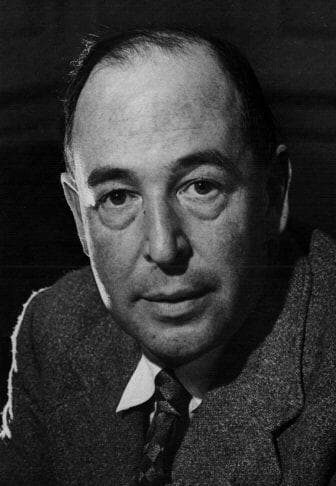
Clive Staples Lewis was a British writer, literary scholar, and Anglican lay theologian. He held academic positions in English literature at both Oxford University and Cambridge University. He is best known as the author of The Chronicles of Narnia, but he is also noted for his other works of fiction, such as The Screwtape Letters and The Space Trilogy, and for his non-fiction Christian apologetics, including Mere Christianity, Miracles, and The Problem of Pain.
Similar books
- The Return of the King
J.R.R. Tolkien
4.5 (679k) average on GoodreadsFantasyEpic conclusion to a fantasy series with profound themes and a sense of an ending world.
- A Wizard of Earthsea
Ursula K. Le Guin
4.0 (241k) average on GoodreadsFantasyLe Guin's novel offers a more nuanced exploration of good and evil, power, and self-discovery, focusing on internal moral struggles and the balance of nature rather than an explicit allegorical framework. It provides a less prescriptive, more ambiguous moral landscape, inviting readers to grapple with complex ethical questions without direct theological answers, unlike Lewis.
- Harry Potter and the Sorcerer's Stone
J.K. Rowling
4.5 (7M) average on GoodreadsFantasyRescued from a miserable life under the stairs, an orphaned boy discovers he's a wizard destined for a magical school, where he uncovers a dangerous secret tied to the dark wizard who murdered his parents.
- The Hunger Games
Suzanne Collins
4.3 (6.4M) average on GoodreadsFantasyIn a future where children fight to the death on live television, Katniss Everdeen volunteers for the arena, turning a death sentence into a fight for survival and a spark of rebellion.
- 1984
George Orwell
4.2 (3.1M) average on GoodreadsPoliticsIn a future where surveillance and thought control are absolute, a man's search for truth clashes with the Party, showing that hope can be a form of rebellion.
- Divergent
Veronica Roth
4.2 (2.9M) average on GoodreadsFantasyIn a society divided by virtues, a sixteen-year-old's difference from the norm starts a rebellion that threatens her world.






Enjoyed the summary?
A summary gives you the shape of the book. The book itself has the detail, the examples and the voice.
Find The Last Battle on AmazonAs an Amazon Associate, BookBrief earns from qualifying purchases. How we're funded