
Synopsis
Covers the whole plot, including the ending.
- Difficulty
- Easy
- Pacing
- Moderate
- Mood
- Atmospheric, Hopeful, Reflective, Thought-provoking
- Read it if
- You enjoy wordless graphic novels with powerful environmental messages and beautiful, intricate artwork.
- Skip it if
- You prefer text-heavy books or stories with explicit dialogue and complex character backstories.
Leaf Plot Summary
Covers the whole plot, including the ending.
The Discovery of Life
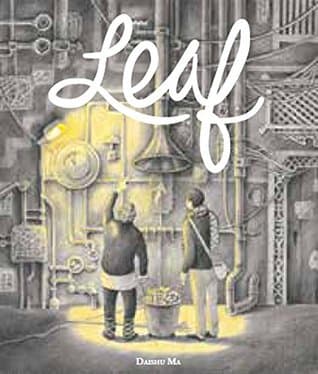
The story begins with a young, unnamed boy in a stark, barren world. The landscape is shown in muted grays and blues, without natural color or life. While exploring this desolate place, the boy finds a single, bright green leaf. This leaf glows softly, a strong contrast to its surroundings. Curious, and holding the glowing leaf, the boy heads back towards a large, detailed city, also rendered in the same somber colors, suggesting a world where nature is long forgotten. The leaf represents hope and a mystery to be solved in the lifeless city.
Return to the Somber City
Carrying the glowing leaf, the boy enters the large city. The city is a marvel of complex architecture and machinery, yet it feels cold and sterile, dominated by tall buildings and no natural elements. People move about, seemingly unaware of the bright object the boy holds. He navigates the winding streets and elevated walkways, the glowing leaf a beacon of warmth and color in the otherwise monochrome environment. His journey through the city highlights its lack of life and the stark contrast with the natural beauty he has found, setting the stage for his quest to understand its origin and meaning.
A Glimpse into the Ducts
While exploring the city, the boy meets an older man working near grates and pipes, maintaining the city's hidden infrastructure. The man, seeing the glowing leaf, gestures for the boy to follow him. He leads the boy into the winding ducts beneath the city, showing a network of pipes and machines that support the metropolis. Here, the man shows the boy how the city's vital resources are managed, hinting at a deeper, unseen system. This meeting is the first step in the boy's understanding that the city's sterile surface hides a complex, and possibly problematic, reality.
The Engineer's Revelation
Inside the ducts, the man, an engineer or maintenance worker, uses diagrams and gestures to explain the city's systems. He reveals that the city is self-sufficient, relying on machines to recycle and purify water and air, and to generate energy. He communicates, without words, how much the natural world has been replaced by artificial constructs. The glowing leaf in the boy's hand becomes even more important as the man shows the city's detachment from organic life, suggesting that the natural world outside is almost entirely depleted, forcing humanity to rely only on technology for survival.
The Botanist's Sanctuary
Continuing his search, the boy follows a subtle clue or feeling, leading him to a hidden part of the city. There, he finds a secluded sanctuary within a building, filled with carefully preserved and categorized plant specimens. He meets a woman, a botanist, who dedicates her life to studying these obsolete plants. Her workspace is a small, well-kept oasis of what once was, a strong contrast to the barren city. The glowing leaf immediately catches her attention, as it is a living example of what she only knows through dried and cataloged remnants, sparking a shared sense of wonder and urgency.
The Truth of Extinction
The botanist, through her extensive collection and silent communication, reveals the truth about the world's environment. She shows the boy ancient texts and images depicting a green past, contrasted with the dried, lifeless specimens she now studies. She communicates that most plant life has vanished, and the city relies on its artificial systems because the outside world is ecologically devastated. Her life's work is an act of preservation and a desperate hope that knowledge of nature will not be lost. The glowing leaf is not just a rarity but a miracle, a potential key to understanding or even reversing the environmental collapse.
A Shared Understanding
The boy and the botanist share a moment of understanding. The glowing leaf, initially just a curious find, is now seen as a symbol of dwindling life and a potential source of renewal. The botanist examines the leaf with awe and scientific curiosity, recognizing its unique vitality. The boy, having now seen both the city's artificiality and the remnants of nature, begins to grasp the urgency of their situation. Together, they form an unspoken alliance, united by the glowing leaf and the shared desire to understand its origin and what it might mean for their desolate world, setting the stage for a collaborative effort.
The Seed of Hope
As the boy and botanist observe the glowing leaf, it changes. The light it emits grows stronger, and it begins to show signs of budding or forming a seed. This suggests that the leaf is not just a relic but a living, generative entity, capable of propagation. This transformation elevates the leaf from a mere symbol to a tangible source of hope for reintroducing life into the barren world. The botanist, with her knowledge of plant life, recognizes the immense potential of this development, realizing that they hold the key to a possible ecological revival.
A Plan for Renewal
Inspired by the leaf's transformation, the boy and the botanist begin to plan. They work together, the botanist using her scientific expertise and the boy providing the drive and perhaps a connection to the outside world. Their goal is to cultivate the nascent life from the glowing leaf and eventually reintroduce it into the environment, both within and outside the city. The engineer, met earlier, might also help, perhaps by understanding how the city's systems could be adapted or bypassed to allow for natural growth. This marks a shift from discovery and understanding to active intervention and hope for the future.
Spreading the Green
With their plan in motion, the boy and the botanist, possibly aided by the engineer, begin to spread the new life. They carefully cultivate the seeds or plantlets from the glowing leaf. The process is painstaking, but gradually, small patches of green appear in the sterile city. These new plants, initially small and vulnerable, are the first steps towards ecological restoration. The sight of these new growths, even small ones, offers a strong visual contrast to the city's previous monochrome existence, symbolizing a gradual return to vibrancy and a challenge to the established artificial order.
The City Awakens
As the new plant life slowly takes root and expands, the city's people begin to notice the change. Initially, there may be confusion or indifference, but as more green appears, a sense of wonder and curiosity spreads. The bright colors and organic forms are a strong departure from their familiar, sterile environment. People pause, observe, and some even begin to interact with the new plants. This awakening among the populace signifies a shift in collective consciousness, as the beauty and importance of nature, long forgotten, begin to reassert themselves in the lives of the city dwellers, fostering a new appreciation for the natural world.
A Greener Future
The story ends with a vision of a transformed city. While still maintaining its architecture and infrastructure, the city is now interwoven with thriving plant life. Greenery spills from balconies, climbs walls, and fills previously barren spaces. The somber grays and blues are now punctuated by vibrant greens and other natural colors. The boy, botanist, and engineer observe the flourishing city, their mission accomplished. This new reality suggests a balance between human innovation and natural ecosystems, offering a hopeful message that even with environmental devastation, renewal is possible through discovery, collaboration, and a renewed appreciation for life.
Leaf Characters
The Protagonist
Protagonist
A curious young explorer who discovers the last living leaf.
The young, unnamed protagonist is a curious and observant individual, initially a solitary figure in a desolate world. He is driven by an innate sense of wonder and a desire to understand the mystery of the glowing leaf he finds. His journey through the city is one of discovery, not just of the leaf's origins, but of the environmental truth hidden beneath the city's sterile facade. He is a catalyst for change, bringing the spark of life and hope into a world that has forgotten it.
Relationships: The Botanist (collaborator and fellow seeker of truth); The Engineer (informer and potential ally)
The Botanist
Supporting
A dedicated scientist preserving the memory of flora.
The Botanist is a meticulous and passionate individual, living a solitary existence dedicated to studying and preserving the last remnants of plant life. She is a guardian of forgotten knowledge, surrounded by dried specimens and ancient texts. Her life's work is a testament to resilience and hope, even in the face of widespread environmental collapse. The discovery of the glowing leaf ignites her scientific curiosity and provides her with a living example of what she has only ever studied in abstract.
Relationships: The Protagonist (collaborator and shared visionary)
The Engineer
Supporting
A knowledgeable maintenance worker revealing the city's hidden systems.
The Engineer is a pragmatic and insightful individual, responsible for maintaining the complex, artificial systems that sustain the city. He understands the intricate workings of the city's infrastructure and the extent of its detachment from nature. While seemingly resigned to the city's artificiality, his willingness to share his knowledge with the protagonist suggests a deeper awareness or perhaps a quiet longing for something more. He provides crucial context about the city's reliance on technology and the absence of natural resources.
Relationships: The Protagonist (informer and guide to the city's underbelly)
The City Dwellers
Mentioned
The largely oblivious inhabitants of the sterile metropolis.
The City Dwellers represent the collective populace of the metropolis. They are depicted as living their lives within the confines of the sterile, artificial city, seemingly unaware or unconcerned with the absence of nature. They move through their days in muted colors, mirroring their environment. Their initial indifference highlights the pervasive disconnect from the natural world. However, their eventual awakening to the growing greenery signifies a collective shift in awareness and a renewed appreciation for life.
Leaf Themes
Environmental Degradation and Hope
The main theme is the clear depiction of a world damaged by environmental degradation, contrasted with the fragile hope for renewal. The desolate landscape and the sterile, grey city show the consequences of neglecting nature. The glowing leaf symbolizes this hope, representing life's potential to re-emerge even in the worst conditions. Scenes like the Botanist's collection of obsolete plants highlight the extent of loss, while the city's eventual re-greening offers a strong message that ecological restoration is possible through collective effort and a renewed appreciation for the natural world.
“A world where the vibrant green is a forgotten memory, until a single leaf ignites a flicker of hope.”
The Balance Between Nature and Technology
The book explores the delicate and often dangerous balance between technology and nature. The city is a marvel of engineering, self-sufficient but without organic life, showing the potential problems of relying too much on technology. The Engineer's role in revealing the city's complex, life-sustaining systems emphasizes humanity's dependence on technology. However, the story ultimately promotes a harmonious integration, where technology can support and coexist with nature, rather than replace it. The city's transformation, with greenery intertwining with its structures, visually represents this desired balance.
“The city breathed through pipes and wires, oblivious to the silence of the soil beneath.”
Discovery and Curiosity
The protagonist's journey is driven by a strong sense of discovery and curiosity. His first encounter with the glowing leaf sparks a quest for understanding, leading him to uncover his world's hidden truths. This theme shows the importance of individual initiative and how wonder can drive meaningful change. The silent communication between characters, relying on visual cues and shared observations, further emphasizes how discovery can bridge gaps and build connections, leading to a collective effort to restore life.
“In a world of muted colors, a single spark of green ignited an unquenchable curiosity.”
The Power of Collaboration
While the protagonist starts his journey alone, the story quickly becomes a strong example of the power of collaboration. The protagonist's discovery gains meaning and momentum through his interactions with the Engineer and, more importantly, the Botanist. Each character brings unique knowledge and skills – the protagonist's discovery, the Engineer's understanding of the city's mechanisms, and the Botanist's scientific expertise in plants. Their combined efforts are essential not only for understanding the leaf's importance but also for developing and executing the plan to reintroduce life, showing that collective action is vital for overcoming huge challenges.
“One leaf, one discovery, but a shared vision to paint the world anew.”
Plot Devices & Literary Techniques
The Glowing Leaf
A singular, vibrant object symbolizing life and hope.
The glowing leaf is the central plot device, acting as a MacGuffin that drives the entire narrative. Its vibrant color and radiant light immediately distinguish it from the desolate world, making it a powerful symbol of life, hope, and the forgotten natural world. It sparks the protagonist's curiosity, leads him to encounter other key characters (the Engineer and the Botanist), and ultimately becomes the catalyst for the city's ecological renewal. Its transformation into a seed further solidifies its role as the physical manifestation of hope and the means for restoration.
Wordless Narrative
Storytelling conveyed entirely through illustrations.
The book's wordless narrative is a crucial plot device that enhances its universal appeal and emotional impact. By relying solely on detailed illustrations, the story transcends language barriers, allowing readers of all ages and backgrounds to interpret and connect with the themes. This visual storytelling forces the reader to pay close attention to character expressions, environmental details, and symbolic imagery, fostering a deeper, more immersive experience. It also emphasizes the power of visual communication and shared understanding between characters and with the audience.
Color Contrast
The use of vibrant green against muted grays and blues.
The stark contrast between the vibrant green of the leaf and the prevailing muted grays and blues of the city and barren landscape is a powerful visual plot device. This color scheme immediately establishes the central conflict between lifelessness and vitality, and highlights the environmental degradation. The gradual introduction of green as life returns to the city serves as a visual indicator of progress and hope, allowing the reader to immediately grasp the narrative's emotional and thematic shifts without the need for dialogue or extensive exposition. It makes the 'greening' of the city a tangible, visually impactful resolution.
The Labyrinthine City
A complex, artificial metropolis symbolizing humanity's detachment from nature.
The meticulously wrought metropolis, with its towering structures, intricate ducts, and absence of natural elements, functions as a significant plot device. It represents humanity's complete reliance on artificial systems and its detachment from nature. Its labyrinthine quality emphasizes the protagonist's journey of discovery and the hidden truths within its depths (like the Engineer's domain and the Botanist's sanctuary). The city's eventual transformation, with nature interwoven into its architecture, visually embodies the narrative's hopeful message of a balanced future, where technology and nature can coexist.
Leaf Quotes
“The wind whispers stories to those who listen with their hearts.”
“To create is to breathe life into the unseen, to give form to a dream.”
“Even the smallest leaf can cast a shadow of hope.”
“Fear is a frost that nips at the edges of courage, but courage is the sun that melts it away.”
“Every color tells a different tale, every shade a different emotion.”
“Growth is not always upward; sometimes it is about spreading wider, deeper, stronger.”
“The most beautiful art is often found in the simplest forms.”
“To truly see, you must look beyond the surface, into the heart of things.”
“We are all connected, like threads in a vast, living tapestry.”
“Imagination is the soil where new worlds bloom.”
“Sometimes, the greatest journey is the one within.”
“Don't just exist; unfurl your unique pattern into the light.”
“The quiet moments are often when the loudest truths are revealed.”
Quiz
10 questions on the plot and the characters. Each answer comes with a short explanation.
Question 1
What is the primary color palette used to depict the metropolis in 'Leaf'?
- Bright reds and yellows
- Somber grays and blues
- Earthy greens and browns
- Vibrant purples and oranges
Show answer
B. Somber grays and blues The description explicitly states the metropolis is 'depicted in somber grays and blues,' contrasting with the vibrant leaf.
Question 2
What does the protagonist discover that initiates his quest in the metropolis?
- A glowing rock
- A vibrant, living leaf
- An ancient map
- A hidden door
Show answer
B. A vibrant, living leaf The story begins with the protagonist discovering 'a leaf that radiates a vibrant life,' which prompts his return to the city.
Question 3
What type of novel is 'Leaf' described as?
- A traditional prose novel
- A poetry collection
- A wordless graphic novel
- A picture book with minimal text
Show answer
C. A wordless graphic novel The book is explicitly called a 'wordless, all-ages graphic novel' in the description.
Question 4
Which character does the protagonist encounter who knows about the city's 'labyrinthine ducts'?
- A woman studying flora
- A man who knows what's happening in the ducts
- The city's mayor
- A child playing in the streets
Show answer
B. A man who knows what's happening in the ducts During his quest, the protagonist 'stumbles upon a man who knows what's really happening in the city's labyrinthine ducts.'
Question 5
What is the primary environmental issue revealed to the protagonist during his quest?
- Air pollution from factories
- Water scarcity due to drought
- The ever-dwindling environment
- Overpopulation in the city
Show answer
C. The ever-dwindling environment The protagonist discovers 'the truth about the ever-dwindling environment,' indicating a general decline in natural habitats.
Question 6
What is the occupation or primary focus of the woman the protagonist encounters?
- She is an architect designing new city structures.
- She is a historian documenting the city's past.
- She studies and classifies obsolete flora.
- She is a mechanic maintaining the city's machinery.
Show answer
C. She studies and classifies obsolete flora. The protagonist meets 'a woman who spends her life studying and classifying obsolete flora,' highlighting her connection to the lost natural world.
Question 7
How does the 'vibrant life' of the discovered leaf contrast with the initial depiction of the metropolis?
- The leaf is silent, while the city is noisy.
- The leaf is small, while the city is vast.
- The leaf radiates life and color, while the city is somber and gray/blue.
- The leaf is found outdoors, while the city is entirely indoors.
Show answer
C. The leaf radiates life and color, while the city is somber and gray/blue. The leaf 'radiates a vibrant life' while the metropolis is 'depicted in somber grays and blues,' creating a strong visual and thematic contrast.
Question 8
Considering 'Leaf' is a wordless graphic novel, what primary method is used to convey plot, character emotions, and thematic messages?
- Extensive internal monologues of the protagonist
- Detailed written descriptions provided by a narrator
- Visual storytelling through illustrations and panel sequences
- Dialogue bubbles with minimal text
Show answer
C. Visual storytelling through illustrations and panel sequences As a 'wordless graphic novel,' all aspects of the story—plot, character, and theme—must be conveyed through its visual art and sequential panels.
Question 9
What does the protagonist's journey from discovering the leaf to uncovering the truth about the environment primarily symbolize?
- The pursuit of fame and recognition within the city.
- An awakening to environmental decay and the search for understanding/solutions.
- A quest to find the origin of all leaves in the world.
- The protagonist's desire to escape the city permanently.
Show answer
B. An awakening to environmental decay and the search for understanding/solutions. The discovery of the vibrant leaf in a dying environment prompts a quest for answers, leading to the truth about the 'ever-dwindling environment,' symbolizing an awakening to ecological issues.
Question 10
Given the 'obsolete flora' studied by one character and the 'ever-dwindling environment,' what is a likely implication about the city's past or present relationship with nature?
- The city has always been completely devoid of plant life.
- Nature was once abundant but has been largely lost or forgotten by the city's inhabitants.
- The city actively cultivates new and unique plant species.
- The city is preparing for a massive reintroduction of diverse flora.
Show answer
B. Nature was once abundant but has been largely lost or forgotten by the city's inhabitants. The existence of 'obsolete flora' and a woman studying it suggests that plant life was once present and understood, but has since become rare or disappeared, indicating a significant loss of nature within or around the city.
Leaf FAQ
What is the central premise of 'Leaf'?
'Leaf' follows a young protagonist who discovers a single, vibrant green leaf in a desolate landscape. This leaf, radiating life and color, prompts him to return to his monochromatic, industrialized city in search of understanding its origin and significance.
How is the city depicted in 'Leaf' and what does its aesthetic suggest?
The metropolis is meticulously wrought in somber grays and blues, portraying a world devoid of natural color and life. This aesthetic starkly contrasts with the vibrant leaf, highlighting the city's industrialized, perhaps oppressive, nature and its disconnect from the natural world.
Who are the key characters the protagonist encounters during his quest?
The protagonist encounters three significant figures: a man who understands the city's labyrinthine ducts, a woman dedicated to studying obsolete flora, and ultimately, the truth about the city's dwindling environment. These characters provide crucial pieces to the puzzle of the leaf and the city's state.
What is the primary mystery the protagonist seeks to solve?
The protagonist's main quest is to understand the origin and meaning of the vibrant leaf he found. His journey is driven by a desire to comprehend how such a living, colorful object could exist in his otherwise sterile, grey world, and what it signifies for his city.
What does the 'labyrinthine ducts' in the city represent?
The labyrinthine ducts likely symbolize the hidden, complex infrastructure that sustains the city, possibly at the expense of its natural environment. The man who understands them acts as a guide to the city's deeper, unseen mechanisms, hinting at an underlying system controlling its resources.
What is the significance of the woman who studies 'obsolete flora'?
The woman studying obsolete flora highlights the city's severe environmental degradation, where once-common plants are now relics. Her role underscores the loss of biodiversity and the city's forgotten connection to nature, suggesting a past where green life was abundant.
Are there any clues to the city's past or how it became so devoid of nature?
While the book is wordless, the presence of the woman studying 'obsolete flora' strongly implies a past where nature thrived, which has since been lost. The city's somber, industrial depiction also suggests a gradual, perhaps deliberate, shift towards an artificial, controlled environment.
What might the single, vibrant leaf symbolize psychologically for the protagonist?
For the protagonist, the leaf likely symbolizes hope, a spark of life, and a call to action in an otherwise desolate world. Psychologically, it represents an awakening or a catalyst that disrupts his acceptance of the city's bleak reality, driving him to seek truth and change.
How does the protagonist's journey reflect a common psychological archetype?
The protagonist's journey aligns with the 'hero's journey' archetype, where an ordinary individual is called to adventure and undergoes transformation. He ventures into the unknown (the city's secrets), faces challenges, and ultimately gains a deeper understanding, returning with new knowledge.
What psychological impact does the city's monochromatic palette have on its inhabitants?
The city's monochromatic palette likely fosters a sense of apathy, conformity, and emotional suppression among its inhabitants. Without the vibrancy of nature, their lives may lack inspiration and a connection to the natural world, leading to a subdued collective psyche.
How does the discovery of the leaf change the protagonist's perception of his world?
The leaf shatters the protagonist's prior acceptance of his world's drabness, opening his eyes to the possibility of color and life. It transforms his perception from one of resignation to one of curiosity and determination to uncover the hidden truths of his environment.
Is 'Leaf' primarily an environmental allegory?
Yes, 'Leaf' functions strongly as an environmental allegory, using its visual narrative to critique industrialization and its impact on nature. The dwindling environment and the search for the leaf's origin directly address themes of ecological degradation and the importance of preserving natural life.
What is the ultimate message or 'truth' the protagonist uncovers about the environment?
The ultimate truth the protagonist uncovers is likely that the city's industrial practices are directly responsible for the depletion of its natural environment. He learns that the vibrancy of the leaf represents a lost past and a potential future, revealing the direct consequences of human actions on nature.
Given it's a wordless graphic novel, how does 'Leaf' convey complex themes effectively?
'Leaf' uses powerful visual storytelling, contrasting colors, detailed imagery, and character expressions to convey its complex themes. The stark difference between the vibrant leaf and the grey city, along with the characters' reactions, communicates the narrative and its deeper meanings without dialogue.
Does the ending offer hope, or is it a cautionary tale?
The ending likely offers a nuanced perspective, potentially both hopeful and cautionary. While the protagonist discovers the truth, the story might conclude with the challenge of what to do with that knowledge, suggesting that change is possible but requires conscious effort from the community.
How does the concept of 'creativity' manifest in the story?
Creativity manifests through the protagonist's imaginative pursuit of answers and the novel's own artistic expression. The leaf itself can be seen as a symbol of life's inherent creativity, and the protagonist's journey is a creative act of discovery and problem-solving in a seemingly uninspired world.
What role does the 'all-ages' aspect play in its thematic delivery?
The 'all-ages' aspect allows 'Leaf' to deliver its powerful environmental and psychological themes in an accessible way, without explicit language or overly complex plot points. Its visual nature makes it universally understandable, enabling readers of any age to grasp the core message about nature and humanity's connection to it.
Could the leaf be interpreted as a metaphor for an idea or a suppressed truth?
Absolutely. Beyond its literal representation of nature, the leaf can be seen as a metaphor for a vital idea, a forgotten truth, or a suppressed emotion within the city's sterile society. Its vibrant presence forces characters to confront what has been lost or ignored, sparking a quest for deeper understanding.
Similar books
- The Giver
Lois Lowry
4.1 (1.8M) average on GoodreadsFantasy"Leaf" shares dystopian themes with The Giver, but offers a more direct and actionable sense of hope and renewal, whereas The Giver leaves readers with a more ambiguous resolution. "Leaf" provides a clearer path to 'A Greener Future' compared to The Giver's uncertain ending.
- Ship Breaker
Paolo Bacigalupi
3.7 (40k) average on GoodreadsFantasyWhile both explore environmental dystopia, "Leaf" is more optimistic and focuses on renewal, whereas Ship Breaker delves into the harsh realities, ethical dilemmas, and grittier socio-economic consequences of resource scarcity with less immediate resolution. Ship Breaker offers a more complex and often bleak portrayal of environmental degradation, contrasting with "Leaf's" more hopeful and solution-oriented approach.
- Harry Potter and the Sorcerer's Stone
J.K. Rowling
4.5 (7M) average on GoodreadsFantasyRescued from a miserable life under the stairs, an orphaned boy discovers he's a wizard destined for a magical school, where he uncovers a dangerous secret tied to the dark wizard who murdered his parents.
- The Hunger Games
Suzanne Collins
4.3 (6.4M) average on GoodreadsFantasyIn a future where children fight to the death on live television, Katniss Everdeen volunteers for the arena, turning a death sentence into a fight for survival and a spark of rebellion.
- 1984
George Orwell
4.2 (3.1M) average on GoodreadsPoliticsIn a future where surveillance and thought control are absolute, a man's search for truth clashes with the Party, showing that hope can be a form of rebellion.
- Divergent
Veronica Roth
4.2 (2.9M) average on GoodreadsFantasyIn a society divided by virtues, a sixteen-year-old's difference from the norm starts a rebellion that threatens her world.






Enjoyed the summary?
A summary gives you the shape of the book. The book itself has the detail, the examples and the voice.
Find Leaf on AmazonAs an Amazon Associate, BookBrief earns from qualifying purchases. How we're funded