
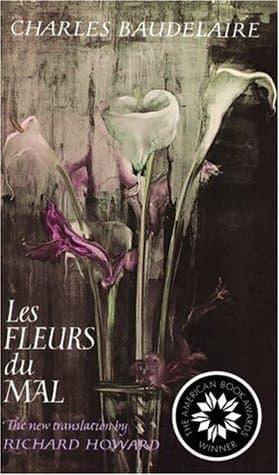
Synopsis
Covers the whole plot, including the ending.
- Difficulty
- Hard
- Pacing
- Moderate
- Mood
- Dark, Melancholy, Decadent, Reflective, Provocative
- Read it if
- You appreciate challenging, introspective poetry that explores the darker facets of human nature and urban life, or if you are interested in the origins of modernism and symbolism in literature.
- Skip it if
- You prefer light, optimistic poetry, or if you are uncomfortable with themes of decadence, despair, and the exploration of moral ambiguity.
Les Fleurs du Mal Plot Summary
Covers the whole plot, including the ending.
Au Lecteur (To the Reader)
The introductory poem, 'Au Lecteur,' is a direct address from Baudelaire to his audience. It immediately sets a bleak, cynical tone. He describes humanity as corrupt, driven by vice, and burdened by 'Ennui'—a deep boredom and spiritual unease he considers the worst sin. Baudelaire includes himself and the reader in this shared human condition, creating a sense of shared responsibility for universal depravity. This opening piece invites the reader into the dark psychological world of 'Les Fleurs du Mal,' preparing them for a journey through the underside of human experience and morality.
Spleen et Idéal (Spleen and Ideal)
The 'Spleen et Idéal' section, the largest in the collection, explores Baudelaire's main internal conflict: the struggle between seeking beauty, spiritual meaning ('Idéal'), and the heavy weight of existential despair and melancholia ('Spleen'). Poems like 'L'Albatros' show the poet's high, but isolated, place in society. 'Correspondances' suggests a spiritual unity in nature, hinting at a higher realm reached through the senses. However, this hope is constantly undercut by the pervasive 'Spleen,' seen in poems like 'Je suis comme le roi d'un pays pluvieux,' where the poet feels stifled by boredom, isolation, and decay. This reflects a deep inability to escape grim reality or find lasting comfort.
Tableaux Parisiens (Parisian Scenes)
In 'Tableaux Parisiens,' Baudelaire looks from his inner world to the outer one, showing vivid, often grim, pictures of 19th-century Paris. He presents the city not as a romantic ideal, but as a place of modernity, full of both fleeting beauty and deep human suffering. Poems like 'Les Petites Vieilles' gently observe the city's forgotten elderly women, highlighting their past lives and current despair. 'À une passante' captures a brief moment of connection and loss in the anonymous city, showing how quickly beauty and desire pass. Baudelaire turns the dirt, crowds, and grand buildings into a scene that reflects his own inner turmoil, finding a somber grandeur in the city's decay and its many inhabitants.
Le Vin (Wine)
The section 'Le Vin' explores the appeal and dangers of drinking as a way to escape life's harshness and the oppressive 'Spleen.' Baudelaire presents wine as a temporary comfort that can inspire poets, console workers, and even change a murderer's conscience. Poems like 'Le Vin des chiffonniers' show how wine offers a brief escape for the poor, letting them forget their misery and dream of glory. But this escape is always short-lived. Baudelaire suggests that these artificial paradises are deceptive. While wine can lift the spirit for a moment, it ultimately fails to provide true or lasting freedom from the human condition, often leading back to the original despair with greater intensity.
Fleurs du Mal (Flowers of Evil)
The section named 'Fleurs du Mal' directly addresses sin, corruption, and forbidden desires, embodying the collection's controversial title. Here, Baudelaire explores the twisted beauty found in vice, suffering, and the grotesque. Poems in this section often use images of decay, disease, and the demonic, challenging common ideas of morality and beauty. He finds a strange, dark appeal in things considered evil or taboo, suggesting that beauty can grow even from the most corrupt ground. This section is key to the collection's provocative nature, as Baudelaire openly explores the darker parts of human nature, seeking a unique aesthetic pleasure and truth within moral wrongdoing, often with both fascination and self-condemnation.
La Révolte (Revolt)
'La Révolte' is a short but powerful section where Baudelaire directly questions religious belief, social norms, and the perceived unfairness of the universe. In poems like 'Le Reniement de Saint Pierre,' he doubts divine justice and expresses deep disappointment with the Christian God, aligning himself with figures who defied heaven. This section has a stark, almost blasphemous, tone. The poet speaks of rebellion against a world he sees as flawed and oppressive. It shows a desperate desire for freedom and a refusal to passively accept suffering or moral limits, even if it means choosing a path of perceived damnation or intellectual defiance against a seemingly uncaring cosmos.
La Mort (Death)
The final section, 'La Mort,' faces the ultimate human fate with dread, acceptance, and a hint of hope for the unknown. Baudelaire sees death not just as an end, but as a possible escape from the pain of 'Spleen' and life's disappointments. Poems here consider the different forms death takes—for lovers, for the poor, for artists—and the comfort it might offer. In 'La Mort des amants,' death is romanticized as a final union. However, in 'La Mort des artistes,' it is seen as the moment an artist's true vision might finally appear. The overall tone is one of tired acceptance, suggesting that death might be the final journey to an 'unknown' that could bring either oblivion or a revelation, the ultimate 'new' experience.
Condemned Poems
Six poems, including 'Les Bijoux' and 'Léthe,' were censored for obscenity soon after 'Les Fleurs du Mal' was published in 1857. They were removed from later editions during Baudelaire's lifetime. These poems, often explicit in their exploration of eroticism, physical desire, and the darker aspects of sexual relationships, were deemed offensive to public morals by French courts. Their later return in complete editions shows their important place in Baudelaire's larger artistic goal: to explore the full range of human experience, including its most rebellious and sensual parts. These poems deepen the collection's themes of sin, beauty, and the pursuit of intense, often forbidden, feelings as a response to the widespread 'Spleen.'
The Figure of the Flâneur
Throughout 'Les Fleurs du Mal,' especially in 'Tableaux Parisiens,' Baudelaire embodies or describes the 'flâneur'—the detached observer of city life. This figure walks the streets of Paris, taking in its sights, sounds, and smells. He sees both its grandeur and its squalor, its fleeting beauty and its deep misery, without necessarily joining in. The flâneur observes humanity closely, finding inspiration in the anonymous crowds, beggars, street performers, and solitary figures. This viewpoint allows Baudelaire to create vivid, impressionistic pictures of modern city life, reflecting on anonymity, isolation, and the temporary nature of beauty in a changing world, all through a melancholic and critical lens.
The Quest for the Absolute
A constant theme throughout the collection is Baudelaire's persistent, often frustrated, search for an 'Absolute'—a transcendent truth, beauty, or spiritual ideal that exists beyond the ordinary and corrupt world. This search appears in different ways: the brief glimpses of the 'Idéal' in 'Correspondances,' the attempt to find comfort in art, the pursuit of intense sensory experiences, and even the embrace of vice as a way to a heightened state. Despite these efforts, the 'Absolute' often remains out of reach, constantly undermined by 'Spleen' and the limits of human life. This unending search, marked by both hope and despair, forms the core of Baudelaire's spiritual and aesthetic journey, defining much of the collection's emotional atmosphere and intellectual tension.
Principal Figures
The Poet (Charles Baudelaire)
Protagonist
The central consciousness, a tormented soul grappling with beauty, vice, and despair.
The Poet in 'Les Fleurs du Mal' is a complex, often contradictory figure, widely understood to be Baudelaire himself. He is a sensitive artist, deeply attuned to both the sublime and the grotesque, constantly caught between the 'Spleen' (melancholy, ennui, spiritual paralysis) and the 'Idéal' (aspiration for beauty, purity, transcendence). He is a keen observer of modern urban life, a 'flâneur,' yet also profoundly isolated. Driven by a desire for intense experience, he explores forbidden pleasures, sin, and decay, often with a sense of self-loathing and a yearning for redemption he never quite achieves. His internal conflict and intellectual honesty define his character.
Relationships: The Reader (Complicit in human sin, addressed directly and challenged.); Jeanne Duval (His 'Black Venus,' a muse for many erotic and melancholic poems, representing both desire and suffering.); The City (Paris) (Both a source of inspiration and a symbol of modern alienation and decay.)
Jeanne Duval
Muse/Supporting
Baudelaire's mistress, a source of both erotic inspiration and profound suffering.
Jeanne Duval, often referred to as Baudelaire's 'Black Venus,' was a Haitian-French actress and dancer who became his long-term mistress and muse. In 'Les Fleurs du Mal,' she is depicted as a figure of exotic beauty, sensuality, and mystery. Her presence inspires many of Baudelaire's most passionate, yet often tormented, love poems. She represents physical desire, the allure of the forbidden, and a certain wild, untamed nature. However, her portrayal is not without complexity; she also becomes associated with suffering, decay, and the destructive aspects of love, embodying the transient and often painful nature of human relationships.
Relationships: The Poet (Mistress and muse, a complex relationship marked by intense passion, dependency, and mutual torment.)
Satan/The Devil
Antagonist/Symbolic
A pervasive, symbolic force representing evil, temptation, and rebellion.
Satan, or the Devil, is not a literal character but a powerful symbolic presence throughout 'Les Fleurs du Mal.' He represents the pervasive nature of evil, the allure of temptation, and the spirit of rebellion against divine and societal norms. Baudelaire often invokes Satan as a figure of tragic grandeur, a fellow outcast, and a source of inspiration for challenging conventional morality. He embodies the destructive forces that plague humanity and the Poet's own soul, often appearing as a tempter who offers fleeting pleasures that lead to spiritual degradation. His presence underscores the collection's exploration of sin, blasphemy, and the darker aspects of human will.
Relationships: The Poet (Both a tempter and a figure of ironic admiration for his defiance; the Poet sometimes aligns with him in rebellion.)
Ennui
Antagonist/Conceptual
A profound spiritual boredom and existential despair, the ultimate human affliction.
Ennui, often translated as 'boredom' but encompassing a deeper sense of spiritual malaise, existential weariness, and profound dissatisfaction, is presented as the ultimate antagonist in 'Les Fleurs du Mal.' It is described in 'Au Lecteur' as the most monstrous of all vices, lurking like a silent predator. Ennui is not a character but a pervasive psychological state that afflicts the Poet and humanity alike, draining life of its meaning, rendering beauty meaningless, and making escape seem impossible. It is the root cause of the Poet's despair and his desperate search for intense experiences, whether through beauty, vice, or even death, to escape its suffocating grip.
Relationships: The Poet (The primary victim, constantly battling against its suffocating influence; a pervasive internal enemy.)
The City Dwellers
Supporting/Collective
The anonymous, suffering, and sometimes grotesque inhabitants of Paris.
The city dwellers are a collective 'character' in 'Tableaux Parisiens,' representing the diverse, often marginalized, population of 19th-century Paris. They include the elderly, the poor, the prostitutes, the beggars, and the anonymous passers-by. Baudelaire often observes them with a mixture of pity, fascination, and a sense of shared human frailty. These figures are not deeply developed individually but serve to populate the urban landscape, reflecting the harsh realities of modern life and the profound sense of isolation that can exist within a crowd. They are often depicted as victims of circumstance, their lives marked by struggle, fleeting joys, and inevitable decay, mirroring the Poet's own existential anxieties.
Relationships: The Poet (Observed subjects, often seen with empathy or as reflections of the Poet's own internal state.)
The Ideal
Conceptual/Supporting
The elusive aspiration for beauty, purity, and spiritual transcendence.
The 'Idéal' is a conceptual 'character' representing Baudelaire's yearning for an unattainable realm of perfect beauty, spiritual purity, and transcendent harmony. It stands in stark contrast to the 'Spleen' and the corrupting influences of the material world. The Idéal is glimpsed in moments of artistic inspiration, in the sublime aspects of nature ('Correspondances'), and in the purity of certain forms of love, though it is rarely sustained. It acts as a guiding, though often frustratingly distant, star for the Poet, driving his artistic endeavors and his search for meaning beyond the mundane. Its elusiveness contributes to the Poet's melancholic state.
Relationships: The Poet (A longed-for state or vision, constantly pursued but rarely achieved; a source of both hope and frustration.)
Death
Conceptual/Supporting
The ultimate escape or final unknown, contemplated with both dread and longing.
Death, in 'Les Fleurs du Mal,' is a conceptual 'character' that looms large, particularly in the final section. It is presented not merely as an end, but as a potential solution to the torments of life and the suffocating grip of 'Spleen.' Baudelaire explores various facets of death: as a liberator, a final journey, an unknown that might hold either oblivion or revelation. While often viewed with a sense of dread, there is also a profound longing for its arrival, as it promises an escape from suffering and the possibility of a new beginning, or at least a cessation of pain. It is the ultimate mystery and the final destination in the Poet's melancholic journey.
Relationships: The Poet (The ultimate destination, contemplated with both fear and a weary acceptance; a potential liberator from 'Spleen.')
The Reader
Mentioned/Implied
Addressed directly, implicated in the universal human condition of sin and ennui.
The Reader is an implied character, directly addressed in the opening poem 'Au Lecteur.' Baudelaire establishes a confrontational yet intimate relationship, accusing the reader of sharing the same vices, particularly 'Ennui,' as the poet himself. This direct address breaks the fourth wall, drawing the audience into the collection's dark moral landscape and preventing them from maintaining a comfortable distance. The Reader is thus made complicit in the human condition described, forced to confront their own potential for depravity and spiritual weariness. This technique serves to universalize the themes and make the work profoundly personal for each individual who engages with it.
Relationships: The Poet (Accused accomplice in human sin, directly addressed and challenged.)
Themes & Insights
Spleen and Idéal
This is the main contrast of the collection, showing the ongoing struggle between spiritual goals and deep existential despair. 'Spleen' includes boredom, sadness, spiritual paralysis, and a feeling of being trapped by the ordinary and corrupt parts of life. It is a suffocating weight that keeps the soul from rising. In contrast, 'Idéal' represents the desire for beauty, purity, transcendence, and spiritual elevation. Baudelaire constantly moves between these two extremes, finding brief moments of the ideal in art, love, or even vice, only to be pulled back down by the overwhelming 'Spleen.' This tension appears in poems like 'L'Albatros,' where the poet's high spirit is brought down by earthly scorn, and 'Je suis comme le roi d'un pays pluvieux,' where 'Spleen' makes even a king miserable.
“Ô Mort, vieux capitaine, il est temps! levons l'ancre! / Ce pays nous ennuie, ô Mort! Appareillons!”
Beauty in Ugliness/Evil
Baudelaire redefines beauty, finding it not only in the traditionally sublime but also in the grotesque, the decaying, the morally wrong, and urban squalor. He challenges common ideas of beauty by suggesting that true beauty can come from unexpected, often dark, places. This theme is central to the collection's title, 'Flowers of Evil,' meaning that something beautiful (flowers) can grow from something inherently corrupt (evil). Poems like 'Une Charogne' ('A Carcass') vividly describe a rotting corpse, yet turn it into a reflection on life and death's cycle, and a strange, unsettling beauty. Similarly, his descriptions of Parisian poverty and vice ('Les Petites Vieilles') find a tragic dignity and aesthetic value in human suffering and decay, making the reader confront uncomfortable truths about beauty's origins.
“Tu m'as donné ta boue et j'en ai fait de l'or.”
Modernity and Urban Alienation
Baudelaire is often called the poet of modernity, capturing the essence of 19th-century city life and its psychological effects. The 'Tableaux Parisiens' section vividly shows the busy, anonymous, and often brutal scene of Paris. He explores alienation, isolation in crowds, the temporary nature of human connection in the city, and the rapid decay and renewal typical of modern cities. The 'flâneur'—the detached observer of city life—is central to this theme, allowing Baudelaire to absorb and reflect on the city's fragmented beauty and deep misery. Poems such as 'À une passante' show the brief encounters and loneliness in the urban maze, where deep connection is glimpsed but immediately lost, highlighting the dehumanizing aspects of modern city life.
“Fourmillante cité, cité pleine de rêves, / Où le spectre en plein jour raccroche le passant.”
Escapism and Artificial Paradises
Facing overwhelming 'Spleen' and life's bleakness, Baudelaire explores various forms of escape. These often lead to 'artificial paradises' that offer temporary relief but ultimately fail. These include intoxication (wine, drugs), exoticism, sensuality, and the pursuit of intense, often forbidden, experiences. The 'Le Vin' section directly discusses the appeal of alcohol as a way to forget suffering and achieve a fleeting sense of transcendence or inspiration. However, Baudelaire consistently shows these escapes as deceptive and unsustainable, leading back to a deeper sense of disappointment and despair. The artificial paradise, while offering momentary rest, cannot provide true or lasting freedom from the human condition, emphasizing the pointlessness of trying to outrun one's own inner pain.
“L'opium agrandit ce qui n'a pas de bornes, / Allonge l'illimité, / Approfondit le temps, creuse la volupté, / Et de noirs plaisirs les âmes informent.”
The Nature of Sin and Guilt
Baudelaire deeply examines sin, guilt, and moral wrongdoing, often with a confessional and self-critical tone. He explores not only common vices like lust and pride but also the more subtle 'Ennui' as the ultimate sin. He is fascinated by the appeal of forbidden acts and the beauty found in decay and corruption, challenging traditional Christian morality. Yet, despite his use of 'evil' as an artistic source, there is a pervasive sense of guilt, regret, and a longing for redemption that is never fully achieved. This internal conflict between attraction to sin and the pain of conscience is a constant thread, suggesting that even in rebellion, the shadow of moral judgment remains. The 'Fleurs du Mal' section explicitly explores these themes, finding dark beauty in depravity.
“C'est le Diable qui tient les fils qui nous remuent!”
Plot Devices & Literary Techniques
Symbolism
Use of evocative objects, colors, and concepts to represent abstract ideas.
Baudelaire is a master of symbolism, using concrete images to evoke abstract ideas and emotions. For instance, the albatross symbolizes the poet's majestic but clumsy spirit in the mundane world. Colors like black and gold often represent decay and spiritual alchemy, respectively. Flowers, particularly the titular 'Fleurs du Mal,' symbolize beauty blooming from corruption. The city of Paris itself becomes a symbol of modern alienation and fragmented beauty. These symbols are not always straightforward, often carrying multiple, sometimes contradictory, meanings, enriching the poems with layers of interpretation and contributing to the collection's enigmatic and dream-like quality. This device allows Baudelaire to explore complex psychological states and philosophical concepts without explicit statement.
Synesthesia
Blending of sensory experiences to create rich, multi-sensory imagery.
Synesthesia is a key device, particularly evident in 'Correspondances,' where Baudelaire describes 'perfumes, colors, and sounds respond[ing] to each other.' He frequently mixes sensory perceptions, such as describing a scent as 'sweet as oboes, green as prairies,' or a sound as having a color. This blending of senses creates a heightened, immersive, and often disorienting experience for the reader, reflecting the poet's own intense and sometimes overwhelming sensory perceptions. It suggests a deeper, underlying unity in the universe, where different sensory inputs are interconnected, and allows Baudelaire to evoke complex emotional and spiritual states that transcend conventional description, blurring the lines between the physical and the metaphysical.
Irony and Paradox
Juxtaposition of contradictory ideas or a disconnect between expectation and reality.
Irony and paradox are pervasive in 'Les Fleurs du Mal,' reflecting Baudelaire's cynical worldview and his exploration of contradictions in human nature. The very title, 'Flowers of Evil,' is a prime example of paradox, suggesting beauty found in corruption. He often uses irony to critique society, religion, and even himself, presenting noble aspirations that lead to degradation, or finding profound truth in what is conventionally deemed ugly or sinful. For instance, the poet's yearning for the 'Idéal' often leads him into the depths of 'Spleen.' This device highlights the inherent tensions and hypocrisies Baudelaire perceives in life, morality, and art, challenging readers to question their preconceived notions and embrace complexity.
Confessional Tone
Direct address to the reader, revealing personal struggles and complicity.
The confessional tone, established most prominently in 'Au Lecteur,' draws the audience directly into the poet's internal world. Baudelaire speaks openly about his vices, his despair, and his spiritual struggles, blurring the line between the poetic persona and his own life. This directness creates an intimate, almost conspiratorial relationship with the reader, who is invited to share in the poet's 'sins' and 'ennui.' This device makes the themes universal, suggesting that the struggles depicted are not unique to the poet but are common to all humanity. It fosters a sense of shared culpability and forces the reader to confront their own potential for depravity, making the experience of reading both intensely personal and intellectually challenging.
Les Fleurs du Mal Quotes
“O you, the most beautiful of all, the most cherished of all, I adore you!”
“For it is the property of the devil to be a poet, and of the poet to be a devil.”
“The world is a hospital where every patient is possessed by the desire of changing his bed.”
“In the blackness of the night, the eye of the poet is a lamp.”
“I am like the king of a rainy country, rich but impotent, young though old.”
“Be always drunken. That's the point; nothing else matters. If you would not feel the horrible burden of Time weighing on your shoulders and crushing you to the earth, be drunken continually.”
“The poet is like the prince of the clouds who haunts the tempest and scorns the archer.”
“We often say that the poet is an idler, but he is never more active than when he is doing nothing.”
“Death is a ship that takes us to an unknown shore.”
“Oh, bitter truth! Oh, sacred lie! Oh, beautiful poison! Oh, blessed knife!”
“The gas-lamps make a bloody stain upon the pavement where a woman weeps and prays.”
“My soul is a cemetery where the moon, with its pale light, wanders like a ghost.”
“I have more memories than if I had lived a thousand years.”
“The devil holds the threads that move us!”
Quiz
10 questions on the plot and the characters. Each answer comes with a short explanation.
Question 1
Which of the following themes is most central to 'Les Fleurs du Mal'?
- The celebration of nature's pristine beauty and innocence.
- The exploration of urban decay, sensuality, and spiritual anguish.
- The glorification of traditional romantic love and chivalry.
- The advocacy for political revolution and social reform.
Show answer
B. The exploration of urban decay, sensuality, and spiritual anguish. 'Les Fleurs du Mal' is renowned for its unflinching portrayal of the darker aspects of human experience, including the squalor of city life, eroticism, and a profound sense of spleen and spiritual suffering.
Question 2
What literary movement is Charles Baudelaire often associated with, particularly through 'Les Fleurs du Mal'?
- Romanticism
- Realism
- Symbolism
- Classicism
Show answer
C. Symbolism Baudelaire is widely considered a precursor to the Symbolist movement, influencing poets with his use of symbols, synesthesia, and exploration of inner states.
Question 3
The collection 'Les Fleurs du Mal' was subject to a legal trial in 1857. What was the primary charge against it?
- Political sedition
- Blasphemy
- Outrage to public decency and good morals
- Plagiarism
Show answer
C. Outrage to public decency and good morals The original 1857 edition of 'Les Fleurs du Mal' led to a trial where Baudelaire and his publishers were convicted of 'outrage to public decency and good morals,' resulting in the suppression of six poems.
Question 4
Which of these famous poems is NOT typically found in 'Les Fleurs du Mal'?
- L'Albatros
- Correspondances
- Le Bateau ivre
- Spleen et Idéal (section title)
Show answer
C. Le Bateau ivre 'Le Bateau ivre' is a famous poem by Arthur Rimbaud, not Charles Baudelaire. 'L'Albatros' and 'Correspondances' are iconic poems from 'Les Fleurs du Mal,' and 'Spleen et Idéal' is the longest section of the collection.
Question 5
In the poem 'L'Albatros,' what do the large wings of the albatross symbolize after it is captured by sailors?
- Its majestic power and freedom in its natural element.
- The poet's genius and his inability to function in the mundane world.
- The burden of past sins and moral failings.
- The vastness of the ocean and the mysteries it holds.
Show answer
B. The poet's genius and his inability to function in the mundane world. The albatross's large wings, which allow it to soar gracefully in the sky, become cumbersome and make it clumsy on the ship's deck, symbolizing the poet's elevated spirit that struggles in the ordinary, often hostile, world.
Question 6
The concept of 'spleen' in Baudelaire's work, particularly in the section 'Spleen et Idéal,' refers to:
- A physical illness affecting the spleen organ.
- A deep sense of melancholia, ennui, and existential despair.
- A passionate desire for social justice and equality.
- The vibrant energy and excitement of urban life.
Show answer
B. A deep sense of melancholia, ennui, and existential despair. 'Spleen' is a key concept in Baudelaire's poetry, representing a profound state of spiritual and emotional exhaustion, a suffocating boredom, and a sense of the futility of existence, often contrasted with the pursuit of 'Idéal' (ideal).
Question 7
Which section of 'Les Fleurs du Mal' primarily deals with the poet's engagement with the city of Paris and its diverse inhabitants?
- Spleen et Idéal
- Tableaux Parisiens
- Le Vin
- Fleurs du Mal
Show answer
B. Tableaux Parisiens 'Tableaux Parisiens' (Parisian Scenes) is a dedicated section within 'Les Fleurs du Mal' where Baudelaire vividly depicts the streets, crowds, and various figures of 19th-century Paris, exploring its beauty and its decay.
Question 8
The poem 'Correspondances' introduces a fundamental Symbolist idea. What is it?
- The idea that nature is a temple where living pillars speak confused words.
- The concept of universal analogy, where senses and spiritual realms intertwine.
- The belief that all human suffering is a direct result of divine punishment.
- The notion that true beauty can only be found in the exotic and the foreign.
Show answer
B. The concept of universal analogy, where senses and spiritual realms intertwine. 'Correspondances' articulates the Symbolist concept of synesthesia and the idea that the material world is full of symbols and 'correspondences' that link the physical senses to deeper spiritual truths and emotions.
Question 9
How does the poet often portray women in 'Les Fleurs du Mal'?
- Exclusively as pure, ethereal beings inspiring divine love.
- As figures embodying both idealized beauty and dangerous sensuality, often leading to destruction.
- Primarily as symbols of domesticity and maternal affection.
- As intellectual companions engaging in philosophical debate.
Show answer
B. As figures embodying both idealized beauty and dangerous sensuality, often leading to destruction. Baudelaire's women are complex, often oscillating between being objects of idealized adoration and sources of profound torment, representing both the sublime and the depraved, drawing the poet into both ecstasy and despair.
Question 10
The concluding section of 'Les Fleurs du Mal' is titled 'La Mort' (Death). What is the prevailing sentiment or perspective presented in this section?
- Death is presented as a terrifying end, devoid of any hope or meaning.
- Death is embraced as a potential journey to the unknown, a new hope after life's miseries.
- Death is viewed as a natural cycle of renewal and rebirth.
- Death is merely a transition to a peaceful, idyllic afterlife.
Show answer
B. Death is embraced as a potential journey to the unknown, a new hope after life's miseries. In 'La Mort,' Baudelaire presents death not as a definitive end, but as a final voyage, an ultimate escape from the 'spleen' of life, offering a sense of hope for something new, even if it is an unknown abyss.
Les Fleurs du Mal FAQ
What is the central theme explored in 'Les Fleurs du Mal'?
'Les Fleurs du Mal' centrally explores the themes of Spleen and Ideal, a dichotomy representing the poet's struggle between the mundane, corrupting reality of urban life and his yearning for beauty, transcendence, and spiritual elevation. This manifests through vivid imagery of Parisian decay juxtaposed with dreams of exotic lands and pure love, often ending in disillusionment.
Who is the primary 'narrator' or poetic voice throughout the collection?
The primary poetic voice is Charles Baudelaire himself, or at least a highly autobiographical persona deeply entangled with his own experiences, observations, and psychological state. This persona, often referred to as 'the Poet,' grapples with moral dilemmas, aesthetic pursuits, and the oppressive weight of existence within 19th-century Paris.
What role does the city of Paris play in the poems?
Paris is not merely a setting but a living, breathing character, a 'monstre doux' that both inspires and suffocates the poet. It's depicted as a labyrinth of squalor, vice, and fleeting beauty, a source of both artistic inspiration and profound despair, embodying the very 'spleen' that pervades the collection.
What was the significance of the 1857 publication and subsequent legal trial?
The 1857 publication was groundbreaking but immediately led to a trial for obscenity and blasphemy, resulting in the censorship of six poems deemed immoral. This event cemented Baudelaire's reputation as a controversial figure and highlighted the clash between his innovative aesthetic and the conservative moral standards of Second Empire France.
How does the structure of the book, divided into sections like 'Spleen et Idéal' and 'Tableaux Parisiens,' contribute to its overall meaning?
The structural divisions, particularly 'Spleen et Idéal' and 'Tableaux Parisiens,' guide the reader through the poet's psychological journey, first establishing the core conflict between despair and aspiration, then grounding it in the specific, often sordid, reality of urban life. Later sections like 'Le Vin' and 'Fleurs du Mal' explore various escapes and the ultimate embrace of depravity, culminating in 'La Mort' as the final release.
Are there any recurring symbols or leitmotifs that link different poems?
Yes, several symbols recur: the albatross represents the misunderstood poet; cats symbolize sensuality and mystery; mirrors reflect self-scrutiny and illusion; and the figure of the prostitute embodies both degradation and a perverse form of beauty. These motifs weave through various poems, reinforcing Baudelaire's consistent thematic concerns.
What is the implied connection between the 'Femmes Damnées' poems and the collection's broader exploration of sin and damnation?
The 'Femmes Damnées' poems, featuring lesbian lovers, directly confront societal taboos and explore alternative forms of love and desire, often portrayed as both liberating and leading to damnation. They serve as a microcosm of the collection's broader exploration of forbidden pleasures, the beauty found in transgression, and the ultimate, often self-inflicted, suffering that accompanies such choices, blurring lines between sacred and profane.
How does Baudelaire use synesthesia in his poetry, and what effect does it create?
Baudelaire frequently employs synesthesia, as famously seen in 'Correspondances' where 'perfumes, colors, sounds correspond.' He blends sensory experiences—describing a scent as 'sweet as oboes' or a color as 'rich as a velvet fabric'—to create a richer, more immersive, and often unsettling sensory landscape, suggesting a deeper, hidden unity or 'correspondence' in the universe that can only be perceived by the sensitive artist.
What is the significance of the dedications to Théophile Gautier and Jeanne Duval?
The dedication to Théophile Gautier acknowledges him as an 'impeccable poet' and a master of 'art for art's sake,' aligning Baudelaire with a specific aesthetic movement. Jeanne Duval, Baudelaire's 'Black Venus,' is a central muse and figure in many poems, representing exoticism, sensuality, and often destructive love, her presence revealing the poet's complex relationship with desire and suffering.
How does the poet's relationship with figures like Jeanne Duval, Madame Sabatier, and Marie Daubrun reflect his psychological state?
His relationships with Jeanne Duval (the sensual, exotic muse), Madame Sabatier (the idealized, spiritual muse), and Marie Daubrun (the melancholic, delicate muse) reveal the poet's fragmented desires and internal conflicts. He projects different facets of his 'Ideal' and 'Spleen' onto each woman, illustrating his inability to find complete fulfillment in any single person and his constant oscillation between physical desire and spiritual yearning.
What psychological concept does 'Spleen' represent in Baudelaire's work?
'Spleen' represents a profound, existential melancholia, a state of ennui, despair, and spiritual paralysis that transcends simple sadness. It's a psychological burden characterized by a sense of futility, disgust with the world, and an inability to find joy or meaning, often manifesting as a suffocating mental fog that traps the poet within himself.
How does Baudelaire's exploration of vice and depravity relate to his own internal moral compass?
Baudelaire's exploration of vice is not necessarily an endorsement but a meticulous, often agonizing, psychological examination. He delves into depravity to understand the human condition, believing that beauty can be found even in corruption, and that confronting evil is a path to self-knowledge. This reveals a complex moral compass, one that is deeply aware of sin yet drawn to its aesthetic potential, often leading to self-reproach.
Is there a sense of redemption or hope present in the collection, or is it overwhelmingly pessimistic?
While overwhelmingly pessimistic, 'Les Fleurs du Mal' does offer fleeting moments of transcendence and beauty, often through art itself. However, these are typically overshadowed by the pervasive 'Spleen' and the inevitability of death. Redemption, if it exists, is found in the very act of poetic creation—transforming suffering into art—rather than in conventional moral or spiritual salvation.
How does Baudelaire challenge traditional notions of beauty in his poetry?
Baudelaire radically challenges traditional notions of beauty by finding it in the grotesque, the morbid, the ephemeral, and even the morally repugnant. He argues for a 'modern beauty' that embraces urban decay, suffering, and vice, transforming them into aesthetic objects. This is evident in poems that describe corpses, prostitutes, and the squalor of Paris, asserting that beauty can emerge from unexpected, even shocking, sources.
In what ways can 'Les Fleurs du Mal' be considered a foundational text of Modernism?
'Les Fleurs du Mal' is foundational to Modernism through its radical subject matter, urban sensibility, and innovative form. It breaks from Romanticism by embracing the dark realities of modern life, psychological complexity, and the fragmentation of experience. Baudelaire's emphasis on the artist's subjective perception, the autonomy of art, and his exploration of alienation and ennui directly prefigure key Modernist concerns and techniques.
What is the ultimate 'flower' that 'blooms' from 'evil' in the collection's title?
The ultimate 'flower' that blooms from 'evil' is the poetry itself – the aesthetic transformation of suffering, sin, and the ugliness of modern existence into art. Baudelaire suggests that beauty and profound insight can be cultivated from the very depths of human depravity and despair, thereby giving meaning to suffering through artistic creation.
How does the theme of exile, both physical and spiritual, manifest in the poems?
Exile manifests through the poet's sense of alienation from society, his inability to find belonging, and his yearning for an exotic, unattainable 'elsewhere.' He feels like an outcast ('L'Albatros'), a stranger in his own city, and spiritually adrift, constantly seeking escape through drugs, alcohol, or imaginary voyages, yet always returning to his internal prison of 'Spleen.'
What is the role of the devil or Satan in the collection?
The devil, or Satan, plays a significant role not just as a religious figure but as a personification of temptation, rebellion, and the darker impulses within humanity. Baudelaire often invokes Satan as a co-conspirator or a source of perverse inspiration, particularly in the later, more transgressive poems, reflecting a fascination with evil and a challenge to conventional morality.
About the author
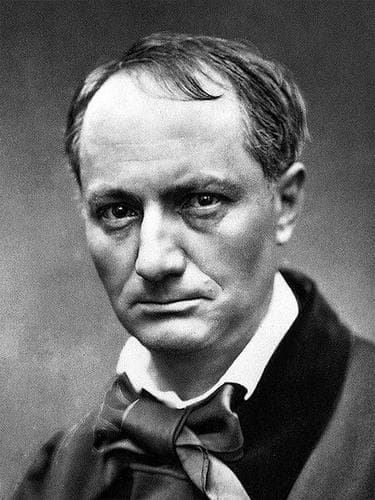
Charles Pierre Baudelaire was a French poet who also worked as an essayist, art critic and translator. His poems are described as exhibiting mastery of rhyme and rhythm, containing an exoticism inherited from Romantics, and are based on observations of real life.
Similar books
- The Waste Land
T.S. Eliot
4.1 (43k) average on GoodreadsFictionDepicts the spiritual and cultural decay of modern society through fragmented, symbolic verse.
- A Season in Hell
Arthur Rimbaud
4.1 (4k) average on GoodreadsFictionA confessional, intense exploration of personal torment, rebellion, and the search for meaning.
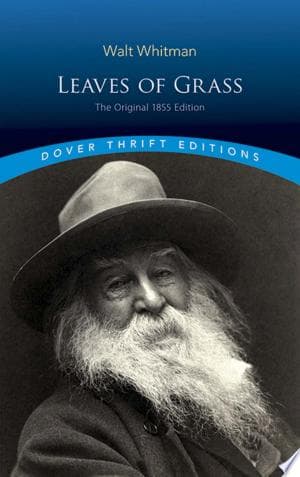
- Leaves of Grass
Walt Whitman
4.1 (90k) average on GoodreadsPhilosophyWhile both Baudelaire and Whitman revolutionized poetry in their respective countries, their approaches differed significantly. Whitman's Leaves of Grass (1855) embraces expansiveness, democratic ideals, and a celebration of the self and nature, often employing free verse and an optimistic, inclusive tone. In contrast, Les Fleurs du Mal is characterized by its formal rigor, introspective focus on individual suffering and urban decay, and a darker, more pessimistic outlook on humanity and modernity. Baudelaire's urban flâneur contrasts sharply with Whitman's wandering, all-encompassing self.
- Nineteen Eighty-Four
George Orwell
4.2 (5.5M) average on GoodreadsFictionWinston Smith dreams of truth and rebellion in a world where Big Brother watches all, but he confronts the terrifying power of a regime that controls not just actions, but thoughts.
- The Frozen River
Ariel Lawhon
4.4 (600k) average on GoodreadsFictionIn 1789 Maine, a heroic midwife's diary helps her expose a murder and get justice in a town that wants to silence her.
- A Man Called Ove
Fredrik Backman
4.4 (569k) average on GoodreadsFictionA stubborn widower, who lives by strict rules, finds his quiet world changed by a lively new family next door, making him face his past and find happiness in human connection.



Enjoyed the summary?
A summary gives you the shape of the book. The book itself has the detail, the examples and the voice.
Find Les Fleurs du Mal on AmazonAs an Amazon Associate, BookBrief earns from qualifying purchases. How we're funded