
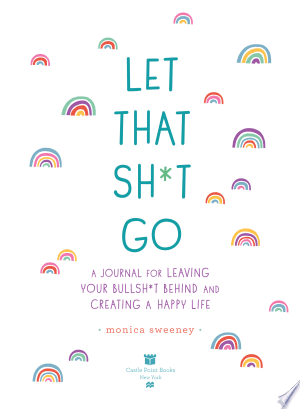
Core Idea
- Difficulty
- Easy
- Read it if
- You're feeling overwhelmed by minor annoyances, want a no-nonsense approach to stress relief, or enjoy self-help with a humorous, irreverent tone.
- Skip it if
- You are offended by profanity, prefer academic or deeply philosophical self-help, or are looking for extensive psychological research.
Key Takeaways from Let That Sh*t Go
The Burden of Bullsh*t
Unexamined emotional baggage weighs you down, preventing joy.
Many people carry a lot of emotional "bullsh*t" without knowing it. This includes unresolved anger, past hurts, worries about the future, and always seeking approval or revenge. This mental and emotional clutter is not harmless; it drains energy, clouds judgment, and reduces real happiness. The book's journal prompts suggest that this inner noise causes constant, low-level stress, stopping people from being present and enjoying life's simple pleasures. Understanding how much energy is lost by holding onto these negative emotions is the first important step toward freedom.
“Harboring grudges and plotting revenge takes a lot of energy.”
In the book: The book's entire premise is built on the idea that holding onto negativity is detrimental and energy-consuming, rather than citing specific studies, it's a foundational assertion for its therapeutic approach.
Try this: Conduct a mental inventory of recent instances where you felt drained or overwhelmed. Identify if these feelings stemmed from replaying past grievances or worrying about future 'what-ifs.' Actively acknowledge the energy drain these thoughts cause.
Related ideas: emotional-baggage, energy-drain, mental-clutter
Profanity as Catharsis
Using 'f*ck' isn't just rude; it's a powerful release valve.
Sweeney's method relies heavily on how profanity can help. The planned use of "fck" and "sht" in the journal is a direct, open way to show frustration, anger, and the desire to let go. In a society that often limits how emotions are shown, especially for women, this strong language gives permission to be real and authentic. It skips polite words and directly addresses intense feelings, offering a strong release that more "polite" language might weaken. This is not about being vulgar for no reason, but about using the impact of certain words to find deeper emotional honesty and release.
“With Let That Sh*t Go, you’ll find moments of profanity-laced catharsis and joy through journaling activities.”
In the book: The very title and consistent language of the book serve as evidence, demonstrating the author's intentional use of profanity as a tool for emotional release and authenticity.
Try this: When journaling about something truly frustrating, allow yourself to use strong, 'unfiltered' language. Don't censor; write exactly what comes to mind, even if it feels aggressive or impolite. Notice the feeling of release.
Related ideas: catharsis, emotional-release, authentic-expression
The Power of Not Giving a F*ck
True bliss arises from detachment, not constant striving or revenge.
The book's main idea supports the strong act of "not giving a f*ck" as a way to real happiness. This is not about being uncaring, but about choosing to detach from outcomes, others' opinions, and the need for approval or revenge. It is an active choice to take back your mental energy from things that do not help your well-being. Instead of putting emotional effort into past wrongs or future worries, the book encourages focusing on present happiness. This detachment frees up mental space, allowing for a more authentic and unburdened life where personal peace is more important than outside drama or social pressures.
“True bliss can be found in simply not giving a f*ck.”
In the book: The book explicitly contrasts the energy spent on 'plotting revenge' with the 'true bliss' found in 'simply not giving a f*ck,' highlighting detachment as a superior path to happiness.
Try this: Identify one area where you frequently 'give too many f*cks' (e.g., a critical colleague, social media validation). For one day, consciously practice observing without emotional investment. Notice how much lighter you feel.
Related ideas: detachment, mindfulness, inner-peace
Journaling as a Release Valve
Writing provides a structured outlet for unburdening your mind.
The book, as a journal, highlights the benefits of writing. Journaling is not just for reflection; it is an active way to release strong emotions and thoughts. By putting internal "bullsh*t" on paper, people can gain distance and perspective. Writing, especially with permission to be raw and unfiltered (as the book's tone encourages), allows for a full emotional clearing. It is a private space where judgment is absent, allowing honest self-expression and processing difficult feelings without fear. This systematic release helps clear mental space and improves emotional control.
“you’ll find moments of profanity-laced catharsis and joy through journaling activities and inspirations.”
In the book: The format of the book itself, being a journal with 'journaling activities,' is the primary evidence for this takeaway. It's designed as a practical tool for emotional processing.
Try this: Dedicate 10-15 minutes each day to free-form journaling. Don't worry about grammar or coherence; just write whatever comes to mind, especially any frustrations or anxieties, until you feel a sense of release.
Related ideas: expressive-writing, emotional-processing, self-reflection
Positive as F*ck
Embracing positivity doesn't mean ignoring negativity; it's a conscious choice.
Sweeney's positivity is not fake or naive. It is a strong, active choice to feel better after acknowledging and releasing the "bullsht." This approach understands that true positivity is not about pretending everything is fine, but about intentionally moving focus and energy toward what makes you feel good, once emotional clutter is gone. It is a tough, strong kind of optimism that comes from facing and letting go of negativity. The "fck" in "positive as f*ck" means a strong, no-nonsense dedication to well-being, rather than passive hope.
“Within these truly charming pages, you’ll find ways to let go of the bullsh*t and lift your spirit a little f*cking higher.”
In the book: The phrase 'lift your spirit a little f*cking higher' directly illustrates the book's goal of proactive positivity, built upon the foundation of letting go.
Try this: After a journaling session where you've released negativity, consciously write down three things you are genuinely grateful for, using strong, emphatic language to describe your appreciation. Focus on the feeling of upliftment.
Related ideas: resilience, optimism, gratitude
Self-Compassion Through Swearing
The raw language fosters a non-judgmental space for self-acceptance.
One often overlooked part of "Let That Sht Go" is how its informal, expletive-filled tone quietly encourages self-compassion. When you are allowed to call your own internal struggles "bullsht" and express frustration with "fck," it creates a less formal, less judgmental inner talk. This lets people approach their flaws and mistakes with humor and acceptance, rather than harsh self-criticism. It makes the messiness of human experience normal, suggesting it is okay to be imperfect and have "sht" to let go of. This raw acceptance is a key part of true self-compassion.
“letting your bullsh*t behind and creating a happy life.”
In the book: The book's overall tone and language, which is both direct and accepting of human flaws, underpins this concept. It's a therapeutic environment created by the voice of the book.
Try this: Next time you catch yourself in a loop of negative self-talk, try reframing your internal criticism using the book's language. For example, instead of 'I'm such an idiot,' try 'That's some f*cking bullsh*t I'm telling myself.' Notice if it helps create distance and reduces the sting of self-judgment.
Related ideas: self-acceptance, inner-critic, vulnerability
Action Over Apathy
Letting go is an active process, not passive indifference.
Despite its casual title, "Let That Sht Go" is about taking active steps toward emotional well-being. The "not giving a fck" idea is often mistaken for apathy, but Sweeney's work clarifies it as a deliberate, energetic choice to pull away from harmful thoughts and situations. The journaling activities themselves are actions—they need involvement, self-reflection, and the courage to face internal struggles. It is an active process of finding, recognizing, and then purposely letting go of what no longer helps you, rather than passively letting life happen. This active letting go leads to real change and "lifting your spirit higher."
“With Let That Sh*t Go, you’ll find moments of profanity-laced catharsis and joy through journaling activities.”
In the book: The book is explicitly a 'journal for leaving your bullsh*t behind,' emphasizing 'journaling activities' as the mechanism for change, which are inherently active.
Try this: When faced with a recurring negative thought or situation, don't just try to ignore it. Actively acknowledge it, then engage in a 'letting go' exercise from the journal (or a similar mental ritual) to consciously release your grip on it. It's a choice, not an absence of thought.
Related ideas: proactive-wellbeing, emotional-agency, conscious-choice
Defining Your Own Bliss
Happiness is an internal state, independent of external validation or revenge.
The book clearly contrasts the short-lived satisfaction of "schadenfreude" or outside approval with the lasting "true bliss" found within. This shows an important idea: lasting happiness does not depend on others' suffering, their approval, or reaching specific outside goals. Instead, it comes from an inner change—the decision to release the need for outside circumstances to be perfect. By "not giving a f*ck" about what others think or about "getting even," people regain their power to define and experience happiness on their own terms, based on peace and presence rather than reactive emotions. This new way of thinking is vital for lasting joy.
“While the wait for one true moment of schadenfreude sounds oh so sweet, true bliss can be found in simply not giving a f*ck.”
In the book: The direct comparison between 'schadenfreude' and 'true bliss' through 'not giving a f*ck' is a central tenet of the book's philosophy on happiness.
Try this: Reflect on what you currently believe would make you truly happy. Challenge whether these are external achievements or internal states. Practice finding moments of 'bliss' in simple, present activities, independent of external factors.
Related ideas: internal-locus-of-control, self-sufficiency, authentic-happiness
Let That Sh*t Go Quotes
“Letting go is not about not caring, it's about caring for yourself more.”
“Holding onto anger is like drinking poison and expecting the other person to die.”
“Your mental health is more important than anyone else's opinion.”
“The past is a place of reference, not a place of residence.”
“You are not responsible for other people's happiness. You are responsible for your own.”
“Comparison is the thief of joy. Stop looking at other people's highlight reels.”
“It's okay to not be okay. It's not okay to stay not okay.”
“The only thing you can control is your reaction to things.”
“Forgiveness is a gift you give yourself, not the person who wronged you.”
“Your energy is a precious resource. Guard it fiercely.”
“Don't let what you can't do interfere with what you can do.”
“The greatest prison people live in is the fear of what other people think.”
“Progress, not perfection. Every small step forward is a victory.”
“Sometimes the most productive thing you can do is rest and recharge.”
Quiz
10 questions on the main ideas. Each answer comes with a short explanation.
Question 1
According to 'Let That Sh*t Go,' what is one of the main energies expended when harboring grudges and plotting revenge?
- Productivity
- Creativity
- A lot of energy
- Financial resources
Show answer
C. A lot of energy The book explicitly states, 'Harboring grudges and plotting revenge takes a lot of energy,' emphasizing the drain these negative emotions have.
Question 2
What does Monica Sweeney suggest is a path to 'true bliss' instead of waiting for schadenfreude?
- Achieving all your life goals
- Simply not giving a f*ck
- Confronting those who wronged you
- Engaging in daily meditation
Show answer
B. Simply not giving a f*ck The book directly states, 'true bliss can be found in simply not giving a f*ck,' advocating for detachment from negative situations.
Question 3
Which of the following is NOT described as a benefit of using the 'Let That Sh*t Go' journal?
- Finding moments of profanity-laced catharsis
- Discovering joy through journaling activities
- Learning advanced financial planning
- Lifting your spirit a little f*cking higher
Show answer
C. Learning advanced financial planning The journal focuses on emotional well-being and letting go, not on financial planning. The description clearly outlines the other benefits.
Question 4
The journaling activities and inspirations in 'Let That Sh*t Go' are characterized as being 'positive as f*ck.' What is the primary aim of this positivity?
- To encourage aggressive confrontation
- To foster a sense of gratitude for past mistakes
- To provide profanity-laced catharsis and joy
- To promote rigorous self-discipline
Show answer
C. To provide profanity-laced catharsis and joy The book links the 'positive as f*ck' inspirations directly to finding 'moments of profanity-laced catharsis and joy,' indicating the emotional release is the goal.
Question 5
Monica Sweeney is also the author of which other bestselling journals mentioned in the description?
- Live Your Best Life and Find Your Zen
- Manifest That Sh*t and Zen as F*ck
- Daily Gratitude and Mindful Moments
- Fuck Your Fears and Embrace Your Power
Show answer
B. Manifest That Sh*t and Zen as F*ck The description explicitly states, 'From the author of bestselling journals Manifest That Sh*t and Zen as F*ck, Monica Sweeney gives the gift of letting go.'
Question 6
What is the overarching goal that the 'truly charming pages' of the journal aim to help the reader achieve?
- To master the art of negotiation
- To develop advanced writing skills
- To let go of the bullsh*t and lift one's spirit
- To become financially independent
Show answer
C. To let go of the bullsh*t and lift one's spirit The description concludes by stating, 'Within these truly charming pages, you’ll find ways to let go of the bullsh*t and lift your spirit a little f*cking higher,' summarizing the core purpose.
Question 7
The book emphasizes that 'true bliss can be found in simply not giving a f*ck.' What psychological shift does this phrase primarily advocate for?
- Embracing apathy towards all aspects of life
- Prioritizing material possessions over emotional well-being
- Detachment from outcomes and external opinions that cause distress
- Aggressively pursuing personal desires without consideration for others
Show answer
C. Detachment from outcomes and external opinions that cause distress While 'not giving a f*ck' might sound like apathy, in the self-help context of letting go of grudges, it refers to a deliberate detachment from negative influences and things beyond one's control, rather than general indifference.
Question 8
How does 'Let That Sh*t Go' differentiate its approach to achieving happiness from the pursuit of 'schadenfreude'?
- It suggests schadenfreude is a necessary first step to true happiness.
- It posits that schadenfreude is a more sustainable form of happiness.
- It argues that waiting for schadenfreude is energy-consuming and that true bliss comes from letting go instead.
- It claims schadenfreude is a form of self-care.
Show answer
C. It argues that waiting for schadenfreude is energy-consuming and that true bliss comes from letting go instead. The book contrasts the two directly: 'While the wait for one true moment of schadenfreude sounds oh so sweet, true bliss can be found in simply not giving a f*ck,' highlighting the energy drain of the former versus the liberation of the latter.
Question 9
Given its self-help nature and use of 'profanity-laced catharsis,' what kind of audience is 'Let That Sh*t Go' most likely targeting?
- Academics interested in psychological theories of emotion.
- Individuals seeking a lighthearted, direct, and unconventional approach to emotional release and stress reduction.
- Young children learning about emotional regulation.
- Professionals looking for corporate team-building exercises.
Show answer
B. Individuals seeking a lighthearted, direct, and unconventional approach to emotional release and stress reduction. The language ('profanity-laced catharsis,' 'bullsh*t') and direct, no-nonsense tone suggest an audience open to unconventional, relatable, and perhaps humorous self-help strategies, rather than formal academic or corporate settings.
Question 10
The book implies a connection between 'harboring grudges' and 'plotting revenge' with a negative impact on one's personal energy. What is the underlying psychological principle being addressed here?
- The principle of cognitive dissonance, where conflicting beliefs cause discomfort.
- The idea that dwelling on negative emotions consumes mental and emotional resources, hindering well-being.
- The theory of classical conditioning, where learned associations dictate emotional responses.
- The concept of self-actualization, focusing on fulfilling one's potential.
Show answer
B. The idea that dwelling on negative emotions consumes mental and emotional resources, hindering well-being. The statement 'Harboring grudges and plotting revenge takes a lot of energy' directly points to the psychological burden and resource drain associated with holding onto negativity, which detracts from overall well-being.
Let That Sh*t Go FAQ
What is 'Let That Sh*t Go' about?
'Let That Sh*t Go' is a self-help journal designed to help you release grudges, negativity, and unnecessary stress. Through journaling activities and inspirations, it guides you toward a happier life by teaching you the art of not giving a f*ck about the things that hold you back.
Does 'Let That Sh*t Go' use profanity?
Yes, 'Let That Sh*t Go' embraces profanity as a tool for catharsis and authentic expression. The language is used to add a direct and relatable tone to help readers release their frustrations and embrace positivity.
What kind of activities are included in the journal?
The journal includes a variety of journaling activities and prompts aimed at helping you identify and release negative thoughts, grudges, and unnecessary worries. These activities are designed to be positive and uplifting, encouraging self-reflection and emotional release.
What is the concept of 'not giving a f*ck' in this book?
In 'Let That Sh*t Go,' 'not giving a f*ck' is about strategically choosing what to invest your energy in. It's not about apathy, but rather about releasing the emotional burden of things that don't serve your happiness, allowing you to focus on what truly matters.
How is 'Let That Sh*t Go' different from other self-help journals?
'Let That Sh*t Go' distinguishes itself with its refreshingly direct, profanity-laced, and humorous approach to self-help. Unlike more traditional journals, it combines raw authenticity with positive affirmations to create a uniquely cathartic and effective journaling experience.
Who is the author, Monica Sweeney?
Monica Sweeney is the author of several bestselling journals, including 'Manifest That Sh*t' and 'Zen as F*ck.' She is known for her no-nonsense, humorous, and effective approach to self-improvement and personal well-being.
Can this journal help with stress and anxiety?
Yes, 'Let That Sh*t Go' is designed to help readers manage stress and anxiety by providing an outlet for releasing negative emotions and worries. The journaling activities encourage a shift in perspective, promoting a more peaceful and less burdened state of mind.
Is this book suitable for beginners to journaling?
Absolutely! The journal is designed to be accessible and engaging for anyone, regardless of their prior journaling experience. Its straightforward prompts and encouraging tone make it easy for beginners to dive in and start their journey of letting go.
Similar books
- Outliers: The Story of Success
Malcolm Gladwell
4.2 (556k) average on GoodreadsBusinessMalcolm Gladwell argues that true success is not just about individual talent, but about the hidden advantages of culture, opportunity, and unique experiences that shape extraordinary lives.
- The Subtle Art of Not Giving a F*ck: A Counterintuitive Approach to Living a Good Life
Mark Manson
3.9 (530k) average on GoodreadsBusinessEmbrace your flaws and stomach life's lemons, because true happiness isn't about relentless positivity, but about choosing what truly matters to give a f*ck about.
- The 7 Habits of Highly Effective People: Powerful Lessons in Personal Change
Stephen R. Covey
4.1 (524k) average on GoodreadsBusinessThis book presents seven habits that help people live more effective, purposeful lives.
- Blink: The Power of Thinking Without Thinking
Malcolm Gladwell
3.9 (487k) average on GoodreadsBusinessExplore the hidden power of quick judgments and how 'thin-slicing' information helps skilled decision-makers succeed instantly, often without conscious thought.
- Rich Dad, Poor Dad
Robert T. Kiyosaki
4.1 (369k) average on GoodreadsBusinessRobert Kiyosaki explains that financial literacy, owning assets instead of liabilities, and making money work for you are the real ways to build wealth, lessons he learned from his biological 'poor dad' and his best friend's entrepreneurial 'rich dad.'
- Who Moved My Cheese?
Spencer Johnson
3.8 (367k) average on GoodreadsBusinessFour tiny maze-dwellers scramble to adapt when their beloved cheese supply vanishes, revealing a timeless parable about embracing change rather than fearing its inevitable relocation.




Enjoyed the summary?
A summary gives you the shape of the book. The book itself has the detail, the examples and the voice.
Find Let That Sh*t Go on AmazonAs an Amazon Associate, BookBrief earns from qualifying purchases. How we're funded