
Synopsis
Covers the whole plot, including the ending.
- Difficulty
- Medium
- Pacing
- Moderate
- Mood
- Suspenseful, Mysterious, Heartfelt, Empowering
- Read it if
- You enjoy middle-grade mysteries with a blend of supernatural elements, personal growth, and a diverse cast, similar to 'Stranger Things' but with a focus on internal fears.
- Skip it if
- You prefer lighthearted stories without themes of fear, corporate conspiracy, or characters grappling with anxiety and identity.
Let the Monster Out Plot Summary
Covers the whole plot, including the ending.
A New Town and Mounting Frustrations
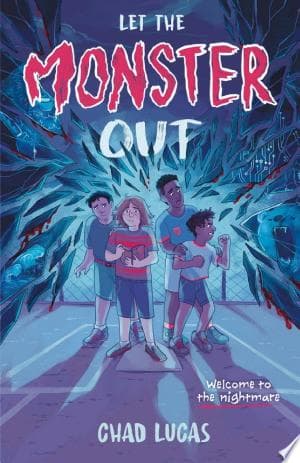
Bones Malone, with his younger brothers, Nash and Rico, recently moved to Langille, a small, mostly white town. Bones feels out of place and isolated as one of the few Black kids. His frustration peaks when he almost fights Charlie, the son of their babysitter, Mrs. Bell. Bones, a talented baseball player, finds comfort on the field, but even that is short-lived when his team, the Langille Lynx, loses their first game. Meanwhile, his mother starts acting strangely, becoming distant and forgetful, almost like a zombie, which deeply worries Bones and his brothers. This change in his mother's behavior, combined with his struggles to fit in, makes Bones increasingly anxious and alone in their new home.
Shared Nightmares and Strange Occurrences
One night, Bones, Nash, and Rico all have the same vivid and terrifying dream. In the dream, they are chased by their deepest fears: Bones by an eerie cracked mirror, Nash by a menacing bear, and Rico by a shadowy figure. The shared dream deeply unsettles them, suggesting something supernatural or deeply wrong is happening. At the same time, their mother's condition worsens; she becomes even more detached and unresponsive, showing symptoms like a trance. The town itself seems to be under a strange spell, with other adults also showing similar signs of being spaced out. This increasing weirdness confirms Bones's growing suspicion that something sinister is happening in Langille.
An Unlikely Alliance with Kyle Specks
Bones meets Kyle Specks, a neurodivergent boy who struggles with social cues but is very intelligent. Kyle, an amateur scientist and observer, has also noticed the unsettling changes in Langille, especially the odd behavior of the adults. At first, Bones is wary of Kyle, finding him peculiar, but Kyle's detailed observations and theories about the town's strange occurrences start to make sense to Bones. Despite their different personalities, they find common ground in their shared concern and a growing desire to find the truth behind the mysterious events. This unlikely partnership marks the start of their investigation into the town's unsettling phenomena.
The Discovery of Dr. Albright's Journal
During their investigation, Bones and Kyle find a hidden, cryptic journal belonging to Dr. Albright. The journal contains perplexing scientific notes, schematics, and observations about fear, dreams, and brainwave manipulation. It also mentions experiments in Langille and a shadowy corporation, 'The Lumina Group,' suggesting their involvement in the strange occurrences. The journal becomes a crucial piece of evidence, giving the boys their first concrete lead and hinting at a much larger, more dangerous conspiracy than they first imagined. Its contents confirm their suspicions that the town's problems are not just psychological but rooted in scientific experimentation.
Unraveling the 'Fear Project'
As Bones and Kyle read Dr. Albright's journal, they start to piece together the chilling truth. They discover that Dr. Albright was involved in a secret project, 'The Fear Project,' which aimed to extract and amplify people's deepest fears. The journal describes how these extracted fears, seen as tangible 'monsters,' could then be controlled or even used as weapons. The strange behavior of the adults, including Bones's mother, is a side effect of their exposure to this technology, leaving them in a suggestible, zombie-like state. The Lumina Group is identified as the entity funding and overseeing these unethical experiments.
Confronting Personal Fears
The journal's revelations bring a terrifying clarity to Bones and his brothers' shared dream. They realize that the dream was not just a nightmare; it was a direct result of 'The Fear Project,' projecting their deepest anxieties into their minds. For Bones, the cracked mirror symbolizes his fear of inadequacy and self-doubt; for Nash, the bear represents his fear of losing control; and for Rico, the shadowy figure embodies his fear of the unknown. This realization forces the boys to confront their personal fears, understanding that these are not just internal struggles but external threats that the Lumina Group is actively exploiting.
Infiltrating the Lumina Facility
Armed with the knowledge from Dr. Albright's journal, Bones, Kyle, Nash, and Rico know they must act. They find the suspected Lumina Group facility, disguised as a research center on the outskirts of Langille. Together, they plan to infiltrate the facility, hoping to find a way to reverse the effects of 'The Fear Project' on the town's adults and stop the corporation's agenda. Their combined skills – Bones's courage and leadership, Kyle's scientific knowledge, and the brothers' loyalty – are essential for this dangerous mission. They prepare to face not only corporate security but also the monstrous manifestations of fear itself.
Inside the Heart of Fear
Inside the Lumina Group's hidden facility, the boys see the terrifying reality of 'The Fear Project.' They witness chambers where the town's collective fears are being extracted and amplified, appearing as grotesque, shadowy creatures. These 'monsters' are not just illusions but semi-physical entities, feeding on the fear they generate. The boys must navigate these fear-filled environments, constantly battling their own anxieties while trying to avoid security personnel. The air is thick with dread, and the stakes become clear: they are not just fighting a corporation, but fear itself, made real.
Confrontation with Dr. Albright and the Lumina Group
Deep within the facility, Bones and Kyle finally confront Dr. Albright. She reveals the full extent of 'The Fear Project,' explaining that the Lumina Group sought to harness fear for various uses, including mind control and military advantage. Dr. Albright expresses regret, admitting she became disillusioned with the project's unethical direction, but was too deeply involved to escape. The boys also face the corporate operatives of the Lumina Group, who want to protect their research and prevent the boys from interfering. This confrontation forces Bones and Kyle to use their wits and courage, not just against monsters, but against the human architects of fear.
Reversing the Project and Facing Their Own Monsters
With Dr. Albright's reluctant help, Bones and Kyle race against time to reverse the fear-extraction technology, aiming to shut down the project and free the town's adults from its influence. As they work, their own personal fear-monsters – Bones's cracked mirror, Nash's bear, and Rico's shadowy figure – appear with increased intensity, directly challenging them. They must confront these manifestations of their deepest anxieties, understanding that overcoming them is crucial not only for their own survival but for the success of their mission. It is a battle of will and courage against their internalized demons, made external and dangerous.
The Town's Awakening and Lumina's Defeat
Through Kyle's quick thinking, Bones's determination, and Dr. Albright's guidance, they overload and reverse the fear-extraction device. A wave of energy washes over the facility and then Langille, causing the fear-monsters to disappear and the trancelike state of the adults to lift. Bones's mother, along with the other affected townspeople, slowly begins to regain her normal consciousness. The Lumina Group's operations are exposed, leading to their downfall and the dismantling of 'The Fear Project.' Langille is freed from its grip, though the experience leaves a lasting impact on everyone involved.
Healing and Acceptance in Langille
In the aftermath, Langille begins to heal. Bones, having faced his fears and saved the town, feels a sense of belonging he had not experienced before. He finds newfound confidence, on and off the baseball field, and his relationship with his mother begins to mend. Kyle, too, emerges from the ordeal with greater self-assurance, recognized for his intelligence and bravery. The experience creates a stronger bond between Bones and Kyle, and the Malone brothers grow closer. While the memory of the fear project lingers, the town, and especially the boys, move forward with a deeper understanding of courage, community, and the importance of facing one's fears rather than letting them consume you.
Principal Figures
Bones Malone
Protagonist
A strong-willed but insecure Black boy new to Langille, struggling with self-doubt and fear.
Bones is a talented baseball player who feels out of place in his new, predominantly white town of Langille. He struggles with feelings of inadequacy and a deep-seated fear of not being good enough, symbolized by the cracked mirror monster. He's protective of his younger brothers and deeply concerned by his mother's strange behavior. While initially prone to anger and isolation, he possesses a strong moral compass and a surprising depth of courage when pushed. He craves acceptance and a sense of belonging.
Relationships: Nash Malone (Younger brother, Bones is protective of him.); Rico Malone (Youngest brother, Bones is protective of him.); Kyle Specks (Initially a wary acquaintance, later a close friend and partner in their investigation.); Mrs. Malone (His mother, whose strange behavior deeply concerns and motivates him.)
Kyle Specks
Supporting/Co-Protagonist
A neurodivergent, highly intelligent boy with a passion for science, who struggles with social interactions.
Kyle is an exceptionally bright boy who is likely neurodivergent, making social situations challenging for him. He's an astute observer and an amateur scientist, often more comfortable with facts and theories than emotions. His parents are overprotective, leading him to feel stifled. Despite his anxieties and social awkwardness, Kyle possesses immense bravery and a strong sense of justice. He is meticulous, analytical, and provides the scientific expertise for their investigation, often seeing details others miss.
Relationships: Bones Malone (Initially an unlikely partner, later a close friend and co-investigator.); Mr. and Mrs. Specks (His overprotective parents.)
Nash Malone
Supporting
Bones's younger brother, who is prone to anxiety and represented by the bear fear-monster.
Nash is Bones's middle brother, a bit more anxious and sensitive than Rico. His deepest fear manifests as a menacing bear, symbolizing a fear of losing control or being overwhelmed. He looks up to Bones and relies on his older brother's protection, but also shows moments of surprising resilience. He is an integral part of the Malone brothers' bond and their shared experience of the fear project.
Relationships: Bones Malone (Older brother and protector.); Rico Malone (Younger brother.); Mrs. Malone (His mother.)
Rico Malone
Supporting
Bones's youngest brother, whose fear-monster is a shadowy, unknown figure.
Rico is the youngest of the Malone brothers, often seen as the most innocent and playful. His fear manifests as a shadowy, unknown figure, representing a fear of the dark and the unknown. Despite his youth, Rico exhibits moments of bravery and resilience, often providing comic relief or a grounding presence. His innocence highlights the profound danger of the fear project and the responsibility his older brothers feel to protect him.
Relationships: Bones Malone (Oldest brother and protector.); Nash Malone (Older brother.); Mrs. Malone (His mother.)
Mrs. Malone
Supporting
Bones's mother, who falls victim to the fear project, becoming distant and zombie-like.
Mrs. Malone is Bones, Nash, and Rico's mother. She is initially portrayed as a loving parent, but soon becomes one of the primary victims of 'The Fear Project.' Her personality shifts dramatically; she becomes distant, forgetful, and unresponsive, almost like a zombie. Her condition serves as a major catalyst for Bones's investigation, as his desire to save her drives much of his actions. Her recovery signifies the success of the boys' mission and the restoration of their family unit.
Relationships: Bones Malone (Her son, who is determined to save her.); Nash Malone (Her son.); Rico Malone (Her son.)
Dr. Albright
Supporting/Antagonistic (initially)
A scientist involved in 'The Fear Project' who becomes a reluctant ally.
Dr. Albright is the scientist whose journal Bones and Kyle discover. She was a key figure in 'The Fear Project' for the Lumina Group, developing the technology to extract and weaponize fear. Initially, she represents the scientific mind behind the town's plight. However, she becomes disillusioned with the project's ethical implications and the Lumina Group's sinister intentions. She eventually provides crucial assistance to Bones and Kyle, helping them understand and ultimately dismantle the project, demonstrating a complex moral struggle.
Relationships: Bones Malone (Initially an unknown antagonist, later a reluctant ally.); Kyle Specks (Initially an unknown antagonist, later a reluctant ally.); The Lumina Group (Her former employers, whom she eventually helps to expose.)
The Lumina Group
Antagonist
A shadowy corporation funding and overseeing 'The Fear Project' for nefarious purposes.
The Lumina Group is the primary antagonistic force in the story, a powerful and unethical corporation. They are behind 'The Fear Project,' which aims to extract, amplify, and weaponize fear for their own sinister gain, possibly for mind control or military applications. They operate in secrecy, exploiting the residents of Langille for their experiments. They represent unchecked corporate power and scientific hubris, prioritizing profit and control over human well-being. Their defeat signifies the triumph of individual courage over systemic evil.
Relationships: Dr. Albright (Their former lead scientist.); Bones Malone (Their primary adversary.); Kyle Specks (Their primary adversary.)
Charlie Bell
Mentioned
The son of Bones's babysitter, whom Bones almost punches.
Charlie is the son of Mrs. Bell, the Malone brothers' babysitter. He's initially portrayed as a source of conflict for Bones, leading to a near physical altercation. His presence highlights Bones's initial struggles with anger and fitting into Langille.
Relationships: Bones Malone (Initial source of conflict.)
Themes & Insights
Facing and Accepting Fear
The central theme is about confronting one's deepest anxieties rather than letting them control you. The 'Fear Project' literally makes the characters' fears real, forcing them to physically battle their internal demons. Bones must overcome his fear of inadequacy and not belonging, symbolized by the cracked mirror. Kyle, despite his social anxieties, finds the courage to act. The story suggests that true bravery is not the absence of fear, but the willingness to act despite it, leading to personal growth and freedom. This is clear when the boys must face their individual fear-monsters within the Lumina facility.
“But when faced with seemingly impossible situations, a shady corporation, and their own worst nightmares, will Kyle and Bones be brave enough to admit they’re scared? Or will the fear totally consume and control them?”
Belonging and Identity
Bones's struggle to find his place as one of the few Black kids in Langille is a significant part of the story. He feels like an outsider, leading to frustration and isolation. His journey to defeat the Lumina Group and save the town helps him form connections and a sense of community he initially lacked. Kyle also struggles with identity, navigating his neurodivergence in a world that does not always understand him. Their shared mission allows them to find acceptance, both from others and within themselves, proving that true belonging comes from shared purpose and mutual respect, not just fitting in.
“Bones Malone feels like he can’t do anything right in his new small town: He almost punched the son of the woman who babysits him and his brothers, he’s one of the only Black kids in Langille, and now his baseball team (the one place where he really feels like he shines) just lost their first game.”
The Dangers of Unchecked Science and Corporate Greed
The Lumina Group and 'The Fear Project' are a cautionary tale about the ethical implications of scientific advancement when driven by corporate greed and a thirst for power. Dr. Albright's initial involvement shows how brilliant minds can be corrupted or exploited in the pursuit of unethical research. The project's disregard for human well-being, turning people into zombie-like subjects and weaponizing their fears, shows the potential for science to be used for destructive purposes. The boys' mission is not just to save their town, but to expose and dismantle a system that prioritizes profit and control over humanity.
“And then he and his brothers have the same dream—one where they’re running from some of their deepest fears, like a bear and an eerie cracked mirror that Bones would rather soon forget.”
Family Bonds and Sibling Loyalty
The relationship between Bones, Nash, and Rico is a foundational element of the story. Their shared dream and their collective experience facing the fear-monsters strengthen their bond. Bones's deep concern for his mother and his protective instincts towards his younger brothers drive much of his motivation. The Malone family's unity, despite their individual fears and challenges, provides a powerful contrast to the isolating effects of the fear project. Their loyalty to each other, even in the face of immense danger, highlights the importance of family as a source of strength and courage.
“And then he and his brothers have the same dream—one where they’re running from some of their deepest fears, like a bear and an eerie cracked mirror that Bones would rather soon forget.”
Plot Devices & Literary Techniques
The Shared Dream
A recurring, identical nightmare experienced by the Malone brothers.
The shared dream is a crucial plot device that initially signals that something supernatural or highly unusual is happening in Langille. It not only establishes the central conflict but also serves to externalize the individual fears of Bones, Nash, and Rico, introducing the 'fear-monsters' early on. This device creates a sense of shared urgency and mystery, bonding the brothers in their confusion and fear, and ultimately providing a tangible link to 'The Fear Project' once Dr. Albright's journal is discovered. It foreshadows the physical manifestations of fear they will later encounter.
Dr. Albright's Journal
A cryptic scientific journal providing clues to the town's strange occurrences.
Dr. Albright's journal functions as the primary expositional device, revealing the scientific basis behind the bizarre events in Langille. It provides Bones and Kyle with the necessary information about 'The Fear Project,' the Lumina Group, and the mechanics of fear extraction. Without the journal, the boys would be left to guess at the cause of their mother's condition and the town's strangeness. It transforms their vague suspicions into a concrete mystery to solve, outlining the stakes and guiding their investigation towards the Lumina facility.
The Fear-Monsters (Externalized Fears)
Physical manifestations of characters' deepest anxieties.
The fear-monsters are a literalization of the theme of facing one's fears. They are not merely symbolic but become tangible, dangerous antagonists that the characters must confront. Bones's cracked mirror, Nash's bear, and Rico's shadowy figure force the boys to directly battle their internal struggles. This device makes the emotional journey of overcoming fear highly visual and action-oriented, elevating the stakes and providing clear, personal challenges for each character to conquer during the climax of the story.
The Zombie-Like State of Adults
The trancelike, unresponsive condition of the town's adults, including Bones's mother.
This device serves as the initial inciting incident and a constant source of concern for Bones. His mother's deteriorating condition is a highly personal motivation for him to investigate what's happening in Langille. It demonstrates the widespread and insidious effect of 'The Fear Project' on the community, raising the stakes and creating a sense of urgency. The adults' unresponsive state makes them vulnerable and highlights the helplessness of the children, thus emphasizing their bravery and resourcefulness in taking action.
Let the Monster Out Quotes
“The thing about monsters is, they’re not always under your bed. Sometimes they’re inside you.”
“Fear can make you do strange things, can make you see things that aren’t there, and make you blind to what is.”
“Sometimes the bravest thing you can do is admit you’re scared.”
“Secrets are heavy. They weigh you down until you can barely breathe.”
“It’s easier to believe in a monster you can fight than the one that lives in your own head.”
“Grief is a monster too, and it changes shape with every new day.”
“We all have a darkness inside us. The trick is not letting it consume you.”
“Sometimes the truth hurts more than any lie, but it’s still the only way to heal.”
“You can’t outrun your past forever. Eventually, it catches up.”
“It’s not about being fearless, it’s about doing what needs to be done even when you are terrified.”
“Hope is a fragile thing, but it’s sometimes all you have left.”
“The scariest monsters are the ones that look just like us.”
“Forgiveness isn't just for the other person; it's for you too.”
“Sometimes you have to let the monster out to truly understand what you're fighting.”
Quiz
10 questions on the plot and the characters. Each answer comes with a short explanation.
Question 1
What is Bones Malone's primary area where he feels like he shines, before things start to go wrong in Langille?
- Academics
- Baseball
- Art
- Video games
Show answer
B. Baseball The text states, 'his baseball team (the one place where he really feels like he shines) just lost their first game.'
Question 2
What is one of Bones Malone's deepest fears that appears in his dream, as mentioned in the summary?
- A monster under his bed
- An eerie cracked mirror
- A giant spider
- Being lost in the woods
Show answer
B. An eerie cracked mirror The summary mentions that Bones and his brothers have a dream 'where they’re running from some of their deepest fears, like a bear and an eerie cracked mirror that Bones would rather soon forget.'
Question 3
What is the suspicious condition Bones's mom is experiencing?
- She's suddenly become very aggressive.
- She's constantly sleeping.
- She's spaced out and acting like a zombie.
- She's rapidly losing her memory.
Show answer
C. She's spaced out and acting like a zombie. The text states, 'His mom isn’t acting like herself at all—she’s totally spaced out, almost like a zombie.'
Question 4
What does Kyle Specks suspect about himself, though he hasn't received an official diagnosis?
- He might be allergic to something in Langille.
- He might be neurodivergent.
- He might have a rare genetic condition.
- He might have a talent for magic.
Show answer
B. He might be neurodivergent. The summary explicitly states, 'Kyle Specks feels like he can never say the right thing at the right time. He thinks he might be neurodivergent, but he hasn’t gotten an official diagnosis yet.'
Question 5
What specific item do Kyle and Bones find that might provide answers to the strange occurrences in town?
- An old map
- A mysterious scientist’s journal
- A forgotten ancient artifact
- A secret government file
Show answer
B. A mysterious scientist’s journal The text mentions, 'especially not after he and Bones find a mysterious scientist’s journal that might hold answers to what’s going on.'
Question 6
What is one of the challenges Kyle's parents face regarding him?
- They worry he is too rebellious.
- They worry the world might be too hard for him and try to protect him.
- They worry he doesn't have enough friends.
- They worry about his academic performance.
Show answer
B. They worry the world might be too hard for him and try to protect him. The summary states, 'His parents worry that the world might be too hard for him and try to protect him, but Kyle knows they can’t do that forever.'
Question 7
What genre is 'Let the Monster Out' primarily categorized as, based on the provided summary?
- Fantasy adventure
- Historical fiction
- Middle-grade mystery
- Contemporary romance
Show answer
C. Middle-grade mystery The very first line of the summary describes the book as 'an equal parts heart-pounding and heartfelt middle-grade mystery.'
Question 8
What is a central theme explored in 'Let the Monster Out' for both Bones and Kyle?
- The importance of winning at all costs.
- The challenges of moving to a new city.
- Facing and accepting one's fears.
- The pursuit of scientific discovery.
Show answer
C. Facing and accepting one's fears. The summary explicitly states the book is 'about facing––and accepting––your fears' and concludes by asking if Kyle and Bones 'will be brave enough to admit they’re scared? Or will the fear totally consume and control them?'
Question 9
Beyond the strange events, what social challenge does Bones face in Langille?
- He struggles with a new language.
- He is one of the only Black kids in town.
- He is significantly older than his classmates.
- He has a disability that makes it hard to socialize.
Show answer
B. He is one of the only Black kids in town. The text mentions Bones's initial struggles, including that 'he’s one of the only Black kids in Langille.'
Question 10
What external antagonist or obstacle, besides their personal fears, do Kyle and Bones face?
- A rival sports team
- A natural disaster
- A shady corporation
- An alien invasion
Show answer
C. A shady corporation The summary asks, 'But when faced with seemingly impossible situations, a shady corporation, and their own worst nightmares, will Kyle and Bones be brave enough to admit they’re scared?'
Let the Monster Out FAQ
What is the central mystery driving the plot of 'Let the Monster Out'?
The central mystery revolves around a strange phenomenon affecting the adults in Langille, causing them to become 'spaced out' and zombie-like, including Bones's mother. This coincides with Bones and his brothers experiencing shared nightmares featuring their deepest fears, leading them to investigate the cause of these unsettling events.
Who are the two main protagonists, and what are their primary struggles at the beginning of the story?
The two main protagonists are Bones Malone and Kyle Specks. Bones struggles with feeling like an outsider in Langille, being one of the only Black kids, and dealing with a recent baseball loss, which is his main source of confidence. Kyle struggles with social interactions, suspects he might be neurodivergent, and feels overprotected by his parents who worry about him facing a difficult world.
How do Bones and Kyle become involved in solving the town's mystery?
Bones and Kyle become involved when they discover a mysterious scientist's journal. This journal seems to contain clues and answers about the strange occurrences in Langille, prompting them to team up and investigate the source of the town's problems, which includes a shady corporation.
What role do the shared nightmares play in the narrative?
The shared nightmares experienced by Bones and his brothers are crucial because they manifest their deepest fears, such as a bear and a cracked mirror. These dreams are not just psychological but are directly linked to the strange events in Langille, suggesting a supernatural or scientific cause that brings fears to life.
What is the 'shady corporation' mentioned in the synopsis, and what is its connection to the mystery?
The synopsis mentions a 'shady corporation' that is implied to be involved in the strange events in Langille. While specific details aren't given, it suggests a corporate entity is either responsible for, or trying to exploit, the phenomenon causing the adults' strange behavior and potentially manipulating the manifestation of fears.
What is the significance of the 'eerie cracked mirror' in Bones's nightmares?
The 'eerie cracked mirror' in Bones's nightmares likely symbolizes a deeper, personal fear related to self-perception, brokenness, or perhaps an inability to see himself clearly or as whole. Its inclusion among his deepest fears suggests it's more than just a scary image, possibly hinting at an insecurity or past trauma.
How does Bones's experience as 'one of the only Black kids in Langille' subtly influence his character arc or perspective?
Bones's experience as 'one of the only Black kids in Langille' likely contributes to his feeling like an outsider and his initial difficulties adapting. This feeling of difference or isolation could amplify his other fears and insecurities, making him more sensitive to the 'weirdness' of the town and potentially shaping his interactions with others.
What might the scientist's journal reveal beyond just the immediate answers to the town's problems?
Beyond immediate answers, the scientist's journal might reveal the ethical dilemmas behind the experiments, the true scope of the 'monster's' capabilities, or even a way to reverse the effects. It could also provide a backstory to the corporation's involvement or a warning about the dangers of manipulating fear.
Is there a connection between the baseball team's loss and the onset of the town's strange events for Bones?
While not explicitly stated as a causal link, the baseball team's loss for Bones immediately precedes the town's strange events and his mother's transformation. This juxtaposition suggests that his personal feelings of failure and vulnerability might make him more attuned to, or susceptible to, the growing strangeness around him, amplifying his internal struggles.
How does Bones's initial aggression ('almost punched the son of the woman who babysits him') relate to his character development throughout the story?
Bones's initial aggression suggests he might use anger as a defense mechanism or a way to cope with feeling overwhelmed or out of place. This contrasts with the later challenge of admitting fear, indicating a journey where he learns to confront his emotions more constructively rather than resorting to outward displays of frustration.
In what ways does Kyle's suspected neurodivergence inform his approach to the mystery and his interactions with others?
Kyle's suspected neurodivergence likely means he processes information differently, potentially noticing details others miss, which could be an asset in solving the mystery. His struggles with social cues might make interactions challenging, but his unique perspective could offer insights crucial to understanding the strange events, despite his parents' protective instincts.
How do the protagonists' individual fears (Bones's cracked mirror, Kyle's social anxiety/overprotection) become catalysts for their growth?
Bones's fear of the cracked mirror and Kyle's fear of the world's harshness, stemming from his neurodivergence and parental overprotection, force them to confront these internal struggles directly. By facing an external threat that manifests their fears, they are compelled to move beyond their comfort zones and develop courage, ultimately growing by accepting their vulnerabilities.
What psychological impact does seeing his mother 'totally spaced out, almost like a zombie' have on Bones?
Seeing his mother in a zombie-like state would be deeply traumatic for Bones, shattering his sense of security and normalcy. It likely instills a profound fear of loss and helplessness, compelling him to act and find a cure, as the safety of his family is directly threatened by the town's bizarre affliction.
How does the book explore the theme of 'facing and accepting your fears' through the characters' actions?
The book explores this theme by making the characters' deepest fears tangible through the nightmares and the town's strange events. Bones and Kyle must literally confront manifestations of their anxieties—whether a bear or social awkwardness—forcing them to acknowledge their fear, not suppress it, and find the bravery to act despite feeling scared.
What does the title 'Let the Monster Out' signify in the context of the story's themes?
The title 'Let the Monster Out' likely refers to both the literal monster causing the town's problems and the metaphorical 'monsters' of fear and insecurity within the characters. It suggests that by allowing these internal fears to surface and be acknowledged, rather than repressed, one can ultimately confront and overcome them, leading to growth.
How might the comparison to 'Stranger Things' influence reader expectations for the book's tone and plot?
The comparison to 'Stranger Things' sets an expectation for a middle-grade mystery with supernatural or sci-fi elements, a strong emphasis on friendship, and a blend of suspense and heartfelt moments. Readers might anticipate a small-town setting, a group of kids solving a serious threat, and a sense of growing dread with fantastical creatures or phenomena.
Could the 'monster' be interpreted as a metaphor for something deeper than just a physical entity?
Yes, the 'monster' can certainly be interpreted metaphorically. It could represent the collective fears and anxieties of the town, the hidden dangers of scientific experimentation, or even the societal pressures and challenges that make children feel isolated or misunderstood, particularly for characters like Bones and Kyle.
What message does the book convey about bravery, especially for middle-grade readers?
The book conveys that bravery isn't the absence of fear, but rather the willingness to act despite being scared. It teaches middle-grade readers that acknowledging and accepting one's fears, rather than letting them control you, is a true act of courage, and that even ordinary kids can be heroes when faced with extraordinary challenges.
Similar books
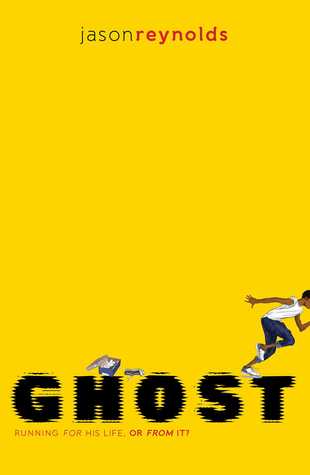
- Ghost
Jason Reynolds
4.2 (29k) average on GoodreadsChildren'sExplores a young Black protagonist's struggles with identity, family, and fitting in, using sports as a backdrop, much like Bones Malone's baseball.
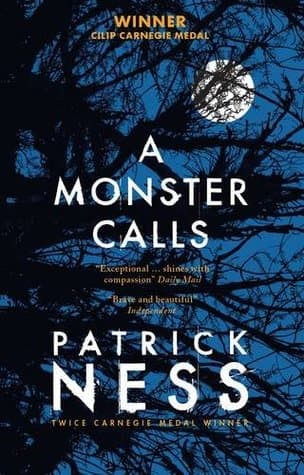
- A Monster Calls
Patrick Ness
4.3 (208k) average on GoodreadsFantasyWhile both books explore confronting personal fears, Ness's A Monster Calls uses a more allegorical and introspective approach, with the monster representing grief and inner turmoil. Lucas's 'Let the Monster Out' externalizes fear into a tangible, scientific project, offering a more action-oriented and less ambiguous confrontation. Ness delves deeper into the psychological landscape of a single character's grief, whereas Lucas focuses on a group dynamic and a more direct, external threat.
- Harry Potter and the Sorcerer's Stone
J.K. Rowling
4.5 (7M) average on GoodreadsFantasyRescued from a miserable life under the stairs, an orphaned boy discovers he's a wizard destined for a magical school, where he uncovers a dangerous secret tied to the dark wizard who murdered his parents.
- The Hunger Games
Suzanne Collins
4.3 (6.4M) average on GoodreadsFantasyIn a future where children fight to the death on live television, Katniss Everdeen volunteers for the arena, turning a death sentence into a fight for survival and a spark of rebellion.
- Nineteen Eighty-Four
George Orwell
4.2 (5.5M) average on GoodreadsFictionWinston Smith dreams of truth and rebellion in a world where Big Brother watches all, but he confronts the terrifying power of a regime that controls not just actions, but thoughts.
- Pride & Prejudice
Jane Austen
4.3 (4.9M) average on GoodreadsElizabeth Bennet and Mr. Darcy navigate love and misunderstanding, learning that first impressions can be wrong.




Enjoyed the summary?
A summary gives you the shape of the book. The book itself has the detail, the examples and the voice.
Find Let the Monster Out on AmazonAs an Amazon Associate, BookBrief earns from qualifying purchases. How we're funded