

Synopsis
Covers the whole plot, including the ending.
- Difficulty
- Medium
- Pacing
- Variable
- Mood
- Thought-provoking, Humorous, Lacerating, Wise, Surreal
- Read it if
- You enjoy experimental narratives, metafiction, and stories that blend coming-of-age with elements of fantasy and social commentary, particularly concerning race and history in the American South.
- Skip it if
- You prefer linear plots, clear-cut genre boundaries, or stories without significant ambiguity and an unreliable narrator.
Long Division Plot Summary
Covers the whole plot, including the ending.
The Meltdown and the Book
In 2013, fourteen-year-old Citoyen 'City' Coldson has a spectacular meltdown during the nationally televised 'Can You Use That Word in a Sentence?' quiz show. His bizarre answers go viral, making him an overnight YouTube sensation. Because of his behavior, City is sent to stay with his grandmother, Lahoma, in the small, coastal Mississippi town of Melahatchie. Before he leaves, his mother gives him a peculiar, authorless book titled 'Long Division.' He soon discovers that the book's main character shares his name, 'City Coldson,' and that the story in the book is set in 1985, hinting at a connection that will unfold as he reads.
1985: Meeting Shalaya and Discovering the Shed
The 'Long Division' story, set in 1985, introduces another City Coldson. This City, along with his crush, Shalaya Crump, explores a peculiar shed in the woods of Melahatchie. This shed, described as being 'made of mismatched wood and smelling like old rain and new dirt,' can transport them. Their first trip into the shed leads them to strange objects and sensations, hinting at its true nature as a portal. They become curious and begin to experiment with the shed's temporal powers, not yet fully understanding what they have found.
The Disappearance of Baize Shephard
Upon his arrival in Melahatchie, the 2013 City learns that a local girl named Baize Shephard has recently disappeared. Her absence casts a shadow over the town, and residents frequently mention her name. This missing person case immediately connects with City's own story, as he begins to see parallels between the real-life mystery and the events in the 'Long Division' book. The town's quiet conversations and the police create tension, making City feel like he has stepped into a story even before he fully understands his role.
Stolen Tech and a Trip to the Future
Continuing their explorations in the shed, the 1985 City and Shalaya successfully travel into the future, landing in 2013. There, they meet an orphaned teenage rapper named Baize Shephard, who has advanced technology: a laptop and a cellphone. Driven by curiosity and a desire for these futuristic tools, the 1985 City and Shalaya steal the devices from Baize. This theft is a key moment, directly linking the two stories and establishing the initial interaction between the past and future versions of the characters, though Baize does not know their temporal origins.
Meeting the Time-Traveler from 1964
After their trip to 2013, the 1985 City and Shalaya use the shed again, this time traveling further into the past, to 1964. There, they meet a man named La-Shay. La-Shay reveals himself to be a fellow time-traveler, though with a more desperate mission. He explains that he needs their help to protect his family from the Ku Klux Klan, which is actively terrorizing the Black community in their region. The stolen laptop and cellphone, initially taken for personal gain, now become tools in a struggle for survival against racial violence.
The Book's Prophecies and City's Growing Unease
As the 2013 City reads 'Long Division,' he becomes increasingly disturbed by the parallels between the book's story and his own life. The characters, locations, and even specific events described in the book begin to appear in his reality in Melahatchie. This blurring of lines between fiction and reality makes City question his sanity and the nature of the book itself. He considers that the book might be more than just a story, perhaps a guide or even a premonition of his own destiny, increasing his anxiety about Baize's disappearance.
The Search for Baize and the Shed's Allure
Driven by the events in 'Long Division' and the real-life mystery of Baize Shephard's disappearance, the 2013 City feels drawn to the mysterious shed behind his grandmother's house. He senses that the shed, so central to the 1985 City's adventures, holds the key to understanding Baize's fate. He begins to investigate it, putting together clues from the book and his surroundings, convinced that the shed is not just a place but a connection point of time and information, directly connected to the missing girl.
Unraveling the Truth of Baize's Disappearance
Inside the shed, the 2013 City uncovers the truth about Baize Shephard's disappearance. He realizes that the Baize Shephard from 2013 is the same Baize Shephard who met the 1985 City and Shalaya. Baize, after having her laptop and cellphone stolen, also discovered the shed's time-traveling capabilities. Desperate to get her stolen property back, she used the shed to follow the 1985 City and Shalaya into the past, accidentally becoming trapped in a different time period. The shed, therefore, is not just a portal but a place where timelines meet and separate.
The Convergence of Timelines
The two interwoven stories of City Coldson, one in 2013 and the other in 1985 (and 1964), finally meet within the enigmatic shed. The 2013 City understands that the 'Long Division' book is not just a fictional account but a historical record, written by a future version of himself or someone connected to these events. The shed acts as the central point where the past, present, and future collide, revealing that the actions of one City directly influence the experiences of the other, creating a complex, repeating story of fate and consequence.
The Cycle of Authorship and Identity
The 2013 City realizes that the 'Long Division' book is not merely a story he is reading, but a story he is actively living and, perhaps, even writing. He understands that the authorless book is a product of the time-traveling experiences, possibly authored by a future version of himself or a collection of voices from across time. This understanding forces him to confront his own identity and destiny, acknowledging that his actions now will shape the narrative for others, mirroring the repeating nature of time and storytelling within the book.
Protecting the Future by Revisiting the Past
The ultimate goal for the time-traveling characters, including the 1985 City, Shalaya, and La-Shay, becomes the protection of marginalized communities from historical and ongoing violence. The stolen laptop and cellphone, initially objects of desire, are used to document and expose the injustices faced by Black individuals, particularly the threats posed by the Klan in 1964. This mission goes beyond personal gain, highlighting a collective effort to use information and foresight to safeguard lives and preserve history against erasure.
The Lasting Impact of Time and Storytelling
The novel concludes by emphasizing the repeating nature of history, the lasting impact of racial injustice, and the power of storytelling. The shed remains a gateway, suggesting that the journey through time is continuous and that the characters' stories are always intertwined. City Coldson, both the 2013 and 1985 versions, gains a deeper understanding of his heritage, his community, and his place within a larger history. The 'Long Division' book itself is a symbol of this ongoing, collective memory and the stories that must be told to ensure a more just future.
Principal Figures
Citoyen "City" Coldson (2013)
Protagonist
A fourteen-year-old YouTube celebrity grappling with a mysterious book and a missing girl.
City Coldson is a precocious, intelligent, and somewhat anxious fourteen-year-old. His on-stage meltdown makes him an accidental internet sensation, leading to his exile to Melahatchie. He is an avid reader, and his intellectual curiosity drives him to unravel the mysteries of the 'Long Division' book and Baize Shephard's disappearance. He is observant and empathetic, often feeling overwhelmed by the weight of the historical and personal narratives he encounters. His journey is one of self-discovery and coming to terms with his role in a larger, time-spanning story.
Relationships: Lahoma Coldson (Grandmother, caretaker); Baize Shephard (Central to his mystery, indirectly connected through time); Citoyen "City" Coldson (1985) (Past self/alternate self, protagonist of the book within the book)
Citoyen "City" Coldson (1985)
Protagonist (within 'Long Division')
A curious teenager who discovers time travel and embarks on a mission to combat injustice.
This version of City Coldson is a teenager in 1985 Melahatchie, characterized by his adventurous spirit and burgeoning crush on Shalaya Crump. He is the first to truly experiment with the time-traveling shed, driven by curiosity and a sense of wonder. Initially, his motivations are somewhat selfish (stealing the laptop), but he quickly becomes committed to using the shed's power for a greater good, particularly after encountering La-Shay and witnessing the realities of 1964. He represents the potential for heroism and the impact of individual choices across time.
Relationships: Shalaya Crump (Love interest, fellow time-traveler); Baize Shephard (Victim of his theft, catalyst for later actions); La-Shay (Fellow time-traveler, mentor/guide)
Shalaya Crump
Supporting
The whip-smart and resourceful friend and love interest of the 1985 City.
Shalaya is the 1985 City's best friend and love interest, known for her sharp wit, intelligence, and practicality. She is often the more grounded of the two, questioning the implications of their time-traveling adventures and providing a moral compass. Her resourcefulness and courage are evident as they navigate different time periods and dangerous situations. She is deeply committed to justice and plays a crucial role in the decision to help La-Shay and his family, embodying resilience and a strong sense of community.
Relationships: Citoyen "City" Coldson (1985) (Love interest, fellow time-traveler); La-Shay (Fellow time-traveler)
Baize Shephard
Supporting
A talented teenage rapper from 2013, whose disappearance links the two narratives.
Baize Shephard is a talented, orphaned teenage rapper in 2013, whose disappearance is the central mystery for the contemporary City. She is the initial victim of the 1985 City and Shalaya's time-traveling antics when they steal her laptop and cellphone. Her subsequent use of the shed to follow them into the past inadvertently leads to her becoming 'lost' in time. Baize represents the intersection of technology, youth culture, and the unforeseen consequences of temporal manipulation, serving as a crucial link between the two timelines.
Relationships: Citoyen "City" Coldson (2013) (The object of his search); Citoyen "City" Coldson (1985) (The one who stole from her); Shalaya Crump (Accomplice in the theft)
Lahoma Coldson
Supporting
City's wise and supportive grandmother in Melahatchie.
Lahoma Coldson is the grandmother of the 2013 City. She provides a stable and loving home for him in Melahatchie, offering quiet wisdom and support. Her presence grounds City in the present and connects him to his family's history in the town. While not directly involved in the time-traveling, her house and the shed on her property are central to the story. She represents the enduring strength and resilience of family and community in the face of adversity, and her subtle understanding of the town's secrets hints at a deeper awareness.
Relationships: Citoyen "City" Coldson (2013) (Grandmother, caretaker)
La-Shay
Supporting
A time-traveler from 1964 seeking help to protect his family from the Klan.
La-Shay is a man from 1964 who has also discovered the time-traveling capabilities of the shed. He uses it to seek help from the future to protect his family and community from the violence and terror of the Ku Klux Klan. His desperation and courage highlight the severe racial injustices of the era and the profound need for intervention. He serves as a catalyst for the 1985 City and Shalaya to use their newfound abilities for a truly noble cause, shifting their focus from personal curiosity to collective liberation.
Relationships: Citoyen "City" Coldson (1985) (Ally, recipient of his plea for help); Shalaya Crump (Ally, recipient of his plea for help)
The Quiz Show Announcer
Mentioned
The voice of the nationally televised quiz show where City's meltdown occurs.
The announcer is a disembodied voice representing the public spectacle and media scrutiny that catapults the 2013 City into reluctant celebrity. While not a character in the traditional sense, he symbolizes the external pressures and judgments that shape City's initial predicament. His reactions to City's meltdown highlight the absurdity and superficiality of mainstream media, setting the stage for City's escape to a more meaningful, if mysterious, reality.
Themes & Insights
The Cyclical Nature of History and Trauma
The novel shows how history, especially racial injustice and trauma, is not linear but repeats across generations. The constant movement between 1964, 1985, and 2013 demonstrates that struggles against systemic racism, violence, and the fight for liberation continue. The characters' journeys through time reveal that the past is never truly gone, and understanding it is important for shaping a different future. For example, the Klan's violence in 1964 directly leads to continued racial tensions and the need for documentation in later eras.
“History ain't just the past, son. It's the future too, if you ain't careful.”
The Power of Storytelling and Authorship
Storytelling is a central theme, explored through the 'Long Division' book itself, which blurs the lines between fiction, memoir, and prophecy. The novel questions who can tell a story, how stories are made, and their ability to shape reality. The 2013 City's realization that he is not just reading a book but possibly living and even writing it, highlights the power of narrative. Sharing and preserving stories, whether through a mysterious book or a stolen cellphone, becomes a form of resistance against historical erasure and a way to connect different experiences across time. The ambiguous authorship of 'Long Division' suggests that stories are collective and change.
“A story ain't just words, City. It's a key. It can unlock things you ain't even know was locked.”
Identity and Self-Discovery
Both versions of City Coldson deal with their identities as they navigate complex realities and time shifts. The 2013 City's journey from an internet celebrity to a detective of time and history forces him to confront his place in a larger lineage. The 1985 City's transformation from a curious teenager to an active participant in the fight against injustice shapes his understanding of who he is. The shared name 'City Coldson' across different eras shows the fluidity and interconnectedness of identity, suggesting that individual selves are part of a larger, evolving story. Their experiences define their understanding of self, community, and purpose.
“Sometimes you gotta get lost to find out who you really are, and who you ain't.”
Memory, Erasure, and Documentation
The novel explores the importance of memory and the dangers of historical erasure, especially concerning the experiences of Black communities. The fight against the Klan in 1964 emphasizes the need to document and remember atrocities to prevent their repetition. The stolen laptop and cellphone, initially objects of desire, become tools for recording and preserving events that might otherwise be forgotten or suppressed. Baize Shephard's rapping and the 'Long Division' book itself serve as forms of documentation, ensuring that voices from the past and present are heard and remembered, challenging narratives that try to erase marginalized histories.
“They try to burn the records, but they can't burn the memory. Not if you keep telling it.”
Plot Devices & Literary Techniques
The Time-Traveling Shed
A mysterious structure capable of transporting individuals through time.
The shed is the central magical realism element and the primary plot device driving the narrative. It functions as a literal and metaphorical portal, allowing characters to traverse different historical periods (1964, 1985, 2013). Its existence is unexplained, adding to its mystical quality. The shed's ability to transport people through time is what links the two City Coldson narratives and facilitates the convergence of past, present, and future events, making it the linchpin of the entire plot and the source of all temporal conflicts and revelations.
The 'Long Division' Book
An authorless book that mirrors and influences the protagonist's reality.
The 'Long Division' book serves as a meta-narrative device. For the 2013 City, it's a story he reads that increasingly reflects his own life, blurring the lines between fiction and reality. For the reader, it's a novel within a novel, creating two interwoven timelines. Its ambiguous authorship and prophetic qualities suggest that stories can transcend time and space, acting as both historical records and blueprints for future events. The book is the primary vehicle through which the reader (and the 2013 City) accesses the 1985 narrative.
Stolen Technology (Laptop and Cellphone)
Futuristic objects that become crucial tools for documenting and communicating across time.
The laptop and cellphone, stolen from 2013 Baize Shephard by the 1985 City and Shalaya, initially represent a clash of eras and a youthful desire for novelty. However, they quickly evolve into vital plot devices. They provide a means for characters in the past to record events, gather information, and potentially communicate or influence future outcomes, particularly in the context of fighting the Klan in 1964. These objects highlight the power of information and technology to bridge temporal gaps and serve as instruments of social justice.
The Quiz Show Meltdown
A public spectacle that launches the 2013 City into an unexpected journey.
The quiz show meltdown is the inciting incident for the 2013 City's storyline. It immediately establishes his character as unusual and sets in motion the events that lead to his exile to Melahatchie and his encounter with the 'Long Division' book. This device serves to remove City from his familiar environment, thrusting him into the unknown and allowing the central mysteries of the plot to unfold. It also acts as a commentary on celebrity, media, and the superficiality of public perception.
Long Division Quotes
“I’m sure you know how it is, living in a place where most of the people you meet want to remind you that you’re not from there, and most of the people who are from there want to remind you that you’re not really from there either.”
“The hardest thing about loving someone, I think, is that you have to love them through all their versions, and sometimes their versions don't make sense.”
“We are a people who have always been trying to get home, even when we are home.”
“Time ain't really real, son. It's just a way we make sense of the things that happen to us.”
“Some stories are so powerful they can bend time.”
“You can't really escape Mississippi, even when you leave it. It's in your blood, in your bones.”
“Maybe the past isn't something you escape. Maybe it's something you carry.”
“We all got to find our own way to live with the ghosts.”
“The truth is a hard thing to look at sometimes, especially when it's about yourself.”
“Ain't no such thing as being too real, only not real enough.”
“Sometimes the only way to get where you're going is to go back to where you started.”
“Every time we tell a story, we're trying to figure out how to live.”
“Our lives are just a bunch of stories we tell ourselves, over and over, until they become real.”
“We were always trying to build something beautiful in the middle of a mess.”
Quiz
10 questions on the plot and the characters. Each answer comes with a short explanation.
Question 1
In what year does the story involving the 14-year-old Citoyen 'City' Coldson, who becomes a YouTube celebrity, primarily take place?
- 1985
- 2005
- 2013
- 1964
Show answer
C. 2013 The book description clearly states that the first interwoven story, featuring the YouTube celebrity City, is set in 2013.
Question 2
What is the name of the small coastal community where the 2013 City Coldson is sent to stay with his grandmother?
- Shalaya
- Melahatchie
- Mississippi City
- Katrina Bay
Show answer
B. Melahatchie After his on-stage meltdown, City is sent to Melahatchie, a small coastal community, to stay with his grandmother.
Question 3
What object does the 2013 City Coldson receive before leaving for his grandmother's, which turns out to be a strange book without an author?
- A laptop
- A cellphone
- Long Division
- A diary
Show answer
C. Long Division The book description states that City is given a 'strange book without an author called Long Division' before he leaves.
Question 4
What is the name of the friend and 'love-object' of the 1985 City Coldson?
- Baize Shephard
- Shalaya Crump
- Grandma Coldson
- Katrina
Show answer
B. Shalaya Crump The 1985 City Coldson's friend and love-object is identified as Shalaya Crump in the summary.
Question 5
From whom do the 1985 City Coldson and Shalaya Crump steal a laptop and cellphone after traveling into the future?
- The 2013 City Coldson
- A time-traveler from 1964
- An orphaned teenage rapper named Baize Shephard
- His grandmother
Show answer
C. An orphaned teenage rapper named Baize Shephard The summary states that the 1985 City and Shalaya 'steal a laptop and cellphone from an orphaned teenage rapper called...Baize Shephard.'
Question 6
To what year do the 1985 City and Shalaya ultimately travel, taking the stolen laptop and cellphone with them?
- 2013
- 1985
- 1964
- 2005
Show answer
C. 1964 After stealing the items, they 'take these with them all the way back to 1964' to help another time-traveler.
Question 7
What is the primary reason the 1985 City and Shalaya travel back to 1964?
- To hide the stolen laptop and cellphone
- To meet the 2013 City Coldson
- To help another time-traveler protect his family from the Klan
- To witness a historical event
Show answer
C. To help another time-traveler protect his family from the Klan They travel to 1964 'to help another time-traveler they meet protect his family from the Klan.'
Question 8
What event causes the 2013 City Coldson to become an overnight YouTube celebrity?
- Winning a national quiz contest
- An on-stage meltdown during a nationally televised quiz contest
- Discovering a way to time travel
- Writing the book 'Long Division'
Show answer
B. An on-stage meltdown during a nationally televised quiz contest The summary states he becomes a YouTube celebrity 'after an on-stage meltdown during a nationally televised quiz contest.'
Question 9
Where does the 2013 City Coldson ultimately discover the key to Baize Shephard's disappearance?
- In the pages of the 'Long Division' book
- In the year 1964, after time traveling
- In the mysterious work shed behind his grandmother’s house
- Through a conversation with Shalaya Crump
Show answer
C. In the mysterious work shed behind his grandmother’s house The two stories converge 'in the mysterious work shed behind his grandmother’s, where he discovers the key to Baize’s disappearance.'
Question 10
Which of the following themes is NOT explicitly mentioned as being explored in Kiese Laymon's 'Long Division'?
- Authorship
- Celebrity
- Environmentalism
- Violence
Show answer
C. Environmentalism The description lists 'celebrity, authorship, violence, religion, and coming of age' as themes. Environmentalism is not mentioned.
Long Division FAQ
What is the core premise of 'Long Division' and how do the two timelines connect?
The novel 'Long Division' follows two interwoven narratives, one in 2013 with 14-year-old Citoyen 'City' Coldson, and another in 1985 with a different City Coldson. The 2013 City reads a mysterious book, also titled 'Long Division,' which details the 1985 City's adventures in time travel. These two narratives converge as the 2013 City uncovers the truth behind Baize Shephard's disappearance, linking his present reality to the events depicted in the book.
Who is Citoyen 'City' Coldson in the 2013 timeline and what leads him to Melahatchie?
In 2013, Citoyen 'City' Coldson is a 14-year-old who gains unexpected YouTube celebrity after an on-stage meltdown during a nationally televised quiz contest. This incident, combined with his grandmother's concerns, leads to him being sent to stay with her in the small coastal community of Melahatchie, Mississippi, where he soon encounters the mystery of a missing girl.
Describe the journey of the 1985 City Coldson and Shalaya Crump.
The 1985 City Coldson and his friend Shalaya Crump discover a unique ability to travel through time. Their adventures lead them to steal a laptop and cellphone from an orphaned teenage rapper named Baize Shephard in the future, which they then take back to 1964. Their ultimate goal is to assist another time-traveler they encounter in protecting his family from the Ku Klux Klan.
Who is Baize Shephard and what is her significance across the timelines?
Baize Shephard appears in both timelines: in 2013, she is a young girl who has recently disappeared in Melahatchie, a mystery that the 2013 City investigates. In the 1985 timeline, she is an orphaned teenage rapper from whom the 1985 City and Shalaya steal futuristic technology. Her disappearance and her connection to the time-traveling events are central to the novel's resolution.
How does the mysterious book 'Long Division' function within the narrative?
The book 'Long Division' is a pivotal plot device given to the 2013 City Coldson. It details the adventures of the 1985 City Coldson, serving as a meta-narrative that blurs the lines between fiction and reality for the protagonist. As City reads it, he realizes the events within the book directly relate to his own experiences and the ongoing mystery of Baize Shephard.
What is the significance of the work shed behind City's grandmother's house?
The work shed behind the 2013 City's grandmother's house is the critical location where the two interwoven stories ultimately converge. It is within this shed that City discovers the key to Baize Shephard's disappearance, revealing the deeper connections between the different timelines and characters.
How does the novel subtly comment on the nature of authorship and celebrity?
The novel explores authorship through the mysterious, authorless book 'Long Division' that the 2013 City reads, suggesting that stories can exist and impact lives independently of their creators. Celebrity is examined through City's overnight YouTube fame, highlighting the fleeting and often absurd nature of modern media attention, especially in contrast to the profound historical struggles depicted.
Are the two 'City Coldson' characters truly distinct, or are they different manifestations of the same person?
The novel intentionally blurs the lines, suggesting they are distinct individuals who share a name and a profound connection through time and narrative. While they have different experiences, their parallel journeys and the way their stories intertwine through the 'Long Division' book imply a deeper, perhaps cyclical, relationship, leaving room for interpretation regarding their ultimate identity.
What role does the concept of 'home' play in the characters' psychological journeys?
For both Cities, 'home' (Melahatchie) is a place of both refuge and profound challenge, forcing them to confront personal anxieties and historical injustices. The 2013 City is sent to his grandmother's as a form of exile, but it becomes the site of his awakening. The 1985 City is deeply rooted in his community, and his time travel is often motivated by a desire to protect his origins.
How does the novel explore the psychological impact of historical trauma, particularly related to the Klan?
The novel delves into the lingering psychological trauma of racial violence by showing how the 1985 City and Shalaya travel back to 1964 to confront the Klan. This direct engagement with a brutal past highlights the enduring fear and the intergenerational burden of protecting Black communities, influencing the characters' sense of justice and their understanding of their own place in history.
Discuss the psychological motivations behind the 1985 City and Shalaya's time travel.
The 1985 City and Shalaya's time travel seems driven by a mix of curiosity, a desire for agency, and ultimately, a powerful sense of responsibility. Their journey to 1964 to protect a family from the Klan suggests a deep-seated need to correct injustices and impact history, perhaps as a way to process the historical weight of their own present.
How does the 2013 City's 'on-stage meltdown' reflect his internal state?
The 2013 City's on-stage meltdown during the quiz contest is a manifestation of his internal anxieties, pressures, and perhaps a nascent awareness of the complexities of identity and history that he's grappling with. It's a public breakdown that ironically propels him into a journey of self-discovery, foreshadowing his deeper engagement with hidden truths.
What is the broader significance of the title 'Long Division'?
The title 'Long Division' can be interpreted in several ways: literal division of time and narratives, the societal divisions of race and history, and perhaps the mathematical process of breaking down complex problems. It suggests a prolonged and difficult separation or calculation that must be worked through, reflecting the novel's exploration of fragmented identities and historical reckoning.
How does the novel use fantasy and science fiction elements to address real-world issues?
The novel employs time travel and the mysterious book as fantastical elements to explore very real-world issues like racial violence, the legacy of slavery, celebrity culture, and coming of age in Post-Katrina Mississippi. These speculative devices allow Laymon to create a unique lens through which to examine historical trauma and its contemporary reverberations, making complex themes accessible.
Is the ending of 'Long Division' hopeful or tragic, concerning Baize Shephard's disappearance?
The ending regarding Baize Shephard's disappearance offers a complex resolution that is open to interpretation. While the 2013 City uncovers the 'key' to her disappearance, the ultimate fate or outcome is often presented with a blend of bittersweetness, closure, and continued mystery, reflecting the enduring impact of the past and the challenges of achieving complete resolution in the face of deep-seated issues.
How does the novel's 'Twain-esque' voice contribute to its themes?
The 'Twain-esque' voice, alternately funny, lacerating, and wise, allows the novel to tackle heavy themes of violence, race, and coming-of-age with both levity and profound insight. This blend of humor and sharp social commentary mirrors Twain's ability to expose societal flaws while engaging readers through relatable, often youthful, perspectives, making the difficult truths more palatable and impactful.
What is the significance of the Post-Katrina Mississippi setting?
The Post-Katrina Mississippi setting underscores themes of resilience, memory, and the aftermath of disaster, both natural and historical. It grounds the fantastical elements in a tangible, recent trauma, highlighting how communities rebuild and grapple with loss, echoing the broader historical struggles faced by Black communities in the South and adding another layer of division and recovery to the narrative.
How does the concept of 'legacy' manifest in the novel?
Legacy is a central theme, manifested through the shared name 'City Coldson,' the intergenerational impact of historical violence (the Klan in 1964 affecting future generations), and the transmission of stories through the mysterious book. The characters are constantly grappling with the past's influence on their present and future, highlighting the enduring weight and power of what is inherited.
About the author

Kiese Laymon is an American author known for his fiction, including the novel "Long Division." His work often explores themes of race, identity, and the complexities of contemporary life. Laymon has received recognition for his contributions to literature and has been involved in various academic and literary initiatives.
Similar books
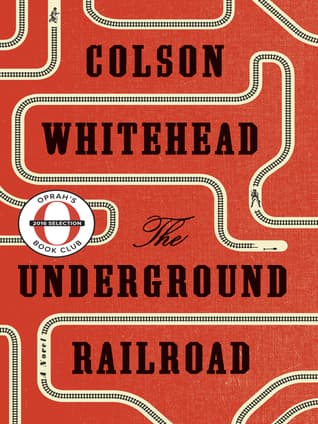
- The Underground Railroad
Colson Whitehead
4.0 (290k) average on GoodreadsLiterary FictionExplores American history and race through a fantastical, speculative lens.
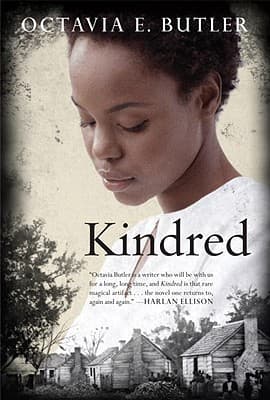
- Kindred
Octavia E. Butler
4.1 (5k) average on GoodreadsFantasyFeatures time travel as a mechanism to confront racial injustice and the complexities of history.
- The Adventures of Huckleberry Finn
Mark Twain
3.8 (1.2M) average on GoodreadsHistorical FictionA coming-of-age story with a distinct, often humorous, voice exploring social issues in the American South.
- The Fifth Season
N.K. Jemisin
Jemisin's novel excels in intricate world-building and explores themes of societal oppression within a more traditional epic fantasy framework. Laymon's "Long Division," however, deliberately blurs the lines between reality, fiction, past, and future, making the act of reading a participatory unraveling of history and identity, rather than an immersion into a fully constructed secondary world.
- Harry Potter and the Sorcerer's Stone
J.K. Rowling
4.5 (7M) average on GoodreadsFantasyRescued from a miserable life under the stairs, an orphaned boy discovers he's a wizard destined for a magical school, where he uncovers a dangerous secret tied to the dark wizard who murdered his parents.
- The Hunger Games
Suzanne Collins
4.3 (6.4M) average on GoodreadsFantasyIn a future where children fight to the death on live television, Katniss Everdeen volunteers for the arena, turning a death sentence into a fight for survival and a spark of rebellion.




Enjoyed the summary?
A summary gives you the shape of the book. The book itself has the detail, the examples and the voice.
Find Long Division on AmazonAs an Amazon Associate, BookBrief earns from qualifying purchases. How we're funded