
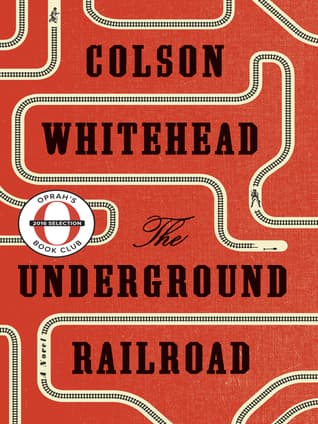
Synopsis
Covers the whole plot, including the ending.
- Difficulty
- Medium
- Pacing
- Moderate
- Mood
- Dark, Harrowing, Resilient, Thought-provoking
- Read it if
- You want a powerful, unflinching, and imaginative historical novel about slavery and the fight for freedom, with a unique speculative twist on the Underground Railroad.
- Skip it if
- You prefer lighthearted reads or are not prepared for graphic depictions of violence, racism, and the systemic dehumanization of enslaved people.
The Underground Railroad Plot Summary
Covers the whole plot, including the ending.
A Life of Brutality on the Randall Plantation
Cora lives a brutal life on the Randall cotton plantation in Georgia, known for its cruelty, especially under the control of the brothers Terrance and James Randall. Cora's grandmother, Ajarry, was brought from Africa and endured many rapes and sales before ending up on the Randall farm, where she had children, including Cora's mother, Mabel. Mabel escaped the plantation when Cora was a child, leaving Cora alone, affected by her mother's departure. This early event shapes Cora's independence and distrust. Life on the plantation is a cycle of hard work, violence, and exploitation, with no hope.
The Decision to Flee with Caesar
Caesar, a literate slave bought from Virginia, asks Cora to escape using the Underground Railroad. Despite her initial hesitation and caution, Cora agrees, driven by her desire for freedom and the memory of her mother's escape. Their escape is dangerous. In the woods, they are ambushed by white men, including a young boy named Blake, who tries to capture Cora. In a moment of panic, Cora hits Blake with a hoe, killing him. This act solidifies her commitment to freedom but also makes her a murderer, increasing the hunt for her.
First Stop: South Carolina's Deceptive Utopia
Cora and Caesar reach their first Underground Railroad station, a real train system with tracks and tunnels, and arrive in South Carolina. The state at first seems to offer progress and opportunity for Black people. They find jobs in a museum, where Cora poses as a 'African savage' exhibit, and Caesar works in a factory. The state provides housing, education, and medical care, and slavery seems abolished. However, Cora soon learns the truth: the state's 'progress' is a eugenics experiment. Black men are sterilized without their knowledge, and Black women are used for forced medical procedures. The idea of freedom falls apart as Cora realizes they are still trapped, but in a different kind of bondage.
Ridgeway's Relentless Pursuit
Meanwhile, the slave catcher Ridgeway, who failed to catch Cora's mother, Mabel, tracks Cora and Caesar. With his Black henchman, Homer, and his dogs, Ridgeway arrives in South Carolina, having found clues about them. When Cora and Caesar hear about Ridgeway, they know their 'safe place' is no longer safe. Caesar is captured and lynched by a mob, and Cora barely escapes with the help of a conductor, Sam. She has to leave her seemingly safe life and go back into the Underground Railroad tunnels, leaving South Carolina.
North Carolina's Reign of Terror
Cora's next stop is North Carolina, a state that has outlawed all Black people, slave or free. Here, she experiences extreme racial terror. The state regularly holds public lynchings of Black people, displaying their bodies along the 'Freedom Trail' as a warning. Cora hides in a dark attic for months in the home of a white abolitionist family, the Valentines. She lives in isolation, fear, and sensory deprivation, hearing the sounds outside and facing the constant threat of discovery. She reads a book from the Valentines, finding a temporary escape, but the fear and the reality of North Carolina weigh on her.
Escape from North Carolina and the Valentine's Sacrifice
Cora's sanctuary in North Carolina is destroyed when Ridgeway and his men get close. The Valentines' home is raided, and the family is killed for hiding a fugitive. Cora escapes through a hidden tunnel, avoiding Ridgeway again. This escape is difficult, as she crawls through dark, small spaces while Ridgeway's men are above her. She is again in the unknown, leaving behind the only kindness she had found in months and understanding the great risks taken by those who helped her.
Indiana's Community and the Mystery of the Randall Farm
Cora travels to Indiana, finding refuge on a thriving, self-sufficient abolitionist farm owned by a free Black man named Valentine. Here, she finds community and relative peace, working with other free Black people and escaped slaves. She connects with Royal, an Underground Railroad conductor, and starts to hope for a stable future. However, Ridgeway, still wanting to catch Cora and get revenge for his past failure with Mabel, tracks her to the farm. He tells her about the Randall plantation, now burned and its former inhabitants scattered or dead, a reminder of her inescapable past.
Confrontation with Ridgeway and Royal's Sacrifice
Ridgeway and his men ambush the Indiana farm. A violent fight happens, and many of the farm's inhabitants are killed or captured. Royal, who had become close to Cora, sacrifices himself to protect her during the raid, showing the constant danger and loss in her journey. Cora again escapes Ridgeway, but with trauma and the loss of another person she trusted. This event makes her face the reality that even in communities meant for freedom, slavery's shadow can still reach.
The Road to the North and the Promise of Freedom
After the destruction in Indiana, Cora continues her journey north, guided by the remaining Underground Railroad conductors. She travels with other escaped slaves, enduring harsh conditions and constant watch. Her path is still dangerous, but she is driven by a desire for true freedom, not just from slavery's chains, but from the systemic oppression and violence that follows Black people in America. She carries her past, the memories of those lost, and the strength forged through her suffering, moving towards an uncertain but hopeful future.
An Uncertain Future in the Far North
Cora eventually reaches a remote station where she meets Molly, who says the railroad goes no further. Molly is with a large wagon train going to the far North, a place rumored to be truly free. Cora, with her determination, decides to join them, accepting the unknown and the continued journey as her path to freedom. The novel ends with Cora getting into the wagon, her future uncertain but her spirit unbroken. She has survived horrors, and while the destination is not fully revealed, moving forward, choosing her own path, shows her triumph and the human spirit in the face of oppression.
Principal Figures
Cora
Protagonist
A resilient slave seeking freedom and an understanding of her mother's abandonment.
Cora is the central protagonist, a young woman born into slavery on the Randall plantation. She is fiercely independent, reserved, and often distrustful, a result of her mother Mabel's abandonment and the brutal realities of her life. Her journey on the Underground Railroad is not just a physical escape, but also an internal quest for identity and self-worth. Despite the immense suffering and loss she endures, Cora possesses an unyielding will to survive and find true freedom, constantly adapting to new dangers and carrying the weight of her past. She is driven by a deep longing to understand her place in the world and to escape the legacy of her ancestors' bondage.
Relationships: Mabel (Mother who escaped, leaving Cora behind); Caesar (Fellow slave and initial escape partner); Ridgeway (Relentless slave catcher and antagonist); Royal (Underground Railroad conductor and love interest in Indiana)
Ridgeway
Antagonist
A notorious and ruthless slave catcher obsessed with capturing Cora and avenging his past failures.
Ridgeway is the primary antagonist, a cruel and relentless slave catcher. He embodies the brutal enforcement of slavery and the systemic racism of the era. His pursuit of Cora is personal, stemming from his past failure to capture her mother, Mabel, an event that deeply wounded his pride and professional reputation. Ridgeway believes in the inherent superiority of white people and the natural order of slavery, viewing escaped slaves as property that must be returned. He is accompanied by his monstrous Black henchman, Homer, and his dogs, creating a terrifying presence that symbolizes the ever-present threat to Cora's freedom.
Relationships: Cora (Target of his relentless pursuit); Mabel (His past failure, fueling his obsession with Cora); Homer (His Black henchman and ward)
Caesar
Supporting
A literate and courageous slave who inspires Cora's escape.
Caesar is a literate slave from Virginia who initiates the plan to escape with Cora. He is intelligent, resourceful, and possesses a strong desire for freedom. Caesar introduces Cora to the concept of the Underground Railroad and provides the initial impetus for her journey. He is optimistic and relatively well-informed compared to other slaves on the Randall plantation, having learned to read and write. His capture and brutal lynching in South Carolina serve as a harsh reminder of the dangers of their escape and a significant loss for Cora, solidifying her resolve to continue her fight for freedom.
Relationships: Cora (Escape partner and confidant)
Mabel
Mentioned
Cora's mother who successfully escaped the Randall plantation, leaving Cora behind.
Mabel is Cora's mother, whose successful escape from the Randall plantation years before the novel begins is a central mystery and a powerful motivator for Cora. Her disappearance leaves Cora feeling abandoned and ostracized but also instills in her the possibility of freedom. Mabel's escape is a source of both pain and inspiration for Cora, and her ultimate fate is unknown for much of the novel, haunting Cora's journey. Ridgeway's failure to capture Mabel fuels his relentless pursuit of Cora, tying the two women together through the slave catcher's obsession.
Relationships: Cora (Daughter whom she left behind); Ridgeway (The slave catcher she evaded)
Homer
Supporting
Ridgeway's young, mute Black henchman, a chilling symbol of internalized oppression.
Homer is Ridgeway's young, mute Black henchman, who travels everywhere with the slave catcher. He is a disturbing and unsettling figure, often described as wearing a small, formal suit. Homer's presence is a constant, chilling reminder of the complex and insidious nature of slavery, as he, a Black child, is complicit in the capture and punishment of other Black people. He serves as a symbol of internalized oppression and the devastating psychological effects of the slave system, having been 'freed' by Ridgeway and molded into his loyal servant.
Relationships: Ridgeway (His master and guardian); Cora (The target he helps track)
Royal
Supporting
An Underground Railroad conductor and love interest who offers Cora hope in Indiana.
Royal is a free Black man and a conductor on the Underground Railroad who aids Cora in Indiana. He offers her a glimpse of genuine connection and a potential future free from constant fear. Royal is kind, intelligent, and deeply committed to the cause of abolition. He provides Cora with a sense of community and a brief period of respite from her harrowing journey. His death during Ridgeway's raid on the Indiana farm is another significant loss for Cora, reinforcing the brutal reality that even in moments of hope, danger is never far away.
Relationships: Cora (Love interest and fellow abolitionist)
Sam
Supporting
A conductor on the Underground Railroad who helps Cora escape South Carolina.
Sam is a key conductor on the Underground Railroad in South Carolina. He is a free Black man who works covertly to help escaped slaves. When Ridgeway closes in on Cora and Caesar, Sam risks his own life to help Cora escape, demonstrating immense courage and dedication to the cause. He represents the network of brave individuals who operated the literal Underground Railroad, providing essential aid and guidance to those fleeing bondage. His actions are crucial in allowing Cora to continue her journey when her initial haven crumbles.
Relationships: Cora (The escaped slave he helps)
Ethel
Supporting
The wife of an abolitionist in North Carolina who harbors Cora.
Ethel is the wife of Martin, one of the white abolitionists who hides Cora in their attic in North Carolina. Initially, Ethel is reluctant and fearful, struggling with the immense risk of harboring a runaway slave in a state where such actions are punishable by death. She is characterized by her anxiety and her internal conflict between her moral compass and her fear for her own family's safety. Despite her fears, she ultimately provides Cora with shelter and some comfort, demonstrating the quiet courage of those who defied the system, even if imperfectly.
Relationships: Cora (The escaped slave she harbors); Martin (Her husband, a fellow abolitionist)
Martin
Supporting
A white abolitionist in North Carolina who hides Cora.
Martin is a white abolitionist in North Carolina who, along with his wife Ethel, hides Cora in their attic for several months. He is depicted as more resolute in his abolitionist convictions than Ethel, often providing Cora with books and small comforts. Martin represents the network of white allies, however small and often fearful, who actively worked against the institution of slavery. His eventual death, along with Ethel's, when Ridgeway discovers their hiding place, underscores the extreme personal cost of defying the slave system.
Relationships: Cora (The escaped slave he harbors); Ethel (His wife)
Themes & Insights
The Brutality and Dehumanization of Slavery
The novel shows the physical and psychological violence of slavery. From descriptions of life on the Randall plantation, including whippings, sexual assault, and forced labor, to the dehumanization in South Carolina's 'living exhibits' or North Carolina's public lynchings, Whitehead shows the horrors. Cora's constant fear, family loss, and arbitrary suffering show how slavery took away humanity and autonomy, making individuals property. The story emphasizes that even 'kind' forms of slavery or post-slavery control are still oppression.
“The only way to stop a slave from running was to make sure he couldn't run. And the only way to make sure he couldn't run was to make sure he couldn't be a man.”
The Search for Freedom and Identity
Cora's journey is a search for freedom, beyond just escaping physical chains. In each state, she faces different forms of racial oppression, making her redefine what freedom means. Her search is also tied to her identity, dealing with her mother's escape and her own place in a world that tries to control her. She tries to find herself amid trauma and loss, finding strength in her resilience and her refusal to be broken, even as her destination is unclear.
“Freedom was a thing that shifted, a place of constant motion. You had to keep moving to keep it.”
The Nature of 'Progress' and Systemic Racism
Whitehead questions the idea of linear progress by showing how systemic racism adapts and continues. South Carolina, at first seeming like a progressive haven, turns out to be a eugenics experiment, showing that even 'abolition' can hide new forms of control. North Carolina's ban on Black people and public executions show a more open, but equally systemic, racism. The novel suggests that the promise of American freedom has always been affected by slavery, and that racism is deeply ingrained in the nation, changing but never disappearing.
“America, too, was a delusion, but it was a delusion everyone believed, which made it more powerful than a nation.”
Trauma, Memory, and Legacy
The novel explores the lasting effects of trauma, both personal and across generations. Cora carries the trauma of her mother's abandonment, plantation violence, and the constant threat of capture. The story often includes memories of Ajarry, Mabel, and other ancestors, showing how slavery's legacy affects future generations. These memories are not just personal but collective, forming a shared history of suffering and resistance that shapes characters' identities and experiences. Cora's constant loss shows the ongoing psychological wounds of the slave system.
“The past was a wound that would not heal. It festered and bled.”
Resistance and Resilience
Despite the brutality, the novel also shows the human spirit of resistance and resilience. Cora's act of running is defiance, and her survival against odds shows her strong will. The Underground Railroad itself is a symbol of collective resistance, a network of people risking their lives for freedom. Even small acts of rebellion, like Ajarry's endurance or Cora's refusal to break, add to a larger story of resilience in the face of oppression. The novel celebrates the courage of those who fought back, both openly and subtly.
“She was a stray, and a stray knows it has to fight for its place.”
Plot Devices & Literary Techniques
The Literal Underground Railroad
A magical realist reimagining of the historical network as an actual subterranean railway.
Whitehead's most prominent plot device is the literal interpretation of the Underground Railroad as a subterranean network of tracks, trains, and conductors. This magical realist element allows the narrative to physically transport Cora from state to state, each stop representing a distinct societal experiment or manifestation of racism. It provides a tangible, almost mythical, pathway to freedom, while simultaneously highlighting the immense danger and secrecy involved in the historical movement. The trains become a symbol of hope and progress, but also of the perilous journey and the constant threat of discovery. The physical railroad underscores the idea of a hidden, organized resistance.
The Shifting States/Mini-Odysseys
Cora's journey through different states, each representing a distinct form of racial oppression.
Cora's journey across various states (Georgia, South Carolina, North Carolina, Indiana) functions as a series of mini-odysseys. Each state presents a unique and distinct manifestation of racial oppression, from overt plantation brutality to deceptive 'progress' and outright state-sanctioned extermination. This device allows Whitehead to explore the multifaceted nature of American racism, demonstrating that there was no single 'slave experience' and that the fight for freedom involved confronting diverse, evolving threats. It's akin to 'Gulliver's Travels,' where each new land reveals a different societal flaw, broadening the scope of the novel's critique of American history.
The Slave Catcher's Perspective (Ridgeway's Chapters)
Interspersed chapters providing insight into the antagonist's motivations and worldview.
Periodically, the narrative shifts focus from Cora to Ridgeway, the slave catcher. These chapters delve into his backstory, his philosophy, and his relentless pursuit of Cora. This device offers a chilling insight into the mindset of those who perpetuated and enforced slavery, humanizing the antagonist without excusing his cruelty. It allows the reader to understand the ideological underpinnings of his actions and the systemic nature of the institution he serves. By showing his internal world, Whitehead emphasizes that the horrors of slavery were not just acts of individual cruelty but were rooted in a deeply flawed and destructive worldview.
The Legacy of Mabel
Cora's mother's escape and unknown fate as a driving force and central mystery.
Mabel's escape and subsequent disappearance form a powerful, unresolved mystery that significantly drives Cora's journey and defines her character. The memory of Mabel's flight simultaneously fuels Cora's hope for freedom and her deep-seated feelings of abandonment. Her mother's story is intertwined with Ridgeway's obsession, making Cora an extension of his past failure. This device connects Cora's personal quest to a generational legacy of resistance and loss, highlighting the continuous struggle for freedom that spans across time and family lines. The eventual revelation of Mabel's fate provides a poignant resolution to this long-standing emotional anchor for Cora.
The Underground Railroad Quotes
“The world may be mean, but people don't have to be, not if they refuse.”
“If you want to see what this nation is all about, you have to ride the rails. Look outside as you speed through, and you'll find the true face of America.”
“Stolen bodies working stolen land. It was an engine that did not stop, its hungry boiler fed with blood.”
“The only way to know how long you have been traveling is to ask someone who knows the time.”
“In America the quirk was that people were things.”
“The whites came to this land for a fresh start and to escape the tyranny of their masters, just like the slaves they would soon enslave.”
“She was a stray, and like all strays she was a survivor.”
“The underground railroad, she thought. It was a joke—until it wasn't.”
“Freedom was a thing that shifted as you looked at it, the way a forest is dense with trees up close but from outside, from the empty meadow, you see its true limits.”
“Every state is different. Each one a state of possibility.”
“The treasure, of course, was the treasure of the self, the only thing worth stealing back.”
“To see the chains was to see the man, and to see the man was to see the chains.”
“The railroad's conductors were the bravest people she had ever known, for they risked everything for a principle.”
“In her heart she carried the map of her escape, a geography of hope.”
Quiz
10 questions on the plot and the characters. Each answer comes with a short explanation.
Question 1
What is the name of the slave catcher who relentlessly pursues Cora throughout her journey?
- Caesar
- Ridgeway
- Fletcher
- Martin
Show answer
B. Ridgeway Ridgeway is the primary antagonist in the novel, a determined slave catcher who makes it his mission to capture Cora after she escapes from the Georgia plantation. His pursuit symbolizes the pervasive and persistent threat of recapture faced by escaped slaves.
Question 2
In Colson Whitehead's novel, how is the Underground Railroad physically depicted?
- As a network of safe houses and secret routes operated by abolitionists
- As a literal railroad with tracks and tunnels running beneath the Southern soil
- As a series of coded messages and maps hidden in quilts
- As a metaphorical journey guided by spiritual visions
Show answer
B. As a literal railroad with tracks and tunnels running beneath the Southern soil Whitehead reimagines the historical Underground Railroad as an actual subterranean railroad with engineers, conductors, stations, and trains. This literalization serves as a powerful narrative device to explore the brutal realities of slavery and escape.
Question 3
What event triggers Cora and Caesar's decision to escape from the Georgia plantation?
- The death of Cora's mother, Mabel
- A violent punishment inflicted on Cora by the overseer
- Caesar telling Cora about the Underground Railroad and proposing escape
- A failed slave rebellion on the plantation
Show answer
C. Caesar telling Cora about the Underground Railroad and proposing escape Caesar, a recent arrival from Virginia, shares knowledge of the Underground Railroad with Cora, offering her a chance at freedom. This conversation is the catalyst for their escape, as Cora, despite her initial reluctance, decides to take the terrifying risk.
Question 4
During their escape, Cora kills a young white boy. What is the immediate consequence of this act?
- It causes Caesar to abandon Cora out of fear
- It leads to a reward being placed on Cora's head, intensifying the hunt for her
- It results in Cora being captured and returned to the plantation
- It prompts the Underground Railroad to refuse her further assistance
Show answer
B. It leads to a reward being placed on Cora's head, intensifying the hunt for her The killing of the boy, who tries to capture her, marks Cora as a dangerous fugitive. This act increases the bounty on her and fuels Ridgeway's personal vendetta, making her escape more perilous and highlighting the extreme measures slaves took to resist capture.
Question 5
What initially seems like a haven for Cora and Caesar in South Carolina but later reveals an insidious scheme?
- A Quaker settlement that secretly supports slavery
- A city with apparent opportunities for black residents, which is actually a eugenics program
- A plantation run by benevolent owners who educate slaves
- A hidden community of escaped slaves that practices strict isolation
Show answer
B. A city with apparent opportunities for black residents, which is actually a eugenics program In South Carolina, Cora finds work and education in a city that appears progressive. However, she discovers that the city's authorities are conducting a eugenics program, sterilizing black women without their consent, exposing how systemic racism can manifest in seemingly benevolent institutions.
Question 6
How does Cora's status as an 'outcast' among her fellow slaves on the plantation influence her character?
- It makes her more submissive and obedient to avoid further isolation
- It fuels her resilience and independence, shaping her fierce will to escape
- It leads her to form a close bond with Caesar from the start
- It causes her to reject the idea of escape as too risky
Show answer
B. It fuels her resilience and independence, shaping her fierce will to escape Cora's isolation, due to her mother Mabel's earlier escape and her own defiant nature, hardens her and fosters a strong sense of self-reliance. This outcast status contributes to her determination to seek freedom, even when faced with immense dangers.
Question 7
What broader historical narrative does Whitehead weave into Cora's journey through different states?
- The evolution of American democracy from the Founding Fathers to the Civil War
- The saga of America from the brutal importation of Africans to unfulfilled promises in the present day
- The technological advancements of the 19th century, such as the steam engine
- The spread of religious movements like the Great Awakening
Show answer
B. The saga of America from the brutal importation of Africans to unfulfilled promises in the present day Whitehead uses Cora's odyssey as a lens to explore the continuum of racial injustice in America. Each state she visits represents different historical atrocities and systemic racism, linking the past horrors of slavery to contemporary issues, thus creating a powerful meditation on shared history.
Question 8
What happens to Caesar after he and Cora escape to South Carolina?
- He is captured by Ridgeway and returned to slavery
- He decides to stay in South Carolina and assimilate into the city's society
- He is betrayed and killed, leaving Cora to continue her journey alone
- He joins the Underground Railroad as a conductor to help others escape
Show answer
C. He is betrayed and killed, leaving Cora to continue her journey alone Caesar is captured and killed in South Carolina, a turning point that forces Cora to flee again and continue her quest for freedom alone. His death underscores the constant peril faced by escaped slaves and the fragility of hope in their struggle.
Question 9
In what way does Whitehead's portrayal of the Underground Railroad serve as a critique of American history?
- By showing it as a failed system that ultimately did not help many slaves
- By literalizing it to highlight the gap between America's ideals of freedom and the brutal reality of slavery
- By depicting it as a purely fictional element with no basis in historical fact
- By using it to argue that slavery was economically necessary for the South
Show answer
B. By literalizing it to highlight the gap between America's ideals of freedom and the brutal reality of slavery By making the Underground Railroad a physical entity, Whitehead critiques the mythologized version of American history. This creative choice emphasizes the extreme dangers and systemic oppression slaves faced, challenging nostalgic narratives and forcing readers to confront the harsh truths of the past.
Question 10
How does Cora's journey reflect the structure of 'Gulliver's Travels', as mentioned in the book description?
- Through comedic encounters with exaggerated characters in each state
- By presenting each state as a distinct 'world' with its own social and political horrors
- Through a first-person narrative that blends fantasy with historical events
- By including magical elements like talking animals and mythical creatures
Show answer
B. By presenting each state as a distinct 'world' with its own social and political horrors Similar to Gulliver's travels to different lands, Cora visits various states—each representing a unique manifestation of racism and oppression in America. This structure allows Whitehead to explore a wide range of historical injustices, from eugenics in South Carolina to violence in other regions, creating an odyssey through time and space.
The Underground Railroad FAQ
What is 'The Underground Railroad' about?
The novel follows Cora, a young enslaved woman on a Georgia plantation, who escapes with fellow slave Caesar via the Underground Railroad—literally reimagined as a physical network of tracks and tunnels. Her journey northward becomes a harrowing odyssey through different states, each representing distinct forms of racial oppression, while she is pursued by the relentless slave catcher Ridgeway.
Why should I read 'The Underground Railroad'?
Whitehead's novel masterfully blends historical fiction with allegorical invention, offering a visceral, unflinching look at slavery's horrors while reimagining the Underground Railroad as a tangible escape route. It's both a gripping survival story and a profound meditation on America's racial legacy, earning the Pulitzer Prize and National Book Award.
What is the background/setting of 'The Underground Railroad'?
Set in the antebellum South, the story begins on the brutal Randall plantation in Georgia before expanding to various states like South Carolina, North Carolina, and Indiana. Whitehead uses each location to critique different historical forms of racism, from medical experimentation to forced sterilization and communal destruction.
What are the most memorable quotes?
Key quotes include: 'The world may be mean, but people don't have to be,' reflecting Cora's resilience; 'The only way to know how long you have is to have it,' on stolen time under slavery; and 'The underground railroad... was a marvel—each station a miracle of black engineering,' highlighting the literalized metaphor of resistance.
What writing style does the author use?
Whitehead employs a direct, unadorned prose that amplifies the novel's brutal realism, interspersed with lyrical passages. The narrative blends historical detail with speculative elements, using a third-person perspective focused on Cora while incorporating brief interludes about other characters to broaden the scope.
What minor details add significant meaning?
Cora's inherited plot of land from her mother Mabel, though tiny, symbolizes her claim to autonomy and legacy. The 'Freedom Trail' in North Carolina—a road lined with lynched bodies—viscerally represents the terror of white supremacy, turning a path into a grotesque public spectacle of control.
What are some subtle foreshadowing moments?
Early mentions of Cora's mother Mabel, who abandoned her, foreshadow Cora's own fraught relationship with motherhood and escape. Caesar's description of the Underground Railroad as 'a real railroad' hints at the novel's literal reimagining, while Ridgeway's fixation on capturing Mabel prefigures his obsessive pursuit of Cora.
What unexpected character connections exist?
Ridgeway's assistant Homer, a free Black child who willingly assists in slave-catching, embodies internalized oppression and complicity. Cora's eventual discovery that her mother Mabel didn't abandon her to die but chose freedom alone adds tragic depth to their severed bond, reframing Mabel's escape as an act of survival rather than betrayal.
What are unspoken character motivations?
Ridgeway's relentless pursuit stems from a personal failure to capture Cora's mother Mabel, driving him to prove his dominance and rectify his legacy. Cora's initial reluctance to escape masks a deep-seated fear of abandonment, rooted in her mother's disappearance, which she must overcome to claim her own agency.
What psychological complexities do characters exhibit?
Cora grapples with trauma-induced numbness and bursts of violent self-preservation, as seen when she kills a white boy during escape. Caesar's optimism about the North clashes with his naivete, leading to his capture, while Ridgeway's racist ideology is layered with a twisted sense of duty and personal vendetta.
What are the major emotional turning points?
Cora's killing of the white boy during escape marks a point of no return, forcing her into a fugitive identity. In South Carolina, her brief hope for safety shatters upon discovering the state's eugenics program, deepening her distrust. The massacre of the Valentine farm in Indiana devastates her belief in communal sanctuary, hardening her resolve for solitary freedom.
How do relationship dynamics evolve?
Cora and Caesar's partnership shifts from cautious alliance to mutual dependence, then fractures under external threats. Her bond with Royal, a free Black conductor, offers tentative trust and romance, but is cut short by violence. Ridgeway's relationship with Homer evolves from paternalistic control to a parasitic dependency that mirrors slavery's distortions.
Which parts remain ambiguous or open-ended?
The ultimate fate of Cora's mother Mabel is left ambiguous—whether she died free or was captured—mirroring the countless untold stories of enslaved people. The novel's ending, with Cora heading west alone, leaves her future uncertain, suggesting freedom is an ongoing journey rather than a fixed destination.
What are controversial scenes or decisions?
Cora's killing of the white boy during escape sparks debate about violence as self-defense versus moral compromise. South Carolina's depiction of a seemingly progressive society that secretly sterilizes Black women critiques historical eugenics programs, unsettling readers with its insidious racism masked as benevolence.
'The Underground Railroad' ending explained: how it ends & what it means
After Ridgeway is killed and Cora escapes the Indiana massacre, she boards a wagon heading west, alone. The ending implies her journey toward freedom continues, rejecting a tidy resolution to emphasize that true liberation is precarious and ongoing. It reflects the unfulfilled promises of American history for Black people.
How does the literal Underground Railroad function as a metaphor?
By making the Underground Railroad a physical network, Whitehead literalizes the courage, ingenuity, and collaboration of Black resistance. Each station represents different historical struggles—like South Carolina's medical exploitation or North Carolina's racial purges—transforming Cora's geographic journey into a chronological tour of America's racial atrocities.
What role does the Valentine farm massacre play?
The destruction of the Valentine farm, a Black utopian community in Indiana, shatters Cora's hope for collective safety and exposes the fragility of Black freedom in a hostile society. It underscores the novel's theme that racism adapts to destroy progress, forcing Cora to rely solely on her own resilience.
How does Whitehead blend history with fiction?
Whitehead incorporates real historical atrocities—like the Tuskegee syphilis experiments and eugenics movements—into the fictionalized states Cora traverses. This technique critiques how systemic racism evolved across eras, making the novel not just a story of slavery but a commentary on America's enduring racial injustices.
What does Cora's final decision to travel west symbolize?
Cora's choice to head west alone symbolizes a rejection of false sanctuaries and a commitment to self-determined freedom. It echoes the historical movement of Black migrants seeking opportunity beyond the South, while acknowledging that freedom remains an individual, fraught pursuit in a nation built on oppression.
About the author

Arch Colson Chipp Whitehead is an American novelist. He is the author of eight novels, including his 1999 debut work The Intuitionist; The Underground Railroad (2016), for which he won the 2016 National Book Award for Fiction and the 2017 Pulitzer Prize for Fiction; and The Nickel Boys, for which he won the Pulitzer Prize for Fiction again in 2020. He has also published two books of non-fiction. In 2002, he received a MacArthur Genius Grant.
Similar books
- Beloved
Toni Morrison
3.9 (325k) average on GoodreadsLiterary FictionExplores the psychological scars of slavery and the trauma of escape with a lyrical, haunting prose.
- Kindred
Octavia E. Butler
4.1 (5k) average on GoodreadsFantasyUses a speculative element (time travel) to vividly depict the brutal realities of slavery and its impact on identity and survival.
- The Water Dancer
Ta-Nehisi Coates
4.1 (64k) average on GoodreadsFantasyFeatures a protagonist with a supernatural ability aiding in escape from slavery, blending historical realism with a touch of magical realism.
- The Old Man and the Sea
Ernest Hemingway
3.8 (831k) average on GoodreadsLiterary FictionA Cuban fisherman's long struggle with a giant marlin becomes a story of endurance and dignity, now retold for young adults with illustrations, phonetic guides, and writing prompts in Traditional Chinese.
- One Hundred Years of Solitude
Gabriel García Márquez
4.1 (753k) average on GoodreadsLiterary FictionThrough the multi-generational story of the Buendía family, a mythical town deals with the repeating patterns of time, love, and solitude, as the extraordinary mixes with the ordinary.
- The Goldfinch
Donna Tartt
3.9 (720k) average on GoodreadsLiterary FictionHaunted by a tragic explosion and clutching a stolen Dutch masterpiece, a young orphan navigates the opulent drawing rooms of New York and the gritty underbelly of the art world, desperately seeking connection and redemption amidst a life spiraling into crime and obsession.




Enjoyed the summary?
A summary gives you the shape of the book. The book itself has the detail, the examples and the voice.
Find The Underground Railroad on AmazonAs an Amazon Associate, BookBrief earns from qualifying purchases. How we're funded