The River
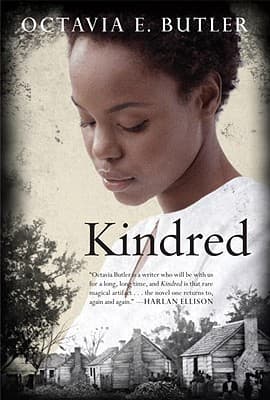
In 1976 California, Dana, an African American woman, is celebrating her 26th birthday with her white husband, Kevin. As they unpack books, Dana suddenly feels dizzy and finds herself transported to a pre-Civil War Maryland plantation. She sees a young white boy, Rufus, drowning in a river and pulls him out. His mother, Margaret Weylin, and father, Tom Weylin, appear. Tom, angry at Dana's presence and her touching his son, threatens her with a shotgun. Just as he is about to shoot, Dana is pulled back to her living room, disoriented and injured. Kevin sees her sudden reappearance, confirming the impossible event.
The Fire
A few days after her first jump, Dana is pulled back to the past when Rufus, now older, sets his curtains on fire. This time, Kevin holds onto her when the jump occurs, and they both arrive in the past. They put out the fire and save Rufus, who recognizes Dana. Tom Weylin is suspicious of Kevin's origins and education. Dana and Kevin invent a story about being from New York, having lost their papers, and being distant relatives of Rufus's father. They are forced to stay on the Weylin plantation, experiencing the brutal realities of slavery firsthand, with Kevin posing as Dana's owner.
The Fall
Dana experiences another jump, this time alone, and finds Rufus as a young man with a broken leg after falling from a tree. She tends to his injury, solidifying her role as a caretaker in his life. During this extended stay, Dana is forced into the role of a house servant and tutor to Rufus and his cousin, Hagar. She witnesses the daily cruelties inflicted upon the enslaved people, including whippings and forced separations. She struggles to maintain her modern sensibilities while navigating the dangerous social hierarchy. Her relationship with Rufus, though complicated by his ownership, deepens as she becomes essential to his survival.
The Fight
After another involuntary return to the present, Dana finds herself back in the past, discovering that Kevin has been stranded there for five years. Rufus, now an adult, has become increasingly cruel and possessive, mirroring his father's behavior. Kevin, hardened by his time in the past, has adapted to the era, even owning enslaved people to protect himself. Dana struggles with Rufus's attempts to force her into a sexual relationship with him, believing it is his right. The tension between Dana, Rufus, and the Weylin family escalates, highlighting the moral compromises forced upon everyone by the system of slavery.
The Storm
Dana, increasingly desperate to escape Rufus's control and the suffocating environment of the plantation, attempts to run away with a fellow enslaved man, Isaac. They are caught. Isaac is brutally beaten and sold, his ears cut off. Dana is also severely whipped by Tom Weylin, a traumatic experience that marks her both physically and psychologically. This event shows the absolute power slaveholders held and the immense risks involved in any act of defiance. The brutal punishment forces Dana to confront the limitations of her agency and the danger she faces as a Black woman in the antebellum South.
The Rope
Following her whipping, Dana recovers, but the psychological toll and physical pain are immense. Rufus, despite his cruelty, still feels a twisted connection to her and continues to assert his ownership. When Tom Weylin, Rufus's father, dies of a heart attack, Rufus inherits the plantation and becomes even more unpredictable and tyrannical. Dana is again in a life-threatening situation with Rufus, who attempts to rape her. In self-defense, Dana grabs a knife and stabs him, triggering her immediate return to the present. The trauma of the event leaves her deeply shaken, and she carries a permanent injury from the struggle.
The Fight for Freedom
Dana returns to the past and finds Rufus even more entrenched in his cruelties. He has forced Alice, an enslaved woman he desires, into a relationship and has children with her. Dana tries to help Alice, who is a distant ancestor of Dana's, navigate the brutal realities of her life under Rufus. Rufus's affection for Dana is a twisted mix of desire, dependence, and possessiveness, making her situation perilous. Dana grapples with the morality of her interventions and the devastating impact of slavery on individuals and families, particularly as she witnesses Alice's suffering and attempts to escape.
The Selling
Rufus's mental state deteriorates further, marked by increasing paranoia and violence. He sells Alice's children, his own children, out of spite and anger when Alice attempts to run away again. This act is a betrayal and devastates Alice, leading her to commit suicide. Dana witnesses this horrific chain of events, feeling helpless and despair. The sale of the children highlights the ultimate power of slaveholders and the complete dehumanization of enslaved people, even those with familial ties to their owners. Dana's own connection to Rufus through her lineage becomes increasingly disturbing.
The Last Embrace
Rufus, now completely unhinged and desperate, attempts to force Dana into a sexual relationship, threatening her and asserting his ownership. He has lost everyone he cared about, and Dana is the only one remaining from his past. Dana, realizing that her life is in imminent danger and that Rufus will never truly let her go, is forced to make a final, desperate choice. As he lunges at her, she stabs him again with a knife, killing him. This act of self-preservation also severs her connection to the past permanently. As she is pulled back to the present, her left arm is absorbed into the wall, a permanent scar from her ordeal.
The Aftermath
Dana returns to 1976, but her left arm is severed at the shoulder, a physical manifestation of her final violent escape from Rufus and the past. Kevin, who has been waiting for her, is relieved but also deeply affected by their shared ordeal. They try to piece together the history of the Weylin plantation and the descendants of Alice and Rufus, discovering that their own family line is directly connected. Dana is left with psychological scars, having experienced the horrors of slavery firsthand. The novel concludes with Dana and Kevin attempting to heal and understand the impact of her journeys through time, and the weight of history on their present.