
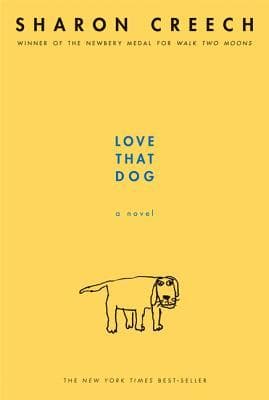
Synopsis
Covers the whole plot, including the ending.
- Difficulty
- Easy
- Pacing
- Slow
- Mood
- Heartwarming, Reflective, Gentle, Hopeful
- Read it if
- You're a young reader exploring emotions, a teacher looking for a gentle introduction to poetry, or anyone who believes they 'can't write poetry' and needs encouragement.
- Skip it if
- You're looking for a complex plot, intricate world-building, or a fast-paced adventure story.
Love That Dog Plot Summary
Covers the whole plot, including the ending.
Jack's Initial Resistance to Poetry
The book starts with Jack's journal entries to his teacher, Ms. Stretchberry, in September. He states he dislikes poetry, claiming it's for girls and that he can't write it because 'my brain is empty.' Despite Ms. Stretchberry's encouragement and assignments, Jack resists, often writing very short, uninspired responses or simply saying he doesn't want to write poetry. He mentions his struggle to find words and his frustration with the expectation to create something poetic. Ms. Stretchberry's prompts, however, gradually begin to lessen his initial reluctance, even if he doesn't realize it yet, as she introduces him to different forms and famous poems.
Introduction to Famous Poems and Jack's Growing Curiosity
Throughout October and November, Ms. Stretchberry introduces the class to various poems, including William Carlos Williams's 'The Red Wheelbarrow' and Robert Frost's 'Stopping by Woods on a Snowy Evening.' Jack initially dismisses them, but his journal entries show a change. He admits to liking 'The Red Wheelbarrow' even though he doesn't understand why, and he finds himself thinking about the woods in Frost's poem. He also reacts strongly to 'The Tiger' by William Blake, finding it strong and a little scary. These encounters slowly open Jack's mind to the idea that poetry isn't just 'girl stuff' and can create strong feelings and images.
Jack Finds His Voice with 'The Red Wheelbarrow'
In December, Jack, still somewhat unwillingly, starts to write. After being moved by 'The Red Wheelbarrow,' he tries to write his own poem about a yellow dog. This is a turning point, as he uses the simple, concrete images that appealed to him in Williams's work. He describes a yellow dog 'eating yellow flowers' and later, a 'yellow dog, sad-eyed, waiting by the road.' These short, sad lines hint at a deeper, unexpressed sadness, marking the first time Jack truly puts personal emotion into his writing, moving beyond just doing an assignment.
The Revelation of Sky, the Yellow Dog
As Jack continues to write through January and February, his poems become more personal and detailed, about a yellow dog. He describes playing with the dog, teaching it tricks, and the dog's loyalty. Slowly, the full, sad story comes out: his yellow dog, named Sky, was hit by a 'big truck' and died. Jack's poems become an emotional way to express his grief and memories, showing how much Sky's death affected him. This personal subject changes his poetry from a school assignment into a way to remember and mourn.
Connecting with Walter Dean Myers
In March, Ms. Stretchberry introduces the class to a poem by Walter Dean Myers about his own dog. This poem affects Jack deeply, as it mirrors his feelings of love and loss for Sky. He feels a strong connection to Myers's words, feeling understood and less alone in his grief. This encounter shows Jack how poetry can connect people through shared experiences and emotions, validating his own emerging poetic voice. He feels a connection with the poet, realizing that even famous writers have experienced similar pain.
Jack Asks to Share His Work
By April, Jack has fully embraced writing about Sky. He has written several poems detailing his memories and feelings. A moment happens when he asks Ms. Stretchberry if she would type up his poems. This request shows a major shift from his initial reluctance to a desire for his work to be seen and acknowledged. He is no longer just writing for an assignment but for himself and, implicitly, for others to read. He also asks if his poems could be shared with Walter Dean Myers, showing his growing confidence as a writer.
The Visit from Walter Dean Myers
In May, Ms. Stretchberry arranges for Walter Dean Myers to visit their school. Jack is nervous but excited. He prepares to read his poems about Sky. During the assembly, Jack bravely stands up and reads his work aloud to the visiting author and his classmates. This public act of sharing is the end of his journey, showing his complete change from a poetry-hater to a confident young poet. Myers praises Jack's work, further supporting his talent and emotional honesty.
Jack's Final Reflections and Continued Writing
After the visit from Walter Dean Myers, Jack continues to write in his journal. He thinks about how much he has changed since September, admitting that he now loves poetry. He realizes that poetry is not just for girls and that he has a lot to say. He thanks Ms. Stretchberry for her patience and guidance. His final entries show a boy who has found his voice, processed his grief, and discovered a passion for writing, showing personal and artistic growth. He even starts to write about other topics, showing his expanded perspective.
Love That Dog Characters
Jack
Protagonist
A young boy who initially hates poetry but discovers his voice through writing about his lost dog.
Jack is a fifth-grade student who starts the school year with a strong aversion to poetry, viewing it as 'girl stuff' and claiming his brain is empty when asked to write. Throughout the book, his journal entries to Ms. Stretchberry chronicle his reluctant journey into the world of verse. He is initially stubborn and resistant, often writing short, dismissive responses. However, as he is exposed to various poems and encouraged by his teacher, he slowly begins to open up. His deep love for his deceased yellow dog, Sky, becomes the catalyst for his poetic expression, allowing him to process grief and find his voice. He is honest, vulnerable, and ultimately courageous.
Relationships: Ms. Stretchberry (teacher and mentor); Sky (his beloved deceased yellow dog); Walter Dean Myers (an admired poet and mentor figure)
Ms. Stretchberry
Supporting
Jack's patient and encouraging teacher who guides him through his poetic journey.
Ms. Stretchberry is Jack's fifth-grade teacher. Though she never speaks directly in the book, her presence is felt entirely through Jack's journal entries. She is portrayed as patient, persistent, and highly skilled in fostering creativity. She introduces her students to a diverse range of poets and forms, gently nudging Jack to engage without forcing him. Her quiet encouragement, thoughtful assignments, and recognition of Jack's nascent talent are instrumental in his transformation. She understands Jack's unspoken grief and provides the safe space and tools for him to express it.
Relationships: Jack (student and mentee)
Sky
Supporting
Jack's deceased yellow dog, whose memory becomes the central inspiration for his poetry.
Sky is Jack's beloved yellow dog, who died tragically after being hit by a truck. Although no longer alive, Sky is a central 'character' in the narrative, as his memory forms the core subject of Jack's most profound and personal poems. Through Jack's verses, Sky is depicted as a loyal, playful, and cherished companion. The dog's death is the source of Jack's deep, unexpressed grief, and writing about Sky becomes Jack's primary way of processing this loss. Sky symbolizes unconditional love, innocence, and the pain of loss.
Relationships: Jack (his owner and best friend)
Walter Dean Myers
Supporting/Mentioned
A real-life poet whose work deeply resonates with Jack and inspires him.
Walter Dean Myers is a renowned author and poet, introduced to Jack's class by Ms. Stretchberry. His poem about his own dog deeply affects Jack, making him feel understood and connected. Myers serves as an inspirational figure and a real-world example of how poetry can express profound emotions and shared experiences. His visit to the school and his validation of Jack's poems are pivotal moments, confirming Jack's newfound identity as a poet. He represents the broader community of writers and the power of literary connection.
Relationships: Jack (admirer and aspiring fellow poet)
William Carlos Williams
Mentioned
A poet whose simple, concrete imagery helps Jack understand poetry.
William Carlos Williams is an American poet whose poem 'The Red Wheelbarrow' is one of the first that truly resonates with Jack. Its simplicity and focus on concrete imagery, 'so much depends upon a red wheelbarrow glazed with rain water beside the white chickens,' initially puzzles Jack but then inspires him to try writing about his own yellow dog in a similar style. Williams's work helps Jack overcome his initial prejudice against poetry by demonstrating that it doesn't have to be overly complex or abstract to be powerful.
Robert Frost
Mentioned
A poet whose descriptive nature poem captures Jack's imagination.
Robert Frost is an American poet whose poem 'Stopping by Woods on a Snowy Evening' is read in Ms. Stretchberry's class. While Jack initially finds it confusing, he admits to thinking about the 'dark and deep' woods and the 'miles to go before I sleep' line. Frost's poem introduces Jack to the evocative power of imagery and atmosphere in poetry, demonstrating how words can transport a reader to a specific setting and mood. It further broadens Jack's understanding of what poetry can achieve beyond simple narrative.
William Blake
Mentioned
A poet whose powerful and slightly frightening poem 'The Tiger' makes a strong impression on Jack.
William Blake is an English poet whose poem 'The Tiger' is introduced by Ms. Stretchberry. Jack finds this poem particularly striking and a bit scary, describing it as 'burning bright' and powerful. Blake's use of vivid, almost primal imagery and profound questions about creation and destruction challenges Jack's preconceived notions about poetry. It shows him that poetry can be intense, thought-provoking, and even unsettling, expanding his emotional and intellectual engagement with the art form.
Love That Dog Themes
The Healing Power of Art and Expression
The central theme is how writing poetry helps Jack process his grief over his dog, Sky. Initially resistant, Jack finds comfort and a voice through his journal entries. His poems become a safe space to recall memories, express sadness, and to honor Sky. Writing changes from a dreaded assignment into a way to heal, showing art's ability to help people cope with deep emotional experiences. Sharing his poems further aids his healing by connecting him with others.
“I guess it does look like a poem when you see it typed up like that.”
Finding One's Voice and Identity
Jack's journey is about self-discovery, moving from a boy who believes he has nothing to say to one who confidently shares his deepest feelings through poetry. His initial resistance to writing comes from a lack of confidence and a narrow view of what poetry is. Through Ms. Stretchberry's guidance and exposure to different poets, Jack discovers that his own experiences and emotions are valid subjects for poetry. By the end, he finds his poetic voice and a stronger sense of self, realizing his ability for creativity and expression.
“I guess I do have something to say after all.”
The Role of Mentorship and Education
Ms. Stretchberry's patient teaching methods are important to Jack's change. She doesn't force him but gently guides him by introducing different poetic styles and letting him explore. Her understanding of his emotional needs, even before he says them, and her belief in his potential, are key to his growth. The book shows how a supportive school environment, focused on individual expression rather than strict rules, can unlock a student's hidden talents and help them with personal challenges.
“Thank you for making me write poetry, Ms. Stretchberry.”
The Universality of Emotion and Connection
Jack's experience with poetry shows that emotions like love, loss, and joy are universal. His connection to Walter Dean Myers's poem about a dog shows that shared experiences can cross time and background. When Jack reads his own poems, he realizes others can relate to his feelings about Sky. This theme emphasizes how art, especially poetry, can connect people, creating empathy and a sense of belonging by showing common human experiences and emotions.
“That poem by Walter Dean Myers about his dog, I really liked it. It made me feel like he knew my dog.”
Plot Devices & Literary Techniques
Epistolary Format (Journal Entries)
The entire narrative is told through Jack's journal entries to his teacher.
The entire book is presented as a series of dated journal entries written by Jack to his teacher, Ms. Stretchberry. This epistolary format provides an intimate, first-person perspective, allowing readers direct access to Jack's thoughts, feelings, and evolving relationship with poetry. It authentically captures a child's voice, complete with misspellings, informal language, and emotional shifts. The format also subtly implies Ms. Stretchberry's responses through Jack's reactions, creating a dynamic, though one-sided, dialogue. This device emphasizes Jack's personal journey and makes his transformation more immediate and relatable.
Allusion to Famous Poets and Poems
References to real-life poets and their works guide Jack's poetic development.
The book frequently alludes to and quotes from the works of real-life poets like William Carlos Williams, Robert Frost, William Blake, and Walter Dean Myers. These allusions serve as catalysts for Jack's own writing, exposing him to different styles and demonstrating the breadth of poetic expression. They also provide concrete examples that Jack can react to, emulate, or find inspiration in. The integration of these famous works anchors Jack's fictional journey in the rich tradition of poetry and highlights how new writers learn from those who came before them.
Symbolism of the Yellow Dog (Sky)
The yellow dog, Sky, symbolizes love, loss, and the catalyst for Jack's creative expression.
Sky, Jack's deceased yellow dog, functions as a powerful symbol throughout the narrative. Initially, the dog represents Jack's deep love and the profound pain of his loss, which he is unable to articulate directly. As Jack begins to write, Sky becomes a symbol of the raw emotion that fuels his creativity. The poems about Sky are not just about a pet; they represent Jack's journey through grief, memory, and ultimately, healing. Sky symbolizes the transformative power of personal experience as the wellspring for art.
Unseen Character (Ms. Stretchberry)
Ms. Stretchberry's character is entirely inferred through Jack's journal entries.
Ms. Stretchberry is a pivotal character, yet she never 'speaks' directly within the text. Her presence, personality, and teaching methods are entirely inferred through Jack's responses, questions, and mentions in his journal entries. This device effectively highlights her role as a patient, guiding mentor and allows the reader to experience Jack's journey from his perspective without external narrative interference. It also subtly reinforces the idea that true mentorship often involves listening and providing space for growth, rather than dictating.
Love That Dog Quotes
“I don't want to because boys don't write poetry. Girls do.”
“My brain was pop-pop-popping when I was trying to write that poem.”
“Love that dog, like a bird loves to fly.”
“You've got to write about what's in your heart.”
“So much depends upon a blue car splattered with mud speeding down the road.”
“I tried. I can't do it. My brain is empty.”
“Sky was the best dog. He could run like the wind.”
“Maybe all my poems will be about my yellow dog.”
“I didn't know you could write poems about anything.”
“It's like the poet is inside my head.”
“I am sorry to hear about your dog. I had a dog once too.”
“And then I wrote a poem and it wasn't half bad.”
“Words can be like a melody, if you let them.”
“Sometimes the best poems are the ones that hurt to write.”
Quiz
10 questions on the plot and the characters. Each answer comes with a short explanation.
Question 1
What is the name of Jack's teacher who encourages him to write poetry?
- Mrs. Johnson
- Ms. Stretchberry
- Mr. Roberts
- Miss Miller
Show answer
B. Ms. Stretchberry Ms. Stretchberry is Jack's persistent and encouraging teacher who assigns poetry exercises throughout the book, helping him discover his voice.
Question 2
What event initially inspires Jack to write about his dog?
- His dog winning a competition
- Reading a poem by Walter Dean Myers
- His dog being hit by a car
- Seeing his dog play with other pets
Show answer
C. His dog being hit by a car Jack's dog Sky is hit by a blue car, which becomes a central, emotional event that Jack processes through his poetry, leading to his poem 'Love That Dog.'
Question 3
Which poet's work does Jack particularly admire and eventually write to?
- Robert Frost
- Emily Dickinson
- Walter Dean Myers
- Shel Silverstein
Show answer
C. Walter Dean Myers Jack is deeply moved by Walter Dean Myers' poem 'Love That Boy' and eventually writes a letter to him, which leads to Myers visiting Jack's school.
Question 4
Why does Jack initially refuse to put his name on his poems?
- He is afraid of criticism from classmates
- He thinks poetry is only for girls
- He wants to keep his writing private
- He doesn't think his poems are good enough
Show answer
B. He thinks poetry is only for girls Early in the book, Jack holds the stereotype that 'only girls write poetry,' which makes him hesitant to claim his work publicly until he gains confidence.
Question 5
What is the name of Jack's dog that he writes about in his poems?
- Max
- Buddy
- Sky
- Rex
Show answer
C. Sky Jack's dog is named Sky, and his love and grief for Sky after the accident become the emotional core of his poetry journey.
Question 6
How does the book's format reflect Jack's growing comfort with poetry?
- It shifts from prose to rhyming verses
- It uses illustrations to show his emotions
- It is written as a series of dated journal entries
- It includes dialogues with other characters
Show answer
C. It is written as a series of dated journal entries The book is structured as Jack's dated journal entries to Ms. Stretchberry, showing his gradual progression from reluctant, sparse notes to more expressive and confident poetry.
Question 7
What does Jack create that leads Ms. Stretchberry to type up and display his work?
- A poem about his favorite food
- A story about a magical dog
- A poem inspired by 'The Red Wheelbarrow'
- A letter to the school principal
Show answer
C. A poem inspired by 'The Red Wheelbarrow' After studying William Carlos Williams' 'The Red Wheelbarrow,' Jack writes his own version about a blue car, which Ms. Stretchberry types up, helping him see his words as 'real' poetry.
Question 8
Which theme is most central to Jack's transformation in the book?
- The importance of academic success
- Overcoming grief through creative expression
- Rebelling against authority figures
- Learning to appreciate nature
Show answer
B. Overcoming grief through creative expression Jack uses poetry to process the loss of his dog Sky, moving from silence and reluctance to finding his voice and healing through writing, making grief and expression key themes.
Question 9
What practical effect does seeing his typed poem have on Jack?
- He decides to become a professional poet
- He realizes poetry can look 'real' and valid
- He stops writing altogether out of embarrassment
- He criticizes Ms. Stretchberry for changing his words
Show answer
B. He realizes poetry can look 'real' and valid When Ms. Stretchberry types up Jack's poem, he notes, 'I guess it does look like a poem when you see it typed up like that,' showing how presentation helps him accept his work as legitimate poetry.
Question 10
How does Jack's attitude toward poetry change by the end of the book?
- He still dislikes it but tolerates it for school
- He becomes a confident poet who shares his work openly
- He switches to writing short stories instead
- He only writes poetry about topics other than his dog
Show answer
B. He becomes a confident poet who shares his work openly Initially hating poetry, Jack evolves to write heartfelt poems like 'Love That Dog,' correspond with Walter Dean Myers, and proudly claim his work, demonstrating significant personal growth.
Love That Dog FAQ
What is 'Love That Dog' about?
'Love That Dog' follows Jack, a reluctant student who initially hates poetry, believing it's only for girls. Through his teacher Ms. Stretchberry's persistent assignments, Jack gradually discovers his voice and processes the grief over his beloved dog Sky, who was hit by a car. The story unfolds entirely through Jack's dated journal entries and poems, showing his emotional and creative transformation.
Why should I read 'Love That Dog'?
This book beautifully captures the reluctant reader's journey into self-expression, making poetry accessible and meaningful. Through Jack's authentic voice and evolving relationship with his teacher, it explores themes of grief, healing, and finding confidence in one's own words. The unique format of journal entries and embedded poems creates an engaging, emotional read for both children and adults.
What is the background/setting of 'Love That Dog'?
The story takes place in a contemporary elementary school classroom, primarily through Jack's perspective in his poetry journal. While physical locations are minimal, the emotional setting revolves around Jack's home life, his memories of his dog Sky, and his interactions with Ms. Stretchberry. The classroom becomes a safe space where Jack processes his grief and discovers poetry.
What are the most memorable quotes?
Key quotes include Jack's early resistance: 'I don't want to because boys don't write poetry. Girls do,' and his transformative realization: 'I guess it does look like a poem when you see it typed up like that.' Another poignant line is his tribute to Sky: 'Love that dog like a bird loves to fly,' showing how poetry helps him articulate deep emotion.
What writing style does the author use?
Sharon Creech uses a unique epistolary style, presenting the entire story through Jack's dated journal entries and poems. The language is simple, conversational, and authentic to a child's voice, with deliberate line breaks that mimic poetic form. This approach allows readers to experience Jack's growing confidence and emotional depth firsthand.
What minor details add significant meaning?
Small details like Jack's initial refusal to put his name on poems, his gradual use of more descriptive language, and his changing handwriting (implied through formatting) signal his emotional growth. The repeated blue car imagery—first as a vague fear, then revealed as what killed Sky—adds layers to his trauma and healing process.
What are some subtle foreshadowing moments?
Early journal entries hint at Jack's trauma through his avoidance of certain topics, like his vague reference to 'the blue car' before revealing Sky's death. His initial poems about 'the yellow dog' indirectly reflect his grief, and his growing interest in Walter Dean Myers' poetry foreshadows his own creative breakthrough and tribute to Sky.
What unexpected character connections exist?
Jack forms an indirect connection to poet Walter Dean Myers, whose work inspires him and whom he eventually writes to, leading to a surprise classroom visit. Additionally, Jack's relationship with his teacher deepens through shared vulnerability—Ms. Stretchberry's encouragement helps him unlock emotions tied to his dog, creating a bond beyond typical student-teacher dynamics.
What are unspoken character motivations?
Jack's initial resistance to poetry stems from unspoken grief and a fear of vulnerability after Sky's death. Ms. Stretchberry's persistence is motivated by a desire to help Jack process his emotions, not just teach poetry. Jack's parents remain mostly off-page, but their support (or lack of direct intervention) suggests they trust the teacher's methods.
What psychological complexities do characters exhibit?
Jack exhibits a child's nuanced grief—avoidance, guilt, and gradual acceptance—through his poetic journey. His shift from 'I can't' to 'I guess it does look like a poem' shows developing self-efficacy. Ms. Stretchberry demonstrates pedagogical patience, using gentle persistence to create a safe space for emotional expression without forcing confessions.
What are the major emotional turning points?
Key turning points include Jack's first honest poem about Sky, his realization that his words 'look like a poem,' and his decision to write to Walter Dean Myers. The climax occurs when Jack shares his full tribute to Sky, 'Love That Dog,' openly acknowledging his grief and transforming his pain into art, which leads to Myers' visit and validation.
How do relationship dynamics evolve?
Jack's relationship with Ms. Stretchberry evolves from resistance to trust, as he shares increasingly personal poems. His connection to poetry changes from disdain to embrace, mirroring his emotional healing. The dynamic with his peers shifts subtly, as his poems gain recognition, though the focus remains on his internal journey and bond with his teacher.
Which parts remain ambiguous or open-ended?
The book leaves ambiguous the specifics of Sky's death and Jack's family life, focusing instead on emotional impact. Jack's future as a poet isn't resolved—it's unclear if he'll continue writing beyond the journal. The open-ended conclusion emphasizes process over outcome, inviting readers to reflect on their own creative and emotional journeys.
What are controversial scenes or decisions?
Some readers might debate Ms. Stretchberry's persistence in assigning poetry despite Jack's clear discomfort, questioning if it pressures him. Others may find the portrayal of grief simplistic, though it's tailored for young audiences. The use of real poet Walter Dean Myers' work and implied visit blurs fiction and reality, which could be seen as either inspirational or unconventional.
'Love That Dog' ending explained: how it ends & what it means
The book ends with Jack's heartfelt poem 'Love That Dog' being typed and displayed, followed by Walter Dean Myers visiting his class. This signifies Jack's full acceptance of poetry as a tool for healing and self-expression. The ending emphasizes that creative expression can transform pain into something meaningful, and that validation from others (like Myers) can empower personal growth.
About the author

Sharon Creech is an American author known for her contributions to children's and young adult literature. Her notable works include "Walk Two Moons," "Love That Dog," "Chasing Redbird," "Hate That Cat," "Granny Torrelli Makes Soup," and "The Great Unexpected." Creech's writing often explores themes of identity, family, and the power of storytelling.
Similar books
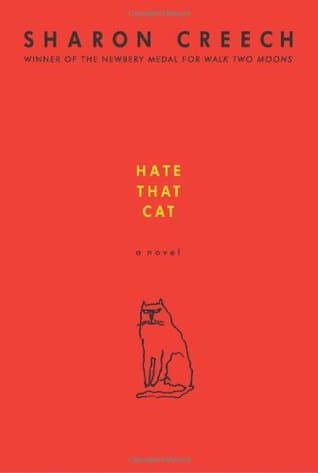
- Hate That Cat
Sharon Creech
3.9 (9k) average on GoodreadsChildren'sA companion novel by the same author, exploring similar themes of grief and finding a voice through poetry.
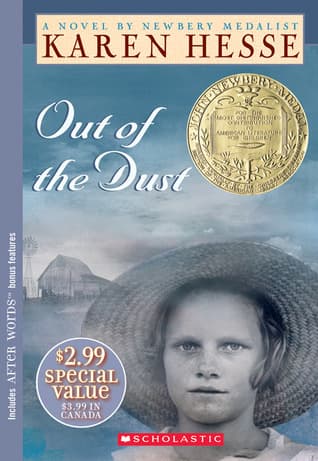
- Out of the Dust
Karen Hesse
3.8 (69k) average on GoodreadsChildren'sA novel in verse that explores a young girl's life and struggles during the Dust Bowl, demonstrating the power of poetry for storytelling.
- A Corner of the Universe
Ann M. Martin
4.1 (14k) average on GoodreadsChildren'sWhile both Love That Dog and A Corner of the Universe explore the emotional landscape of young protagonists dealing with complex feelings, Creech's book uses a unique poetic structure to convey internal thought, whereas Martin's novel employs a more traditional prose narrative. Martin delves into themes of mental illness and family secrets with a focus on external events impacting the protagonist's understanding of the world, contrasting with Creech's internal journey of grief and self-expression through art. Love That Dog is more tightly focused on a specific emotional process, while A Corner of the Universe paints a broader picture of a summer of discovery and disillusionment.
- Harry Potter and the Sorcerer's Stone
J.K. Rowling
4.5 (7M) average on GoodreadsFantasyRescued from a miserable life under the stairs, an orphaned boy discovers he's a wizard destined for a magical school, where he uncovers a dangerous secret tied to the dark wizard who murdered his parents.
- The Hobbit, or There and Back Again
J.R.R. Tolkien
4.3 (2.9M) average on GoodreadsFantasyA comfort-loving hobbit named Bilbo Baggins is whisked away by a mischievous wizard and a band of dwarves on an unexpected journey to reclaim stolen treasure from a fearsome dragon, discovering courage and a magical ring along the way.
- Harry Potter and the Goblet of Fire
J.K. Rowling
4.6 (2.6M) average on GoodreadsFantasyA bewildered Harry Potter, underage and thrust into a deadly Triwizard Tournament, must brave dragons, mermaids, and a resurgent dark magic to survive a year that will forever alter the wizarding world.




Enjoyed the summary?
A summary gives you the shape of the book. The book itself has the detail, the examples and the voice.
Find Love That Dog on AmazonAs an Amazon Associate, BookBrief earns from qualifying purchases. How we're funded