
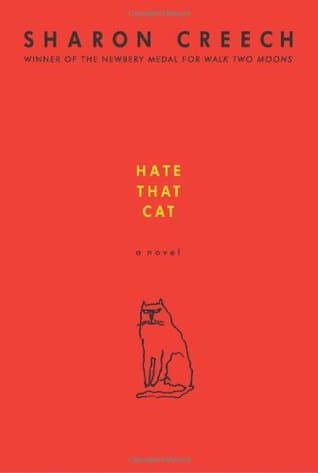
Synopsis
Covers the whole plot, including the ending.
- Difficulty
- Easy
- Pacing
- Moderate
- Mood
- Heartwarming, Reflective, Poignant, Gentle
- Read it if
- You enjoy heartwarming stories about finding your voice, children's literature told in verse, or exploring themes of grief and healing through creative expression.
- Skip it if
- You prefer traditional narrative structures over free verse poetry or stories with fast-paced plots.
Hate That Cat Plot Summary
Covers the whole plot, including the ending.
Jack's Initial Dislike for Cats and Poetry
The story begins with Jack, a young boy in Miss Stretchberry's class (Room 204), writing a series of free verse poems during the school year. His first entries in February immediately show his dislike for a 'fat black cat' that drops a nut on his head, making a 'nasty, spiteful' meow. He dislikes cats in general, often mentioning his discomfort around them. At the same time, Jack does not want to write poetry, often saying he 'can't' or 'doesn't want to.' Miss Stretchberry, his teacher, patiently encourages him, suggesting different forms and topics, gently pushing him to explore his thoughts and feelings through verse, often referencing classic poems and poets.
Exploring Different Poetic Forms and Influences
As the school year goes into March and April, Miss Stretchberry introduces Jack to different poetic forms and famous poets. She reads poems about animals, nature, and everyday life, trying to find something Jack can connect with. He slowly starts to respond, at first copying the structures or themes of the poems she shares. For instance, after hearing William Carlos Williams's 'The Red Wheelbarrow,' Jack tries his own version, focusing on a 'yellow school bus.' He also works with haikus and concrete poems, showing a growing, though still hesitant, interest in writing.
The Introduction of Walter Dean Myers and 'Love That Boy'
A moment happens when Miss Stretchberry introduces the class to the poetry of Walter Dean Myers. Jack is immediately interested, especially by Myers's poem 'Love That Boy.' This poem deeply connects with Jack, who repeatedly asks Miss Stretchberry to read it aloud. He begins to understand how words can capture strong emotions and experiences. The rhythm and imagery of Myers's work inspire Jack, and for the first time, he shows real enthusiasm for a poem, even asking if he can try to write a poem 'like that.' This shows a change in his attitude towards poetry.
Jack's Growing Appreciation for Poetry
After discovering Walter Dean Myers, Jack's poetry becomes more personal and heartfelt. He starts writing about things that truly matter to him, going beyond simple observations. He writes about sounds, silence, and writing itself. He even begins to show a tentative appreciation for the 'cat' in Myers's poem 'Love That Boy,' understanding it as a symbol of comfort and companionship, rather than just the nuisance he associates with his own 'fat black cat.' His entries become longer, more descriptive, and show a developing confidence in his poetic voice, often directly telling Miss Stretchberry his thoughts.
The Revelation of Jack's Blind Cat, Sky
In a personal entry, Jack finally shares why he has complicated feelings about cats and his initial reluctance to write about them. He had a beloved cat named Sky, who was blind and deaf. Sky was hit by a car and died, a traumatic event that left Jack heartbroken. This explains his strong dislike for the 'fat black cat' and his difficulty expressing himself through poetry; the pain of Sky's loss was too fresh. He describes Sky's unique qualities, how she moved through the world, and the deep bond they shared, making it clear that his 'hate' for the other cat was displaced grief.
Processing Grief Through Poetry
With the truth about Sky's death now known, Jack begins to use his poems to process his grief. He writes poignant verses recalling Sky's blindness, her gentle nature, and the sorrow he feels over her absence. He describes the silence in his house after she's gone and the lasting pain of her loss. His poems show his love for Sky, changing his initial 'hate' into an outlet for sadness and remembrance. Miss Stretchberry provides quiet support, allowing him the space to mourn and heal through his writing, acknowledging his deep feelings.
Connecting Sky to 'Love That Boy'
Jack makes a connection between his own beloved Sky and the 'cat' in Walter Dean Myers's 'Love That Boy.' He realizes that Myers's poem is not just about a literal cat, but about deep affection, companionship, and perhaps even loss. He sees similarities between the comfort and love described in the poem and the bond he shared with Sky. This realization helps him to further accept the power of poetry to express complex emotions and to find comfort. He now 'loves' the cat in Myers's poem because it reminds him of his own cherished pet.
Finding His Poetic Voice and the School Assembly
As the school year ends, Jack's confidence in his poetic voice grows. He continues to write about Sky, about words, and about the world around him, but with new ease and depth. He even begins to appreciate the 'fat black cat' that first bothered him, seeing it as just another creature in the world, no longer weighed down by his grief. Miss Stretchberry invites Walter Dean Myers to visit the school, and Jack volunteers to read his poems about Sky at the assembly, showing his transformation and healing.
Walter Dean Myers's Visit and Jack's Public Reading
The school assembly arrives, and Walter Dean Myers is present. Jack, at first nervous, bravely stands before the audience and reads his poems about Sky. This public act of sharing his personal grief and love is the result of his journey throughout the book. He receives encouragement and validation from Myers, who acknowledges the power of Jack's words. This experience gives Jack a sense of closure and affirmation, solidifying his new identity as a poet who can express his deepest feelings and experiences, turning his sorrow into art.
Hate That Cat Characters
Jack
Protagonist
A young boy who initially dislikes poetry and harbors a secret grief, who finds his voice through writing.
Jack is a sensitive and observant young boy in Miss Stretchberry's class. He starts the book with a declared aversion to both cats and poetry, often responding to assignments with 'I can't' or 'I don't want to.' His initial poems are short, resistant, and focused on superficial observations or his dislike for a specific 'fat black cat.' As the story progresses, guided by his teacher and inspired by Walter Dean Myers, Jack slowly opens up, revealing his deep grief over the loss of his blind cat, Sky. This revelation explains his initial resistance and becomes the wellspring for his most poignant and personal poetry. He is thoughtful and internal, eventually finding immense courage to share his vulnerability.
Relationships: Miss Stretchberry (Student-teacher relationship, evolving into a mentor-mentee bond); Sky (Beloved pet cat, the source of his grief and poetic inspiration); Walter Dean Myers (Literary idol and inspiration)
Miss Stretchberry
Supporting
Jack's patient and encouraging teacher who fosters his love for poetry.
Miss Stretchberry is Jack's elementary school teacher, a wise and empathetic figure who guides her students, particularly Jack, through the world of poetry. She never forces Jack to write but consistently provides gentle encouragement, introduces him to diverse poets and forms, and creates a safe space for him to express himself. She understands the nuances of his resistance and carefully nudges him towards self-discovery, always responding to his poems with insightful questions and affirmations. Her teaching methods are central to Jack's transformation, demonstrating the power of a supportive educator.
Relationships: Jack (Teacher-student, mentor)
Sky
Mentioned/Symbolic
Jack's beloved blind cat, whose tragic death is the catalyst for his emotional journey.
Sky is Jack's cherished pet cat, a unique and deeply loved creature who was blind and deaf. Her tragic death, hit by a car, forms the emotional core of Jack's story and explains his initial 'hate' for other cats and his reluctance to engage with poetry. Although she is only present in Jack's memories and poems, Sky's presence is profound. She represents unconditional love, unique beauty, and the pain of loss. Jack's poems about Sky vividly describe her navigating the world with her remaining senses, highlighting the special bond they shared and the depth of his grief.
Relationships: Jack (Beloved pet of Jack)
Walter Dean Myers
Supporting/Inspirational
A real-life poet whose work deeply inspires Jack and helps him find his voice.
Walter Dean Myers is a renowned poet whose work is introduced to Jack's class by Miss Stretchberry. His poem 'Love That Boy' particularly resonates with Jack, becoming a turning point in his attitude towards poetry. Myers's accessible style and heartfelt themes connect with Jack on a deep emotional level, making him realize that poetry can be about real life and deep feelings. The eventual visit of Walter Dean Myers to the school assembly provides a powerful validation for Jack's own poetic journey, demonstrating the impact of literary figures on young aspiring writers.
Relationships: Jack (Literary inspiration and later, a supportive figure)
The Fat Black Cat
Symbolic
An ordinary cat that becomes a symbol of Jack's displaced grief and initial resistance.
The 'fat black cat' is the first subject of Jack's poems and initially represents everything he dislikes about cats. This cat is a seemingly ordinary neighborhood feline that drops a nut on Jack's head and meows 'nastily.' Jack's intense dislike for this specific cat is a projection of his unresolved grief and anger over the loss of his own beloved cat, Sky. As Jack heals and grows through his poetry, his feelings towards the 'fat black cat' soften, eventually becoming just another part of the world, no longer burdened by his sorrow. It serves as an initial antagonist that transforms into a neutral observer.
Relationships: Jack (Object of Jack's initial intense dislike, later indifference)
Hate That Cat Themes
Grief and Loss
The main theme is Jack's unspoken grief over the death of his blind cat, Sky. His initial resistance to writing and his dislike for other cats show this loss. By writing poetry, Jack slowly processes his sorrow, moving from denial and displacement to remembrance and acceptance. The book shows how art can be a tool for healing and mourning, allowing him to honor Sky's memory and express the pain of her absence. This theme is clear in his poems describing Sky's unique qualities and the silence after she is gone.
“And Sky who was blind / and deaf / was hit by a car / and died. / And now / there is no sound / in our house / at all.”
The Power of Poetry and Self-Expression
This theme explores how poetry changes Jack from a reluctant, emotionally quiet child into a confident young writer. Miss Stretchberry's patient guidance and the inspiration from Walter Dean Myers help Jack discover that poetry is not just about rhymes or specific forms, but a way to express deep feelings, observe the world, and process difficult experiences. Through his poems, Jack finds his voice, shares his vulnerability, and heals. The book supports the idea that everyone has a story to tell and that words can be a source of power and connection.
“I like the way / words / can be / a cat / or a boy / or a feeling / all at once.”
The Role of Mentorship and Education
Miss Stretchberry's role as a patient, empathetic, and inspiring teacher is important to Jack's development. Her teaching style, which emphasizes encouragement over force, active listening, and exposing students to diverse literary voices, allows Jack to grow at his own pace. She recognizes his hidden struggles and provides the tools and space he needs to overcome them. This theme shows the impact a dedicated educator can have on a child's emotional and intellectual growth, encouraging creativity and self-discovery.
“Miss Stretchberry, / you are a good teacher. / You always make me / think.”
Empathy and Understanding
At first, Jack struggles with empathy, projecting his grief onto the 'fat black cat.' However, as he explores his own emotions through poetry, he begins to understand others and the world better. His connection to Walter Dean Myers's poem 'Love That Boy' allows him to see a cat not just as a nuisance, but as a symbol of love and companionship, mirroring his own bond with Sky. This journey helps him develop empathy, moving beyond his immediate pain to appreciate the broader spectrum of life and feeling.
“And the cat / in the poem / is a good cat / and I love that cat / because it reminds me / of Sky.”
Plot Devices & Literary Techniques
Free Verse Poetry
The entire narrative is presented as a collection of Jack's free verse poems.
The entire novel is structured as a series of free verse poems written by Jack throughout his school year. This device allows for an intimate first-person perspective, directly conveying Jack's thoughts, feelings, and observations without the constraints of traditional narrative prose. The evolving style and content of his poems directly reflect his emotional and intellectual growth, from short, resistant entries to longer, more expressive verses. It immerses the reader in Jack's internal world and makes his journey of self-discovery highly personal and impactful.
Epistolary/Journal Format
The story unfolds through Jack's poetic entries, addressed primarily to his teacher.
The book uses an epistolary format, as Jack's poems are essentially journal entries or letters addressed to his teacher, Miss Stretchberry. This device creates a direct, conversational tone, allowing Jack to share his thoughts and feelings as they develop. Miss Stretchberry's presence is implied through Jack's responses and questions, making the reader privy to a dynamic, evolving dialogue. This format emphasizes the personal journey of the protagonist and highlights the supportive relationship between student and teacher, making the reader feel like an observer of Jack's private reflections.
Symbolism of Cats
Cats symbolize grief, love, and the process of healing for Jack.
Cats serve as a powerful symbolic motif throughout the book. The 'fat black cat' initially symbolizes Jack's displaced anger and unresolved grief, acting as an innocent target for his negative emotions. Conversely, Jack's beloved blind cat, Sky, symbolizes unconditional love, loss, and the unique beauty found in vulnerability. The 'cat' in Walter Dean Myers's poem 'Love That Boy' then becomes a symbol of comfort, companionship, and the universal experience of deep affection. The evolution of Jack's feelings towards these different cats directly mirrors his emotional journey and healing process.
Allusions to Other Poets and Poems
References to famous poets and their works guide Jack's poetic development.
Miss Stretchberry frequently introduces Jack and the class to various poets like William Carlos Williams, Robert Frost, and Walter Dean Myers. These allusions serve as pedagogical tools, providing models and inspiration for Jack's own writing. By engaging with these established works, Jack learns about different poetic forms, themes, and the power of language. The most significant allusion is to Walter Dean Myers's 'Love That Boy,' which acts as a profound catalyst for Jack, helping him connect with his own emotions and understand the deeper purpose of poetry, moving beyond mere imitation to genuine self-expression.
Hate That Cat Quotes
“I used to hate that cat. I used to hate that cat more than anything.”
“It's hard to write about things you don't understand.”
“Sometimes you have to look at the same thing in a different way to see it truly.”
“The world is full of sounds, if you just listen.”
“You can't always choose what happens to you, but you can choose how you react.”
“Poetry is just noticing things.”
“And sometimes the things you hate the most are the things you need the most.”
“It's okay to miss someone, even if they're still here.”
“A good poem can make you feel things you didn't even know you had inside.”
“Sometimes the quietest things make the loudest noise in your heart.”
“It's not about being perfect, it's about being true.”
“And now I love that cat. I love that cat more than anything.”
“You can't always understand everything, but you can always keep looking.”
“Even a small thing can make a big difference.”
Quiz
10 questions on the plot and the characters. Each answer comes with a short explanation.
Question 1
What is the primary reason Jack states he 'hates that cat' at the beginning of the book?
- The cat scratched him when he tried to pet it.
- The cat dropped a nut on his head and then 'talked back' to him.
- The cat stole his lunch while he was waiting for the bus.
- The cat frequently sits in his favorite spot at the bus stop.
Show answer
B. The cat dropped a nut on his head and then 'talked back' to him. In the very first entry, Jack describes how the fat black cat dropped a nut on his head ('thunk') and then responded with a 'nasty, spiteful' 'Murr-mee-urrr' when he yelled at it, leading to his declaration of hatred.
Question 2
Who is Jack's teacher in Room 204?
- Mrs. Peterson
- Mr. D'Angelo
- Miss Stretchberry
- Ms. Jenkins
Show answer
C. Miss Stretchberry The introductory text clearly states 'Room 204—Miss Stretchberry', indicating she is Jack's teacher. She was also his teacher in 'Love That Dog'.
Question 3
What literary device is primarily used throughout 'Hate That Cat'?
- Traditional prose narrative
- Epistolary format with letters
- Free verse poetry
- Graphic novel format
Show answer
C. Free verse poetry 'Hate That Cat', like its predecessor 'Love That Dog', is written entirely in free verse poetry, mimicking Jack's journal entries and his evolving understanding of poetry.
Question 4
What significant event from 'Love That Dog' is referenced and continues to impact Jack in 'Hate That Cat'?
- His family moving to a new house.
- The death of his beloved dog, Sky.
- Winning a school-wide poetry contest.
- Meeting his favorite poet, Walter Dean Myers.
Show answer
B. The death of his beloved dog, Sky. The loss of his dog, Sky, is a central theme and source of grief for Jack in 'Love That Dog' and continues to influence his emotions and poetry in 'Hate That Cat', particularly his feelings towards the new cat.
Question 5
Why does Jack initially resist writing about the cat?
- He thinks cats are boring and uninteresting subjects for poetry.
- He believes writing about the cat is a betrayal of his dog, Sky.
- He is afraid of cats and doesn't want to think about them.
- He only wants to write about things that are 'famous' or 'important'.
Show answer
B. He believes writing about the cat is a betrayal of his dog, Sky. Jack struggles with writing about the cat because he feels a deep loyalty to Sky. He perceives writing about another animal, especially one he initially dislikes, as disloyal to his deceased dog.
Question 6
What does Jack discover about the 'fat black cat' that begins to change his perspective?
- The cat is actually very playful and friendly.
- The cat is a stray and has no home or owner.
- The cat is blind in one eye and appears to be struggling.
- The cat belongs to a new student in his class.
Show answer
C. The cat is blind in one eye and appears to be struggling. Jack notices that the cat is blind in one eye, which evokes a sense of pity and understanding in him, softening his initial hatred and allowing him to see the cat with more compassion.
Question 7
Which theme is most central to Jack's journey in 'Hate That Cat'?
- The importance of academic success.
- Overcoming grief and learning to open one's heart again.
- The challenges of moving to a new school.
- The excitement of discovering new hobbies.
Show answer
B. Overcoming grief and learning to open one's heart again. The book explores Jack's ongoing process of grieving for his dog, Sky, and his reluctance to embrace new attachments (like the cat). His journey is about healing and finding a way to love again after loss.
Question 8
How does Jack's relationship with Miss Stretchberry evolve throughout the book regarding his poetry?
- He becomes more rebellious and refuses her suggestions.
- He grows to trust her guidance and becomes more open to writing honestly.
- He finds her advice restrictive and prefers to write without her input.
- Their relationship remains strictly formal and professional.
Show answer
B. He grows to trust her guidance and becomes more open to writing honestly. Miss Stretchberry's patient encouragement helps Jack to overcome his initial resistance and write more openly and honestly, particularly about his feelings for the cat and his grief for Sky. He learns to trust her as a mentor.
Question 9
What does the ending of 'Hate That Cat' suggest about Jack's feelings towards the cat?
- He remains indifferent to the cat, never truly liking it.
- He eventually accepts and even cares for the cat, seeing it as more than just a nuisance.
- He decides to get another dog to replace Sky, forgetting about the cat.
- He moves away, so his interaction with the cat ends abruptly.
Show answer
B. He eventually accepts and even cares for the cat, seeing it as more than just a nuisance. By the end of the book, Jack's perspective has shifted significantly. He starts feeding the cat, worries about it, and ultimately writes poetry that expresses affection and concern, signifying that he has moved past his initial hatred and developed a bond.
Question 10
How does the book's title, 'Hate That Cat,' contrast with its overall message and Jack's character arc?
- The title is purely literal, as Jack maintains his hatred throughout.
- The title acts as an ironic counterpoint, highlighting Jack's journey from dislike to empathy and eventual affection.
- The title is misleading, as the cat is only a minor detail in the story.
- The title refers to a different cat entirely, not the one by the bus stop.
Show answer
B. The title acts as an ironic counterpoint, highlighting Jack's journey from dislike to empathy and eventual affection. The title 'Hate That Cat' serves as an ironic contrast to Jack's emotional development. While he begins with strong negative feelings, his journey throughout the book is about understanding, empathy, and ultimately forming a connection with the cat, transforming his initial 'hate' into care.
Hate That Cat FAQ
What is "Hate That Cat" about?
"Hate That Cat" is about a young boy named Jack who, through a series of free verse poems written for his teacher Miss Stretchberry, processes his feelings about a black cat, the loss of his beloved dog Sky, and his evolving understanding of poetry, sound, and silence. It's a companion novel to "Love That Dog."
Why should I read "Hate That Cat"?
You should read "Hate That Cat" for its poignant exploration of grief, the power of poetry to express complex emotions, and its gentle narrative about finding one's voice. Sharon Creech masterfully uses free verse to make poetry accessible and relatable for young readers, showing how everyday experiences can inspire profound art.
What is the background/setting of "Hate That Cat"?
The story is set in Jack's classroom, Room 204, where his teacher Miss Stretchberry encourages him to write poetry. The narrative unfolds through Jack's journal entries, detailing his observations and feelings, primarily centered around a black cat in his neighborhood and memories of his past experiences.
What are the most memorable quotes?
One memorable 'quote' is Jack's repeated refrain "I hate that cat," which evolves in meaning throughout the book. Another is when Jack describes how his dog Sky 'smelled like sunshine and good things,' encapsulating his deep affection and loss. The simple, direct language makes many of Jack's observations resonate deeply.
What writing style does the author use?
Sharon Creech uses a free verse poetry style, presented as Jack's journal entries to his teacher, Miss Stretchberry. The language is simple, direct, and conversational, mimicking a child's natural thought process and making the emotional content highly accessible and impactful without relying on complex poetic structures.
What minor details add significant meaning?
The specific sounds Jack describes – the 'thunk' of the nut, the 'murr-mee-urrr' of the cat, and the 'whump-whump' of the owl – all serve to highlight his acute awareness of his environment and how these sounds trigger memories and emotional responses, particularly in relation to his dog Sky's death.
What are some subtle foreshadowing moments?
Jack's initial intense hatred for the black cat, coupled with his avoidance of discussing his dog Sky, subtly foreshadows that the cat is a stand-in for his unresolved grief. His recurring mentions of specific sounds and the color black hint at a deeper, unarticulated trauma that he's slowly working through.
What unexpected character connections exist?
The most unexpected connection isn't between characters but between Jack's feelings for the 'fat black cat' and his lingering grief over his deceased dog, Sky. The cat acts as a symbolic representation of his pain and anger, allowing him to slowly confront and express his deeper sorrow.
What are unspoken character motivations?
Jack's unspoken motivation for initially hating the black cat is his profound, unresolved grief over the loss of his dog, Sky. He projects his anger and sadness onto the cat as a safer outlet than directly confronting the pain of Sky's death, which he struggles to articulate directly.
What psychological complexities do characters exhibit?
Jack exhibits complex psychological responses to grief, including displacement (projecting feelings onto the cat), avoidance (reluctance to speak of Sky), and a gradual process of emotional integration as he uses poetry to confront his loss. His journey illustrates the winding path of a child processing trauma.
What are the major emotional turning points?
A major emotional turning point is when Jack finally reveals the story of Sky's death, killed by a car, and how the black cat's similar appearance and presence triggered his intense emotions. Another is when he realizes the cat's eyes are not 'nasty' but 'gold-green,' signifying a shift in his perception and healing.
How do relationship dynamics evolve?
The primary relationship dynamic is between Jack and Miss Stretchberry. It evolves from a student-teacher dynamic where Jack is reluctant and resistant to poetry, to one of deep trust and understanding, as Miss Stretchberry patiently guides him to use words as a tool for emotional processing and self-expression.
Which parts remain ambiguous or open-ended?
While Jack's emotional journey reaches a resolution regarding Sky's death, the exact future of his relationship with the black cat remains somewhat open-ended. He no longer hates it, but whether he develops affection for it, or if it simply fades into the background, is left to the reader's imagination.
What are controversial scenes or decisions?
There aren't overtly controversial scenes in this gentle children's book. However, some readers might debate the effectiveness or ethics of Miss Stretchberry's persistent encouragement for Jack to write about difficult topics, even when he initially resists, though her approach ultimately proves beneficial.
"Hate That Cat" ending explained: how it ends & what it means
The book ends with Jack's feelings towards the black cat transforming from hatred to a more neutral, even appreciative, understanding. He acknowledges the cat's beauty and its role in helping him finally articulate his grief over Sky. It signifies Jack's emotional healing and his embrace of poetry as a means of processing life's complexities.
About the author

Sharon Creech is an American author known for her contributions to children's and young adult literature. Her notable works include "Walk Two Moons," "Love That Dog," "Chasing Redbird," "Hate That Cat," "Granny Torrelli Makes Soup," and "The Great Unexpected." Creech's writing often explores themes of identity, family, and the power of storytelling.
Similar books
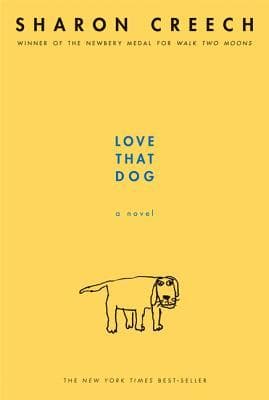
- Love That Dog
Sharon Creech
4.0 (39k) average on GoodreadsChildren'sA companion novel told in the same free verse style about the same character, Jack, and his journey with poetry and a beloved pet.
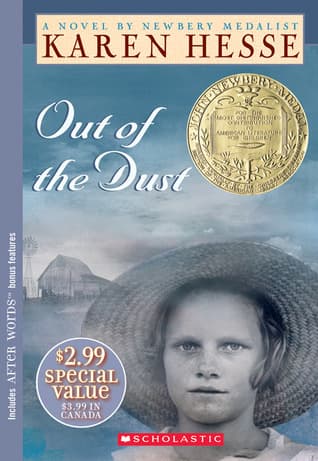
- Out of the Dust
Karen Hesse
3.8 (69k) average on GoodreadsChildren'sA Newbery Medal-winning novel told in free verse, focusing on a young girl's life during the Dust Bowl and her resilience.
- The Giver
Lois Lowry
4.1 (1.8M) average on GoodreadsFantasyWhile both books explore profound themes, The Giver uses a dystopian, plot-driven narrative to examine memory, societal control, and loss, whereas Hate That Cat offers an intimate, introspective, free-verse exploration of personal grief and healing.
- Bridge to Terabithia
Katherine Paterson
4.0 (445k) average on GoodreadsFantasyBoth novels address grief and friendship. However, Bridge to Terabithia employs a traditional narrative structure that builds to a sudden, tragic event and its aftermath, while Hate That Cat is a sustained, gentle meditation on loss and gradual acceptance, told through poetry.
- Harry Potter and the Sorcerer's Stone
J.K. Rowling
4.5 (7M) average on GoodreadsFantasyRescued from a miserable life under the stairs, an orphaned boy discovers he's a wizard destined for a magical school, where he uncovers a dangerous secret tied to the dark wizard who murdered his parents.
- The Hobbit, or There and Back Again
J.R.R. Tolkien
4.3 (2.9M) average on GoodreadsFantasyA comfort-loving hobbit named Bilbo Baggins is whisked away by a mischievous wizard and a band of dwarves on an unexpected journey to reclaim stolen treasure from a fearsome dragon, discovering courage and a magical ring along the way.




Enjoyed the summary?
A summary gives you the shape of the book. The book itself has the detail, the examples and the voice.
Find Hate That Cat on AmazonAs an Amazon Associate, BookBrief earns from qualifying purchases. How we're funded