

Synopsis
Covers the whole plot, including the ending.
- Difficulty
- Medium
- Pacing
- Moderate
- Mood
- Thought-provoking, Emotional, Sensitive, Hopeful
- Read it if
- You are interested in a pioneering and sensitive exploration of transgender identity, sibling relationships, and the challenges of coming out to family in a conservative environment.
- Skip it if
- You prefer fast-paced plots with significant external conflict over character-driven stories focused on internal struggles and family dynamics.
Luna Plot Summary
Covers the whole plot, including the ending.
Liam's Secret Life as Luna
Regan, a high school student, lives with her parents and younger brother, Liam. For years, she has kept Liam's secret: at night, in his basement bedroom, Liam becomes Luna, a girl. Regan helps Luna with makeup, lends her clothes, and talks with her late into the night. Their parents do not know, believing Liam is just a typical teenage boy. This double life has created both closeness and tension for the siblings, as Regan feels the burden of the secret and the emotional toll it takes on Liam, who struggles deeply with his male identity during the day. Luna's nocturnal existence is the only time Liam feels truly himself, a beautiful and confident girl.
The Weight of the Secret
Regan feels increasingly alone because of her brother's secret. She has no one to talk to about Liam/Luna, which strains her relationships with her best friend, Allison, and her boyfriend, Chris. She often makes excuses to avoid social events, spending time with Luna instead. The constant fear of exposure and the emotional responsibility for Luna's well-being affect her. Regan sees Liam's unhappiness and withdrawal during the day, which contrasts sharply with Luna's personality at night. She wants Liam to be able to live as Luna openly but also fears what might happen to their family.
Luna's Desire for More
Luna begins to express a stronger desire to live as a girl beyond their basement and secretly online. She tells Regan her dream of attending the upcoming school dance as Luna. This idea frightens Regan, who understands the immense risk involved. Luna says she can't continue living only at night and that she deserves to experience life openly. She has been researching gender identity and finding support online, which encourages her to push for more. Regan, though nervous, feels great pressure to support her brother's desire for authenticity, even as she deals with the potential consequences for their family and her own life.
A Near Discovery and Parental Blindness
One evening, while Luna is dressed and doing her makeup, their mother almost walks in on them. Regan quickly creates a diversion, preventing discovery. This close call shows how unaware their parents are of Liam's true identity. Their mother often comments on Liam's quietness or his 'phase' of spending time alone, misinterpreting his behavior. Their father is even more distant, often busy with work. This incident shows the deep misunderstanding within the family and the emotional effort Regan expends to maintain the secret, protecting both Luna and their parents from a truth she knows will be upsetting.
The Dance Dilemma
Luna becomes more insistent about attending the school dance as a girl. She plans her outfit, practices her walk, and is filled with hopeful anticipation. Regan, however, is consumed by worry. She tries to discourage Luna, fearing humiliation, bullying, and the inevitable public exposure that would follow. The arguments between them grow, with Luna accusing Regan of not truly supporting her, and Regan feeling overwhelmed by the responsibility and the potential consequences. Despite her fears, Regan's loyalty to Luna and her understanding of Luna's need for this experience push her to reluctantly consider helping Luna fulfill her dream.
A Moment of Shared Joy, Then Panic
Against Regan's better judgment, she helps Luna get ready and they go to the school dance together. Luna, dressed beautifully, experiences a brief, exciting moment of living openly as herself, dancing and interacting with others, including Chris, Regan's boyfriend. Regan watches, a mix of pride and terror washing over her. The joy is short-lived. Someone recognizes Luna, and whispers and stares begin to spread. The atmosphere quickly changes from celebratory to hostile, forcing Regan and Luna to flee the dance in a panic, their brief taste of freedom ending in fear and humiliation.
The Secret Exposed
The incident at the dance quickly leads to Luna's identity being exposed. News spreads through the school, and eventually, their parents learn the truth. Their mother reacts with shock, confusion, and deep distress, struggling to understand the 'son' she thought she knew with the girl standing before her. Their father reacts with anger and denial, unable to accept that Liam is Luna, insisting it's a phase or a mental illness. The family home becomes a battleground of emotions, with Regan caught in the middle, trying to explain and mediate, while Luna retreats further into herself, heartbroken by her parents' reactions.
Family Fallout and Therapy
The family is in crisis. Their parents struggle greatly, particularly their father, who initially refuses to acknowledge Luna. Their mother, though heartbroken, tries to understand but is overwhelmed. They insist Liam see a therapist, hoping to 'cure' him, though the therapist is understanding and supportive of Luna. Regan's relationship with her parents becomes strained as they blame her for keeping the secret. Her friendship with Allison is also tested by the drama, and her relationship with Chris becomes complicated. Luna feels great guilt for the upheaval she has caused, even as she stands firm in her identity, leading to a period of intense emotional difficulty for everyone.
Seeking Acceptance and a New Path
Through therapy and online communities, Luna finds support and resources, connecting with other transgender individuals. She learns about gender-affirming care and begins to imagine a future where she can live authentically. While their father remains resistant, their mother slowly starts to accept Luna's identity, showing small signs of understanding, asking questions, and trying to learn. Regan, though still bearing the weight of the past, feels a sense of relief that the secret is out and sees a way forward for Luna. The family begins a difficult journey towards understanding and acceptance, marked by both setbacks and small wins.
Luna's Emergence and Hope for the Future
Luna makes the decision to transition and live openly as a girl. She plans to attend a new school where she can start fresh. Their mother, though still struggling, commits to supporting Luna, even helping her shop for new clothes. Their father remains largely withdrawn but shows a small sign of acknowledgement. Regan feels great pride and relief for her sister. The book concludes with Luna, now fully embracing her identity, looking towards a future where she can live authentically, surrounded by a family that, despite its challenges, is slowly learning to accept and love her for who she truly is.
Principal Figures
Regan
Protagonist
Liam's older sister and confidante, burdened by Luna's secret.
Regan is the primary narrator and Liam's older sister. She has known about Luna for years and has been her primary confidante, makeup artist, and protector. Regan is fiercely loyal to Luna but also deeply burdened by the secret, which isolates her from her friends and strains her own life. She experiences immense anxiety, guilt, and frustration, often feeling like she has to choose between her own life and supporting Luna. Despite the emotional toll, her love for her brother/sister drives her actions and her desire for Luna to be happy and authentic. She is a compassionate but often overwhelmed character.
Relationships: Luna/Liam (Younger sibling, complex bond of love, protection, and shared secret); Allison (Best friend, relationship strained by Regan's secrets); Chris (Boyfriend, relationship complicated by Luna's secret and eventual exposure); Parents (Daughter, often feels responsible for protecting them from the truth and later mediating their reactions)
Luna/Liam
Protagonist
A transgender teen who secretly lives as a girl at night, yearning for open acceptance.
Liam is a teenage boy during the day, withdrawn, unhappy, and struggling with his assigned gender. At night, he transforms into Luna, a vibrant, confident, and beautiful girl who feels like his true self. Luna is deeply sensitive and longs for acceptance, particularly from her family. Her desire to live openly as Luna grows throughout the book, leading her to push for experiences like attending the school dance. Despite facing fear, rejection, and misunderstanding, Luna demonstrates immense bravery and resilience in her journey towards self-discovery and authenticity. She is the emotional core of the story.
Relationships: Regan (Older sister, closest confidante and ally); Parents (Son/Daughter, experiences deep misunderstanding and initial rejection from them); Allison (Regan's best friend, eventually learns about Luna); Chris (Regan's boyfriend, briefly interacts with Luna at the dance)
Allison
Supporting
Regan's best friend, often confused and frustrated by Regan's secretive behavior.
Allison is Regan's best friend and a seemingly typical high school girl. She is initially unaware of Luna's existence and becomes increasingly frustrated and hurt by Regan's evasiveness, cancelled plans, and emotional distance. She represents the outside world and the friendships Regan sacrifices to protect Luna's secret. When the truth is revealed, Allison struggles to understand but ultimately tries to be supportive of Regan, though their friendship is tested by the scale of the secret Regan kept.
Relationships: Regan (Best friend, their relationship is strained by the secret); Luna/Liam (Acquaintance, later learns about Luna's identity)
Chris
Supporting
Regan's boyfriend, initially supportive but struggles with the family drama.
Chris is Regan's boyfriend. He is generally kind, understanding, and patient with Regan's often erratic behavior, though he is also confused by her frequent unavailability and emotional distance. He represents a potential normal life for Regan that is constantly disrupted by Luna's secret. When Luna's identity is revealed, Chris is initially supportive of Regan but struggles to fully comprehend the situation, and the intense family drama strains their relationship, highlighting the societal challenges faced by transgender individuals and their families.
Relationships: Regan (Boyfriend, their relationship is central to Regan's personal life); Luna/Liam (Acquaintance, briefly interacts with Luna at the dance)
Mom (Mrs. Miller)
Supporting
Liam and Regan's mother, initially oblivious and later deeply distressed by Luna's revelation.
Liam and Regan's mother is initially portrayed as a loving but somewhat oblivious parent, attributing Liam's introversion to typical teenage phases. When Luna's identity is revealed, she experiences profound shock, confusion, and grief, struggling to reconcile her understanding of her 'son' with the truth. She grapples with the social implications and her own internal biases. Over time, she slowly begins to move towards understanding and acceptance, seeking therapy and attempting to support Luna, albeit imperfectly. Her journey represents the difficult process of parental adjustment to a child's transgender identity.
Relationships: Luna/Liam (Mother, struggles to accept her child's true identity); Regan (Mother, initially blames Regan for keeping the secret); Dad (Wife, their relationship is strained by their differing reactions to Luna)
Dad (Mr. Miller)
Supporting
Liam and Regan's father, highly resistant and in denial about Luna's identity.
Liam and Regan's father is largely absent emotionally and preoccupied with work. When Luna's identity is revealed, he reacts with anger, denial, and a rigid refusal to acknowledge Luna as anything other than his son, Liam. He views it as a phase, a mental illness, or something that can be 'fixed.' His resistance creates significant tension and pain within the family, making Luna's journey to acceptance much harder. He struggles deeply with societal expectations of masculinity and his own understanding of family. His character embodies the significant parental challenge of accepting a transgender child.
Relationships: Luna/Liam (Father, struggles deeply with acceptance); Regan (Father, his anger affects their relationship); Mom (Husband, their relationship is strained by their differing reactions to Luna)
Dr. Miller (Therapist)
Supporting
Liam's therapist, providing professional guidance and support for Luna and the family.
Dr. Miller is the therapist Liam is sent to see after Luna's identity is revealed. Unlike the parents, Dr. Miller is knowledgeable and supportive of Luna's transgender identity, providing a safe space for Luna to express herself and helping the family understand gender identity. She offers guidance and resources, helping to bridge the communication gap between Luna and her parents. Dr. Miller serves as an important voice of reason and expertise, pushing the family towards acceptance and understanding rather than trying to 'cure' Luna.
Relationships: Luna/Liam (Therapist, provides professional support and guidance); Parents (Therapist, helps them understand Luna's identity)
Themes & Insights
Identity and Self-Discovery
The central theme is Luna's journey to understand and embrace her true gender identity. Liam's secret life as Luna shows the internal struggle of living in a body and presenting a gender that doesn't align with one's inner self. The story explores the courage it takes to pursue authenticity, despite societal pressures and familial expectations. Luna's transformation from a hidden identity to a public declaration of self is the driving force of the narrative, emphasizing the human need to live as one's true self, even at great personal cost.
“I can't live like this anymore. I can't live half a life. I have to be Luna.”
Acceptance and Rejection
This theme explores the varying degrees of acceptance and rejection Luna faces, primarily from her family. Regan's steady, though sometimes burdened, acceptance contrasts sharply with her parents' initial shock, denial, and anger. The narrative explores the pain of not being seen or affirmed by loved ones, but also the hope found in eventual, even partial, understanding. It extends beyond the family to societal acceptance, as seen in the reactions at the school dance, showing the broader challenges transgender individuals face in a world that often struggles to understand or validate their experiences.
“It was like they were looking at a stranger, not their child, not their brother.”
The Burden of Secrets
Regan's role as the keeper of Luna's secret is a significant theme. The novel shows the emotional and social toll that keeping such a profound secret takes on an individual. Regan's isolation, her strained friendships, and her constant worry show how secrets can harm personal well-being and relationships. The eventual revelation, while painful, brings a sense of release, suggesting that living authentically, even through struggle, is ultimately less burdensome than maintaining a facade, for both the person with the secret and those who protect it.
“The secret was a heavy thing, a physical weight I carried everywhere.”
Family Dynamics and Love
The story examines the complexities of family love and loyalty when confronted with a challenging truth. Despite the anger, confusion, and pain, the underlying love within the Miller family continues. Regan's strong loyalty to Luna, even when she disagrees with her, is central. The parents' struggle, though often painful to witness, is rooted in their love for their child, even if misguided by misunderstanding. The novel shows that family acceptance is not always immediate or perfect, but a process, highlighting the resilience of familial bonds when tested by profound change.
“I loved Liam. I loved Luna. It was the same person, but I knew it wasn't the same for everyone else.”
Plot Devices & Literary Techniques
Dual Identity/Alter Ego
The literal manifestation of Liam's true self as Luna.
The central plot device is Liam's dual identity as Luna. This isn't merely a disguise but a profound psychological and emotional reality. Liam's daytime persona is a shell, while Luna represents his authentic self, emerging only at night. This device allows the author to explore the stark contrast between how Liam is perceived by the world and who he truly is, emphasizing the internal conflict and the yearning for authenticity. It also highlights the secrecy and isolation inherent in living a life that contradicts one's true gender identity before coming out.
First-Person Narrative (Regan's POV)
The story is told exclusively through the eyes of Liam's sister, Regan.
The entire novel is narrated from Regan's first-person perspective. This choice is crucial as it allows the reader to experience the story not just from the transgender individual's point of view, but from the perspective of a sibling who is deeply involved, burdened, and affected by the secret. It provides insight into the emotional toll on family members, the challenges of being an ally, and the complexities of navigating family dynamics when a loved one is transgender, offering a unique and empathetic lens on the narrative.
Symbolism of the Moon (Luna)
The moon represents Luna's hidden nature and eventual emergence.
The name Luna, meaning 'moon,' is a powerful symbol throughout the book. Just as the moon appears at night, Luna's true self initially emerges only in the darkness and secrecy of Liam's bedroom. The moon's phases can also symbolize Luna's journey of growth and eventual visibility. The name itself reflects the temporary and hidden nature of her existence before her courageous decision to reveal herself, and her yearning to shine brightly and openly, like the full moon, in the light of day.
The Basement Bedroom
A physical space representing secrecy, transformation, and refuge.
Liam's basement bedroom functions as a key symbolic setting. It is the private, hidden space where Liam can transform into Luna, away from the prying eyes of his parents and the world. It represents both a sanctuary for Luna's true self and a prison for Liam's daytime identity. This enclosed, subterranean space emphasizes the hidden, 'underground' nature of Luna's existence for many years, contrasting with her eventual desire to emerge into the open and live authentically in the light.
Luna Quotes
“I was born a boy, but I am a girl. I have always been a girl.”
“The hardest part about being Luna was being Luna alone.”
“Sometimes you just have to do what's right, even if it scares you.”
“You can't choose who you love, but you can choose how you love them.”
“There's a difference between a secret and a lie. A secret is something you keep. A lie is something you tell.”
“Being a girl isn't just about wearing dresses. It's about how you feel inside.”
“I didn't want to lose my brother, but I didn't want to lose Luna either.”
“It’s hard to be yourself when you don’t know who yourself is.”
“The world isn't ready for Luna, but Luna is ready for the world.”
“We all have secrets. Some are bigger than others.”
“Sometimes the bravest thing you can do is just be yourself.”
“It’s not fair that someone has to hide who they are just to be safe.”
“You don't have to understand everything to accept it.”
Quiz
10 questions on the plot and the characters. Each answer comes with a short explanation.
Question 1
What is the name Liam chooses for his female identity?
- Selene
- Luna
- Diana
- Cynthia
Show answer
B. Luna Liam's female identity is named Luna, reflecting how she only emerges at night, much like the moon.
Question 2
Who is Regan in relation to Liam?
- His best friend
- His mother
- His sister
- His girlfriend
Show answer
C. His sister Regan is Liam's sister, who helps him with clothes and makeup for his transformation into Luna.
Question 3
Where does Luna primarily reveal herself in secret?
- In the attic
- At a friend's house
- In his basement bedroom
- In the garage
Show answer
C. In his basement bedroom Liam transforms into Luna in the secrecy of his basement bedroom, away from his family's eyes.
Question 4
What is the central theme of 'Luna'?
- The challenges of long-distance relationships
- A transgender teen's struggle for self-identity and acceptance
- The importance of academic achievement
- Overcoming a sports injury
Show answer
B. A transgender teen's struggle for self-identity and acceptance The novel's core theme revolves around Luna's journey to embrace her true self and gain acceptance from her family and friends as a transgender teen.
Question 5
What literary device is used when the book describes Luna as only revealing herself 'like the moon'?
- Metaphor
- Simile
- Personification
- Hyperbole
Show answer
B. Simile The phrase 'like the moon' uses 'like' to compare Luna's emergence to the moon's nightly appearance, which is a simile.
Question 6
What significant recognition did 'Luna' receive?
- Pulitzer Prize
- Newbery Medal
- National Book Award Finalist
- Man Booker Prize
Show answer
C. National Book Award Finalist The book 'Luna' was selected as a National Book Award Finalist, highlighting its impact and importance.
Question 7
Why is it significant that Luna 'is preparing to emerge from her cocoon'?
- It signifies her decision to run away from home.
- It implies she is about to go to college.
- It represents her readiness to reveal her true self to the world.
- It means she is planning a secret trip.
Show answer
C. It represents her readiness to reveal her true self to the world. The metaphor of 'emerging from her cocoon' symbolizes Luna's decision to transition from her secret life to openly living as her true female self, seeking acceptance from her family and friends.
Question 8
What is the primary conflict Liam faces internally?
- Struggling with academic pressure at school.
- Disliking his male identity and longing to live as his female self.
- Dealing with a difficult relationship with his parents.
- Choosing between two different career paths.
Show answer
B. Disliking his male identity and longing to live as his female self. Liam's primary internal conflict is his profound discomfort with his assigned male identity and his deep desire to live authentically as Luna, his female self.
Question 9
How does Regan's role evolve as Luna prepares to emerge?
- She becomes increasingly distant and unsupportive.
- She takes on the role of Luna's primary confidante and support system.
- She tries to convince Luna to abandon her transformation.
- She becomes jealous of the attention Luna receives.
Show answer
B. She takes on the role of Luna's primary confidante and support system. Regan, having provided secret support with clothes and makeup, must transition to being Luna's public ally and advocate as Luna prepares to reveal her true self to others, becoming a crucial part of her support system.
Question 10
What makes 'Luna' a 'groundbreaking novel' as stated in the description?
- It features an entirely new literary genre.
- It was one of the first Young Adult novels to openly explore the experience of a transgender teen.
- It introduced a unique narrative structure never seen before.
- It was the first book to be published simultaneously in print and digital formats.
Show answer
B. It was one of the first Young Adult novels to openly explore the experience of a transgender teen. 'Luna' is considered groundbreaking because it was a pioneering Young Adult novel in openly addressing and exploring the complex and often overlooked experiences of a transgender teenager, contributing significantly to LGBTQ+ representation in literature.
Luna FAQ
What is "Luna" about?
"Luna" by Julie Anne Peters is about a transgender teenager named Liam who secretly lives a double life as Luna, his true female self, at night. His sister, Regan, is his confidante and accomplice, helping him with clothes and makeup. The novel explores Liam's journey towards self-acceptance and his desire to transition fully, as well as the profound impact this has on his family and friendships as Luna prepares to emerge into the world.
Why should I read "Luna"?
You should read "Luna" for its groundbreaking and sensitive portrayal of a transgender teen's struggle for identity and acceptance, a topic rarely explored in YA literature at the time of its publication. It offers a deeply personal look at the emotional complexities of transitioning, the challenges of family understanding, and the importance of self-love, making it a compelling and educational read for anyone interested in LGBTQ+ themes and personal growth.
What is the background/setting of "Luna"?
The story is set in a contemporary suburban environment, primarily focusing on the home life of Liam (Luna) and his sister Regan. Much of the early action takes place in Liam's basement bedroom, a private sanctuary where Luna can emerge. The setting emphasizes the contrast between the ordinary, often conservative, external world and the hidden, transformative world within Liam's home.
What are the most memorable quotes?
While the book's power lies more in its narrative and character development than specific quotable lines, memorable sentiments often revolve around Luna's longing for authenticity and Regan's internal struggles. For instance, Luna's repeated assertion of her true self, often through the simple statement 'I am Luna,' carries significant weight, as does Regan's internal monologues about the burden and love she feels for her brother.
What writing style does the author use?
Julie Anne Peters employs a first-person narrative primarily from Regan's perspective, offering an intimate and often raw look at her sister's experience. The writing is straightforward and empathetic, allowing readers to deeply connect with Regan's confusion, loyalty, and eventual understanding. This perspective highlights the ripple effects of Luna's transition on those closest to her.
What minor details add significant meaning?
The detail of Luna choosing her name from the moon, which only reveals itself fully at night, is a significant metaphor for her hidden existence. Also, Regan's constant struggle to keep Liam's secret, including hiding clothes and makeup, underscores the immense pressure and isolation both siblings feel, adding depth to their bond and individual sacrifices.
What are some subtle foreshadowing moments?
Early in the novel, Liam's increasing dissatisfaction with presenting as male and his growing confidence as Luna, even within the confines of his room, subtly foreshadow his eventual desire to live openly as Luna. Regan's anxiety about Luna being discovered also hints at the inevitable confrontation with their parents and the wider world.
What unexpected character connections exist?
While not entirely unexpected given the premise, the deep, almost symbiotic connection between Liam/Luna and Regan is a central unexpected dynamic. Regan, despite her own discomfort and the burden of the secret, becomes Luna's primary support system, transcending typical sibling rivalry to form a profound bond of unconditional love and protection.
What are unspoken character motivations?
Liam's unspoken motivation to fully transition is driven by an overwhelming internal dysphoria and a profound need for authenticity, even if it means risking his family's disapproval and social ostracization. Regan's unspoken motivation to protect Luna, despite her fears, stems from a deep sisterly love and an innate understanding that Luna's true self is essential to her brother's well-being.
What psychological complexities do characters exhibit?
Liam exhibits the psychological complexity of gender dysphoria, struggling with the disconnect between his assigned sex and his internal gender identity, leading to a profound sense of unease and a desperate longing for self-actualization as Luna. Regan showcases complex emotions including loyalty, fear, resentment, and protective love, grappling with her identity as a sister to a transgender sibling and the burden of secrecy.
What are the major emotional turning points?
A major emotional turning point occurs when Luna decides she can no longer live solely in secret and expresses her desire to transition publicly. Another is when Regan, after much internal conflict, fully embraces and advocates for Luna, confronting their parents and friends. The moments of familial confrontation, particularly with their mother, are also significant emotional pivots.
How do relationship dynamics evolve?
The relationship between Liam and Regan evolves from a typical sibling bond to one of deep, shared secrecy and mutual dependence, with Regan acting as Luna's primary confidante and protector. The family dynamic with their parents shifts from ignorance and denial to a slow, painful process of understanding and potential acceptance, challenged by the parents' initial shock and traditional views.
Which parts remain ambiguous or open-ended?
The full extent of the family's long-term acceptance, especially from their father, remains somewhat open-ended. While there are steps towards understanding, the journey of Luna's full integration into society and her family's complete embrace is an ongoing process, reflecting the real-world complexities of transition.
What are controversial scenes or decisions?
One controversial aspect could be Regan's initial reluctance and occasional resentment towards Luna, which some readers might find challenging, though it realistically portrays the burden of being a confidante. The parents' initial strong negative reactions and difficulty in understanding Luna's identity also present scenes that spark debate about familial acceptance and societal norms.
"Luna" ending explained: how it ends & what it means
The novel ends with Luna taking significant steps towards living openly as her true self, including attending a school dance as Luna with Regan's support. While her parents are still grappling with her transition, there's a fragile but hopeful move towards acceptance and understanding, particularly from their mother. The ending signifies that while the journey is far from over, Luna has found the courage to live authentically, and Regan has fully embraced her role as a loving, supportive sister, symbolizing hope for self-acceptance and familial reconciliation.
About the author
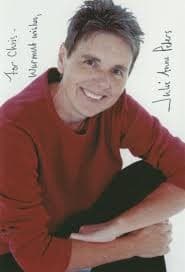
Julie Anne Peters is an American author known for her contributions to young adult fiction. Her notable works include "Keeping You a Secret," which explores themes of love and identity, and "Luna," a groundbreaking story about a transgender teenager. Peters' writing often addresses complex social issues and has garnered recognition within the literary community.
Similar books
- George
Alex Gino
4.1 (31k) average on GoodreadsChildren'sExplores a young transgender child's journey to express her true identity.
- Harry Potter and the Sorcerer's Stone
J.K. Rowling
4.5 (7M) average on GoodreadsFantasyRescued from a miserable life under the stairs, an orphaned boy discovers he's a wizard destined for a magical school, where he uncovers a dangerous secret tied to the dark wizard who murdered his parents.
- The Hunger Games
Suzanne Collins
4.3 (6.4M) average on GoodreadsFantasyIn a future where children fight to the death on live television, Katniss Everdeen volunteers for the arena, turning a death sentence into a fight for survival and a spark of rebellion.
- To Kill a Mockingbird
Harper Lee
4.3 (4.5M) average on GoodreadsHistorical FictionIn the 1930s Jim Crow South, Harper Lee writes about racial injustice, moral growth, and the quiet courage of a lawyer father, Atticus Finch, as seen through his young daughter's eyes.
- The Fault in Our Stars
John Green
4.2 (3.6M) average on GoodreadsYoung AdultA girl with a terminal illness finds her story rewritten when a charming boy with a similar past enters her life at a cancer support group, leading to a star-crossed romance.
- Divergent
Veronica Roth
4.2 (2.9M) average on GoodreadsFantasyIn a society divided by virtues, a sixteen-year-old's difference from the norm starts a rebellion that threatens her world.






Enjoyed the summary?
A summary gives you the shape of the book. The book itself has the detail, the examples and the voice.
Find Luna on AmazonAs an Amazon Associate, BookBrief earns from qualifying purchases. How we're funded