

Synopsis
Covers the whole plot, including the ending.
- Difficulty
- Medium
- Pacing
- Fast
- Mood
- Dark, Chilling, Gripping, Bleak, Tender
- Read it if
- You enjoy dystopian tales with a unique narrative voice, exploring themes of oppression, truth, and rebellion through the eyes of an unconventional hero.
- Skip it if
- You prefer straightforward narratives without allegorical elements or are sensitive to dark, bleak settings.
Maggot Moon Plot Summary
Covers the whole plot, including the ending.
The Wall and the Motherland
Standish Treadwell, a boy with dyslexia and different colored eyes, lives in Zone Seven of the oppressive Motherland. He describes his life, highlighting his struggles with reading and writing, which make him an outcast in a society that values conformity. His only comfort is his friendship with Hector, a bright and imaginative boy next door. The two boys often play football, dreaming of a life beyond the tall wall that separates their impoverished zone from the mysterious, supposedly perfect Zone One. Standish often feels like an outsider, questioned and belittled by authorities and peers, but Hector's loyalty and shared wonder keep his spirits up in the bleakness.
The Disappearance of Hector's Family
One morning, Standish finds that Hector and his family have vanished from their home. Their apartment is empty, cleaned, and their belongings are gone. The authorities, represented by the ruthless 'Skoobs', offer no explanation, only vague threats and silence. Standish is devastated and alone, his world shattered by his best friend's sudden absence. He refuses to believe the official story that Hector's family simply 'moved away', sensing a deeper, more sinister truth behind their disappearance. This event fuels Standish's growing distrust of the Motherland and its secret regime.
The New Neighbors and the Moon Man
A new family, the Grotowskis, moves into Hector's old apartment. Their son, Hemlock, is a quiet, sickly boy who is initially hostile towards Standish. Hemlock is obsessed with the 'Moon Man' and the Motherland's propaganda about its space program, which claims to have put a man on the moon. Standish finds Hemlock's strong belief in the Motherland's story unsettling, especially with his own growing suspicions. Despite initial friction, Standish starts to feel a connection to Hemlock, sensing a shared vulnerability and loneliness beneath Hemlock's defensive manner. This new dynamic slowly begins to unravel the tightly controlled world Standish inhabits.
The Football Over the Wall
During a game, Standish's football goes over the wall into the forbidden Zone One. Driven by a desperate need to retrieve it and a growing curiosity about what lies beyond, Standish convinces Hemlock to help him. They manage to climb the wall, a dangerous and forbidden act, and venture into the supposedly perfect and advanced Zone One. What they discover is not the glorious paradise shown in propaganda, but a desolate wasteland filled with discarded machinery, rubble, and an eerie silence. This firsthand experience shatters their ideas of the Motherland's perfection and confirms Standish's suspicions that the regime is hiding a terrible secret.
The Hidden Base and the Truth
Deep within the ruins of Zone One, Standish and Hemlock find a hidden entrance to an underground facility. Inside, they find a large, elaborate set designed to look like the moon's surface, with fake craters and backdrops. They witness the 'Moon Man' himself, a terrified and emaciated individual, being forced to perform a fake moon landing for propaganda films. It becomes clear that the Motherland's proudest achievement is a cruel hoax, created to maintain control and project an image of superiority. This discovery is a shock, showing the extent of the regime's deception and its ruthless methods.
The Rescue Attempt and Betrayal
Standish, horrified by the Moon Man's situation, tries to help him, driven by his sense of justice and compassion. However, they are discovered by Hemlock's father, who is a high-ranking official involved in the moon landing hoax. Hemlock's father, desperate to protect the secret and his family's position, stops Standish from freeing the Moon Man. This betrayal is devastating for Standish, as he realizes the depth of the conspiracy and the personal cost of defying the Motherland. Hemlock, caught between his father and Standish, is visibly conflicted, showing his inner struggle.
Hemlock's Confession and the Plan
Overwhelmed by guilt and his family's involvement, Hemlock tells Standish that his father was involved in Hector's family's disappearance because Hector's father was a dissident. He also reveals his father's deep fear of the Motherland's secret police, the Skoobs. Hemlock, now fully on Standish's side, plans to expose the moon landing hoax to the wider world. He believes that if the truth gets out, the Motherland's power will crumble, and justice might be served for Hector and the Moon Man. Their shared purpose strengthens their bond, turning their initial animosity into a powerful alliance.
The Broadcast and the Uprising
Hemlock, using his father's access and knowledge, broadcasts the real footage of the fake moon landing to the entire Motherland. The truth, clear and undeniable, shatters the regime's facade. The revelation sparks widespread outrage and an immediate uprising among the oppressed citizens. The Skoobs and other authorities are overwhelmed by the rebellion. The Motherland, once seemingly invincible, begins to crumble under its lies and the people's fury. Standish, witnessing the chaos, feels a surge of hope, believing that their actions have brought about change.
The Aftermath and the Search for Hector
In the ensuing chaos, with the Motherland in disarray, Standish, now a reluctant hero, searches for Hector. He navigates streets filled with rioters and fleeing officials, hoping to find his friend amidst the wreckage of the old regime. The world around him is changing, but his main motivation remains reuniting with Hector, the one constant in his life. He encounters pockets of resistance and acts of defiance, realizing that rebellion had been brewing long before Hemlock's broadcast. The future is uncertain, but the possibility of freedom and justice feels real for the first time.
A Glimmer of Hope
While searching through the abandoned Skoob headquarters, Standish finds a hidden message, a drawing left by Hector. The drawing, deciphered by Standish's unique way of seeing, indicates that Hector is alive and has been taken to a place beyond the Motherland's immediate control, perhaps a resistance camp. This discovery fills Standish with renewed hope and purpose. The ending is bittersweet, as the Motherland is in ruins, but the bond of friendship endures, and the possibility of reuniting with Hector gives Standish the strength to face the uncertain future. The fight for true freedom and the search for his friend continue.
Principal Figures
Standish Treadwell
Protagonist
A dyslexic boy who sees the world differently, defying the Motherland's control.
Standish is a young boy with dyslexia and heterochromia (different colored eyes), which makes him an outcast in the conformist Motherland. He struggles with reading and writing but possesses an extraordinary ability to see patterns and truths that others miss. He is fiercely loyal to his friends and possesses a strong moral compass, driving him to uncover the truth behind the Motherland's lies. Despite being labeled 'not bright' by society, his unique perspective and unwavering courage make him the unlikely catalyst for change.
Relationships: Hector (Best friend and confidant; Standish's emotional anchor.); Hemlock (Initial adversary who becomes a reluctant ally and friend.); Grandfather (Loving and supportive guardian, a source of wisdom and comfort.)
Hector
Supporting
Standish's imaginative and loyal best friend, a victim of the Motherland's oppression.
Hector is Standish's only friend and neighbor, a bright and imaginative boy who shares Standish's dreams of a world beyond the wall. He is intelligent and creative, often engaging in imaginative play with Standish. His sudden disappearance, along with his family, serves as the primary catalyst for Standish's quest for truth. Although absent for much of the narrative, his memory and their friendship profoundly influence Standish's actions and motivations. He symbolizes the innocent victims of the Motherland's tyranny.
Relationships: Standish (Best friend; his disappearance motivates Standish.); Hemlock's Father (Persecutor, responsible for Hector's family's capture.)
Hemlock Grotowski
Supporting
The sickly son of a Motherland official, torn between loyalty and conscience.
Hemlock is the frail, sickly boy who moves into Hector's old apartment. Initially hostile and fiercely loyal to the Motherland's propaganda, he is the son of a high-ranking official involved in the moon landing hoax. He is conflicted, caught between his father's expectations and the dawning realization of the Motherland's deception. His technical skills and access, combined with his growing conscience, become crucial in exposing the truth. He represents the internal struggle faced by those within the system.
Relationships: Standish (Initial rival, later a crucial ally and friend.); Hemlock's Father (His father, a figure of authority and complicity.)
Grandfather
Supporting
Standish's wise and supportive guardian, a symbol of quiet resistance.
Standish's Grandfather is a kind and loving figure who provides Standish with emotional support and a sense of normalcy in their harsh world. He is a man of quiet wisdom, often offering cryptic but profound advice. He is subtly subversive, encouraging Standish's unique way of thinking and protecting him from the Motherland's rigid doctrines. His stories and presence ground Standish and remind him of the importance of kindness and independent thought. He represents the enduring spirit of humanity and resistance against oppression.
Relationships: Standish (Grandfather and guardian; a source of unconditional love and wisdom.)
The Moon Man
Mentioned
The emaciated victim of the Motherland's moon landing hoax.
The Moon Man is a nameless, emaciated individual held captive in the underground facility in Zone One. He is forced to perform in the fake moon landing propaganda films, a symbol of the Motherland's extreme cruelty and deception. His suffering is palpable, and his existence confirms the regime's most audacious lie. His plight deeply affects Standish, reinforcing his determination to expose the truth. He embodies the profound human cost of the Motherland's lies and ambition.
Skoobs
Antagonist
The menacing secret police of the Motherland.
The Skoobs are the feared secret police of the Motherland, responsible for enforcing conformity and silencing dissent. They are portrayed as brutal, emotionless agents who instill terror in the citizens. They are directly involved in the disappearance of Hector's family and harass Standish, serving as the oppressive face of the regime. Their presence underscores the constant threat and surveillance under which the characters live, highlighting the dangers of defiance. They represent the pervasive nature of state control.
Hemlock's Father
Antagonist
A high-ranking official complicit in the Motherland's deception.
Hemlock's father is a significant official within the Motherland's government, directly involved in orchestrating the fake moon landing. He is a man driven by fear and ambition, willing to betray others and maintain the regime's lies to protect his family and his position. His actions, including his role in Hector's family's disappearance, reveal the corrupting influence of power within the Motherland. He is a complex antagonist, motivated by a twisted sense of familial protection within a brutal system.
Relationships: Hemlock (Father; he tries to control Hemlock and keep him complicit.); Hector's Family (Responsible for their disappearance.)
Themes & Insights
The Power of Truth vs. Deception
The novel contrasts the oppressive power of the Motherland's lies with the freeing force of truth. The entire society rests on propaganda, especially the fake moon landing, which controls its citizens. Standish, with his unique perception, sees through these deceptions. The climax, where Hemlock broadcasts the truth of the hoax, shows how a single, undeniable truth can dismantle a regime built on falsehoods, as seen in the subsequent uprising.
“'But Standish Treadwell – who has different-colored eyes, who can't read, can't write, Standish Treadwell isn't bright – sees things differently than the rest of the 'train-track thinkers.''”
Friendship and Loyalty
The lasting bond between Standish and Hector is the emotional center of the story. Hector's disappearance prompts Standish's quest, and his memory drives Standish's determination. Even when Standish forms an alliance with Hemlock, their shared goal to find Hector and expose the truth strengthens their loyalty. This theme shows how personal connections provide strength and motivation against oppression, demonstrating that even in the bleakest worlds, human connection can endure, as seen in Standish's tireless search for Hector.
“'He was my friend. My only friend. And they took him away.''”
Individuality vs. Conformity
The Motherland enforces conformity, punishing anyone who differs from its rigid norms, like Standish's dyslexia and 'different' eyes. Standish is called 'not bright' because he does not fit the mold of a 'train-track thinker.' However, his unique way of seeing and thinking allows him to perceive the lies and injustice others accept. The novel champions individual thought and the courage to be different, suggesting that insight often comes from those who refuse to conform, leading to the rebellion against the oppressive system.
“'They want us to be train-track thinkers, Standish. All going in the same direction.''”
The Nature of Oppression and Resistance
The Motherland operates as a totalitarian regime, controlling every aspect of its citizens' lives through surveillance (Skoobs), propaganda, and fear. The disappearance of Hector's family and the Moon Man's fate show the brutality of this oppression. However, the novel also explores different forms of resistance: Grandfather's quiet subversion, Standish's persistent questioning, and Hemlock's active defiance through broadcasting the truth. It shows that resistance, even in small acts, can grow and lead to a widespread uprising, demonstrating that even strong oppressive systems can be challenged and overthrown.
“'They don't like people who ask questions, Standish. It makes them nervous.''”
Plot Devices & Literary Techniques
First-Person Narrative (Unreliable Narrator)
The story is told through the unique, dyslexic perspective of Standish Treadwell.
The entire novel is narrated by Standish, whose dyslexia and unconventional way of processing information create a distinctive voice. His 'unreliability' isn't born of malice but from his struggle with conventional literacy and his 'different' way of seeing the world. This narrative choice immerses the reader directly into Standish's mind, allowing us to experience the Motherland's oppression and the unfolding mystery through his deeply personal and often metaphorical lens. It highlights the subjective nature of truth and challenges the reader to 'read between the lines,' just as Standish does with the world around him.
The Wall
A physical and symbolic barrier separating the oppressed from the perceived elite.
The wall separating Zone Seven from Zone One serves as both a literal and metaphorical barrier. Physically, it restricts movement and reinforces the class divisions within the Motherland. Symbolically, it represents the regime's control, its secrets, and the psychological barrier it creates in the minds of its citizens. Crossing the wall is a forbidden act that leads Standish and Hemlock to the truth, making it a crucial plot point that facilitates the discovery of the moon landing hoax and the subsequent unraveling of the Motherland's lies.
The Fake Moon Landing
The central deception of the Motherland, a symbol of its power and cruelty.
The fake moon landing is the grand illusion at the heart of the Motherland's propaganda. It represents the ultimate lie perpetuated by the regime to maintain its authority and project an image of technological superiority. The discovery of the elaborate set and the suffering Moon Man exposes the depths of the Motherland's deception and its willingness to sacrifice human lives for its agenda. Its revelation serves as the catalyst for the widespread rebellion, demonstrating how a foundational lie, once exposed, can shatter an entire system of control.
Heterochromia (Different Colored Eyes)
Standish's unique physical trait, symbolizing his 'different' perspective.
Standish's different colored eyes are a recurring physical characteristic that sets him apart from others in the conformist Motherland. Beyond being a physical descriptor, it symbolizes his unique way of seeing the world – his ability to perceive truths and patterns that others, blinded by propaganda, miss. It marks him as an outsider but also as the one capable of true insight. This physical difference underscores the theme of individuality versus conformity and highlights how 'differences' can be a source of strength rather than weakness.
Maggot Moon Quotes
“It was not a bird. It was not a plane. It was an Angel, broken and beautiful, falling from the sky.”
“Some secrets are like seeds. You plant them, and they grow into something you never expected.”
“The past is a stubborn ghost. It whispers in your ear and paints pictures in your mind.”
“Even in the darkest night, there is always a whisper of light. You just have to listen for it.”
“Truth is a tricky thing. It hides in plain sight, and sometimes the biggest lies are the ones we tell ourselves.”
“The city was a labyrinth of shadows and whispers, where every corner held a story, and every alley hid a secret.”
“Sometimes the greatest monsters are not the ones with fangs and claws, but the ones with human faces.”
“Love, even a broken love, leaves its mark. A scar that never truly fades.”
“The future is not written in stone. It is a river, constantly changing, constantly flowing.”
“Courage isn't about not being afraid. It's about being afraid and doing it anyway.”
“We are all just stories in the end. Make yours a good one.”
“The weight of the world can crush you, or you can learn to carry it.”
“Silence can be a weapon, or a shield. It all depends on who is wielding it.”
“There are some things you can't unsee, some sounds you can't unhear. They become a part of you.”
Quiz
10 questions on the plot and the characters. Each answer comes with a short explanation.
Question 1
What is the name of Standish Treadwell's only friend and neighbor?
- Humphrey
- Hector
- Pike
- Sloth
Show answer
B. Hector Hector is Standish's best and only friend, with whom he shares many adventures and secrets.
Question 2
What physical characteristic makes Standish Treadwell stand out?
- He has a limp.
- He is exceptionally tall.
- He has different-colored eyes.
- He has a distinctive birthmark on his face.
Show answer
C. He has different-colored eyes. Standish's different-colored eyes are a recurring detail mentioned in the book, highlighting his uniqueness.
Question 3
What is the 'Motherland' trying to hide on the other side of the wall?
- A secret training facility for soldiers.
- A hidden stash of forbidden books.
- The truth about the Moon landing and the Moon Man.
- An abandoned city from before the war.
Show answer
C. The truth about the Moon landing and the Moon Man. The central mystery involves the Motherland's deception regarding the Moon landing and the existence of the Moon Man.
Question 4
What term does Standish use to describe people who think conventionally and don't question the Motherland's narratives?
- Sheep-thinkers
- Train-track thinkers
- Blind followers
- System slaves
Show answer
B. Train-track thinkers Standish frequently refers to those who accept the propaganda without question as 'train-track thinkers,' highlighting his unique perspective.
Question 5
What is Standish's primary academic challenge, repeatedly mentioned?
- He struggles with mathematics.
- He cannot read or write.
- He has difficulty with public speaking.
- He fails to understand history lessons.
Show answer
B. He cannot read or write. The narrative explicitly states that Standish 'can't read, can't write,' which is a significant aspect of his character and how he perceives the world.
Question 6
What object initially leads Standish and Hector to investigate beyond the wall?
- A lost pet.
- A dropped wallet.
- A football.
- A mysterious note.
Show answer
C. A football. The prompt specifically mentions, 'What if the football hadn't gone over the wall,' indicating this is the inciting incident.
Question 7
What is the thematic significance of Standish's inability to read and write in the context of the Motherland's control?
- It symbolizes his intellectual inferiority compared to others.
- It represents his vulnerability to manipulation and propaganda.
- It highlights how he perceives truth through observation and intuition rather than dictated texts.
- It means he is exempt from the Motherland's educational system.
Show answer
C. It highlights how he perceives truth through observation and intuition rather than dictated texts. Despite his illiteracy, Standish's unique perspective allows him to 'see things differently' and uncover truths that those who rely on official, written narratives miss.
Question 8
The 'Moon Man' is a figure central to the Motherland's deception. What is the ultimate truth revealed about the Moon Man?
- He is a benevolent protector of the Motherland.
- He is a fictional character used to inspire patriotism.
- He is a real person being held captive and used as part of a hoax.
- He is an alien being who landed on Earth.
Show answer
C. He is a real person being held captive and used as part of a hoax. The big secret on the other side of the wall involves the Motherland's elaborate hoax, where a real person is used to perpetuate the lie of the Moon landing.
Question 9
How does the author's choice of a first-person narrative, told by Standish, contribute to the novel's unique tone?
- It provides an objective, detached view of the oppressive regime.
- It creates a consistently formal and academic voice.
- It offers a naive, often darkly humorous, and deeply personal perspective on a bleak world.
- It allows for a broad, omniscient understanding of all characters' thoughts.
Show answer
C. It offers a naive, often darkly humorous, and deeply personal perspective on a bleak world. The prompt highlights 'an utterly original first-person voice' that is 'by turns gripping and darkly humorous, bleak and chilling, tender and transporting,' which directly results from Standish's unique and unfiltered perspective.
Question 10
What is the 'dark secret' that Standish and Hector uncover beyond the wall, specifically related to the Moon landing?
- They find evidence that the Moon is actually uninhabitable.
- They discover that the Moon landing was faked on Earth.
- They learn that the Moon is controlled by an enemy nation.
- They uncover plans for a second, secret Moon mission.
Show answer
B. They discover that the Moon landing was faked on Earth. The core mystery and 'dark secret' of the Motherland is the elaborate deception that the Moon landing was a hoax, staged on Earth.
Maggot Moon FAQ
What is the core premise of 'Maggot Moon' and who is the protagonist?
'Maggot Moon' is set in a dystopian Motherland, a totalitarian regime that controls its citizens through propaganda and fear. The story follows Standish Treadwell, a seemingly 'unbright' boy with dyslexia and different-colored eyes, who possesses a unique way of perceiving the world despite his inability to read or write.
Who is Hector and what role does he play in Standish's life?
Hector is Standish's best and only friend, his next-door neighbor, and a fellow outcast in the Motherland's oppressive society. He is Standish's intellectual counterpart, often providing the logical framework or understanding that Standish struggles with, making them an inseparable and complementary duo.
What is 'the wall' in the story, and what significant event prompts Standish and Hector to cross it?
The wall is a literal and metaphorical barrier separating the drab, controlled lives of the citizens from the forbidden, mysterious sector where the Motherland conducts its secret operations. The inciting incident is when Standish and Hector's football goes over this wall, leading them to discover the hidden truths beyond it.
What is the 'Moon Man' and what is his significance to the Motherland's propaganda?
The 'Moon Man' is the Motherland's ultimate propaganda symbol, representing their supposed triumph in a space race. He is presented as a heroic figure who has successfully landed on the moon, a feat the regime uses to bolster its image and control its populace, despite the reality being far more sinister.
How does Standish's dyslexia influence his narrative voice and perception of the world?
Standish's dyslexia profoundly shapes his unique first-person narration. He experiences the world through sensory details and intuitive leaps rather than conventional logic, often 'seeing' the truth behind the Motherland's lies because he isn't bound by its written propaganda or 'train-track thinking.'
What is the 'Dark Satellite' and how does it connect to the Motherland's deception?
The 'Dark Satellite' is the Motherland's secret weapon, a massive, hidden construct used to project a fake moon landing on a nearby planet, deceiving the world into believing their 'Moon Man' has achieved space travel. It's the physical manifestation of their grandest lie, built with slave labor and immense cruelty.
What is the true fate of Hector and how does it impact Standish?
Hector is captured and executed by the Motherland's regime for discovering their secrets. His death is a devastating blow to Standish, stripping him of his only companion and forcing him to confront the full brutality of the Motherland, ultimately strengthening his resolve to expose their lies.
Who is Gramps and what is his role in Standish's life and the resistance?
Gramps is Standish's grandfather and his primary caregiver, a resilient and secretly rebellious figure. He provides Standish with stability and love, and he is a member of the underground resistance movement, subtly guiding Standish and eventually becoming a key player in the plan to expose the Motherland.
How do Standish's 'different-colored eyes' serve as a metaphor or symbol in the story?
Standish's heterochromia symbolizes his unique perspective and his ability to see beyond the Motherland's carefully constructed reality. While others see him as 'unbright' or flawed, his dual vision allows him to perceive truths that are hidden from the 'train-track thinkers' who adhere strictly to the regime's narrative.
What is the psychological impact of the Motherland's constant surveillance and propaganda on its citizens?
The Motherland's pervasive surveillance and relentless propaganda create a climate of fear, conformity, and intellectual stagnation. Citizens are conditioned to accept official narratives without question, leading to a profound sense of helplessness and a suppression of independent thought, as exemplified by the 'train-track thinkers.'
How does Standish's relationship with his parents, who are absent, influence his character development?
Standish's parents were taken by the Motherland, leaving him with a deep-seated trauma and a yearning for justice. This loss fuels his quiet rebellion and his determination to uncover the truth, providing a powerful emotional underpinning for his actions throughout the novel.
What is the significance of the recurring motif of 'maggots' and 'moon' in the title and narrative?
The 'maggot' symbolizes decay, corruption, and the hidden rot beneath the Motherland's pristine facade, while the 'moon' represents the grand deception and the unattainable ideal the regime projects. Together, 'Maggot Moon' encapsulates the novel's central theme of a beautiful lie built upon a foundation of horrific truth and oppression.
How does the ending of 'Maggot Moon' offer both a sense of triumph and a lingering ambiguity?
The ending sees Standish successfully exposing the Motherland's fake moon landing to the world, a clear triumph for truth and justice. However, the subsequent fate of Standish and the full ramifications for the Motherland remain somewhat open-ended, suggesting that while one battle is won, the struggle for freedom is ongoing.
What role does the character of the 'Devil' play in the story, and is he a literal or metaphorical figure?
The 'Devil' is initially presented as a feared enforcer of the Motherland, a shadowy figure of authority and cruelty. While he embodies evil, he is a literal human agent of the regime, rather than a supernatural entity, representing the brutal, unquestioning obedience demanded by the totalitarian state.
How does the book challenge traditional notions of intelligence through Standish's character?
The book brilliantly challenges the idea that literacy or conventional academic intelligence defines a person's worth or insight. Standish, despite his inability to read or write, possesses a profound emotional intelligence, intuition, and moral clarity that allows him to see truths that elude those considered 'bright' by the Motherland.
What is the broader message about totalitarianism and the power of individual perception that 'Maggot Moon' conveys?
'Maggot Moon' powerfully illustrates how totalitarian regimes control populations through fear, misinformation, and the suppression of critical thought. It champions the idea that even the most seemingly insignificant individual, armed with a unique perspective and moral courage, can expose systemic lies and ignite change.
About the author

Sally Gardner is a British author known for her work in children's and young adult fiction. Her notable books include "Maggot Moon," a dystopian tale set in an alternate history, and "The Red Necklace," which explores themes of revolution and adventure during the French Revolution. Gardner's writing often features imaginative storytelling and richly developed characters.
Similar books
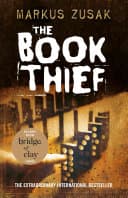
- The Book Thief
Markus Zusak
4.4 (1.8M) average on GoodreadsHistorical FictionExplores a child's perspective in a totalitarian regime with unique narrative style and themes of war and resistance.
- 1984
George Orwell
4.2 (3.1M) average on GoodreadsPoliticsFeatures a highly oppressive, surveilled society and the struggle for truth against overwhelming state control.
- The Giver
Lois Lowry
4.1 (1.8M) average on GoodreadsFantasyFollows a young protagonist who sees the hidden truths and flaws in an outwardly 'perfect' society.
- The Hunger Games
Suzanne Collins
4.3 (6.4M) average on GoodreadsFantasyMaggot Moon focuses on psychological struggle and individual acts of defiance against oppression, rather than the large-scale, action-oriented rebellion and spectacle found in The Hunger Games. Gardner's approach is more literary and less reliant on genre tropes, emphasizing the insidious nature of propaganda over overt combat.
- Harry Potter and the Sorcerer's Stone
J.K. Rowling
4.5 (7M) average on GoodreadsFantasyRescued from a miserable life under the stairs, an orphaned boy discovers he's a wizard destined for a magical school, where he uncovers a dangerous secret tied to the dark wizard who murdered his parents.
- Divergent
Veronica Roth
4.2 (2.9M) average on GoodreadsFantasyIn a society divided by virtues, a sixteen-year-old's difference from the norm starts a rebellion that threatens her world.





Enjoyed the summary?
A summary gives you the shape of the book. The book itself has the detail, the examples and the voice.
Find Maggot Moon on AmazonAs an Amazon Associate, BookBrief earns from qualifying purchases. How we're funded