
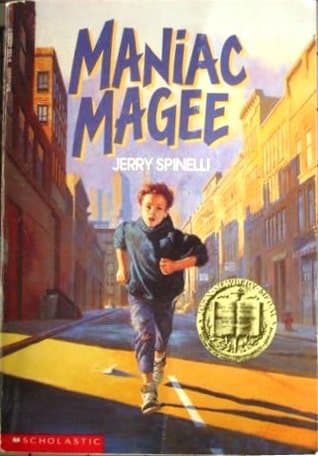
Synopsis
Covers the whole plot, including the ending.
- Difficulty
- Easy
- Pacing
- Moderate
- Mood
- Uplifting, Hopeful, Thought-provoking, Humorous
- Read it if
- You enjoy heartwarming stories about overcoming prejudice, the power of a single individual to make a difference, and unique characters.
- Skip it if
- You prefer complex adult narratives or stories without a strong message of social harmony.
Maniac Magee Plot Summary
Covers the whole plot, including the ending.
The Runaway Orphan
Jeffrey Lionel Magee, an orphan since his parents were killed in a trolley accident when he was three, lives with his Aunt Dot and Uncle Dan. Their house is tense and silent, with the couple refusing to speak to each other, communicating only through separate duplicate items. This goes on for eight years. One day, during a spring musical at his school, Jeffrey suddenly stands up, screams, and runs away from the performance, from his aunt and uncle, and from his hometown of Bridgeport. He runs for over a year, covering hundreds of miles, until he eventually arrives in the racially divided town of Two Mills, Pennsylvania, where his legend begins to grow.
The Legend Begins in Two Mills
Upon arriving in Two Mills, Jeffrey, now known as Maniac Magee, immediately makes an impact. He intercepts a football pass from the high school star, Hands Down, and punts it back farther than anyone could imagine. He then runs onto the baseball field and hits every pitch from the best pitcher, McNab, out of the park. Later, he unties a notoriously tangled knot at the Pickwell's backyard, a feat no one else could accomplish. These impossible feats, combined with his constant running, earn him the nickname 'Maniac' and establish his mythical status among the townspeople, both black and white, who are amazed by his abilities.
Living with the Beales
Maniac, having nowhere to live, is taken in by Amanda Beale, a young black girl he met while she was carrying her suitcase of books. The Beale family – Mr. and Mrs. Beale, Amanda, Hester, and Lester – welcome him into their home on the East End, the black side of town. Maniac experiences genuine family love and stability for the first time since his parents' death. He helps around the house, reads to the younger children, and enjoys the warmth of a loving family. However, his presence as a white boy living in the East End causes tension and resentment among some of the black residents, who deface the Beale's house with racial slurs.
The Race and the Cobras
While living with the Beales, Maniac faces growing animosity from both sides of Two Mills. On the East End, some residents are uncomfortable with his presence. On the West End, he encounters John McNab and his gang, the Cobras. McNab, still bitter about Maniac's baseball prowess, tries to bully him. Maniac outruns them repeatedly, even after McNab throws a stone that hits Maniac in the head. This incident further solidifies Maniac's reputation for invincibility and his ability to navigate the town's racial divide, though he remains an outsider to both communities.
Leaving the Beales and the Zoo
Despite the comfort and love he found with the Beales, Maniac realizes his presence is causing problems for them. The racial slurs on their house and the general tension make him feel like a burden. Believing he is bringing trouble to the family, Maniac decides to leave the Beales' home. He finds temporary shelter in the deer pen at the Elmwood Park Zoo, living among the animals. This period highlights his deep loneliness and his inability to find a lasting place where he truly belongs, despite his desire for a family.
Grayson's Friendship
While living at the zoo, Maniac encounters Earl Grayson, an old, alcoholic zookeeper who was once a minor league baseball pitcher. Grayson, initially prejudiced against Maniac because he's a 'ragamuffin,' soon warms to him. Maniac discovers that Grayson is illiterate and patiently teaches him to read, starting with simple words and progressing to books. Their friendship deepens, and they share stories and holidays, creating a makeshift family. Grayson, in turn, teaches Maniac about baseball and provides him with a sense of belonging, something Maniac desperately wants.
Tragedy and Return to Loneliness
Maniac and Grayson spend a joyful Christmas together, filled with reading and shared meals. However, shortly after Christmas, Grayson dies in his sleep. Maniac is devastated by the loss of his friend and the only true family he had known since his parents' death. He finds himself alone again, wandering the town aimlessly and sleeping in various places, including the band shell in the park. Grayson's death is a blow, reinforcing Maniac's recurring experience of loss and his inability to find a permanent home.
The McNab Challenge
Maniac encounters two young, runaway boys, Russell and Piper McNab, who are the younger brothers of John McNab. He realizes they are living in squalor and fear in their West End home, which is fortified like a fortress against the perceived 'enemy' of the East End. Maniac tries to help them, enticing them with challenges and feats to get them to go to school and improve their lives. He hopes that by engaging with them, he can prevent them from falling into the same racist patterns as their older brother and help them escape their bleak home life.
Crossing the Line
In a desperate attempt to show Russell and Piper that the East End isn't as dangerous as they've been taught, Maniac brings Mars Bar Thompson, a tough black kid from the East End, to Piper's birthday party at the McNabs' house. The party is a chaotic scene of poverty and prejudice. The presence of Mars Bar immediately causes a tense standoff, highlighting the deep racial hatred and fear that permeate Two Mills. Maniac's attempt at reconciliation backfires, further emphasizing the seemingly insurmountable division.
Mars Bar and the Rescue
Maniac, frustrated by his inability to make a difference with the McNabs, finds himself running again, contemplating his endless search for a home. He encounters Mars Bar Thompson, who challenges him to a race. During the race, Russell McNab, Piper's younger brother, gets stuck on a trestle, paralyzed by fear of heights. Mars Bar, despite his previous animosity towards Maniac and white people, rescues Russell. This act of bravery and Maniac's presence during the rescue begin to forge an unexpected connection between the two boys.
Coming Home
After the trestle incident, Mars Bar, having seen Maniac's deep loneliness and his refusal to return to the McNabs' toxic home, understands Maniac's plight. He finds Maniac sleeping in the deer pen again and convinces him to return to the Beales. Mars Bar pulls Maniac back to the East End, where the Beale family welcomes him with open arms. Maniac, finally realizing that he is loved and wanted, accepts their offer of a permanent home. He has found his family, not just a place to stay, and the legend of Maniac Magee finds its enduring peace.
Principal Figures
Jeffrey Lionel 'Maniac' Magee
Protagonist
A legendary, homeless orphan with extraordinary athletic abilities and a desire for a home.
Maniac Magee is an orphaned boy, whose parents died when he was three. He possesses incredible athletic prowess, speed, and a knack for untangling knots and solving problems. Despite his legendary status, Maniac is fundamentally lonely, driven by a deep yearning for a home and a family. He is colorblind to race, treating everyone equally, which makes him a unique figure in the racially segregated town of Two Mills. He is compassionate, selfless, and innocent, often oblivious to the social complexities around him.
Relationships: Aunt Dot and Uncle Dan (Estranged guardians, cause of his initial runaway); Amanda Beale (First friend in Two Mills, sister figure, catalyst for his stay with the Beales); Beale Family (Adoptive family, provides love and stability); John McNab (Antagonist, rival in sports, leader of the Cobras); Earl Grayson (Mentor and surrogate grandfather, taught him about baseball and friendship); Mars Bar Thompson (Initial rival, later an unlikely friend and catalyst for his return to the Beales)
Amanda Beale
Supporting
A determined, book-loving girl who befriends Maniac and brings him home.
Amanda Beale is a young black girl from the East End who carries all her books in a suitcase to protect them from her younger siblings and a dog. She is intelligent, kind, and brave, being the first person to genuinely befriend Maniac in Two Mills. Amanda is protective of her books and her family, and she sees Maniac's innocence and kindness, offering him a place to stay despite the potential repercussions in her segregated community. She represents open-mindedness and the power of literature.
Relationships: Maniac Magee (First friend, brings him into her family); Beale Family (Her immediate family)
Earl Grayson
Supporting
An elderly zookeeper and former minor league baseball player who befriends Maniac.
Grayson is an old, lonely, and initially prejudiced white man who works at the Elmwood Park Zoo. He was once a minor league baseball pitcher but never made it to the majors. He is illiterate, a secret he guards fiercely until Maniac discovers it. Grayson finds a purpose in teaching Maniac about baseball and, in turn, is taught to read by Maniac. He provides Maniac with a temporary, loving home and becomes a surrogate grandfather figure, offering the boy a sense of belonging he desperately craves.
Relationships: Maniac Magee (Friend, student (reading), teacher (baseball), surrogate grandson)
Mars Bar Thompson
Supporting
A tough, intimidating black boy from the East End who becomes Maniac's rival and later friend.
Mars Bar Thompson is a proud, aggressive, and sometimes hostile black boy from the East End, known for his distinctive walk, his candy bar, and his confrontational attitude. He embodies the stereotypes and prejudices present in Two Mills. Initially, he sees Maniac as an outsider and a rival, but through various encounters, including Maniac's unwavering kindness and his own act of heroism, Mars Bar begins to soften. He eventually becomes an unlikely friend and the one who finally brings Maniac home to the Beales.
Relationships: Maniac Magee (Initial rival, later an unlikely friend)
John McNab
Antagonist
The star pitcher and leader of a notorious gang from the West End.
John McNab is the best pitcher in the West End, a formidable athlete whose ego is bruised by Maniac's superior baseball skills. He leads a gang called the Cobras and embodies the racial prejudice and hostility of the white community in Two Mills. McNab is characterized by his anger, his fear of the East End, and his general destructive behavior. He represents the entrenched divisions and hatred that Maniac tries to overcome, and his home life reveals the cycle of poverty and prejudice.
Relationships: Maniac Magee (Rival, object of his hatred); Russell and Piper McNab (Younger brothers, who Maniac tries to help)
Russell and Piper McNab
Supporting
John McNab's younger brothers, living in poverty and fear in the West End.
Russell and Piper are John McNab's younger brothers, living in a squalid, fortified house in the West End. They are neglected, dirty, and deeply ingrained with their older brother's racial prejudices against the East End. Maniac tries to help them by engaging them in challenges and trying to show them a different way of life, hoping to break the cycle of prejudice and neglect. Their vulnerability and the environment they grow up in highlight the social issues plaguing Two Mills.
Relationships: Maniac Magee (Someone trying to help them); John McNab (Older brother, influences their worldview)
Mr. and Mrs. Beale
Supporting
Amanda's loving parents who provide Maniac with a temporary home.
Mr. and Mrs. Beale are Amanda's kind and compassionate parents. They live in the East End and, despite the racial tensions, welcome Maniac, a white boy, into their home and treat him as one of their own children. They provide him with the first sense of family and stability he has known since his parents' death. Their acceptance and love for Maniac highlight their open-mindedness and humanity, contrasting sharply with the pervasive prejudice of the town.
Relationships: Maniac Magee (Adoptive parents); Amanda Beale (Their daughter)
Themes & Insights
The Search for Home and Family
Maniac's entire journey is driven by his yearning for a permanent home and a loving family after the traumatic loss of his parents. He runs away from his unhappy aunt and uncle, finds temporary solace with the Beales, experiences a brief, close connection with Grayson, and eventually returns to the Beales. Each temporary home is a step in his quest, highlighting his emotional vulnerability despite his physical prowess. The theme culminates when he finally accepts the Beales' love as his true home, realizing that home is about connection and belonging, not just a physical place.
“A home isn't a place--it's a feeling. It's the feeling of being wanted, of belonging.”
Racial Prejudice and Division
The town of Two Mills is divided by race, with a clear East End (black) and West End (white). This theme is central to the novel, as Maniac, who is colorblind and treats everyone equally, acts as a catalyst for exposing and challenging these divisions. His presence in the East End with the Beales, and his attempts to bridge the gap by bringing Mars Bar to the McNabs' party, highlight the deep hatred, fear, and misunderstanding between the communities. The novel portrays the destructive nature of prejudice and the difficulty of overcoming it.
“He was an unknown, all right, but not because nobody knew his name. They knew his name, all right. They just didn't know what to make of him. Because he was white. And he was in the East End.”
The Power of Storytelling and Legend
Maniac Magee's story is presented as a legend, with his extraordinary feats becoming exaggerated tales passed down by word of mouth. His ability to untangle the 'knot,' hit home runs, and outrun bullies contributes to his mythical status. This theme explores how stories shape perception, create identity, and provide a way for a community to understand and explain the extraordinary. The narrator frequently refers to Maniac's 'legend,' emphasizing that his impact extends beyond his physical actions, residing in the collective imagination of Two Mills.
“And the legend of Maniac Magee, which had begun in the East End, was now growing in the West End.”
Literacy and Education
The theme of literacy is explored through Maniac's relationship with Grayson. Maniac, an avid reader, patiently teaches the illiterate Grayson to read, opening up a new world for the old man. This highlights the power of education and the joy of discovery that comes with it. Amanda Beale's fierce protection of her books also shows the value of reading. Literacy is presented not just as a skill but as a key to understanding, connection, and personal growth, contrasting with the ignorance and prejudice that often stem from a lack of exposure to new ideas.
“He taught Grayson the alphabet. He taught him how to read. And the old man, who had never known the joy of a book, was reborn.”
Plot Devices & Literary Techniques
Hyperbole and Tall Tale
Exaggerated feats and descriptions that build Maniac's legendary status.
The novel uses hyperbole extensively to describe Maniac's abilities, such as his incredible speed, his ability to hit every pitch out of the park, and his knack for untangling the 'knot.' These exaggerated descriptions contribute to the 'tall tale' quality of Maniac's story, making him a mythical figure rather than just a normal boy. This device serves to elevate Maniac's character, explain his profound impact on the town, and give the narrative a whimsical, legendary feel, allowing the author to address serious themes through a fantastical lens.
Symbolism of the 'Knot'
A physical representation of the town's intractable problems and divisions.
The 'knot' at the Pickwell's backyard, which Maniac effortlessly untangles, symbolizes the complex and seemingly unsolvable problems of Two Mills, particularly its racial division. Just as no one else could untie the physical knot, no one seems capable of resolving the deep-seated prejudice and hatred that separate the East and West Ends. Maniac's ability to untie it suggests his unique, innocent approach to problems, hinting at his potential to bridge divides, even if the larger societal 'knot' proves more resistant.
The Two Mills Divide (East End/West End)
A literal and metaphorical representation of racial segregation and prejudice.
The physical division of Two Mills into the predominantly black East End and the white West End serves as a central plot device. This geographical split directly mirrors the racial segregation and the deep-seated prejudice that characterize the town. Maniac's constant movement between these two areas, and his inability to truly belong to either, highlights the absurdity and destructiveness of the division. The divide creates conflict, shapes character interactions, and underscores the novel's main themes about race, belonging, and the search for unity.
Maniac's Colorblindness
Maniac's inability to perceive or understand racial differences.
Maniac's 'colorblindness' is a crucial plot device. He genuinely does not understand or acknowledge racial differences, treating everyone simply as people. This innocence allows him to move freely between the East and West Ends, baffling and challenging the established social norms. His lack of prejudice makes him a unique catalyst for change and a mirror reflecting the town's ingrained biases. It also makes him vulnerable to the harsh realities of racism, as he struggles to comprehend why people would hate each other based on skin color, driving much of the plot's conflict.
Maniac Magee Quotes
“Maniac Magee was not born in a house or a hospital like other people. He was born in a dump.”
“He was a kid, all right, but he was more than that. He was a legend.”
“Nobody had ever seen a white kid on the East End. Or a black kid on the West End.”
“Fishbelly, go home!”
“He was an orphan, but he wasn't alone. Not anymore.”
“He wasn't really running from anything. He was running to something. To find a home.”
“You can't eat a whole town, can you?”
“He had a name, but it was like a secret, a treasure he kept to himself.”
“A man's gotta do what a man's gotta do.”
“He was a legend, all right. But a legend doesn't have an address.”
“He wasn't white. He wasn't black. He was a kid.”
“Nobody liked being called a name, especially by somebody who didn't even know you.”
“You can't just go around fixing everybody, Maniac. Some things you just gotta leave alone.”
“He didn't have a house, but he had a home. He had a family. And he had a friend.”
Quiz
10 questions on the plot and the characters. Each answer comes with a short explanation.
Question 1
What is Jeffrey Lionel Magee's nickname?
- Speedy Magee
- Maniac Magee
- Legend Magee
- Runaway Magee
Show answer
B. Maniac Magee Jeffrey Lionel Magee is widely known by his nickname, Maniac Magee, throughout the story due to his extraordinary feats.
Question 2
What event led to Jeffrey becoming an orphan?
- A house fire
- A car accident
- A trolley accident
- A flood
Show answer
C. A trolley accident Jeffrey's parents were killed in a tragic trolley accident, leading him to become an orphan.
Question 3
Which of the following is NOT one of Maniac's legendary feats in Two Mills?
- Untying Cobble's Knot
- Hitting a home run off the pitching machine 'The Terminator'
- Defeating Mars Bar in a footrace
- Winning the annual town spelling bee
Show answer
D. Winning the annual town spelling bee While Maniac performs many extraordinary feats, winning the annual spelling bee is not one of them. He is more known for his athletic and problem-solving abilities.
Question 4
What is the name of the town Maniac Magee runs to and impacts?
- East End
- West End
- Two Mills
- Bridgeport
Show answer
C. Two Mills The story takes place in the racially divided town of Two Mills, which is central to Maniac's adventures and impact.
Question 5
What object does Maniac retrieve from the Finsterwalds' yard that no other kid would dare to?
- A baseball glove
- A football
- A missing report card
- A football that had been kicked over the fence
Show answer
D. A football that had been kicked over the fence Maniac fearlessly retrieves a football from the dreaded Finsterwalds' yard, a feat that astounds the local kids.
Question 6
Who is the first family on the East End to take Maniac in?
- The McNabs
- The Beales
- The Grays
- The Pickwells
Show answer
B. The Beales The Beale family, residents of the East End, are the first to offer Maniac a home and show him kindness.
Question 7
What is the significance of Cobble's Knot in the story?
- It is a symbol of Maniac's athletic prowess.
- It represents the town's division and Maniac's ability to overcome seemingly impossible challenges.
- It is a secret message left by Maniac's parents.
- It marks the boundary between the East End and West End.
Show answer
B. It represents the town's division and Maniac's ability to overcome seemingly impossible challenges. Cobble's Knot, an enormous, tangled knot of string, symbolizes the deep-seated divisions and problems within Two Mills, and Maniac's success in untying it signifies his unique ability to tackle seemingly insurmountable obstacles.
Question 8
Why does Maniac leave the Beale family?
- He gets into a fight with Amanda Beale.
- He feels he is causing problems for the family due to his race.
- He is captured by his aunt and uncle.
- He decides to go live with the McNabs.
Show answer
B. He feels he is causing problems for the family due to his race. Maniac, being white, realizes his presence is causing tension and threats to the Black Beale family in the racially divided East End, prompting him to leave to protect them.
Question 9
What is the primary theme explored through the racial division of Two Mills?
- The importance of sportsmanship.
- The power of individual action to bridge divides and challenge prejudice.
- The challenges of poverty in urban areas.
- The benefits of living a nomadic lifestyle.
Show answer
B. The power of individual action to bridge divides and challenge prejudice. A central theme of 'Maniac Magee' is how one individual, through kindness, courage, and a refusal to acknowledge artificial barriers, can begin to break down long-standing racial prejudice and division within a community.
Question 10
Where does Maniac eventually find a more permanent home, largely due to Amanda Beale's persistence?
- With the Pickwells
- In the deer shed at the zoo
- With Grayson in the baseball equipment room
- Back with the Beale family
Show answer
D. Back with the Beale family After much wandering and several temporary homes, Amanda Beale persistently convinces Maniac to return and live permanently with her family, emphasizing that he belongs with them.
Maniac Magee FAQ
What prompts Maniac Magee to run away from his aunt and uncle?
Maniac Magee runs away during a school musical, 'Finian's Rainbow,' after eight years of living with his aunt and uncle. Their home life was characterized by a silent, unspoken tension; his aunt cooked and cleaned, and his uncle worked, but they never spoke to each other, creating an oppressive atmosphere that became unbearable for Maniac.
How does Maniac's arrival impact the racially divided town of Two Mills?
Maniac's arrival disrupts the strict racial segregation of Two Mills, a town where whites live on the West End and blacks on the East End, and residents rarely cross the bridge between them. His innocent disregard for these boundaries, exemplified by his comfortable interactions with both sides, forces the townspeople to confront their prejudices and the absurdity of their divisions, even if they don't immediately overcome them.
What is the significance of Maniac striking out John McNab, the legendary pitcher?
Maniac striking out John McNab, the fearsome pitcher known for his unhittable fastball and throwing frogs, is one of his first legendary feats in Two Mills. This act immediately establishes him as an extraordinary figure to the West End kids, earning their awe and grudging respect, and sets the stage for his mythical status within the town.
Why does Maniac refuse to live permanently with any family, despite being offered homes?
Maniac refuses permanent homes because he fears that his presence brings trouble or that the families he stays with will eventually become unhappy, mirroring his experience with his aunt and uncle. He carries a deep-seated trauma from his parents' death and his subsequent unhappy living situation, leading him to believe he's a burden or a jinx, preferring to be a transient helper rather than a permanent fixture.
What is the 'knot' Maniac tries to untangle at the Pickwell's house, and what does it symbolize?
The 'knot' Maniac untangles is a massive, incredibly tangled ball of string in the Pickwell's house. Symbolically, it represents the tangled, complex problems and divisions within Two Mills, particularly its racial prejudices. Maniac's ability to patiently and successfully untangle it highlights his unique problem-solving skills and his capacity to bring order to chaos, even if only on a small scale.
How does Maniac's relationship with the Beales differ from his other attempts to find a home?
Maniac's relationship with the Beales is his most successful attempt at finding a family, as they offer him unconditional love and acceptance, providing him with his first real home since his parents' death. Unlike other instances, the Beales embrace him fully, giving him a name, a bed, and a sense of belonging that he desperately craves, yet ultimately flees due to his internal conflicts.
What is the significance of Maniac's fear of 'the dark' and how does it relate to his past?
Maniac's fear of 'the dark' is a profound phobia stemming from the traumatic night his parents died in a trolley accident. He associates darkness with the helplessness and terror of that event, and it manifests as an intense fear that prevents him from sleeping in dark places, forcing him to sleep with lights on or outdoors under the stars.
How does Mars Bar Thompson's initial antagonism towards Maniac evolve throughout the story?
Mars Bar Thompson initially views Maniac as an intruder and an enemy, especially when Maniac crosses into the East End. Their relationship is marked by hostility, but it gradually evolves into a grudging respect and eventually a deep, if sometimes unspoken, friendship, culminating in Mars Bar saving Maniac and bringing him back to the East End.
What is the 'finishing' act Maniac performs for the McNab boys, and why is it important?
The 'finishing' act Maniac performs for the McNab boys involves him repeatedly running on the railroad tracks, dodging trains, and eventually 'racing' a train on the trestle where his parents died. This reckless stunt is his way of confronting his deepest trauma and testing his own mortality, a dangerous attempt to either conquer his past or succumb to it.
What does the symbol of the 'untied shoelace' represent for Maniac?
The 'untied shoelace' symbolizes Maniac's innocence, his detachment from conventional worries, and his free-spirited nature. It suggests a lack of concern for trivial details and a focus on larger, more profound experiences, embodying his carefree yet deeply impactful journey through life.
Why does Maniac risk his life to save Russell McNab from the trolley trestle?
Maniac risks his life to save Russell McNab from the trolley trestle, despite his own crippling fear of the place where his parents died, because he cannot stand by and watch another child come to harm. This act demonstrates his inherent compassion, selflessness, and his desire to prevent others from experiencing the same trauma he endured.
How does the author use the character of Maniac to challenge the concept of 'home'?
The author uses Maniac's character to challenge the traditional concept of 'home' by showing that it's not merely a physical place, but a feeling of belonging, love, and acceptance. Maniac finds temporary 'homes' in unexpected places and with diverse people, highlighting that true home is where one feels safe and loved, regardless of permanence or conventional structure.
What is the significance of Maniac living with the buffalo at the zoo?
Maniac living with the buffalo at the zoo signifies his desire for isolation and his attempt to escape human connection after being hurt and feeling like a burden to others. It represents his retreat into a primal, solitary existence where he believes he can cause no harm and avoid the complexities of human relationships, yet it also shows his deep loneliness.
How does the legend of Maniac Magee serve as a metaphor for hope and change in Two Mills?
The legend of Maniac Magee serves as a metaphor for hope and change by demonstrating that an individual, through acts of kindness, bravery, and disregard for prejudice, can challenge ingrained social divisions. His feats and his ability to bridge the gap between the East and West Ends, even temporarily, offer a glimpse of a more unified and harmonious future for Two Mills.
What is the role of the 'finishing question' in Maniac's story, and what does it reveal about him?
The 'finishing question' is Maniac's unspoken, existential query about why he survived his parents' accident and what his purpose is. It reveals his deep-seated trauma, his search for meaning, and his struggle with survivor's guilt, driving his relentless running and his attempts to help others, as if seeking to earn his right to exist.
What does the 'Two Mills' setting represent in the broader context of American society?
The 'Two Mills' setting, with its stark racial division between the East and West Ends, represents the historical and ongoing racial segregation and prejudice prevalent in many American towns. It serves as a microcosm of larger societal issues, reflecting the deep-seated biases and the often arbitrary nature of such divisions.
How does Maniac's ability to run so fast contribute to his legend and character?
Maniac's extraordinary running ability is central to his legend, making him seem almost superhuman and embodying his restless spirit and desire to escape. It's not just physical speed, but a metaphorical running from his past, from sorrow, and from the expectation of permanence, allowing him to be a free agent of change.
What is the significance of Maniac sharing a butterscotch Krimpets with Mars Bar?
The sharing of a butterscotch Krimpets between Maniac and Mars Bar is a pivotal moment, symbolizing the breaking down of racial barriers and the beginning of their unlikely friendship. It's a simple act of generosity and trust that transcends the deep-seated prejudices of Two Mills, showing that common ground can be found even amidst division.
About the author

Jerry Spinelli is an American author known for his contributions to children's and young adult literature. His notable works include "Stargirl," "Maniac Magee," "Milkweed," "Loser," "Smiles to Go," and "The Library Card," which often explore themes of individuality and resilience. Spinelli's writing has earned him various awards, including the Newbery Medal for "Maniac Magee."
Similar books
- Wonder
R.J. Palacio
4.4 (733k) average on GoodreadsChildren'sExplores themes of acceptance, kindness, and fitting in through a unique protagonist.
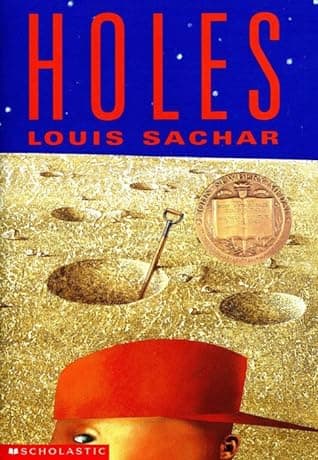
- Holes
Louis Sachar
4.0 (970k) average on GoodreadsChildren'sFeatures a quirky protagonist, elements of legend, and a journey of self-discovery.
- The Giver
Lois Lowry
4.1 (1.8M) average on GoodreadsFantasyWhile both address societal issues for young readers, The Giver uses a dystopian, controlled society to explore themes of conformity and loss of individuality, offering a more philosophical and less character-driven critique. Maniac Magee uses legend and individual action to tackle social divisions in a more optimistic, yet still challenging, realistic setting.
- Bridge to Terabithia
Katherine Paterson
4.0 (445k) average on GoodreadsFantasyBoth novels explore profound themes for young readers, including friendship and navigating difficult circumstances. However, Bridge to Terabithia is set in a more grounded, intensely realistic world dealing with grief and imagination, whereas Maniac Magee incorporates elements of tall tale and almost mythical abilities to address social issues like racial segregation and homelessness.
- Harry Potter and the Sorcerer's Stone
J.K. Rowling
4.5 (7M) average on GoodreadsFantasyRescued from a miserable life under the stairs, an orphaned boy discovers he's a wizard destined for a magical school, where he uncovers a dangerous secret tied to the dark wizard who murdered his parents.
- The Hobbit, or There and Back Again
J.R.R. Tolkien
4.3 (2.9M) average on GoodreadsFantasyA comfort-loving hobbit named Bilbo Baggins is whisked away by a mischievous wizard and a band of dwarves on an unexpected journey to reclaim stolen treasure from a fearsome dragon, discovering courage and a magical ring along the way.





Enjoyed the summary?
A summary gives you the shape of the book. The book itself has the detail, the examples and the voice.
Find Maniac Magee on AmazonAs an Amazon Associate, BookBrief earns from qualifying purchases. How we're funded