

Synopsis
Covers the whole plot, including the ending.
- Difficulty
- Medium
- Pacing
- Moderate
- Mood
- Atmospheric, Suspenseful, Dark, Disturbing, Reflective
- Read it if
- You are interested in allegorical tales about the dangers of fascism and the power of charismatic demagogues, or enjoy psychological novellas with a dark, suspenseful atmosphere.
- Skip it if
- You prefer lighthearted or straightforward narratives, or are sensitive to themes of manipulation and public humiliation.
Mario and the Magician Plot Summary
Covers the whole plot, including the ending.
Arrival in Torre di Venere
The narrator, his wife, and their two children arrive in Torre di Venere for their summer vacation. They are initially charmed by the town's beauty and relaxed atmosphere. However, they soon feel a growing unease and tension among locals and tourists. A minor incident involving a young Roman nobleman's accidental exposure at the beach causes a strong reaction from Italian authorities, suggesting a rigid social control in the idyllic setting. This early event hints at the suppression of individual freedom that will mark later events, shifting the holiday from pleasant to disquieting.
The Incident at the Beach
During a day at the beach, the narrator's daughter, Eleonora, is startled by a young Roman nobleman who, while changing, accidentally exposes himself. The incident, though minor, is met with an extreme response from the local community and authorities. The nobleman is publicly shamed and forced to leave the beach, while the narrator's family feels disapproval for witnessing the event. This overreaction shows the rigid social conservatism and oppressive atmosphere that has begun to infiltrate the charming Italian resort town, disturbing the family's peace.
Growing Discomfort
As their stay in Torre di Venere continues, the narrator and his family find their holiday increasingly overshadowed by the town's stifling social climate. The initial charm gives way to discomfort. Locals show nationalistic fervor and suspicion towards foreigners, making the family feel unwelcome. The narrator observes growing intolerance and a lack of genuine joy among the people, contrasting with the carefree vacation they expected. This escalating unease sets the stage for the arrival of Cipolla, whose performance will embody the oppressive forces.
The Arrival of Cipolla
Flyers appear around Torre di Venere, announcing a 'cavalier-magician' named Cipolla. The advertisements are peculiar, suggesting a show less about traditional magic and more about personality and a test of wills. The narrator and his family, despite their unease with the town, decide to attend the performance, partly out of curiosity and partly because there is little else to do. This decision marks a turning point, as Cipolla's show will become the central event for exploring the story's themes of manipulation and power.
The Performance Begins
The narrator and his family attend Cipolla's performance in a packed, stuffy hall. Cipolla enters, a physically imposing and grotesque figure with a whip, a cigarette, and a hunchback. He begins his act not with tricks, but with monologues, boasting about his abilities and subtly insulting the audience. His manner is arrogant and captivating, establishing his dominance. The atmosphere in the hall becomes tense, as the audience is drawn into Cipolla's unsettling world, preparing for his hypnotic displays of power and manipulation.
Cipolla's Hypnotic Control
Cipolla's act moves beyond showmanship as he demonstrates hypnotic powers. He singles out audience members, forcing them to perform ridiculous and humiliating acts against their will. A young man, for instance, is compelled to stick out his tongue repeatedly, to his embarrassment. Another is made to believe he is on a ship and suffers seasickness. Cipolla's power is undeniable, and the audience, though hesitant, falls under his spell, fascinated and disturbed by his ability to strip individuals of their autonomy. The narrator observes this with revulsion and curiosity.
The Humiliation of the Nobleman
In one striking display of power, Cipolla targets a proud Roman nobleman. Through hypnotic suggestion, Cipolla compels the nobleman to dance and make a fool of himself, amusing the crowd and visibly distressing the nobleman once he comes out of the trance. This incident shows Cipolla's sadistic streak and his desire to break the will of those who resist him. The narrator notes the chilling effectiveness of Cipolla's methods, as the nobleman, despite initial resistance, cannot defy the magician's command, deepening the sense of control in the hall.
Mario's Introduction
Among the staff serving refreshments is Mario, a young, good-natured waiter from the town. He is simple, honest, and shy, with quiet dignity. Mario is known to the narrator's family from their stays in Torre di Venere and is fond of Silvestra, a hotel worker. His presence contrasts with Cipolla's manipulative personality, representing a more innocent form of human interaction. Mario's simple nature and unrequited affection for Silvestra set the stage for his tragic role in the story's climax.
Cipolla's Cruelty Towards Mario
Late in the evening, as the audience dwindles, Cipolla singles out Mario. Aware of Mario's affection for Silvestra, Cipolla, through hypnotic power, makes Mario believe he is Silvestra and that she has returned his love. He compels Mario to approach him, embrace him, and kiss him on the cheek. This cruel manipulation is a profound humiliation for Mario, who, in his trance, experiences joy only to be shattered by the realization of what truly happened once he comes to his senses. The audience, including the narrator, watches in horror and fascination.
The Tragic Climax
As Mario awakens from Cipolla's hypnotic spell and realizes his humiliation, the waiter is overcome with shame, betrayal, and rage. The illusion of reciprocated love, cruelly offered and then snatched away, is too much for his innocent nature. In a sudden, desperate act of defiance, Mario pulls out a small pistol and fires it at Cipolla. The magician collapses, dead, amidst the stunned silence of the remaining audience. This violent act serves as a shocking, yet inevitable, conclusion to Cipolla's reign of manipulative power, a moment of rebellion against psychological oppression.
Aftermath and Reflection
Immediately after Cipolla's death, the hall erupts into chaos, but the narrator and his family quickly leave. Later, the narrator reflects on the disturbing events. He understands Mario's act not as criminality, but as a desperate assertion of human dignity against an overwhelming, manipulative force. The beach incident, the oppressive atmosphere of Torre di Venere, and Cipolla's performance all combine into a meditation on unchecked power, the fragility of individual freedom, and how easily people can be led astray or subjugated. The family's holiday ends with unease and a loss of innocence.
Mario and the Magician Characters
The Narrator
Protagonist
An observant and reflective German intellectual on holiday.
The unnamed narrator is a discerning and thoughtful German intellectual, traveling with his wife and two children. He serves as the primary observer and commentator on the events in Torre di Venere. He is initially drawn to the beauty of Italy but quickly becomes disillusioned by the growing nationalism and oppressive social climate. His perspective is one of a detached yet concerned outsider, capable of analyzing the psychological and political undercurrents of the events unfolding around him, particularly Cipolla's performance.
Relationships: Narrator's Wife (Spousal companion, shares observations and concerns); Eleonora (Daughter, her innocence is exposed to the town's harshness); Boy (son) (Son, part of the family unit experiencing the events)
Cipolla
Antagonist
A grotesque and manipulative 'cavalier-magician' with hypnotic powers.
Cipolla is a physically deformed and arrogant stage performer, presenting himself as a 'cavalier-magician.' He is the embodiment of manipulative power, using his hypnotic abilities to dominate and humiliate his audience. He is characterized by his whip, his cigarette, and his relentless, self-aggrandizing monologues. Cipolla revels in breaking down the wills of others, representing the dangerous allure and coercive nature of authoritarian figures. He is cruel, sadistic, and utterly devoid of empathy, deriving pleasure from the subjugation of his victims.
Relationships: Mario (Victim of Cipolla's most cruel and public humiliation); Audience Members (Subjects of his hypnotic control and manipulation)
Mario
Supporting
A simple, good-natured local waiter who becomes Cipolla's final victim.
Mario is a young, unassuming waiter in Torre di Venere, known to the narrator's family for his quiet dignity and simple honesty. He is depicted as a good-hearted, somewhat shy individual with a deep, unrequited affection for a local girl named Silvestra. His innocence and genuine nature make him a stark contrast to Cipolla's calculating malice. Mario's ultimate act of violence is born out of profound humiliation and a desperate assertion of his violated dignity, transforming him from a passive observer into a tragic figure of rebellion.
Relationships: Cipolla (His tormentor, who exploits his deepest affections); Silvestra (Object of his unrequited affection, exploited by Cipolla)
Narrator's Wife
Supporting
The narrator's companion, sharing his observations and concerns.
The narrator's wife is an intelligent and sensitive woman who accompanies him and their children on their holiday. She shares her husband's initial enjoyment of Torre di Venere and later his growing unease and discomfort with the town's atmosphere. She is a perceptive observer in her own right, often echoing or reinforcing the narrator's sentiments. Her presence highlights the family's shared experience of the unsettling events, providing a relatable human element to the intellectual analysis presented by the narrator.
Relationships: The Narrator (Spousal companion, shares observations and concerns); Eleonora (Mother, protective of her children)
Eleonora
Supporting
The narrator's young daughter, whose innocence is exposed to the town's harshness.
Eleonora is the narrator's young daughter, whose innocent encounter at the beach triggers the first significant sign of the town's oppressive social climate. She is a child, and her reactions to the events are primarily emotional and intuitive, reflecting the impact of the unsettling environment on a sensitive young mind. Her experience underscores the vulnerability of innocence in the face of rigid social norms and later, the disturbing spectacle of Cipolla's performance. She represents the potential for corruption and fear in a controlled society.
Relationships: The Narrator (Daughter, her experience is observed and interpreted by her father); Narrator's Wife (Daughter, protected by her mother)
Roman Nobleman
Mentioned
A young man whose accidental exposure at the beach causes a disproportionate scandal.
The Roman nobleman is a minor character whose brief appearance serves as a catalyst for revealing the oppressive nature of Torre di Venere. His accidental exposure while changing at the beach, a trivial incident, is met with extreme public shaming and expulsion by the local authorities. He embodies the individual who inadvertently transgresses societal norms and is swiftly punished, highlighting the rigid moral code and the lack of tolerance prevalent in the town. His humiliation foreshadows the psychological subjugation later inflicted by Cipolla.
Silvestra
Mentioned
A local girl who is the object of Mario's affection.
Silvestra is a young local girl who works at the hotel and is the object of Mario's quiet, unrequited affection. She is not a speaking character, but her presence is significant due to Mario's feelings for her. Cipolla cruelly exploits Mario's love for Silvestra during his performance, making Mario believe that Cipolla is Silvestra returning his affection. She represents the innocent, personal desires that are vulnerable to manipulation by powerful, cynical forces.
Relationships: Mario (Object of his unrequited love)
Mario and the Magician Themes
The Dangers of Authoritarianism and Manipulation
This is the central theme, criticizing the rise of fascism. Cipolla, with his hypnotic control, boasts, and humiliation of individuals, directly mirrors the tactics of fascist dictators. His power comes not from magic, but from psychological coercion and the audience's willingness to surrender their will. The town's earlier overreaction to the Roman nobleman's incident further emphasizes the pervasive nature of oppressive control, where individual freedom is sacrificed for a rigid, nationalistic order. Mario's final act is a desperate, violent assertion against total subjugation.
“For the freedom of the will is a ticklish thing, and it is easy to get in its way.”
The Fragility of Individual Freedom
The story explores how easily individual autonomy can erode, both by overt coercion and by a subtle, pervasive social atmosphere. The narrator's family initially seeks a carefree holiday, but their freedom is gradually curtailed by the town's nationalistic fervor and rigid social codes, ending in the complete subjugation of individuals under Cipolla's spell. The audience's fascination with Cipolla, even as they are humiliated, shows human susceptibility to charismatic authority, even when destructive. The incident with the Roman nobleman shows how quickly personal liberty can be suppressed by collective judgment and authority.
“It was as though the whole air were charged with a sort of nationalistic electricity, and one had to be careful not to draw a spark.”
The Nature of Power and Charisma
Mann examines how power works, especially the kind wielded by charismatic figures like Cipolla. Cipolla's power is not mystical but psychological, based on his ability to read people, exploit their weaknesses, and project absolute authority. His 'magic' is a sophisticated form of mind control and intimidation. The audience, despite initial discomfort, is drawn into his performance, demonstrating the magnetic pull of a strong, sinister personality. This theme examines the psychological mechanisms that allow one individual to dominate and control a group, reflecting the political climate of the time.
“He was a phenomenon, an abnormal manifestation, a human paradox.”
Humiliation and Dignity
The story uses public humiliation to strip individuals of dignity and reinforce Cipolla's power. From the Roman nobleman's shaming to various audience members forced into ridiculous acts, Cipolla systematically breaks down his victims' self-respect. Mario's humiliation is the most profound, as Cipolla exploits his deepest affections. Mario's subsequent violence can be interpreted as a desperate attempt to reclaim his lost dignity, suggesting limits to human endurance under oppression and that dignity's suppression can lead to violent rebellion.
“A man's dignity, a man's honor, a man's love, are things which one does not play with.”
Plot Devices & Literary Techniques
The Unreliable Narrator (Subtly)
The narrator's subjective observations and interpretations color the events.
While not overtly unreliable, the narrator's sophisticated intellectual perspective shapes the reader's understanding of the events. His interpretations of the town's atmosphere, Cipolla's performance, and Mario's actions are filtered through his own biases and intellectual framework. This device encourages the reader to consider the subjective nature of perception and the intellectual's role in interpreting political and social phenomena, making the story more of an allegorical commentary than a simple recounting of facts.
Allegory
Characters and events symbolize broader political and social forces.
The entire novella functions as an allegory for the rise of fascism in Europe. Cipolla explicitly represents the charismatic, manipulative fascist leader (like Mussolini or Hitler), while the audience symbolizes the populace susceptible to such figures. Torre di Venere, with its nationalistic fervor and oppressive atmosphere, stands for a society under authoritarian rule. Mario's act of violence, though tragic, can be seen as a desperate, visceral rebellion against total psychological and political subjugation, symbolizing a last stand for individual freedom.
Foreshadowing
Early incidents hint at the later, more significant conflicts and themes.
The story employs foreshadowing to build a sense of impending dread and to prepare the reader for the climax. The incident with the Roman nobleman at the beach, for example, is a clear early sign of the town's rigid social control and intolerance, foreshadowing Cipolla's later, more extreme acts of humiliation. The growing discomfort of the narrator's family and the peculiar advertisements for Cipolla's show also build tension, hinting that the 'magic' will be more sinister than entertaining, thus preparing the reader for the manipulative and tragic events to come.
Atmosphere and Setting
The physical and social environment reflects the story's themes.
The setting of Torre di Venere initially appears idyllic but quickly devolves into an oppressive, nationalistic environment. The stuffy, overcrowded hall where Cipolla performs further amplifies the sense of confinement and discomfort, mirroring the psychological suffocation experienced by the audience. The oppressive heat and the general sense of unease contribute to the story's overall mood, reflecting the political tensions and claustrophobia of the era. The setting thus becomes a character in itself, embodying the forces that restrict and manipulate.
Mario and the Magician Quotes
“The sea, the sea! Always the sea! The sea is a symbol of eternity, is it not? And of life too, for all life comes from the sea.”
“Freedom, in the last analysis, is only the will to be responsible for oneself.”
“One does not have to be a genius to be able to influence people. One only has to be a little more resolute than they are.”
“He was a man who, if he could not be admired, at least insisted on being taken seriously.”
“But the truth is, the human spirit is a rebellious thing, and it does not like to be dictated to, even by its own will.”
“Hypnosis is nothing more than the art of making another person's will subject to one's own.”
“The atmosphere was charged, not with pleasure, but with a kind of tense, collective expectation.”
“One must have the courage to choose, and the courage to bear the consequences of one's choice.”
“What a strange blend of the comical and the terrifying, this man was!”
“The will, that mysterious, potent force, was being bent and twisted, not by argument or persuasion, but by sheer, insistent pressure.”
“It was a triumph, yes, but a triumph of the will over freedom, of compulsion over spontaneity.”
“There was something deeply unsettling about seeing a human being reduced to a mere puppet, however willing.”
“And the audience, in its collective humiliation, seemed to love it, or at least to be fascinated by it.”
“A sudden, sharp report... the crack of a pistol... then silence.”
Quiz
10 questions on the plot and the characters. Each answer comes with a short explanation.
Question 1
Which specific physical characteristic is repeatedly emphasized about Cipolla's appearance, contributing to his unsettling presence?
- His exceptionally long, white beard.
- His clubfoot and constant cracking of a whip.
- His piercing blue eyes and bald head.
- His unusually small stature and high-pitched voice.
Show answer
B. His clubfoot and constant cracking of a whip. Cipolla's clubfoot and the whip are repeatedly mentioned, highlighting his physical deformity and his instrument of control, both contributing to his imposing and unsettling character.
Question 2
Where does the story 'Mario and the Magician' primarily take place?
- A bustling German city during Oktoberfest.
- A quiet Swiss mountain resort.
- A seaside resort town in Italy.
- A grand opera house in Vienna.
Show answer
C. A seaside resort town in Italy. The story is set in Torre di Venere, a fictional seaside resort town in Italy, which sets the stage for the vacationing family's encounter with Cipolla.
Question 3
What is Mario's profession before he encounters Cipolla?
- He is a waiter at a café.
- He is a fisherman.
- He is a hotel bellhop.
- He is a local musician.
Show answer
A. He is a waiter at a café. Mario is a young, polite waiter at a local café, which is where the narrator's family first observes him.
Question 4
What does Cipolla primarily use to exert his control over the audience during his performance?
- Elaborate stage illusions and magic tricks.
- Hypnotism, suggestion, and psychological manipulation.
- Physical threats and intimidation from assistants.
- Monetary rewards for participation.
Show answer
B. Hypnotism, suggestion, and psychological manipulation. Cipolla's power comes from his ability to hypnotize and manipulate the audience's minds through suggestion and rhetoric, forcing them to perform acts against their will.
Question 5
Which of the following best describes the initial reaction of the narrator and his family to Cipolla's performance?
- They are immediately captivated and entertained.
- They are deeply disturbed and wish to leave, but feel compelled to stay.
- They are amused by his eccentricities and openly laugh.
- They are indifferent and pay little attention to the show.
Show answer
B. They are deeply disturbed and wish to leave, but feel compelled to stay. The narrator and his family find the performance increasingly unsettling and uncomfortable, but a strange compulsion, similar to the audience's, keeps them in their seats.
Question 6
What is the primary thematic parallel that Thomas Mann draws between Cipolla and the political climate of his time?
- The rise of intellectualism and scientific progress.
- The dangers of charismatic authoritarian leaders and their manipulation of the masses.
- The importance of individual freedom and self-expression.
- The decline of traditional cultural values.
Show answer
B. The dangers of charismatic authoritarian leaders and their manipulation of the masses. Cipolla is a clear allegory for fascist dictators like Mussolini and Hitler, demonstrating how charismatic figures can use rhetoric and manipulation to control and subjugate the will of the people.
Question 7
What specific act does Cipolla compel Mario to perform that directly leads to the story's climax?
- To sing a patriotic song.
- To confess a secret about the narrator.
- To embrace Cipolla, believing him to be his beloved Silvestra.
- To dance an elaborate ballroom routine.
Show answer
C. To embrace Cipolla, believing him to be his beloved Silvestra. Cipolla uses hypnotism to make Mario believe he is embracing Silvestra, his sweetheart, but instead, he embraces Cipolla. This profound humiliation and violation of Mario's will triggers his violent reaction.
Question 8
How does the narrator interpret the initial refusal of the young cavalry officer to participate in Cipolla's act?
- As a sign of the officer's superior intellect.
- As a brief, hopeful moment of individual resistance against Cipolla's power.
- As an act of rude defiance that will be punished.
- As a demonstration of Cipolla's limited abilities.
Show answer
B. As a brief, hopeful moment of individual resistance against Cipolla's power. The narrator notes the young officer's initial resistance with a glimmer of hope, seeing it as a potential challenge to Cipolla's absolute control, though it ultimately fails.
Question 9
What symbolic significance does the repeated image of the whip hold in relation to Cipolla's character?
- It represents his past as a circus performer.
- It symbolizes his physical pain and disability.
- It embodies his authority, dominance, and the coercive power he wields over others.
- It signifies his love for animals and training.
Show answer
C. It embodies his authority, dominance, and the coercive power he wields over others. The whip is a constant companion for Cipolla, serving as a powerful symbol of his control, his ability to compel, and the forceful, almost violent, nature of his persuasion.
Question 10
The narrator's decision to stay and observe the entire performance, despite his growing discomfort, reflects what broader human tendency highlighted by Mann?
- The innate human desire for entertainment and spectacle.
- The susceptibility of even critical observers to the allure and compulsion of a powerful, manipulative force.
- The importance of documenting historical events as they unfold.
- The moral obligation to confront injustice directly.
Show answer
B. The susceptibility of even critical observers to the allure and compulsion of a powerful, manipulative force. The narrator, despite his intellectual understanding and moral revulsion, finds himself unable to leave, illustrating how even those who recognize the dangers of fascism can be drawn in or paralyzed by its insidious power.
Mario and the Magician FAQ
What is the basic premise of 'Mario and the Magician'?
'Mario and the Magician' recounts a German family's unsettling vacation in Torre di Venere, Italy, where they witness the hypnotic, manipulative performance of the magician Cipolla. The story culminates in a tragic act of violence during Cipolla's show, deeply disturbing the narrator and highlighting the dark undercurrents of the era.
Who are the main characters in the story?
The main characters include the unnamed narrator, a German father on vacation with his family; Mario, a young, shy waiter at a café who becomes a victim of Cipolla's hypnosis; and Cipolla, the titular magician, a physically deformed but charismatic and domineering showman.
Where does the story take place and what is the significance of the setting?
The story is set in Torre di Venere, a fictional Italian seaside resort. The setting is crucial as it initially presents an idyllic, yet subtly unwelcoming atmosphere that foreshadows the oppressive mood of Cipolla's performance and reflects the growing political tensions in Italy at the time.
What is the inciting incident that leads to the story's climax?
The inciting incident is the family's decision, despite initial reservations and the town's strange atmosphere, to attend Cipolla's late-night magic show. This choice places them directly in the path of Cipolla's manipulative power and sets the stage for the tragic events.
How does the story conclude, and what is the immediate aftermath?
The story concludes with Mario, under Cipolla's hypnotic command, kissing the magician, believing him to be Silvestra. Upon realizing the deception, Mario shoots and kills Cipolla. The immediate aftermath is a stunned silence, followed by a sense of liberation for the audience, though the narrator remains deeply disturbed.
What specific physical characteristics of Cipolla are emphasized, and why are they important?
Cipolla is described with a hunched back, a long, pointed nose, and eyes that dart about. These physical deformities, combined with his elegant attire and imperious manner, create a striking contrast that emphasizes his unnatural power and psychological dominance, making him both repulsive and compelling.
Are there any subtle indications of the political climate of the 1920s and 30s within the narrative?
Yes, the story subtly reflects the political climate through the locals' initial resentment towards the German tourists, the stifling heat, and the general sense of unease and irrationality that pervades Torre di Venere. Cipolla's dictatorial control over his audience directly mirrors the rise of fascist leaders and their rhetoric in Europe.
What is the significance of Cipolla's constant smoking and drinking during his performance?
Cipolla's continuous smoking and drinking of cognac during his show are significant. They symbolize his self-indulgence, his defiance of conventional propriety, and perhaps a desperate attempt to sustain his energy and maintain his control, highlighting his human vulnerabilities beneath his show of power.
How does the narrator's initial dismissal of the children's illness connect to the larger themes?
The narrator's initial dismissal of his children's illness as 'nervousness' connects to the larger themes of denial and the suppression of unease. It mirrors the broader societal tendency to overlook or rationalize growing anxieties and threats, much like Europe's initial response to rising fascism.
How does Cipolla psychologically manipulate his audience?
Cipolla manipulates his audience through a combination of hypnotic suggestion, public humiliation, and an assertive, charismatic stage presence. He preys on their weaknesses, challenges their wills, and uses their collective suggestibility to force them into acts they would otherwise resist, demonstrating his mastery over their minds.
What psychological effect does Cipolla's performance have on the narrator and his family?
Cipolla's performance deeply disturbs the narrator, leaving him with a lasting sense of horror and disgust. His children also experience fear and discomfort, particularly the young girl who tries to leave. The experience shatters their sense of security and exposes them to the unsettling power of irrational control.
Why does Mario, a seemingly gentle character, resort to such extreme violence?
Mario, a shy and gentle waiter, resorts to extreme violence because Cipolla's final hypnotic act, forcing him to kiss the magician under the illusion of it being his beloved Silvestra, represents a profound violation of his personal dignity and romantic ideal. The public humiliation and emotional betrayal break his self-control, leading to a desperate act of rebellion.
How does the story explore the psychology of obedience and free will?
The story powerfully explores the psychology of obedience and free will by depicting how easily individuals can be compelled to surrender their autonomy under a charismatic authority figure. Cipolla's ability to make people perform against their will highlights the fragile boundaries of personal freedom and the dangers of mass suggestibility.
In what ways can Cipolla be interpreted as a symbol of fascism?
Cipolla embodies fascism through his charismatic yet menacing personality, his use of rhetoric and hypnotic control to dominate a crowd, his public humiliation of dissenters, and his ultimate disregard for individual autonomy. He represents the demagogue who seizes power by exploiting the collective will and emotional vulnerabilities of the populace.
Is Mario's act of violence justified, or is it merely another act of compulsion?
This is a point of debate. Some argue Mario's violence is a desperate act of regaining agency and is thus justified as a rebellion against oppression. Others might view it as a final, tragic act of compulsion, a violent outburst triggered by Cipolla's manipulation rather than a fully free choice, leaving the justification ambiguous.
What is the significance of the narrator's final thought that the 'catastrophe' had a 'liberating effect'?
The narrator's final thought is complex. While personally horrified, he acknowledges the 'liberating effect' on the audience, suggesting that Cipolla's death broke the spell of oppression and fear. This reflects the hope that tyrannical regimes, despite their destructive nature, can eventually be overthrown, leading to a collective sense of relief.
How does Mann use the Italian setting to enhance the story's themes?
Mann uses the Italian setting to enhance themes of exoticism, latent hostility, and the rise of fascism. The initial allure of the holiday destination contrasts sharply with the growing sense of unease and the locals' simmering resentment, mirroring Italy's own political climate under Mussolini and the seductive yet dangerous appeal of authoritarianism.
What broader message about human nature does the story convey?
'Mario and the Magician' conveys a profound message about the susceptibility of human nature to manipulation and the fragility of individual will when confronted with powerful, charismatic figures. It warns against the dangers of surrendering personal freedom and highlights the potential for both collective delusion and sudden, violent rebellion.
How does the story's ending, particularly the audience's reaction, contribute to its political allegory?
The audience's reaction to Cipolla's death – a mixture of shock and a 'liberating effect' – strongly contributes to the political allegory. It suggests that while the downfall of a dictator may be violent and disturbing, it can also bring a collective sense of release from oppression, symbolizing the potential for societies to break free from tyrannical control.
About the author
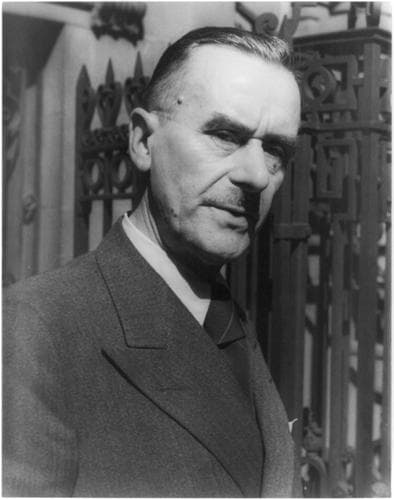
Paul Thomas Mann was a German novelist, short story writer, social critic, philanthropist, essayist, and the 1929 Nobel Prize in Literature laureate. His highly symbolic and ironic epic novels and novellas are noted for their insight into the psychology of the artist and the intellectual. His analysis and critique of the European and German soul used modernized versions of German and Biblical stories, as well as the ideas of Johann Wolfgang von Goethe, Friedrich Nietzsche, and Arthur Schopenhauer.
Similar books
- The Lottery
Shirley Jackson
4.1 (58k) average on GoodreadsScience FictionExplores mob mentality and the dark side of human nature in a seemingly normal setting.
- Animal Farm
George Orwell
4.0 (2.7M) average on GoodreadsPoliticsA political allegory criticizing totalitarianism and the manipulation of power.
- Heart of Darkness
Joseph Conrad
3.4 (415k) average on GoodreadsHistorical FictionFeatures a charismatic, manipulative figure who holds sway over others, with a journey into psychological darkness.
- The Trial
Franz Kafka
4.0 (235k) average on GoodreadsLiterary FictionBoth "Mario and the Magician" and Kafka's "The Trial" explore the individual's struggle against an overwhelming, seemingly arbitrary power. However, Mann's power is embodied in a charismatic human figure (Cipolla), making the oppression more tangible and politically specific, whereas Kafka's power is an inscrutable, bureaucratic system, creating a more existential and absurd form of dread. Mann's critique is more directly political, while Kafka's is more broadly existential and psychological. As scholar Stanley Corngold notes in "Franz Kafka: The Necessity of Form" (1999), Kafka's work often foregrounds the individual's incomprehension of the forces acting upon them, a theme less central to Mann's more direct allegory of political subjugation.
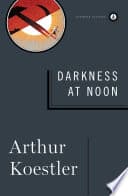
- Darkness at Noon
Arthur Koestler
4.0 (26k) average on GoodreadsPoliticsKoestler's "Darkness at Noon" (1940) also critiques totalitarian regimes, specifically Stalinism, by focusing on the psychological manipulation and forced confessions within a political system. While Mann's novella depicts the initial seduction and coercion by a charismatic figure, Koestler delves into the internalized logic and ultimate destruction of the individual under a fully established totalitarian state. Both highlight the erosion of individual identity and moral integrity, but Koestler's work is a more explicit and detailed examination of political purges and the psychology of the accused, whereas Mann's is a more symbolic and cautionary tale about the preconditions for such regimes. Literary critic George Steiner, in his essays on 20th-century literature, often positions Koestler's work as a direct, albeit fictionalized, documentation of political terror, contrasting it with Mann's more veiled, artistic critique.
- Nineteen Eighty-Four
George Orwell
4.2 (5.5M) average on GoodreadsFictionWinston Smith dreams of truth and rebellion in a world where Big Brother watches all, but he confronts the terrifying power of a regime that controls not just actions, but thoughts.





Enjoyed the summary?
A summary gives you the shape of the book. The book itself has the detail, the examples and the voice.
Find Mario and the Magician on AmazonAs an Amazon Associate, BookBrief earns from qualifying purchases. How we're funded