

Synopsis
Covers the whole plot, including the ending.
- Difficulty
- Medium
- Pacing
- Moderate
- Mood
- Dark, Satirical, Thought-provoking, Bleak
- Read it if
- You enjoy political allegories, satires of totalitarianism, or fables with profound moral lessons. Perfect for readers interested in the dangers of unchecked power and propaganda.
- Skip it if
- You prefer lighthearted stories without political commentary or find allegorical narratives difficult to engage with.
Animal Farm Plot Summary
Covers the whole plot, including the ending.
Old Major's Dream and Call to Rebellion
At Manor Farm, animals gather to hear old Major, a respected boar, tell about a dream and a vision of a world without humans. He says humans exploit animals, taking their labor without giving anything back. Major introduces 'Beasts of England' as an anthem for their future revolution. He says 'All animals are equal.' He urges them to overthrow Mr. Jones, their careless farmer, and create a society where animals rule themselves. Major dies shortly after this speech, leaving the other animals, especially the pigs, to plan the revolution.
The Rebellion and Establishment of Animal Farm
Inspired by Old Major, the animals, led by pigs Snowball and Napoleon, successfully revolt against Mr. Jones. One evening, Jones forgets to feed them and tries to whip them, starting the uprising. The animals drive Jones and his men off the farm. They destroy human symbols like whips and harnesses. They rename the farm 'Animal Farm.' They create the Seven Commandments, painted on the barn wall. The most important ones are 'Whatever goes upon two legs is an enemy' and 'All animals are equal.' The pigs, being the smartest, take charge of farm work and educating the others.
Early Success and the Rise of Pig Leadership
In the early days, Animal Farm does well. The animals work harder than before, motivated by their freedom, and have a good harvest. Boxer, the strong carthorse, becomes an excellent worker, saying 'I will work harder.' Snowball organizes committees for animal welfare and education, including a literacy class where most animals learn to read some words. However, the pigs, especially Napoleon and Snowball, quickly become leaders, keeping the milk and apples for themselves. They say it is for their brainwork. This starts their shift from the initial idea of equality.
Napoleon's Coup and Snowball's Expulsion
Snowball and Napoleon's disagreements grow, especially about building a windmill for electricity and easier labor. Snowball strongly supports the windmill, showing detailed plans. Napoleon shows he does not care for it. During a main debate about the windmill, Napoleon sends out nine fierce dogs he had secretly raised. They chase Snowball off the farm. With Snowball gone, Napoleon says he is the only leader. He stops the Sunday morning meetings and debates. He announces that a special committee of pigs will make all decisions, ending the animals' say in things.
The Windmill Project and Napoleon's Propaganda
After Snowball leaves, Napoleon immediately says the windmill will be built. He claims it was his idea and Snowball just stole his plans. Squealer, Napoleon's minister of propaganda, convinces the other animals of this lie. He twists facts and calls Snowball a traitor. The animals, especially Boxer, work very hard to build the windmill, facing many problems. When a storm destroys the half-built windmill, Napoleon blames Snowball. He says Snowball is a saboteur working with Mr. Frederick and Mr. Pilkington, the neighboring farmers. This event further supports Napoleon's story of an outside enemy and justifies more control.
Purges and the Reign of Terror
As food runs low and conditions worsen, Napoleon becomes more paranoid and cruel. He holds public confessions and executions. Various animals, including pigs, hens, and sheep, are forced to confess to crimes they supposedly did under Snowball's influence or for human farmers. Napoleon's dogs brutally kill these 'traitors' in front of the horrified animals. These killings create fear and remove any possible opposition, giving Napoleon complete power. The song 'Beasts of England' is banned. A new song praising Napoleon replaces it, as the old song is deemed unnecessary now that the revolution is 'finished.'
Trade with Humans and Betrayal
Despite the initial rule against trading with humans, Napoleon announces that Animal Farm will start trading with neighboring farms for needed supplies, especially for the windmill. Mr. Whymper, a human lawyer, acts as a go-between. The animals are uneasy, but Squealer manipulates them. He says no such rule ever existed or that it was misunderstood. Napoleon sells timber to Mr. Frederick, a cruel farmer. Frederick pays with fake money. This betrayal leads to a violent attack on Animal Farm. The windmill is destroyed a second time, and several animals are killed or hurt.
Boxer's Demise and the Shifting Commandments
Boxer, the most loyal and hardworking animal, collapses from overwork and injury. The pigs promise to send him to a veterinary hospital. However, Benjamin, the cynical donkey, reads the side of the van that takes Boxer away. He realizes it belongs to a knacker, a horse slaughterer. Despite Benjamin's frantic warnings, the other animals are too late. Squealer quickly invents a story that Boxer died peacefully in the hospital, getting the best care. Meanwhile, Squealer repeatedly changes the Seven Commandments on the barn wall to justify the pigs' actions. For example, 'No animal shall drink alcohol' becomes 'No animal shall drink alcohol TO EXCESS.'
The Pigs Become Human-like
Years pass, and most animals who remembered the Rebellion have died. The farm is richer, but only the pigs and dogs benefit. They live in luxury while other animals remain overworked and underfed. The pigs openly adopt human customs: they walk on two legs, carry whips, wear clothes, and drink alcohol. Squealer teaches the sheep to chant 'Four legs good, two legs BETTER!' The last commandment on the barn wall changes to one principle: 'ALL ANIMALS ARE EQUAL BUT SOME ANIMALS ARE MORE EQUAL THAN OTHERS.' This final change shows the complete corruption of the revolution's first ideals.
The Final Betrayal: Animal Farm Becomes Manor Farm
The novel ends with a dinner party at Animal Farm. Napoleon hosts human farmers from neighboring properties. He announces that Animal Farm will go back to its original name, Manor Farm. He says the animals will no longer call each other 'Comrade.' He praises the human farmers for their efficiency and says he stands with them, especially in their struggle against their own lower classes. The other animals, led by Benjamin, look through the farmhouse window. They watch the pigs and humans arguing over a card game, unable to tell them apart. The pigs have become identical to the oppressive humans they replaced. This signifies the revolution's complete failure to achieve equality and freedom.
Principal Figures
Napoleon
Antagonist
A large, fierce-looking Berkshire boar who becomes the tyrannical dictator of Animal Farm.
Napoleon is cunning, ruthless, and power-hungry. From the outset, he shows little interest in Old Major's ideals, focusing instead on consolidating his own authority. He uses force and intimidation, particularly through his trained dogs, to eliminate rivals like Snowball and suppress dissent. Napoleon is a master manipulator, relying on Squealer to spread propaganda and rewrite history. He systematically dismantles the principles of Animalism, gradually adopting human vices and ultimately becoming indistinguishable from the oppressive humans the animals overthrew. His actions are driven solely by a desire for absolute control and personal luxury.
Relationships: Snowball (Rival, then enemy); Squealer (Propaganda minister, loyal subordinate); Boxer (Exploited worker, victim); Dogs (Personal guard, enforcers)
Snowball
Supporting
A lively, intelligent pig who is Napoleon's main rival for leadership.
Snowball is an idealistic and eloquent speaker, genuinely committed to the principles of Animalism and the welfare of the animals. He is a brilliant strategist, evident in his plans for the Battle of the Cowshed and the windmill. He attempts to educate the other animals and organize various committees to improve their lives. However, he lacks Napoleon's ruthlessness and political cunning, making him vulnerable to Napoleon's power play. His expulsion by Napoleon marks a turning point in the farm's descent into tyranny, and he is subsequently used as a scapegoat for all of Animal Farm's problems.
Relationships: Napoleon (Rival); Old Major (Inspired by his teachings); Boxer (Respected by Boxer for his intelligence)
Boxer
Supporting
A strong, hardworking, and loyal carthorse, dedicated to Animal Farm.
Boxer is the epitome of the exploited working class. He is incredibly strong, diligent, and blindly loyal, adopting the mottos 'I will work harder' and 'Napoleon is always right.' His immense physical strength is crucial for the farm's success, particularly in building the windmill. Boxer is kind-hearted and naive, unable to grasp the pigs' manipulations or the true nature of Napoleon's regime. His unwavering faith in the revolution and its leaders, despite mounting evidence of their corruption, ultimately leads to his tragic betrayal and death, serving as a poignant symbol of the proletariat's exploitation.
Relationships: Napoleon (Loyal follower); Clover (Close friend); Benjamin (Friend, recipient of Benjamin's warnings)
Squealer
Supporting
A small, fat pig who serves as Napoleon's chief propagandist and mouthpiece.
Squealer is exceptionally articulate and persuasive, capable of twisting facts, rewriting history, and convincing the other animals of even the most blatant lies. He uses sophisticated rhetoric, emotional appeals, and threats (often referencing the return of Mr. Jones or the danger of Snowball) to justify Napoleon's increasingly tyrannical actions and privileges. He is instrumental in maintaining the pigs' control by manipulating the less intelligent animals and constantly revising the Seven Commandments. Squealer represents the propaganda machine in totalitarian regimes, controlling information and public perception.
Relationships: Napoleon (Loyal enforcer of his will); Other animals (Manipulator, deceiver)
Old Major
Supporting
A wise, old boar whose revolutionary dream inspires the animals.
Old Major is the catalyst for the revolution. He is a revered figure among the animals, respected for his age and wisdom. His speech about the tyranny of humans and his vision of an animal-ruled utopia, encapsulated in the song 'Beasts of England,' provides the ideological foundation for Animalism. Although he dies early in the story, his ideas continue to influence the animals and serve as a benchmark against which the pigs' later corruption is measured. He represents the theoretical founder of the revolution, whose pure ideals are later perverted.
Relationships: All animals (Inspirational leader, revered elder)
Benjamin
Supporting
A cynical, skeptical donkey who remains detached and observes the farm's decline.
Benjamin is the oldest animal on the farm and one of the few who remembers life before the Rebellion. He is intelligent and literate but chooses not to use his abilities to influence events, believing that 'life would go on as it had always gone on—that is, badly.' He is deeply cynical about the revolution's prospects from the start and offers few opinions, though he is fiercely loyal to Boxer. Benjamin represents the disillusioned intellectual who recognizes the corruption but is unwilling or unable to act, only showing emotion when Boxer is taken away.
Relationships: Boxer (Closest friend); Other animals (Distant observer)
Clover
Supporting
A kind and motherly mare, often troubled by the changes on the farm.
Clover is a loyal, strong, and compassionate mare, a close friend to Boxer. She is one of the more observant animals, often sensing that the pigs are altering the commandments or betraying the original ideals. However, she lacks the intelligence or assertiveness to articulate her concerns effectively or challenge the pigs' authority. Her inner turmoil and confusion reflect the common animal's struggle to reconcile the pigs' actions with the principles of Animalism. She represents the well-meaning but ultimately powerless working class.
Relationships: Boxer (Close friend); Muriel (Fellow literate animal)
Mr. Jones
Antagonist
The original human owner of Manor Farm, a negligent and cruel farmer.
Mr. Jones is depicted as an irresponsible and alcoholic farmer who mistreats his animals, fails to feed them properly, and abuses them physically. His negligence and cruelty are the direct cause of the animals' rebellion. After being overthrown, he attempts to reclaim his farm but is ultimately unsuccessful. He represents the oppressive, autocratic rule that the revolution seeks to overthrow, and his potential return is often used by Squealer to scare the animals into submission.
Relationships: Animals (Oppressor); Mr. Frederick, Mr. Pilkington (Fellow farmers)
Moses
Mentioned
A tame raven who tells stories of a mystical 'Sugarcandy Mountain.'
Moses is a spy for Mr. Jones and tells the animals tales of a paradise called Sugarcandy Mountain, where animals go when they die. He represents organized religion and the promise of an afterlife, which can distract the oppressed from their present suffering and discourage rebellion. Initially, the pigs try to suppress his stories, but later, Napoleon allows him to return, finding his tales useful for pacifying the weary and hopeless animals, suggesting that religion can be a tool for social control.
Relationships: Mr. Jones (Pet, informer); Animals (Preacher of an afterlife)
Themes & Insights
The Corruption of Ideals and Power
The main theme looks at how revolutionary ideals, at first good and fair, can be corrupted by those who gain power. Old Major's vision of 'All animals are equal' is slowly taken apart by Napoleon and the pigs. They use the animals' ignorance and fear to create a totalitarian government. The slow changes to the Seven Commandments, the pigs' growing privileges, and their final change into human-like rulers clearly show how absolute power corrupts completely, turning liberators into rulers.
“All animals are equal, but some animals are more equal than others.”
Propaganda and Manipulation
Orwell shows how propaganda helps maintain totalitarian control. Squealer, Napoleon's speaker, skillfully uses words, fear, and rewriting history to control what the animals believe. He convinces them Snowball is a traitor, that Napoleon's decisions are always right, and that their living conditions are getting better, even when facts show otherwise. The constant changes to the Seven Commandments and blaming Snowball for all failures show how a government can twist truth to justify its actions and stop disagreement, keeping people unaware and obedient.
“Surely, comrades, you do not want Jones back?”
Ignorance and Apathy of the Oppressed
The novel shows the dangers of an uneducated and unquestioning population. Most animals, because they are not smart, cannot read, or are blindly loyal (like Boxer), cannot see the pigs' lies. They accept Squealer's explanations without question. They forget the original commandments, and fear easily sways them. Benjamin, the cynical donkey, is the smart one who sees the truth but chooses to do nothing, which helps the government succeed. This theme shows how the oppressed can accidentally help their own control by not thinking critically or acting together.
“Four legs good, two legs bad.”
Class Stratification and Exploitation
Despite the first promise of equality, Animal Farm quickly develops a new class system. The pigs become the smart elite, keeping privileges and resources for themselves. The other animals, especially the horses and hens, become the working class. The pigs live well, eat the best food, and avoid manual labor, while the working animals labor hard and suffer. This mirrors human society's class structures, showing how even a revolutionary movement can recreate the very systems of exploitation it tried to end.
“The animals worked like slaves. But they were happy in their work; they grudged no effort or sacrifice, well aware that everything that they did was for the benefit of themselves and those of their kind, not for a pack of idle, thieving human beings.”
The Nature of Totalitarianism
Animal Farm is an allegory for how totalitarian states rise and work. It shows key features: a powerful leader (Napoleon), a propaganda system (Squealer), a secret police (the dogs), the use of scapegoats (Snowball), killings, rewriting history, and stopping individual thought. The farm's change from a freeing revolution to a harsh dictatorship, where individual freedom is crushed and the government controls everything, warns about totalitarianism's methods and dangers.
“No animal must ever tyrannise over his own kind. Weak or strong, clever or simple, we are all brothers. No animal must ever kill any other animal. All animals are equal.”
Plot Devices & Literary Techniques
Allegory
The entire narrative acts as a symbolic representation of the Russian Revolution and the rise of the Soviet Union.
Animal Farm functions as an extended allegory, where characters and events directly parallel historical figures and occurrences of the Russian Revolution and the subsequent Stalinist era. Mr. Jones represents Tsar Nicholas II, Old Major is a blend of Karl Marx and Lenin, Napoleon symbolizes Joseph Stalin, Snowball embodies Leon Trotsky, and the dogs represent the secret police (KGB). The rebellion, the building of the windmill, and the purges all correspond to specific historical events, allowing Orwell to critique totalitarianism through a seemingly simple animal fable.
Fable
A moral tale featuring anthropomorphic animals to convey a political message.
The story is structured as a fable, using animals with human characteristics and speech to deliver a clear moral and political lesson. By detaching the narrative from specific human characters, Orwell creates a universal commentary on power, corruption, and oppression that transcends its immediate historical context. The animal characters simplify complex political dynamics, making the underlying critique of totalitarianism accessible and impactful, while also giving the story a timeless quality.
Satire
The use of humor, irony, or exaggeration to expose and criticize political folly and vice.
Orwell employs satire throughout the novel to expose the hypocrisy and brutality of totalitarian regimes. The pigs' gradual adoption of human vices, the absurdity of Squealer's propaganda, and the ultimate transformation of the farm's motto to 'All animals are equal, but some animals are more equal than others' are all examples of biting satire. This device allows Orwell to make his political critique both entertaining and devastatingly effective, highlighting the inherent contradictions and moral bankruptcy of the system he condemns.
Symbolism
Objects and characters representing broader ideas or historical entities.
Numerous elements in Animal Farm carry symbolic weight. The 'Seven Commandments' symbolize the initial revolutionary ideals and constitution, which are progressively eroded. The 'windmill' represents the grand industrial projects and economic plans of the Soviet Union, often built at great cost to the populace. 'Sugarcandy Mountain' symbolizes the promise of an afterlife or religious solace, used to pacify the exploited. The 'farmhouse' symbolizes the seat of power and luxury, forbidden to the common animals but eventually occupied by the pigs, signifying their complete corruption.
Animal Farm Quotes
“All animals are equal, but some animals are more equal than others.”
“Four legs good, two legs bad.”
“Man is the only creature that consumes without producing.”
“The creatures outside looked from pig to man, and from man to pig, and from pig to man again; but already it was impossible to say which was which.”
“I will work harder.”
“No one believes more firmly than Comrade Napoleon that all animals are equal. He would be only too happy to let you make your decisions for yourselves. But sometimes you might make the wrong decisions, comrades, and then where should we be?”
“Windmill or no windmill, he said, life would go on as it had always gone on—that is, badly.”
“The only good human being is a dead one.”
“If she could have spoken her thoughts, it would have been to say that this was not what they had aimed at when they had set themselves years ago to work for the overthrow of the human race.”
“Donkeys live a long time. None of you has ever seen a dead donkey.”
“The truest happiness, he said, lay in working hard and living frugally.”
“It was a pig walking on his hind legs.”
“Man serves the interests of no creature except himself.”
“Napoleon is always right.”
Quiz
10 questions on the plot and the characters. Each answer comes with a short explanation.
Question 1
What event initially inspires the animals of Manor Farm to rebel against Mr. Jones?
- Mr. Jones sells Old Major to the knacker
- Mr. Jones and his men forget to feed the animals for an entire day
- Mr. Jones announces he will slaughter all the pigs
- Mr. Jones decides to sell the farm to another human
Show answer
B. Mr. Jones and his men forget to feed the animals for an entire day The rebellion is triggered when Mr. Jones gets drunk and forgets to feed the animals, leading them to break into the store-shed themselves. This moment of neglect after Old Major's revolutionary speech provides the immediate catalyst for the animals to take control.
Question 2
Which animal is known for the motto 'I will work harder' and represents the exploited working class?
- Benjamin the donkey
- Boxer the horse
- Mollie the mare
- Clover the mare
Show answer
B. Boxer the horse Boxer, the loyal and strong cart-horse, adopts 'I will work harder' as his personal motto. He represents the dedicated but naive working class who are exploited by the ruling pigs, ultimately being sent to the knacker when he is no longer useful.
Question 3
What is the final, revised version of the Seven Commandments that appears on the barn wall at the end of the novel?
- All animals are equal, but some animals are more equal than others
- Four legs good, two legs better
- No animal shall kill any other animal without cause
- All animals are comrades
Show answer
A. All animals are equal, but some animals are more equal than others By the end, the pigs have completely corrupted the original Seven Commandments. The single remaining commandment encapsulates the novel's central irony: the pigs have become exactly like the humans they overthrew, creating a hierarchy where they claim superiority while pretending to maintain equality.
Question 4
Which character secretly changes the Seven Commandments to justify the pigs' actions throughout the story?
- Napoleon
- Squealer
- Snowball
- Minimus
Show answer
B. Squealer Squealer, Napoleon's propagandist, is responsible for secretly altering the commandments painted on the barn wall. He does this gradually to accommodate the pigs' increasingly human-like behavior, such as sleeping in beds and drinking alcohol, while maintaining the illusion that the original principles are intact.
Question 5
What happens to Snowball after he presents his plans for the windmill?
- He is elected as the new leader of Animal Farm
- He is chased off the farm by Napoleon's dogs
- He is given charge of building the windmill
- He voluntarily leaves to start another revolution
Show answer
B. He is chased off the farm by Napoleon's dogs After Snowball passionately argues for his windmill project, Napoleon signals his secretly trained attack dogs to chase Snowball off the farm. This marks Napoleon's consolidation of power and the end of any pretense of democratic debate among the animals.
Question 6
Why do the pigs begin walking on two legs and carrying whips by the end of the novel?
- To show they have evolved beyond the other animals
- To more efficiently manage the farm's operations
- To demonstrate they have become indistinguishable from the human oppressors they overthrew
- To intimidate neighboring farms into trade agreements
Show answer
C. To demonstrate they have become indistinguishable from the human oppressors they overthrew The pigs' adoption of human characteristics—walking upright, wearing clothes, carrying whips—symbolizes the complete betrayal of the revolution's ideals. They have become the new ruling class, exploiting the other animals just as Mr. Jones did, illustrating Orwell's warning about how revolutionary movements can degenerate into new forms of tyranny.
Question 7
What is the significance of the sheep's altered maxim 'Four legs good, two legs better' at the end?
- It shows the sheep have become more intelligent than the pigs
- It signals the pigs' complete ideological reversal and embrace of human ways
- It indicates the animals have decided to welcome humans back to the farm
- It represents a new compromise between animals and humans
Show answer
B. It signals the pigs' complete ideological reversal and embrace of human ways The sheep, who previously bleated 'Four legs good, two legs bad' to drown out dissent, now chant 'Four legs good, two legs better' as the pigs walk upright. This demonstrates how the pigs have manipulated language and ideology to justify their transformation into human-like oppressors, completing the cycle of corruption.
Question 8
Which historical figure does Old Major primarily represent in Orwell's allegory of the Russian Revolution?
- Vladimir Lenin
- Karl Marx
- Leon Trotsky
- Joseph Stalin
Show answer
B. Karl Marx Old Major represents Karl Marx, the philosopher whose ideas inspired the communist revolution. Like Marx, Old Major provides the theoretical framework for rebellion (through his speech about animalism) but dies before seeing the revolution implemented. His skull is later displayed, paralleling how communist regimes preserved Marx's legacy while distorting his ideas.
Question 9
What is the true fate of Boxer after he collapses while working on the windmill?
- He recovers and retires to a special pasture as promised
- He is secretly sold to the knacker by the pigs, who use the money to buy whiskey
- He is given a hero's funeral on the farm
- He is treated by a veterinarian and becomes an advisor to Napoleon
Show answer
B. He is secretly sold to the knacker by the pigs, who use the money to buy whiskey When Boxer collapses, Squealer claims he's being taken to a veterinary hospital. Benjamin reads the side of the van and reveals it says 'Horse Slaughterer and Glue Boiler.' The pigs sell Boxer to the knacker, using the money to buy a case of whiskey. This represents the ultimate betrayal of the working class by the revolutionary leaders.
Question 10
How does Orwell use the character of Benjamin the donkey to comment on intellectual responses to totalitarianism?
- He represents intellectuals who actively resist tyranny through organized opposition
- He symbolizes cynical intellectuals who recognize corruption but remain passive, believing nothing ever really changes
- He demonstrates how educated animals can successfully negotiate with the pigs for better conditions
- He shows how intellectuals inevitably become collaborators with oppressive regimes
Show answer
B. He symbolizes cynical intellectuals who recognize corruption but remain passive, believing nothing ever really changes Benjamin is the oldest animal who can read and understands what's happening but remains aloof, repeating 'Donkeys live a long time' and 'Life would go on as it had always gone on.' He represents intellectuals who see through propaganda and corruption but take no action, either from cynicism or the belief that resistance is futile—a critique of passive intellectualism in the face of tyranny.
Animal Farm FAQ
What is 'Animal Farm' about?
'Animal Farm' is an allegorical novella about a group of farm animals who overthrow their human owner, Mr. Jones, to establish a self-governing society based on the principles of Animalism. Led initially by the pigs Snowball and Napoleon, the farm descends into a totalitarian regime where the pigs become indistinguishable from the humans they originally rebelled against, culminating in the famous corruption of their founding principle: 'All animals are equal, but some animals are more equal than others.'
Why should I read 'Animal Farm'?
You should read 'Animal Farm' because it's a timeless political satire that uses a simple farmyard fable to explore complex themes like revolution, corruption, propaganda, and the cyclical nature of tyranny. Its allegory of the Russian Revolution and Stalinist Russia remains relevant to any society where power is abused, making it a sharp critique of totalitarianism that resonates across generations.
What is the background/setting of 'Animal Farm'?
The story is set on Manor Farm in England, which the animals rename Animal Farm after their rebellion. The setting evolves from a neglected farm under Mr. Jones to a supposedly utopian animal-run society, and finally to a regime where the pigs live in the farmhouse and trade with humans, mirroring the farm's original oppressive state.
What are the most memorable quotes from 'Animal Farm'?
Key quotes include 'All animals are equal, but some animals are more equal than others,' which highlights the hypocrisy of the pigs' rule; 'Four legs good, two legs bad,' a simplistic slogan used to control the animals; and 'Napoleon is always right,' showing the cult of personality around the pig leader. These lines encapsulate the book's themes of propaganda and corruption.
What writing style does George Orwell use in 'Animal Farm'?
Orwell employs a clear, concise, and accessible fable-like style, using simple language and animal characters to convey complex political ideas. The narrative is straightforward and satirical, with dark humor and irony, making it an effective allegory that can be understood by readers of all ages while delivering a powerful critique of totalitarianism.
What minor details add significant meaning to 'Animal Farm'?
Minor details like the changing of the Seven Commandments on the barn wall, such as 'No animal shall sleep in a bed' being amended to 'with sheets,' subtly show the pigs' gradual corruption. The use of Squealer's persuasive speeches and the dogs' intimidation tactics highlight how propaganda and fear maintain control, adding depth to the allegory of authoritarian regimes.
What are some subtle foreshadowing moments in 'Animal Farm'?
Early foreshadowing includes the pigs taking the milk and apples for themselves, claiming it's for the farm's benefit, which hints at their future greed. Napoleon's raising of the puppies in secret to become his private guard dogs foreshadows his use of force to seize power, while the initial debates between Snowball and Napoleon suggest the coming power struggle.
What unexpected character connections exist in 'Animal Farm'?
Unexpected connections include the pigs forming alliances with humans like Mr. Pilkington by the end, showing they've become the very oppressors they rebelled against. Boxer's unwavering loyalty to Napoleon, despite being sent to the knacker's, highlights the tragic exploitation of the working class, while Moses the raven's tales of Sugarcandy Mountain parallel how religion can be used to pacify the masses.
What are unspoken character motivations in 'Animal Farm'?
Napoleon's unspoken motivation is a lust for power and control, masked by claims of working for the farm's good. Squealer is driven by a desire to maintain his privileged position through manipulation, while Boxer is motivated by a naive belief in the revolution's ideals, ignoring the pigs' corruption. These hidden drives fuel the plot's descent into tyranny.
What psychological complexities do characters exhibit in 'Animal Farm'?
Characters show complexities like Napoleon's strategic cunning combined with paranoia, leading to purges like Snowball's expulsion. Boxer represents blind loyalty and cognitive dissonance, as he repeats 'Napoleon is always right' despite evidence of betrayal. The sheep's mindless chanting of slogans illustrates how groupthink can enforce conformity, while Benjamin the donkey's cynical detachment masks a deep-seated pessimism about change.
What are the major emotional turning points in 'Animal Farm'?
Key emotional turning points include the animals' initial euphoria after overthrowing Mr. Jones, followed by disillusionment as the pigs take control. The betrayal of Boxer, who is sold to the knacker's despite his loyalty, evokes shock and sadness. The final scene, where the pigs and humans are indistinguishable, leaves a sense of despair and cyclical oppression, marking the complete failure of the revolution.
How do relationship dynamics evolve in 'Animal Farm'?
Relationships shift from unity during the rebellion to division as the pigs seize power. Napoleon and Snowball's rivalry ends with Snowball's exile, establishing Napoleon's dictatorship. The pigs gradually alienate the other animals through exploitation, such as reducing rations while living luxuriously. By the end, the pigs form alliances with humans, betraying the original animal solidarity and creating a new hierarchy mirroring the old one.
Which parts of 'Animal Farm' remain ambiguous or open-ended?
Ambiguities include the fate of Snowball after his expulsion—whether he survives or is killed is left unclear. The ultimate outcome for the animals under the pigs' rule is open-ended, suggesting a cycle of oppression without resolution. Benjamin's silent resignation at the end leaves his future actions uncertain, hinting at passive acceptance rather than rebellion.
What are controversial scenes or decisions in 'Animal Farm'?
Controversial scenes include the brutal execution of animals accused of conspiring with Snowball, which mirrors Stalin's purges and raises ethical questions about revolutionary violence. Napoleon's decision to trade with humans and adopt their vices, like drinking alcohol, sparks debate on whether corruption is inevitable in power structures. Boxer's betrayal and death are often criticized as a harsh critique of blind loyalty.
'Animal Farm' ending explained: how it ends & what it means
The ending shows the pigs and humans playing cards together, with the animals outside unable to distinguish between them, symbolizing that the pigs have become the new oppressors. This signifies the complete corruption of the revolution's ideals, suggesting that power corrupts absolutely and that totalitarian regimes often replicate the systems they overthrow. It serves as a warning about the cyclical nature of tyranny and the fragility of freedom.
How does 'Animal Farm' critique propaganda and manipulation?
The book critiques propaganda through characters like Squealer, who twists the truth and revises history to justify the pigs' actions, such as altering the Seven Commandments. The sheep's mindless repetition of slogans like 'Four legs good, two legs bad' shows how simplified messages can control masses, while Napoleon's use of fear, via the dogs, demonstrates how manipulation and intimidation sustain authoritarian rule.
What role do the Seven Commandments play in the story's development?
The Seven Commandments, initially representing Animalism's ideals, are gradually altered by the pigs to justify their increasing privileges, such as changing 'No animal shall drink alcohol' to 'No animal shall drink alcohol to excess.' This manipulation symbolizes how revolutionary principles can be corrupted by those in power, serving as a central metaphor for the erosion of ethics in totalitarian regimes.
How does 'Animal Farm' reflect historical events like the Russian Revolution?
The allegory mirrors the Russian Revolution, with Old Major representing Karl Marx/Lenin, Snowball as Trotsky, and Napoleon as Stalin. Events like the Battle of the Cowshed parallel the Russian Civil War, while the pigs' purges and propaganda reflect Stalin's Great Purge and control of media. The windmill project symbolizes industrialization efforts like the Five-Year Plans, showing how ideals can be co-opted for oppressive ends.
About the author
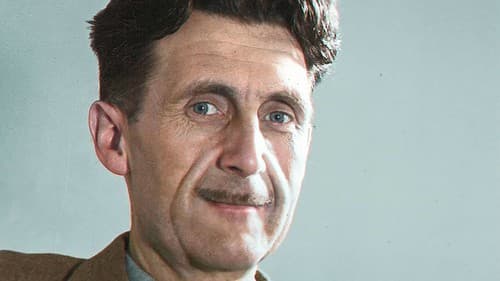
Eric Arthur Blair, better known by his pen name George Orwell, was an English novelist, essayist, journalist, and critic. His work is characterised by lucid prose, social criticism, opposition to totalitarianism, and support of democratic socialism.
Similar books
- Nineteen Eighty-Four
George Orwell
4.2 (5.5M) average on GoodreadsFictionExplores themes of totalitarianism, surveillance, and manipulation of truth with a similarly dystopian tone.
- Lord of the Flies
William Golding
3.7 (2.3M) average on GoodreadsYoung AdultExamines the corruption of power and the descent into savagery within a closed society.
- Brave New World
Aldous Huxley
4.0 (1.4M) average on GoodreadsFantasyA classic dystopian novel that critiques societal control and loss of individuality, though through different mechanisms.
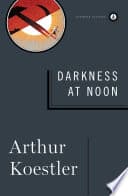
- Darkness at Noon
Arthur Koestler
4.0 (26k) average on GoodreadsPoliticsWhile both critique totalitarianism, Animal Farm offers a broader, more accessible allegorical critique of the systemic corruption of revolutionary ideals. Koestler's work delves deeper into the psychological torment and ideological struggles of individuals within a totalitarian system, making it less direct in its allegorical structure and more focused on internal conflict.
- 1984
George Orwell
4.2 (3.1M) average on GoodreadsPoliticsIn a future where surveillance and thought control are absolute, a man's search for truth clashes with the Party, showing that hope can be a form of rebellion.
- Freakonomics: A Rogue Economist Explores the Hidden Side of Everything
Steven D. Levitt
4.0 (709k) average on GoodreadsBusinessThis book uses economic principles to reveal the surprising incentives behind everything from drug dealing and real estate to cheating teachers and the decline of crime.





Enjoyed the summary?
A summary gives you the shape of the book. The book itself has the detail, the examples and the voice.
Find Animal Farm on AmazonAs an Amazon Associate, BookBrief earns from qualifying purchases. How we're funded