
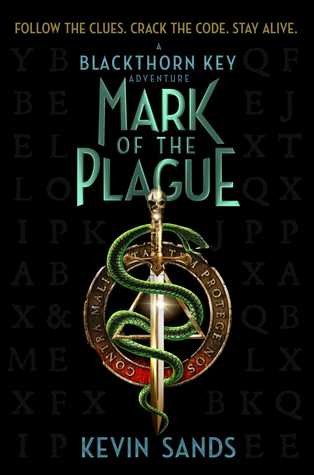
Synopsis
Covers the whole plot, including the ending.
- Difficulty
- Medium
- Pacing
- Fast
- Mood
- Suspenseful, Adventurous, Mysterious, Dark, Urgent
- Read it if
- You enjoy historical mysteries with a strong sense of adventure, intricate puzzles, and a touch of the macabre, set against the backdrop of 17th-century London during the plague.
- Skip it if
- You prefer light-hearted stories without serious stakes or are sensitive to descriptions of illness and death.
Mark of the Plague Plot Summary
Covers the whole plot, including the ending.
The Return of the Plague
London faces terror again as the Black Death returns, quickly killing citizens. Christopher Rowe, now a more experienced apothecary's apprentice at the Blackthorn Key shop, sees the growing panic. City physicians are helpless, offering only old, ineffective remedies. Graves are dug quickly, and the smell of sickness fills the air. People turn on each other, blaming foreigners and the poor for the plague. The Lord Mayor struggles to keep order. Despair grows as the death toll rises daily, threatening to overwhelm the city.
The Prophet and the Apothecary
During this chaos, a prophet named Brother Salo appears, preaching about divine anger and London's coming end, further scaring people. Yet, hope arrives with a mysterious foreign apothecary, Professor Savill, who claims to have a cure for the plague. Savill shows his remedy works on a patient who quickly recovers. The Lord Mayor, desperate, allows Savill to produce and give out his cure, choosing the Blackthorn Key shop, known for its skilled apprentices and secure facilities, as the main place for preparation and distribution.
The Cure and the Conspiracy
Christopher and his friend Tom help Professor Savill prepare the cure. The remedy, a complex mix of ingredients, is very strong, and its fast distribution brings hope to London. But this hope is short-lived when an assassin tries to kill Savill at the Blackthorn Key shop. Christopher's quick thinking and knowledge of the shop's defenses stop the attack, but it becomes clear that someone powerful wants Savill — and his cure — gone. This event pushes Christopher and Tom into a dangerous investigation, making them question the cure's true nature and origins.
Unraveling the Ingredients
Because of the assassination attempt and his curiosity, Christopher carefully analyzes Professor Savill's cure. He notices odd things about the ingredients and how it is made, which do not match any known alchemy or medicine. With Tom's help, he secretly gets samples of the cure and its raw parts. Christopher's skill as an apothecary's apprentice lets him find several unusual and possibly dangerous substances. This makes him suspect that Savill's cure might be more than it seems, perhaps even part of a larger, darker plan instead of a simple good deed.
A Deadly Message
Christopher finds a coded message hidden in one of Savill's notes. Deciphering it, he and Tom follow clues to a secret meeting in a secluded part of London. They see a shadowy figure, later identified as one of Savill's associates, exchanging information with another unknown person. The encounter becomes dangerous when Christopher and Tom are seen, forcing them to run through the city's winding streets. This chase confirms Christopher's growing suspicion: Savill is not just a kind healer but is involved in a complex, dangerous conspiracy that reaches deep into London's criminal underworld.
The Sickness Strikes Home
The plague, reaching everyone, strikes close to home when Christopher's friend, Sally, becomes very sick. Her rapid decline brings the disease's horror into sharp focus for Christopher, increasing his resolve to find the truth behind Savill's cure and the conspiracy. He feels an urgent need to find a real remedy, not just for Sally, but for all of London. This personal tragedy strengthens his determination, pushing him to take greater risks in his investigation, despite the dangers at every turn.
The True Nature of the Cure
Through careful research, experiments, and deciphering more clues, Christopher makes a terrible discovery: Professor Savill's 'cure' is not what it appears to be. It is not a remedy but a weakened form of the plague itself, designed to cause a mild infection that gives immunity to the stronger, deadlier strain. This 'vaccine' is given without public knowledge or consent, a dangerous risk with thousands of lives. Christopher realizes that Savill is not a savior, but a manipulator, using the plague to gain power and wealth while risking countless innocent lives.
The Mastermind Revealed
Christopher's investigation connects Savill's actions to a powerful figure in London's elite: Master Benedict, a respected member of the Apothecaries' Guild, previously thought to be blameless. Christopher finds evidence that Benedict caused the initial plague outbreak, or at least helped it spread, to create a market for Savill's 'cure' and strengthen his own influence and wealth. Benedict had secretly developed the weakened plague strain years ago, seeing it as a way to control and profit from the city's health. He is the true leader behind the chaos.
Confrontation and Capture
With clear evidence, Christopher confronts Master Benedict. The confrontation is tense and dangerous, as Benedict reveals his cold motives and tries to silence Christopher. A frantic chase follows through secret passages and hidden rooms in Benedict's large estate. With help from Tom and the timely arrival of Master Blackthorn and the city watch, Benedict is finally caught. The truth about his terrible plot, including his use of Savill and the deliberate spread of the plague for profit and power, is revealed to the shocked authorities and public.
Aftermath and Recovery
With Benedict's capture and the truth known, London slowly begins to recover. The remaining doses of Savill's weakened plague are controlled, and real medical efforts increase. Many lives were lost, but Christopher's bravery saved countless more. Christopher, though relieved, is deeply affected by the experience. He understands the great power of knowledge and the heavy responsibility that comes with it. He thinks about the sacrifices made, the friends lost, and people's resilience in such darkness, emerging from the ordeal not just as an apprentice, but as a hero.
Mark of the Plague Characters
Christopher Rowe
Protagonist
A sharp-witted apothecary's apprentice with a knack for puzzles and a strong moral compass.
Christopher is an intelligent and observant apprentice at the Blackthorn Key, driven by a profound sense of justice and an insatiable curiosity. He possesses a keen mind for puzzles, codes, and alchemical principles, which he uses to unravel complex mysteries. Despite his youth, he displays remarkable courage and resourcefulness in the face of danger. He is fiercely loyal to his friends and his master, and the suffering of others deeply affects him, compelling him to act. His experiences have matured him, making him more aware of the darker aspects of human nature.
Relationships: Tom (Best friend and loyal companion); Master Blackthorn (Mentor and surrogate father); Sally (Close friend)
Tom
Supporting
Christopher's loyal and brave best friend, always ready for an adventure.
Tom is Christopher's steadfast best friend and confidante. Strong, agile, and often more impulsive than Christopher, he provides invaluable physical support during their investigations, whether it's scaling walls or navigating dangerous alleys. He is fiercely loyal and trusts Christopher implicitly, often serving as the emotional anchor when Christopher becomes too engrossed in a puzzle. Tom's courage is unwavering, and he frequently puts himself in harm's way to protect Christopher or help solve a mystery. His practical skills and street smarts complement Christopher's more intellectual approach.
Relationships: Christopher Rowe (Best friend)
Professor Savill
Antagonist/Supporting
The mysterious foreign apothecary who introduces a seemingly miraculous cure for the plague.
Professor Savill is a enigmatic foreign apothecary who arrives in London claiming to possess a cure for the Black Death. He presents himself as a benevolent genius, but his motives are deeply suspect. He is intelligent and cunning, capable of manipulating public opinion and scientific processes to his advantage. Savill is not the ultimate mastermind but a key player, working under the direction of a more powerful individual. He is driven by a combination of scientific ambition and self-preservation, willing to engage in morally dubious practices for his own gain.
Relationships: Master Benedict (Subordinate/co-conspirator)
Master Benedict
Antagonist
A respected member of the Apothecaries' Guild and the true orchestrator of the plague conspiracy.
Master Benedict is a seemingly benevolent and highly respected figure within London's Apothecaries' Guild, holding significant power and influence. Beneath his outwardly charitable and esteemed facade lies a cold, calculating, and ruthless individual. He is the true mastermind behind the plague's resurgence and the 'cure' scheme, driven by an insatiable desire for wealth, power, and control. He views human lives as expendable pawns in his grand designs, believing his superior intellect gives him the right to manipulate society for his own benefit. His ambition knows no moral bounds.
Relationships: Professor Savill (His pawn/employee)
Master Blackthorn
Supporting
Christopher's wise and protective mentor and master apothecary.
Master Blackthorn is Christopher's kind and astute master, the owner of the Blackthorn Key shop. He is a skilled apothecary, deeply knowledgeable in his craft, and a surrogate father figure to Christopher. He instills in Christopher a strong work ethic, a thirst for knowledge, and a moral compass. Though initially skeptical of Savill's cure, he trusts Christopher's judgment and supports his apprentice's investigations, offering guidance and protection when needed. He embodies integrity and true medical ethics, standing in stark contrast to Benedict.
Relationships: Christopher Rowe (Mentor/Surrogate Father)
Sally
Supporting
A young friend of Christopher and Tom, whose illness brings the plague's threat close to home.
Sally is a young girl, a friend to Christopher and Tom, who lives in London. Her character serves as a poignant reminder of the plague's devastating impact on ordinary lives. When she falls ill with the Black Death, it personalizes the epidemic for Christopher, intensifying his urgency to find a genuine solution and expose the conspiracy. Her vulnerability and suffering highlight the stakes of Christopher's investigation, pushing him to take greater risks. She represents the innocent victims caught in the machinations of powerful, unscrupulous individuals.
Relationships: Christopher Rowe (Friend); Tom (Friend)
Brother Salo
Mentioned
A doomsaying prophet who preaches divine wrath during the plague.
Brother Salo is a fervent prophet who appears in London during the plague, preaching of God's judgment and the city's impending doom. He represents the fear and superstition that grip the populace during times of crisis. While not directly involved in the conspiracy, his sermons amplify the panic and despair, making the public more susceptible to false hope and manipulation. He is a symptom of the city's terror, rather than a cause, but his presence adds to the chaotic atmosphere Christopher navigates.
Lord Mayor
Supporting
The harried leader of London, desperate to control the plague and maintain order.
The Lord Mayor is the chief magistrate of London, responsible for the city's governance and the well-being of its citizens. During the plague, he is overwhelmed and desperate, struggling to manage the crisis, maintain order, and find a solution. He is portrayed as well-meaning but somewhat naive, easily swayed by the promise of a cure and trusting of established authorities. His desperation makes him vulnerable to manipulation by figures like Savill and Benedict, highlighting the challenges of leadership during a widespread catastrophe.
Relationships: Professor Savill (Initially trusts and empowers); Master Benedict (Initially trusts and respects)
Mark of the Plague Themes
The Dangers of Unchecked Ambition and Power
The novel shows how the desire for power and wealth can corrupt even respected people. Master Benedict, a leading figure in the Apothecaries' Guild, plans the plague's spread and the 'cure' scheme purely for personal gain. His actions show a cruel disregard for human life, seeing thousands of people's suffering as a way to achieve his goals. This theme is clear through his manipulation of Savill and his willingness to sacrifice lives for his plans. Christopher's discovery of Benedict's plot reveals the dark side of authority.
“'Knowledge is power, Christopher. And power, when wielded correctly, can reshape the world to one's own design.”
The Nature of Truth and Deception
The story shows how to tell truth from elaborate lies. Professor Savill's 'cure' first seems like a miracle, but Christopher's sharp mind uncovers its true, darker nature: a weakened form of the plague itself. The entire conspiracy relies on lies, from the supposed origins of the plague to the motives of those claiming to fight it. Christopher's journey involves uncovering layers of deceit, trusting his observations and scientific reasoning over appearances and authority. This theme highlights the importance of critical thinking and questioning things that seem too good to be true, especially during a crisis.
“'Sometimes, the most dangerous lies are those wrapped in the comforting guise of truth.”
Courage in the Face of Adversity
Christopher and Tom repeatedly show great courage, not just in facing physical threats but also in challenging powerful people and societal norms. Christopher risks his life and reputation to investigate Savill's cure, even when evidence points to respected individuals. His determination to find the truth, despite personal danger and widespread panic, is central to his character. The courage shown by the boys, often against great odds and in a fear-stricken city, highlights human resilience and the importance of doing what is right, even when it is scary. This is especially clear when Sally falls ill, strengthening Christopher's resolve.
“'Fear is a poison, Christopher, but courage is the antidote.”
The Ethics of Science and Medicine
The novel explores the ethical issues around scientific discovery and medical treatment. Savill's 'cure,' a type of vaccination using a weakened pathogen, raises questions about informed consent and the potential for harm in seeking a greater good. Master Benedict's willingness to intentionally spread a disease to profit from its 'cure' represents the ultimate betrayal of medical ethics. The story makes readers consider the line between innovation and exploitation, and the moral responsibilities of those with scientific knowledge and power over life and death. Christopher, as an aspiring apothecary, deals with these ethical questions throughout his investigation.
“'To heal is a sacred trust, Christopher. To betray that trust, even for what one believes is a noble cause, is to become a monster.”
Plot Devices & Literary Techniques
Coded Messages and Riddles
Cryptic clues that Christopher must decipher to advance the plot.
Coded messages and riddles are central to Christopher's investigation. These are not merely decorative but serve as vital plot drivers, revealing hidden information, secret meeting places, and the true identities of conspirators. Christopher's skill in cryptography, honed during his apprenticeship, is crucial for unraveling these complex puzzles. They build suspense, engage the reader's intellect, and allow Christopher to gather information discreetly, often leading him into dangerous situations while keeping the antagonists unaware of his progress until it's too late.
The Plague as a Catalyst
The Black Death serves as the primary external conflict and the engine of the conspiracy.
The return of the Black Death is not just a backdrop but the fundamental catalyst for the entire plot. It creates widespread panic, making the populace desperate for a cure and thus susceptible to deception. This desperation allows the conspirators to implement their plan, using the plague as both a weapon and a means to generate profit and power. The plague's indiscriminate nature also raises the personal stakes for Christopher when it strikes close to home, intensifying his resolve and driving the narrative forward with a constant sense of urgency and dread.
The Apothecary's Shop as a Hub
The Blackthorn Key shop serves as a safe haven, a laboratory, and a focal point for the conspiracy.
The Blackthorn Key shop is more than just a setting; it's a multi-functional plot device. It acts as Christopher's home and a place of comfort, but also as a secure laboratory where he can secretly analyze Savill's cure and conduct experiments. Its selection as the central distribution point for Savill's remedy makes it a focal point for the conspiracy, bringing the danger directly to Christopher's doorstep. The shop's hidden passages and defensive mechanisms, established in the previous book, also become crucial for thwarting attacks and aiding Christopher's escape, making it a dynamic element in the story.
Red Herring Characters
Characters introduced to mislead the reader and Christopher about the true villain.
Several characters serve as red herrings, intentionally diverting suspicion away from the true mastermind, Master Benedict. Professor Savill initially appears to be the primary antagonist, with his mysterious background and suspicious actions. Brother Salo's doomsaying also creates a sense of misdirection, making it seem as though supernatural or religious forces are at play. These characters add layers of complexity to the mystery, forcing Christopher (and the reader) to constantly re-evaluate their assumptions and sift through misleading information to uncover the real threat, enhancing the mystery genre elements of the novel.
Mark of the Plague Quotes
“The truth is a stubborn thing, Christopher. It doesn't care whether you want to believe it or not.”
“Fear can make a man do strange things, but it can also make him very clever.”
“Sometimes, the only way to find out what's real is to dig a little deeper than anyone else dares.”
“A secret is like a wound. The longer you keep it hidden, the more it festers.”
“The world is full of people who will tell you what you want to hear. It's the ones who tell you what you need to hear that are truly valuable.”
“Even in the darkest times, there's always a flicker of hope, if you know where to look for it.”
“Logic is a powerful weapon, but sometimes, a bit of daring is what you truly need.”
“The greatest lies are often built on a foundation of small truths.”
“You can't save everyone, Christopher. But you can try to save the ones you can.”
“Knowledge is a dangerous thing if it falls into the wrong hands. But ignorance can be even more dangerous.”
“Sometimes, the most ordinary people can do the most extraordinary things.”
“The past has a way of catching up to you, no matter how fast you run.”
“It's not about being fearless, Christopher. It's about acting despite your fear.”
“Even the smallest detail can unravel the biggest mystery.”
Quiz
10 questions on the plot and the characters. Each answer comes with a short explanation.
Question 1
What historical event has returned to London, causing widespread fear and disease?
- The Great Fire
- The Black Death
- The Spanish Flu
- The Sweating Sickness
Show answer
B. The Black Death The synopsis explicitly states, 'The Black Death has returned to London, spreading disease and fear through town.'
Question 2
Who arrives in London with a cure for the plague that actually works?
- A renowned physician
- An unknown apothecary
- A traveling alchemist
- The King's personal healer
Show answer
B. An unknown apothecary The text mentions, 'an unknown apothecary arrives with a cure that actually works.'
Question 3
Which shop is chosen to prepare the mysterious apothecary's remedy?
- The Golden Mortar
- The Blackthorn shop
- The King's Pharmacy
- The White Lily Apothecary
Show answer
B. The Blackthorn shop The synopsis states, 'Christopher’s Blackthorn shop is chosen to prepare the remedy.'
Question 4
What event prompts Christopher and Tom to begin investigating a conspiracy?
- The prophet's prediction of doom
- The apothecary's cure failing
- An assassin threatening the apothecary's life
- The Black Death spreading to their own street
Show answer
C. An assassin threatening the apothecary's life The text explains, 'But when an assassin threatens the apothecary’s life, Christopher and his faithful friend Tom are back to hunting down the truth.'
Question 5
What is Christopher Rowe's profession or role, as indicated by his shop?
- Baker
- Blacksmith
- Apothecary/Apprentice
- Bookseller
Show answer
C. Apothecary/Apprentice Christopher's shop is referred to as 'Blackthorn shop' and he is involved in preparing remedies, implying he is an apothecary or an apprentice in the field, as established in the previous book, 'The Blackthorn Key'.
Question 6
What kind of challenges do Christopher and Tom typically face and are expected to in this book?
- Fighting mythical beasts
- Solving puzzles, riddles, and uncovering secrets
- Navigating royal court intrigue
- Surviving a shipwreck
Show answer
B. Solving puzzles, riddles, and uncovering secrets The description highlights, 'Christopher Rowe is back and there are more puzzles, riddles, and secrets to uncover'.
Question 7
What is the primary motivation for Christopher and Tom to risk their lives in this adventure?
- To gain fame and fortune
- To prevent the prophet's prediction from coming true
- To uncover the heart of a dark conspiracy and save lives, especially as sickness strikes close to home
- To prove the unknown apothecary is a fraud
Show answer
C. To uncover the heart of a dark conspiracy and save lives, especially as sickness strikes close to home They are 'risking their lives to untangle the heart of a dark conspiracy' and the stakes are 'higher than ever before' because 'the sickness strikes close to home'. This implies a strong motivation to save others and those they care about.
Question 8
How does the synopsis suggest the stakes are elevated in this particular adventure compared to previous ones?
- The villain is more powerful than before.
- The entire kingdom is at risk, not just London.
- The sickness strikes close to home, making the situation personal.
- Christopher and Tom are now working alone without any guidance.
Show answer
C. The sickness strikes close to home, making the situation personal. The final line states, 'And as the sickness strikes close to home, the stakes are higher than ever before…' indicating a personal threat.
Question 9
What role does the mysterious prophet play in setting the initial atmosphere of the story?
- They provide direct clues for Christopher and Tom to follow.
- They create a sense of impending doom and fear before the cure arrives.
- They are secretly the unknown apothecary providing the cure.
- They are the assassin threatening the apothecary.
Show answer
B. They create a sense of impending doom and fear before the cure arrives. The prophet 'predicts the city’s ultimate doom—until an unknown apothecary arrives with a cure', suggesting their primary role is to establish the dire, fearful atmosphere before hope appears.
Question 10
Given the genre and previous book's success, what underlying theme is likely central to Christopher and Tom's investigation?
- The inevitable triumph of good over evil through brute force.
- The importance of critical thinking, problem-solving, and courage in uncovering deception.
- The futility of fighting against fate and historical events.
- The power of magic and supernatural intervention to solve problems.
Show answer
B. The importance of critical thinking, problem-solving, and courage in uncovering deception. The description mentions 'puzzles, riddles, and secrets to uncover' and 'hunting down the truth, risking their lives to untangle the heart of a dark conspiracy', which strongly points to themes of intellect, bravery, and perseverance against deception, characteristic of mystery/YA genres.
Mark of the Plague FAQ
What is the central conflict Christopher Rowe faces in 'Mark of the Plague'?
Christopher must uncover a dark conspiracy surrounding a mysterious apothecary's cure for the returning Black Death in London. His task is complicated by an assassin targeting the apothecary and the increasing risk as the plague strikes closer to his own home and friends.
Who is the 'mysterious prophet' mentioned in the synopsis, and what is their role?
The mysterious prophet is an individual who predicts London's ultimate doom due to the Black Death's return. Their pronouncements likely spread fear and potentially influence public opinion or even the actions of the conspirators, setting a grim tone for the unfolding events.
How does Christopher's Blackthorn shop become involved with the plague cure?
Christopher's Blackthorn shop is specifically chosen to prepare the remedy created by the unknown apothecary. This selection places Christopher and his skills directly at the center of the crisis, making him privy to the cure's details and a target for those who wish to disrupt its distribution.
Who is Tom, and what is his significance to Christopher in this adventure?
Tom is Christopher's faithful friend and companion, who consistently assists him in his investigations. He serves as a loyal ally, providing support and often a second pair of hands or eyes as Christopher navigates the dangerous conspiracy surrounding the plague and the apothecary.
What are the immediate stakes for Christopher as the plague progresses?
The stakes are incredibly high for Christopher because the sickness begins to strike close to home. This personal danger means that not only is London at risk, but his friends, family, or even he himself could fall victim, intensifying his urgency to find the truth.
Are there any subtle clues about the apothecary's true identity or motives woven into the narrative?
The text describes the apothecary as 'unknown,' which immediately suggests a deliberate mystery around their origins and intentions. Readers might find subtle inconsistencies in their methods, an unusual knowledge of London, or peculiar reactions to certain events that hint at a deeper agenda beyond simply curing the plague.
How might the 'riddles and secrets' from the first book, 'The Blackthorn Key,' connect to the new conspiracy?
The earlier experience with riddles and secrets likely honed Christopher's deductive skills and understanding of hidden messages, which are crucial for this new mystery. There might even be a thematic link or a returning character/organization from the first book that subtly influences the plague conspiracy.
What specific historical details of the Black Death are emphasized, and how do they impact the plot?
The narrative emphasizes the 'spreading disease and fear,' which are hallmarks of the historical Black Death. This atmosphere of terror creates a fertile ground for the prophet's predictions and allows the 'unknown apothecary' to gain influence quickly, as people are desperate for any solution, regardless of its origin.
Does Christopher utilize any unique apothecary skills or knowledge from his training to solve the mystery?
Given that Christopher's shop is chosen to prepare the remedy, it's highly probable he uses his deep knowledge of ingredients, preparations, and perhaps even toxicology or medical observation. These skills could help him detect inconsistencies in the cure or identify components that reveal the apothecary's true intentions.
How does the psychological pressure of the plague affect Christopher's decision-making and emotional state?
The omnipresent threat of the Black Death, especially as it approaches his inner circle, likely creates immense psychological pressure on Christopher. This could lead to heightened anxiety, moments of desperation, or a fierce determination that drives him to take greater risks than he might otherwise, impacting his judgment.
What role does fear play in the manipulation of the London populace by the prophet and conspirators?
Fear is a primary tool of manipulation. The prophet capitalizes on the city's terror to spread doom, potentially weakening morale or making people more susceptible to false hope. Conspirators could exploit this fear to push their agenda, control resources, or divert attention from their true schemes.
How does Christopher's past trauma or experiences from 'The Blackthorn Key' influence his approach to this new threat?
Christopher's previous experiences with danger and conspiracy would have matured him, making him more resilient and perhaps more cautious, yet also more determined. He might be less trusting of strangers and more adept at recognizing patterns of deception, which would be invaluable in this new mystery.
In what ways does Tom's loyalty provide psychological support or challenge Christopher's perspective?
Tom's unwavering loyalty offers crucial psychological support, reminding Christopher he is not alone and providing a sense of stability amidst chaos. While generally supportive, Tom might occasionally challenge Christopher's more reckless ideas or provide a grounded perspective when Christopher becomes too focused or overwhelmed.
Is the 'cure that actually works' genuinely benevolent, or could it be a more sinister component of the conspiracy?
The phrase 'cure that actually works' is intentionally ambiguous. While it provides relief, it could be a Trojan horse—a way to gain trust and access for a more sinister purpose, such as controlling the population, distributing a different substance, or revealing a hidden vulnerability in those who take it.
What are the ethical dilemmas Christopher might face regarding the distribution or understanding of the cure?
Christopher might face dilemmas such as whether to distribute the cure if he suspects its true nature, or if he uncovers a harmful side effect. He could also struggle with revealing the truth about the apothecary, potentially causing widespread panic or undermining a perceived good, even if it's flawed.
Could the 'assassin' be working independently, or are they an integral part of the larger conspiracy?
The assassin is likely an integral part of the larger conspiracy, as their target is the apothecary, whose cure is central to the plot. Their actions are probably meant to silence the apothecary, prevent the cure's preparation, or manipulate the situation to serve the conspirators' ultimate goal.
What broader social or political commentary might the story be making through its depiction of the plague and the 'prophet'?
The story could be commenting on how fear and desperation make societies vulnerable to charismatic figures (like the prophet) or those offering quick solutions, highlighting the dangers of misinformation and the manipulation of public sentiment during crises. It might also touch upon the ethics of power and control.
How does the author use the historical setting of the Black Death to amplify the story's themes of mystery and danger?
The Black Death provides an inherently terrifying and chaotic backdrop where death is commonplace and authority is often overwhelmed. This historical context naturally amplifies themes of mystery and danger, as a killer is already loose, and any new threat or secret feels even more perilous against such a grim reality.
Similar books
- The Blackthorn Key
Kevin Sands
4.2 (9k) average on GoodreadsFantasyDirect prequel, featuring the same characters and similar mystery-solving structure.
- Chasing Vermeer
Blue Balliett
3.7 (28k) average on GoodreadsChildren'sFeatures young protagonists solving an art mystery with codes and puzzles.
- The Name of the Rose
Umberto Eco
4.1 (301k) average on GoodreadsHistorical FictionA historical mystery set in a confined, tense environment with intellectual puzzles, though for an older audience.
- Harry Potter and the Sorcerer's Stone
J.K. Rowling
4.5 (7M) average on GoodreadsFantasyRescued from a miserable life under the stairs, an orphaned boy discovers he's a wizard destined for a magical school, where he uncovers a dangerous secret tied to the dark wizard who murdered his parents.
- The Hunger Games
Suzanne Collins
4.3 (6.4M) average on GoodreadsFantasyIn a future where children fight to the death on live television, Katniss Everdeen volunteers for the arena, turning a death sentence into a fight for survival and a spark of rebellion.
- 1984
George Orwell
4.2 (3.1M) average on GoodreadsPoliticsIn a future where surveillance and thought control are absolute, a man's search for truth clashes with the Party, showing that hope can be a form of rebellion.




Enjoyed the summary?
A summary gives you the shape of the book. The book itself has the detail, the examples and the voice.
Find Mark of the Plague on AmazonAs an Amazon Associate, BookBrief earns from qualifying purchases. How we're funded