

Synopsis
Covers the whole plot, including the ending.
- Difficulty
- Easy
- Pacing
- Moderate
- Mood
- Thought-provoking, Empowering, Realistic, Sensitive
- Read it if
- You're a middle-grade reader or parent looking for a sensitive and realistic portrayal of navigating unwanted attention and harassment in school, and the importance of speaking up.
- Skip it if
- You are looking for a lighthearted read without serious social themes.
Maybe He Just Likes You Plot Summary
Covers the whole plot, including the ending.
The First Unwanted Hug
Seventh grader Mila experiences an unwanted hug from a boy named Kyle on the school blacktop. She feels a knot in her stomach, but tries to dismiss it. The next day, Kyle gives her another hug, and other boys, including Owen, start making comments and smirking at her. Mila feels increasingly uncomfortable, especially when Owen starts following her around. Her best friend, Zara, dismisses Mila's concerns, suggesting that the boys are just flirting and Mila is overreacting. Mila is confused and upset, as the attention feels anything but pleasant. She confides in her other friend, Mari, who is more sympathetic but also unsure how to help.
Escalating Attention and Band Practice Disruptions
The unwanted attention from Kyle, Owen, and their friends continues to grow. They follow Mila in the halls, make crude comments, and try to touch her. Mila starts to dread going to school and avoids certain areas. Her sanctuary, band practice, also becomes a target. Owen, who plays trombone, starts making faces at her during practice, disrupting her focus and her 'blue-sky' feeling of peace while playing her flute. Mila tries to ignore them, but the constant harassment wears her down. She feels isolated, as Zara continues to tell her to just accept the attention as harmless flirting.
Seeking Solace in Karate
Feeling increasingly helpless and frustrated by the boys' behavior and her friends' lack of understanding, Mila decides to join a karate class. She is initially nervous but quickly finds a sense of control and strength in learning self-defense techniques. In the class, she meets a girl named Gabby, who is older and more confident. Gabby quickly becomes a supportive figure for Mila, offering a different perspective than Zara and Mari. Mila starts to feel more empowered and less like a victim, but the harassment at school continues, making it difficult to fully apply her newfound confidence.
The Halloween Dance Incident
The school's Halloween dance becomes an important moment. Mila, dressed as a scientist, tries to enjoy herself, but the boys' behavior intensifies. Owen corners her and tries to grab her, making her feel trapped and terrified. She manages to escape, but the incident leaves her shaken. This public display of harassment finally makes Zara realize the seriousness of the situation, though she still struggles to fully grasp the emotional impact on Mila. Mila feels humiliated and angry, realizing she can no longer ignore or downplay what is happening.
Confiding in Her Parents and Mrs. Rourke
After the Halloween dance, Mila can no longer keep silent. She tearfully confides in her parents, explaining the full extent of the boys' harassment. Her parents are shocked and supportive, immediately taking her concerns seriously. They encourage her to speak with Mrs. Rourke, the school counselor. Mila, though nervous, agrees. During her meeting with Mrs. Rourke, Mila details the incidents, feeling a sense of relief to finally be heard by an adult who validates her feelings and assures her that what she is experiencing is not normal 'flirting' but harassment.
School Intervention and Peer Reactions
Following Mila's report, Mrs. Rourke and the school administration launch an investigation. Kyle and Owen are called in, and consequences are discussed. The school also implements a new anti-harassment policy and starts holding assemblies on appropriate behavior. News of the incident spreads among the students, leading to mixed reactions. Some students, particularly other girls, express solidarity with Mila, revealing they've experienced similar issues. However, some boys and even some girls defend Owen and Kyle, accusing Mila of overreacting. Zara and Mari, while supportive, struggle with the social fallout.
Mila's Growing Advocacy
Empowered by the support from her parents, Gabby, and Mrs. Rourke, Mila starts to become an advocate. She shares her story with a school group, inspiring other girls to come forward with their own experiences of unwanted attention. She uses her karate training not just for physical defense but as a metaphor for standing her ground. Mila realizes that her experience is not unique and that many girls suffer in silence. She starts to feel a sense of purpose in helping to create a safer environment for everyone at school.
Confrontation and Resolution Efforts
Mila eventually has a direct, brief confrontation with Owen, where she firmly tells him his behavior was unacceptable. While Owen doesn't fully apologize, Mila feels a sense of closure in speaking her truth directly to him. The school continues its efforts, with Mrs. Rourke leading discussions and workshops on respect and consent. There's a noticeable shift in the school's atmosphere, though it's clear that changing ingrained behaviors will take time. Mila understands that one incident won't fix everything, but her actions have sparked important conversations.
Rebuilding Friendships and Moving Forward
Mila's friendships with Zara and Mari are tested but ultimately strengthened. Zara, initially dismissive, comes to understand the seriousness of Mila's experiences and becomes a more empathetic friend. Mari continues to be a quiet but steadfast supporter. Mila also deepens her friendship with Gabby from karate, finding a different kind of camaraderie. As the school year progresses, Mila feels more confident and secure. She continues to enjoy band, now free from the constant disruptions, and embraces her role as someone who stood up for herself and others, paving the way for a more respectful school environment.
Principal Figures
Mila
Protagonist
A seventh-grader who experiences and confronts unwanted attention from male classmates.
Mila is a quiet and thoughtful seventh-grader who loves playing the flute in band, finding it a source of peace and a 'blue-sky' feeling. Initially, she struggles with self-doubt and confusion when boys start harassing her, questioning if she's overreacting. She feels isolated and misunderstood by her best friend, Zara. Mila is driven by a desire for peace and respect, and her journey involves finding her voice and standing up for herself and others. Her love for music and her later passion for karate define her personal growth.
Relationships: Zara (Best friend, initially dismissive, later supportive); Mari (Supportive friend); Gabby (Karate classmate and mentor); Kyle (Harasser); Owen (Primary harasser); Mrs. Rourke (School counselor, supportive adult); Mila's Parents (Supportive and protective)
Zara
Supporting
Mila's best friend, initially dismissive of Mila's concerns, but eventually understands.
Zara is Mila's outgoing and popular best friend. Initially, she represents the common, misguided notion that boys' unwanted attention is harmless flirting, often telling Mila she's overreacting or should be flattered. Zara is more focused on social dynamics and fitting in, which blinds her to the seriousness of Mila's situation. Her character arc involves a significant shift in perspective, as she gradually realizes the emotional toll the harassment takes on Mila and becomes a more empathetic and understanding friend, albeit after some struggle.
Owen
Antagonist
A male classmate who leads the harassment against Mila.
Owen is one of the main boys who harasses Mila, often initiating or escalating the unwanted attention, comments, and physical proximity. He is portrayed as someone who views his actions as harmless teasing or flirting, lacking awareness of the impact of his behavior. He plays the trombone in the school band, which allows him to disrupt Mila's 'blue-sky' moments during practice. Owen's actions are central to Mila's discomfort and her eventual decision to speak up, representing the pervasive issue of casual harassment in schools.
Relationships: Mila (Harasser of Mila); Kyle (Friend and co-harasser)
Kyle
Supporting
A male classmate who initiates the physical harassment of Mila.
Kyle is the first boy to give Mila an unwanted hug on the blacktop, setting the stage for the escalating harassment. He participates in the group's unwanted attention and comments, though Owen often takes the lead. Kyle's actions highlight how seemingly minor physical contact can be deeply unsettling and contribute to a pattern of harassment. He represents the initial, often overlooked, signs of inappropriate behavior.
Relationships: Mila (Harasser of Mila); Owen (Friend and co-harasser)
Mari
Supporting
Mila's quieter friend who is more sympathetic but less assertive than Zara.
Mari is Mila's other close friend. She is generally quieter and more observant than Zara. While she doesn't actively dismiss Mila's feelings, she also struggles to offer concrete advice or interventions, often watching from the sidelines. Mari represents a more passive but empathetic bystander, someone who understands Mila's discomfort but lacks the tools or confidence to challenge the situation directly. Her presence provides a contrast to Zara's initial dismissal.
Gabby
Supporting
An older girl Mila meets in karate class who offers support and empowerment.
Gabby is an older, more confident girl Mila meets at her karate class. She quickly becomes a mentor figure, offering Mila a different perspective on strength and self-worth. Gabby understands the importance of standing up for oneself and provides a safe space for Mila to process her feelings outside of her immediate friend group. Her presence helps Mila gain confidence and a sense of empowerment, both physically and emotionally, and she validates Mila's experiences in a way her other friends initially couldn't.
Relationships: Mila (Karate classmate and mentor)
Mrs. Rourke
Supporting
The school counselor who supports Mila and helps implement school-wide changes.
Mrs. Rourke is the compassionate and professional school counselor to whom Mila eventually confides. She takes Mila's report seriously, validates her feelings, and guides her through the process of reporting the harassment. Mrs. Rourke represents the crucial role of supportive adults in addressing issues of harassment in schools. She not only helps Mila individually but also works with the school administration to implement broader changes and educational initiatives.
Relationships: Mila (School counselor and advocate)
Mila's Parents
Supporting
Mila's loving parents who provide immediate and unwavering support.
Mila's parents are portrayed as caring and supportive figures who, once informed, immediately take Mila's concerns seriously. They encourage her to speak up, offer emotional comfort, and actively participate in seeking solutions with the school. They represent a crucial safety net for Mila, demonstrating the importance of parental support in navigating difficult experiences like harassment. Their reaction contrasts with some of the initial dismissiveness Mila faces from her peers.
Relationships: Mila (Daughter)
Themes & Insights
Consent and Bodily Autonomy
The novel directly addresses consent, especially regarding physical touch and personal space. Mila's discomfort with Kyle's unwanted hugs and Owen's attempts to grab her shows the violation of her bodily autonomy. The story states that 'no' means no, and that unwanted attention, regardless of intent, is unacceptable. It challenges the idea that girls should tolerate or even welcome such attention, showing Mila's journey to understand and assert her right to control her own body and personal boundaries, as seen when she tells Owen to stop.
“It wasn't flirting. It was harassment. And it made me feel like I wasn't in charge of my own body anymore.”
The Spectrum of Harassment
The book details how seemingly minor incidents, like unwanted hugs and smirks, can grow into a pattern of harassment, including following, verbal comments, and physical intimidation. It debunks the myth that only overt, severe actions constitute harassment, showing how a series of 'small' actions can create a hostile and uncomfortable environment. Mila's confusion and her friends' initial dismissal ('maybe he just likes you') show how society often normalizes or downplays such behavior, making it difficult for victims to identify and report it.
“It wasn't just a hug. It was a hug I didn't want. And then it was a smirk, and then a comment, and it kept getting bigger and bigger, like a snowball rolling down a hill.”
Finding Your Voice and Empowerment
Mila's journey is about finding her voice and learning to advocate for herself. Initially, she feels confused, isolated, and unable to say she is uncomfortable. Her decision to join karate, confide in her parents, and speak with Mrs. Rourke are steps in this process. The book shows that empowerment comes not only from physical self-defense but also from verbal assertion, seeking support, and refusing to be silenced. Mila's eventual courage to speak up and inspire others is an example of this theme.
“I realized that my voice was a weapon, too. Maybe even more powerful than a karate chop.”
Bystander Effect and Friendship Loyalty
The novel explores the complex dynamics of friendship when harassment occurs. Zara's initial dismissal of Mila's concerns ('maybe he just likes you') exemplifies the bystander effect and the difficulty friends can have in validating experiences they don't personally understand. The book shows how peer pressure and a desire to fit in can prevent friends from acting as allies. However, it also shows the potential for growth, as Zara eventually comes to understand and support Mila, demonstrating that true friendship involves empathy and standing up for each other, even when it is uncomfortable.
“I wished Zara understood. I wished she believed me instead of telling me it was nothing.”
The Role of Supportive Adults and Institutions
A significant theme is the role of supportive adults and school structures in addressing harassment. Mila's parents immediately believe and support her, and Mrs. Rourke, the school counselor, acts as a professional and empathetic guide. Their actions—listening, validating, and taking concrete steps—are important for Mila's healing and for creating systemic change within the school. The narrative shows that victims should not have to fight these battles alone and that schools have a responsibility to create safe environments and enforce clear anti-harassment policies.
“It's not your fault, Mila. And it's not okay. We're going to help you fix this.”
Plot Devices & Literary Techniques
First-Person Narrative
Provides direct access to Mila's internal thoughts and feelings.
The story is told from Mila's first-person perspective, allowing readers to experience her confusion, discomfort, fear, and eventual empowerment firsthand. This narrative choice is crucial for conveying the emotional toll of the harassment and for building empathy. It highlights the internal struggle Mila faces in understanding what is happening to her and in finding the courage to speak up, making her journey of self-discovery and advocacy deeply personal and relatable.
The 'Blue-Sky' Feeling
A recurring symbol of peace, focus, and Mila's inner sanctuary.
The 'blue-sky' feeling represents Mila's state of flow and peace when she plays her flute, a mental space where she feels completely herself and free from worries. The disruption of this feeling by Owen's harassment during band practice symbolizes the invasion of her personal sanctuary and the loss of her sense of safety. Its eventual return signifies her reclaiming her peace and confidence, showing that she has regained control over her internal world despite external pressures.
Karate Class
A literal and symbolic tool for Mila's empowerment and self-defense.
Karate class serves as both a literal plot device for Mila to learn self-defense techniques and a powerful symbol of her growing empowerment. It provides her with physical skills and, more importantly, a sense of confidence, discipline, and the ability to stand her ground. The dojo becomes a safe space where she can channel her frustration into strength, and her friendship with Gabby further solidifies her support system, illustrating that power isn't just about physical strength but also mental resilience and community.
The Halloween Dance
A turning point where the harassment escalates and is publicly witnessed.
The Halloween dance functions as a critical turning point in the narrative. The public nature of Owen's aggressive behavior towards Mila at the dance forces her friends, particularly Zara, to confront the reality and severity of the harassment. It's the incident that pushes Mila to her breaking point, motivating her to finally confide in her parents and seek adult intervention. The festive setting juxtaposed with the terrifying incident amplifies the violation Mila experiences.
Maybe He Just Likes You Quotes
“It was just a joke, but it didn't feel like a joke to me.”
“Maybe he just likes you. That's what everyone kept saying.”
“I used to think that 'like' meant a good thing. Now I'm not so sure.”
“It's not flirting if only one person is doing it.”
“Sometimes, when you don't say anything, it's like saying yes.”
“The hardest part wasn't what he did, it was how everyone reacted.”
“You don't have to be mean to be a bully.”
“My voice felt small, but I knew I had to use it.”
“It's not about whether he meant to be creepy; it's about how it made you feel.”
“Sometimes the truth is messy, but it's still the truth.”
“Just because you can do something, doesn't mean you should.”
“It's okay to say no, even to someone you like.”
“I wasn't asking for trouble. I was just trying to be myself.”
“The only way things change is if someone is brave enough to make them.”
Quiz
10 questions on the plot and the characters. Each answer comes with a short explanation.
Question 1
What is the initial unwanted physical interaction Mila experiences on the school blacktop?
- A high-five that lingered too long
- An unwanted hug
- A playful shove
- A hair ruffle
Show answer
B. An unwanted hug The book explicitly states that for Mila, 'it starts with an unwanted hug on the school blacktop,' marking the beginning of her uncomfortable experiences.
Question 2
How does Mila's friend Zara initially react to Mila's discomfort about the boys' attention?
- She immediately supports Mila and confronts the boys.
- She tells Mila she's overreacting and doesn't understand flirting.
- She advises Mila to ignore them and they'll eventually stop.
- She suggests Mila tell a teacher right away.
Show answer
B. She tells Mila she's overreacting and doesn't understand flirting. Zara's initial reaction is dismissive, suggesting Mila is 'being immature, overreacting' and questioning if she knows 'what flirting looks like,' which highlights a common challenge victims face.
Question 3
What activity does Mila initially use as an escape, where she experiences a 'blue-sky' feeling?
- Art class
- Reading in the library
- Band practice
- Playing soccer at recess
Show answer
C. Band practice The text mentions that 'Even during band practice-the one time Mila could always escape to her 'blue-sky' feeling,' indicating it was a sanctuary for her before the harassment spread there.
Question 4
What new class does Mila enroll in that helps her gain confidence?
- Debate club
- Karate class
- Swimming lessons
- Theater arts
Show answer
B. Karate class Mila 'starts to gain confidence when she enrolls in karate class,' suggesting the physical and mental discipline of martial arts helps her feel stronger.
Question 5
What is a central theme explored in 'Maybe He Just Likes You'?
- The importance of academic achievement
- Navigating unwanted attention and harassment in middle school
- The challenges of moving to a new town
- The joy of discovering a new hobby
Show answer
B. Navigating unwanted attention and harassment in middle school The book's description explicitly states it 'explores the subject of #MeToo for the middle grade audience in this novel about experiencing harassment and unwanted attention from classmates,' making this the central theme.
Question 6
Why does Mila's perception of the boys' attention differ from her friend Zara's?
- Mila is naturally more shy than Zara.
- Mila experiences it as unwanted and uncomfortable, while Zara interprets it as harmless flirting.
- Zara is secretly jealous of the attention Mila receives.
- Mila has had negative experiences with boys in the past that Zara is unaware of.
Show answer
B. Mila experiences it as unwanted and uncomfortable, while Zara interprets it as harmless flirting. Mila feels it 'doesn’t feel like flirting' and is uncomfortable, whereas Zara dismisses her concerns, suggesting Mila is 'immature' and 'overreacting' to what she perceives as flirting. This highlights the subjective and often gendered interpretation of such interactions.
Question 7
What prompts Mila to realize she 'can't battle this on her own'?
- She gets a bad grade because she's distracted.
- Her parents discover what's happening.
- She is finally pushed too far by the boys' actions.
- Zara finally tells her to get help.
Show answer
C. She is finally pushed too far by the boys' actions. The narrative states, 'When Mila is finally pushed too far, she realizes she can’t battle this on her own,' indicating a breaking point where she understands the need for external support.
Question 8
What does the phrase 'the boys are EVERYWHERE' signify for Mila?
- She is suddenly popular and has many male friends.
- The unwanted attention has spread to all aspects of her school life, leaving her no safe space.
- She is observing a new trend of boys gathering in large groups.
- She is hallucinating due to stress.
Show answer
B. The unwanted attention has spread to all aspects of her school life, leaving her no safe space. This phrase illustrates the pervasive nature of the harassment, indicating that the unwanted attention is no longer confined to specific locations but has infiltrated all parts of her school day, including her former sanctuary of band practice.
Question 9
The book addresses the #MeToo subject for a 'middle grade audience.' What does this imply about the way the topic is handled?
- It features explicit details of severe sexual harassment.
- It focuses on age-appropriate manifestations of harassment, like unwanted touching and verbal comments.
- It avoids the topic of harassment entirely, focusing on friendship drama.
- It uses complex legal terminology related to harassment cases.
Show answer
B. It focuses on age-appropriate manifestations of harassment, like unwanted touching and verbal comments. For a 'middle grade audience,' the book would address the topic in a way that is understandable and relevant to younger readers, focusing on behaviors like unwanted hugs, smirks, and comments, rather than more explicit or legally complex aspects of harassment.
Question 10
What is significant about Mila finding 'help in some unexpected places'?
- It suggests that her initial support system (friends) was insufficient, and she had to look beyond it.
- It means the boys who were harassing her eventually helped her.
- She found help from a magical source.
- Her help came from online strangers.
Show answer
A. It suggests that her initial support system (friends) was insufficient, and she had to look beyond it. Given that her friends initially didn't understand her plight, finding help in 'unexpected places' implies that she had to seek support outside her immediate social circle, perhaps from adults, other peers, or school resources, highlighting the isolation often felt by victims.
Maybe He Just Likes You FAQ
What is "Maybe He Just Likes You" about?
"Maybe He Just Likes You" is about seventh-grader Mila who experiences unwanted physical attention and comments from boys at her middle school, particularly from a classmate named Kyle. Initially dismissed by her friends as 'flirting,' Mila struggles to understand and articulate what she's experiencing, eventually finding her voice and seeking help to address the harassment.
Why should I read "Maybe He Just Likes You"?
You should read this book because it offers a crucial and accessible exploration of consent, boundaries, and harassment for a middle-grade audience. It validates the feelings of young people who experience unwanted attention and provides a framework for understanding and addressing such situations, making it an important read for both children and adults.
What is the background/setting of "Maybe He Just Likes You"?
The story is set in a typical American middle school, focusing on Mila's daily life in seventh grade. Key settings include the school blacktop, hallways, classrooms, the band room where Mila finds solace, and the karate dojo where she builds confidence. This familiar setting makes the experiences relatable to its target audience.
What writing style does the author use?
Barbara Dee employs a clear, empathetic, and direct writing style, using Mila's first-person perspective to convey her confusion, frustration, and growing empowerment. The language is appropriate for middle-grade readers, making complex emotional and social issues understandable without being preachy.
What minor details add significant meaning?
Mila's love for playing the clarinet and finding 'blue-sky' moments during band practice is a significant detail. It represents her safe space and passion, which is then invaded by the boys' attention, highlighting how harassment can disrupt even the most personal and cherished parts of a person's life.
What are some subtle foreshadowing moments?
Early on, Zara's casual dismissal of Mila's discomfort, suggesting Kyle 'just likes her,' subtly foreshadows the initial lack of understanding Mila will face from her peers and even some adults, indicating that her journey to be heard will be challenging.
What unexpected character connections exist?
An unexpected connection emerges when Mila finds support from a school librarian, Ms. Lopez, who has a deeper understanding of harassment and resources. Additionally, her karate instructor offers a different kind of mentorship, teaching her not just self-defense but also self-respect and assertiveness, which proves vital.
What are unspoken character motivations?
Kyle's unspoken motivation for his behavior seems to stem from a misguided understanding of how to express interest or exert social dominance, possibly influenced by peer dynamics and a lack of education on consent. He likely doesn't see his actions as harmful, only as 'flirting.'
What psychological complexities do characters exhibit?
Mila exhibits the psychological complexity of self-doubt and confusion, questioning her own perceptions when her friends dismiss her feelings. She grapples with internalizing blame before realizing the problem lies with the boys' behavior, not her own 'overreacting.'
What are the major emotional turning points?
A major emotional turning point occurs when Mila is pushed too far during band practice, disrupting her 'blue-sky' space, which leads to her breaking down and realizing she cannot handle the situation alone. Another is when she stands up for herself using techniques from karate, signifying her newfound empowerment.
How do relationship dynamics evolve?
Mila's friendship with Zara evolves from a close, supportive bond to one strained by Zara's initial dismissal and misunderstanding of Mila's experiences. This tension highlights how differing perspectives on harassment can impact friendships, ultimately leading to a re-evaluation of their dynamic as Zara eventually comes to understand Mila's perspective.
Which parts remain ambiguous or open-ended?
The long-term social repercussions for Kyle and other boys involved remain somewhat open-ended; while the school takes action, the full extent of their understanding and change in behavior is left for the reader to ponder. The book focuses more on Mila's journey than a definitive 'punishment' for the perpetrators.
What are controversial scenes or decisions?
The scene where Mila's friend Zara initially dismisses Mila's concerns as 'overreacting' or 'just flirting' can be controversial. It highlights the prevalent societal issue of victim-blaming and downplaying harassment, sparking debate about how friends should support each other in such situations.
"Maybe He Just Likes You" ending explained: how it ends & what it means
The book ends with Mila finding her voice and support from unexpected allies, including Ms. Lopez and her karate instructor, and eventually her friends. She confronts the harassment, and the school takes steps to address the issue, demonstrating that speaking up is crucial. It means that while harassment can be isolating, seeking help and setting boundaries are powerful steps toward reclaiming agency and creating safer environments.
Similar books
- The Thing About Jellyfish
Ali Benjamin
4.1 (27k) average on GoodreadsChildren'sDeals with a young girl navigating grief and complex emotions in middle school.
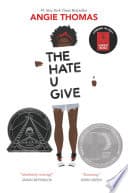
- The Hate U Give
Angie Thomas
4.5 (504k) average on GoodreadsYoung AdultWhile both books tackle social justice issues for young adults, The Hate U Give focuses on racial injustice and police brutality, offering a broader societal critique. Maybe He Just Likes You provides a more intimate and specific examination of peer-on-peer sexual harassment in a school setting, making it distinct in its thematic focus on this particular form of gender-based violence.
- Wonder
R.J. Palacio
4.4 (733k) average on GoodreadsChildren'sBoth Wonder and Maybe He Just Likes You address bullying and social acceptance. However, Wonder centers on a child with facial differences navigating school and social integration. Dee's novel, in contrast, specifically delves into the nuances of sexual harassment, distinguishing it by focusing on unwanted attention and boundary violations rather than general bullying based on appearance or difference.
- Harry Potter and the Sorcerer's Stone
J.K. Rowling
4.5 (7M) average on GoodreadsFantasyRescued from a miserable life under the stairs, an orphaned boy discovers he's a wizard destined for a magical school, where he uncovers a dangerous secret tied to the dark wizard who murdered his parents.
- The Hobbit, or There and Back Again
J.R.R. Tolkien
4.3 (2.9M) average on GoodreadsFantasyA comfort-loving hobbit named Bilbo Baggins is whisked away by a mischievous wizard and a band of dwarves on an unexpected journey to reclaim stolen treasure from a fearsome dragon, discovering courage and a magical ring along the way.
- Harry Potter and the Goblet of Fire
J.K. Rowling
4.6 (2.6M) average on GoodreadsFantasyA bewildered Harry Potter, underage and thrust into a deadly Triwizard Tournament, must brave dragons, mermaids, and a resurgent dark magic to survive a year that will forever alter the wizarding world.





Enjoyed the summary?
A summary gives you the shape of the book. The book itself has the detail, the examples and the voice.
Find Maybe He Just Likes You on AmazonAs an Amazon Associate, BookBrief earns from qualifying purchases. How we're funded