
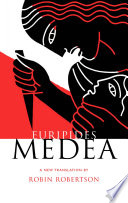
"Medea" Quiz
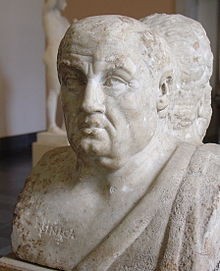
Seneca's "Medea" tells the story of a vengeful sorceress who, betrayed by her husband Jason, enacts a horrific revenge by murdering their children.
classics | 106 pages | Published in 1931
Play the quiz
Test your knowledge about the book "Medea". We have come up with 10 quiz questions for the book. Hit play and start testing your knowledge. Each correctly answered question gives one point.
10 questions available
Essay questions
These essay questions are meant to be used as a starting point for your essay or research paper.
- Discuss the theme of revenge in Seneca's 'Medea.' How does Medea’s pursuit of vengeance drive the plot and shape her character?
- Analyze the portrayal of gender roles in 'Medea.' How does Seneca explore the limitations and expectations placed upon women in Roman society?
- Compare and contrast Seneca’s Medea with Euripides’ Medea. In what ways does Seneca’s version differ in its depiction of the protagonist and her motivations?
- Examine the role of the supernatural in 'Medea.' How do Medea’s abilities as a sorceress influence the outcome of the play and her interactions with other characters?
- How does Seneca use dramatic irony and foreshadowing in 'Medea'? Provide examples from the text and analyze their effectiveness.
- Discuss the significance of motherhood in 'Medea.' How does Medea’s identity as a mother conflict with her desire for revenge?
- Analyze Jason’s character in 'Medea.' What are his motivations, and how does Seneca portray his relationship with Medea?
- Explore the use of rhetoric and language in 'Medea.' How does Seneca’s writing style contribute to the emotional intensity of the play?
- What is the function of the Chorus in Seneca’s 'Medea'? How does it enhance or contrast with the main action of the play?
- Discuss the concept of fate versus free will in 'Medea.' To what extent is Medea responsible for her actions versus being a victim of circumstance?
- Analyze the depiction of justice in 'Medea.' How does the play challenge or reinforce contemporary Roman ideas of justice and morality?
- How does Seneca use imagery and symbolism to convey the psychological state of Medea throughout the play?
- Examine the ending of 'Medea.' What is the significance of Medea’s escape and the fate of the other characters?
- How does Seneca’s 'Medea' reflect Stoic philosophy or contradict it? Discuss with reference to specific passages.
- In what ways does 'Medea' address the conflict between passion and reason? How are these forces represented in Medea and other characters?


