
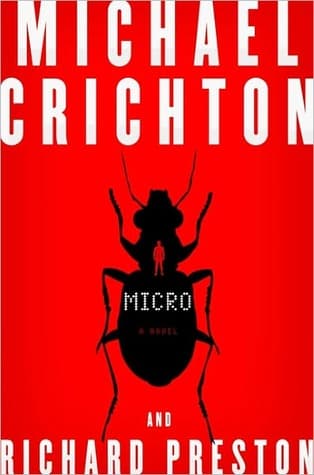
Synopsis
Covers the whole plot, including the ending.
- Difficulty
- Medium
- Pacing
- Fast
- Mood
- Suspenseful, Adventurous, Perilous, Ingenious
- Read it if
- You enjoy high-concept science thrillers, survival stories, and a blend of scientific fact with intense action.
- Skip it if
- You dislike detailed scientific explanations or find stories with characters in extreme peril stressful.
Micro Plot Summary
Covers the whole plot, including the ending.
The Lure of Nanigen MicroSensors
The story starts with seven bright graduate students from Harvard, including the ambitious Karen King, the practical Peter Jansen, and the quiet Lily Marquette. They are experts in various science fields and are drawn to Hawaii by an appealing offer from Nanigen MicroSensors, a biotech company led by the mysterious CEO, Vincent Drake. The students are excited about important research and good careers, unaware of the dark plans in motion. They fly to Oahu, where they see the company's advanced labs and the promise of revolutionary work, but also meet Drake's odd and controlling personality.
The Deception and the Hunt
Before the main group arrives, Eric Chan, a graduate student and Peter Jansen's close friend, already works at Nanigen. He finds proof that Vincent Drake is illegally using Nanigen's miniaturization technology for military purposes and human tests, specifically on himself to boost his senses. Eric tries to expose Drake, but Drake, who has already used his technology to enhance his own senses and reflexes, ambushes him. Eric is shrunk to an inch tall and thrown into the Hawaiian rainforest, where a predatory ant kills him. This event sets the stage for the other students' dangerous journey.
The Miniaturization and the Betrayal
After Eric disappears, the other six students — Karen, Peter, Lily, Danny, Rick, and Amanda — become suspicious. They find Eric's hidden research and realize Drake's true goals. In a desperate move to silence them and get back evidence, Drake ambushes the students. During the chaotic fight in Nanigen's lab, Drake's henchman, Jeremy, a former military operative, shrinks the students to half an inch tall using Nanigen's advanced technology. They are then dumped into the thick, dangerous Hawaiian rainforest, left to die among its giant plants and animals.
A World Transformed: The Rainforest at Micro-Scale
Immediately after being shrunk, the students face a terrifying new reality. The familiar rainforest becomes an alien, highly detailed world where every leaf is a giant obstacle and every insect is a huge predator. They quickly learn that their vast scientific knowledge is almost useless against nature's raw, overwhelming power at this scale. They get separated during the initial chaos, with Lily and Danny in one group, and Karen, Peter, Rick, and Amanda in another. The sheer scale of their problem, along with the immediate threat of spiders, ants, and other creatures, forces them to adapt or die.
Loss and Survival
The trip through the miniaturized rainforest is full of danger and devastating losses. Rick is impaled by a thorn after a fall, and Amanda is tragically carried off by a giant wasp. Both die from the overwhelming dangers of their new environment. These deaths deeply affect the remaining students, especially Peter, who struggles with the emotional toll. Lily, with her plant knowledge, becomes vital for finding edible plants and moving through the dense growth, while Danny's engineering skills prove very useful for making temporary tools and defenses.
Vincent Drake's Pursuit
Unknown to the students, Vincent Drake is not content to let nature handle them. Driven by paranoia and the need to protect his illegal activities, he uses his own miniaturization technology, enhanced senses, and a special drone to actively hunt them. He sees them as loose ends and a threat to his empire. Drake's pursuit adds another layer of terror, as the students realize they are fighting not just the environment but also a determined, technologically advanced human predator. His presence makes their desperate fight for survival even more urgent and terrifying.
Alliances and Desperate Measures
The surviving students eventually manage to regroup, forming a stronger, more united team. Peter's leadership emerges, and he, along with Lily and Danny, starts applying their scientific knowledge creatively to their new scale. They make tools from natural materials, use their understanding of insect behavior to avoid predators, and develop ways to communicate and move. Karen, initially more self-interested, also begins to help, driven by the shared threat. Their cleverness becomes their main weapon against the overwhelming dangers of the micro-world and Drake's relentless hunt.
The Beehive and the Escape Attempt
Looking for a temporary safe place from predators and Drake, the students find shelter inside a giant beehive. Here, they observe the complex social structure of the bees and plan to use them to escape. Their idea is to attach themselves to a bee and fly out of the rainforest, hoping to reach a place where they can be found and return to normal size. This bold plan requires precise timing and teamwork, showing their desperate ingenuity and their understanding of the natural world, even at a tiny level.
The Confrontation and the Sacrifice
As the students try to escape, Vincent Drake closes in. A final confrontation happens inside the beehive and its immediate area. Drake, using his enhanced senses and advanced gear, poses a great threat. In the ensuing chaos, Danny makes a heroic sacrifice, distracting Drake long enough for Peter, Lily, and Karen to escape on a bee. Danny's death, though sad, gives the others a small chance at survival, highlighting the high stakes and the bonds formed under extreme pressure.
The Return and the Reckoning
Peter, Lily, and Karen manage to ride the bee out of the immediate danger zone. A search party eventually finds them, having returned to their normal size, though the details of their re-enlargement are somewhat unclear, suggesting a malfunction or a specific opportunity. With the students safe, Drake's crimes are revealed. The evidence Eric had collected, combined with the survivors' statements, leads to his downfall. Vincent Drake is arrested, and his illegal operations are shut down, bringing some justice to the horrific experience the students went through.
Principal Figures
Peter Jansen
Protagonist
A pragmatic and intelligent graduate student who becomes a leader.
Peter is a brilliant and level-headed graduate student, specializing in robotics. He is initially drawn to Nanigen by the promise of scientific advancement but quickly becomes suspicious of Vincent Drake. Throughout the ordeal, Peter emerges as the de facto leader of the group, using his scientific knowledge and practical thinking to guide the survivors. He is deeply affected by the deaths of his friends but maintains a strong resolve to protect the remaining members and expose Drake.
Relationships: Eric Chan (Close friend); Lily Marquette (Developing romantic interest and strong ally); Karen King (Initially adversarial, later a reluctant ally); Vincent Drake (Arch-nemesis)
Lily Marquette
Supporting
A quiet and observant botanist who proves invaluable for survival.
Lily is a botanist, initially portrayed as quiet and somewhat reserved. Her expertise in flora becomes critically important for the group's survival in the miniaturized rainforest, as she can identify edible plants and navigate the treacherous vegetation. She possesses a keen observational eye and a deep understanding of natural systems. Her calm demeanor and practical knowledge are a steadying force for the group amidst the chaos.
Relationships: Peter Jansen (Developing romantic interest and strong ally); Danny (Friend and fellow survivor)
Karen King
Supporting
An ambitious and initially self-serving student who learns to cooperate.
Karen is a highly ambitious and competitive graduate student, focused on her career and personal advancement. She is initially more concerned with her own survival and often clashes with Peter over leadership and strategy. However, as the dangers mount and her friends are lost, she slowly begins to understand the importance of cooperation and selflessness. Her sharp intellect and drive, though sometimes misguided, are assets to the group.
Relationships: Peter Jansen (Initially antagonistic, later an uneasy ally); Vincent Drake (Target of Drake's treachery)
Vincent Drake
Antagonist
The brilliant but psychopathic CEO of Nanigen MicroSensors.
Vincent Drake is the visionary founder and CEO of Nanigen MicroSensors, a genius in the field of miniaturization. However, beneath his charismatic exterior lies a ruthless and psychopathic ambition. He is obsessed with power and control, using his technology for illegal military applications and even augmenting himself. Drake is utterly devoid of empathy, viewing people as disposable tools or obstacles to be eliminated. He is a relentless hunter, determined to silence anyone who threatens his empire.
Relationships: Eric Chan (Victim of Drake's treachery); Peter Jansen (Primary adversary)
Eric Chan
Supporting
The first student to uncover Drake's treachery and pay the ultimate price.
Eric is a graduate student and a close friend of Peter Jansen. He is already working at Nanigen when the other students arrive and is the first to uncover Vincent Drake's illicit activities and the true, sinister purpose of the miniaturization technology. Eric's moral compass compels him to try and expose Drake, but his efforts lead to his own tragic miniaturization and brutal death in the rainforest, serving as a warning and a catalyst for the other students' ordeal.
Relationships: Peter Jansen (Close friend); Vincent Drake (Victim of Drake's treachery)
Danny
Supporting
An engineering student whose practical skills and sacrifice aid the group.
Danny is an engineering student whose practical skills prove invaluable to the group's survival. He is adept at jury-rigging solutions and creating makeshift tools from natural materials, such as fashioning weapons or navigation aids. Danny is courageous and loyal, ultimately making the ultimate sacrifice to ensure the escape of Peter, Lily, and Karen during the final confrontation with Vincent Drake. His death is a poignant moment, highlighting the desperate stakes of their situation.
Relationships: Lily Marquette (Friend and fellow survivor); Peter Jansen (Ally)
Rick
Supporting
One of the graduate students who falls victim to the rainforest's dangers.
Rick is one of the graduate students who is miniaturized with the group. He is present during the initial chaos and struggles of adapting to the micro-world. Unfortunately, Rick is one of the early casualties, succumbing to the dangers of the environment when he is impaled by a massive thorn after a fall. His death emphasizes the immediate and overwhelming peril faced by the students.
Relationships: Peter Jansen (Fellow student); Amanda (Fellow student)
Amanda
Supporting
Another graduate student who tragically perishes in the rainforest.
Amanda is another member of the graduate student group miniaturized by Drake. She experiences the initial terror and disorientation of being thrust into the micro-world. Like Rick, Amanda becomes an early casualty, tragically carried off and killed by a giant wasp. Her death further reinforces the brutal and unforgiving nature of the environment the students find themselves in, highlighting their vulnerability and the constant threat of predation.
Relationships: Peter Jansen (Fellow student); Rick (Fellow student)
Jeremy
Mentioned
Vincent Drake's ruthless ex-military operative and enforcer.
Jeremy is Vincent Drake's chief enforcer, an ex-military operative who carries out Drake's dirty work. He is responsible for the actual miniaturization of the students and their subsequent abandonment in the rainforest. Jeremy is cold, efficient, and loyal to Drake, acting as the physical arm of Drake's malevolence. He is a secondary antagonist, representing the direct physical threat to the students.
Relationships: Vincent Drake (Employer/subordinate); Peter Jansen (Antagonist)
Themes & Insights
Nature's Indifference and Power
The novel shows nature as a powerful, uncaring force, especially when seen at a tiny scale. The rainforest, usually beautiful, becomes a terrifying maze where every insect is a huge predator and every plant a giant obstacle. This theme appears from the moment Eric Chan is eaten by an ant, and continues with the deaths of Rick (impaled by a thorn) and Amanda (carried off by a wasp). The students' scientific knowledge, so strong in their normal world, is almost useless against the raw power of the micro-jungle, forcing them to adapt or die.
“At this scale, the rainforest was not beautiful; it was a terrifying, intricate death trap where every leaf was a mountain and every ant a dragon.”
The Perils of Unchecked Scientific Ambition
This theme looks at the ethical limits of science and the dangers of technology in the wrong hands. Vincent Drake, a brilliant scientist, uses his new miniaturization technology not to help humanity, but for personal gain, military uses, and to silence threats. His arrogance and lack of morals lead him to commit terrible acts, including trying to murder the graduate students. The very technology meant to shrink objects becomes a weapon of terror, showing Crichton's repeated warning about scientific progress without ethical oversight.
“He saw no moral line, only opportunities. And the world was full of opportunities for those brave enough to seize them, no matter the cost.”
Survival Through Ingenuity and Cooperation
Facing overwhelming challenges, the graduate students, despite their initial disagreements and individual goals, learn that survival depends on their ability to cooperate and use their combined scientific skills. Peter's leadership, Lily's plant knowledge, and Danny's engineering skills become essential for navigating the micro-world, finding food, and planning escapes. Their ability to adapt, innovate, and work as a team, making tools from natural materials and understanding insect behavior, is what ultimately allows a few of them to survive. This contrasts sharply with nature's raw power and Drake's technological threat.
“Their degrees were useless here. Their wits, their teamwork, and whatever they could fashion from a leaf or a twig – those were their only weapons.”
The Transformation of Perspective
Being miniaturized completely changes how the characters see the world and their place in it. What was once ordinary becomes enormous; a dewdrop is an ocean, a spider a giant. This theme explores how a radical change in scale can force a new look at priorities, values, and even the definition of life itself. The students must face their own smallness in the face of nature's size and brutality. This leads to a deep shift in their understanding of how ecosystems connect and how fragile their own lives are. This transformation is both terrifying and, for the survivors, ultimately insightful.
“The world had not changed; they had. And in that change, every familiar thing became alien, every mundane detail a matter of life or death.”
Plot Devices & Literary Techniques
Miniaturization Technology
The central scientific innovation enabling the story's premise.
This advanced technology, developed by Nanigen MicroSensors, allows for the precise and controlled shrinking of organic and inorganic matter to incredibly small scales. It serves as the primary catalyst for the entire plot, transforming the familiar world into a deadly, alien environment for the protagonists. The device is both a marvel of science and a dangerous weapon, highlighting the novel's core theme of unchecked scientific ambition. It's the mechanism by which the students are trapped and the core element of Vincent Drake's power and villainy.
The Hawaiian Rainforest Setting
A familiar environment rendered terrifyingly alien at a micro-scale.
The lush Hawaiian rainforest is not merely a backdrop but a character in itself. Once the students are miniaturized, this vibrant ecosystem transforms into a hyper-detailed, dangerous, and overwhelming world. Its dense foliage, diverse insect population, and tropical conditions create countless obstacles and threats, serving as a constant antagonist. The setting emphasizes the theme of nature's indifference and power, as the students must navigate its colossal features and monstrous inhabitants to survive, making their scientific knowledge a double-edged sword.
The Ruthless Pursuit
Vincent Drake's active hunt for the miniaturized students.
Beyond the natural dangers of the micro-world, the students face the constant, active threat of Vincent Drake. Drake's use of augmented senses, drones, and his own miniaturization capabilities to hunt them adds a layer of psychological terror and urgency. This device elevates the stakes from mere survival against nature to a race against a determined, technologically superior human predator. It underscores Drake's psychopathic nature and ensures that the narrative maintains a high level of suspense, preventing the students from ever truly feeling safe.
The Scientific Expertise of the Students
The characters' diverse scientific backgrounds are crucial for their survival.
Each graduate student possesses a unique scientific specialization (robotics, botany, engineering, etc.). While initially overwhelmed, their combined knowledge becomes their primary tool for survival. They apply their understanding of physics, biology, and engineering to solve problems at a micro-scale: identifying edible plants, fashioning tools, understanding insect behavior, and devising escape plans. This device highlights the power of intellect and interdisciplinary cooperation, contrasting with Drake's misuse of science and reinforcing that knowledge, when applied ethically, can be a formidable force.
Micro Quotes
“The problem with artificial intelligence is that it's still artificial.”
“Nature always finds a way to remind us who's in charge.”
“In the jungle, you're not at the top of the food chain anymore.”
“Every solution creates new problems.”
“Fear makes you do stupid things. And brave things.”
“The world is full of things we don't understand, and that's usually where the real danger lies.”
“Sometimes the greatest discoveries are made when you're looking for something else entirely.”
“You never truly appreciate your size until it's gone.”
“The line between genius and madness is often just a matter of perspective.”
“Survival is not about being the strongest, but about being the most adaptable.”
“The greatest threats are often the ones you can't even see.”
“Technology is a tool. It can be used for good or for evil.”
“Even the smallest creature can be a monster if you're small enough.”
“The past is never truly gone; it just waits for an opportunity to resurface.”
Quiz
10 questions on the plot and the characters. Each answer comes with a short explanation.
Question 1
What is the primary reason the graduate students are lured to Hawaii by Nanigen MicroSensors?
- To develop new drone technology.
- To work on advanced medical treatments.
- To apply their scientific expertise to micro-robotics and miniaturization.
- To research new forms of sustainable energy.
Show answer
C. To apply their scientific expertise to micro-robotics and miniaturization. The students are specifically recruited for their diverse scientific backgrounds to assist with Nanigen's groundbreaking work in miniaturization and micro-robotics.
Question 2
Who is the main antagonist responsible for shrinking the students and casting them into the rainforest?
- Eric Jansen
- Peter Schlosser
- Vincente Drake
- Karen King
Show answer
C. Vincente Drake Vincente Drake, the CEO of Nanigen MicroSensors, is revealed to be the ruthless antagonist who shrinks the students and abandons them in the rainforest.
Question 3
What is the initial size of the students after they are miniaturized?
- Approximately one inch tall.
- About half an inch tall.
- Roughly two inches tall.
- Less than a quarter-inch tall.
Show answer
B. About half an inch tall. Upon their initial miniaturization, the students are roughly half an inch tall, making the rainforest an immensely dangerous environment.
Question 4
Which specific natural predator poses one of the earliest and most significant threats to the miniaturized students in the Hawaiian rainforest?
- Giant spiders
- Preying mantises
- Army ants
- Scorpions
Show answer
C. Army ants The army ants are one of the first and most terrifying threats the students encounter, demonstrating the extreme danger of the scaled-up natural world.
Question 5
What scientific discipline does Karen King specialize in, which proves crucial for the group's survival?
- Robotics engineering
- Entomology (study of insects)
- Botany (study of plants)
- Microbiology
Show answer
B. Entomology (study of insects) Karen King's expertise in entomology is vital for understanding and predicting the behavior of the insects and other arthropods that become massive threats.
Question 6
What is the primary technological advantage Vincente Drake seeks to exploit through his miniaturization technology?
- Creating microscopic weapons for military use.
- Developing new forms of renewable energy sources.
- Manufacturing ultra-small, high-performance electronics and sensors.
- Pioneering new methods of space exploration.
Show answer
C. Manufacturing ultra-small, high-performance electronics and sensors. Drake's ambition is to dominate the market for ultra-small, high-performance electronics and sensors, believing miniaturization is the key to the next technological revolution.
Question 7
How do the students manage to communicate with the outside world, albeit briefly, after being miniaturized?
- They use a salvaged Nanigen micro-drone.
- They find a working miniature two-way radio.
- They modify a discarded cell phone to send a signal.
- They use a repurposed Bluetooth earpiece and a damaged cell phone to send a distress call.
Show answer
D. They use a repurposed Bluetooth earpiece and a damaged cell phone to send a distress call. The students ingeniously use a combination of a discarded Bluetooth earpiece and a damaged cell phone to create a makeshift communication device, highlighting their scientific ingenuity under duress.
Question 8
The book explores the concept of 'emergent properties' at different scales. How does this theme manifest most prominently in the rainforest environment for the miniaturized protagonists?
- The unexpected intelligence of certain insect species.
- The way familiar insects and plants behave in entirely new and dangerous ways when scaled up.
- The spontaneous formation of new ecosystems within the rainforest.
- The ability of the students to adapt to their new size instantly.
Show answer
B. The way familiar insects and plants behave in entirely new and dangerous ways when scaled up. The theme of emergent properties is central, as the rainforest, when viewed at a micro scale, reveals entirely new dangers and behaviors in its inhabitants that were not apparent at human scale, such as the destructive power of a raindrop or the predatory nature of seemingly harmless insects.
Question 9
What critical physiological challenge do the miniaturized students face that requires constant attention and ingenuity to overcome?
- Maintaining a stable body temperature in the humid environment.
- The immense force of water droplets, like rain, which become lethal.
- The difficulty of breathing due to increased atmospheric pressure.
- Rapid dehydration due to their smaller body mass.
Show answer
B. The immense force of water droplets, like rain, which become lethal. At their reduced size, raindrops become devastating impacts, capable of causing severe injury or death. The students must constantly seek shelter and strategize to avoid being crushed by precipitation.
Question 10
What is the ultimate fate of Vincente Drake and his miniaturization technology at the end of the novel?
- He successfully commercializes the technology and becomes immensely wealthy.
- He is arrested and his technology is confiscated by the authorities.
- He is miniaturized himself and ultimately succumbs to the dangers of the micro-world he created.
- He escapes justice and continues his research in secret.
Show answer
C. He is miniaturized himself and ultimately succumbs to the dangers of the micro-world he created. In a climactic turn of events, Drake himself is miniaturized and meets his demise in the very micro-environment he forced upon the students, a fitting end for the villain.
Micro FAQ
What is the core premise of 'Micro' and who are the main protagonists?
'Micro' centers on a group of seven brilliant graduate students from Harvard's Department of Organismic and Evolutionary Biology who are recruited to work for a mysterious Hawaiian biotech company called Nanigen MicroSensors. They soon discover Nanigen's dark secrets, leading to them being miniaturized to half an inch tall and abandoned in the perilous Hawaiian rainforest, forcing them to use their scientific knowledge to survive.
Who is Vin Drake and what is his role in the initial conflict?
Vin Drake is the ruthless and ambitious CEO of Nanigen MicroSensors. He is the primary antagonist who orchestrates the miniaturization and subsequent abandonment of the graduate students after they uncover his illicit activities and the dangerous potential of his miniaturization technology. His motive is to eliminate witnesses and protect his company's secrets and profits.
What is the significance of the 'Microsensors' in the company's name and technology?
Nanigen MicroSensors' core technology revolves around miniaturization, not just of objects but also creating highly advanced, tiny sensors and devices. The company's name hints at their ability to shrink biological and mechanical components to microscopic levels, which is the technology used to reduce the students and the basis for Drake's illicit weapon development.
Which specific scientific disciplines are most crucial for the students' survival in the rainforest?
The students' diverse backgrounds in biology, entomology, botany, and zoology are critical. Karen, an entomologist, understands insect behavior; Peter, a botanist, identifies edible plants; and Rick, a zoologist, helps navigate the dangers of various creatures. Their combined knowledge of the rainforest's ecosystem is their primary tool for survival.
How does the book explore the 'nature vs. technology' theme?
The book explores this theme by pitting advanced miniaturization technology, a product of human innovation, against the raw, indifferent power of the natural world. Once miniaturized, the students' technological advantages are stripped away, forcing them to confront the rainforest's ecosystem on its own terms, where even small insects become colossal threats.
What is the true purpose of Nanigen's miniaturization technology, beyond what is initially advertised?
Beyond its advertised use for medical diagnostics and industrial applications, Nanigen's miniaturization technology is being secretly weaponized by Vin Drake. He intends to create micro-sized assassins and surveillance tools, essentially biological weapons that are undetectable and highly lethal, for military and corporate espionage purposes.
Are there any subtle foreshadowing elements regarding the students' fate before they are miniaturized?
Yes, there are subtle hints. The initial tours of Nanigen's facilities emphasize the precision and power of their miniaturization process, and the students' initial encounters with the company's security and Drake's evasiveness suggest a hidden agenda. The extreme secrecy around certain projects also points to darker applications of the technology.
What is the significance of the specific creatures encountered by the students in the rainforest?
Each creature, from ants to spiders and scorpions, is chosen to highlight the extreme danger and scale shift the students experience. They are not merely obstacles; they represent the magnified lethality of a normal ecosystem when viewed from a micro perspective, forcing the characters to adapt their scientific understanding to a terrifying new reality.
How does the character of Peter Jansen evolve throughout his ordeal?
Peter Jansen, initially a somewhat reserved botanist, undergoes significant character development. He becomes more assertive and resourceful, often taking leadership roles and making difficult decisions for the group's survival. His scientific knowledge of plants proves invaluable, and he learns to apply it practically under extreme duress, demonstrating remarkable resilience.
What psychological impact does extreme miniaturization have on the graduate students?
The extreme miniaturization induces profound psychological trauma, including intense fear, helplessness, and a re-evaluation of their place in the world. They experience a shift in perception where familiar objects become insurmountable obstacles and common insects become monstrous predators, leading to existential dread and pushing their mental fortitude to its limits.
How do the students cope with the loss and death of their peers in such a hostile environment?
The students cope with loss through a combination of grief, determination, and a heightened sense of urgency to survive for those who have fallen. Each death reinforces the perilousness of their situation and strengthens their resolve to outwit Drake and escape, often leading to a more focused and pragmatic approach to their challenges.
What role does scientific problem-solving play in their psychological resilience?
Scientific problem-solving is crucial for their psychological resilience, providing a framework for understanding and mitigating threats. By analyzing their environment, identifying patterns, and devising experiments, they maintain a sense of control and purpose, preventing despair. This intellectual engagement is a powerful coping mechanism against overwhelming fear and helplessness.
Is Vin Drake a purely evil villain, or are there nuances to his character?
While Drake is undeniably ruthless and driven by greed, the novel suggests a certain amorality rather than pure evil. He views his actions as necessary for scientific advancement and corporate success, believing he is operating beyond conventional ethics for the 'greater good' of his vision. This self-justification adds a layer of complexity to his villainy.
How does the ending of 'Micro' provide resolution while leaving room for contemplation?
The ending provides resolution by having the surviving students escape miniaturization and expose Drake's crimes, bringing him to justice. However, it leaves room for contemplation by raising questions about the ethics of advanced biotechnology, the potential for human hubris, and the enduring power of nature, suggesting that such technologies always carry inherent risks.
Does the book offer a definitive stance on the ethics of genetic engineering or advanced biotech?
The book doesn't offer a definitive 'yes' or 'no' stance but rather presents a cautionary tale. It highlights the immense potential of advanced biotech for both good and destructive purposes, emphasizing that ethical considerations and oversight are paramount. The misuse of miniaturization technology by Drake serves as a stark warning about unchecked scientific ambition.
What is the broader message about humanity's place in the natural world that 'Micro' conveys?
'Micro' conveys the message that despite humanity's technological advancements, we are ultimately subservient to the fundamental laws and power of the natural world. When stripped of their technology, the students are humbled, demonstrating that nature, even at a microscopic scale, possesses an overwhelming complexity and danger that can easily overcome human ingenuity.
How does the collaboration between Michael Crichton and Richard Preston impact the novel's style and themes?
Crichton's original vision likely established the high-concept premise, scientific detail, and thriller pacing, typical of his work. Preston, known for his non-fiction science writing, likely enriched the ecological details, biological accuracy, and the vivid descriptions of the rainforest and its micro-inhabitants, enhancing the immersive and terrifying experience of the miniaturized world.
About the author
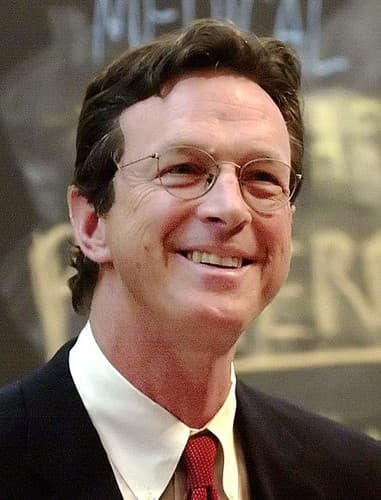
Michael Crichton was an American author and filmmaker known for his contributions to the science fiction genre. His notable works include Jurassic Park, The Andromeda Strain, Timeline, Sphere, Congo, and State of Fear, many of which explore themes of technology and its impact on society. Crichton's writing often blends scientific concepts with thrilling narratives, making him a significant figure in contemporary literature.
Similar books
- Jurassic Park
Michael Crichton
4.0 (803k) average on GoodreadsThrillerFeatures scientific hubris, nature vs. technology, and high-stakes survival against magnified threats.
- The Andromeda Strain
Michael Crichton
3.9 (223k) average on GoodreadsThrillerShowcases scientific problem-solving under extreme pressure and a focus on biological threats.
- Congo
Michael Crichton
3.6 (159k) average on GoodreadsThrillerInvolves an expedition into a dangerous, unexplored environment with advanced technology and hidden dangers.
- Angels & Demons
Dan Brown
3.9 (2.7M) average on GoodreadsThrillerA Harvard symbologist races through Rome's ancient sites, deciphering cryptic clues to unmask the Illuminati and stop a vengeful plot to destroy the Vatican with a stolen antimatter weapon.
- Gone Girl
Gillian Flynn
4.1 (2.3M) average on GoodreadsThrillerA wife's sudden disappearance on her fifth anniversary reveals a web of lies and psychological warfare, exposing the secrets within a seemingly perfect marriage.
- The Girl on the Train
Paula Hawkins
3.9 (2.1M) average on GoodreadsThrillerA woman’s fascination with a seemingly perfect couple she watches from her daily train commute leads her into a dark investigation when she witnesses something that shatters their idyllic image.



Enjoyed the summary?
A summary gives you the shape of the book. The book itself has the detail, the examples and the voice.
Find Micro on AmazonAs an Amazon Associate, BookBrief earns from qualifying purchases. How we're funded