

Synopsis
Covers the whole plot, including the ending.
- Difficulty
- Medium
- Pacing
- Variable
- Mood
- Intricate, Philosophical, Dark Academia, Suspenseful
- Read it if
- You love intricate, character-driven fantasy with a strong focus on language, mathematics, and the ethics of creation. Fans of Seanan McGuire's other works will appreciate her distinctive voice and complex world-building.
- Skip it if
- You prefer straightforward plots, dislike stories with multiple timelines/perspectives, or are not a fan of morally ambiguous characters and a somewhat bleak tone.
Middlegame Plot Summary
Covers the whole plot, including the ending.
The Genesis of the Twins and Reed's Obsession
James Reed, an alchemist, thinks he can become a god by embodying language and mathematics, the core concepts of reality. He creates many homunculi, including 'If' children, but none perfectly balance these concepts. He then creates Roger and Dodger, twins with innate connections to language and mathematics. Reed, with his mentor Stewart, raises them, subtly guiding their development to make them perfect examples of their concepts. He isolates them, controls their education, and watches their interactions. He records their progress in his quest for power. The twins' early lives are controlled, their abilities nurtured, but their freedom is restricted. This sets the stage for Reed's experiment.
The First Iteration: Childhood and Growing Powers
Roger and Dodger, in their first significant version, grow up in a controlled environment, not knowing their true nature or Reed’s plans. Roger learns and uses words easily, often speaking in complex stories. Dodger, in contrast, is good at math, seeing the world in equations and probabilities. They communicate through a unique, almost telepathic bond, sharing thoughts and emotions. As they grow, their powers appear: Roger can influence events through stories, and Dodger can predict and change probabilities. Reed, with Stewart, watches their development, sometimes stepping in to help them understand their concepts better. He keeps up the idea of a normal, though supervised, childhood. This period establishes their bond and early abilities.
The Doctrine of Ethos and the Alchemical Goal
As the twins get older, Reed tells them about the Doctrine of Ethos, an alchemical theory that says the universe is built on basic concepts, and mastering these concepts can lead to ultimate power. He explains that Roger is language and Dodger is mathematics. Together, through their 'assimilation' – a merging of their essences – they can become one powerful being. Reed presents this as their destiny and a path to something beyond human, leaving out that he plans to take their power for himself. The twins are at first fascinated and a little overwhelmed by this. They start to accept their roles, believing they are working toward a shared goal, unaware of Reed's manipulation. This revelation changes how they understand their own existence.
Escalating Powers and Early Assimilation Attempts
Roger and Dodger's abilities grow stronger. Roger can now subtly rewrite reality through stories, while Dodger can change probabilities to an amazing degree, making impossible events seem normal. Reed starts pushing them toward assimilation, the alchemical merging of their beings. Their first attempts are partial and unstable, causing strange time distortions and brief looks into other realities. These experiences are both exciting and scary for the twins; they feel immense power but also the danger of losing themselves. Reed, however, sees these failures as useful data. He refines his methods and pushes them harder. He gives them more complex alchemical texts and rituals, slowly preparing them for the complete assimilation he wants, while still pretending to be a benevolent guide.
The Role of Stewart and the 'If' Children
Stewart, Reed's assistant and former mentor, is a moral voice in the story, though Reed's ambition often overrides him. He has strong doubts about Reed's methods and the ethics of creating and manipulating the twins. Stewart also maintains the 'If' children, the failed homunculi before Roger and Dodger, who exist in various states of incompleteness and suffering. These 'If' children show Reed's past failures and the casual cruelty in his pursuit of godhood. Their existence reminds Stewart of the risks and what could happen to Roger and Dodger if Reed's plans fail. Stewart's internal conflict and his reluctant involvement highlight the lack of morals in Reed's actions.
The Inevitable Betrayal and the First Death
Reed thinks the twins are ready and starts a full assimilation ritual. But his true plan is to absorb their combined power for himself, which he has hidden. The ritual goes wrong. Instead of a smooth merging, the process is violent and chaotic. The twins realize Reed's betrayal and fight back. Their powers clash with Reed's alchemy. In the resulting temporal and reality-bending chaos, one of the twins—often Roger in early versions—dies. This death is not permanent, as the story shows their existence is cyclical. The death breaks the surviving twin but also starts their defiance and a growing awareness of their situation in future versions.
The Cycle of Rebirth and Remembering
After the catastrophic assimilation attempt, the surviving twin (often Dodger) is reborn, usually with no conscious memory of their past life. However, faint echoes and instinctual knowledge remain. These 'memories' appear as unexplained skills, unusual fears, or an innate distrust of Reed. As they grow through later versions, these fragmented memories become stronger, forming a growing awareness of their cycle and Reed's manipulation. This gradual remembering is important to the story; it lets the twins slowly piece together their history and understand their situation. Each rebirth brings them closer to breaking free from Reed and gaining true control, rather than the forced assimilation he wants.
Breaking the Loop: The Twins' Alliance
In a key version, both Roger and Dodger remember significant parts of their past lives. Roger, remembering his past deaths and Reed's betrayals, becomes protective of Dodger. Dodger, remembering the mathematical patterns of their existence and the inevitability of their deaths under Reed's plan, starts to look for a way out of the loop. They realize that their individual powers are not enough against Reed. Only by working together, combining Roger's linguistic manipulation of reality and Dodger's mathematical understanding of probability, do they have a chance. This version is a turning point; the twins go from being pawns to active agents, planning their escape and trying to stop Reed's control, instead of just reacting to him.
Enlisting Stewart's Help and the Final Confrontation
Roger and Dodger, now fully aware of their history and Reed's plans, approach Stewart. They appeal to his conscience, reminding him of the 'If' children and their suffering. Stewart, conflicted but moved by their situation and his own moral objections to Reed's cruelty, agrees to help them. He gives them important information about Reed's alchemical weaknesses and the assimilation ritual. With this knowledge and their combined powers, the twins confront Reed in a final battle. The fight is a complex mix of language, mathematics, and alchemy, with reality bending and breaking. The twins, with Stewart's help, manage to stop Reed's power, preventing his ascension and freeing themselves from his control.
The Aftermath: Freedom and a New Beginning
After Reed's defeat, the twins are finally free. They feel exhausted and relieved, but also uncertain. They are no longer bound by Reed's experiments or the endless cycle of rebirth and death. Stewart, having helped, deals with his own involvement but finds some peace. Roger and Dodger, having assimilated on their own terms, now deeply understand reality. Their individual powers have merged into a unified, balanced whole. They decide to explore the world, understand their place in it, and define their own purpose, free from Reed's ambition. Their journey is just beginning, and they undertake it together, as equals, finally in control of their own destinies and the great power they now have.
Principal Figures
Roger
Protagonist
The embodiment of language, stories, and narrative, constantly seeking meaning and connection.
Roger is one of the twin protagonists, created by James Reed to embody language. He possesses an innate understanding of words, grammar, and narrative, often seeing the world through the lens of stories. He is empathetic, curious, and deeply protective of his twin, Dodger. His power allows him to subtly manipulate reality through the crafting of narratives, making events unfold as he describes them. Throughout multiple iterations, Roger slowly retains memories of his past lives, particularly the pain of death and Reed's betrayal, which fuels his desire to protect Dodger and break free. He is driven by a need for connection and understanding, often grappling with the philosophical implications of his existence.
Relationships: Dodger (Twin sister, deep telepathic and emotional bond, co-dependent); James Reed (Creator, tormentor, antagonist); Stewart (Reluctant ally, moral guide)
Dodger
Protagonist
The embodiment of mathematics, logic, and probability, seeking order and predictability.
Dodger is the other twin protagonist, created by James Reed to embody mathematics. She sees the world in numbers, equations, and probabilities, finding comfort and understanding in logical patterns. She is highly intelligent, analytical, and possesses the ability to manipulate probabilities, subtly altering outcomes. Dodger often struggles with social nuances, preferring the clarity of mathematics to the complexities of human emotion, though her bond with Roger is paramount. Across iterations, she uses her mathematical prowess to identify the cyclical nature of their existence and devise strategies to break free from Reed's control. Her primary drive is to understand and control the variables of her life, leading her to seek a definitive solution to their predicament.
Relationships: Roger (Twin brother, deep telepathic and emotional bond, co-dependent); James Reed (Creator, tormentor, antagonist); Stewart (Reluctant ally, moral guide)
James Reed
Antagonist
A brilliant but ruthless alchemist obsessed with achieving godhood through the Doctrine of Ethos.
James Reed is the primary antagonist, a highly intelligent and dangerously ambitious alchemist. He is the 'progenitor' of Roger and Dodger, having created them as part of his grand experiment to achieve godhood by embodying the fundamental concepts of reality: language and mathematics. Reed is manipulative, cold, and utterly lacking in empathy, viewing his creations as tools rather than individuals. He is driven by an insatiable hunger for power and control, willing to sacrifice countless iterations of the twins and disregard all ethical boundaries to achieve his ultimate goal of assimilation and ascension. His brilliance is matched only by his hubris, leading him to believe he can master the very fabric of existence.
Relationships: Roger (Creation, experimental subject, target for assimilation); Dodger (Creation, experimental subject, target for assimilation); Stewart (Former mentor, reluctant assistant, moral foil)
Stewart
Supporting
Reed's former mentor and reluctant assistant, serving as the moral compass of the story.
Stewart is Reed's former mentor and current, reluctant assistant. He possesses considerable alchemical knowledge but is fundamentally a more ethical and compassionate individual than Reed. Stewart is deeply conflicted by Reed's experiments, particularly the creation and repeated suffering of the 'If' children and the twins. He serves as a moral counterpoint to Reed's ruthless ambition, often trying to subtly guide the twins or mitigate Reed's cruelty. Despite his complicity, he harbors a profound sense of guilt and eventually becomes a crucial ally to Roger and Dodger, providing them with vital information and assistance in their struggle against Reed. His actions are driven by a desire for redemption and to prevent further harm.
Relationships: James Reed (Former student, current employer, moral antagonist); Roger (Confidante, eventual ally); Dodger (Confidante, eventual ally)
The 'If' Children
Mentioned
Failed homunculi, precursors to Roger and Dodger, living in various states of incompleteness and suffering.
The 'If' children are the numerous failed alchemical creations preceding Roger and Dodger. They are homunculi, each embodying some incomplete or unbalanced aspect of language or mathematics, or a combination thereof. They exist in various states of awareness and physical manifestation, often in perpetual suffering or madness, kept by Stewart in a hidden part of Reed's facility. They serve as a chilling reminder of Reed's relentless experimentation and his disregard for life in pursuit of his goal. Their existence highlights the ethical horror of Reed's work and motivates Stewart to eventually aid the twins, as he sees their potential fate mirrored in the 'If' children.
Relationships: James Reed (Creator, tormentor); Stewart (Caretaker, sympathetic observer)
The Unnamed Progenitor
Mentioned
Reed's own alchemical creator, whose work he seeks to surpass.
The Unnamed Progenitor is Reed's own alchemical creator, a figure mentioned in passing as the source of Reed's alchemical knowledge and initial inspiration. This character is not directly involved in the narrative but serves to establish a lineage of alchemical ambition and to contextualize Reed's own pursuit of godhood. Reed's desire to surpass his progenitor's achievements, particularly in the realm of the Doctrine of Ethos, is a subtle driving force behind his extreme experiments. The progenitor represents the recursive nature of creation and ambition within the alchemical world, suggesting a long history of powerful beings striving for ultimate control over reality.
Relationships: James Reed (Creator of Reed, source of alchemical knowledge)
Themes & Insights
Identity and Self-Discovery
The novel explores identity, especially for Roger and Dodger. As creations made for a purpose, they must figure out if their identity is set by Reed or if they can create their own. They discover their true nature, their bond, and their individual powers, eventually rejecting Reed's imposed identity and defining themselves. This is clear in their increasing defiance across different versions, as they choose their path instead of giving in to assimilation. The 'If' children show the sad results of not having a complete identity, serving as warnings.
“They were meant to be two halves of a whole, but they were also meant to be themselves, and the space between those two truths was a battlefield.”
Free Will vs. Determinism
Middlegame examines the struggle between free will and fate. Reed's project tries to control the twins' development and fate, believing he can arrange their ascension to godhood for himself. However, the twins' repeated rebirths and their growing ability to remember past versions introduce free will. Each time, they make slightly different choices, learn new lessons, and slowly move away from Reed's intended path. Their success in breaking the cycle shows their choice winning over the fate Reed tried to impose, highlighting the power of choice even in a seemingly inescapable loop.
“The loop was a cage, but cages could be broken, if you knew the right words and the right numbers.”
The Nature of Creation and Responsibility
The book looks at the ethics of creation and a creator's responsibilities. James Reed, as the twins' creator, acts with great arrogance and ignores his creations' well-being. He sees them as tools, not beings, causing their repeated suffering and death. Stewart, on the other hand, represents the moral questions of creation, feeling guilt for his involvement and eventually helping the twins. The story questions a creator's obligations to their creations and the dangers of seeking power without ethical thought. The 'If' children are constant reminders of Reed's irresponsibility and the suffering it causes.
“He built them to be gods, and then he treated them like toys.”
The Power of Language and Mathematics
The novel explores language and mathematics as the basic parts of reality. Roger represents language, able to shape reality through stories. Dodger represents mathematics, understanding and changing the probabilities and structures that govern existence. The interaction between their powers is central to the plot; their combined abilities let them understand and change reality in deep ways. The book suggests that these two concepts are not just tools for understanding, but active forces that can be used, and that true power comes from their balanced integration.
“Language was the story of the world, and mathematics was the skeleton it hung upon.”
Plot Devices & Literary Techniques
The Doctrine of Ethos
The alchemical theory that guides Reed's pursuit of godhood.
The Doctrine of Ethos is a fictional alchemical theory central to Reed's motivations. It posits that reality is built upon fundamental concepts, and that by mastering and embodying these concepts – specifically language and mathematics – one can achieve ultimate power, or godhood. This doctrine serves as the philosophical backbone for Reed's experiments, providing a pseudo-scientific justification for his creation of Roger and Dodger. It defines the goal of assimilation and the ultimate power the twins are meant to wield, framing the entire conflict around the pursuit of this alchemical ascension. The twins' journey is about understanding and subverting this doctrine for their own ends.
Temporal Loop/Cyclical Narrative
The narrative structure that involves the twins reliving and remembering past iterations of their lives.
The story employs a cyclical narrative structure, where Roger and Dodger are repeatedly born, live, die, and are reborn, often with faint or growing memories of their previous iterations. This temporal loop is a key plot device, allowing the twins to accumulate knowledge, learn from past mistakes, and gradually develop strategies to escape their predetermined fate. It creates a sense of inevitability and urgency, while also providing opportunities for character development across multiple timelines. The 'remembering' aspect allows the audience to piece together the history of their struggle alongside the characters, making their eventual triumph over Reed more impactful as a breaking of the cycle.
Innate Powers and Embodiment
The twins' inherent connection to and manifestation of language and mathematics.
Roger and Dodger are not just skilled in language and mathematics; they embody these concepts. Roger can manipulate narrative and reality through words, while Dodger can understand and alter probabilities and the underlying mathematical structures of the universe. This device is crucial as it defines their very being and the source of their immense power. Their powers are not learned skills but intrinsic aspects of their existence, making their struggle against Reed a fight for their essence. The embodiment of these concepts also facilitates their eventual assimilation, which is presented as a natural, if forced, merging of the fundamental building blocks of reality.
The Assimilation
The alchemical process of merging Roger and Dodger into a single, omnipotent being.
The Assimilation is the ultimate goal of Reed's experiments: to merge Roger and Dodger into a single, all-powerful being that embodies both language and mathematics. This process is presented as a dangerous, transformative event, capable of granting godhood. For Reed, it's a means to usurp that power. For the twins, it's initially a terrifying unknown, then a forced destiny, and finally, a choice they make on their own terms. The threat of forced assimilation drives much of the plot, and the successful, consensual assimilation at the end represents their triumph and the realization of their true potential, free from Reed's control.
Middlegame Quotes
“Words have power. Words can remake the world. Words can unmake the world. Words are the bones of the world, and there is no magic without them.”
“She was a story, and stories always had to end, even if the ending was only the beginning of another story.”
“There are no monsters, not really. Only people who have forgotten how to be human.”
“The past is never truly gone. It’s just waiting for a chance to catch up to you.”
“Every story is a lie, but some lies are more true than others.”
“To be alive is to be in motion, even if that motion is only the turning of the pages.”
“Sometimes, the only way to win is to change the rules of the game.”
“The world doesn’t care if you’re ready. It just keeps turning.”
“We are all made of stories, and we tell ourselves the ones that help us survive.”
“Love isn't a spell, it's a decision. A choice you make every single day.”
“There are always other paths. Always other stories. We just have to be brave enough to find them.”
“Knowledge is power, but power without purpose is just noise.”
“The greatest danger isn't failing, it's never trying at all.”
“Every beginning is just an ending that hasn't happened yet.”
“You can't outrun the story you're in, but you can always try to rewrite it.”
Quiz
10 questions on the plot and the characters. Each answer comes with a short explanation.
Question 1
Who created the twins, Roger and Dodger?
- Their biological parents
- Reed
- An unknown deity
- A collective of alchemists
Show answer
B. Reed According to the provided text, Reed is skilled in alchemical arts and created Dodger and her brother.
Question 2
What is Roger's primary natural skill or inclination?
- Understanding numbers and mathematics
- Mastery of alchemy
- Skill with words, languages, and understanding the world through story
- Physical combat and strategy
Show answer
C. Skill with words, languages, and understanding the world through story The text states that Roger is 'skilled with words, languages come easily to him' and he 'instinctively understands how the world works through the power of story.'
Question 3
What is Reed's ultimate goal for Roger and Dodger?
- To help them live normal human lives
- To study their unique abilities for scientific research
- To raise them to godhood and claim their authority as his own
- To train them as his apprentices in alchemy
Show answer
C. To raise them to godhood and claim their authority as his own The description clearly states Reed's plan: 'to raise the twins to the highest power, to ascend with them and claim their authority as his own.'
Question 4
How do Roger and Dodger perceive their own nature at the beginning of the story?
- They believe they are gods in training.
- They are unaware they are not entirely human.
- They know they are alchemical constructs.
- They suspect Reed is their true father.
Show answer
B. They are unaware they are not entirely human. The text explicitly states: 'Roger and Dodger aren’t exactly human, though they don’t realise it.'
Question 5
What is Dodger's primary natural skill or inclination?
- Understanding and manipulating stories
- Mastery of languages and communication
- An obsession with numbers and understanding the world through math
- The ability to foretell the future
Show answer
C. An obsession with numbers and understanding the world through math The description states that for Dodger, 'Numbers are her world, her obsession, her everything. All she understands, she does so through the power of math.'
Question 6
What field of study is Reed skilled in?
- Linguistics
- Mathematics
- Alchemy
- Theology
Show answer
C. Alchemy The text describes Reed as 'skilled in the alchemical arts like his progenitor before him.'
Question 7
The phrase 'Pray it isn’t attained' at the end of the description implies what about the pursuit of godhood?
- It is a universally desired and benevolent outcome.
- It is a dangerous or potentially catastrophic event.
- It is an impossible feat, making the wish ironic.
- It is a private, personal journey with no wider implications.
Show answer
B. It is a dangerous or potentially catastrophic event. The phrase 'Pray it isn’t attained' suggests a strong warning or fear regarding the attainment of godhood, implying it would lead to negative consequences rather than positive ones.
Question 8
What is the relationship between Reed and his 'progenitor' regarding alchemy?
- Reed surpassed his progenitor in alchemical skill.
- Reed inherited or learned alchemical skills from his progenitor.
- Reed's progenitor actively opposed his alchemical pursuits.
- Reed's progenitor was also one of the twins.
Show answer
B. Reed inherited or learned alchemical skills from his progenitor. The text states Reed is 'skilled in the alchemical arts like his progenitor before him,' indicating a lineage or shared tradition of alchemical knowledge.
Question 9
The description suggests that Roger and Dodger are not 'entirely' human or gods 'yet.' What does this imply about their current state?
- They are fully human but destined to become gods.
- They are in a transitional or nascent state of being, possessing unique, non-human qualities.
- They are failed experiments, neither human nor divine.
- They are merely illusions created by Reed.
Show answer
B. They are in a transitional or nascent state of being, possessing unique, non-human qualities. The phrasing 'aren’t exactly human' and 'aren’t exactly gods, either. Not entirely. Not yet.' points to them being in a state of becoming or existing outside strict definitions, implying a unique, evolving nature.
Question 10
What fundamental forces or ways of understanding the world do the twins, Roger and Dodger, embody?
- Good versus Evil
- Nature versus Nurture
- Story/Words versus Math/Numbers
- Creation versus Destruction
Show answer
C. Story/Words versus Math/Numbers Roger understands the world through 'story' and 'words,' while Dodger understands it through 'numbers' and 'math,' establishing a fundamental duality in their understanding.
Middlegame FAQ
What is "Middlegame" about?
"Middlegame" follows the lives of Roger and Dodger, alchemically created twins embodying language and mathematics, respectively. They are being manipulated by their 'progenitor' Reed, who seeks to ascend to godhood by merging their powers, believing they are the living embodiment of the Doctrine of Ethos.
Why should I read "Middlegame"?
You should read "Middlegame" for its intricate plot, unique magic system rooted in alchemy and linguistic/mathematical concepts, and its deep exploration of identity, free will, and the nature of creation. It's a cerebral fantasy that blends science fiction elements with a compelling character-driven narrative.
What is the background/setting of "Middlegame"?
The story is set in a contemporary, yet subtly magical, version of America, primarily following Roger and Dodger through various foster homes and academic institutions. The underlying 'magic' system is a complex form of alchemy, passed down through generations of alchemists like James Reed, focusing on the manipulation of fundamental concepts like language and mathematics.
What are the most memorable quotes?
One memorable quote is, 'The world is made of words. The world is made of numbers. The world is made of stories.' This encapsulates the core themes and the twins' respective powers. Another is 'There are rules to the game, and the rules are mutable, but the game is not,' highlighting the inherent struggle and predetermination within their existence.
What writing style does the author use?
Seanan McGuire employs a non-linear narrative style, often jumping through time and offering meta-commentary on the story itself, much like a living alchemical text. Her prose is rich with literary allusions, scientific concepts, and a dry wit, creating a complex and intellectually stimulating reading experience.
What minor details add significant meaning?
The repeated motif of the 'Impossible City' and the concept of 'improbable places' aren't just fantasy elements; they represent the liminal spaces where the twins' powers can manifest and where the boundaries of reality are thinnest, crucial for Reed's alchemical experiments.
What are some subtle foreshadowing moments?
Early mentions of Roger's headaches and Dodger's seizures subtly foreshadow the mental strain their alchemical connection and Reed's manipulations put on them. The repeated phrase 'as above, so below' hints at the alchemical principle governing their creation and the cosmic stakes of Reed's plan.
What unexpected character connections exist?
The most unexpected connection is between Reed and his own progenitor, who is revealed to be a previous, failed attempt at creating the Doctrine of Ethos. This cyclical nature of creation and failure ties into Reed's desperate ambition and provides context for his methods with Roger and Dodger.
What are unspoken character motivations?
Reed's unspoken motivation is a deep-seated fear of obsolescence and a profound desire for control and immortality, stemming from his own lineage of alchemists who have all failed to achieve ascension. He sees Roger and Dodger not as children, but as tools for his ultimate goal.
What psychological complexities do characters exhibit?
Roger struggles with imposter syndrome and a deep need for validation, often feeling secondary to Dodger's 'purer' mathematical power. Dodger, conversely, battles with social awkwardness and an inability to understand human nuance, leading to a reliance on Roger for emotional interpretation, creating a codependent psychological bond.
What are the major emotional turning points?
A major emotional turning point is when Roger and Dodger finally realize the truth of their creation and Reed's manipulative intentions, shattering their perception of their 'father figure.' Another is their decision to actively defy Reed and forge their own path, embracing their unique identities rather than just being instruments.
How do relationship dynamics evolve?
Initially, Roger and Dodger's relationship is one of intense codependency, with each completing the other's understanding of the world. As they mature and uncover Reed's plot, their bond evolves into a conscious alliance of resistance, shifting from instinctual connection to deliberate partnership against a common enemy, while still retaining their deep affection.
Which parts remain ambiguous or open-ended?
The ultimate fate of the Doctrine of Ethos and whether Roger and Dodger truly 'ascend' to godhood in the traditional sense remains somewhat ambiguous. Their future role in the larger alchemical order and the full extent of the universe they've glimpsed are left open for interpretation.
What are controversial scenes or decisions?
Reed's repeated 'resets' of Roger and Dodger's lives, effectively wiping their memories and restarting their development when they deviate from his plan, are highly controversial. This raises ethical questions about free will, identity, and the moral limits of scientific or alchemical experimentation.
"Middlegame" ending explained: how it ends & what it means
The ending sees Roger and Dodger, having gained a fuller understanding of their powers and Reed's manipulations, choose to defy Reed's intended 'ascension.' They assert their own agency, using their combined abilities to stabilize their existence outside of Reed's control. It signifies their triumph over deterministic creation and their embrace of self-determination, suggesting they become something new and powerful, free from their progenitor's design.
About the author
Seanan McGuire is an American author known for her work in speculative fiction. Her notable books include "Every Heart a Doorway," which explores the lives of children who have returned from magical worlds, and "Middlegame," a complex tale of alchemy and sibling bonds. McGuire has received multiple awards for her writing, including the Hugo and Nebula Awards.
Similar books
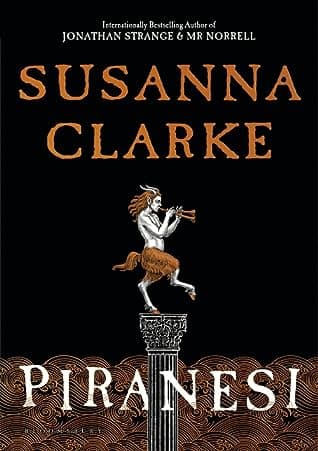
- Piranesi
Susanna Clarke
4.4 (10k) average on GoodreadsLiterary FictionFeatures a unique, isolated world and a protagonist uncovering the truth of their existence.
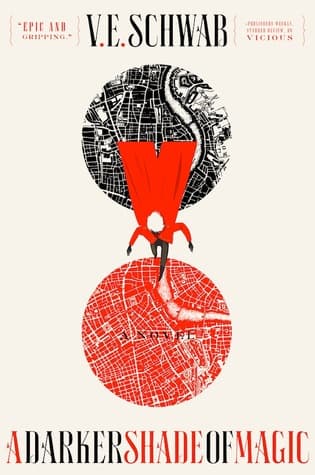
- A Darker Shade of Magic
V.E. Schwab
4.1 (201k) average on GoodreadsFantasyWhile both Middlegame and A Darker Shade of Magic feature unique magic systems and compelling characters, Middlegame delves more deeply into philosophical questions of creation, identity, and narrative structure. Schwab's work is more focused on adventure and accessible world-building across multiple Londons, whereas McGuire's is more intellectually demanding and introspective, with its primary conflict being internal and existential rather than external and action-oriented.
- American Gods
Neil Gaiman
4.1 (758k) average on GoodreadsFantasyBoth novels explore the existence of powerful, non-human entities interacting with the human world. However, American Gods focuses on inherited mythological deities and their struggle for relevance in modern society, employing a sprawling, road-trip narrative. Middlegame, in contrast, focuses on artificially created beings (homunculi) and their struggle against their creator's predetermined designs, utilizing a more experimental, self-referential, and non-linear plot structure that is less about grand mythology and more about the intimate, often violent, dynamics of creation and agency.
- Harry Potter and the Sorcerer's Stone
J.K. Rowling
4.5 (7M) average on GoodreadsFantasyRescued from a miserable life under the stairs, an orphaned boy discovers he's a wizard destined for a magical school, where he uncovers a dangerous secret tied to the dark wizard who murdered his parents.
- The Hunger Games
Suzanne Collins
4.3 (6.4M) average on GoodreadsFantasyIn a future where children fight to the death on live television, Katniss Everdeen volunteers for the arena, turning a death sentence into a fight for survival and a spark of rebellion.
- 1984
George Orwell
4.2 (3.1M) average on GoodreadsPoliticsIn a future where surveillance and thought control are absolute, a man's search for truth clashes with the Party, showing that hope can be a form of rebellion.




Enjoyed the summary?
A summary gives you the shape of the book. The book itself has the detail, the examples and the voice.
Find Middlegame on AmazonAs an Amazon Associate, BookBrief earns from qualifying purchases. How we're funded