

Synopsis
Covers the whole plot, including the ending.
- Difficulty
- Easy
- Pacing
- Fast
- Mood
- Humorous, Lighthearted, Nostalgic, Slightly Mischievous
- Read it if
- You enjoy classic children's picture books with a clever twist and a moral lesson about appreciating teachers.
- Skip it if
- You prefer complex narratives or stories without a clear educational message.
Miss Nelson Is Missing! Plot Summary
Covers the whole plot, including the ending.
Room 207's Misbehavior
The students of Room 207 are notorious for their poor behavior. They throw spitballs, make paper airplanes, whisper, giggle, and are generally disrespectful to their kind and gentle teacher, Miss Nelson. Miss Nelson often tries to reason with them, saying, 'Now, children, I don't like to shout,' but her pleas go largely ignored. The children believe they can get away with anything because Miss Nelson is too nice to punish them. Their classroom is a constant state of chaos, and Miss Nelson feels increasingly frustrated and unappreciated by her unruly class.
Miss Nelson Disappears
One Tuesday morning, the students arrive at Room 207 to find Miss Nelson's desk empty. There is no sign of her anywhere. The children are initially surprised and a little confused, as Miss Nelson is always punctual. They whisper among themselves, wondering where she could be. While some are a bit concerned, many still see it as an opportunity for more mischief, unaware of the significant change about to descend upon their classroom. Their initial reaction is more curiosity than genuine worry for their teacher's well-being.
The Arrival of Miss Viola Swamp
Suddenly, a new teacher enters Room 207. She is a stern-looking woman dressed in an ugly black dress, with a sour expression and a booming voice. She introduces herself as Miss Viola Swamp, the new substitute teacher. Miss Swamp immediately establishes a terrifying presence, informing the class that she knows all about their terrible reputation. She declares that things will be different now and that they will have to shape up. Her arrival sends a shiver through the previously boisterous students, who are taken aback by her harsh demeanor.
Swamp's Strict Regime
Miss Viola Swamp wastes no time in implementing her strict rules. She assigns mountains of homework, demands quiet, and forbids any talking or disruptions. She makes the children stay after school to finish their assignments and practice arithmetic. The fun and games that characterized Room 207 are completely gone. The students are miserable, finding the work difficult and Miss Swamp's presence unbearable. They miss Miss Nelson's kind demeanor and lenient approach, realizing how good they had it before.
The Search for Miss Nelson Begins
Realizing they cannot stand Miss Swamp any longer, the students decide they must find Miss Nelson. They hold a secret meeting to discuss their strategy. They wonder if she might be hiding or if something bad has happened to her. They form a search party, with different groups assigned to look for clues. They check the library, the cafeteria, and even the principal's office, hoping to find some trace of their missing teacher. Their motivation is primarily to escape Miss Swamp's tyranny, but a genuine concern for Miss Nelson also begins to emerge.
Detective McSmogg Joins the Case
Unable to find Miss Nelson themselves, the children decide to call a real detective, Detective McSmogg. Detective McSmogg is a bumbling but well-meaning investigator. He arrives at the school and interviews the students, taking notes and looking for clues. He investigates the classroom, Miss Nelson's desk, and other areas of the school. Despite his efforts, Detective McSmogg finds no leads and is unable to locate Miss Nelson. His investigation proves fruitless, leaving the students disheartened and still stuck with Miss Swamp.
The Students' Despair
As days turn into weeks, the students become more and more miserable under Miss Swamp's harsh rule. They are exhausted from the extra work and the constant fear of her scolding. They truly miss Miss Nelson's gentle voice, her stories, and her patience. They wish they had appreciated her more when she was there. They start to behave perfectly, not out of fear of Miss Swamp, but out of a genuine desire for their old teacher to return. The classroom is silent and orderly, a stark contrast to its previous chaos.
Miss Nelson's Return
One morning, the students arrive at school, expecting another dreadful day with Miss Swamp. To their utter surprise and relief, Miss Nelson is back at her desk, smiling warmly. The students are overjoyed, rushing to greet her. They express how much they missed her and promise to be the best-behaved class ever. Miss Nelson, noticing their changed attitudes and the perfectly clean classroom, smiles knowingly. The students are so happy to have her back that they don't even question where she was.
The Mystery Unravels (for the reader)
After the students leave, Miss Nelson returns home. As she takes off her hat and wig, the reader discovers her secret: Miss Nelson was, in fact, Miss Viola Swamp all along. She had cleverly disguised herself to teach her unruly class a lesson about appreciation and good behavior. She smiles to herself, satisfied with the outcome. She even has a 'secret weapon' - a 'witchy' black dress - ready for future use, just in case the students ever forget their lesson. The mystery is solved for the reader, but the students remain blissfully unaware of her clever ruse.
Miss Nelson Is Missing! Characters
Miss Nelson
Protagonist
The kind and patient teacher of Room 207, who devises a clever plan.
Miss Nelson is initially portrayed as a sweet, good-natured, and somewhat timid teacher who struggles to control her unruly class in Room 207. She is patient and tries to reason with her students, but her kindness is often taken for granted. Her defining characteristic is her intelligence and resourcefulness, as she orchestrates a brilliant plan to teach her students a lesson without them ever realizing it. She is deeply committed to her students' education and well-being, even if it means resorting to unconventional methods.
Relationships: Students of Room 207 (Teacher-student, initially unappreciated, later respected and loved.)
Miss Viola Swamp
Antagonist/Alter-ego
The strict, unpleasant, and demanding substitute teacher.
Miss Viola Swamp is the terrifying and unyielding substitute teacher who takes over Room 207. She is characterized by her ugly black dress, sour expression, and booming voice. She imposes a harsh and joyless regime, assigning excessive homework and demanding absolute silence and obedience. Her purpose is to make the students miserable enough to appreciate their kind regular teacher. She is not a real person but a cleverly crafted persona adopted by Miss Nelson to achieve her pedagogical goals.
Relationships: Students of Room 207 (Strict disciplinarian and intimidated students.)
The Students of Room 207
Supporting/Collective Protagonist
A group of initially misbehaving children who learn a valuable lesson.
The students of Room 207 are a collective character, initially portrayed as disrespectful, noisy, and prone to mischief. They throw spitballs, make paper airplanes, and ignore Miss Nelson's pleas for order. They take advantage of her kindness, believing they can get away with anything. Their collective journey involves realizing the value of their kind teacher and learning to appreciate her, driven by their fear and dislike of Miss Viola Swamp. They ultimately transform into well-behaved and appreciative students.
Relationships: Miss Nelson (Students to teacher, initially disrespectful, later appreciative.); Miss Viola Swamp (Students to strict substitute, initially terrified, later relieved by her absence.)
Detective McSmogg
Supporting
A bumbling detective hired to find Miss Nelson.
Detective McSmogg is a minor but memorable character, a private investigator hired by the students to find their missing teacher. He is depicted as somewhat incompetent and easily confused, despite his professional appearance. He takes notes diligently and investigates various parts of the school but ultimately fails to find any clues about Miss Nelson's whereabouts. His role is primarily to highlight the students' desperation to find Miss Nelson and to add a touch of humorous futility to their search efforts.
Relationships: Students of Room 207 (Hired investigator by the students.)
Principal
Mentioned
The school's administrator, briefly mentioned during the search for Miss Nelson.
The Principal is only briefly mentioned when the students consider looking for Miss Nelson in his office. He represents the broader school authority but plays no active role in the plot. His presence is implied, but he doesn't interact with the students or Miss Nelson, nor does he seem aware of the unusual events unfolding in Room 207. His mention serves to emphasize the students' desperate search for their teacher.
Miss Nelson Is Missing! Themes
Appreciation and Value
The central theme is about appreciating those we value, particularly teachers. The students of Room 207 take Miss Nelson's kindness for granted, only realizing her worth once she is replaced by the harsh Miss Viola Swamp. The contrast between the two teachers highlights how easy it is to overlook the good in our lives until it's gone. Their misery under Swamp forces them to reflect on their past behavior and develop a genuine appreciation for Miss Nelson's gentle approach and patience.
“The kids in Room 207 were misbehaving again. Spitballs stuck to the ceiling. Paper planes whizzing through the air. They were the worst-behaved class in the whole school.”
Consequences of Misbehavior
The book illustrates the direct consequences of unchecked misbehavior. The students' constant disruptions and disrespect lead to the unpleasant experience of having Miss Viola Swamp as their teacher. This harsh reality is a powerful lesson, demonstrating that actions have repercussions. The misery they endure under Miss Swamp's strict regime is a direct result of their previous unruly conduct, forcing them to learn discipline and respect the hard way.
“No more story time. No more fun and games. Just work, work, work.”
Identity and Disguise
The theme of identity and disguise is central to the plot's mystery element. Miss Nelson's transformation into Miss Viola Swamp shows how altering one's appearance and persona can change how one is perceived and treated. The students are completely fooled by the disguise, emphasizing how external presentation can obscure true identity. This deception allows Miss Nelson to observe her students' behavior from a different perspective and implement her lesson effectively, without revealing her true self until the very end.
“She put on an ugly black dress. She put on lumpy stockings. She put on a mean, ugly face.”
Effective Teaching Methods
The book explores different teaching methods and their effectiveness. Miss Nelson's initial gentle approach fails to control her class, suggesting that kindness alone isn't always sufficient. Her transformation into Miss Viola Swamp, while extreme, is effective in instilling discipline and respect. This highlights the idea that sometimes unconventional or even stern methods are necessary to achieve desired behavioral changes, particularly when traditional approaches have failed. Ultimately, it's Miss Nelson's clever and strategic use of both personas that teaches her students the most.
“Well, Miss Nelson, we'll certainly try to improve.”
Plot Devices & Literary Techniques
Dramatic Irony
The reader knows Miss Nelson's secret, while the characters do not.
Dramatic irony is a key device, as the reader is made aware of Miss Nelson's true identity as Miss Viola Swamp towards the end of the book, while the students remain oblivious. This creates a humorous tension and allows the reader to appreciate Miss Nelson's cleverness and the students' predicament from an omniscient perspective. The reader understands the underlying purpose of Miss Swamp's harshness, while the students only experience the immediate, unpleasant consequences, making their eventual appreciation for Miss Nelson even more impactful.
The Disguise
Miss Nelson's physical transformation into Miss Viola Swamp.
The disguise, specifically Miss Nelson dressing up as Miss Viola Swamp, is the central plot device driving the entire story. It allows Miss Nelson to create an entirely different persona, enabling her to enforce strict discipline that her kind demeanor previously couldn't. This physical transformation is crucial for the plot, as it facilitates the contrast between the two 'teachers' and the students' subsequent realization of their misbehavior. It's the mechanism through which the lesson is delivered.
Foil Characters
Miss Nelson and Miss Viola Swamp serve as contrasting characters.
Miss Nelson and Miss Viola Swamp function as foil characters, although they are secretly the same person. Miss Nelson embodies kindness, patience, and a gentle approach, while Miss Viola Swamp represents strictness, harshness, and an unyielding demeanor. This stark contrast is essential for the students to fully grasp the value of their original teacher. By experiencing the 'worst' (Swamp), they learn to appreciate the 'best' (Nelson), effectively highlighting the qualities of each persona.
The Mystery
The unexplained disappearance of Miss Nelson drives the students' actions.
The mystery surrounding Miss Nelson's disappearance is the primary driver of the plot. It creates suspense and motivates the students to search for her, ultimately leading them to appreciate her more. The unresolved nature of her absence, from the students' perspective, maintains the illusion of two separate teachers and allows Miss Nelson's plan to unfold. The mystery is only resolved for the reader in the final pages, providing a satisfying reveal.
Miss Nelson Is Missing! Quotes
“The kids in Room 207 were misbehaving again.”
“They were the worst-behaved class in the whole school.”
“Miss Nelson was the nicest teacher in the whole school.”
“I am your new teacher, Miss Viola Swamp.”
“And there will be no story hour today.”
“We'll have story hour when you are perfect.”
“Where is Miss Nelson?”
“Maybe she was eaten by sharks.”
“We'll never be happy again.”
“We'll have to find her.”
“She was the meanest substitute teacher in the whole world.”
“Maybe we should have behaved.”
“I'll never tell.”
“The kids in Room 207 were the best-behaved class in the whole school.”
Quiz
10 questions on the plot and the characters. Each answer comes with a short explanation.
Question 1
What is the room number of the misbehaving class in the story?
- Room 101
- Room 207
- Room 306
- Room 412
Show answer
B. Room 207 The story explicitly states that the misbehaving kids are in Room 207, establishing the setting from the beginning.
Question 2
Who is the substitute teacher that takes over when Miss Nelson disappears?
- Miss Viola Swamp
- Miss Daisy Grump
- Miss Wilma Witch
- Miss Greta Grouch
Show answer
A. Miss Viola Swamp Miss Viola Swamp is the strict, witch-like substitute who enforces discipline, contrasting sharply with Miss Nelson's gentle nature.
Question 3
What do the students do that shows their misbehavior at the start of the book?
- They throw spitballs and paper planes
- They scream and run in the halls
- They refuse to do any homework
- They draw on the walls with crayons
Show answer
A. They throw spitballs and paper planes The opening describes spitballs stuck to the ceiling and paper planes whizzing through the air, illustrating the class's chaotic behavior.
Question 4
Why do the students start to regret their behavior after Miss Nelson disappears?
- They miss her kindness and realize they took her for granted
- They are afraid they will fail the class without her
- They feel guilty because their parents scold them
- They are bored without her fun lessons
Show answer
A. They miss her kindness and realize they took her for granted Facing the harsh substitute Miss Viola Swamp, the students appreciate Miss Nelson's good-natured teaching and regret not showing her respect.
Question 5
What does Miss Viola Swamp make the students do that is particularly demanding?
- She assigns long homework and enforces strict rules
- She makes them clean the entire school
- She forces them to apologize to every teacher
Show answer
A. She assigns long homework and enforces strict rules Miss Viola Swamp is depicted as giving piles of homework and maintaining a rigid, no-nonsense classroom environment to discipline the students.
Question 6
How do the students try to find out what happened to Miss Nelson?
- They hire a detective named McSmogg
- They ask the principal for help
- They search her house themselves
- They put up missing posters around town
Show answer
A. They hire a detective named McSmogg In their curiosity and growing concern, the students enlist Detective McSmogg to investigate Miss Nelson's disappearance, adding a humorous mystery element.
Question 7
What is revealed at the end about Miss Nelson and Miss Viola Swamp?
- They are the same person, with Miss Nelson disguising herself
- They are sisters playing a trick on the class
- Miss Swamp was a ghost trying to teach a lesson
- Miss Nelson was on vacation and hired Miss Swamp
Show answer
A. They are the same person, with Miss Nelson disguising herself The twist ending shows that Miss Nelson disguised herself as Miss Viola Swamp to teach the students a lesson about appreciation and behavior.
Question 8
What key theme does the book emphasize through Miss Nelson's plan?
- The importance of showing appreciation and not taking people for granted
- The need for strict discipline in education
- The value of creativity in teaching methods
- The dangers of misbehavior leading to punishment
Show answer
A. The importance of showing appreciation and not taking people for granted By pretending to be Miss Viola Swamp, Miss Nelson helps the students realize they should value and respect her kind nature, highlighting themes of gratitude.
Question 9
How does the class's behavior change after Miss Nelson returns?
- They become perfectly behaved and appreciative
- They continue misbehaving but less often
- They rebel even more against authority
- They ignore Miss Nelson out of fear
Show answer
A. They become perfectly behaved and appreciative After experiencing Miss Viola Swamp's strictness, the students are relieved to have Miss Nelson back and show improved behavior and respect.
Question 10
What detail in the illustrations hints at Miss Nelson's disguise before the reveal?
- Similarities in clothing items or accessories between the two characters
- Miss Swamp is shown wearing a mask in one scene
- The students notice Miss Nelson's voice sounds familiar
- Miss Nelson leaves a note explaining her plan
Show answer
A. Similarities in clothing items or accessories between the two characters James Marshall's illustrations include subtle clues, such as matching items, that attentive readers might notice, foreshadowing the identity twist.
Miss Nelson Is Missing! FAQ
What is 'Miss Nelson Is Missing!' about?
The book follows the misbehaving students of Room 207 who disrespect their kind teacher Miss Nelson until she mysteriously disappears. They are then subjected to the strict, witch-like substitute Miss Viola Swamp, who enforces harsh rules and makes them long for Miss Nelson's return.
Why should I read 'Miss Nelson Is Missing!'?
It's a humorous and timeless children's story that teaches appreciation for teachers through a clever mystery. The contrast between Miss Nelson's gentleness and Miss Viola Swamp's strictness creates engaging lessons about behavior and consequences, enhanced by James Marshall's expressive illustrations.
What is the background/setting of 'Miss Nelson Is Missing!'?
The story is set in an elementary school classroom, Room 207, where the students' misbehavior includes spitballs on the ceiling and paper planes flying around. The ordinary school setting contrasts sharply with the mysterious disappearance of Miss Nelson and the arrival of the unusual substitute.
What are the most memorable quotes from 'Miss Nelson Is Missing!'?
Key quotes include the opening line, 'The kids in Room 207 were misbehaving again,' and Miss Viola Swamp's stern commands like 'Sit up straight!' and 'No talking!' These lines highlight the classroom chaos and the substitute's authoritarian style.
What writing style does the author use in 'Miss Nelson Is Missing!'?
Harry Allard employs a simple, direct narrative with repetitive phrases and exaggerated scenarios to emphasize the students' bad behavior and the story's humorous tone. The text pairs seamlessly with James Marshall's cartoonish illustrations to create a lighthearted, engaging read.
What minor details add significant meaning to 'Miss Nelson Is Missing!'?
Small details like the spitballs stuck to the ceiling and paper planes whizzing through the air visually reinforce the students' disrespect. Miss Nelson's gentle demeanor and Miss Viola Swamp's pointed nose and dark attire subtly hint at their contrasting roles in teaching the children a lesson.
What are some subtle foreshadowing moments in 'Miss Nelson Is Missing!'?
The students' extreme misbehavior early on foreshadows Miss Nelson's disappearance as a consequence. Miss Viola Swamp's sudden appearance and strict rules hint that she might be connected to Miss Nelson, leading to the reveal that they are the same person in disguise.
What unexpected character connections exist in 'Miss Nelson Is Missing!'?
The biggest twist is that Miss Viola Swamp is actually Miss Nelson in disguise. This revelation shows that Miss Nelson orchestrated her own 'disappearance' to teach the students a lesson about appreciating her, connecting the two seemingly opposite characters as one.
What are unspoken character motivations in 'Miss Nelson Is Missing!'?
Miss Nelson's motivation is to make her students realize her value by experiencing a harsh substitute, though she never explicitly states this plan. The students' initial disrespect stems from taking her kindness for granted, driving them to regret their actions only after facing Miss Viola Swamp.
What psychological complexities do characters exhibit in 'Miss Nelson Is Missing!'?
Miss Nelson demonstrates cleverness and patience by using disguise to teach empathy, while the students show a shift from entitlement to gratitude. Miss Viola Swamp's exaggerated strictness serves as a psychological tool to highlight the students' fear and longing for Miss Nelson's return.
What are the major emotional turning points in 'Miss Nelson Is Missing!'?
Key emotional shifts include the students' initial joy at Miss Nelson's absence turning to dread under Miss Viola Swamp, their growing regret and appreciation for Miss Nelson, and their relief and changed behavior when she 'returns,' realizing they had taken her for granted.
How do relationship dynamics evolve in 'Miss Nelson Is Missing!'?
The dynamics change from the students disrespecting Miss Nelson to fearing Miss Viola Swamp, then to genuinely appreciating Miss Nelson upon her return. This evolution teaches them to value their teacher, transforming their classroom behavior from chaotic to respectful.
Which parts of 'Miss Nelson Is Missing!' remain ambiguous or open-ended?
The story leaves ambiguous how exactly Miss Nelson disguised herself as Miss Viola Swamp and whether the students ever discover the truth. It also doesn't specify if Miss Nelson planned the substitution alone or had help, adding a layer of mystery to her clever scheme.
What are controversial scenes or decisions in 'Miss Nelson Is Missing!'?
Some readers might debate whether Miss Nelson's deception as Miss Viola Swamp is an ethical teaching method, as it involves fear and trickery. Others could question if the students' quick change in behavior is realistic or if it oversimplifies the lesson about appreciation.
'Miss Nelson Is Missing!' ending explained: how it ends & what it means
The book ends with Miss Nelson returning as if nothing happened, and the students behaving perfectly, having learned to appreciate her. The meaning is that sometimes people need to experience loss or hardship to value what they have, with Miss Nelson's plan successfully teaching this lesson through contrast.
Similar books
- Harry Potter and the Sorcerer's Stone
J.K. Rowling
4.5 (7M) average on GoodreadsFantasyRescued from a miserable life under the stairs, an orphaned boy discovers he's a wizard destined for a magical school, where he uncovers a dangerous secret tied to the dark wizard who murdered his parents.
- The Hobbit, or There and Back Again
J.R.R. Tolkien
4.3 (2.9M) average on GoodreadsFantasyA comfort-loving hobbit named Bilbo Baggins is whisked away by a mischievous wizard and a band of dwarves on an unexpected journey to reclaim stolen treasure from a fearsome dragon, discovering courage and a magical ring along the way.
- Harry Potter and the Goblet of Fire
J.K. Rowling
4.6 (2.6M) average on GoodreadsFantasyA bewildered Harry Potter, underage and thrust into a deadly Triwizard Tournament, must brave dragons, mermaids, and a resurgent dark magic to survive a year that will forever alter the wizarding world.
- Harry Potter and the Order of the Phoenix
J.K. Rowling
4.5 (2.5M) average on GoodreadsFantasyIn a year of oppressive secrets and the threat of Voldemort, Harry Potter and Dumbledore's Army secretly train for war, shown through Jim Kay and Neil Packer's dark illustrations.
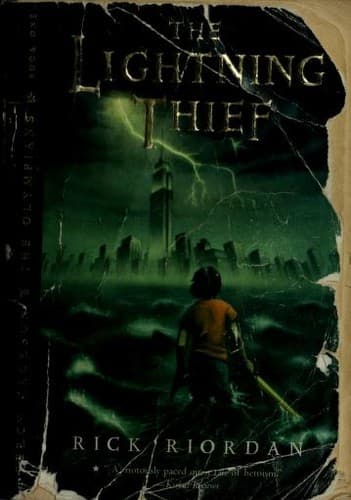
- The Lightning Thief
Rick Riordan
4.3 (2M) average on GoodreadsFantasyThrust into a world of mythological monsters and divine treachery, an ordinary boy discovers he's the son of Poseidon and must embark on a perilous quest across modern America to prevent an Olympian war.
- The Giver
Lois Lowry
4.1 (1.8M) average on GoodreadsFantasyIn a world where everyone is the same, a young boy named Jonas learns about true memory, forcing him to see the cost of his community's peaceful ignorance.





Enjoyed the summary?
A summary gives you the shape of the book. The book itself has the detail, the examples and the voice.
Find Miss Nelson Is Missing! on AmazonAs an Amazon Associate, BookBrief earns from qualifying purchases. How we're funded