
Synopsis
Covers the whole plot, including the ending.
- Difficulty
- Medium
- Pacing
- Moderate
- Mood
- Thought-provoking, Controversial, Philosophical, Spiritual
- Read it if
- You enjoy speculative fiction that directly challenges religious dogma and explores the intersection of faith, science, and global politics.
- Skip it if
- You prefer traditional religious narratives or are uncomfortable with stories that re-interpret core spiritual beliefs.
Mission Plot Summary
Covers the whole plot, including the ending.
The Arrival and the Impossible Wounds
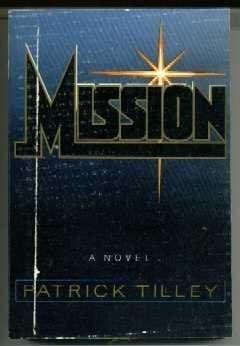
On Easter Sunday, two paramedics bring a naked, seemingly 35-year-old man into Manhattan General Hospital's emergency room. He is dead. Dr. Ben Sagi, a skeptical physician, notices the man's unusual injuries: a two-inch stab wound below his rib cage and nail wounds through his feet and wrists. These wounds match the stigmata of Jesus Christ, unsettling Sagi and the staff. The man's sudden appearance, his injuries, and the timing of Easter create an immediate sense of unease among medical professionals, who rely on scientific reason but face an inexplicable event.
The Vatican's Intervention
News of the mysterious body quickly reaches the Vatican. Father Anthony Scapulari, a brilliant and practical Jesuit priest, is sent to New York on a secret mission: to confirm the body's authenticity and manage the implications if it is Christ. Scapulari is a man of faith but also a seasoned investigator, aware of potential hoaxes. He immediately claims the Church's right over the body, clashing with the hospital's desire for a full scientific investigation. Scapulari's arrival starts a complex power struggle between faith and science, as both institutions compete for control over the narrative and the evidence.
Initial Investigations and Conflicting Evidence
Despite the Vatican's involvement, Dr. Ben Sagi conducts a preliminary autopsy. He finds no conventional explanation for the man's death or his wounds. The body shows no signs of decomposition, appearing as if death happened moments before arrival, yet paramedics reported finding him in an alley. Father Scapulari, meanwhile, consults theologians and biblical scholars, trying to reconcile the appearance with prophecy and doctrine. He arranges for the body to be moved to a secure, secret location, increasing tensions with Sagi and the authorities. Both men, driven by their fields, confront a reality that defies their established ways of thinking.
The Resurrection and the Revelation
In a surprising turn, the dead man awakens. He is not Jesus Christ, but a being from an advanced extraterrestrial civilization, called 'The Visitor' or 'The Emissary.' He communicates telepathically, explaining that his species has subtly guided human spiritual and technological development for millennia. His 'crucifixion' was not a historical event but a re-enactment, a deliberate 'message' meant to get humanity's attention and cause a global spiritual crisis. The nail wounds and spear mark were self-inflicted, part of a complex simulation. This revelation shatters Scapulari's faith and forces Sagi to confront a reality beyond his scientific grasp.
The Mission Explained
The Visitor explains that his species, the 'Overseers,' has watched humanity for ages, stepping in at key moments to prevent self-destruction. He says humanity is nearing an evolutionary threshold, where its destructive tendencies could cause global catastrophe. His 'mission' is to deliver a direct message: humanity must evolve its collective consciousness, embrace unity, and overcome its primitive divisions, or face extinction. He states that the 'miracles' and 'prophecies' of Earth's religions were often misinterpreted messages or advanced technological interventions by his kind, meant to inspire moral development.
The Global Impact and Disbelief
As the Visitor's presence and claims become known to a select few, including Scapulari, Sagi, and high-ranking government officials, the world's power structures are thrown into chaos. Religious leaders struggle to reconcile their doctrines with the extraterrestrial explanation; some dismiss it as a demonic deception, others face a deep crisis of faith. Governments fear global panic and the collapse of social order. The United States government, specifically General Maxwell, tries to control and weaponize the Visitor's advanced knowledge, while Scapulari grapples with the potential unraveling of Christianity itself. The world faces an existential crisis as its deepest beliefs are challenged.
The Struggle for Control
General Maxwell and the military try to contain and study the Visitor, seeing him as a strategic asset or a threat. They try to interrogate him, but his telepathic abilities and advanced understanding make him immune to conventional methods. Father Scapulari, initially devastated, begins to see a new, universal truth in the Visitor's message, but struggles to convince the rigid Vatican hierarchy. Dr. Sagi, the scientist, finds himself caught between the military's aggressive tactics and Scapulari's spiritual re-evaluation, all while trying to apply a scientific lens to an utterly unscientific phenomenon. Each group tries to shape the Visitor's narrative to its own goals, showing humanity's inherent divisions.
The Universal Truth
The Visitor continues to share knowledge, explaining that the universe is full of life, and that spiritual evolution is a universal constant. He describes a cosmic consciousness, a unifying force that supports all existence, and that humanity's current path of conflict and materialism deviates from this. He demonstrates advanced technologies and knowledge, proving his claims beyond doubt to those who witness them. His teachings go beyond individual religions, offering a broader, more inclusive spiritual framework that emphasizes interconnectedness, empathy, and the pursuit of knowledge. He challenges humanity to look beyond Earth and embrace its place in a vast, intelligent cosmos.
The Test and the Choice
The Visitor presents humanity with a clear choice: embrace unity and conscious evolution, or succumb to destructive tendencies, leading to self-annihilation. He clarifies that his species will not directly intervene to save humanity if it chooses the latter; their role is to guide, not dictate. This ultimatum creates intense debate and division among world leaders, scientists, and religious figures. Some advocate for immediate global change, others cling to old doctrines, and a few see an opportunity for power in the chaos. The weight of this decision falls on individuals like Scapulari and Sagi, who must decide how to share this profound truth with a world unprepared to receive it.
The Farewell and the Legacy
Having delivered his message and shown the implications of humanity's choices, the Visitor prepares to leave. He stresses that the 'mission' is now humanity's own. His departure is as mysterious as his arrival, leaving behind a world changed by his presence. Father Scapulari, now a man of universal faith, and Dr. Sagi, a scientist whose worldview has been shattered and rebuilt, are left to deal with the aftermath. They become unexpected allies, dedicated to spreading the Visitor's message of unity and cosmic awareness. The book concludes with humanity at a crossroads, with a new understanding of its place in the universe, but still facing the challenge of transforming its collective consciousness.
Principal Figures
Dr. Ben Sagi
Protagonist
A skeptical, rational physician confronted with the inexplicable.
Dr. Ben Sagi is a highly competent and deeply pragmatic emergency room physician at Manhattan General Hospital. He is a man of science, grounded in empirical evidence and medical fact, with little patience for superstition or unproven claims. His skepticism is a defining trait, making him initially dismissive of the religious implications of the mysterious body. However, he is also driven by a profound curiosity and a commitment to truth, which compels him to investigate the inexplicable phenomena surrounding the Visitor. He represents the scientific community's struggle to reconcile its understanding with a reality that defies all known laws.
Relationships: Father Anthony Scapulari (Initial antagonist, later reluctant ally and intellectual sparring partner); The Visitor (Subject of scientific inquiry, later source of profound enlightenment)
Father Anthony Scapulari
Protagonist/Antagonist (initially)
A brilliant Jesuit priest whose faith is profoundly challenged and transformed.
Father Anthony Scapulari is a highly intelligent, politically astute, and deeply devout Jesuit priest, hand-picked by the Vatican to investigate the 'Second Coming.' He is a man of unwavering faith, dedicated to the Church and its doctrines, yet possesses a sharp, analytical mind that allows him to navigate complex theological and political landscapes. Initially, he is zealous in his defense of Catholic dogma and determined to secure the body as a relic, clashing fiercely with Dr. Sagi. His journey is one of immense spiritual crisis as his core beliefs are systematically dismantled by the Visitor's revelations.
Relationships: Dr. Ben Sagi (Initial antagonist, later reluctant ally and intellectual sparring partner); The Visitor (Object of religious veneration, later source of spiritual enlightenment and crisis)
The Visitor / The Emissary
Catalyst/Mentor
An extraterrestrial being posing as Christ to deliver a critical message to humanity.
The Visitor is a highly advanced extraterrestrial being, a representative of a civilization that has silently overseen human development for millennia. He is not Jesus Christ, but deliberately orchestrated his appearance and 'crucifixion' wounds to mimic the biblical narrative, creating a global spiritual crisis to capture humanity's attention. He possesses telepathic abilities, vast knowledge, and a profound understanding of universal principles. His demeanor is calm, wise, and empathetic, yet firm in his delivery of humanity's impending choices. He acts as a cosmic mentor, revealing truths that shatter existing paradigms and challenging humanity to evolve.
Relationships: Dr. Ben Sagi (Object of scientific study, recipient of profound knowledge); Father Anthony Scapulari (Source of spiritual crisis and ultimate enlightenment)
General Maxwell
Antagonist/Supporting
A high-ranking military official focused on control and weaponization.
General Maxwell is a pragmatic and authoritative military leader representing the U.S. government's immediate response to the Visitor's appearance. His primary concern is national security, control, and the potential strategic advantages or threats posed by the extraterrestrial being. He is inherently suspicious and driven by a desire to contain, study, and potentially weaponize the Visitor's advanced knowledge or technology. He embodies the military-industrial complex's fear-based reaction to the unknown and its tendency to view any anomaly through a lens of power and control, often clashing with both Sagi's scientific ethics and Scapulari's spiritual concerns.
Relationships: The Visitor (Strategic asset/threat to be controlled); Dr. Ben Sagi (Scientific resource to be leveraged); Father Anthony Scapulari (Obstacle to be circumvented)
Cardinal Ratzinger
Supporting
A conservative Vatican official representing institutional rigidity.
Cardinal Ratzinger is a high-ranking official within the Vatican, representing the conservative and traditional wing of the Catholic Church. He is deeply committed to maintaining doctrinal purity and the established order. His primary role is to advise and direct Father Scapulari, often urging caution and adherence to traditional interpretations, especially as the Visitor's revelations begin to challenge core tenets of Christianity. He embodies the institutional resistance to radical change and the fear of undermining centuries of religious authority. His character highlights the immense pressure Scapulari faces from within the Church.
Relationships: Father Anthony Scapulari (Superior and source of institutional pressure)
Themes & Insights
The Conflict of Science vs. Faith
The novel directly confronts the tension between scientific rationalism and religious belief. Dr. Ben Sagi represents the scientific view, demanding evidence and logical explanations for the Visitor's existence. Father Anthony Scapulari represents faith, initially trying to fit the event into Christian dogma. The Visitor's revelations force both characters, and humanity, to re-evaluate their frameworks. The book suggests that both science and faith, in rigid forms, can be limiting, and that true understanding may come from a broader, cosmic perspective that goes beyond earthly divisions. This is clear in Sagi's initial disbelief versus Scapulari's initial certainty, both of which are broken.
“Science seeks to explain the how, faith the why. But what if the why is simply a more complex how, and the how utterly beyond our current faith?”
The Nature of Spirituality and Religion
The book explores spirituality, separating it from organized religion. The Visitor reveals that many religious figures and 'miracles' were misinterpreted guidance or interventions from his species, meant to encourage moral and ethical development. This challenges the basic narratives of Earth's religions. The theme argues that true spirituality is about interconnectedness, empathy, and universal consciousness, rather than specific dogmas. Scapulari's journey from a devout Catholic to someone embracing a universal, cosmic spirituality shows this redefinition, suggesting a broader understanding of the divine.
“You built your churches around the shadows we cast, not the light itself. The truth is far vaster than your sacred texts.”
Humanity's Evolutionary Crossroads
A central theme is humanity's turning point: either evolve its collective consciousness toward unity and peace, or face self-destruction due to its conflicts. The Visitor's mission is a direct warning and a call to action. The book highlights humanity's tribalism, materialism, and inability to overcome old divisions as major threats to its survival. The various reactions to the Visitor — from military attempts to control him (General Maxwell) to religious denial (Cardinal Ratzinger) — show the resistance to this necessary evolution. The narrative suggests that true progress is not technological but spiritual and ethical, requiring a shift in global consciousness.
“Your species stands at a precipice. The choice to ascend or to fall is now, irrevocably, yours.”
The Impact of Truth and Revelation
The novel examines the deep impact of a challenging truth on individuals and institutions. The Visitor's revelations shatter the foundations of established religions, scientific ideas, and government authority. For characters like Scapulari, the truth brings existential crisis before a new understanding. For others, like General Maxwell, it creates fear and a desire for control. The book explores how difficult it is for humanity to accept a truth that undermines its deepest beliefs and comfortable illusions, showing the psychological and societal upheaval that comes with radical shifts in understanding. The initial disbelief in Manhattan General is a small example of the global reaction.
“The greatest burden is not the truth itself, but the unpreparedness of those who must bear it.”
Plot Devices & Literary Techniques
The Mysterious Arrival
A seemingly impossible event that immediately hooks the reader and sets the central mystery.
The sudden appearance of a man with stigmata-like wounds, dead on arrival on Easter Sunday in a modern hospital, serves as a powerful inciting incident. This device immediately establishes an atmosphere of profound mystery and challenges the reader's assumptions. It creates an undeniable hook, forcing characters like Dr. Sagi and Father Scapulari, and by extension the reader, to confront an event that defies rational explanation and religious dogma. It is the catalyst for all subsequent plot developments and the central question that drives the narrative forward.
The 'Crucifixion' as a Deliberate Message
A re-contextualization of a sacred event to convey an urgent, universal message.
The revelation that the Visitor's 'crucifixion' was a staged event, a meticulously planned re-enactment rather than a historical or divine occurrence, functions as a powerful re-contextualization. This device not only shatters religious expectations but also highlights the Visitor's intelligence and his species' long-term engagement with humanity. It transforms a symbol of suffering and redemption into a calculated communication strategy, emphasizing that the message (unity, evolution) is more important than the literal historical event, and that humanity's interpretations have often missed the deeper intent.
Telepathic Communication
A means for the Visitor to impart knowledge directly and bypass linguistic barriers.
The Visitor's ability to communicate telepathically serves as a crucial plot device, allowing for direct and immediate transmission of complex ideas and universal truths without the limitations of spoken language or cultural interpretation. This bypasses potential misunderstandings or mistranslations, ensuring his message is received clearly by characters like Sagi and Scapulari. It also underscores his advanced nature and subtly reinforces the theme of interconnectedness, as thoughts and feelings are shared directly, creating a profound, intimate, and undeniable connection with his audience.
Mission Quotes
“The greatest enemy of truth is not the lie—deliberate, contrived, and dishonest—but the myth—persistent, persuasive, and unrealistic.”
“Fear is a choice. You can choose to let it paralyze you, or you can choose to use it as fuel.”
“Sometimes, the only way to find your true path is to get lost.”
“Power is not about what you can do to others, but what you can do for them.”
“The universe doesn't care about your plans. It cares about your intention.”
“To truly see, you must first close your eyes to what you think you know.”
“Every ending is just a new beginning, disguised as a tragedy.”
“The most dangerous chains are not those visible to the eye, but those forged in the mind.”
“Silence is not empty. It's full of answers waiting to be heard.”
“We are all connected, not just by shared experience, but by the very fabric of existence.”
“The future is not something you wait for; it's something you create.”
“Truth often whispers, while lies shout.”
“Compassion is the bridge between worlds, between hearts, between species.”
“Sometimes, the only way to save something is to let it go.”
“The universe speaks in symbols. It is up to us to learn its language.”
Quiz
10 questions on the plot and the characters. Each answer comes with a short explanation.
Question 1
On what specific holiday is the body of the man, believed to be Jesus Christ, brought into Manhattan General Hospital?
- Christmas Eve
- New Year's Day
- Easter Sunday
- Good Friday
Show answer
C. Easter Sunday The book explicitly states that the event occurs on Easter Sunday, which adds to the symbolic significance of Christ's reappearance.
Question 2
What is the approximate age of the man whose body is brought into the hospital?
- Around 25 years old
- Around 35 years old
- Around 45 years old
- Around 55 years old
Show answer
B. Around 35 years old The synopsis clearly states that the man is 35 years old, aligning with traditional depictions of Jesus at the time of his crucifixion.
Question 3
What kind of wound is found below the man's rib cage, and what is its approximate size?
- A three-inch burn wound
- A two-inch stab wound
- A four-inch laceration
- A one-inch puncture wound
Show answer
B. A two-inch stab wound The description specifically mentions a 'two-inch stab wound below his rib cage,' mirroring the spear wound described in biblical accounts.
Question 4
Besides the stab wound, what other specific injuries are noted on the man's body that link him to the Crucifixion?
- Scars on his back from scourging
- Wounds on his forehead from a crown of thorns
- Nail wounds in his feet and wrists
- Bruises around his eyes and mouth
Show answer
C. Nail wounds in his feet and wrists The presence of 'nail wounds in his feet and wrists' is explicitly mentioned, directly corresponding to the manner of crucifixion.
Question 5
The synopsis highlights the temporal and geographical displacement of this event. How far in time and distance is this appearance from the original Crucifixion?
- 5000 miles and 10 centuries
- 7000 miles and 20 centuries
- 3000 miles and 15 centuries
- 1000 miles and 5 centuries
Show answer
B. 7000 miles and 20 centuries The text states '7000 miles and 20 centuries away from the Crucifixion,' emphasizing the impossible nature of the event.
Question 6
What is the initial medical status of the man when he arrives at Manhattan General Hospital?
- Critically injured but alive
- In a coma
- Dead on arrival
- Unconscious but stable
Show answer
C. Dead on arrival The synopsis clearly states he is 'dead on arrival,' which poses an immediate and profound challenge to the witnesses.
Question 7
Beyond being a work of fiction, what deeper purpose does the book 'MISSION' aim to serve, according to the description?
- To provide a historical account of religious figures
- To offer a scientific explanation for miracles
- A stunning reassessment of central truths and deepest beliefs
- To criticize modern medical practices
Show answer
C. A stunning reassessment of central truths and deepest beliefs The description highlights the book's intent as 'a stunning reassessment of the central truths and deepest beliefs by which we live,' indicating its thematic depth.
Question 8
Given the extraordinary circumstances, what is the core dilemma presented to the witnesses in the story?
- How to keep the event a secret from the public
- How to medically revive a body from 20 centuries ago
- What they can and should do in the face of such an impossible event
- How to identify the man's true identity without historical records
Show answer
C. What they can and should do in the face of such an impossible event The questions posed in the synopsis, 'What can the witnesses do? What would you do?', directly address the core dilemma of how to react to such an impossible and profound occurrence.
Question 9
The book is described as 'powerful and compelling fiction.' What genres are explicitly mentioned for 'Mission'?
- Thriller, Mystery, Historical Fiction
- Fantasy, Spirituality, Science Fiction
- Romance, Drama, Biography
- Horror, Adventure, Western
Show answer
B. Fantasy, Spirituality, Science Fiction The genre tags provided at the beginning of the prompt explicitly state: 'Fantasy, Spirituality, Science Fiction.'
Question 10
The reappearance of Jesus Christ, 'dead on arrival,' 7000 miles and 20 centuries away, is described as 'the impossible has happened.' What central theme does this impossibility immediately challenge or force a re-evaluation of?
- The efficacy of modern medical technology
- The limits of human scientific understanding and religious dogma
- The logistical challenges of international travel
- The legal implications of a historical figure's reappearance
Show answer
B. The limits of human scientific understanding and religious dogma The 'impossible' nature of the event, particularly the displacement in time and space, fundamentally challenges both scientific rationality and established religious beliefs, forcing a re-evaluation of what is considered possible and true.
Mission FAQ
What is the central premise of 'Mission' by Patrick Tilley?
The novel opens with the astonishing arrival of a man, seemingly Jesus Christ due to his specific wounds and appearance, at Manhattan General Hospital on Easter Sunday, dead on arrival. This event forces modern society, particularly the medical and religious communities, to confront an impossible resurrection and its profound implications for faith and reality. The story explores the immediate aftermath and the complex reactions to this miraculous, yet tragic, occurrence.
Who are the key characters involved in the initial discovery and investigation?
Dr. Ben Sacks, a skeptical but dedicated emergency room doctor, is one of the primary witnesses and the first to examine the body. Father Michael O'Connor, a Catholic priest, is also present and struggles to reconcile his faith with the tangible evidence. Their differing perspectives drive much of the early narrative as they grapple with the identity of the mysterious man.
What kind of wounds does the mysterious man possess, and why are they significant?
The man has a two-inch stab wound below his rib cage, consistent with the spear wound described in biblical accounts, and nail wounds in his feet and wrists. These specific injuries are unmistakably reminiscent of the Crucifixion, making the identification as Jesus Christ almost undeniable, despite the chronological and geographical impossibilities.
How does the global community react to the news of this impossible event?
The news sparks immediate global pandemonium, causing widespread religious fervor, scientific debate, and political maneuvering. Governments and religious institutions struggle to control the narrative, while individuals worldwide are forced to re-evaluate their deepest beliefs, leading to both conversions and profound crises of faith.
What challenges do Dr. Sacks and Father O'Connor face in handling the body and its implications?
Dr. Sacks faces immense pressure to medically explain the inexplicable, while Father O'Connor grapples with the theological ramifications of a dead Christ appearing in the modern world. Both are torn between their professional duties and the overwhelming spiritual implications, leading them to question their own beliefs and sanity.
Are there any subtle clues or details in the narrative that hint at the man's true origin or purpose beyond a simple resurrection?
Yes, there are subtle hints throughout the narrative, particularly concerning the man's physical state and the lack of a clear explanation for his arrival. Some theories proposed by characters delve into possibilities of time travel, interdimensional shifts, or even a sophisticated hoax, suggesting a deeper, more complex explanation than initially perceived.
Does the book explore any scientific theories or explanations for the event, even if ultimately inconclusive?
The book heavily features scientific attempts to rationalize the event. Dr. Sacks and other medical professionals perform extensive tests, seeking any biological or physical anomaly that could explain the man's preservation or arrival. While no definitive scientific answer is found, these investigations highlight the limitations of science when confronted with the truly miraculous.
Are there any characters who hold alternative, non-religious interpretations of the event, perhaps hinting at a different kind of 'mission'?
Indeed, some characters, particularly those in intelligence or governmental roles, consider the event as a potential alien contact, a sophisticated psychological operation, or a manifestation of collective human consciousness. These interpretations broaden the scope of the 'mission' from purely religious to potentially existential or even extraterrestrial.
How does Dr. Ben Sacks's initial skepticism evolve throughout the story?
Dr. Sacks, initially a staunch atheist and man of science, is profoundly challenged by the inexplicable event. His skepticism slowly erodes as he confronts undeniable evidence that defies all medical and scientific understanding. This journey forces him to re-evaluate his worldview, moving from disbelief to a reluctant, yet profound, acceptance of the unknown.
What psychological impact does the dead Jesus have on Father Michael O'Connor's faith?
Father O'Connor experiences a severe crisis of faith, as the appearance of a dead Christ, 2000 years later, seems to contradict the very tenets of resurrection and salvation. He struggles with doubt, anger, and profound confusion, forcing him to confront the limits of dogma and seek a deeper, more personal understanding of his beliefs.
How do ordinary people in the novel cope with the cognitive dissonance caused by this impossible event?
Ordinary people react in a spectrum of ways: some experience profound spiritual awakening, others descend into fanaticism or despair, and many struggle with intense cognitive dissonance. The book portrays the psychological strain of confronting an event that shatters established reality, leading to both inspiring acts of faith and desperate attempts at denial.
Does the book suggest a collective unconscious or shared human belief played a role in the manifestation?
The novel subtly explores the idea that collective human belief, expectation, or even fear might have played a role in the manifestation. While not explicitly confirmed, the shared cultural memory and intense focus on the figure of Christ are presented as potential contributing factors to such an extraordinary event, blurring the lines between reality and shared consciousness.
Is the 'mission' in the title primarily religious, or does it carry a broader, more existential meaning?
While the initial event is deeply religious, the 'mission' in the title evolves to encompass a broader existential meaning. It prompts humanity to question its purpose, its understanding of reality, and its place in the universe. The mission becomes less about a specific religious figure and more about humanity's collective journey of self-discovery and re-evaluation.
Does the book offer a definitive explanation for how Jesus arrived in modern New York, or does it leave it ambiguous?
The book deliberately maintains ambiguity regarding the precise mechanism of Jesus's arrival. While various theories are explored—scientific, theological, and even fantastical—no single definitive explanation is provided. This ambiguity is central to the novel's power, forcing readers to grapple with the mystery and draw their own conclusions about the nature of the miraculous.
What is the author's stance on faith vs. science, as presented through the narrative?
Patrick Tilley doesn't present a simple 'faith vs. science' conflict with a clear winner. Instead, he explores how both are challenged and forced to adapt when confronted with the inexplicable. The narrative suggests that neither can fully explain the event, implying that some truths may lie beyond the current understanding of both disciplines, necessitating a re-evaluation of their boundaries.
How does the ending of 'Mission' challenge or affirm the reader's own beliefs?
The ending of 'Mission' is designed to be thought-provoking rather than conclusive. It leaves readers with profound questions about belief, reality, and the nature of miracles. It doesn't necessarily affirm or deny specific beliefs but compels readers to introspectively examine their own spiritual and philosophical frameworks in light of the extraordinary events depicted.
Could the man be an impostor, and does the book explore this possibility in detail?
Yes, the possibility of the man being an impostor or a victim of an elaborate hoax is thoroughly explored, particularly by skeptical characters and governmental agencies. Investigations are launched to find any evidence of fraud, but the sheer impossibility of replicating his wounds and the circumstances of his appearance make the impostor theory increasingly difficult to sustain, though it remains a point of contention for some.
What societal changes or long-term impacts are depicted as a result of the event?
The event triggers massive societal upheaval, including widespread religious revivals, civil unrest, and a reordering of political and scientific priorities. The long-term impacts involve a re-examination of ethical frameworks, a surge in spiritual seeking, and a general shift in humanity's perception of its own vulnerability and destiny. The world is irrevocably changed by the confrontation with the impossible.
Similar books
- The Da Vinci Code
Dan Brown
3.9 (1.9M) average on GoodreadsThrillerExplores religious mysteries and conspiracies that challenge established beliefs.
- Childhood's End
Arthur C. Clarke
4.1 (130k) average on GoodreadsFantasyDeals with a higher power's intervention on Earth and its profound impact on humanity's evolution and spiritual understanding.
- Dune
Frank Herbert
4.2 (766k) average on GoodreadsFantasyBoth works delve into prophecy, messianic figures, and spirituality. However, 'Mission' grounds its spiritual revelations in a singular, unambiguous extraterrestrial event, contrasting with Dune's intricate, millennia-spanning socio-political and biological evolution. Tilley's approach is more about a sudden, undeniable confrontation with universal truth, rather than the slow unfolding of destiny.
- Harry Potter and the Sorcerer's Stone
J.K. Rowling
4.5 (7M) average on GoodreadsFantasyRescued from a miserable life under the stairs, an orphaned boy discovers he's a wizard destined for a magical school, where he uncovers a dangerous secret tied to the dark wizard who murdered his parents.
- The Hunger Games
Suzanne Collins
4.3 (6.4M) average on GoodreadsFantasyIn a future where children fight to the death on live television, Katniss Everdeen volunteers for the arena, turning a death sentence into a fight for survival and a spark of rebellion.
- 1984
George Orwell
4.2 (3.1M) average on GoodreadsPoliticsIn a future where surveillance and thought control are absolute, a man's search for truth clashes with the Party, showing that hope can be a form of rebellion.






Enjoyed the summary?
A summary gives you the shape of the book. The book itself has the detail, the examples and the voice.
Find Mission on AmazonAs an Amazon Associate, BookBrief earns from qualifying purchases. How we're funded