Estimated read time: 7 min read
One Sentence Summary
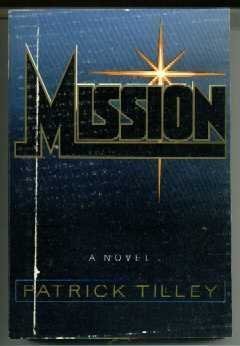
"Mission" by Patrick Tilley is a thrilling sci-fi novel about humanity's desperate fight against an alien invasion threatening Earth's survival.
Table of Contents
Introduction
Patrick Tilley’s Mission is a captivating science fiction novel that explores humanity’s struggle and resilience in the face of alien contact and cosmic mystery. Published in the late 20th century, this book blends thrilling adventure with profound philosophical questions about survival, identity, and purpose. For college students and lecturers interested in science fiction’s role in reflecting societal anxieties and hopes, Mission offers a rich narrative ripe for analysis.
This summary dives deep into the book’s historical context, characters, plot, themes, and literary techniques, providing a comprehensive yet engaging guide. Whether you’re encountering Mission for the first time or revisiting its pages, this overview will enhance your understanding and appreciation of Patrick Tilley’s work.
Historical Context
Patrick Tilley wrote Mission during a period marked by burgeoning interest in space exploration and extraterrestrial life, reflecting Cold War anxieties and the dawn of the digital age. The late 1970s and 1980s saw a surge in sci-fi literature that grappled with humanity’s place in the universe, a time when real-world space missions captivated public imagination.
- Era: Late 20th century (1970s-1980s)
- Major Events: Cold War, Space Shuttle program beginnings, rise of computer technology
- Literary Movements: New Wave science fiction focusing on psychological depth and social commentary
- Influences: Real-world space exploration, global political tensions, and emerging technology
Mission reflects these influences by combining speculative alien encounters with introspective human drama, mirroring contemporary hopes and fears about the unknown.
Brief Synopsis
Plot Overview
Mission follows a group of human protagonists thrust into an interstellar conflict after encountering an alien species. The story revolves around their efforts to understand the aliens’ intentions, survive escalating threats, and navigate the moral complexities of first contact. The narrative weaves suspense, action, and philosophical inquiry, culminating in a mission that questions humanity’s future in the cosmos.
Setting
The novel unfolds primarily in the near future on Earth and extends into space, capturing a tense atmosphere filled with uncertainty and discovery. The settings shift from familiar terrestrial environments to alien landscapes and spacecraft interiors, emphasizing the contrast between human familiarity and cosmic mystery.
Main Characters
| Name | Role | Key Traits | Importance to Plot |
|---|---|---|---|
| Commander Rourke | Mission leader | Decisive, pragmatic, resilient | Leads the team, central decision-maker |
| Dr. Elaine Marks | Scientist and analyst | Intelligent, curious, empathetic | Interprets alien signals, moral compass |
| Lt. Harris | Security officer | Loyal, cautious, brave | Protects crew, represents military aspect |
| Alien Ambassador | Representative of aliens | Mysterious, enigmatic, diplomatic | Catalyst for human-alien interaction |
| Captain Jin | Pilot and explorer | Resourceful, daring, quick-witted | Navigates spacecraft, vital for survival |
This table outlines the core group driving the narrative forward, each contributing unique perspectives and skills that shape the mission’s outcome.
Plot Summary
Part 1: Contact and Confusion
The story opens with humanity receiving unexplainable signals from deep space. Initial excitement quickly turns to suspicion as a mysterious alien vessel appears near Earth. Commander Rourke assembles a team to investigate, including scientists and military personnel. The early encounters are marked by miscommunication and escalating tensions, setting a suspenseful tone.
Part 2: The Mission Unfolds
As the team embarks on a journey aboard a specially equipped spacecraft, they face technical challenges and internal conflicts. Dr. Elaine Marks deciphers complex alien messages, revealing a cryptic invitation to a distant planet. Along the way, the crew confronts their fears and prejudices, highlighting humanity’s vulnerability and resilience.
Part 3: Alien Worlds and Revelations
Upon arrival, the explorers encounter alien environments and cultures that challenge their understanding of life and sentience. The Alien Ambassador emerges as a pivotal figure, offering insights into the aliens’ motives and history. The narrative deepens, exploring philosophical questions about coexistence, survival, and the nature of intelligence.
Part 4: Resolution and Reflection
The climax sees the human crew making critical decisions that impact not only their survival but the future relationship between species. Themes of sacrifice, trust, and hope converge. The conclusion leaves readers contemplating humanity’s place in a vast and mysterious universe.
Themes and Motifs
Mission delves into several profound themes, weaving them into the narrative fabric:
- Humanity and Otherness: The tension between familiar human traits and alien differences explores fears of the unknown and the potential for empathy.
- Survival and Sacrifice: Characters confront life-threatening situations that test their values and commitment to the greater good.
- Communication and Misunderstanding: The novel highlights the challenges and importance of cross-cultural (and cross-species) dialogue.
- Exploration and Discovery: Reflecting human curiosity, the story celebrates the spirit of adventure and the quest for knowledge.
- Ethics of Contact: The book questions moral responsibilities when encountering new life forms, touching on imperialism and coexistence.
Motifs such as signals, journeys, and isolation recur, reinforcing the novel’s exploration of connection and alienation.
Literary Techniques and Style
Patrick Tilley employs several literary techniques that enhance Mission’s impact:
- Multiple Perspectives: The story shifts among different characters’ viewpoints, offering a multidimensional understanding of events.
- Symbolism: Alien artifacts and signals symbolize broader existential questions and humanity’s quest for meaning.
- Realism in Sci-Fi: Detailed descriptions of technology and space travel ground the narrative in plausible science, increasing immersion.
- Suspenseful Pacing: Tilley balances action sequences with introspective moments, maintaining reader engagement.
- Dialogue: Naturalistic and purposeful dialogue reveals character traits and advances the plot.
His clear, concise prose makes complex ideas accessible, a valuable trait for academic discussion and general readership alike.
Author's Background
Patrick Tilley (1928–2020) was a British science fiction author known for blending technical detail with human drama. Before writing fiction, he worked in advertising and telecommunications, which informed his realistic portrayal of technology.
- Influences: The space race, Cold War dynamics, and philosophical inquiries into humanity’s future.
- Writing Style: Combines hard science fiction elements with character-driven narratives.
- Other Notable Works: The Amtrak Wars series, exploring post-apocalyptic themes.
- Legacy: Tilley’s work is appreciated for its thoughtful treatment of alien contact and human psychology, making him a respected figure in speculative fiction.
His background lends credibility to Mission, making it a compelling study for students interested in science, ethics, and literature.
Key Takeaways
- Mission offers a nuanced portrayal of first contact, emphasizing communication and empathy over conflict.
- The novel challenges readers to consider ethical implications of encountering alien life.
- It showcases the resilience and complexity of human nature under extraordinary circumstances.
- The story balances scientific plausibility with philosophical depth.
- Tilley’s characters represent diverse human responses to the unknown, enriching the narrative.
Reader's Takeaway
Reading Mission is intellectually stimulating and emotionally engaging. It invites readers to ponder humanity’s place in the cosmos and the possibilities of coexistence beyond Earth. The book encourages curiosity, critical thinking, and empathy—qualities valuable for students and educators alike.
The tension and moral dilemmas portrayed resonate with contemporary global issues, making Mission not just a futuristic tale but a mirror reflecting present-day challenges.
Conclusion
Patrick Tilley’s Mission stands as a significant work in science fiction, combining thrilling adventure with deep philosophical inquiry. Its exploration of alien contact, human resilience, and ethical complexity makes it a must-read for those interested in the genre’s capacity to reflect and challenge societal values.
For college students and lecturers, Mission provides fertile ground for discussion on themes ranging from communication and survival to the ethics of exploration. This summary offers a thorough foundation, but the novel’s true richness unfolds best through direct engagement with its pages.
Dive into Mission and embark on a journey that stretches from Earth’s familiar confines to the vast uncertainties of the universe—an adventure that questions what it truly means to be human.
Mission FAQ
What is the main theme of the book 'Mission' by Patrick Tilley?
'Mission' explores themes of survival, human resilience, and the ethical dilemmas faced during an alien invasion.
Who are the primary characters in 'Mission'?
The primary characters include key human protagonists who struggle to understand and combat the alien threat, as well as the alien invaders themselves.
Is 'Mission' part of a series or a standalone novel?
'Mission' is a standalone novel, but Patrick Tilley has written other science fiction works that explore similar themes.
What genre does 'Mission' fall under?
'Mission' is a science fiction novel, with elements of thriller and speculative fiction.
When was 'Mission' by Patrick Tilley published?
'Mission' was published in the early 1990s.
Does the book 'Mission' include any commentary on human nature or society?
Yes, through the narrative of an alien invasion, the book examines human nature, societal responses to crisis, and moral questions.
Is 'Mission' suitable for young adult readers?
'Mission' contains some mature themes and complex ideas, so it is generally recommended for adult readers or mature young adults.
Are there any sequels or related books connected to 'Mission'?
While 'Mission' itself is a standalone, Patrick Tilley has authored other novels in the science fiction genre, but none are direct sequels.
What makes Patrick Tilley's writing style unique in 'Mission'?
Tilley's writing combines suspenseful pacing with detailed world-building and thoughtful character development.