

Synopsis
Covers the whole plot, including the ending.
- Difficulty
- Medium
- Pacing
- Moderate
- Mood
- Dark, Atmospheric, Suspenseful, Intriguing
- Read it if
- You enjoy a strong female protagonist using early forensic science to solve gruesome crimes in a richly detailed and historically accurate medieval setting.
- Skip it if
- You are sensitive to graphic descriptions of child murders or prefer a faster-paced mystery without significant historical detail.
Mistress of the Art of Death Plot Summary
Covers the whole plot, including the ending.
The Cambridge Murders and Rising Tensions
In 1171 Cambridge, England, four children are found dead, each showing signs of ritualistic killing. The superstitious people, fueled by antisemitic beliefs, immediately blame the town's Jewish community, accusing them of blood libel. Riots start, threatening the Jewish residents. King Henry II, though not sympathetic to the Jews, knows their economic importance—their taxes are vital to his treasury. To protect his financial interests and stop more violence, he places the Jewish community under royal protection, moving them to a fortified castle. However, the King understands that only a clear answer to the murders can truly stop the unrest and future scapegoating.
A Royal Summons for a 'Master'
Desperate for a solution that does not involve simply killing a tax-paying population, King Henry II seeks a scientific approach. He asks his cousin, the King of Sicily, known for his advanced medical knowledge and diverse court of scholars, for help. Henry specifically asks for a 'master of the art of death'—an early medical examiner—to investigate the Cambridge murders. He hopes a clear, medically-backed explanation will clear the Jews and restore order. The Sicilian court, known for its progressive views and scientific inquiry, agrees to send their best expert, unaware of the cultural differences and dangers awaiting their chosen physician in England.
Adelia's Arrival and Concealed Identity
To King Henry II's surprise, the 'master' sent from Salerno is not a man, but a young woman named Adelia Aguilar. A brilliant and skilled physician and anatomist, Adelia is accompanied by her companions: Simon of Naples, a Jewish scholar and linguist, and Mansur, a Moorish bodyguard and assistant. Upon their arrival in England, Adelia quickly realizes how patriarchal and superstitious English society is. To avoid accusations of witchcraft and to be taken seriously, she must hide her true identity as a female doctor, posing as a male scholar's assistant. This deception causes constant tension and danger during her investigation.
First Investigations and Local Resistance
Adelia, disguised as an assistant, begins her careful examination of the victims' remains, using advanced forensic techniques unknown in England. She reconstructs the crime scenes, analyzes wounds, and looks for patterns, often to the bewilderment of local officials. She quickly sees that the murders are not random but the work of a single, cunning person—a serial killer. Her scientific methods conflict with the deep superstitions and religious dogma of the English clergy and townsfolk, who prefer to blame demonic influence or Jewish ritual rather than a human perpetrator.
Encountering Sir Rowley Picot
During her investigation, Adelia meets Sir Rowley Picot, a practical and intelligent tax collector for King Henry II. Rowley is at first wary of Adelia and her methods but soon recognizes her intellect and deductive abilities. He reveals a personal connection to the case: his own sister disappeared years ago, and he believes her fate might be linked to the current murders. This shared goal—finding the truth—creates an uneasy alliance between them. Rowley becomes Adelia's main contact and protector within the English court, helping her navigate the social landscape.
Uncovering Patterns and Suspects
As Adelia investigates, she uncovers patterns in the killer's methods, including specific surgical techniques and ritualistic elements that suggest a background in medicine or anatomy, possibly from the Crusades. Her suspicions turn towards individuals who have recently returned from the Holy Land, where different medical practices and brutal realities could have shaped a disturbed mind. She starts to investigate returning knights, monks, and other figures with access to medical knowledge, narrowing her list of suspects. The killer's signature suggests a twisted religious zealotry mixed with scientific understanding.
The Killer's Modus Operandi Revealed
Adelia's forensic expertise allows her to piece together the killer's methods. She discovers that the murders are not random violence but planned reenactments of an ancient, obscure ritual, possibly linked to pagan beliefs or a perversion of Christian iconography. The killer is skilled and precise, suggesting a background in anatomy or surgery. This realization deepens the mystery, as it points to a highly educated and dangerous individual operating within a society ill-equipped to understand such calculated depravity. The killer's intelligence makes them a formidable opponent.
Confrontation and Narrow Escapes
As Adelia and her companions, Simon and Mansur, get closer to identifying the killer, they face increasing danger. The killer, aware of their investigation, begins to stalk them, leaving menacing warnings and even trying to stop their progress. Adelia has several narrow escapes, her life threatened by the person she is hunting. The tension escalates, showing the personal stakes for Adelia and her team. These confrontations highlight the killer's cunning and ruthlessness, demonstrating their willingness to eliminate anyone who stands in their way, including a clever foreign woman disrupting their dark work.
Unmasking the Perpetrator
Through forensic evidence, careful observation, and deduction, Adelia finally unmasks the serial killer. The perpetrator is not an obvious outcast, but a seemingly respected, though tormented, figure within the Cambridge community, one who had served in the Crusades. The revelation shocks the local people and the court, as it challenges their ideas of evil and their readiness to blame the marginalized. The killer's motives are a mix of religious fanaticism, personal trauma, and a twisted interpretation of ancient rites, fueled by their experiences in the Holy Land.
Aftermath and Justice
With the killer's identity exposed, a confrontation leads to their arrest. While the official narrative still struggles to fully understand Adelia's scientific methods, the undeniable evidence she presented leads to justice for the murdered children. King Henry II, despite his initial skepticism and the awkwardness of dealing with a female 'master,' acknowledges the success of the Sicilian 'expert.' Adelia's true identity as a female doctor remains a carefully guarded secret to protect her from persecution, but her groundbreaking work helps create a new understanding of crime and investigation in a world of superstition. Her mission is complete, but the experience changes her.
Mistress of the Art of Death Characters
Adelia Aguilar
Protagonist
A brilliant and pioneering female forensic doctor from Salerno.
Adelia is a highly intelligent, courageous, and independent woman, trained in the advanced medical and forensic sciences of the University of Salerno. She possesses keen observational skills, a sharp deductive mind, and an unwavering commitment to truth and justice. Despite her scientific rigor, she is also compassionate and driven by a desire to protect the innocent. Her greatest challenge is navigating the deeply patriarchal and superstitious society of medieval England, where her skills are seen as either miraculous or demonic.
Relationships: Simon of Naples (Trusted colleague and friend, intellectual sparring partner); Mansur (Loyal bodyguard and assistant, protective figure); Sir Rowley Picot (Uneasy ally turned friend and potential romantic interest); King Henry II (Employer, skeptical but ultimately appreciative monarch)
Sir Rowley Picot
Supporting
A pragmatic and intelligent tax collector for King Henry II, with a personal stake in the murders.
Rowley is a shrewd and observant man, grounded in the realities of English life and politics. He is initially suspicious of Adelia's foreign methods but possesses an open mind and a strong sense of justice. His personal quest to find answers about his missing sister fuels his dedication to the investigation, making him a valuable, if sometimes conflicted, ally to Adelia. He represents a bridge between the superstitious English world and Adelia's scientific approach.
Relationships: Adelia Aguilar (Ally, friend, and developing romantic interest); King Henry II (Subordinate, loyal servant)
Simon of Naples
Supporting
A Jewish scholar, linguist, and Adelia's intellectual companion.
Simon is a wise, learned, and patient man, serving as Adelia's translator, scribe, and intellectual confidant. As a Jew, he understands the prejudices and dangers faced by those deemed 'outsiders' in medieval England. His calm demeanor and extensive knowledge of various cultures and languages make him an invaluable asset to Adelia's team, helping her navigate both the linguistic and cultural complexities of her mission.
Relationships: Adelia Aguilar (Trusted colleague, friend, and intellectual partner); Mansur (Fellow companion and team member)
Mansur
Supporting
Adelia's loyal Moorish bodyguard and assistant.
Mansur is a formidable and fiercely loyal Moorish warrior, serving as Adelia's personal protector and assistant. He is a man of few words but strong actions, always vigilant and ready to defend Adelia from any threat. His presence highlights the diverse and advanced nature of the Sicilian court from which Adelia hails, contrasting sharply with the insular nature of medieval England. He provides a physical safeguard for Adelia in a dangerous land.
Relationships: Adelia Aguilar (Devoted bodyguard and servant); Simon of Naples (Fellow companion and team member)
King Henry II
Supporting
The pragmatic and demanding King of England.
King Henry II is a powerful, calculating, and often ruthless monarch, primarily concerned with maintaining his power and the stability of his kingdom. He is not sentimental but is pragmatic enough to seek a scientific solution to the Cambridge murders to protect his treasury and prevent civil unrest. He is initially skeptical of Adelia but ultimately acknowledges the results of her work, even if he doesn't fully understand her methods.
Relationships: Adelia Aguilar (Employer, initially skeptical but eventually satisfied); Sir Rowley Picot (Loyal servant)
Brother Michael
Antagonist
A zealous and fanatical monk in Cambridge.
Brother Michael is a prominent figure in the local clergy, representing the deeply entrenched religious fanaticism and anti-Jewish sentiment of medieval England. He is quick to blame the Jewish community for the murders and actively incites prejudice. He views Adelia's scientific methods with suspicion, seeing them as an affront to God and potentially demonic. He embodies the ignorance and superstition that Adelia must combat.
Relationships: Adelia Aguilar (Opponent, ideological antagonist)
The Killer
Antagonist
A serial murderer with a twisted religious and medical background.
The killer is a highly intelligent, cunning, and deeply disturbed individual, likely a veteran of the Crusades, who uses their knowledge of anatomy and obscure rituals to commit gruesome murders. Their motives are rooted in a combination of religious fanaticism, personal trauma, and a perverted sense of justice or ritual. They are meticulous, elusive, and dangerous, posing a formidable challenge to Adelia's investigative skills.
Relationships: Adelia Aguilar (Prey and hunter)
Mistress of the Art of Death Themes
Science vs. Superstition
This is the main conflict of the novel. Adelia Aguilar, with her advanced forensic knowledge from Salerno, represents the growing scientific method, while medieval England is full of religious dogma, folk beliefs, and a quickness to blame unexplained events on divine or demonic intervention. Adelia's careful examination of bodies and crime scenes contrasts with the local clergy's insistence on blood libel and witchcraft. Her struggle to use logic and evidence in a world that prefers faith and fear shows the slow, often dangerous, shift from a world of magic to one of reason. For example, Adelia must hide her true identity as a doctor to avoid being called a witch, showing the danger of scientific inquiry in a superstitious age.
“What had seemed a miracle in Salerno was considered witchcraft in England.”
Prejudice and Xenophobia
The novel shows the deep prejudice against Jews in medieval England, immediately blaming them for the child murders without evidence. Adelia herself, as a foreign woman with unusual knowledge, faces suspicion and hostility, forcing her to hide her identity. Simon, as a Jew, and Mansur, as a Moor, also experience xenophobia. This theme explores how fear of the 'other' can lead to scapegoating, injustice, and violence, and how hard it is to challenge ingrained biases, even with clear evidence. The initial riots against the Jewish community are a strong example of this prejudice.
“It was easier to blame the Jew than to look for the devil you knew.”
The Role of Women in Society
Adelia's very existence as a female 'master of the art of death' challenges the strict gender roles of the 12th century. She must pretend to be a man's assistant to do her work, highlighting the limits placed on women, especially those with intellect and ambition. The novel explores society's resistance to female authority and intelligence, and Adelia's quiet defiance in pursuing her calling despite these barriers. Her internal conflict between her identity and her need for secrecy constantly reminds us of this theme.
“A woman's place was in the kitchen, or the birthing bed, not dissecting dead children.”
Justice and Truth
At its core, the novel is a search for justice for the murdered children and for the wrongly accused Jewish community. Adelia's pursuit of truth through scientific investigation, even when facing danger and opposition, drives the story. The theme questions what justice means in a society where truth can be hidden by prejudice, fear, and political gain. It stresses the importance of objective evidence over popular belief in achieving true justice, and the courage needed to stand for it. King Henry II's practical need for a true killer, rather than a scapegoat, also connects to this theme.
“The dead speak, if you know how to listen.”
Plot Devices & Literary Techniques
Red Herring
Misleading clues or suspects to divert attention from the true killer.
The novel employs red herrings by initially directing suspicion towards the Jewish community, a common and convenient scapegoat in medieval times. This misdirection serves to highlight the pervasive prejudice of the era and the difficulty Adelia faces in shifting focus to empirical evidence. Various other minor characters with suspicious behaviors or backgrounds are also introduced, momentarily drawing Adelia's and the reader's attention away from the actual perpetrator, adding layers to the mystery and keeping the audience guessing until the true killer is revealed.
Dramatic Irony
The audience knows something significant that certain characters do not.
A significant use of dramatic irony is Adelia's concealed identity as a female doctor. The reader is aware from the outset that she is the 'master of the art of death,' while most characters in the story believe her to be a male scholar's assistant. This creates tension and humor, as Adelia must constantly navigate situations where her true skills and knowledge would be shocking or dangerous if revealed. It also underscores the societal constraints she operates under, making her triumphs all the more impressive.
Foreshadowing
Hints or clues about future events or revelations.
The narrative subtly foreshadows the killer's background and methods through early descriptions of the victims' wounds and the ritualistic nature of the crimes, hinting at a perpetrator with both medical knowledge and a twisted religious zeal. For instance, the specificity of certain cuts or the arrangement of the bodies suggests a deliberate, learned hand. Rowley's mention of his missing sister also foreshadows a deeper connection to the killer's past actions, hinting that the current murders are not isolated incidents but part of a larger, ongoing pattern by the same individual.
Fish out of Water
A character placed in an unfamiliar environment, leading to conflict and development.
Adelia Aguilar serves as a prime 'fish out of water' character. A highly educated and scientifically minded woman from the advanced Sicilian court, she is plunged into the superstitious, patriarchal, and culturally backward world of medieval England. This device highlights the stark contrast between her progressive understanding of medicine and the prevalent ignorance and fear. Her struggle to adapt, to hide her true identity, and to apply her methods in such an alien environment drives much of the narrative's tension and character development, forcing her to be resourceful and resilient.
Mistress of the Art of Death Quotes
“The greatest enemy of truth is very often not the lie - deliberate, contrived and dishonest - but the myth - persistent, persuasive and unrealistic.”
“Women, like men, should be free to follow their own minds and learn what they wish.”
“It is a strange thing, this business of life and death. One moment there is a person, whole and breathing, and the next there is only a shell.”
“Fear is a powerful weapon, and ignorance is its shield.”
“The human body, even in death, holds secrets if one knows how to ask the right questions.”
“Justice is not always about what is right, but what can be proven.”
“There are some things that even the most learned man cannot explain, and some that the most ignorant will understand.”
“Sometimes the greatest evil is not in the act itself, but in the silence that allows it to continue.”
“To understand the living, you must first understand the dead.”
“The past is a stubborn thing, and it often refuses to stay buried.”
“Superstition is a comfortable blanket for those who fear the truth.”
“Even the strongest chains can be broken with enough determination.”
“It is not enough to simply see; one must observe, and then interpret.”
“The human heart, for all its complexity, is often driven by the simplest desires: love, hate, fear.”
Quiz
10 questions on the plot and the characters. Each answer comes with a short explanation.
Question 1
Why does King Henry II protect the Jewish community in Cambridge after the murders, despite not being their friend?
- He believes in their innocence and wants to prevent injustice.
- He needs the taxes received from Jewish merchants to keep his treasuries from going bankrupt.
- He fears a larger rebellion if the mob is allowed to continue its violence.
- He wants to use the Jewish community as leverage against the local church authorities.
Show answer
B. He needs the taxes received from Jewish merchants to keep his treasuries from going bankrupt. King Henry II is described as not being a friend of the Jews, but he is 'invested in their fate' because 'Without the taxes received from Jewish merchants, his treasuries would go bankrupt.'
Question 2
What is Adelia's primary challenge in conducting her investigation as a doctor in medieval England?
- The lack of proper medical tools and facilities.
- The language barrier with the local English population.
- She must conceal her true identity as a doctor to avoid accusations of witchcraft.
- The constant interference from the church in her scientific methods.
Show answer
C. She must conceal her true identity as a doctor to avoid accusations of witchcraft. The text states, 'In a backward and superstitious country like England, Adelia must conceal her true identity as a doctor in order to avoid accusations of witchcraft.'
Question 3
Who are the two companions who travel with Adelia to England?
- A knight and a scribe.
- Simon, a Jew, and Mansur, a Moor.
- A nun and a local constable.
- Her father and a servant.
Show answer
B. Simon, a Jew, and Mansur, a Moor. The synopsis explicitly states, 'Adelia and her companions—Simon, a Jew, and Mansur, a Moor—travel to England to unravel the mystery.'
Question 4
From which university does Adelia, the 'mistress of the art of death,' originate?
- University of Oxford
- University of Paris
- University of Salerno
- University of Bologna
Show answer
C. University of Salerno Adelia is described as 'a young prodigy from the University of Salerno,' which was known for its medical school.
Question 5
What specific type of expertise does King Henry II seek from his cousin, the King of Sicily?
- A skilled diplomat to mediate religious tensions.
- A master architect to rebuild Cambridge.
- His finest 'master of the art of death,' an early version of the medical examiner.
- A military strategist to quell the rioting mob.
Show answer
C. His finest 'master of the art of death,' an early version of the medical examiner. King Henry II 'asks for his finest 'master of the art of death,' an early version of the medical examiner,' to investigate the murders scientifically.
Question 6
What is the initial widespread belief regarding the perpetrators of the Cambridge child murders?
- They are the work of a rival noble family.
- The crimes are immediately blamed on the town's Jewish community, as evidence of ritual sacrifice.
- They are random acts of violence by bandits.
- A vengeful spirit is haunting the town.
Show answer
B. The crimes are immediately blamed on the town's Jewish community, as evidence of ritual sacrifice. The crimes 'are immediately blamed on the town's Jewish community, taken as evidence that Jews sacrifice Christian children in blasphemous ceremonies.'
Question 7
Who is Sir Rowley Picot, and what is his ambiguous role in Adelia's investigation?
- A local priest who obstructs Adelia's work.
- One of the king's tax collectors, who may be a needed friend or the killer.
- Adelia's long-lost brother who aids her secretly.
- The leader of the mob, trying to frame the Jews.
Show answer
B. One of the king's tax collectors, who may be a needed friend or the killer. Sir Rowley Picot is identified as 'one of the king's tax collectors, a man with a personal stake in the investigation. Rowley may be a needed friend, or the fiend for whom they are searching.'
Question 8
What specific historical event is suggested as a potential background for the serial killer's experience or motive?
- The Norman Conquest.
- The Black Death.
- The Crusades, implying the killer had been on Crusade with the king.
- Local peasant revolts.
Show answer
C. The Crusades, implying the killer had been on Crusade with the king. The text suggests the serial killer is 'most likely one who has been on Crusade with the king,' hinting at a connection to that historical event.
Question 9
Why is the title 'Mistress of the Art of Death' particularly significant and ironic in the context of the story's premise?
- It highlights Adelia's superior skill compared to other male doctors.
- The king requested a 'master,' but was sent a 'mistress' (Adelia), whose gender creates complications and dangers in medieval England.
- It refers to her ability to revive the dead, which is a magical art.
- It's an ironic title because she is actually terrible at her job.
Show answer
B. The king requested a 'master,' but was sent a 'mistress' (Adelia), whose gender creates complications and dangers in medieval England. The king 'has been sent a 'mistress' of the art of death' because her name is Adelia, directly contrasting with the requested 'master' and setting up her gender as a crucial plot point and source of conflict.
Question 10
What is the broader theme or conflict represented by Adelia's scientific investigation in medieval England?
- The struggle between different noble houses for power.
- The clash between emerging scientific reasoning and prevailing superstition and religious dogma.
- The economic impact of royal taxation on common people.
- The challenges of international diplomacy and cultural exchange.
Show answer
B. The clash between emerging scientific reasoning and prevailing superstition and religious dogma. Adelia's need to conceal her identity 'in a backward and superstitious country like England' highlights the conflict between scientific investigation (her role) and the prevailing medieval beliefs and fears of witchcraft, representing a broader theme.
Mistress of the Art of Death FAQ
What is the central premise of 'Mistress of the Art of Death'?
The novel centers on Adelia, a female 'master of the art of death' (early forensic pathologist) from Salerno, sent by the King of Sicily to medieval Cambridge, England. Her mission is to investigate the murders of four children, which have been falsely attributed to the town's Jewish community, thereby preventing a massacre and uncovering the true serial killer.
Why does King Henry II intervene to protect the Jewish community in Cambridge?
King Henry II, despite not being particularly fond of Jews, intervenes to protect them from the rioting mob because their taxes are crucial to his treasury. He needs their financial contributions to avoid bankruptcy, so finding the real killer is an economic necessity for him.
Who are Adelia's primary companions on her journey and investigation in England?
Adelia is accompanied by Simon, a Jewish man who serves as her scribe and interpreter, and Mansur, a Moorish eunuch who acts as her protector and assistant. Together, they form a unique and diverse team, often facing prejudice and suspicion in medieval England.
What significant challenge does Adelia face due to her gender and profession in medieval England?
Adelia must conceal her true identity as a female doctor and forensic expert to avoid being accused of witchcraft or heresy. Her advanced medical knowledge and scientific methods are viewed with extreme suspicion in the superstitious English society, forcing her to work in secret.
What is the initial theory regarding the murders, and how does Adelia challenge it?
The initial theory is that the Jewish community is sacrificing Christian children in blasphemous rituals, a common anti-Semitic libel of the time. Adelia, using her forensic skills, examines the bodies to find scientific evidence that points away from ritual sacrifice and towards a serial killer with specific patterns.
How does the 'Crusade' theme connect to the killer's identity?
The novel strongly hints that the serial killer is likely someone who has been on Crusade with King Henry II. This connection suggests a backstory of trauma, religious fanaticism, or psychological damage sustained during the Crusades, influencing the killer's motives and methods.
What is the significance of Adelia's origin from the University of Salerno?
The University of Salerno was a renowned center of medical learning in medieval Europe, known for its advanced, often secular approach to medicine and for accepting women as students and practitioners. This background positions Adelia as exceptionally skilled and progressive compared to her English counterparts.
What role does Sir Rowley Picot play in Adelia's investigation?
Sir Rowley Picot, one of King Henry's tax collectors, becomes involved with Adelia, initially appearing as a potential ally. He has a personal stake in the investigation, making him either a needed friend providing assistance or a potential suspect, creating tension and ambiguity around his character.
How does the setting of medieval Cambridge contribute to the atmosphere and challenges of the investigation?
Medieval Cambridge, with its shadowy river paths, walled churches, and secluded nunneries, provides a claustrophobic and superstitious backdrop. The limited scientific understanding, pervasive fear, and strong religious dogma make Adelia's rational investigation incredibly difficult and dangerous.
How does Adelia cope with the psychological pressure of her clandestine work and the constant threat of exposure?
Adelia manages the psychological pressure by focusing rigorously on her scientific methods and observations, relying on her intellect to maintain control in chaotic situations. She also leans on the loyalty and protection of Simon and Mansur, forming a tight-knit unit against the hostile world around them.
What psychological impact does the prejudice and superstition of medieval England have on Adelia?
The constant prejudice and superstition force Adelia into a state of heightened vigilance and isolation, as she cannot openly share her true self or her advanced knowledge. This creates a deep sense of otherness and a need for constant self-preservation, while also fueling her determination to prove her methods.
How does the killer's psychological profile reflect the era's social and religious anxieties?
The killer's actions likely stem from a twisted interpretation of religious duty or trauma, possibly exacerbated by experiences during the Crusades. This profile reflects the era's pervasive religious fanaticism, fear of the 'other,' and the psychological toll of widespread violence and dogma on individuals.
What is the psychological journey of Simon, Adelia's Jewish scribe, as he witnesses the persecution of his people?
Simon experiences profound fear and despair as he witnesses the violent prejudice against the Jewish community, but he also finds purpose and strength in assisting Adelia. His journey is one of resilience, navigating a hostile world while contributing to a cause that could save his people.
Is Sir Rowley Picot's ambiguous nature a deliberate narrative choice to highlight the pervasive mistrust of the era?
Yes, Sir Rowley's ambiguous role is a deliberate choice, reflecting the pervasive mistrust and suspicion of the era where allegiances were fluid and hidden motives common. His character forces both Adelia and the reader to constantly question who can be trusted, mirroring the dangers of the time.
How does the novel challenge or confirm modern perceptions of medieval scientific understanding?
The novel challenges the perception of medieval science as entirely primitive by showcasing Adelia's advanced forensic knowledge from Salerno, while simultaneously confirming the widespread superstition and ignorance in places like England. It highlights the vast disparities in intellectual development across different regions of Europe.
What broader social commentary does the false accusation against the Jewish community offer?
The false accusation serves as a powerful commentary on historical anti-Semitism, the dangers of scapegoating, and the ease with which fear and ignorance can incite violence against minority groups. It underscores how prejudices can be exploited to avoid confronting uncomfortable truths.
How does Adelia's role as a 'mistress' rather than 'master' of death invert traditional gender roles for the period?
Adelia's title and profession directly invert traditional gender roles, placing a woman in a position of intellectual and scientific authority usually reserved for men. Her struggle to maintain this identity in a patriarchal society highlights the historical barriers women faced in professional fields, while also celebrating her exceptional skill.
What is the significance of the contrast between the advanced medical knowledge of Salerno and the superstition of England?
This contrast is crucial for highlighting the novel's themes of progress versus ignorance, and the dangers of intellectual stagnation. It emphasizes Adelia's isolation and the formidable challenge she faces in introducing rational thought into a world governed by fear and religious dogma.
Similar books
- The Name of the Rose
Umberto Eco
4.1 (301k) average on GoodreadsHistorical FictionFeatures a medieval monk using deductive reasoning to solve murders in a historical setting.
- The Alienist
Caleb Carr
4.1 (182k) average on GoodreadsFictionPioneering forensic investigation of a serial killer in a historical period, though set later.
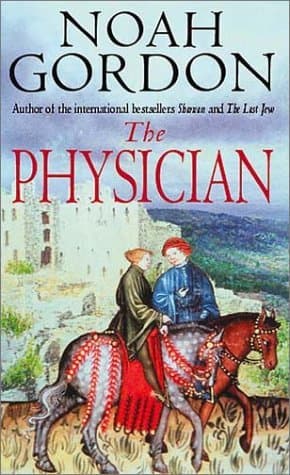
- The Physician
Noah Gordon
4.4 (39k) average on GoodreadsHistorical FictionGordon's The Physician also features a protagonist with advanced medical knowledge for his time, traveling to a foreign land for his studies, much like Adelia's journey and expertise. Both books provide rich detail about historical medical practices. However, The Physician is more of an epic historical saga, tracing the protagonist's entire life and career, while Mistress of the Art of Death is a more focused, contained mystery within a specific timeframe. Franklin's novel also gives a much stronger emphasis to the 'whodunit' aspect and the clash of gender roles than Gordon's broader historical narrative.
- Angels & Demons
Dan Brown
3.9 (2.7M) average on GoodreadsThrillerA Harvard symbologist races through Rome's ancient sites, deciphering cryptic clues to unmask the Illuminati and stop a vengeful plot to destroy the Vatican with a stolen antimatter weapon.
- Gone Girl
Gillian Flynn
4.1 (2.3M) average on GoodreadsThrillerA wife's sudden disappearance on her fifth anniversary reveals a web of lies and psychological warfare, exposing the secrets within a seemingly perfect marriage.
- The Girl on the Train
Paula Hawkins
3.9 (2.1M) average on GoodreadsThrillerA woman’s fascination with a seemingly perfect couple she watches from her daily train commute leads her into a dark investigation when she witnesses something that shatters their idyllic image.





Enjoyed the summary?
A summary gives you the shape of the book. The book itself has the detail, the examples and the voice.
Find Mistress of the Art of Death on AmazonAs an Amazon Associate, BookBrief earns from qualifying purchases. How we're funded