

Synopsis
Covers the whole plot, including the ending.
- Difficulty
- Medium
- Pacing
- Moderate
- Mood
- Mysterious, Unsettling, Thought-provoking, Dark
- Read it if
- You enjoy thought-provoking, morally complex stories that blend fantasy, horror, and social commentary, with a focus on a young protagonist's internal struggle.
- Skip it if
- You prefer straightforward fantasy with clear heroes and villains, or stories with a definitive, unambiguous resolution.
Mo Plot Summary
Covers the whole plot, including the ending.
The Whispers in the Woods
Mo, a sensitive and thoughtful young boy, lives in a quiet village with his parents. He struggles with his family's and peers' differing expectations. One day, playing in the ancient woods, he begins to hear a faint, ethereal voice. The voice is gentle and seems to offer guidance, but its origin and intentions are unclear. Mo first dismisses it as imagination, but the voice persists, becoming clearer and more insistent, often speaking in riddles or giving cryptic advice. This new presence subtly influences his perception, making him question his experiences.
The Pressure of Expectations
Mo's home life has a subtle tension between his parents. His father, a practical and somewhat strict man, values conformity and hard work, urging Mo to focus on tangible achievements. His mother, more mystical and open-minded, encourages Mo to trust his intuition and explore unseen aspects of life. This parental difference creates internal conflict for Mo, who wants to please both but finds their views incompatible. The mysterious voice often comments on these pressures, sometimes affirming his mother's perspective, other times hinting at a different path, further complicating Mo's choices.
The Bullying at School
At school, Mo is often bullied, especially by Randal and his friends. Randal, a physically large and cruel boy, enjoys tormenting Mo, isolating him and making him feel inferior. These encounters leave Mo feeling helpless and ashamed, pushing him further into his own internal world. The voice, now a constant companion, sometimes offers strategies to deal with the bullies, urging him to stand up for himself or find ways to avoid confrontation. However, Mo struggles to follow these suggestions, paralyzed by fear and a desire to avoid conflict, which worsens his situation.
The Stranger in the Village
A charismatic and eloquent stranger named Elias arrives in the village. He quickly captivates many residents with his powerful speeches and promises of a better future. Elias preaches purity and strength, subtly creating division and fear against those he calls 'outsiders' or 'weak.' Mo is initially intrigued by Elias's magnetism but soon feels uneasy. The voice in his head, however, is deeply suspicious of Elias, warning Mo to be wary of his words and true intentions. This creates another layer of conflict for Mo, as he sees many adults, including some of his friends' parents, falling under Elias's influence.
The Voice's Directives
As the pressures on Mo increase, so does the voice's influence. It moves beyond cryptic advice, offering increasingly direct instructions that challenge Mo's sense of right and wrong. For instance, it might suggest a seemingly harmless lie to avoid punishment or a subtle act of defiance against an injustice. Mo struggles with these directives, unsure whether to trust the voice or his own moral compass. The voice argues that these actions are necessary for his survival and growth, pushing Mo to question societal norms and his own obedience, blurring the lines between good and bad.
A Friend's Plea
Mo's close friend, Lily, a perceptive and kind girl, tells him about her growing worry about Elias and the tense atmosphere in the village. She notices changes in people's behavior, whispers of suspicion, and hardening attitudes, especially toward those who do not conform to Elias's ideals. Lily expresses her fear for the future and questions Elias's teachings, urging Mo to be cautious. Her plea resonates with Mo's own doubts, reinforcing the voice's warnings and making him realize that Elias's presence is more widespread and dangerous than he first thought, affecting even those he cares about.
The Confrontation with Randal
After enduring relentless bullying, the voice pushes Mo to confront Randal. It gives Mo a surge of unexpected courage and suggests a specific tactic. Instead of physical retaliation, the voice guides Mo to use Randal's insecurities against him, exposing a vulnerability or delivering a sharp, unexpected verbal retort that leaves Randal stunned and humiliated in front of his friends. This act of defiance, while not physical, is a turning point for Mo, showing his ability to stand up for himself, with the voice's direct help, and temporarily shifting their power dynamic.
The Village Divided
Elias's influence peaks, his sermons becoming more hostile and his followers more zealous. The divisions he created now appear as open hostility, with villagers turning against each other based on their loyalty to Elias's ideas. Friends become estranged, families argue, and the once peaceful community is fractured by suspicion and fear. Mo sees firsthand the destructive power of extremism, observing how fear can corrupt even well-meaning people. The voice expresses growing concern, urging Mo to understand the true nature of the conflict and the dangers of blind faith, whether in Elias or any other dogma.
A Difficult Choice
Mo faces a critical decision that forces him to choose between his personal safety, the voice's demands, and his community's well-being. This choice is often a moral dilemma, such as exposing Elias's true nature, protecting an 'outsider' targeted by Elias's followers, or following a path the voice insists is necessary for his survival but might risk others. The weight of this decision is immense, and Mo considers the potential consequences, knowing his actions could change his village's fate and his own future, forcing him to define his identity and moral boundaries.
The Revelation and Its Aftermath
In a climactic moment, Mo discovers the true nature of the mysterious voice. This revelation is often ambiguous, suggesting the voice might be an external entity, a manifestation of his subconscious, or a symbol of his moral compass. With this understanding, Mo makes a definitive choice about Elias and his village's future. The aftermath is not a clear victory or defeat, but a profound shift in Mo's understanding of himself and the world. He emerges with a clearer sense of identity, having navigated the complex demands of reality and fantasy, and having forged his own path among conflicting influences.
Principal Figures
Mo
Protagonist
A young boy struggling to find his identity amidst conflicting demands.
Mo is a sensitive, introspective, and initially timid young boy, caught between the pragmatic expectations of his father, the spiritual inclinations of his mother, and the harsh realities of bullying. He is deeply affected by the world around him, prone to introspection, and yearns for a sense of belonging and understanding. His internal world is rich, making him susceptible to the influence of the mysterious voice. He possesses an innate moral compass, which is constantly challenged by external pressures and the voice's directives, forcing him to question his own beliefs and the nature of reality.
Relationships: The Voice (Mysterious guide/internal manifestation, offering cryptic advice and challenges.); Father (Strict, pragmatic, demanding conformity.); Mother (Spiritual, intuitive, encouraging self-discovery.); Randal (Antagonistic bully, source of fear and humiliation.); Lily (Close friend, provides emotional support and shared apprehension.)
The Voice
Supporting/Supernatural Influence
An enigmatic, guiding presence heard only by Mo.
The Voice is an ethereal and mysterious entity, heard exclusively by Mo. It begins as a gentle, guiding presence offering cryptic advice, but gradually becomes more direct and even morally ambiguous in its instructions. Its origin is unknown – it could be a supernatural entity, a manifestation of Mo's subconscious, or a symbolic representation of his developing intuition. The Voice acts as both a mentor and a challenger, pushing Mo beyond his comfort zone and forcing him to confront difficult truths about himself and the world. It often provides counter-narratives to the societal pressures Mo faces.
Relationships: Mo (Sole confidante and recipient of guidance/challenges.)
Elias
Antagonist
A charismatic stranger who preys on the villagers' fears and desires.
Elias is a charismatic and manipulative stranger who arrives in Mo's village. He possesses a captivating presence and uses eloquent rhetoric to gain influence, preaching a message of purity and strength. Beneath his alluring exterior, Elias is a dangerous demagogue who subtly sows seeds of division and fear, targeting 'outsiders' and those who do not conform to his ideology. He represents the seductive power of extremism and the corruption of community spirit, becoming a significant external threat that Mo must confront. His influence tests the moral fabric of the village and Mo's own resolve.
Relationships: Mo (Ideological adversary, source of moral conflict.); Village community (Leader and manipulator of their fears and hopes.)
Randal
Supporting/Antagonist
The cruel leader of a group of bullies who torment Mo.
Randal is a physically imposing and aggressive boy who leads a group of bullies at Mo's school. He embodies the immediate, tangible threat of peer pressure and cruelty that Mo faces. Randal delights in tormenting Mo, often through physical intimidation and verbal abuse, making Mo feel helpless and ashamed. He represents the oppressive forces of conformity and the challenges Mo must overcome to assert his own identity and stand up for himself. His presence forces Mo to consider different strategies for self-preservation and defiance.
Relationships: Mo (Bully and victim.)
Lily
Supporting
Mo's kind and perceptive friend, who shares his apprehension.
Lily is Mo's close friend, a kind and perceptive girl who provides a vital source of emotional support and shared understanding. She is observant and sensitive to the changing atmosphere in the village, particularly concerning Elias's growing influence. Lily often voices her discomfort and concern, acting as a sounding board for Mo's own doubts and fears. She represents a connection to normalcy and a reminder of the community's potential for good, contrasting with the divisive forces at play. Her presence reinforces Mo's moral compass and his desire to protect those he cares about.
Relationships: Mo (Close friend, confidante.)
Mo's Father
Supporting
A pragmatic and rigid man who emphasizes conformity and tangible success.
Mo's father is a practical and somewhat rigid man who places a high value on conformity, hard work, and tangible achievements. He embodies the societal pressure to fit in and adhere to established norms, often dismissing Mo's more imaginative or introspective tendencies. His expectations create internal conflict for Mo, who struggles to reconcile his father's pragmatic worldview with his own emerging sense of self and the guidance of the mysterious voice. He represents a traditional, perhaps well-meaning but ultimately limiting, perspective on how Mo should navigate the world.
Relationships: Mo (Father-son, source of pressure and expectation.); Mo's Mother (Married, differing worldviews.)
Mo's Mother
Supporting
A spiritual and open-minded woman who encourages Mo's intuition.
Mo's mother possesses a more mystical and open-minded disposition than her husband. She encourages Mo to trust his intuition, explore his inner world, and embrace the unseen aspects of life. She provides a counter-balance to her husband's pragmatism, offering Mo a sense of acceptance and understanding for his unique sensitivities. Her influence empowers Mo to consider alternative perspectives and to trust his own inner voice, aligning more closely with the initial gentle nature of the mysterious voice he hears. She represents compassion and the importance of spiritual and emotional well-being.
Relationships: Mo (Mother-son, source of understanding and encouragement.); Mo's Father (Married, differing worldviews.)
Themes & Insights
Identity and Self-Discovery
The main theme is Mo's struggle to form his own identity amid conflicting demands. He is pulled between his parents' different views, peer pressure (Randal), and Elias's dangerous ideology. The mysterious voice guides and challenges him, forcing Mo to question who he is and who he wants to be. His journey is one of internal discovery, where he must learn to separate his true self from others' expectations and influences, ultimately choosing his own moral path, as seen when he confronts Randal or stands against Elias.
“Do you hear yourself, Mo? Or do you only hear what others want you to be?”
The Nature of Reality and Perception
The novel constantly blurs the lines between fantasy and reality, making Mo and the reader question what is real. The mysterious voice, heard only by Mo, is a key example of this ambiguity. Is it a supernatural entity, his imagination, or his subconscious? This theme extends to how characters perceive events and each other, especially with Elias's manipulation. What one person sees as truth, another sees as deception. Mo's journey is also about understanding that reality is subjective and that his perception shapes his experience, as he learns to interpret the voice and the world around him.
“The world is not as it seems, little one. It is as you choose to see it.”
The Dangers of Extremism and Conformity
S. Pearce explores extremism through Elias, who uses fear and promises of belonging to divide the community. The novel shows how easily people can be swayed by charismatic leaders and how quickly conformity can lead to prejudice and hostility. Mo sees his village fracture as Elias's rhetoric grows, highlighting the importance of critical thinking and independent judgment. Randal's bullying also reinforces the theme of conformity, showing the pressures to fit in and the potential for cruelty when individuals blindly follow a leader or group.
“When fear speaks, few stop to question its tongue.”
Moral Choice and Conscience
Mo consistently faces difficult moral choices, often at the voice's urging, which sometimes suggests actions that challenge his sense of right and wrong. These dilemmas force Mo to confront his conscience and define his ethical boundaries. Whether confronting a bully, questioning parental expectations, or standing against Elias's harmful ideology, Mo's journey is a series of tests of his moral strength. The novel suggests that true morality comes from internal conviction, not blind obedience, and that navigating an 'unsettled world' requires a strong, self-defined moral compass.
“The easiest path is rarely the truest one, Mo. What does your heart truly say?”
Plot Devices & Literary Techniques
The Mysterious Voice
An enigmatic, guiding presence heard only by Mo, blurring lines between reality and fantasy.
The mysterious voice is the primary plot device, serving multiple functions. It acts as a catalyst for Mo's internal journey, a source of conflict, and a means of exploring the themes of identity and perception. Its ambiguous nature keeps the reader guessing about its true origin – is it supernatural, a manifestation of Mo's subconscious, or something else entirely? The voice provides Mo with guidance, challenges his moral compass, and pushes him to make difficult decisions, thereby driving the narrative forward and forcing Mo's character development. It is the central mystery that Mo must unravel to understand himself and his world.
The Charismatic Antagonist (Elias)
A manipulative figure who embodies the dangers of extremism and social division.
Elias serves as a crucial antagonist, embodying the external threats to Mo's personal integrity and the community's well-being. His charisma and manipulative rhetoric are plot devices that allow the novel to explore themes of extremism, conformity, and the fragility of social harmony. Elias's presence creates significant tension and conflict, forcing Mo to confront moral dilemmas on a larger scale than his personal struggles. He acts as a foil to Mo's innocent nature and the voice's often cryptic guidance, providing a clear, dangerous external force that Mo must eventually reckon with, thereby driving the climax of the story.
Moral Dilemmas
Situations that force Mo to make difficult ethical choices, shaping his character.
Throughout the narrative, Mo is repeatedly faced with moral dilemmas. These aren't just minor choices; they are significant crossroads that force him to weigh different values, loyalties, and potential consequences. Examples include whether to obey his parents, stand up to Randal, trust the voice's morally ambiguous advice, or challenge Elias's growing influence. These dilemmas are essential plot devices because they actively shape Mo's character arc, forcing him to define his own identity and moral compass. Each choice moves the plot forward, revealing more about Mo's inner strength and the complex nature of the world he inhabits.
Symbolic Setting (The Woods)
The ancient woods serve as a liminal space where fantasy and reality converge for Mo.
The ancient woods bordering Mo's village function as a powerful symbolic setting. They are the initial place where Mo hears the mysterious voice, establishing them as a liminal space where the boundaries between reality and the supernatural blur. The woods represent both refuge and a place of unsettling mystery, reflecting Mo's internal state. They are separate from the structured, demanding world of the village and school, allowing for introspection and the emergence of the fantastic. As a plot device, the woods provide a consistent backdrop for Mo's encounters with the voice and his internal struggles, grounding the fantastical elements in a tangible, yet mystical, location.
Mo Quotes
“The wind was a storyteller, and tonight it whispered tales of old magic and forgotten kings.”
“Every shadow holds a secret, and every secret, a key to a greater truth.”
“Courage isn't the absence of fear, but the will to act despite it.”
“The past is a river, ever flowing, ever changing, yet its banks remain.”
“Some bonds are forged in fire, others in the quiet understanding of shared burdens.”
“Magic is not a tool, but a part of the world, and we are but its conduits.”
“To truly see, you must first close your eyes to what you expect to find.”
“The greatest battles are often fought within the confines of one's own mind.”
“Hope, like a faint star, can guide you through the darkest night.”
“Not all who wander are lost, but some are searching for a home they've never known.”
“The whispers of the ancient ones are not always kind, but they are always true.”
“A kingdom built on lies will eventually crumble, no matter how grand its walls.”
“Sometimes, the quietest moments hold the loudest revelations.”
“The balance of the world is delicate; even a single feather can tip the scales.”
Quiz
10 questions on the plot and the characters. Each answer comes with a short explanation.
Question 1
What is the primary internal conflict Mo faces throughout the story?
- His struggle to choose between two different schools.
- The conflicting demands of family, friends, and strangers on his conscience.
- His desire to escape his home and travel the world.
- A physical battle against a supernatural entity.
Show answer
B. The conflicting demands of family, friends, and strangers on his conscience. The book description explicitly states that Mo attempts to find his way as family, friends, and strangers tug at his conscience with their conflicting demands, which is his primary internal conflict.
Question 2
What kind of guidance does Mo receive amidst his struggles?
- Advice from a wise old mentor figure.
- Letters from a distant relative.
- A mysterious voice that attempts to guide him.
- Dreams and visions of the future.
Show answer
C. A mysterious voice that attempts to guide him. The book description mentions that 'All the while a mysterious voice attempts to guide him,' indicating this as his source of guidance.
Question 3
Which of the following themes is a central focus of 'Mo'?
- The triumph of technology over nature.
- The examination of notions of identity in an unsettled world.
- The pursuit of romantic love in a dystopian society.
- The history of a fictional kingdom.
Show answer
B. The examination of notions of identity in an unsettled world. S. Pearce's enigmatic tale 'skilfully examines notions of identity in an unsettled world,' making this a central theme.
Question 4
The narrative of 'Mo' is characterized by its oscillation between which two primary genres/moods?
- Comedy and satire.
- Science fiction and romance.
- Fantasy and reality, horror and wonder.
- Historical fiction and biography.
Show answer
C. Fantasy and reality, horror and wonder. The book description states that 'Mo hovers tantalisingly between fantasy and reality, between horror and wonder,' defining its unique narrative style.
Question 5
What specific societal issues or elements does 'Mo' delve into at times?
- Ancient prophecies and lost civilizations.
- The supernatural and violent extremism.
- Space exploration and alien encounters.
- Economic recessions and political corruption.
Show answer
B. The supernatural and violent extremism. The description notes the story 'Delving at times into the supernatural and at others into violent extremism,' highlighting these specific elements.
Question 6
How is 'Mo' characterized in terms of its overall message or purpose?
- As a lighthearted adventure story.
- As a modern day morality tale.
- As a historical exposé.
- As a scientific treatise.
Show answer
B. As a modern day morality tale. The story 'can be seen as a modern day morality tale,' according to the description, indicating its didactic nature.
Question 7
What kind of world does Mo inhabit, as described in the context of his identity struggle?
- A utopian society free of conflict.
- A post-apocalyptic wasteland.
- An unsettled world.
- A rigidly controlled totalitarian state.
Show answer
C. An unsettled world. The tale 'skilfully examines notions of identity in an unsettled world,' directly describing Mo's environment.
Question 8
Given the description, what is the most likely emotional impact 'Mo' aims to have on its readers?
- To evoke consistent laughter and amusement.
- To inspire a sense of calm and predictability.
- To keep readers guessing throughout and engage them intellectually.
- To instill fear and dread without resolution.
Show answer
C. To keep readers guessing throughout and engage them intellectually. The description states that the story 'will keep readers guessing throughout,' implying an aim for intellectual engagement and suspense.
Question 9
How does the author, S. Pearce, approach the examination of identity within the narrative?
- Through straightforward exposition and clear answers.
- By presenting Mo with simple, dichotomous choices.
- Skilfully and enigmatically, reflecting the complex nature of the subject.
- Primarily through the use of historical anecdotes.
Show answer
C. Skilfully and enigmatically, reflecting the complex nature of the subject. The description characterizes the tale as 'enigmatic' and notes it 'skilfully examines notions of identity,' suggesting a nuanced and complex approach rather than a simple one.
Question 10
Considering the blend of fantasy, reality, horror, and wonder, what kind of protagonist is Mo likely to be perceived as by readers?
- A purely heroic figure with unwavering conviction.
- A morally ambiguous character grappling with complex choices.
- A detached observer who rarely participates in the action.
- A comedic relief character throughout the story.
Show answer
B. A morally ambiguous character grappling with complex choices. Given the 'conflicting demands' and the 'modern day morality tale' aspect, Mo is likely a protagonist facing difficult moral choices, making him morally ambiguous rather than purely heroic or detached.
Mo FAQ
What is the central conflict Mo faces throughout the book?
Mo's central conflict revolves around navigating the conflicting demands of his family, friends, and strangers, each pulling his conscience in different directions. Simultaneously, he grapples with a mysterious voice attempting to guide him, forcing him to question his own identity and moral compass in an unsettling world.
Who are the key figures in Mo's immediate family and how do they influence him?
While specific names are not provided in the synopsis, Mo's family members are described as significant influences, making 'demands' on his conscience. Their conflicting perspectives likely represent traditional values or personal desires that Mo must reconcile with his developing sense of self.
How does the 'mysterious voice' manifest and what is its apparent goal?
The mysterious voice is presented as an entity that 'attempts to guide him.' Its manifestation is left ambiguous, but its goal appears to be influencing Mo's decisions and potentially shaping his identity or path, possibly acting as a moral compass or a tempting whisper.
What role does the 'unsettled world' play in Mo's journey and the book's themes?
The 'unsettled world' serves as the backdrop for Mo's identity struggle, reflecting the external chaos and moral ambiguity he experiences internally. It provides the context for both supernatural elements and violent extremism, amplifying the stakes of his choices and highlighting the fragility of identity in a turbulent environment.
How does the book blend elements of fantasy, horror, and wonder?
The book blends these elements by presenting Mo's journey as hovering 'tantalisingly between fantasy and reality, between horror and wonder.' This suggests that the supernatural aspects could be beautiful or terrifying, and Mo's perception of his world is constantly shifting between the mundane and the extraordinary, creating a sense of pervasive ambiguity.
Are there any subtle clues that suggest the mysterious voice might be an external entity versus an internal manifestation of Mo's conscience?
The description 'a mysterious voice attempts to guide him' leans slightly towards an external entity, implying a separate will. However, the ambiguity allows for interpretation that it could be Mo's own burgeoning conscience, a suppressed desire, or even a fragmented aspect of his psyche externalized due to stress.
Does the book offer any hints about the origin or nature of the 'violent extremism' Mo encounters?
The synopsis states the story delves 'at times into violent extremism,' suggesting it's not just a backdrop but an active force. Without more details, it's implied this extremism might be a direct consequence of the 'unsettled world' or a specific ideological group that attempts to recruit or influence Mo, testing his moral boundaries.
Are there recurring symbols or motifs related to identity that readers should look for?
Given the focus on 'notions of identity,' readers should look for recurring symbols related to masks, mirrors, reflections, or perhaps crossroads and paths. These could subtly reinforce Mo's struggle to define himself amidst external pressures and internal guidance.
What psychological impact do the conflicting demands have on Mo's development?
The conflicting demands likely create significant psychological strain on Mo, leading to confusion, self-doubt, and potentially a fragmented sense of self. He is constantly pulled in different directions, which could inhibit his ability to form a stable identity and foster anxiety about making the 'right' choice.
How does Mo's age and stage of development influence his susceptibility to external influences and the mysterious voice?
As a 'young boy,' Mo is likely in a formative stage of development, making him highly susceptible to external influences and the mysterious voice. He is still forming his worldview and moral framework, rendering him more vulnerable to manipulation and making the search for identity particularly acute and challenging.
In what ways might the 'horror' elements contribute to Mo's psychological state rather than just being external threats?
The 'horror' elements could be deeply internalized, manifesting as Mo's fears, anxieties, and the psychological terror of making wrong choices or losing himself. The horror might not just be external monsters or events, but the terrifying prospect of moral corruption or the dissolution of his own identity under pressure.
How does Mo's internal struggle with the 'mysterious voice' reflect a common psychological dilemma?
Mo's internal struggle with the 'mysterious voice' reflects the common psychological dilemma of internalizing external pressures versus developing an authentic inner self. It can be seen as an allegory for the battle between societal expectations, personal desires, and the development of one's own moral conscience and autonomy.
Is the ending of 'Mo' ambiguous, leaving the reader to decide Mo's ultimate fate or identity?
Given that the book 'will keep readers guessing throughout' and is an 'enigmatic tale,' it is highly probable that the ending of 'Mo' is ambiguous. It likely leaves Mo's ultimate identity or the definitive triumph of one influence over another open to the reader's interpretation, reinforcing the themes of identity and moral ambiguity.
How might the 'modern day morality tale' aspect challenge traditional notions of good and evil?
As a 'modern day morality tale,' the book likely challenges traditional notions of good and evil by presenting situations where choices are not clear-cut, and characters' motivations are complex. It might suggest that 'good' and 'evil' are subjective, context-dependent, or even that the path to a moral life is fraught with compromises and difficult personal sacrifices.
Could the 'mysterious voice' be interpreted as a metaphor for external societal pressures or even the author's narrative voice?
Yes, the 'mysterious voice' could be interpreted metaphorically in several ways. It might represent the collective societal pressures Mo faces, the insidious whispers of extremism, or even an allegorical representation of fate. Additionally, in a metafictional sense, it could be seen as the author's guiding hand, subtly influencing Mo's journey and the reader's perception.
What is the ultimate message regarding identity that Pearce intends for readers to take away from Mo's journey?
The ultimate message regarding identity likely emphasizes its fluid, contested nature, particularly in a turbulent world. Pearce probably intends for readers to understand that identity is not fixed but continuously shaped by internal struggles, external pressures, and the choices one makes, suggesting that true identity is an ongoing process of self-discovery amidst chaos.
How does the book's blend of 'fantasy and reality' contribute to its thematic exploration of identity?
The blend of 'fantasy and reality' directly contributes to the thematic exploration of identity by blurring the lines between what is real and what is imagined, external and internal. This ambiguity forces Mo, and the reader, to question the nature of truth and self, suggesting that identity itself can be a fantastical construct or a fragile reality.
Similar books
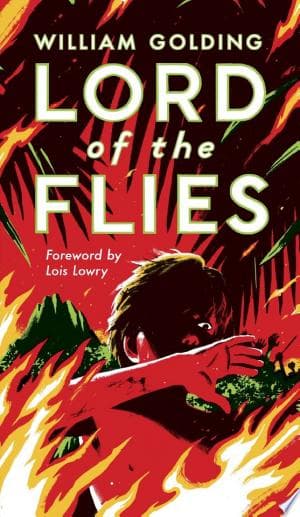
- Lord of the Flies
William Golding
3.7 (2.3M) average on GoodreadsYoung AdultExplores the dark side of human nature and moral dilemmas through young characters in an isolated setting.
- The Ocean at the End of the Lane
Neil Gaiman
4.0 (481k) average on GoodreadsFantasyFeatures a child protagonist encountering unsettling, magical realism elements and grappling with adult themes.
- A Wizard of Earthsea
Ursula K. Le Guin
4.0 (241k) average on GoodreadsFantasyBoth 'Mo' and 'A Wizard of Earthsea' explore themes of responsibility, power, and coming-of-age. However, 'Mo' offers a more grounded, intimate focus on immediate adolescent pressures and community conflict, whereas Le Guin's work operates on a grander, more philosophical scale with a broader world-building scope.
- Harry Potter and the Sorcerer's Stone
J.K. Rowling
4.5 (7M) average on GoodreadsFantasyRescued from a miserable life under the stairs, an orphaned boy discovers he's a wizard destined for a magical school, where he uncovers a dangerous secret tied to the dark wizard who murdered his parents.
- The Hunger Games
Suzanne Collins
4.3 (6.4M) average on GoodreadsFantasyIn a future where children fight to the death on live television, Katniss Everdeen volunteers for the arena, turning a death sentence into a fight for survival and a spark of rebellion.
- 1984
George Orwell
4.2 (3.1M) average on GoodreadsPoliticsIn a future where surveillance and thought control are absolute, a man's search for truth clashes with the Party, showing that hope can be a form of rebellion.




Enjoyed the summary?
A summary gives you the shape of the book. The book itself has the detail, the examples and the voice.
Find Mo on AmazonAs an Amazon Associate, BookBrief earns from qualifying purchases. How we're funded