

Synopsis
Covers the whole plot, including the ending.
- Difficulty
- Medium
- Pacing
- Fast
- Mood
- Dark, Desperate, War-torn, Hopeful (eventually)
- Read it if
- You've read the first two Hunger Games books and need to know how the story ends, even if it's a difficult journey.
- Skip it if
- You're looking for a light, feel-good read with a straightforward happy ending.
Mockingjay Plot Summary
Covers the whole plot, including the ending.
District 13 and the Aftermath
Katniss Everdeen wakes in District 13's medical ward, a military, underground bunker believed destroyed by the Capitol decades ago. She is reunited with her mother and sister, Prim. Gale Hawthorne rescued many survivors from District 12 before its destruction. District 13 is led by President Alma Coin, a stern leader, and Plutarch Heavensbee, the former Head Gamemaker. Katniss sees the ruins of District 12 and destruction across other districts, confirming the rebellion's scale. She struggles with PTSD, nightmares, and trauma from the Quarter Quell, especially Peeta Mellark's capture by the Capitol. Coin and Plutarch suggest she become the rebellion's symbol, the 'Mockingjay', to inspire the fighting districts.
The Mockingjay's Debut
Katniss reluctantly agrees to be the Mockingjay, but with conditions: she demands immunity for all captured tributes, including Peeta, and the right to kill President Snow herself. Coin agrees. Katniss struggles to perform in staged propaganda videos (propos) filmed in District 13's sterile setting. Haymitch Abernathy suggests she go to actual war zones to film genuine reactions. Her first successful propos are filmed in District 8, during a Capitol bombing raid on a hospital, and later at District 12's ruins, where she sings 'The Hanging Tree'. These raw, emotional videos quickly unite rebel forces and inspire hope across the oppressed districts, establishing her as a powerful symbol.
Peeta's Capture and Rescue
During a propo shoot, the Capitol broadcasts interviews with Peeta, who appears thin and brainwashed, warning Katniss and the rebels about fighting the Capitol. His pleas deeply upset Katniss. District 13 intelligence reveals Peeta is held with other captured victors (Johanna Mason, Enobaria, Annie Cresta) in the Capitol. Gale volunteers for a dangerous mission to infiltrate the Capitol and rescue them. The mission succeeds, but Peeta returns disoriented and violent due to 'hijacking' – a Capitol torture technique using tracker jacker venom to distort memories and turn him against Katniss. He tries to strangle her, showing the extent of his manipulation.
Rehabilitation and Military Strategy
Peeta is isolated and undergoes intensive de-hijacking therapy with Dr. Aurelius, a Capitol defector. He slowly distinguishes real memories from fake ones, but his recovery is hard and painful, marked by confusion and distrust. Katniss trains with Gale and Finnick Odair in District 13's military exercises. She struggles with the moral questions of warfare, especially the use of advanced weapons designed by Beetee and Gale, which raises ethical concerns about harm to civilians. Coin and Plutarch plan the next rebellion phases, focusing on capturing key Capitol strongholds and spreading the revolution's influence.
The Assault on District 2
District 2, home to the Capitol's main military academy and a large mountain fortress called 'The Nut,' remains loyal to President Snow. Coin orders an assault, and Katniss, Gale, and Finnick are deployed. The rebels face a hard moral choice: destroy The Nut by collapsing its tunnels, trapping thousands of Capitol loyalists inside, or try to take it by force, leading to many rebel casualties. Gale suggests sealing the exits to force the Capitol soldiers out, but it causes significant loss of life. Katniss makes a public speech calling for peace, but a loyalist shoots her, and her bulletproof Mockingjay suit barely saves her.
Infiltration of the Capitol
As the war grows, Katniss is assigned to a 'Star Squad' of propo filmers, including Gale, Finnick, Cressida, Messalla, Castor, Pollux, and a recovering Peeta, whose presence is meant to boost morale and possibly film his death. Their mission is supposedly to film propos in the Capitol, but Katniss wants to reach Snow. The Capitol becomes a deadly arena, full of 'pods' – booby traps and lethal devices designed to kill rebels. The squad moves through a complex cityscape, facing fire, engineered creatures, and armed Peacekeepers. The lines between propaganda and actual combat blur as they suffer casualties.
The Sewer Attack and Finnick's Death
While moving through the Capitol's sewers to avoid detection, the Star Squad is ambushed by engineered lizard-mutts, with sharp claws and the ability to mimic human voices, including calling out 'Katniss'. The attack is brutal and chaotic. Finnick Odair, a beloved victor and Katniss's ally, is dragged into the darkness by the mutts and killed. Peeta's hijacking returns during the chaos, forcing Katniss to make hard choices to protect him. The remaining squad members are devastated by the loss and the horrific nature of the Capitol's defenses, further showing the war's brutality.
The President's Mansion
After the sewer attack, Katniss, Peeta, Gale, and a few remaining squad members push toward President Snow's mansion. The Capitol's defenses are failing, and the streets are full of refugees seeking shelter. They see a horrific scene: a hovercraft with Capitol markings drops parachutes of silver boxes into a crowd of refugee children gathered outside Snow's mansion, promising help. When the children rush forward, the boxes explode, causing many deaths. A second wave of explosions targets the arriving medical team, including Prim. Katniss watches in horror as her sister is engulfed in flames.
Prim's Death and Snow's Capture
Primrose Everdeen dies in the second wave of explosions outside Snow's mansion. Katniss, seeing her sister's death, is severely burned and injured in the blast. She is rushed to a rebel medical facility. The attack on the children and medics turns the remaining Capitol loyalists against Snow, leading to his quick overthrow and capture by rebel forces. The war is effectively over, with the Capitol falling to District 13. Katniss, recovering from her injuries, is filled with grief and a strong desire for revenge, complicated by her growing suspicion about who truly caused the attack that killed Prim.
The Execution and Coin's Rise
President Snow is held captive, awaiting execution. Katniss is given the honor of delivering the final arrow. However, during a meeting with President Coin, Coin proposes a final Hunger Games with Capitol children to punish them for their parents' sins, a suggestion that deeply disturbs Katniss. Katniss also realizes the bombs that killed Prim were designed by Beetee and Gale, identical to Capitol weapons. This leads her to suspect Coin orchestrated the attack to discredit Snow and take power. At Snow's public execution, instead of killing Snow, Katniss shoots Coin through the heart, assassinating Panem's newly appointed leader. Snow laughs before the ensuing chaos tramples him to death.
Aftermath and Return to District 12
Katniss is arrested for Coin's assassination but is eventually found not guilty, largely due to Dr. Aurelius's testimony about her mental state. She returns to a desolate, still-recovering District 12, with Haymitch. She spends her days in deep depression, struggling with her trauma and immense losses. Peeta, having largely recovered from his hijacking, eventually returns to District 12. He begins planting primroses around the district and uses a game of 'real or not real' to help them both cope with their shared past and rebuild trust. Gale, unable to reconcile their differences and his role in the war, takes a high-ranking job in District 2.
Rebuilding and Hope
Years pass. Katniss and Peeta slowly heal from their emotional and physical wounds. They find comfort in each other, working to rebuild District 12 and create a new life free from the Capitol's control. Katniss still struggles with nightmares and memories of her loved ones, but Peeta's steady presence and their shared understanding provide comfort. They eventually marry and have two children. The epilogue shows Katniss watching her children play, thinking about the lasting scars of war but also the hope for a future where her children will never know the Hunger Games. She carries the weight of memory but chooses to focus on the good.
Mockingjay Characters
Katniss Everdeen
Protagonist
The reluctant symbol of the rebellion, the Mockingjay.
Katniss is a fiercely independent and protective young woman, deeply traumatized by her experiences in the Hunger Games. She is driven by love for her family and friends, particularly Prim, and a profound sense of justice. Initially resistant to becoming a political symbol, she accepts the role of the Mockingjay out of necessity and a desire to dismantle the Capitol's oppressive regime. Her moral compass is often tested by the brutal realities of war, leading her to question the motives of both sides.
Relationships: Peeta Mellark (Complicated romantic relationship, co-survivors, eventual husband); Gale Hawthorne (Childhood best friend, romantic interest, ideological foil); Primrose Everdeen (Beloved younger sister, primary motivation); President Alma Coin (Leader of District 13, manipulative ally, eventual enemy); Haymitch Abernathy (Mentor, fellow victor, drinking companion)
Peeta Mellark
Supporting/Love Interest
The kind baker's son, hijacked by the Capitol.
Peeta is compassionate, empathetic, and a skilled orator, often acting as Katniss's emotional anchor. His capture and subsequent 'hijacking' by the Capitol, which distorts his memories and turns him against Katniss, is a central conflict. Despite the severe trauma, he fights to regain his identity and sanity. His innate goodness and ability to connect with people make him a powerful, albeit damaged, figure in the rebellion. He represents the hope for healing and rebuilding after war.
Relationships: Katniss Everdeen (Complicated romantic relationship, co-survivors, eventual husband); Dr. Aurelius (Therapist during de-hijacking process)
Gale Hawthorne
Supporting/Love Interest
Katniss's best friend and a fierce rebel warrior.
Gale is strong, resourceful, and fiercely loyal, but also driven by a deep-seated anger and desire for revenge against the Capitol. His pragmatic and sometimes ruthless approach to warfare, particularly his involvement in designing morally ambiguous traps, creates a significant ideological rift with Katniss. He is a skilled hunter and strategist, becoming a key military leader in the rebellion. His love for Katniss is a constant undercurrent, but their differing views on the cost of victory ultimately separate them.
Relationships: Katniss Everdeen (Childhood best friend, romantic interest, ideological foil); Beetee Latier (Collaborator in designing weaponry)
President Alma Coin
Antagonist
The cold, calculating leader of District 13.
President Coin is the stern and pragmatic leader of District 13, whose primary objective is the overthrow of the Capitol and the establishment of a new Panem under her rule. She is highly intelligent, strategic, and ruthless, prioritizing the rebellion's success above individual lives. Her cold demeanor and manipulative tactics gradually reveal her ambition and a potential for tyranny that mirrors President Snow's, making her a formidable, albeit initially allied, antagonist to Katniss's ideals.
Relationships: Katniss Everdeen (Nominal ally, manipulative leader, eventual victim); Plutarch Heavensbee (Advisor and strategist)
President Coriolanus Snow
Antagonist
The tyrannical president of Panem.
President Snow is the cunning and ruthless dictator of Panem, determined to crush the rebellion and maintain his iron grip on power. Even in defeat, he remains a master manipulator, attempting to sow discord among the rebels and assert his twisted version of justice. His cold cruelty and willingness to sacrifice countless lives to preserve his regime make him a truly terrifying figure. He represents the ultimate corruption of power and the oppressive system Katniss fights to dismantle.
Relationships: Katniss Everdeen (Arch-nemesis); President Alma Coin (Rival for power)
Primrose Everdeen
Supporting
Katniss's beloved younger sister and a budding healer.
Prim is gentle, compassionate, and intelligent, evolving from a frightened child into a skilled medic during the rebellion. Her growth and dedication to healing others represent hope and the innocence that Katniss fights to protect. She is Katniss's primary motivation throughout the series, and her shocking death serves as the ultimate tragedy, profoundly impacting Katniss and the narrative's direction.
Relationships: Katniss Everdeen (Older sister, protector); Mrs. Everdeen (Mother)
Haymitch Abernathy
Supporting
Katniss and Peeta's cynical, but wise, mentor.
Haymitch is a former victor, perpetually drunk but possessing a sharp mind and deep understanding of the Capitol's machinations. He serves as a mentor to Katniss and Peeta, offering cynical but often profound advice. His experiences have left him deeply scarred, but he retains a core loyalty to his tributes. In District 13, he plays a crucial role in shaping Katniss's public image and guiding her through the political landscape of the rebellion.
Relationships: Katniss Everdeen (Mentee, surrogate daughter figure); Peeta Mellark (Mentee)
Finnick Odair
Supporting
The charming and traumatized victor from District 4.
Finnick is a charismatic and skilled victor, but beneath his charming exterior lies deep trauma from his past experiences, particularly the exploitation by the Capitol. He is fiercely loyal to his loved ones, especially Annie Cresta, and becomes a trusted ally to Katniss. His journey in District 13 sees him grappling with his past and fighting for a future with Annie, making his eventual death a poignant loss for the rebellion.
Relationships: Annie Cresta (Fiancée, eventual wife); Katniss Everdeen (Ally, fellow victor)
Plutarch Heavensbee
Supporting
The former Head Gamemaker turned rebel strategist.
Plutarch is intelligent, manipulative, and a master of public relations and strategy. He defected from the Capitol to District 13, where he becomes a key advisor to President Coin and instrumental in developing the rebellion's propaganda efforts. He understands the power of symbols and public perception, guiding Katniss in her role as the Mockingjay. While seemingly on the side of good, his methods often reflect a similar strategic ruthlessness to the Capitol he once served.
Relationships: President Alma Coin (Advisor, strategist); Katniss Everdeen (Propaganda director)
Beetee Latier
Supporting
The brilliant inventor and technology expert from District 3.
Beetee is a brilliant but frail inventor and technologist, whose genius is invaluable to the rebellion. He designs advanced weaponry and communication systems, including the two-stage bombs used in the Capitol, which inadvertently lead to Prim's death. His intellect is a powerful asset, but his creations highlight the moral complexities of warfare and the unintended consequences of technological advancement.
Relationships: Gale Hawthorne (Collaborator in weapon design)
Mockingjay Themes
The Corrupting Nature of Power
The novel explores how power, no matter who holds it, can corrupt. President Snow shows this, keeping his tyrannical rule through fear. However, President Coin, once in power, quickly shows her own authoritarian tendencies, suggesting a final Hunger Games for Capitol children. Katniss's assassination of Coin is a direct response to this perceived corruption, stopping a new form of tyranny from replacing the old. The cycle of oppression is a constant threat, regardless of which 'side' is in power.
“'You'll never be free of them,' Snow had told me. 'They'll follow you to the grave.”
The Moral Ambiguity of War
Mockingjay looks at the difficult ethical problems faced during war. The rebellion, while fighting for freedom, uses tactics that blur moral lines, such as Gale's strategic use of traps and Beetee's two-stage bombs. The attack on District 2 forces Katniss to confront the cost of victory, where innocent lives are often lost. The bombing of children outside Snow's mansion, first blamed on the Capitol but later suspected to be Coin's doing, shows how war can desensitize people and lead to atrocities by both sides, making it hard to tell 'good' from 'evil'.
“'War is not a game,' he says. 'It's a way of life.”
Trauma and Psychological Scars
The lasting psychological effect of violence and war is a main theme. Katniss suffers from severe PTSD, having nightmares and emotional numbness throughout the book. Peeta's 'hijacking' is a clear example of the psychological manipulation and trauma inflicted by the Capitol, leaving him a shell of his former self. Even after the war, characters like Katniss and Haymitch struggle to find peace, dealing with their losses and the horrors they saw. The 'real or not real' game becomes a way for Peeta and Katniss to cope, symbolizing their ongoing fight to distinguish truth from trauma.
“It's not over. It'll never be over.”
The Power of Symbols and Propaganda
The novel carefully explores how symbols and propaganda are used as weapons in war. Katniss, as the Mockingjay, is deliberately made into a symbol to inspire the rebellion. Her 'propos' are carefully planned to create emotion and energize the districts. Conversely, the Capitol uses Peeta as a tool for counter-propaganda, trying to demoralize the rebels. The manipulation of public perception is a constant battle, showing how images and stories can be as powerful as bombs in shaping a conflict's course and controlling the masses.
“You've got to be the Mockingjay. It's the only way.”
Love, Loss, and Hope for the Future
Amidst the violence and despair, the lasting power of love and the possibility of a hopeful future remain. Katniss's love for Prim and Peeta drives many of her actions, and Prim's death is the ultimate reason for Katniss's final, decisive act. The slow, painful rebuilding of Katniss and Peeta's relationship after his hijacking symbolizes the healing process and the choice to embrace life despite deep loss. Their eventual family represents a fragile but strong hope for a world free from the cycle of violence, where future generations can live in peace.
“There are much worse games to play.”
Plot Devices & Literary Techniques
The Mockingjay Symbol
A potent emblem of rebellion and hope.
The Mockingjay, initially Katniss's district token, transforms into the powerful symbol of the entire rebellion against the Capitol. It represents defiance, hope, and the collective will of the oppressed districts. Its image is used extensively in propaganda (propos) to rally forces and inspire uprisings. Katniss embodies this symbol, her actions and image becoming synonymous with the fight for freedom, demonstrating the power of iconography in political movements.
Hijacking
A Capitol torture method that distorts memories.
Hijacking is a psychological torture technique employed by the Capitol, using tracker jacker venom to manipulate and distort a victim's memories, turning them against their loved ones. Peeta Mellark is the primary victim of this device, causing him to perceive Katniss as a threat. It serves as a powerful metaphor for psychological warfare, brainwashing, and the trauma of war, highlighting the Capitol's cruelty and the deep psychological scars left on its victims. Peeta's slow recovery from hijacking is a central element of his character arc.
Propos (Propaganda Videos)
Rebel-produced videos used to inspire and inform.
Propos are propaganda videos produced by District 13, starring Katniss as the Mockingjay, designed to rally the rebel forces and demoralize the Capitol. They are a crucial tool in the psychological warfare of the rebellion, demonstrating the power of media and carefully crafted narratives. The tension between staged performances and authentic moments in these propos highlights the manipulation inherent in propaganda, even when serving a 'just' cause. They are key in spreading the rebellion's message and solidifying Katniss's symbolic role.
Pods (Capitol Traps)
Lethal booby traps deployed throughout the Capitol.
Pods are sophisticated, deadly booby traps strategically placed throughout the Capitol by President Snow to turn the city into a deathtrap for invading rebels. They range from firebombings and laser grids to genetically engineered muttations. These pods transform the urban landscape into a literal Hunger Games arena, forcing Katniss and her squad to navigate constant peril. They serve to illustrate the Capitol's advanced technology and its ruthless determination to destroy its enemies, effectively turning its own city into a weapon.
The Two-Stage Bomb
A delayed-detonation weapon designed for maximum casualties.
The two-stage bomb, designed by Beetee and Gale, is a weapon that detonates once, then after a brief pause, detonates again, specifically targeting first responders and medics who rush to aid the initial victims. This device is morally ambiguous, highlighting the ruthless efficiency desired in wartime. Its use in the attack outside Snow's mansion, which kills Prim, becomes a pivotal plot point, raising questions about the ethics of rebel warfare and ultimately leading Katniss to suspect Coin's true motives.
Quiz
10 questions on the plot and the characters. Each answer comes with a short explanation.
Question 1
Where is Katniss taken at the beginning of 'Mockingjay' after the events of 'Catching Fire'?
- District 12
- The Capitol
- District 13
- District 4
Show answer
C. District 13 Katniss is rescued from the arena at the end of 'Catching Fire' and taken to the hidden underground District 13, which was believed to be destroyed.
Question 2
What role does Katniss reluctantly agree to take on for the rebellion?
- A military general
- The Mockingjay, a symbol of the rebellion
- A spy within the Capitol
- A medic on the front lines
Show answer
B. The Mockingjay, a symbol of the rebellion Katniss is persuaded by President Coin and Plutarch Heavensbee to become the Mockingjay, the face and voice of the rebellion, to inspire the districts.
Question 3
Who is the President of District 13 and the leader of the rebellion?
- President Snow
- President Coin
- President Paylor
- President Heavensbee
Show answer
B. President Coin Alma Coin is the stern and calculating president of District 13, who leads the rebellion against the Capitol.
Question 4
What is the primary motivation for Katniss to eventually accept her role as the Mockingjay?
- A desire for personal fame and glory
- To ensure the safety and rescue of Peeta
- To become the next President of Panem
- To get revenge on Gale for past disagreements
Show answer
B. To ensure the safety and rescue of Peeta Katniss's primary condition for becoming the Mockingjay is that Peeta and the other captured victors be rescued from the Capitol.
Question 5
Which character is subjected to 'hijacking' by the Capitol, causing them to believe Katniss is an enemy?
- Gale Hawthorne
- Finnick Odair
- Peeta Mellark
- Haymitch Abernathy
Show answer
C. Peeta Mellark Peeta is captured by the Capitol and subjected to a torture technique called 'hijacking,' where his memories are distorted using tracker jacker venom to make him fear and hate Katniss.
Question 6
What is the purpose of the 'propos' (propaganda videos) that Katniss films?
- To document the history of Panem for future generations
- To entertain the citizens of District 13 during wartime
- To inspire and unite the rebel districts against the Capitol
- To provide intelligence to the Capitol about rebel movements
Show answer
C. To inspire and unite the rebel districts against the Capitol The propos are a crucial element of the rebellion's strategy, designed to rally the districts, show them the Capitol's cruelty, and encourage them to fight.
Question 7
What significant event occurs that leads to Katniss's sister, Prim, being killed?
- Prim volunteers for a final Hunger Games
- Prim is caught in a Capitol bombing designed by Gale and Beetee
- Prim is executed by President Snow for treason
- Prim succumbs to a disease outbreak in District 13
Show answer
B. Prim is caught in a Capitol bombing designed by Gale and Beetee Prim is killed by bombs dropped on Capitol children, a tactic that Katniss later realizes was designed by Gale and Beetee, intended to hit medics who came to help, including Prim.
Question 8
What is the ultimate fate of President Coin after the rebellion's victory?
- She becomes the new President of Panem
- She is assassinated by Katniss Everdeen
- She retires to District 13 to rebuild
- She is imprisoned for war crimes
Show answer
B. She is assassinated by Katniss Everdeen During President Snow's public execution, Katniss turns her arrow and kills President Coin, believing Coin would perpetuate a new tyrannical regime, symbolized by her proposal for a final Hunger Games.
Question 9
What is the symbolic significance of Katniss choosing to kill President Coin instead of President Snow?
- It shows her continued loyalty to Snow despite his cruelty.
- It represents her rejection of all forms of oppressive power, regardless of who wields it.
- It was a spontaneous act of rage with no deeper meaning.
- She believed Coin was more dangerous than Snow.
Show answer
B. It represents her rejection of all forms of oppressive power, regardless of who wields it. Katniss realizes that Coin is just as power-hungry and manipulative as Snow, and by killing Coin, she rejects the cycle of tyranny and the idea that one oppressor should simply be replaced by another.
Question 10
What is the final state of Panem at the very end of the book, years after the war?
- It is ruled by a new totalitarian regime under a different president.
- It has dissolved into separate, independent districts.
- It is a peaceful, democratic society, with the Hunger Games abolished.
- It is still in a state of civil war, with no clear victor.
Show answer
C. It is a peaceful, democratic society, with the Hunger Games abolished. After the war, Panem transitions into a more democratic society, with the Hunger Games permanently abolished. Katniss and Peeta raise a family in a rebuilt District 12, living in peace.
Mockingjay FAQ
What is the central conflict Katniss faces at the beginning of 'Mockingjay'?
At the outset, Katniss is grappling with the psychological trauma of the Quarter Quell and the destruction of District 12. She is thrust into the role of the Mockingjay, a symbol of rebellion, by District 13, but struggles to embrace this identity while also mourning Peeta's capture and the loss of her home.
How does District 13's culture and leadership differ from what Katniss experienced in District 12 or the Capitol?
District 13 operates under strict military discipline and a highly regulated, underground existence, prioritizing survival and the rebellion above all else. Its leader, President Coin, is pragmatic and strategic, a stark contrast to the flamboyant tyranny of President Snow or the simple, struggling life of District 12, often clashing with Katniss's more emotional decision-making.
What role does Peeta Mellark play in the Capitol's propaganda efforts against the rebellion?
Peeta is used by the Capitol as a propaganda tool, appearing in televised interviews where he denounces the rebellion and urges Katniss to surrender. He is subjected to 'hijacking' – a form of torture using tracker jacker venom – which distorts his memories and makes him believe Katniss is a mutt designed to kill him.
Describe the main objective of the rebellion's military campaign in 'Mockingjay'.
The rebellion's primary objective is to unite the remaining districts and overthrow the tyrannical rule of the Capitol, culminating in a direct assault on the Capitol itself. Their strategy involves psychological warfare using Katniss as the Mockingjay, combined with targeted military strikes to destabilize Snow's regime and eventually capture him.
What significant personal sacrifice does Katniss make towards the end of the book that impacts her future?
Katniss makes the profound sacrifice of choosing not to participate in the new Hunger Games proposed by Coin, and ultimately assassinates President Coin herself. This act, driven by her realization that Coin would perpetuate the cycle of violence, ensures a different future for Panem but isolates Katniss and deepens her emotional scars.
How does the 'propo' filming process reveal deeper truths about the rebellion's manipulation?
The 'propo' filming initially seems authentic, but Katniss quickly realizes it's highly staged and manipulated by Plutarch Heavensbee and Cressida's team. This process highlights how the rebellion, despite its noble goals, employs its own forms of propaganda and image control, mirroring some of the Capitol's tactics, and forcing Katniss to question their sincerity.
What is the significance of the 'nut' bombing that destroys the remaining Capitol children?
The 'nut' bombing, which kills innocent Capitol children including Prim, is revealed to be a strategy orchestrated by President Coin, using Capitol hovercraft disguised as rebel vehicles and then rebel hovercraft. This horrific act is designed to turn the remaining Capitol loyalists against President Snow and ensure Coin's rise to power, exposing her ruthlessness and mirroring Snow's own cruelty.
How does Gale's involvement in the 'nut' bomb strategy affect his relationship with Katniss?
Gale's involvement in developing the strategy for the 'nut' bomb, which ultimately kills Prim, creates an irreparable rift between him and Katniss. While he didn't personally deploy it, his intellectual contribution to a weapon that caused such devastation, and his inability to fully disavow it, makes it impossible for Katniss to forgive him or imagine a future with him.
What is the true purpose of President Snow's final conversation with Katniss, and what does he reveal?
President Snow's final conversation with Katniss is an attempt to expose President Coin's manipulative and tyrannical nature, revealing that Coin was responsible for the 'nut' bombing that killed Prim. He aims to sow doubt in Katniss's mind and reveal the true depth of Coin's ambition, effectively pushing Katniss to turn against Coin.
Analyze Katniss's struggle with PTSD and survivor's guilt throughout the book.
Katniss's PTSD is evident in her nightmares, flashbacks, and difficulty connecting with others, stemming from the Games and the destruction of District 12. Her survivor's guilt is exacerbated by her perception that she is responsible for the deaths of others, particularly Prim, and the immense pressure of being the Mockingjay, constantly questioning if her actions are worth the cost.
How does Peeta's 'hijacking' impact his identity and his relationship with Katniss?
Peeta's hijacking severely fractures his identity, as his memories and perceptions are twisted to make him believe Katniss is a threat. This creates immense psychological damage, forcing him to rebuild his sense of self and for Katniss to painstakingly help him distinguish reality from the Capitol's lies, profoundly altering the dynamics of their relationship and requiring a long, arduous recovery.
Discuss the psychological impact of being a symbol (the Mockingjay) versus being an individual for Katniss.
Katniss constantly struggles between her personal identity and the manufactured symbol of the Mockingjay. The rebellion demands she embody a heroic figure, often suppressing her genuine emotions and trauma, leading to feelings of dehumanization and a loss of agency. This conflict fuels her internal resistance and contributes to her eventual disillusionment with the rebellion's leadership.
How does President Coin's leadership style reflect a 'means to an end' philosophy, and what are its psychological consequences for her followers?
President Coin's leadership is characterized by a ruthless 'means to an end' philosophy, where the ultimate goal of overthrowing the Capitol justifies any sacrifice, including innocent lives. This cold pragmatism psychologically impacts her followers by demanding absolute obedience and suppressing individual morality, creating a climate of fear and unquestioning loyalty, as seen in her willingness to sacrifice children for political gain.
Is President Coin truly a villain, or a necessary evil for the rebellion's success?
This is debatable. Coin undeniably achieves the overthrow of the Capitol, which could be seen as a necessary evil. However, her immediate proposal for new Hunger Games and her involvement in Prim's death demonstrate a willingness to perpetuate the very systems of oppression they fought against, suggesting she is a villain who would have replaced one tyranny with another.
What is the ultimate message about war and power that 'Mockingjay' conveys through its ending?
'Mockingjay' ultimately conveys a cynical message about the cyclical nature of war and power. It suggests that even in revolutions, the pursuit of power can corrupt, and that new regimes can become as oppressive as the old ones. The ending emphasizes that true peace requires breaking cycles of violence, not just replacing leaders, and that personal integrity is paramount.
How does the ending, with Katniss and Peeta choosing a quiet life, challenge traditional heroic narratives?
The ending challenges traditional heroic narratives by having Katniss and Peeta choose a quiet, domestic life over continued leadership or public acclaim. It rejects the idea that a hero must remain in the spotlight or wield power, instead advocating for personal healing and the pursuit of simple happiness as a valid and profound form of post-war existence, focusing on rebuilding rather than ruling.
Discuss the ambiguity of Katniss's final act against President Coin. Was it justice, revenge, or a desperate attempt to break the cycle?
Katniss's assassination of President Coin is highly ambiguous. It can be seen as an act of justice, preventing Coin from instituting a new, equally cruel regime. It might also be interpreted as revenge for Prim's death, or a desperate, impulsive act to break the cycle of violence she was trapped in, ensuring no more Hunger Games would ever occur, regardless of the personal cost to herself.
To what extent does 'Mockingjay' argue that propaganda is an unavoidable tool in any conflict, regardless of the cause?
'Mockingjay' strongly suggests that propaganda is an unavoidable and powerful tool in any conflict. Both the Capitol and the rebellion extensively use propaganda to manipulate public opinion and motivate their forces. While the rebellion's 'propos' are framed as inspiring, they are still carefully constructed narratives, highlighting that even a 'just' cause relies on strategic messaging and image control.
About the author

Suzanne Collins is an American author and television writer. She is best known as the author of the young adult dystopian book series The Hunger Games.
Similar books
- Divergent
Veronica Roth
4.2 (2.9M) average on GoodreadsFantasyFeatures a dystopian society, a strong female protagonist leading a rebellion, and difficult choices.
- The Giver
Lois Lowry
4.1 (1.8M) average on GoodreadsFantasyExplores themes of memory, control, and the cost of a seemingly perfect society, with a young protagonist challenging the status quo.
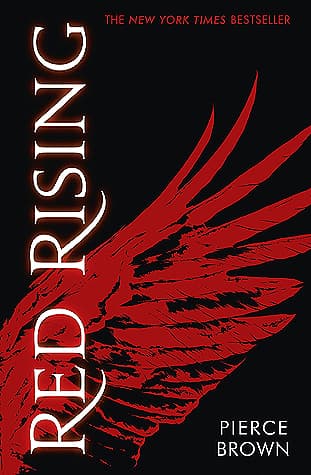
- Red Rising
Pierce Brown
4.3 (248k) average on GoodreadsFantasyInvolves a brutal class-based society, a protagonist who infiltrates the elite to spark a revolution, and intense action.
- The Maze Runner
James Dashner
4.0 (1.1M) average on GoodreadsFantasy'Mockingjay' and 'The Maze Runner' both feature young protagonists thrust into life-or-death situations within oppressive systems. However, Collins's narrative in 'Mockingjay' is far more character-driven and psychologically complex, focusing on Katniss's internal struggle and the ethical dilemmas of leadership. Dashner's series, while providing thrilling action and mystery, tends to prioritize plot mechanics and external conflicts over deep character introspection or a critical examination of political ideologies. 'Mockingjay' also presents a more mature and less conventional ending, avoiding the clear-cut resolution often found in 'The Maze Runner' series.
- Harry Potter and the Sorcerer's Stone
J.K. Rowling
4.5 (7M) average on GoodreadsFantasyRescued from a miserable life under the stairs, an orphaned boy discovers he's a wizard destined for a magical school, where he uncovers a dangerous secret tied to the dark wizard who murdered his parents.
- The Hunger Games
Suzanne Collins
4.3 (6.4M) average on GoodreadsFantasyIn a future where children fight to the death on live television, Katniss Everdeen volunteers for the arena, turning a death sentence into a fight for survival and a spark of rebellion.





Enjoyed the summary?
A summary gives you the shape of the book. The book itself has the detail, the examples and the voice.
Find Mockingjay on AmazonAs an Amazon Associate, BookBrief earns from qualifying purchases. How we're funded