
Synopsis
Covers the whole plot, including the ending.
- Difficulty
- Medium
- Pacing
- Moderate
- Mood
- Dark, Tragic, Intense, Psychological, Fatalistic
- Read it if
- You enjoy intense psychological dramas, classical tragedies reinterpreted, or plays with dark, complex family dynamics.
- Skip it if
- You prefer lighthearted stories, are sensitive to themes of incest and murder, or dislike plays with a somber, fatalistic tone.
Mourning Becomes Electra Plot Summary
Covers the whole plot, including the ending.
Homecoming
The play opens in front of the Mannon house in New England, shortly after the end of the Civil War. Christine Mannon is having an affair with Captain Adam Brant, a descendant of the black sheep Mannon line. Christine despises her husband, General Ezra Mannon, and their imposing, puritanical home. She confesses to Brant her plan to poison Ezra, making it look like a heart attack, as he suffers from a weak heart. Lavinia Mannon, Christine and Ezra's daughter, has long suspected her mother's affair and warns Brant to stay away from her family. Lavinia is fiercely devoted to her father and harbors a deep resentment towards her mother, fueled by her own unacknowledged desire for Ezra's affection.
Ezra's Return
General Ezra Mannon returns home, expressing his war weariness and a desire to finally find peace and love with Christine. He confides in her his hopes for a new beginning, revealing a vulnerability that surprises Christine. However, Christine remains cold and determined. That night, after a heated argument where Ezra reveals his knowledge of her affair and his own past infidelities, Christine administers the poison. Ezra dies, and Lavinia immediately suspects foul play, recognizing the symptoms of poison rather than a natural heart attack. She confronts Christine, who feigns innocence, but Lavinia's suspicions are solidified.
Orin's Homecoming
Orin Mannon, Ezra and Christine's son, returns from the war, suffering from shell shock and a strong maternal attachment. He is deeply disturbed by his father's death and his mother's apparent grief. Lavinia, seeing an opportunity to gain an ally, takes Orin to visit Ezra's grave. There, she subtly plants seeds of doubt about Christine's innocence, eventually revealing her belief that Christine murdered Ezra. Orin, already emotionally fragile and possessing an Oedipal attachment to Christine, is torn between his love for his mother and the shocking accusation from his sister. His bond with Lavinia intensifies, becoming increasingly unhealthy and co-dependent.
The Confrontation and Revelation
Lavinia and Orin follow Christine to Boston, where she meets Adam Brant. They spy on Christine and Brant, witnessing their intimate moments, which confirms Lavinia's accusations for Orin. Overwhelmed by jealousy and a sense of betrayal, Orin's fragile mental state deteriorates further. They confront Christine, revealing their knowledge of her affair and their conviction that she murdered Ezra. Christine, cornered, confesses to the murder but attempts to justify her actions by recounting Ezra's coldness and her love for Brant. The confrontation is emotionally charged, sealing the fate of the Mannon family.
The Murder of Adam Brant
Driven by a desire for revenge and manipulated by Lavinia, Orin decides to kill Adam Brant. Lavinia, fueled by her own jealousy and a twisted sense of justice, assists Orin in tracking Brant to his ship. Orin shoots Brant, making it appear as a robbery gone wrong. The siblings then return home, attempting to cover their tracks. The act profoundly affects Orin, deepening his psychological torment and guilt. Lavinia, while outwardly resolute, is also deeply implicated in the violence, binding her further to Orin in their shared secret and crime.
Christine's Suicide
Upon learning of Adam Brant's death, Christine is utterly devastated. She realizes the full extent of her children's vengeful actions and the complete destruction of her hopes for happiness. Confronted by Lavinia, who coldly informs her of Brant's murder and Orin's involvement, Christine's resolve breaks. Overcome by grief and despair, she retreats into the Mannon house. Later, a gunshot is heard from within. Christine has committed suicide, leaving Orin and Lavinia to grapple with the immediate consequences and the lingering guilt of their actions, further entrenching the curse upon the Mannon household.
The South Sea Islands Fantasy
After Christine's death, Orin and Lavinia travel to the South Sea Islands, a place Christine had once dreamed of escaping to with Brant. Lavinia hopes this change of scenery will help Orin recover, but instead, he becomes increasingly obsessed with their shared crimes and their twisted family history. He begins writing a detailed account of the Mannon family's sins, convinced he is documenting a curse. He sees Lavinia as a reincarnation of Christine, further blurring the lines of their relationship and his own deteriorating sanity. Lavinia, meanwhile, attempts to find solace and perhaps even love with a sailor, Peter Niles, but Orin's presence continually thwarts her.
Orin's Descent and Death
Back at the Mannon house, Orin's mental state rapidly deteriorates. He is haunted by the ghosts of his parents and Brant, and his fixation on Lavinia intensifies, bordering on incestuous desire. He sees Lavinia as a mirror image of Christine, constantly reminding him of his mother's affair and his own complicity in the murders. Lavinia, desperate to escape his possessiveness and the dark shadow of their past, tries to find a life with Peter Niles. Orin, unable to cope with Lavinia's attempts at independence and consumed by guilt and madness, takes his own life with Ezra's pistol in the Mannon study.
Lavinia's Isolation
Following Orin's death, Lavinia is left completely isolated. She has destroyed all her relationships, including her potential for happiness with Peter Niles, who is repulsed by the Mannon family's dark history and her coldness. Lavinia, now resembling her mother, Christine, and even her puritanical father, Ezra, in her sternness, rejects any possibility of love or escape. She understands that the Mannon curse has fully consumed her. In a final, symbolic act of self-imprisonment, she orders the shutters of the Mannon house to be nailed shut, condemning herself to live out her days alone within its walls, haunted by the past.
The End of the Curse
Lavinia, in her final moments, recognizes that she is the last of the Mannons and that the curse has finally come to rest with her. She explicitly states her intention to live in the house alone, to keep the Mannon dead company, and to atone for the family's sins. She rejects Seth's offer of company and any hope of a future outside the house. By choosing this path of self-imposed isolation and penitence, Lavinia believes she is fulfilling her destiny and, paradoxically, bringing an end to the active cycle of violence and revenge. The Mannon house, now a tomb, becomes her final resting place, a monument to the family's tragic downfall.
Principal Figures
Lavinia Mannon
Protagonist
The stern, vengeful daughter, driven by a complex mix of love, jealousy, and duty.
Lavinia is the daughter of Ezra and Christine Mannon, and the parallel to Electra. Initially a stern, puritanical figure, devoted to her father and resentful of her mother, she is the catalyst for much of the play's tragic action. She is intelligent, observant, and possesses a strong will, often manipulating those around her, especially her brother Orin. Her deep, unacknowledged love for her father borders on the incestuous, fueling her hatred for Christine and Adam Brant. She transforms significantly throughout the play, gradually taking on the physical and emotional characteristics of her mother.
Relationships: Ezra Mannon (Daughter, deeply devoted and possessive, bordering on incestuous affection.); Christine Mannon (Daughter, intensely hateful and jealous, rivals for Ezra's affection.); Orin Mannon (Sister, manipulative and co-dependent, a twisted bond of shared crime and psychological torment.); Adam Brant (Rival for Christine's affection, object of her hatred and revenge.); Peter Niles (Love interest, ultimately rejected due to her family's curse.)
Christine Mannon
Antagonist/Tragic Figure
Ezra's wife, a beautiful but trapped woman who seeks escape through an affair and murder.
Christine is the beautiful, sensual wife of Ezra Mannon and mother to Lavinia and Orin, paralleling Clytemnestra. She feels stifled by the cold, puritanical Mannon household and her emotionally distant husband. She seeks passion and escape in her affair with Adam Brant. While initially portrayed as a villain for her infidelity and murder of Ezra, she is also a tragic figure, driven by a desperate desire for love and happiness that the Mannon family denies her. Her actions set off a chain reaction of revenge and destruction.
Relationships: Ezra Mannon (Wife, feels trapped and unloved, eventually murders him.); Lavinia Mannon (Mother, rivals for Ezra's affection, intensely disliked by Lavinia.); Orin Mannon (Mother, possesses an Oedipal bond with him, which Lavinia exploits.); Adam Brant (Lover, sees him as her only hope for happiness and escape.)
Orin Mannon
Protagonist/Tragic Figure
The shell-shocked son, deeply attached to his mother, who descends into madness and revenge.
Orin is the son of Ezra and Christine, and the parallel to Orestes. He returns from the Civil War emotionally and psychologically damaged by his experiences, suffering from shell shock. He possesses a strong, almost Oedipal attachment to his mother, Christine. This bond, combined with Lavinia's manipulation and the shock of his father's murder, drives him into a cycle of revenge and guilt. He is highly sensitive and artistic, but ultimately lacks the strength to resist the Mannon curse, leading to his mental deterioration and suicide. He becomes increasingly obsessed with documenting the family's sins.
Relationships: Ezra Mannon (Son, initially admired him, later avenges his murder.); Christine Mannon (Son, strong Oedipal attachment, deeply loves her despite her crimes.); Lavinia Mannon (Brother, co-dependent and manipulated, later develops an incestuous obsession with her.); Adam Brant (Victim, murdered him out of revenge for his father.)
Ezra Mannon
Supporting/Catalyst
The stern, puritanical patriarch and Civil War general, whose death ignites the family's tragedy.
Ezra Mannon is the patriarch of the Mannon family, a respected Civil War general, and the parallel to Agamemnon. He embodies the cold, puritanical values of his New England ancestry, which stifles his wife, Christine. Though he returns from the war desiring reconciliation and love, his past emotional distance and his wife's resentment lead to his murder. His death is the catalyst for the entire tragic cycle of revenge and guilt that consumes the Mannon family. He is a stern, imposing figure, yet reveals a vulnerability in his final moments.
Relationships: Christine Mannon (Husband, emotionally distant, murdered by her.); Lavinia Mannon (Father, deeply admired and loved by her, a source of her puritanical ideals.); Orin Mannon (Father, initially admired, but later avenged by Orin.)
Adam Brant
Supporting/Catalyst
Christine's lover and a descendant of the outcast Mannon line, who becomes a victim of revenge.
Adam Brant is Christine's lover, a sea captain, and a descendant of the outcast Mannon family branch, paralleling Aegisthus. He is a romantic figure who genuinely loves Christine and shares her desire to escape the oppressive Mannon world. He is unaware of Christine's full manipulative nature and is drawn into her plot to murder Ezra. His existence and his relationship with Christine are the primary motivations for Lavinia's vengeful actions. He is ultimately murdered by Orin and Lavinia, becoming another victim in the Mannon curse.
Relationships: Christine Mannon (Lover, a source of passion and hope for her.); Lavinia Mannon (Object of her hatred and revenge.); Orin Mannon (Victim of his revenge.)
Peter Niles
Supporting
Lavinia's suitor, a kind and innocent man who represents a chance for normal life.
Peter Niles is a kind, straightforward young man who is in love with Lavinia. He represents a potential escape for Lavinia from the dark, cursed world of the Mannons, offering a chance at a normal, happy life. He is oblivious to the full extent of the Mannon family's crimes and psychological torment. His innocence and devotion stand in stark contrast to the Mannon's twisted relationships. Ultimately, Lavinia rejects him, realizing she cannot escape her fate and the curse that binds her to the Mannon house.
Relationships: Lavinia Mannon (Suitor, genuinely loves her and offers a future outside the Mannon curse.); Hazel Niles (Brother, also innocent and kind.)
Hazel Niles
Supporting
Orin's suitor, a sweet and innocent woman who represents a lost opportunity for Orin.
Hazel Niles is Peter's sister and a gentle, innocent young woman who is in love with Orin. Like her brother, she represents a stark contrast to the Mannon family's darkness and offers Orin a chance at a healthy, loving relationship. Orin's descent into madness and his obsession with Lavinia prevent him from accepting her love, symbolizing his inability to escape the Mannon curse. Her purity highlights Orin's corruption.
Relationships: Orin Mannon (Suitor, genuinely loves him but is unable to save him from his fate.); Peter Niles (Sister.)
Seth Beckwith
Supporting/Observer
The Mannon's gardener, an old family retainer who observes and comments on the tragedy.
Seth Beckwith is the long-time gardener and caretaker of the Mannon estate. He serves as an observer and commentator on the unfolding tragedy, often providing a chorus-like function with his common-sense observations and knowledge of Mannon family history. He understands the dark undercurrents of the family and frequently alludes to the 'curse' that plagues them. He represents the outside world's perspective on the Mannons' insular and doomed existence, offering a contrast to their internal turmoil.
Relationships: Mannon Family (Long-time employee and observer, privy to family secrets and history.)
Themes & Insights
The Curse of the Mannons/Fate vs. Free Will
The central theme is the idea of a generational curse, echoing the House of Atreus. The Mannon family seems fated to repeat a cycle of murder, revenge, and incestuous desires, driven by their puritanical repression and inability to express healthy love. Each character attempts to break free, but their actions only deepen the curse. Christine's murder of Ezra, intended to secure her freedom, directly leads to her own death and the further unraveling of her children. Lavinia and Orin's revenge on Brant and Christine, while seemingly a choice, is presented as an inescapable response to the preceding crimes, ultimately trapping them further in the cycle. The play suggests that while characters make choices, the weight of their family history and inherent psychological flaws make their tragic end almost inevitable.
“There's a Mannon look in her eyes... just like her father... and her mother too... a look of being dead and alive at the same time.”
Repression and Hypocrisy
The Mannon family embodies the destructive nature of puritanical repression. Their stern, moralistic facade hides illicit desires, hatred, and unexpressed emotions. Ezra's coldness and Christine's stifled sensuality are direct results of this repression. Lavinia, initially a champion of Mannon virtue, is revealed to harbor deeply repressed desires, including an Oedipal love for her father and a subsequent transformation into a mirror image of her mother's sensuality and vengefulness. The Mannon house itself, with its Greek temple-like facade, symbolizes this hypocrisy – an outward show of order and virtue concealing inner chaos and corruption. The constant struggle between the 'purity' of the Mannon name and the 'sin' that festers within drives much of the conflict.
“I was a Mannon. I had to be strong. I had to forget I was a woman.”
Incestuous Desire and Oedipal Complex
O'Neill explicitly draws on Freudian psychology, particularly the Oedipal and Electra complexes. Orin exhibits a clear Oedipal attachment to his mother, Christine, which is shattered by her affair and Ezra's murder, leading to his subsequent fixation on Lavinia. Lavinia, in turn, harbors a deep, unacknowledged Electra complex towards her father, Ezra, which fuels her hatred for Christine and her possessiveness over Orin. This incestuous undercurrent manifests in the characters' inability to form healthy relationships outside the family, and in Orin's eventual pathological obsession with Lavinia, seeing her as a reincarnation of Christine. This theme highlights the destructive power of unresolved family dynamics and forbidden desires.
“You're not Orin! You're the Mannon dead!”
Revenge and Justice
The play is a relentless cycle of revenge, where each act of violence begets another. Christine murders Ezra to escape him and be with Brant. Lavinia and Orin murder Brant to avenge Ezra. Christine commits suicide out of grief and despair, which Orin and Lavinia see as a final act of justice. The characters are driven by a primitive desire for retribution, often cloaked in a sense of moral duty, particularly by Lavinia. However, this pursuit of 'justice' only perpetuates the suffering, demonstrating that revenge is a destructive force that consumes both the avenger and the avenged. The cycle only ends when Lavinia, the last Mannon, willingly embraces her isolation as a form of atonement, becoming both the executioner and the final victim.
“I'm going to stay in this house and live alone with the dead!”
Escape and Freedom
Many characters yearn for escape from the oppressive Mannon house and their puritanical heritage. Christine dreams of escaping to the South Sea Islands with Adam Brant, seeking passion and freedom. Orin, after the murders, finds a temporary, imagined freedom in the same exotic locale, yet cannot escape his guilt. Lavinia initially desires to escape the 'Mannon curse' by marrying Peter Niles, but ultimately realizes it is impossible. The play suggests that true escape is elusive, as the psychological chains of family history and personal guilt are inescapable. The Mannons are trapped by their own desires and the consequences of their actions, with death or self-imprisonment being the only 'freedom' they achieve.
“I hate the Mannons! I hate the house!”
Plot Devices & Literary Techniques
The Mannon House
A symbolic setting that embodies the family's puritanical facade and hidden corruption.
The Mannon house is not merely a setting but a powerful symbol. Its Greek temple-like facade represents the family's outward show of respectability, order, and puritanical virtue. However, its interior is a place of dark secrets, repressed desires, and violence. It acts as a prison for the characters, an inescapable monument to their cursed lineage. The house 'watches' the characters, and its atmosphere influences their actions, reflecting their internal turmoil. As the tragedy unfolds, the house becomes increasingly oppressive, culminating in Lavinia's decision to nail its shutters shut, sealing herself inside with the 'dead' and transforming it into a tomb.
Physical Resemblance and Transformation
Characters physically transform to resemble other family members, highlighting inherited traits and the cyclical nature of the curse.
A key plot device is the recurring physical resemblance among the Mannons. Lavinia initially resembles Ezra, but gradually takes on Christine's features, especially after her mother's death. Orin, too, sees Christine in Lavinia, and later, Lavinia sees Ezra in Orin. This physical transformation underscores the idea of a family 'type' or curse, suggesting that the characters are not entirely distinct individuals but rather different manifestations of the same doomed lineage. It highlights the cyclical nature of their tragedy and the inescapable influence of their ancestors, blurring individual identity with inherited fate and psychological patterns.
The South Sea Islands
A symbolic representation of an idealized, unattainable escape from the Mannon curse.
The South Sea Islands function as a powerful symbol of freedom, passion, and escape from the cold, puritanical world of the Mannons. Christine idealizes them as a haven with Adam Brant, a place where she can shed her Mannon identity. Orin and Lavinia actually travel there, but find that the islands cannot erase their guilt or their family's curse. Instead, Orin's madness intensifies, and Lavinia's attempts at a new life are thwarted. The islands represent a false hope, demonstrating that the Mannon curse is not a geographical confinement but a psychological and spiritual one, inescapable even in paradise.
Mirrors and Reflections
Used to emphasize self-recognition, inherited traits, and the blurring of identities within the family.
The motif of mirrors and reflections appears throughout the play, both literally and figuratively. Characters often see themselves or others as reflections of past Mannons, particularly Christine and Ezra. This device highlights the idea of inherited traits, the cyclical nature of the family curse, and the blurring of individual identities within the Mannon lineage. For instance, Orin sees Christine in Lavinia, and Lavinia herself eventually recognizes her transformation into her mother. These reflections force the characters to confront their own complicity in the family's tragic patterns and their inability to escape their past.
Mourning Becomes Electra Quotes
“I can’t live in this house! I can’t live in this town! I can’t live in this world!”
“There's a devil in our blood.”
“God, I'm so sick of the dead! I wish they'd stay dead!”
“It's as if I had been born dead.”
“I've got to punish myself! I've got to make myself pay!”
“There's no justice in the world—except what you make yourself.”
“We're caught in a trap, Christine. There's no way out.”
“I want to be loved! I want to love!”
“The past is an evil dream. It's only the present that matters.”
“I'm going to lock myself in this house—and live alone with the dead!”
“It's fate, I tell you! It's the Mannon curse!”
“I hate love! It's an ugly thing!”
“There’s no escape from the past.”
“I loved him! I loved him! I loved him!”
Quiz
10 questions on the plot and the characters. Each answer comes with a short explanation.
Question 1
Which ancient Greek tragedy serves as the primary inspiration for Eugene O'Neill's 'Mourning Becomes Electra'?
- Oedipus Rex
- Antigone
- The Bacchae
- Oresteia
Show answer
D. Oresteia The provided context explicitly states that 'Mourning Becomes Electra' is the 20th-century version of the ancient Greek tragedy 'Oresteia' by Aeschylus.
Question 2
Who is the modern play's equivalent of Agamemnon from the 'Oresteia'?
- Orin Mannon
- Christine Mannon
- General Ezra Mannon
- Peter Niles
Show answer
C. General Ezra Mannon The provided context directly states, 'Agamemnon from the Oresteia becomes General Ezra Mannon.'
Question 3
What is the primary motivation for Christine Mannon's desire to poison Ezra Mannon?
- To inherit his vast fortune quickly.
- To escape her loveless marriage and be with Adam Brant.
- To prevent him from exposing her past infidelity.
- To exact revenge for his past mistreatment of her children.
Show answer
B. To escape her loveless marriage and be with Adam Brant. Christine is deeply unhappy in her marriage to Ezra and is having an affair with Adam Brant. Her desire to be free of Ezra and pursue her relationship with Brant is the driving force behind the poisoning.
Question 4
Which character in 'Mourning Becomes Electra' parallels Clytemnestra from the 'Oresteia'?
- Lavinia Mannon
- Christine Mannon
- Hazel Niles
- Marie Brantôme
Show answer
B. Christine Mannon The provided context explicitly states, 'Clytemnestra becomes Christine.'
Question 5
What is the nature of Lavinia Mannon's feelings towards her father, Ezra, and her mother, Christine, at the beginning of the play?
- She adores Christine and resents Ezra.
- She is indifferent to both her parents.
- She idolizes Ezra and despises Christine.
- She loves both parents equally and is devoted to their happiness.
Show answer
C. She idolizes Ezra and despises Christine. Lavinia exhibits a strong Electra complex, showing intense devotion to her father and an open antagonism, bordering on hatred, towards her mother, especially due to Christine's affair.
Question 6
Following the murder of Adam Brant, what action does Orin Mannon take that significantly impacts his psychological state?
- He confesses to the murder to the local authorities.
- He writes a detailed account of the family's crimes in a journal.
- He flees the country with Lavinia to escape justice.
- He attempts to commit suicide out of guilt.
Show answer
B. He writes a detailed account of the family's crimes in a journal. After killing Adam Brant, Orin becomes obsessed with documenting the family's dark history in a journal, which further spirals his mental health and deepens his guilt.
Question 7
What is the ultimate fate of Lavinia Mannon at the end of the play?
- She marries Peter Niles and lives a happy, normal life.
- She leaves the Mannon house and travels to the South Seas.
- She commits suicide after Orin's death.
- She isolates herself within the Mannon house, condemning herself to a living death.
Show answer
D. She isolates herself within the Mannon house, condemning herself to a living death. After the tragic events and Orin's death, Lavinia chooses to lock herself within the Mannon house, effectively sealing herself off from the outside world and any possibility of happiness, embracing the family curse.
Question 8
Which recurring symbol throughout the play represents the inescapable doom and psychological burden of the Mannon family?
- The sea and sailing ships.
- The portrait of General Ezra Mannon.
- The Mannon house itself, resembling a Greek temple.
- The sound of church bells.
Show answer
C. The Mannon house itself, resembling a Greek temple. The Mannon house, with its imposing and cold temple-like facade, is a constant visual and thematic symbol of the family's rigid, puritanical past and the oppressive, inescapable curse that binds them.
Question 9
What is the primary psychological effect of the Mannons' puritanical upbringing on their relationships and emotional expression?
- It fosters open communication and emotional honesty.
- It leads to repressed emotions, guilt, and a distorted view of love and sexuality.
- It encourages a strong sense of community and family loyalty.
- It promotes a practical and rational approach to life's challenges.
Show answer
B. It leads to repressed emotions, guilt, and a distorted view of love and sexuality. The Mannons' puritanical background is depicted as a major source of their psychological torment, leading to the repression of natural desires, a pervasive sense of guilt, and an inability to express love or sexuality in a healthy way, contributing to the tragic cycle.
Question 10
After Orin and Lavinia travel to the South Seas, what significant change occurs in Lavinia's appearance and demeanor?
- She becomes more withdrawn and melancholic, mirroring Orin's despair.
- She adopts a more vibrant, sensual, and 'native' appearance, resembling Christine.
- She develops a severe illness that weakens her considerably.
- She becomes overtly religious and seeks solace in faith.
Show answer
B. She adopts a more vibrant, sensual, and 'native' appearance, resembling Christine. Upon returning from the South Seas, Lavinia has transformed. She sheds her rigid, puritanical appearance and adopts a more feminine and sensual look, strikingly similar to her mother Christine, symbolizing her unconscious embrace of her mother's 'sinful' nature.
Mourning Becomes Electra FAQ
What is the central conflict that drives the plot of 'Mourning Becomes Electra'?
The central conflict revolves around the Mannon family's deeply dysfunctional relationships, fueled by lust, hatred, and a pervasive sense of doom. Christine Mannon's affair with Adam Brant and her subsequent murder of her husband, Ezra, ignites a cycle of revenge and psychological torment that consumes the entire family, mirroring the ancient curse on the House of Atreus.
How does the play adapt the character of Agamemnon from the 'Oresteia'?
General Ezra Mannon serves as the modern Agamemnon, a stern, emotionally distant patriarch who returns from war, only to be murdered by his wife, Christine. His coldness and past infidelities contribute to Christine's resentment, setting the stage for her betrayal and the subsequent unraveling of the family.
What role does Christine Mannon play in initiating the tragedy?
Christine Mannon, the Clytemnestra figure, is the catalyst for the tragedy. Driven by her hatred for Ezra and her passionate love for Adam Brant, she poisons Ezra, believing this act will free her to live a happy life. Her actions, however, only intensify the family's suffering and lead to a chain of retributive violence.
How do Lavinia and Orin Mannon parallel Electra and Orestes?
Lavinia Mannon embodies Electra, fiercely loyal to her father and consumed by a desire for vengeance against Christine and Adam Brant. Orin Mannon, the Orestes figure, is initially devoted to his mother but is manipulated by Lavinia into helping her exact revenge, leading to his psychological breakdown and eventual suicide.
What is the significance of the Mannon house itself?
The Mannon house is a grim, tomb-like structure that symbolizes the family's oppressive legacy and the psychological prison they inhabit. Its Greek temple-like façade hints at the classical tragedy, while its dark, claustrophobic interior reflects the family's internal decay and inability to escape their fate.
Are there any subtle allusions to the 'Oresteia' beyond character parallels?
Beyond character parallels, the play subtly echoes the Furies from the 'Oresteia' through the persistent sense of guilt and psychological torment that hounds Lavinia and Orin. The 'curse' on the Mannon family, though not explicitly divine, functions similarly, ensuring that violence and suffering are perpetually repaid within the family line.
What is the significance of the South Sea Islands in Orin's narrative?
The South Sea Islands represent a fleeting ideal of innocence and freedom for Orin, a stark contrast to the oppressive New England Mannon home. His longing to return there with Lavinia, and later his despair when he realizes it's an unattainable escape, highlights his yearning for a world unburdened by the family's curse.
How does the play use physical appearance to convey character traits?
O'Neill frequently uses physical descriptions to emphasize character traits and their Greek counterparts. Lavinia's gaunt, severe appearance reflects her Electra-like rigidity and obsession with duty, while Christine's initial beauty and later haggardness mirror her moral decline. The Mannon 'mask' or 'face' is also repeatedly mentioned, signifying their emotional repression.
Discuss the psychological impact of incestuous desires within the Mannon family.
The play deeply explores the destructive nature of repressed and expressed incestuous desires. Lavinia's possessive love for Ezra and later Orin, and Orin's unhealthy attachment to Christine and then Lavinia, create a suffocating emotional environment. These desires warp their relationships, making genuine connection impossible and contributing to their psychological unraveling.
How does guilt manifest in Lavinia and Orin after their acts of revenge?
Guilt manifests differently in Lavinia and Orin. Orin is immediately overwhelmed by the horror of his actions, leading to hallucinations, paranoia, and a profound sense of self-loathing that drives him to suicide. Lavinia, initially more resilient, is slowly consumed by the 'ghosts' of her past, developing a cold, haunted demeanor and an inability to find peace.
What psychological factors contribute to Christine Mannon's hatred for Ezra?
Christine's hatred for Ezra stems from a combination of his emotional coldness, his perceived betrayal with another woman during their marriage, and her own desire for passionate love that Ezra cannot provide. She feels trapped and suffocated by the Mannon household and Ezra's puritanical nature, leading her to seek solace and revenge with Adam Brant.
How does the play portray the concept of 'fate' versus 'free will'?
The play heavily leans towards fate, suggesting that the Mannons are trapped by their inherited psychological predispositions and the cyclical nature of their revenge. While characters make choices, these choices often feel predetermined by their deep-seated desires and hatreds, making their tragic end seem inevitable rather than a result of true free will.
Is there any hope for redemption or escape for the Mannon family?
The play offers very little hope for redemption or escape. Lavinia's final act of sealing herself within the Mannon house signifies a complete surrender to the family's curse, embracing her role as the last guardian of their tragic legacy. The cycle of violence and suffering ends not in resolution, but in bleak, self-imposed isolation.
What is the significance of Lavinia's decision to 'live alone with the dead' at the play's end?
Lavinia's decision is a profound act of self-condemnation and acceptance of her fate. By choosing to remain in the Mannon house, she willingly embraces the role of the family's final victim and jailer, ensuring that the 'curse' ends with her, but also that she is forever haunted by the ghosts of her family's past. It's an act of both penance and ultimate despair.
How does O'Neill's use of language contribute to the play's somber tone?
O'Neill employs stark, often blunt language, punctuated by moments of intense emotional outburst, which contributes to the play's somber and fatalistic tone. Dialogue often reveals characters' internal turmoil and psychological repression, with repeated phrases and motifs emphasizing the cyclical nature of their suffering and the inescapable gloom of their existence.
Could Adam Brant be considered a victim of the Mannon family's machinations?
Adam Brant is undeniably a victim, drawn into the Mannon's web of revenge through his affair with Christine and his own misguided desire for vengeance against Ezra. He genuinely loved Christine and sought a new life, but his past connection to the Mannons and his role in Ezra's death made him an inevitable target for Lavinia and Orin's retribution.
What is the thematic significance of the 'mask' in relation to the Mannon characters?
The 'mask' refers to the Mannon family's inherited, emotionless facial expression, symbolizing their deep-seated repression, puritanical heritage, and inability to express genuine feeling. It highlights their psychological imprisonment and the way they hide their true selves and desires behind a façade of cold propriety.
How does the play challenge traditional notions of justice and morality?
The play profoundly challenges traditional notions of justice by presenting a cycle of revenge where each act of 'justice' only begets further violence and suffering. Morality is blurred, as characters commit heinous acts out of love, hate, or a warped sense of duty, suggesting that in the Mannon world, there is no clear right or wrong, only an inescapable descent into tragedy.
About the author
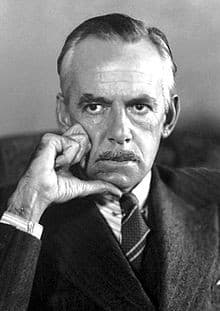
Eugene Gladstone O'Neill was an American playwright awarded the 1936 Nobel Prize in Literature. His poetically titled plays were among the first to introduce into the U.S. the drama techniques of realism, earlier associated with Russian playwright Anton Chekhov, Norwegian playwright Henrik Ibsen, and Swedish playwright August Strindberg. The tragedy Long Day's Journey into Night is often included on lists of the finest U.S. plays in the 20th century, alongside Tennessee Williams's A Streetcar Named Desire and Arthur Miller's Death of a Salesman.
Similar books
- Wuthering Heights
Emily Brontë
3.9 (1.3M) average on GoodreadsHistorical FictionFeatures intense, destructive passions, family feuds, and a haunting, almost cursed atmosphere.
- A Streetcar Named Desire
Tennessee Williams
4.0 (261k) average on GoodreadsFictionBoth Mourning Becomes Electra and A Streetcar Named Desire (1947) delve into the destructive forces within families and individuals, particularly focusing on the psychological unraveling of female protagonists (Lavinia and Blanche DuBois). However, O'Neill's play is a sprawling, epic re-imagining of classical tragedy with a large cast and a focus on generational curses, whereas Williams's play is a more confined, domestic tragedy rooted in Southern Gothic realism. Williams's language is far more poetic and lyrical, creating a dreamlike, almost hallucinatory atmosphere, which contrasts with O'Neill's more direct, albeit intense, dialogue. While both deal with sexual repression and violence, Williams's treatment is often more suggestive and symbolic, while O'Neill's is more explicit and directly tied to the Greek tragic model.
- Nineteen Eighty-Four
George Orwell
4.2 (5.5M) average on GoodreadsFictionWinston Smith dreams of truth and rebellion in a world where Big Brother watches all, but he confronts the terrifying power of a regime that controls not just actions, but thoughts.
- The Frozen River
Ariel Lawhon
4.4 (600k) average on GoodreadsFictionIn 1789 Maine, a heroic midwife's diary helps her expose a murder and get justice in a town that wants to silence her.
- A Man Called Ove
Fredrik Backman
4.4 (569k) average on GoodreadsFictionA stubborn widower, who lives by strict rules, finds his quiet world changed by a lively new family next door, making him face his past and find happiness in human connection.
- The Art of Racing in the Rain
Garth Stein
4.2 (452k) average on GoodreadsFictionThrough the eyes of Enzo, a wise and observant dog, a race car driver's family navigates a journey of love, loss, and resilience, learning that life's most important lessons often come in the curves, not just on the straightaways.





Enjoyed the summary?
A summary gives you the shape of the book. The book itself has the detail, the examples and the voice.
Find Mourning Becomes Electra on AmazonAs an Amazon Associate, BookBrief earns from qualifying purchases. How we're funded