

Synopsis
Covers the whole plot, including the ending.
- Difficulty
- Easy
- Pacing
- Moderate
- Mood
- Suspenseful, Intriguing, Classic
- Read it if
- You love classic whodunits with a charming amateur detective, intricate plotting, and a quintessential English village setting.
- Skip it if
- You prefer modern thrillers with fast-paced action and graphic details over a more cerebral, character-driven mystery.
Murder Is Easy Plot Summary
Covers the whole plot, including the ending.
A Fateful Train Journey and a Chilling Revelation
Luke Fitzwilliam, a retired police officer from India, is on a train to London. He meets an elderly woman, Miss Lavinia Pinkerton. She tells him she thinks a serial killer is at work in her quiet village of Wychwood-under-Ashe. She describes several recent deaths, including Major Horton, Tommy Pearce, and Mrs. Cooper, all ruled accidents or natural causes. Miss Pinkerton believes these are murders and even names Dr. Humbleby, the local doctor, as the next target. Fitzwilliam is skeptical, but her conviction bothers him. He dismisses her claims as an old woman's ramblings, but her sincerity leaves an impression.
Tragedy Strikes: Miss Pinkerton's Demise and Dr. Humbleby's Fate
Soon after their train journey, Luke Fitzwilliam reads in the newspaper that Miss Lavinia Pinkerton has died in London, hit by a car in a hit-and-run. Though it seems accidental, the timing worries Fitzwilliam. He then sees another report: Dr. Humbleby, the man Miss Pinkerton named as the next victim, has died in Wychwood-under-Ashe from blood poisoning after a minor operation. These two deaths, exactly as Miss Pinkerton predicted, make Fitzwilliam take her claims seriously. He decides to investigate himself, believing that if Miss Pinkerton was right, a dangerous killer is still in Wychwood.
Undercover in Wychwood
Determined to find the truth, Luke Fitzwilliam travels to Wychwood-under-Ashe. He pretends to be a man collecting folklore for a book. He uses this as an excuse to interview villagers and subtly gather information about the deceased and their relationships. He stays at The Bell Inn, the local pub, and starts watching the community. He quickly finds that the village has much gossip and hidden tensions under its calm surface. Fitzwilliam begins to piece together the events around the earlier deaths, looking for connections and inconsistencies that might point to a murderer.
Initial Suspicions and the Village Dynamics
During his investigation, Luke Fitzwilliam meets Bridget Conway, a young woman engaged to the wealthy, older Lord Easterfield. Bridget is lively and quickly becomes Luke's helper and confidante. He also meets other key villagers, including Canon Pennefather, a seemingly forgetful scholar; Mrs. Horton, the widow of the first victim; and Rivers, Lord Easterfield's suspicious butler. Luke initially considers several villagers as possible suspects, including the unusual Miss Waynflete and the village lawyer, Mr. Ellsworthy. He observes the complex social interactions and hidden resentments in Wychwood-under-Ashe, realizing that almost anyone could have a reason for murder.
A String of 'Accidents' Continues
As Luke Fitzwilliam continues his secret investigation, the supposed 'accidents' do not stop. Mrs. Horton, Major Horton's widow, dies after accidentally drinking hat dye, mistaking it for cough medicine. Her death is quickly blamed on her known forgetfulness, but Luke sees it as another carefully planned murder. Then, a local cat is found dead, poisoned, which is dismissed as a random event. These increasing events strengthen Luke's belief that a clever and ruthless killer is systematically removing those who might know or suspect something about previous crimes, or simply those who are inconvenient.
The Net Tightens: Key Suspects Emerge
Luke and Bridget Conway start working more closely, discussing the people and events in Wychwood. Their suspicions fall on several individuals. They consider if the killer targets people who knew something specific about the past, or whose deaths benefit someone in particular. They look at Miss Waynflete, who seems to know a lot about everyone, and Mr. Ellsworthy, the lawyer, who handles many villagers' affairs. The unusual behavior of some villagers, and the seemingly unimportant details of their lives, become possible clues as they try to understand the killer's pattern and reason.
A Near Miss and a Revelation
Bridget Conway has a close call when a car almost hits her. Luke believes this was an attempt on her life, further proving the killer's desperation. This event energizes their investigation. Later, Luke and Bridget find an important detail: the murderer seems to target people who, in some way, remind them of a past bad event or injustice, or who might reveal a dark secret. The killer's pattern is not random; it is driven by a twisted sense of justice or a need for control. This helps them focus on psychological motivation rather than just opportunity.
The Killer's Identity is Revealed
Through careful thought and observation, Luke Fitzwilliam and Bridget Conway finally identify the killer: Honoria Waynflete. Miss Waynflete, who first appears as an unusual but harmless single woman, is revealed to be a careful and cold-blooded murderer. Her reason is not greed or strong emotion, but a twisted sense of order and a desire to 'clean up' the world by removing those she considers undesirable, inconvenient, or 'untidy'. She carefully arranges each death to look accidental. Her seemingly harmless presence in the village helps her gather information and carry out her plans without suspicion. Her intelligence and lack of emotion make her very dangerous.
The Confrontation and Confession
Luke Fitzwilliam confronts Honoria Waynflete, showing her the evidence he has collected. She does not deny her actions. Instead, she calmly confesses, explaining her twisted ideas. She believes she is helping by removing 'unnecessary' or 'troublesome' people from society, seeing them as flaws in her ideal world. She describes how she planned each 'accident,' from Major Horton's death to Mrs. Horton's poisoning, and even her attempt on Bridget's life. Her confession is unsettlingly rational and shows no regret, revealing her deep mental issues and careful planning.
Justice Prevails and a New Beginning
After her confession, Honoria Waynflete is arrested, ending the fear in Wychwood-under-Ashe. The village, initially slow to believe in a serial killer, is shocked by the news of Miss Waynflete's guilt. With the immediate danger gone, Luke Fitzwilliam's work is finished. He and Bridget Conway, having worked so closely and formed a strong bond, realize their feelings for each other. Bridget breaks off her engagement to Lord Easterfield, choosing a future with Luke. They decide to leave Wychwood-under-Ashe, looking forward to a life together, leaving the quiet village to slowly recover from the horrors it has faced.
Murder Is Easy Characters
Luke Fitzwilliam
Protagonist
Retired police officer from India, investigating serial murders in Wychwood.
Luke Fitzwilliam is a sharp, observant, and determined ex-police officer from the Indian Police Service. Initially skeptical of Miss Pinkerton's claims, he becomes deeply committed to uncovering the truth after her death and the subsequent 'accidents.' He possesses keen deductive reasoning and a methodical approach to investigation, often masking his true purpose with a casual demeanor. He is honorable and has a strong sense of justice, unwilling to let a killer go unpunished. His past experience makes him adept at reading people and situations, even in an unfamiliar English village setting.
Relationships: Miss Lavinia Pinkerton (Source of initial suspicion, catalyst for his investigation); Bridget Conway (Love interest and investigative partner); Lord Easterfield (Bridget's fiancé, initial rival for Bridget's affection)
Miss Lavinia Pinkerton
Supporting
Elderly woman who first alerts Luke to the murders in Wychwood.
Miss Lavinia Pinkerton is an elderly, perceptive, and courageous woman from Wychwood-under-Ashe. Despite her advanced age and the dismissive attitude of others, she possesses an uncanny intuition about the sinister events unfolding in her village. She is the catalyst for the entire investigation, bravely confiding her suspicions to Luke Fitzwilliam on a train. Her death, exactly as she predicted for another victim, proves the validity of her claims and drives Luke to action. She represents the innocent victim whose warnings are initially ignored but ultimately proven tragically true.
Relationships: Luke Fitzwilliam (Confidante, recipient of her warnings)
Bridget Conway
Supporting
Spirited young woman engaged to Lord Easterfield, who becomes Luke's ally and love interest.
Bridget Conway is a vibrant, intelligent, and independent young woman, originally from Canada, who is engaged to the much older Lord Easterfield. She feels a sense of duty towards Lord Easterfield but is restless and yearns for excitement and authenticity. She quickly forms a bond with Luke Fitzwilliam, drawn to his sincerity and intrigued by his covert investigation. Bridget proves to be a valuable ally, offering keen observations and acting as a sounding board for Luke's theories. Her willingness to question authority and her own intuition make her an essential partner in uncovering the truth, and she ultimately falls in love with Luke.
Relationships: Luke Fitzwilliam (Love interest and investigative partner); Lord Easterfield (Fiancée)
Honoria Waynflete
Antagonist
Seemingly harmless spinster, revealed to be the meticulous serial killer.
Honoria Waynflete is initially presented as an intelligent, seemingly kind, and slightly eccentric spinster living in Wychwood-under-Ashe. She is well-respected in the community and appears to be a pillar of society. However, beneath her composed exterior lies a chillingly rational and psychopathic mind. Her motive for murder is a warped sense of order and a desire to 'tidy up' the world by eliminating individuals she deems inconvenient, untidy, or morally objectionable. She is meticulous in her planning, making each death appear accidental, and shows no remorse for her actions. Her intelligence and lack of emotional connection make her a formidable and terrifying killer.
Relationships: Luke Fitzwilliam (The detective who exposes her); Bridget Conway (One of her intended victims)
Lord Easterfield
Supporting
Wealthy and influential older man, engaged to Bridget Conway.
Lord Easterfield is a powerful, wealthy, and somewhat domineering older man who is engaged to Bridget Conway. He is a prominent figure in Wychwood-under-Ashe and represents the established order. He is possessive of Bridget and initially dismissive of Luke Fitzwilliam, viewing him as a potential rival. He is somewhat self-absorbed and slow to grasp the true danger lurking in the village, relying on official explanations for the deaths. His character highlights the societal blindness to the sinister undercurrents beneath the surface of the seemingly peaceful village.
Relationships: Bridget Conway (Fiancée); Luke Fitzwilliam (Rival for Bridget's affection)
Dr. Humbleby
Mentioned
Local physician, predicted by Miss Pinkerton to be the next victim.
Dr. Humbleby is the local doctor in Wychwood-under-Ashe. He is mentioned by Miss Pinkerton as the next person the killer intends to murder. His death, soon after Miss Pinkerton's, from blood poisoning after a minor operation, serves as the critical piece of evidence that convinces Luke Fitzwilliam of the validity of Miss Pinkerton's claims. His death is carefully orchestrated by the killer to appear as a medical accident, fitting the pattern of the other 'accidental' deaths.
Relationships: Miss Lavinia Pinkerton (Named as next victim); Honoria Waynflete (His murderer)
Major Horton
Mentioned
First 'accidental' victim, whose death sparks Miss Pinkerton's suspicions.
Major Horton is the first of the 'accidental' victims in Wychwood-under-Ashe, dying after falling down a flight of stairs. His death is officially ruled an accident, but it is the first event that raises Miss Pinkerton's suspicions about foul play. He is described as a man with a bad temper, and his death is subtly manipulated by the killer to appear as a consequence of his own clumsiness or the frailties of old age, setting the precedent for the subsequent 'accidents'.
Relationships: Mrs. Horton (Wife); Honoria Waynflete (His murderer)
Mrs. Horton
Supporting
Widow of Major Horton, another victim of the serial killer.
Mrs. Horton is Major Horton's absent-minded widow. She is characterized by her forgetfulness and confusion, which the killer expertly exploits. Her death, from consuming hat dye that she mistakes for cough medicine, is easily dismissed by the villagers as another unfortunate accident attributed to her scatterbrained nature. However, Luke Fitzwilliam recognizes it as another carefully planned murder, using her known habits against her. Her vulnerability makes her an easy target for the calculating killer.
Relationships: Major Horton (Husband); Honoria Waynflete (Her murderer)
Canon Pennefather
Supporting
Absent-minded scholar and local clergyman.
Canon Pennefather is the local clergyman in Wychwood-under-Ashe, known for his scholarly pursuits and somewhat absent-minded nature. He is a benign presence in the village, often engrossed in his studies. His character provides a contrast to the sinister events, representing the intellectual detachment that can overlook immediate dangers. While not directly involved in the murders, his observations and reactions contribute to the village's atmosphere and Luke's understanding of the community's dynamics. He is a man of good intentions, but ultimately unaware of the darkness surrounding him.
Mr. Ellsworthy
Supporting
Village solicitor, initially a minor suspect.
Mr. Ellsworthy is the village solicitor, a respected figure who handles the legal affairs of many residents. He is initially considered a minor suspect by Luke Fitzwilliam due to his access to villagers' wills and financial situations, which could provide motives. However, he is ultimately cleared of suspicion. His character serves to highlight the complex web of relationships and potential motives that Luke must navigate, demonstrating how many seemingly respectable individuals could harbor secrets or appear suspicious in a murder investigation.
Murder Is Easy Themes
The Deceptive Nature of Appearances
The novel shows how evil can hide under a surface of respectability and calm. Wychwood-under-Ashe looks like a peaceful English village, but it has many murders. The killer, Honoria Waynflete, exemplifies this theme. She appears to be a harmless, respected single woman while carefully planning and committing murders. Luke Fitzwilliam's initial dismissal of Miss Pinkerton's warnings shows how easily appearances can trick, highlighting the danger of judging by first impressions.
“Murder is easy,' said Miss Pinkerton, 'when no one believes it's murder.”
Justice and Injustice
A main theme is seeking justice when a system fails to recognize and prosecute a clever killer. The official rulings of 'accident' or 'natural causes' for the first deaths show a great injustice. Luke Fitzwilliam, a former police officer, feels he must act when official justice fails. The killer, Honoria Waynflete, also acts under her own twisted idea of 'justice,' believing she is 'cleaning up' the world by removing those she considers unwanted. This contrast between societal justice, individual moral duty, and a killer's warped beliefs drives the story.
“These things that look like accidents, they are not accidents. They are deliberate. They are murder.”
Intuition Versus Rationality
The story contrasts Miss Pinkerton's sharp intuition, and later Bridget Conway's, with Luke Fitzwilliam's initial doubt and logical, evidence-based approach. Miss Pinkerton's gut feeling about the murders is dismissed by others, including Luke, until her own death proves her 'unfounded' suspicions. Luke then has to combine his professional investigative skills with the more subtle, intuitive insights gained from observing village life and personality quirks. This theme suggests that sometimes, a gut feeling can be a more accurate measure of danger than purely logical reasoning, especially with a very deceptive criminal.
“You see, I know people. And I know when things are not right.”
The Banality of Evil
The theme of the ordinary nature of evil is shown through Honoria Waynflete. She is not a monstrous figure in appearance or behavior. She is a seemingly ordinary, even respected, member of the community. Her reason for murder is not strong emotion or greed, but a cold, almost bureaucratic desire for 'tidiness' and control. She commits her crimes with careful planning and no remorse, making her actions more unsettling because they come from such an 'ordinary' person. This shows how deep evil can exist in the most unexpected and unassuming forms.
“Oh, I merely tidy things up, you know. There are so many untidy people in the world.”
Social Class and Hierarchy
The novel quietly explores how social class and hierarchy work in the English village. Lord Easterfield, with his wealth and influence, represents the upper levels, while characters like Rivers the butler or Tommy Pearce are at different levels. These social structures often decide who is believed, whose life is valued, and how crimes are seen. The killer uses these social dynamics to her advantage, knowing that certain deaths will be more easily dismissed as accidents due to the victim's perceived status or habits. Luke Fitzwilliam, as an outsider, can see these dynamics with a fresh view.
“You'd be surprised how much people don't notice, especially when they don't want to.”
Plot Devices & Literary Techniques
The 'Accidental' Death Motif
A series of murders disguised as everyday accidents or natural causes.
This is the central plot device. The killer meticulously orchestrates each murder to appear as an unfortunate accident (falling down stairs, hat dye poisoning, blood poisoning from a minor operation). This device not only makes the killer incredibly difficult to identify but also creates a pervasive sense of unease and doubt. It challenges the conventional understanding of crime, forcing Luke to look beyond the obvious and question every seemingly innocuous event, transforming the village into a landscape of potential danger where nothing can be trusted at face value.
The Unreliable Narrator (of events)
The village's collective interpretation of events as 'accidents' creates a false narrative.
While the novel doesn't have a single unreliable character narrator in the traditional sense, the collective narrative of the villagers and authorities, who consistently label the deaths as 'accidents,' functions as an unreliable account of events. This widespread misinterpretation is a crucial plot device, allowing the killer to operate undetected. Luke Fitzwilliam's role is to dismantle this unreliable narrative and expose the truth, highlighting how easily a community can be deceived by its own desire for order and peace, even in the face of mounting evidence.
The Outsider Detective
Luke Fitzwilliam, a former colonial police officer, investigates a local English village.
Luke Fitzwilliam's status as an outsider, recently returned from India, is a key plot device. He lacks the ingrained biases and social connections of the villagers, allowing him to observe the community with fresh eyes and question assumptions that locals would take for granted. His external perspective enables him to see the pattern in the 'accidents' that the villagers, accustomed to their quiet lives, overlook. This device is common in Christie's work, allowing for a detached yet incisive analysis of closed communities.
The 'Prophet's Warning'
Miss Pinkerton's initial, dismissed warning that proves tragically accurate.
Miss Pinkerton's encounter with Luke Fitzwilliam on the train serves as a vital plot device. Her detailed, yet initially unverified, predictions about the serial killer and the next victim are crucial. Her subsequent death, mirroring the 'accidents' she described, elevates her warning from mere 'ramblings of an old woman' to undeniable truth. This device not only hooks the reader and the protagonist but also establishes the immediate credibility of the seemingly outlandish premise, propelling Luke into action and giving the investigation a personal urgency.
The Red Herring Gallery
Numerous characters are introduced with plausible motives or suspicious behaviors.
Christie masterfully employs a gallery of red herrings. Characters like Mr. Ellsworthy (the solicitor with access to wills), Miss Waynflete (initially presented as an eccentric but harmless figure), and various villagers with hidden resentments are all given just enough suspicious detail to divert Luke's and the reader's attention. This device keeps the audience guessing and adds complexity to the investigation, making the eventual revelation of the true, often unexpected, killer more impactful and surprising, while also showcasing the intricate social web of the village.
Murder Is Easy Quotes
“The young man looked at her, and it was quite clear that he thought her the most charming and delightful old lady he had ever met.”
“Murder is easy, you see, when no one believes you.”
“It's always the quiet ones, isn't it? The ones you'd least suspect.”
“People are very good at deceiving themselves about what they want to believe.”
“One can always find a reason for anything, if one looks hard enough.”
“There are some people who are better out of the world than in it.”
“She had a way of looking at you, as if she knew all your secrets.”
“The truth is often the most unlikely thing.”
“It’s amazing what people will do for money, or love, or even just for spite.”
“He had the feeling that he was walking into a spider's web.”
“The most dangerous people are those who appear to be harmless.”
“There are certain things one just knows, without being able to prove them.”
“It was a very nice, ordinary, English village. And that was precisely what was so terrifying about it.”
“The greatest weapon against crime is common sense.”
Quiz
10 questions on the plot and the characters. Each answer comes with a short explanation.
Question 1
Who does Luke Fitzwilliam initially meet on the train who tells him about the murders in Wychwood?
- Miss Pinkerton
- Lavinia Fullerton
- Miss Lavinia Pinkerton
- Honoria Waynflete
Show answer
C. Miss Lavinia Pinkerton Luke Fitzwilliam meets Miss Lavinia Pinkerton on the train, who is on her way to Scotland Yard to report the murders in Wychwood.
Question 2
What is the initial 'accidental' cause of death for Miss Lavinia Pinkerton shortly after she speaks to Luke?
- She falls down a flight of stairs.
- She is hit and killed by a passing car.
- She suffers a sudden heart attack.
- She drowns in a local pond.
Show answer
B. She is hit and killed by a passing car. Miss Pinkerton is found dead, crushed by a passing car, which is initially considered an accident but fuels Luke's suspicion.
Question 3
What is Luke Fitzwilliam's profession before he becomes involved in the Wychwood murders?
- He is a doctor.
- He is a retired detective.
- He is an ex-policeman from the colonial service.
- He is a journalist.
Show answer
C. He is an ex-policeman from the colonial service. Luke Fitzwilliam is an ex-policeman who has served in the colonial service, giving him the investigative skills necessary to tackle the Wychwood mystery.
Question 4
Which character in Wychwood is Luke Fitzwilliam supposedly visiting, providing him with an alibi and reason to be in the village?
- Major Horton
- Lord Whitfield
- Bridget Conway
- Honoria Waynflete
Show answer
D. Honoria Waynflete Luke pretends to be visiting Honoria Waynflete, a distant relative, as a cover for his investigation into the deaths in Wychwood.
Question 5
What is the common characteristic of the victims in Wychwood that Miss Pinkerton mentioned?
- They were all wealthy landowners.
- They were all involved in a local charity.
- They were all people who knew something or were about to reveal something.
- They were all elderly residents of the village.
Show answer
C. They were all people who knew something or were about to reveal something. Miss Pinkerton's insight was that the victims were not random, but people who had information or were perceived as threats by the killer.
Question 6
Which of these is NOT one of the initial 'accidental' deaths in Wychwood before Luke arrives, as described by Miss Pinkerton?
- Dr. Humbleby, who died of septicaemia.
- Mrs. Ferrars, who committed suicide.
- Major Horton, who fell from a bridge.
- Lord Whitfield, who died of a sudden heart attack.
Show answer
D. Lord Whitfield, who died of a sudden heart attack. Lord Whitfield is a significant character but not one of the initial victims Miss Pinkerton describes. The initial victims include Dr. Humbleby, Mrs. Ferrars, and Major Horton, all under suspicious circumstances.
Question 7
What is the primary motive behind the series of murders in Wychwood?
- Revenge for a past injustice.
- To inherit a large fortune.
- To eliminate anyone who might expose the killer's past crimes or current secrets.
- A random act of a deranged mind.
Show answer
C. To eliminate anyone who might expose the killer's past crimes or current secrets. The killer systematically eliminates individuals who possess knowledge that could link them to previous wrongdoings or expose their true nature.
Question 8
Which character does Luke Fitzwilliam initially suspect, even setting a trap for them, based on their suspicious behavior and knowledge?
- Dr. Humbleby
- Mr. Abbott
- Honoria Waynflete
- Bridget Conway
Show answer
C. Honoria Waynflete Luke initially suspects Honoria Waynflete due to her close proximity to several victims and her seemingly detached reactions, leading him to test her knowledge about the deaths.
Question 9
What is the key method the murderer uses to make the deaths appear accidental?
- Poisoning disguised as natural illness.
- Staged suicides.
- Manipulating machinery to cause fatal accidents.
- Setting traps in the victims' homes.
Show answer
A. Poisoning disguised as natural illness. The killer frequently employs poisons that mimic natural causes of death or illnesses, making the murders difficult to detect as anything other than unfortunate accidents.
Question 10
Who is ultimately revealed to be the serial killer in Wychwood?
- Lord Whitfield
- Bridget Conway
- Honoria Waynflete
- Dr. Humbleby
Show answer
C. Honoria Waynflete In a classic Christie twist, it is revealed that the seemingly benign Honoria Waynflete is the serial killer, driven by a desire to eliminate anyone who might expose her past actions or secrets.
Murder Is Easy FAQ
What is 'Murder Is Easy' about?
'Murder Is Easy' follows retired police officer Luke Fitzwilliam who, after dismissing an old woman's claims of a serial killer in the village of Wychwood, finds himself investigating the very murders she described when she herself becomes a victim. He infiltrates the seemingly idyllic village, where a series of deaths, all disguised as accidents, point to a cunning murderer. Fitzwilliam must uncover the truth before the killer strikes again.
Why should I read 'Murder Is Easy'?
You should read 'Murder Is Easy' for its classic Agatha Christie charm, featuring a clever premise where the detective is drawn into the case almost by accident, and for its atmospheric portrayal of a seemingly peaceful English village harboring dark secrets. It offers a satisfying puzzle with a surprising killer and motive, challenging readers to piece together clues from seemingly disparate 'accidents'.
What is the background/setting of 'Murder Is Easy'?
The story is primarily set in the seemingly tranquil English village of Wychwood-under-Ashe, a picturesque community where everyone knows everyone else, yet a series of suspicious 'accidents' are occurring. The initial encounter that sets the plot in motion takes place on a train journey to London, establishing a stark contrast between urban anonymity and rural claustrophobia.
What are the most memorable quotes?
One memorable quote is 'Murder is easy... when no one suspects.' This phrase, often attributed to the killer's mindset, perfectly encapsulates the chilling theme of the book. Another resonant line is 'It’s easy to get rid of people if you only want to enough,' highlighting the cold, calculating nature of the murderer and the simplicity of their methods.
What writing style does the author use?
Agatha Christie employs her signature clear, concise, and engaging writing style, focusing on plot intricacy and character development through dialogue and observation. The narrative is driven by Luke Fitzwilliam's perspective, blending his logical deduction with moments of personal reflection and interaction within the village community, maintaining a steady pace of suspense and revelation.
What minor details add significant meaning?
The seemingly innocuous details, such as the specific illnesses or weaknesses of the victims (e.g., Mrs. Horton's bad throat, Mr. Abbot's heart condition), become crucial in understanding how their deaths were made to look accidental. Also, the repeated mention of Miss Pinkerton's 'ramblings' being dismissed by others underscores the killer's ability to operate in plain sight.
What are some subtle foreshadowing moments?
Miss Pinkerton's detailed, though dismissed, account of the previous murders and the intended next victim subtly foreshadows the killer's pattern and methods. Furthermore, the early introduction of various villagers and their seemingly minor grievances or eccentricities subtly sets the stage for the revelation of a killer who is deeply embedded within the community, making everyone a potential suspect.
What unexpected character connections exist?
An unexpected connection is the romantic entanglement between Luke Fitzwilliam and Bridget Conway, a young woman who is engaged to Lord Whitfield, a prominent figure in the village. This personal connection complicates Luke's investigation, adding a layer of emotional stakes and placing him closer to the very people under suspicion, including Lord Whitfield himself.
What are unspoken character motivations?
The killer's unspoken motivation, beyond the surface-level desire to eliminate perceived threats or annoyances, is a deep-seated need for control and a twisted sense of justice, believing they are 'tidying up' the world by removing those they deem undesirable. For other characters, unspoken motivations include fear of social ostracization, leading them to overlook or downplay suspicious events.
What psychological complexities do characters exhibit?
The killer exhibits severe psychological complexity, displaying a calm, almost detached demeanor while orchestrating multiple murders, suggesting a psychopathic lack of empathy masked by a charming exterior. Luke Fitzwilliam, on the other hand, grapples with the psychological burden of having initially dismissed Miss Pinkerton, driving his relentless pursuit of justice and exhibiting guilt and determination.
What are the major emotional turning points?
A major emotional turning point is Luke Fitzwilliam's realization that Miss Pinkerton's 'ramblings' were terrifyingly accurate, spurred by her own death and the subsequent 'accidental' demise of the fourth victim she predicted. This shifts his casual skepticism to a determined, personal quest for justice. Another is Bridget Conway's growing trust in Luke and her own dawning suspicion about the true nature of events in Wychwood.
How do relationship dynamics evolve?
Relationship dynamics evolve significantly, particularly between Luke Fitzwilliam and Bridget Conway, moving from initial acquaintance to a deep, trusting bond as they work together to uncover the truth. The relationships within the village community, initially appearing harmonious, gradually reveal underlying tensions, resentments, and suspicions, unraveling the facade of peace.
Which parts remain ambiguous or open-ended?
While the killer's identity and motive are ultimately revealed, the full extent of their past activities or potential future victims, had they not been stopped, remains somewhat ambiguous. The exact psychological trigger for the killer's initial murderous act is also left to some interpretation, hinted at through their personality but not fully detailed.
What are controversial scenes or decisions?
One potentially controversial aspect is the ease with which the killer carries out multiple murders, often by exploiting existing vulnerabilities or situations, which might lead some readers to question the competence of local authorities or the credulity of the villagers. The killer's ultimate fate, while satisfying, could also spark debate on the nature of justice.
'Murder Is Easy' ending explained: how it ends & what it means
The book ends with Luke Fitzwilliam successfully unmasking Honoria Waynflete as the serial killer. She confesses her motive: eliminating individuals she deemed 'unsuitable' or 'troublesome' to maintain her twisted vision of a perfect Wychwood. Luke and Bridget Conway, having grown close during the investigation, decide to marry. The ending signifies the restoration of order to Wychwood and the triumph of justice, but also highlights the chilling reality of evil lurking beneath a veneer of respectability.
About the author

Dame Agatha Mary Clarissa Christie, Lady Mallowan, was an English writer known for her 66 detective novels and 14 short story collections, particularly those revolving around fictional detectives Hercule Poirot and Miss Marple. She also wrote the world's longest-running play, the murder mystery The Mousetrap, which has been performed in the West End since 1952. A writer during the "Golden Age of Detective Fiction", Christie has been called the "Queen of Crime". She also wrote six novels under the pseudonym Mary Westmacott. In 1971, she was made a Dame (DBE) by Queen Elizabeth II for her contributions to literature. Guinness World Records lists Christie as the best-selling fiction writer of all time, her novels having sold more than two billion copies.
Similar books
- And Then There Were None
Agatha Christie
4.3 (822k) average on GoodreadsThrillerFeatures a group of strangers in an isolated setting, being picked off one by one by an unknown killer.
- THE MURDER OF ROGER ACKROYD
Agatha Christie
4.2 (153k) average on GoodreadsThrillerShowcases a clever twist and a detailed investigation by a keen observer in a village setting.
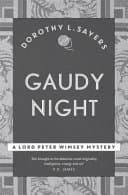
- Gaudy Night
Dorothy L. Sayers
4.2 (23k) average on GoodreadsHistorical FictionOffers a detailed, intellectual mystery with a focus on character and setting, solved by an amateur sleuth.
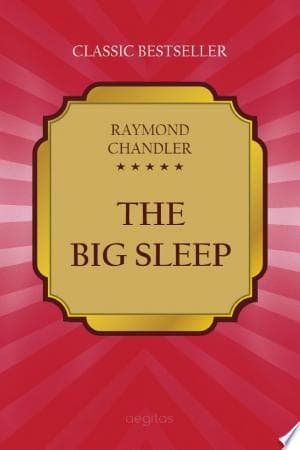
- The Big Sleep
Raymond Chandler
4.0 (126k) average on GoodreadsThrillerPublished in the same year, Chandler's novel represents the hard-boiled school of detective fiction, featuring a cynical protagonist (Philip Marlowe), a gritty urban setting, and themes of corruption and moral ambiguity. Christie's "Murder Is Easy" offers a stark contrast with its genteel village setting, intellectual puzzle, and focus on the restoration of order, rather than the exploration of societal decay.
- Angels & Demons
Dan Brown
3.9 (2.7M) average on GoodreadsThrillerA Harvard symbologist races through Rome's ancient sites, deciphering cryptic clues to unmask the Illuminati and stop a vengeful plot to destroy the Vatican with a stolen antimatter weapon.
- Gone Girl
Gillian Flynn
4.1 (2.3M) average on GoodreadsThrillerA wife's sudden disappearance on her fifth anniversary reveals a web of lies and psychological warfare, exposing the secrets within a seemingly perfect marriage.




Enjoyed the summary?
A summary gives you the shape of the book. The book itself has the detail, the examples and the voice.
Find Murder Is Easy on AmazonAs an Amazon Associate, BookBrief earns from qualifying purchases. How we're funded