
Synopsis
Covers the whole plot, including the ending.
- Difficulty
- Easy
- Pacing
- Moderate
- Mood
- Charming, Witty, Mysterious, Cozy
- Read it if
- You love classic 'closed circle' mysteries with a charming, intelligent duo, set in a boarding school environment.
- Skip it if
- You prefer gritty, dark mysteries or don't enjoy children's/young adult fiction.
Murder Most Unladylike Plot Summary
Covers the whole plot, including the ending.
The Wells & Wong Detective Society is Formed
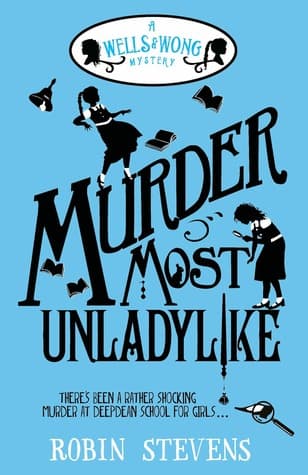
In 1934, at Deepdean School for Girls, Hazel Wong, a new student from Hong Kong, struggles to fit in. Her only friend is the lively and often bossy Daisy Wells, who loves detective stories. Together, they decide to form a secret detective agency, the Wells & Wong Detective Society. Their first cases are mundane, like finding Lavinia's missing tie, which Daisy says is not worth their time. Hazel, who is practical and observant, writes down their rules and notes in her book. They want a real, exciting mystery to solve, something challenging that will test their skills, not knowing what will happen in their boarding school.
A Body Disappears
Deepdean's normal routine breaks when Hazel, on her way to find Daisy, discovers Miss Bell, the Science Mistress, dead on the gymnasium floor. Shocked, Hazel rushes to find Daisy. When they return to the gym minutes later, the body has vanished. Daisy, at first doubtful, soon understands the situation's seriousness. The girls now face a double mystery: a murder, and the removal of the evidence. They decide they must solve the murder themselves, before the killer strikes again or the police arrive and mess up the investigation, as Daisy believes.
The First Suspects and a Secret Rendezvous
Daisy and Hazel start their investigation, making a list of suspects. They learn that Miss Bell was not well-liked and had arguments with several people. They find that Miss Bell was meeting someone secretly, shown by a love letter in her room—though the recipient's name is torn off. Their investigation leads them to suspect Miss Bell's fiancé, Mr. Curtis, the History Master, and Miss Bell's former best friend and rival, Miss Lappet, the English Mistress. The girls also learn Miss Bell argued with other teachers and some older girls, making their initial ideas about the killer's identity and motive more complex.
A Second Death and Growing Fear
To the girls' dismay, Miss Bell's body is found in the school grounds, moved again. The police arrive, led by Inspector Mallory and Sergeant Witney, but Daisy and Hazel continue their secret investigation, sure they can do better. The situation gets worse when a second body is found: Elizabeth Hurst, the Head Girl, is discovered dead in the school library. Elizabeth was known for being strict and bullying younger girls. This second murder causes fear at Deepdean, showing a dangerous killer is still at large in the school, targeting its residents.
Uncovering Elizabeth's Secrets
The Wells & Wong Detective Society focuses on Elizabeth Hurst, realizing her death must connect to Miss Bell's. They find that Elizabeth had a secret life beyond her role as Head Girl. She blackmailed people, using information to manipulate peers and some teachers. It becomes clear Elizabeth was involved in covering up Miss Bell's body, possibly moving it to protect someone or gain power. The girls also find evidence Elizabeth was meeting someone secretly, and she knew an important secret about Miss Bell's past, giving a strong reason for her to be silenced by the killer.
The Poison and the Diary
Daisy and Hazel conclude Miss Bell was poisoned with cyanide, likely in her tea. They also find Miss Bell's hidden diary, which shows her unhappiness and difficult relationships with several people at school. The diary entries hint at a secret affair and a past wrong Miss Bell wanted to hide. It seems the killer was close to Miss Bell, someone who knew her habits and had access to her. The diary also has cryptic mentions of events from years ago, suggesting the murders' origins lie in a long-buried secret.
The Wells & Wong Agency Under Threat
As Daisy and Hazel get closer to the truth, they face more danger. They receive threats and are almost caught several times while investigating. The pressure of the investigation also strains their friendship, with Daisy's bossiness and Hazel's caution clashing. Hazel starts to question Daisy's methods and rule-breaking, while Daisy gets frustrated with Hazel's fears. Despite their disagreements, their friendship and shared goal to solve the case keep them working together, even as the killer's shadow grows, making them realize the true risks of their detective work.
Unmasking the Killer
Through careful thinking, clue gathering, and some daring listening, Daisy and Hazel put the puzzle together. They realize the killer is Miss Lavinia Lappet, the English Mistress. Miss Lappet had been Miss Bell's best friend years ago, but their friendship ended after Miss Bell stole Miss Lappet's fiancé, Mr. Curtis. Miss Lappet, driven by years of anger and a desire for revenge, poisoned Miss Bell. Elizabeth Hurst found out Miss Lappet's secret and was blackmailing her, leading Miss Lappet to murder Elizabeth to silence her and keep her secret from the police.
The Confrontation and Confession
Daisy and Hazel set a trap for Miss Lappet, confronting her with their evidence. They explain how she moved Miss Bell's body, used school chemicals for the poison, and murdered Elizabeth to cover her actions. At first, Miss Lappet denies everything, but with the girls' detailed evidence and emotional pressure, she breaks down and confesses to both murders. She describes her long-held hatred for Miss Bell and her desperate act to silence Elizabeth, showing her deep pain and anger. The girls' bold and clever plan brings the killer to justice, though through unusual means.
Justice and the Future of Wells & Wong
With Miss Lappet's confession, Daisy and Hazel present their findings to Inspector Mallory and Sergeant Witney, who are surprised by the girls' involvement but impressed by their accurate conclusions. Miss Lappet is arrested, and the Deepdean School murders are solved. The school slowly returns to normal, but forever changed. Daisy and Hazel, having solved their first truly exciting mystery, confirm their partnership. They think about the dangers they faced and the complexities of human nature, strengthening their bond and their resolve to continue their detective work, ready for more mysteries.
Murder Most Unladylike Characters
Daisy Wells
Protagonist
The imaginative and often bossy co-founder of the detective agency.
Daisy Wells is the charismatic and self-appointed senior partner of the Wells & Wong Detective Society. She is intelligent, confident, and has a flair for the dramatic, often taking inspiration from her beloved detective novels. Daisy is the mastermind behind their investigations, quick to theorize and direct, but sometimes overlooks practical details in her enthusiasm. She comes from a privileged background, which contributes to her assured and sometimes imperious manner. Despite her occasional bossiness, she deeply values her friendship with Hazel and relies on Hazel's practicality and observational skills to ground their investigations. Her drive is to solve exciting, complex mysteries.
Relationships: Hazel Wong (Best friend and co-detective); Lavinia Best (Fellow student, sometimes a target of Daisy's bossiness); Miss Bell (Murder victim, Daisy investigates her death)
Hazel Wong
Protagonist
The observant and practical co-founder, documenting their investigations.
Hazel Wong is the junior partner of the Wells & Wong Detective Society and the narrator of the story. Originally from Hong Kong, she is a new student at Deepdean School and often feels like an outsider. Hazel is intelligent, methodical, and incredibly observant, meticulously recording all their findings and rules in her notebook. She is more cautious and pragmatic than Daisy, often providing the logical counterpoint to Daisy's grand theories. Her quiet nature allows her to notice details others miss. She is fiercely loyal to Daisy but occasionally struggles with Daisy's demanding personality. Her drive is to understand and solve mysteries, often with a focus on fairness and justice.
Relationships: Daisy Wells (Best friend and co-detective); Miss Bell (First to discover her body, central to her investigation); Lavinia Best (Fellow student, sometimes a source of information)
Miss Bell
Murder Victim
The unpopular Science Mistress whose murder kickstarts the mystery.
Miss Bell is the Science Mistress at Deepdean School, and her mysterious death is the central event of the novel. She is portrayed as generally unpopular among both students and staff, known for her strictness, often cold demeanor, and a tendency to be unfair. She had a complicated past, including a broken engagement to Mr. Curtis and a fractured friendship with Miss Lappet, which ultimately led to her demise. Her diary reveals a more vulnerable side, showing her unhappiness and the secrets she kept. Her character's history and relationships provide the primary motives for the killer.
Relationships: Miss Lappet (Former best friend, eventual murderer); Mr. Curtis (Fiancé, stolen from Miss Lappet); Elizabeth Hurst (Head Girl, involved in her initial body disappearance)
Miss Lavinia Lappet
Antagonist
The English Mistress and the cunning murderer of Miss Bell and Elizabeth Hurst.
Miss Lavinia Lappet is the English Mistress at Deepdean and the novel's antagonist. Initially appearing as a quiet and somewhat reserved teacher, she harbors a deep-seated resentment and pain stemming from Miss Bell stealing her fiancé, Mr. Curtis, years prior. This long-simmering betrayal fuels her desire for revenge. She is intelligent and meticulous, capable of planning and executing two murders and a complex cover-up. Her motive is rooted in a desire for retribution and to protect her secret when Elizabeth Hurst attempts to blackmail her. Her outwardly calm demeanor masks a dangerous and vengeful personality.
Relationships: Miss Bell (Former best friend, murder victim); Mr. Curtis (Former fiancé, stolen by Miss Bell); Elizabeth Hurst (Blackmailer, second murder victim)
Elizabeth Hurst
Supporting/Victim
The strict Head Girl, a blackmailer who becomes the second murder victim.
Elizabeth Hurst is the Head Girl of Deepdean School, known for her sternness, adherence to rules, and tendency to bully younger students. She is highly intelligent and ambitious but uses her position to gather information and blackmail others, including Miss Lappet. Elizabeth discovers Miss Lappet's involvement in Miss Bell's murder and attempts to leverage this knowledge, leading to her own death. Her character highlights the darker undercurrents of power and manipulation within the seemingly innocent school environment. She is initially involved in moving Miss Bell's body, indicating her complex role in the unfolding mystery.
Relationships: Miss Bell (Involved in her body's initial disappearance); Miss Lappet (Her blackmailer, and eventual murderer); Daisy Wells (Fellow student, subject of Elizabeth's authority)
Mr. Curtis
Supporting/Red Herring
The History Master, Miss Bell's fiancé, and a initial suspect.
Mr. Curtis is the school's History Master and Miss Bell's fiancé. He is initially a prime suspect for Daisy and Hazel due to his romantic involvement with Miss Bell and the general knowledge that their engagement was somewhat strained. He is a kind but somewhat weak-willed man who was previously engaged to Miss Lappet before Miss Bell 'stole' him away. His past actions and current relationship provide a plausible, but ultimately incorrect, motive for murder, serving as a significant red herring in the investigation. He is genuinely distraught by Miss Bell's death.
Relationships: Miss Bell (Fiancé, murder victim); Miss Lappet (Former fiancé, murderer); Daisy Wells (Teacher, subject of investigation)
Lavinia Best
Supporting
A fellow student, often a source of information and minor conflict.
Lavinia Best is a fellow student at Deepdean and a member of Daisy and Hazel's dormitory. She is often depicted as somewhat naive and easily flustered, providing comic relief and sometimes inadvertently offering clues to the detectives. She is the victim of the 'missing tie' case, which Daisy dismisses, but her interactions with other students and her observations are occasionally useful to Hazel. Lavinia represents the typical Deepdean student, largely unaware of the dark events unfolding around her.
Relationships: Daisy Wells (Fellow student, sometimes bullied by Daisy); Hazel Wong (Fellow student)
Miss Tennyson
Supporting
The school matron, known for her strictness and gossip.
Miss Tennyson is the school matron, a formidable presence known for her strictness and her encyclopedic knowledge of school gossip. She is a figure of authority and sometimes fear for the girls. Her tendency to overhear conversations and her familiarity with the staff's personal lives make her an unwitting source of information for Daisy and Hazel. She often appears suspicious or unhelpful due to her rigid nature, but ultimately her presence adds to the authentic boarding school atmosphere.
Relationships: Daisy Wells (Authority figure); Hazel Wong (Authority figure)
Inspector Mallory
Supporting
The official police detective, initially dismissive but eventually impressed.
Inspector Mallory is the police detective in charge of the official investigation into Miss Bell's and Elizabeth Hurst's murders. He is a professional but somewhat conventional investigator, initially dismissive of the girls' theories and presence. He represents the established authority that Daisy and Hazel are trying to outsmart. Despite his initial skepticism, he eventually comes to acknowledge the girls' intelligence and the accuracy of their deductions, though he would never openly admit to being outsmarted by schoolgirls. He is thorough but less imaginative than Daisy.
Relationships: Daisy Wells (Investigator, initially dismissive of her); Hazel Wong (Investigator, initially dismissive of her)
Sergeant Witney
Supporting
Inspector Mallory's assistant, more open to the girls' insights.
Sergeant Witney is Inspector Mallory's assistant, a more approachable and slightly less rigid figure than his superior. He is often the one to listen more patiently to Daisy and Hazel, even if he doesn't fully believe them at first. His character provides a subtle contrast to Mallory, showing a slightly more open-minded side of the police force. He helps to facilitate some of the interactions between the girls and the official investigation, occasionally relaying information or showing a flicker of understanding for their perspective.
Relationships: Inspector Mallory (Superior officer); Daisy Wells (Investigator, somewhat more receptive to her); Hazel Wong (Investigator, somewhat more receptive to her)
Murder Most Unladylike Themes
Friendship and Loyalty
The friendship between Daisy and Hazel is the novel's core. Despite their different personalities—Daisy's assertiveness and Hazel's quiet observation—they are very loyal to each other. Their bond is tested by the investigation's dangers and their different methods, but it strengthens as they use each other's unique skills. Hazel's belief in Daisy and Daisy's reliance on Hazel's carefulness are key to their success, showing how their complementary strengths make them a good team. The theme explores how true friendship can overcome challenges and even dangerous situations.
“We are the Wells & Wong Detective Society,” Daisy said. “And we are going to solve this murder. Together.”
Justice and Morality
The novel explores the girls' pursuit of justice outside the legal system. Daisy and Hazel are driven by a strong moral sense to find the truth, even when adults are dismissive or cannot solve the crime. They deal with the moral issues of murder and its reasons, learning that even respected people can do terrible things. Their actions raise questions about who is best at delivering justice and if rules can sometimes prevent the truth. The girls' commitment to finding the killer, regardless of personal risk, shows their strong sense of right and wrong.
“Grown-ups are always wrong,” Daisy said. “We are the only ones who can possibly solve this.”
Appearance vs. Reality
Deepdean School, at first a safe and respectable place, hides dark secrets and dangers. The appearance of an orderly boarding school breaks with the murders, revealing complex, often sinister, realities below the surface. Characters like Miss Lappet and Elizabeth Hurst appear one way but have different, darker reasons. The girls, as innocent schoolgirls, are underestimated by adults, allowing them to uncover truths others miss. This theme shows that things are rarely as they seem, and real understanding needs looking past appearances.
“It’s a good thing,” said Daisy, “that nobody ever suspects us, isn’t it?”
Prejudice and Otherness
Hazel Wong's experience as an East Asian girl in an English boarding school in the 1930s shows themes of prejudice and being an outsider. She often feels like an outsider, struggling to understand English customs and sometimes facing subtle biases. Her unique perspective, however, also helps their detective work, as her observation skills are sharpened by her constant need to understand new environments. Daisy, despite their friendship, sometimes shows casual insensitivity, making Hazel navigate both the murder mystery and her new world's social dynamics. This theme explores the challenges of belonging and the value of different viewpoints.
“Being foreign is an advantage,” I told myself. “People don’t notice you.”
The Role of Women in Society
Set in the 1930s, the novel touches on societal expectations for women and girls. Daisy and Hazel, as young girls, are largely ignored by the adult male police, which ironically lets them work more freely. Their intelligence and deductive skills challenge the idea that serious investigation is only for men. The female teachers, driven by personal grievances and secrets, also show the limited choices and social pressures women faced. The girls' agency and skill in solving a complex crime challenge the gender norms of the era, showing female intelligence and capability.
“No one ever listens to girls,” Daisy said with satisfaction. “It’s our greatest weapon.”
Plot Devices & Literary Techniques
First-Person Narration (Hazel Wong)
Provides an intimate, observant, and often self-effacing perspective on the events.
The story is narrated by Hazel Wong, which allows readers to experience the mystery through her meticulous observations and internal thoughts. Hazel's perspective, as an outsider at Deepdean, offers a unique lens, highlighting details that an English-born character might overlook. Her careful documentation in her notebook, which is essentially the narrative, grounds the fantastical elements of Daisy's theories in practical evidence. This device builds suspense as readers only know what Hazel knows, and her personal struggles with belonging add an emotional layer to the thrilling mystery.
Red Herring
Misleading clues and false suspects designed to divert attention from the real killer.
The novel cleverly employs several red herrings to keep readers guessing. Characters like Mr. Curtis, Miss Tennyson, and even initially, Elizabeth Hurst, are presented with plausible motives or suspicious behaviors that draw the girls' and the reader's attention away from the true culprit, Miss Lappet. For instance, the strained relationship between Miss Bell and Mr. Curtis, and Miss Bell's general unpopularity, make many characters seem like potential murderers. These diversions increase the complexity of the mystery and force Daisy and Hazel to constantly re-evaluate their theories, making the final reveal more satisfying.
The Detective Notebook
Hazel's journal, serving as both a narrative device and a record of the investigation.
Hazel's notebook is a central plot device, functioning as a tangible record of the Wells & Wong Detective Society's rules, observations, suspect lists, and theories. It allows the reader to follow the girls' deductive process step-by-step and highlights Hazel's methodical nature. The notebook also serves as a confessional space for Hazel's personal feelings and anxieties, adding depth to her character. Its physical presence in the story, with entries and diagrams, makes the investigation feel real and organized, contrasting with the chaotic nature of the murders.
The Secret Society
A covert organization allowing the protagonists to operate outside adult supervision.
The Wells & Wong Detective Society itself is a key plot device. By forming a secret club, Daisy and Hazel are able to conduct their investigation largely unsupervised by adults, who would otherwise dismiss or forbid their activities. The secrecy adds an element of thrill and danger, as they must hide their snooping from teachers and the police. This device not only facilitates the plot by allowing the girls freedom of movement and inquiry but also reinforces their bond and sense of shared purpose against the adult world, which often underestimates them.
The Hidden Diary
A crucial piece of evidence that reveals past secrets and motives.
Miss Bell's hidden diary is a classic mystery trope used to unveil critical backstory and motivations. Its discovery provides the girls with intimate details of Miss Bell's personal life, her strained relationships, and her past grievances with Miss Lappet and Mr. Curtis. The diary entries fill in crucial gaps in the timeline and expose the deep-seated resentment that ultimately led to the murder. It serves as a direct link to the killer's motive, moving the investigation from speculation to concrete evidence and helping the girls piece together the complex web of relationships and betrayals.
Murder Most Unladylike Quotes
“I am the daughter of a detective. I have been trained to observe.”
“There is no such thing as a perfect crime, only imperfect detectives.”
“Friendship is the most important clue of all.”
“A lady must always be prepared for the unexpected.”
“The truth is like a puzzle; you have to find all the pieces before it makes sense.”
“Sometimes the quietest people see the most.”
“Murder doesn't care about ladylike behavior.”
“In a world of secrets, the smallest detail can be the key.”
“We are the Wells and Wong Detective Society, and we will solve this.”
“Being different isn't a weakness; it's what makes you strong.”
“The past always leaves traces, if you know where to look.”
“A good detective listens more than she speaks.”
“Fear is just another clue to be examined.”
“In the end, justice must be served, no matter how ladylike or not.”
Quiz
10 questions on the plot and the characters. Each answer comes with a short explanation.
Question 1
What is the name of the school where Daisy Wells and Hazel Wong set up their secret detective agency?
- St. Mary's School for Girls
- Deepdean School for Girls
- Weston Boarding School
- Hazel's former school in Hong Kong
Show answer
B. Deepdean School for Girls The story is set at Deepdean School for Girls, a boarding school in England where Daisy and Hazel are students and establish their detective agency.
Question 2
Who is the first person to discover the body of Miss Bell, the Science Mistress?
- Daisy Wells
- Hazel Wong
- Lavinia
- The Headmistress
Show answer
B. Hazel Wong Hazel Wong discovers Miss Bell's body in the gymnasium, but when she returns with Daisy minutes later, the body has disappeared, sparking the central mystery.
Question 3
What trivial case do Daisy and Hazel initially investigate before the murder mystery?
- A stolen science experiment
- Missing homework assignments
- Lavinia's missing tie
- A broken window in the dormitory
Show answer
C. Lavinia's missing tie The girls' detective agency starts with minor cases like Lavinia's missing tie, which they consider unexciting compared to the later murder investigation.
Question 4
Why is it particularly challenging for Daisy and Hazel to solve Miss Bell's murder?
- They have no forensic tools
- The body disappears, so they must first prove a murder occurred
- The police refuse to help them
- Miss Bell had no enemies at the school
Show answer
B. The body disappears, so they must first prove a murder occurred The disappearance of Miss Bell's body means the girls face the dual challenge of solving the murder and convincing others it even happened, adding urgency to their investigation.
Question 5
How does Hazel's background as a student from Hong Kong influence her role in the detective agency?
- She feels isolated and struggles to make friends
- She is more observant and methodical, often recording details in a casebook
- She uses knowledge of Eastern detective techniques
- She is hesitant to get involved in school mysteries
Show answer
B. She is more observant and methodical, often recording details in a casebook Hazel's outsider perspective and meticulous nature make her the chronicler of their cases, often noting clues and events that Daisy might overlook, strengthening their partnership.
Question 6
What is a key theme explored through Daisy and Hazel's friendship during the investigation?
- The importance of academic competition
- Loyalty and trust under pressure
- Overcoming language barriers
- Rebelling against school rules
Show answer
B. Loyalty and trust under pressure The murder investigation tests Daisy and Hazel's friendship, as they must rely on each other's strengths and maintain trust while facing danger and suspicion.
Question 7
Which of the following best describes Daisy Wells' personality in the book?
- Shy and reserved, preferring to stay in the background
- Bold and charismatic, often taking the lead in investigations
- Strictly focused on her studies, with little interest in mysteries
- Easily frightened and reluctant to take risks
Show answer
B. Bold and charismatic, often taking the lead in investigations Daisy is portrayed as confident, inventive, and natural leader who drives the detective agency, contrasting with Hazel's more cautious approach.
Question 8
What historical setting detail from 1934 impacts the girls' investigation?
- The use of modern smartphones for communication
- Limited forensic technology and societal expectations for girls
- Widespread internet access aiding research
- Coeducational schools being common
Show answer
B. Limited forensic technology and societal expectations for girls Set in 1934, the book reflects historical constraints like rudimentary crime-solving tools and gender norms that challenge the girls as they investigate independently.
Question 9
In addition to solving the murder, what personal challenge do Hazel and Daisy face that threatens their agency?
- Competition from a rival detective club at school
- The risk of expulsion if caught investigating
- Balancing their detective work with impending exams
- Proving the murder happened before the police arrive and take over
Show answer
D. Proving the murder happened before the police arrive and take over The girls race against time to gather evidence and prove the murder occurred, fearing the police will dismiss their claims or solve the case first, undermining their agency's credibility.
Question 10
What does the disappearance of Miss Bell's body symbolize in the context of the mystery genre?
- A red herring to mislead the detectives
- The killer's attempt to cover up the crime and create doubt
- A supernatural element in the story
- An accident that complicates the investigation
Show answer
B. The killer's attempt to cover up the crime and create doubt The body's disappearance heightens the mystery by forcing Daisy and Hazel to work with limited evidence, typical of classic whodunit plots where the killer tries to obscure the crime.
Murder Most Unladylike FAQ
What is 'Murder Most Unladylike' about?
The book follows Daisy Wells and Hazel Wong, two students at Deepdean School for Girls in 1934, who run a secret detective agency. Their investigation takes a serious turn when Hazel discovers the body of their Science Mistress, Miss Bell, only for it to disappear minutes later. The girls must solve the murder while proving it even happened, racing against time and the police.
Why should I read 'Murder Most Unladylike'?
It's a clever, engaging mystery that blends a classic whodunit with historical school life and strong character dynamics. The 1930s boarding school setting adds charm, while Daisy and Hazel's contrasting personalities—Daisy's boldness versus Hazel's observant nature—create a compelling detective duo. The plot twists keep readers guessing until the end.
What is the background/setting of 'Murder Most Unladylike'?
Set in 1934 at Deepdean School for Girls, a fictional English boarding school, the story captures the rigid social hierarchies and traditions of the era. The school environment, with its strict rules and cliques, provides a confined setting that heightens the mystery's tension and influences the characters' interactions.
What are the most memorable quotes?
Key quotes include Daisy's declaration, 'We're detectives, Hazel. We notice things,' highlighting their partnership, and Hazel's reflection, 'In a school full of girls, secrets are the currency.' These lines underscore the themes of observation and hidden truths central to the mystery.
What writing style does the author use?
Robin Stevens employs a first-person narrative from Hazel's perspective, making it accessible and immersive for young readers. The prose is lively and detailed, with a mix of humor and suspense that balances the dark murder plot with the everyday dramas of school life.
What minor details add significant meaning?
Small details like Miss Bell's missing science notes and the specific timing of her disappearance—just before a school event—hint at premeditation. Hazel's meticulous note-taking as the 'Watson' to Daisy's 'Holmes' subtly reinforces her role as the reliable narrator and clue-gatherer.
What are some subtle foreshadowing moments?
Early mentions of Miss Bell's strained relationships with other staff and students foreshadow her murder. Daisy's overconfidence in her detective skills is subtly challenged by moments where Hazel's observations prove crucial, hinting at later conflicts in their friendship.
What unexpected character connections exist?
Unexpected links emerge between Miss Bell and other teachers, revealing hidden rivalries and secrets that motive the murder. The dynamics among the students, such as Lavinia's minor thefts, subtly tie into the broader web of deception at Deepdean.
What are unspoken character motivations?
Daisy is driven by a desire for excitement and recognition, often masking deeper insecurities about her place in society. Hazel, as an outsider from Hong Kong, seeks acceptance and purpose through their detective work, using it to navigate the school's social complexities.
What psychological complexities do characters exhibit?
Daisy displays a blend of charisma and manipulation, using her social status to control situations, while Hazel grapples with self-doubt and cultural displacement. The killer's actions reveal a calculated psyche, driven by jealousy or fear, hidden behind a respectable facade.
What are the major emotional turning points?
Key moments include Hazel's initial shock at finding Miss Bell's body, which thrusts her into the investigation, and a mid-story argument between Daisy and Hazel over trust and methods, testing their friendship. The climax, where the killer is revealed, brings a mix of relief and tension.
How do relationship dynamics evolve?
Daisy and Hazel's friendship deepens from a lopsided partnership—with Daisy as the leader—to a more equal collaboration as Hazel gains confidence. Their interactions with suspects, like teachers and peers, shift from suspicion to understanding, revealing layers of loyalty and betrayal.
Which parts remain ambiguous or open-ended?
Some motives behind secondary characters' actions are left partially unexplained, inviting readers to speculate. The aftermath of the murder's resolution hints at ongoing secrets at Deepdean, suggesting future mysteries for the detective agency.
What are controversial scenes or decisions?
Daisy's occasional recklessness in pursuing clues puts herself and Hazel at risk, sparking debate about her judgment. The girls' decision to investigate independently, rather than involving adults immediately, raises questions about responsibility and the ethics of amateur detective work.
'Murder Most Unladylike' ending explained: how it ends & what it means
The ending reveals the killer's identity, tied to personal grievances and hidden connections at the school. Daisy and Hazel successfully prove the murder, strengthening their bond but leaving their agency's future open. It underscores themes of justice and friendship triumphing in a constrained, adult-dominated world.
Similar books
- The Secret Seven Adventure
Enid Blyton
3.8 (5k) average on GoodreadsChildren'sFeatures a group of children solving mysteries in a classic, innocent style.
- The Westing Game
Ellen Raskin
4.0 (165k) average on GoodreadsChildren'sWhile Raskin's 'The Westing Game' is renowned for its intricate, puzzle-box plot and large ensemble cast, 'Murder Most Unladylike' focuses more intently on the evolving friendship and individual growth of its two core protagonists. Stevens provides a richer emotional landscape and a more grounded, specific historical setting, whereas Raskin's setting is more abstract and puzzle-driven.
- Harry Potter and the Sorcerer's Stone
J.K. Rowling
4.5 (7M) average on GoodreadsFantasyRescued from a miserable life under the stairs, an orphaned boy discovers he's a wizard destined for a magical school, where he uncovers a dangerous secret tied to the dark wizard who murdered his parents.
- The Hobbit, or There and Back Again
J.R.R. Tolkien
4.3 (2.9M) average on GoodreadsFantasyA comfort-loving hobbit named Bilbo Baggins is whisked away by a mischievous wizard and a band of dwarves on an unexpected journey to reclaim stolen treasure from a fearsome dragon, discovering courage and a magical ring along the way.
- Harry Potter and the Goblet of Fire
J.K. Rowling
4.6 (2.6M) average on GoodreadsFantasyA bewildered Harry Potter, underage and thrust into a deadly Triwizard Tournament, must brave dragons, mermaids, and a resurgent dark magic to survive a year that will forever alter the wizarding world.
- Harry Potter and the Order of the Phoenix
J.K. Rowling
4.5 (2.5M) average on GoodreadsFantasyIn a year of oppressive secrets and the threat of Voldemort, Harry Potter and Dumbledore's Army secretly train for war, shown through Jim Kay and Neil Packer's dark illustrations.






Enjoyed the summary?
A summary gives you the shape of the book. The book itself has the detail, the examples and the voice.
Find Murder Most Unladylike on AmazonAs an Amazon Associate, BookBrief earns from qualifying purchases. How we're funded