

Synopsis
Covers the whole plot, including the ending.
- Difficulty
- Medium
- Pacing
- Moderate
- Mood
- Witty, Mysterious, Romantic, Gothic, Charming
- Read it if
- You love classic retellings with a clever, supernatural twist and a strong, witty female cast.
- Skip it if
- You prefer your historical fiction strictly traditional or dislike ghost stories.
My Plain Jane Plot Summary
Covers the whole plot, including the ending.
An Unlikely Friendship and a Mysterious Opportunity
The story begins with Charlotte Brontë, a young woman with writing ambitions, facing her family's poverty and her own lack of success. She attends a lecture by Alexander Blackwood, a renowned supernatural investigator from the Society for the Relocation of Wayward Spirits (S.R.W.S.). Later, while trying to sell her stories, Charlotte meets Jane Eyre, an orphan who can see ghosts. Jane, having endured a hard life at Lowood School, is desperate for work. Blackwood, secretly watching Jane, offers her a governess position at Thornfield Hall, a notoriously haunted estate, pretending it's a standard job. He also subtly encourages Charlotte to seek inspiration there, hoping she will document the supernatural events.
Thornfield Hall and Its Spectral Inhabitants
Jane Eyre arrives at Thornfield Hall, a large, gothic manor. She immediately notices its eerie atmosphere. She quickly finds that the estate is full of ghosts, more than any place she has seen. The most prominent is Helen Burns, a former Lowood pupil and Jane's only friend there, who died tragically. Helen's ghost is friendly and offers Jane comfort and advice. Jane begins her duties as governess to young Adèle Varens and meets the stern housekeeper Mrs. Fairfax. Her hidden supernatural abilities let her navigate the haunted halls with a unique perspective, observing the lingering spirits and their often-disturbing activities.
The Enigmatic Mr. Rochester
Jane's employer, Mr. Edward Rochester, makes a dramatic entrance, nearly falling from his horse on the moors. He is a dark, brooding, and often moody man, but he has a captivating charm. Jane is intrigued by his mysterious nature and hints of a troubled past. Rochester, in turn, is fascinated by Jane's intelligence and spirit, qualities he finds refreshing. Their interactions involve intellectual sparring and a growing, undeniable attraction, despite Rochester's attempts to keep a distance. He often questions Jane about her past and opinions, testing her wit and resolve. Meanwhile, Blackwood and his apprentice, Alexander, arrive at Thornfield, supposedly to investigate mysterious fires and offer Rochester their services, though their true goal is to study Jane and the ghosts.
Blackwood's Investigation and Jane's Secret
Alexander Blackwood, with his apprentice, also named Alexander (known as Alex), sets up his ghost-hunting equipment at Thornfield. He believes the estate holds a powerful center of spectral energy and wants to cleanse it. Blackwood is a skilled, if somewhat rigid, investigator, driven by scientific method. He knows Jane is there but doesn't suspect her ability to see ghosts, thinking she is just an ordinary governess. Jane, for her part, keeps her abilities secret from Blackwood, fearing his reaction and potential consequences. She observes his methods, often finding them crude compared to her intuitive understanding of spirits. Charlotte, meanwhile, tries to gather material for her novel, observing the interactions between Jane, Rochester, and the spirits, and finding herself drawn into the mystery.
A Fire, a Rescue, and Growing Affection
One night, a mysterious fire breaks out in Mr. Rochester's bedchamber. Jane, alerted by a ghost, discovers it and bravely puts out the flames, saving Rochester's life. He is deeply grateful and intrigued by her quick thinking, further strengthening their bond. Rochester suspects foul play but remains vague about who caused it. This incident brings them closer, and their conversations become more personal. Jane finds herself increasingly drawn to Rochester's complex personality, despite his moody exterior and the age difference. Blackwood and Alex investigate the fire, attributing it to a mischievous spirit, but are puzzled by its intensity and lack of a clear source. Jane, however, senses a more malicious intent behind the act.
The Arrival of Blanche Ingram and Rochester's Proposal
A group of wealthy guests arrives at Thornfield, including the beautiful and proud Blanche Ingram, whom Rochester seems to court with great enthusiasm. Jane is deeply hurt and believes Rochester is using Blanche to make her jealous, or genuinely intends to marry her for social standing. She withdraws, feeling her hopes dashed. However, after a particularly difficult evening where Blanche openly mocks Jane, Rochester pulls Jane aside and unexpectedly proposes marriage. Jane is initially disbelieving and overwhelmed, but eventually accepts, her heart soaring. This turn of events shocks everyone, especially Mrs. Fairfax and the visiting guests, who expected Rochester to marry Blanche.
The Wedding Day Revelation
On Jane and Rochester's wedding day, as they stand at the altar, a lawyer named Mr. Briggs and a man named Richard Mason interrupt the ceremony. They reveal that Mr. Rochester is already married to Bertha Mason, Richard's sister, who is still alive and living at Thornfield Hall. Jane is utterly devastated and humiliated. Rochester, desperate to justify himself, leads them to a locked room on the third floor, where Bertha, a raving madwoman, is hidden. He explains her insanity and his attempts to care for her, but the truth remains: he is a bigamist. Jane is heartbroken and cannot accept being his mistress.
Jane's Escape and Charlotte's Dilemma
Overwhelmed by the betrayal and the impossibility of her situation, Jane makes the painful decision to flee Thornfield Hall in the middle of the night, leaving behind the only man she has loved. She carries little, determined to forge a new path, however uncertain. Rochester, distraught, tries to find her but fails. Meanwhile, Charlotte Brontë, who has observed these events, is reeling from the revelations. The dramatic turn of events, especially Bertha Mason's existence, challenges her earlier romantic ideas and forces her to confront the darker, more complex realities of love and morality. She struggles with how to include this shocking truth in her developing novel, understanding its deep impact on Jane's character and story.
The Fire at Thornfield and Bertha's Fate
Thornfield Hall catches fire, a blaze far more destructive than the previous incident. It is revealed that Bertha Mason, in a moment of clarity or madness, set the fire herself. Mr. Rochester, despite his past actions, tries to save her from the inferno. He succeeds in getting the servants out but is severely injured, losing his eyesight and one hand. Bertha dies in the flames, ending her tormented life and freeing Rochester from his legal bonds. The once grand Thornfield Hall is reduced to ruins. News of the tragic fire and Rochester's injuries spreads, eventually reaching Jane, who now lives a quiet life as a schoolmistress in a remote village.
Jane's Return and a New Beginning
After learning of Rochester's injuries and Bertha's death, Jane feels she must return to him. She finds him living in a secluded cottage, blind and scarred, but also humbled and softened by his suffering. The power dynamic between them has shifted; he is no longer the imposing master, and she is no longer the powerless governess. Jane, having found independence and strength, returns not out of obligation, but out of genuine love and compassion. They reconcile, their bond stronger and more honest than before. Rochester confesses his love and remorse, and Jane, seeing his transformation, accepts his renewed proposal. Their union is now one of equals, built on mutual respect and understanding.
Charlotte's Literary Success and Blackwood's Enlightenment
Charlotte Brontë, having witnessed and documented the events at Thornfield Hall, finally publishes her novel, 'Jane Eyre,' which becomes a great success. Her experiences, especially observing Jane's resilience and the complex nature of the supernatural, have deeply influenced her writing. Alexander Blackwood, initially rigid in his scientific approach to ghost hunting, also changes. Witnessing Jane's unique abilities and the emotional depth of the spirits at Thornfield, especially Helen Burns, forces him to re-evaluate his understanding of the supernatural. He begins to see ghosts not just as entities to be relocated, but as beings with stories and lingering emotions, leading to a more empathetic approach to his work. Alex, his apprentice, continues to learn and grow under Blackwood's guidance.
A Life Together and the Enduring Presence of Spirits
Jane Eyre and Edward Rochester finally marry, establishing a quiet, fulfilling life together. Rochester eventually regains partial sight in one eye, allowing him to see their firstborn son. Their love story, forged through hardship and revelation, shows enduring affection. While the most malevolent spirits are gone, the supernatural remains a subtle part of their lives. Jane continues to occasionally see ghosts, a part of her unique nature. The story ends with peace and contentment for Jane and Rochester. Their journey has led them to a deeper understanding of love, forgiveness, and the unseen world that coexists with their own, forever tied to Thornfield Hall's legacy.
Principal Figures
Jane Eyre
Protagonist
An orphaned governess with the ability to see ghosts.
Jane is a fiercely independent and intelligent young woman, marked by a difficult childhood at Lowood School. She possesses a strong moral compass, unwavering integrity, and an innate sense of justice. Her unique ability to see and communicate with ghosts sets her apart and often informs her perceptions of the world. Despite her plain appearance and modest circumstances, Jane holds a deep well of passion and resilience. She yearns for love and belonging but refuses to compromise her principles or self-respect for either.
Relationships: Edward Rochester (complex romantic love, initially master/governess, evolving to equals); Charlotte Brontë (unlikely friendship, source of inspiration); Helen Burns (ghost) (childhood friend, spiritual guide and protector); Alexander Blackwood (investigator/subject, initially wary, later mutual respect); Adèle Varens (governess/pupil)
Edward Rochester
Protagonist/Love Interest
The brooding, mysterious master of Thornfield Hall.
Rochester is a wealthy, intelligent, and deeply troubled man with a dark past. He is initially presented as enigmatic and temperamental, often testing Jane's wit and spirit. Beneath his cynical exterior, he possesses a passionate heart and a profound sense of loneliness. His secret marriage to Bertha Mason has trapped him in a life of guilt and despair, leading him to unconventional and sometimes manipulative behavior. He longs for genuine connection and redemption, finding himself drawn to Jane's purity and strength.
Relationships: Jane Eyre (complex romantic love, initially master/governess, evolving to equals); Bertha Mason (legal wife, source of torment and guilt); Adèle Varens (ward, somewhat distant father figure); Alexander Blackwood (client/investigator, initially skeptical, later trusting)
Charlotte Brontë
Supporting/Narrator-esque
An aspiring author who finds inspiration in Jane's life and the supernatural.
Charlotte is depicted as a determined, intelligent, and somewhat naive young woman with a burning desire to become a successful writer. She is observant and thoughtful, constantly seeking inspiration for her novels. Her perspective often frames the narrative, offering insights into the creative process and the challenges faced by women in her era. She is initially drawn to the romantic ideal but is forced to confront the harsh realities of life and the supernatural through her experiences at Thornfield. She develops a genuine friendship with Jane, providing a grounded, human counterpoint to Jane's supernatural experiences.
Relationships: Jane Eyre (unlikely friendship, source of inspiration); Alexander Blackwood (professional acquaintance, mild romantic tension); Alex Blackwood (apprentice) (friendly acquaintance, intellectual sparring partner)
Alexander Blackwood
Supporting/Antagonist (initially)
A renowned supernatural investigator with a scientific approach.
Blackwood is a leading member of the S.R.W.S., dedicated to the scientific investigation and relocation of spirits. He is intelligent, methodical, and initially quite rigid in his approach, prioritizing empirical evidence over intuition. He is skeptical of anything that cannot be explained logically, which puts him at odds with Jane's inherent abilities. His mission at Thornfield is to cleanse the estate of its spectral inhabitants, viewing them as disruptions rather than sentient beings. Despite his stern exterior, he is driven by a genuine desire to understand and control the supernatural.
Relationships: Jane Eyre (investigator/subject, initially wary, later mutual respect); Alex Blackwood (apprentice) (mentor/apprentice); Charlotte Brontë (professional acquaintance, mild romantic tension)
Alex Blackwood (Apprentice)
Supporting
Alexander Blackwood's intelligent and observant apprentice.
Alex is the younger, more open-minded apprentice to Alexander Blackwood. He is intelligent, observant, and often acts as a foil to his mentor's rigid scientific approach. He is more empathetic towards the spirits and more receptive to unconventional ideas, including Jane's unique abilities. Alex often questions his mentor's methods and is a quick learner, eager to understand the nuances of the supernatural world. He develops a friendly rapport with Charlotte and offers a fresh perspective on the events at Thornfield.
Relationships: Alexander Blackwood (mentor/apprentice); Charlotte Brontë (friendly acquaintance, intellectual sparring partner); Jane Eyre (observant, respectful of her abilities)
Helen Burns (Ghost)
Supporting/Supernatural
Jane's deceased childhood friend, who becomes her spectral guide.
Helen Burns is the ghost of Jane's only friend from Lowood School, who died tragically young. She is a gentle, wise, and comforting presence for Jane at Thornfield. Helen acts as a spiritual guide and protector, offering silent reassurance and sometimes subtle warnings. Her lingering presence highlights the injustice of her early death and the profound impact she had on Jane's life. She represents the benevolent side of the supernatural, demonstrating that not all spirits are malicious or lost.
Relationships: Jane Eyre (childhood friend, spiritual guide and protector)
Bertha Mason
Antagonist/Tragic Figure
Edward Rochester's hidden, insane wife.
Bertha Mason is Mr. Rochester's secret wife, kept locked away in Thornfield Hall due to her severe mental illness. She is a tragic figure, driven to madness and violence, and represents the dark secret that binds Rochester. Her presence is a source of terror and mystery, manifesting through unexplained fires, disembodied laughter, and violent outbursts. Though she acts as an antagonist, she is also a victim of circumstances and the societal limitations of her time, unable to receive proper care or understanding for her condition.
Relationships: Edward Rochester (legal wife, tormentor, and victim)
Mrs. Fairfax
Supporting
The kind but unsuspecting housekeeper of Thornfield Hall.
Mrs. Fairfax is the elderly housekeeper at Thornfield Hall. She is a kind, motherly figure who initially welcomes Jane and provides her with a sense of stability. She is genuinely fond of Rochester and Adèle, but she remains entirely unaware of the supernatural happenings in the house and Rochester's dark secret. Her traditional and somewhat naive perspective serves as a contrast to Jane's acute awareness of the unseen world.
Relationships: Jane Eyre (employer/employee, friendly, maternal); Edward Rochester (loyal employee, somewhat maternal); Adèle Varens (guardian, caregiver)
Themes & Insights
The Seen and Unseen Worlds
This theme explores how the physical world and the supernatural realm exist together, especially through Jane's ability to see ghosts. It looks at how different characters view and interact with these two realities – from Blackwood's scientific, skeptical method to Jane's intuitive, empathetic understanding. The unseen world of spirits at Thornfield Hall is not just a setting but an active force, influencing events and revealing hidden truths, such as Helen Burns's lingering presence or the mischievous actions of other spirits, which often lead to plot developments like the fires in Rochester's room. The story suggests that what is 'unseen' often holds deep truths about the 'seen' world and its people.
“There are more things in heaven and earth, Horatio, than are dreamt of in your philosophy.”
Independence vs. Belonging
Jane Eyre's main struggle is to find a place where she belongs without giving up her independent spirit and moral honesty. Her orphan status and lack of social standing constantly challenge her self-worth. She longs for love and connection but consistently refuses to compromise her principles, whether enduring injustices at Lowood or rejecting Rochester's proposal when she learns of his existing marriage. Her flight from Thornfield, leaving the man she loves, is a powerful act of her autonomy. The theme explores the tension between wanting deep connection and needing self-respect, ending with her eventual return to Rochester, but only on her own terms, as an equal.
“I am no bird; and no net ensnares me: I am a free human being with an independent will.”
Love, Deception, and Redemption
The complex relationship between Jane and Rochester is central to this theme. It explores love that grows amidst secrets and societal limits. Rochester's deception about Bertha Mason is a major conflict, forcing Jane to confront the moral implications of their love. The theme examines whether love can truly succeed when built on lies, and if redemption is possible for those who have caused pain. Rochester's journey through suffering and humility, leading to his transformation, allows a more honest and deep love to emerge with Jane. The story suggests that true love requires honesty, sacrifice, and a willingness to face one's own flaws.
“Do you think, because I am poor, obscure, plain, and little, I am soulless and heartless? You think wrong!”
The Power of Storytelling and Imagination
This theme is present through Charlotte Brontë's role in the story. It highlights the process of artistic creation, turning lived experience into literature, and the blurred lines between reality and fiction. Charlotte observes Jane's life, Thornfield's mysteries, and the supernatural events, using them as inspiration for her novel. The story itself becomes a commentary on the creation of 'Jane Eyre,' exploring how an author shapes and interprets events. It also touches on imagination's power to perceive what others cannot, linking Charlotte's artistic vision with Jane's supernatural sight. The narrative suggests that stories can capture truths that mere facts often miss.
“I will write a book. And it shall be about a governess, of course. For who knows the truth of this world better than those who are meant to be invisible?”
Plot Devices & Literary Techniques
The Haunted House (Thornfield Hall)
A gothic manor teeming with spirits and secrets.
Thornfield Hall functions as more than just a setting; it is a character in itself, imbued with a palpable atmosphere of mystery and foreboding. Its crumbling architecture and isolated location enhance the gothic tone. The house is a vessel for the 'unseen world,' literally housing numerous spirits, including Helen Burns and the malevolent presence of Bertha Mason. The secrets hidden within its walls, particularly Bertha's confinement, directly drive the plot and the escalating tension. The physical manifestation of the house's haunting, such as the fires and strange noises, serves to both mislead and inform the characters, pushing the narrative forward.
First-Person Perspective (Multiple)
The story is told through the alternating viewpoints of Jane, Charlotte, and Alexander Blackwood.
The novel employs a shifting first-person narrative, primarily alternating between Jane Eyre, Charlotte Brontë, and Alexander Blackwood. This allows for a multifaceted understanding of the events at Thornfield. Jane's perspective offers direct insight into her emotions and her unique supernatural perceptions. Charlotte's viewpoint provides a meta-narrative on the creation of the 'Jane Eyre' story, showcasing her struggles as an aspiring author and her interpretation of events. Blackwood's perspective offers a scientific, often skeptical, lens on the supernatural. This device creates dramatic irony, as each character possesses incomplete information, and the reader gains a fuller picture through their combined, often conflicting, observations.
Supernatural Abilities
Jane's unique gift of seeing and interacting with ghosts.
Jane's ability to see and communicate with ghosts is a central plot device. It is not merely a decorative element but actively drives her understanding of her surroundings and influences her decisions. Her interactions with spirits like Helen Burns provide guidance and comfort, while her perception of the more malevolent presences, such as Bertha's spectral manifestations, alerts her to danger and foreshadows key events. This ability positions Jane as an outsider, but also as a uniquely insightful observer, allowing her to uncover truths that others, like Rochester and Blackwood, are initially blind to. It grounds the fantasy elements within the historical fiction framework.
The Madwoman in the Attic
Bertha Mason, Rochester's hidden, insane wife, embodying a gothic trope.
The 'madwoman in the attic' trope, personified by Bertha Mason, is a crucial plot device. Her existence is Rochester's dark secret and the primary impediment to his marriage to Jane. Bertha's confinement and her mental state serve multiple narrative functions: she creates mystery and suspense, her violent outbursts cause physical harm and property damage (e.g., the fires), and her eventual revelation shatters Jane's world. This device highlights themes of societal repression, the consequences of past mistakes, and the tragic fate of women deemed 'mad' in the 19th century, while also serving as a literal ghost-like presence within the haunted house.
My Plain Jane Quotes
“I was just Jane. Plain Jane. Nothing more, nothing less. And sometimes that was a very hard thing to be.”
“There was a fine line between being a lady and being a girl with a sword. I was trying to walk it.”
“Some secrets are meant to be kept, even from those you love most.”
“A girl could dream, couldn't she? Even a plain one.”
“The world was not always what it seemed. Sometimes, the most ordinary things hid the most extraordinary secrets.”
“Courage wasn't the absence of fear, but the triumph over it.”
“You never truly knew a person until you saw them fight.”
“Love, like a good sword, needed to be tested by fire.”
“Sometimes, the only way to find your place in the world was to make one for yourself.”
“The past was a stubborn thing. It clung to you, no matter how hard you tried to shake it off.”
“It wasn't about being perfect. It was about being brave enough to try.”
“A true gentleman knows when to offer his hand, and when to offer his sword.”
“Not all monsters had fangs and claws. Some wore human faces.”
“Even the most ordinary girl could do extraordinary things, given the right circumstances.”
Quiz
10 questions on the plot and the characters. Each answer comes with a short explanation.
Question 1
What is Jane Eyre's initial occupation when she arrives at Thornfield Hall?
- Housekeeper
- Governess
- Maid
- Companion
Show answer
B. Governess As stated in the synopsis, Jane Eyre 'embarks on a new life as a governess at Thornfield Hall.'
Question 2
Which real-life historical figure is mentioned as an aspiring author and supernatural investigator in the story?
- Emily Brontë
- Mary Shelley
- Charlotte Brontë
- Jane Austen
Show answer
C. Charlotte Brontë The synopsis explicitly states that 'aspiring author Charlotte Brontë' is one of the main characters drawn into the ghost hunt.
Question 3
What is the primary genre blend of 'My Plain Jane' as described in the synopsis?
- Sci-Fi and Romance
- Fantasy and Mystery
- Gothic and Supernatural
- Historical Drama and Comedy
Show answer
C. Gothic and Supernatural The description highlights 'an adventure of Gothic proportions' and mentions a 'supernatural investigator' and an 'epic ghost hunt,' strongly indicating Gothic and Supernatural elements.
Question 4
What is Mr. Rochester's defining personality trait mentioned in the original 'Jane Eyre' context within the synopsis?
- His generosity
- His even temper
- His uneven temper
- His jovial nature
Show answer
C. His uneven temper The synopsis describes Mr. Rochester with 'his uneven temper (!!),' indicating this as a key characteristic.
Question 5
Besides Jane Eyre and Charlotte Brontë, who is the third main character involved in the 'epic ghost hunt'?
- Mr. Rochester
- Alexander Blackwood
- Edward Fairfax Rochester
- St. John Rivers
Show answer
B. Alexander Blackwood The synopsis clearly states that 'supernatural investigator Alexander Blackwood' is drawn together with Jane and Charlotte.
Question 6
What specific type of secret is Mr. Rochester implied to be hiding, beyond just 'skeletons in his closets'?
- Financial debts
- Another marriage
- Supernatural connections
- A criminal past
Show answer
C. Supernatural connections The text states 'a certain gentleman is hiding more than skeletons in his closets,' in the context of a supernatural investigator and a ghost hunt, strongly hinting at supernatural secrets.
Question 7
The book's premise suggests a significant deviation from the traditional 'Jane Eyre' ending. What is the implied question about Jane's fate with Rochester?
- Does she run away from Thornfield?
- Does she marry him?
- Does she become a published author?
- Does she reveal his secrets?
Show answer
B. Does she marry him? The synopsis ends with the rhetorical question 'Or does she?' after stating 'Reader, she marries him. (!!!),' directly questioning the traditional marriage plot.
Question 8
The title 'My Plain Jane' combined with the synopsis suggests a reinterpretation of what literary classic?
- Wuthering Heights
- Pride and Prejudice
- Jane Eyre
- Frankenstein
Show answer
C. Jane Eyre The entire synopsis is framed around the story of 'penniless orphan Jane Eyre' and her relationship with 'Mr. Rochester,' directly referencing the classic novel 'Jane Eyre.'
Question 9
What literary work is referenced to set the scale of the 'epic ghost hunt' mentioned in the synopsis?
- Pride and Prejudice
- Sense and Sensibility
- Wuthering Heights
- Great Expectations
Show answer
C. Wuthering Heights The synopsis describes the ghost hunt as 'the most epic ghost hunt this side of Wuthering Heights,' using Emily Brontë's novel as a point of comparison for its Gothic and supernatural scale.
Question 10
Based on the description, what is a key theme explored in 'My Plain Jane' regarding established narratives?
- The importance of historical accuracy in fiction.
- The stability and unchanging nature of classic stories.
- The reinterpretation and subversion of familiar tales.
- The superiority of original works over adaptations.
Show answer
C. The reinterpretation and subversion of familiar tales. The synopsis starts with 'You may think you know the story' and then questions the traditional ending with 'Or does she?', indicating a clear theme of reinterpretation and subversion of the established 'Jane Eyre' narrative.
My Plain Jane FAQ
What is the core premise of 'My Plain Jane' and how does it diverge from the original 'Jane Eyre'?
'My Plain Jane' reimagines the classic 'Jane Eyre' by introducing a supernatural element and a new character, Alexander Blackwood. While Jane still goes to Thornfield as a governess and meets Mr. Rochester, the narrative quickly shifts to focus on a ghost hunt led by Blackwood, involving Jane and an aspiring author named Charlotte Brontë, rather than solely on Jane's romance with Rochester.
Who is Charlotte Brontë in this story, and what is her role?
Charlotte Brontë is portrayed as a budding author who is also a 'seer,' meaning she can perceive ghosts, though she initially struggles to control this ability. She becomes a key member of Alexander Blackwood's supernatural investigation team, using her unique perception to help track and understand the spirits haunting Thornfield Hall.
What kind of supernatural elements are present in 'My Plain Jane'?
The story features a variety of spectral beings, primarily focusing on the restless ghost of Bertha Mason, who haunts Thornfield Hall. These ghosts are not merely atmospheric but are active participants in the plot, capable of influencing the living and revealing hidden truths about the manor's past and its inhabitants.
How does the relationship between Jane Eyre and Mr. Rochester differ from the original novel?
In 'My Plain Jane,' the romance between Jane and Mr. Rochester is significantly de-emphasized and complicated by the supernatural events and Rochester's hidden secrets. Jane's focus shifts from solely her feelings for Rochester to her involvement in the ghost hunt and her own burgeoning independence and agency, ultimately questioning Rochester's true character more deeply.
Who is Alexander Blackwood, and what is his connection to the supernatural world?
Alexander Blackwood is a professional supernatural investigator, leading a small team dedicated to understanding and managing spectral phenomena. He is highly knowledgeable about ghosts and their behaviors, serving as a mentor to Charlotte and a guiding force in the investigation at Thornfield, often providing logical and scientific explanations for the inexplicable.
What is the significance of the 'Society for the Suppression of Supernumerary Spirits'?
The Society is the organization Alexander Blackwood works for, dedicated to investigating and 'suppressing' (which often means helping to resolve) supernatural disturbances. It provides a formal framework for the ghost-hunting activities and hints at a larger world where the supernatural is acknowledged, albeit often hidden from the general public.
Are there any subtle nods to other Brontë works or Victorian literature within the narrative?
Beyond the obvious 'Jane Eyre' framework, the novel subtly references 'Wuthering Heights' in its description of the ghost hunt, hinting at a shared literary universe. Charlotte Brontë's own struggles as an aspiring female author in Victorian society are also woven into her character arc, reflecting historical realities.
How does the book's portrayal of Bertha Mason's ghost offer a new perspective on her character?
Bertha Mason's ghost is not merely a madwoman in the attic but a tragic figure whose spectral presence reveals the injustices and suffering she endured. Her haunting becomes a plea for understanding and resolution, forcing characters to confront Rochester's past actions and the societal constraints placed upon women.
What is the true nature of Mr. Rochester's secrets, beyond his marriage to Bertha?
Mr. Rochester's secrets extend beyond simply having a mad wife; he is deeply involved in attempting to control and manipulate the supernatural forces at Thornfield, often to his own selfish ends. His motives are revealed to be far darker and more self-serving, involving attempts to harness the ghosts for personal gain, rather than simply concealing a past mistake.
How does Jane Eyre's agency and self-discovery evolve in this retelling?
Jane's agency is significantly amplified as she moves from a passive governess to an active participant in the supernatural investigation. She develops a strong sense of self, making independent decisions, questioning authority figures like Rochester, and ultimately choosing her own path based on her moral compass and newfound understanding of the world.
What psychological impact does Charlotte Brontë's 'seer' ability have on her?
Charlotte's ability to see ghosts initially causes her significant distress and isolation, making her feel like an outcast. However, through her work with Blackwood and Jane, she learns to embrace her unique perception, transforming it from a burden into a powerful tool for understanding and empathy, ultimately bolstering her confidence as an individual and writer.
How does the novel explore themes of confinement and liberation, particularly for its female characters?
The book explores confinement through Thornfield Hall itself and the societal expectations placed on women like Jane and Bertha. Liberation is found as Jane breaks free from romantic illusions, Charlotte embraces her true self, and even Bertha's ghost finds a form of release by having her story acknowledged and her suffering addressed.
What role does empathy play in resolving the supernatural conflicts in the story?
Empathy is crucial, particularly in understanding Bertha's ghost. Instead of merely 'exorcising' her, the characters, especially Jane and Charlotte, must empathize with her suffering and the circumstances that led to her tragic end. This understanding is key to bringing peace to the restless spirit and resolving the haunting.
Is 'My Plain Jane' a critique of the original 'Jane Eyre' or a loving homage?
It functions as both. While offering a fresh, often humorous, and critical perspective on certain problematic elements of the original (like Rochester's character and the treatment of Bertha), it also clearly demonstrates a deep affection for the source material, expanding its world and themes rather than simply dismantling it.
How does the ending challenge traditional romantic narratives found in Victorian novels?
The ending subverts traditional romantic expectations by prioritizing Jane's independence, intellectual growth, and her found family with Charlotte and Blackwood over a conventional marriage to Rochester. It suggests that true happiness and fulfillment can be found outside of a prescribed romantic union, particularly one built on deceit.
What message does the novel convey about the importance of telling one's own story?
The novel strongly emphasizes the power of narrative, particularly through Charlotte's journey as an aspiring author and Jane's own experiences. It highlights that marginalized voices, like Bertha's, deserve to be heard and understood, and that individuals gain agency and control over their lives by shaping and sharing their own truths.
Could Alexander Blackwood be seen as a more suitable romantic interest for Jane than Rochester, and why?
Many readers could interpret Blackwood as a more suitable partner due to his honesty, respect for Jane's intelligence, and shared interest in uncovering truth. Unlike Rochester, he doesn't manipulate or conceal crucial information, offering Jane a partnership built on mutual respect and intellectual camaraderie, rather than passion clouded by deceit.
What is the significance of the title 'My Plain Jane'?
The title 'My Plain Jane' plays on the common perception of Jane Eyre as 'plain' and highlights the narrative's ownership and reinterpretation of her story. It suggests a more personal, perhaps even affectionate, retelling that delves beyond her perceived plainness to reveal her extraordinary inner strength and adventures, while also hinting at Charlotte Brontë's narrative voice.
Similar books
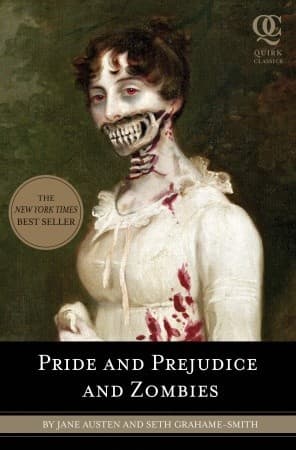
- Pride and Prejudice and Zombies
Seth Grahame-Smith
3.3 (129k) average on GoodreadsFantasyClassic novel retold with a fantastical, action-oriented twist.
- The Haunting of Hill House
Shirley Jackson
3.8 (162k) average on GoodreadsThrillerClassic gothic horror with a focus on a haunted house and its psychological effects.
- The Eyre Affair
Jasper Fforde
3.9 (119k) average on GoodreadsFantasyFforde's book is a highly meta-fictional, alternate-history literary detective novel that plays with the very fabric of literature itself. It is more complex and intellectually demanding, requiring a broader understanding of literary history and theory. While both 'My Plain Jane' and 'The Eyre Affair' are humorous and deconstructive, Fforde's work operates on a grander, more intricate scale of literary playfulness and critical commentary, whereas Hand's focuses more on character dynamics and a localized supernatural mystery.
- Harry Potter and the Sorcerer's Stone
J.K. Rowling
4.5 (7M) average on GoodreadsFantasyRescued from a miserable life under the stairs, an orphaned boy discovers he's a wizard destined for a magical school, where he uncovers a dangerous secret tied to the dark wizard who murdered his parents.
- The Hunger Games
Suzanne Collins
4.3 (6.4M) average on GoodreadsFantasyIn a future where children fight to the death on live television, Katniss Everdeen volunteers for the arena, turning a death sentence into a fight for survival and a spark of rebellion.
- 1984
George Orwell
4.2 (3.1M) average on GoodreadsPoliticsIn a future where surveillance and thought control are absolute, a man's search for truth clashes with the Party, showing that hope can be a form of rebellion.





Enjoyed the summary?
A summary gives you the shape of the book. The book itself has the detail, the examples and the voice.
Find My Plain Jane on AmazonAs an Amazon Associate, BookBrief earns from qualifying purchases. How we're funded