
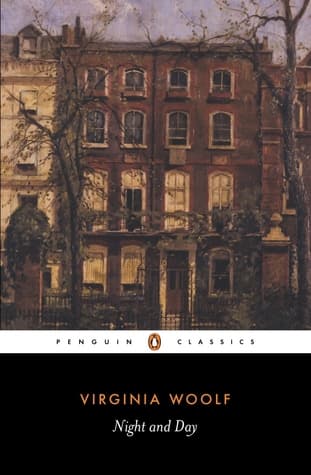
Synopsis
Covers the whole plot, including the ending.
- Difficulty
- Medium
- Pacing
- Slow
- Mood
- Reflective, Intellectual, Observational, Romantic
- Read it if
- You enjoy classic literature, character-driven stories, and subtle explorations of societal norms and women's roles in early 20th-century England. Perfect for fans of intellectual romance and social commentary.
- Skip it if
- You prefer fast-paced plots, clear-cut resolutions, or modern, explicit romance. This book is more about internal conflict and social observation than dramatic action.
Night and Day Plot Summary
Covers the whole plot, including the ending.
A Literary Tea and Initial Encounters
The novel opens at the Hilbery family home in Chelsea. Katharine Hilbery, granddaughter of a famous poet, hosts an afternoon tea. Guests include Ralph Denham, a solicitor who writes essays, and William Rodney, a poet secretly in love with Katharine. Katharine, despite her beauty and social standing, feels detached and often works on astronomy in her private study. She observes social rituals and conversations with a critical eye. Denham is immediately drawn to her, while Rodney struggles to express his feelings. The evening shows the Hilberys' intellectual and social world, full of literary discussions and unspoken social pressures.
William Rodney's Proposal and Katharine's Indecision
After several social events, William Rodney, with Mrs. Hilbery's encouragement, proposes marriage to Katharine. Katharine accepts, feeling a sense of family obligation and a desire for stability, though she has doubts and no strong feelings for him. Her acceptance is more about meeting expectations than declaring love. She tells her cousin, Cassandra Otway, about her engagement but finds it hard to explain her true feelings. Her family approves of the engagement, seeing Rodney as a good match that fulfills social expectations for a woman of Katharine's position.
Ralph Denham's Growing Fascination and Mary Datchet's Unrequited Love
Ralph Denham finds himself more and more interested in Katharine, despite her engagement to Rodney. He often seeks her out, engaging her in intellectual discussions that challenge her conventional views. Their talks often cover abstract ideas, unlike typical superficial social conversations. Meanwhile, Mary Datchet, a women's suffrage activist from a modest background, secretly loves Ralph Denham without success. She works hard for her cause, finding purpose in her activism, but her personal life remains lonely. Mary watches Denham's growing interest in Katharine with quiet sadness, seeing the social gap between herself and the Hilbery family.
A Country Visit and Shifting Affections
The Hilbery family and their guests, including Ralph Denham and William Rodney, spend time at the Hilbery country house. During this time, Katharine and Denham's intellectual and emotional bond grows deeper. They take long walks and have serious discussions, exploring their inner thoughts and feelings, often talking about reality and individual consciousness. Katharine feels increasingly drawn to Denham's intensity and unconventional ideas, while Rodney, unaware of their growing connection, continues his work and shows his affection for Katharine in a formal way. The country setting provides a place for their developing, unspoken romance, showing the difference between social expectations and personal desires.
Rodney's New Obsession and Katharine's Confession
William Rodney, during his stay at the Hilbery country house, gradually shifts his affection towards Katharine's lively and more openly expressive cousin, Cassandra Otway. He finds Cassandra's energy charming and feels less intimidated by her than by Katharine's intellectual reserve. This change in Rodney's focus gives Katharine an unexpected sense of freedom. Sensing an opportunity, Katharine finally tells Ralph Denham that she does not truly love Rodney and feels trapped by their engagement. This confession marks a turning point, opening the way for a possible relationship between Katharine and Denham, but also creating social complications.
The Unraveling of Engagements
Empowered by his feelings for Cassandra, William Rodney formally breaks off his engagement with Katharine, which surprises and eventually relieves both families. He then proposes to Cassandra, who, after thinking it over and talking frankly with Katharine, accepts. This turn of events frees Katharine from a commitment she never wanted. Soon after, Ralph Denham, recognizing the depth of his feelings and Katharine's new availability, proposes marriage to her. Their proposal is less about social convention and more about a deep intellectual and emotional connection, though it remains somewhat quiet and unconventional.
Mary Datchet's Disillusionment and New Path
Mary Datchet, who had hoped for a relationship with Ralph Denham, is deeply affected by the news of his engagement to Katharine. She faces the reality of her unrequited love and the social barriers that separate her from Denham's world. Though heartbroken, Mary finds new purpose and comfort in her work for women's suffrage. She dedicates herself more fully to her political activities, putting her emotional energy into a cause she believes in. This period marks a maturing for Mary, as she accepts her personal limits and chooses a path of independent action, finding fulfillment outside of traditional romantic expectations.
Navigating Parental Expectations and Social Scrutiny
Katharine and Ralph Denham now have to tell their families about their unconventional engagement, especially Katharine's parents, Mrs. Hilbery and Mr. Hilbery. Mrs. Hilbery, busy with her biography of her father, is initially surprised by the sudden change in engagements but eventually accepts it, often seeing romantic situations through a romanticized, literary view. Mr. Hilbery, more practical, questions Denham's financial prospects and social standing. Denham, for his part, must deal with his own family's expectations, particularly his sister's, who views Katharine's upper-class background with some suspicion. The couple faces a period of adjustment and quiet social scrutiny.
A Visit to Denham's Home and Social Contrasts
Katharine visits Ralph Denham's family home in the suburbs, which is very different from her grand Chelsea residence. She meets his sister, Joan, and sees the more modest, practical, and less intellectual environment. This visit shows the significant class differences between Katharine and Denham, and the different worlds they live in. Katharine, used to a life of privilege and intellectual pursuits, feels somewhat out of place, yet she wants to understand Denham's background. Denham, in turn, knows about the social gap, and both struggle with how to bridge these differences in their upcoming marriage, recognizing that their union crosses social boundaries.
Reconciliation and the Future
As the novel ends, the characters find some resolution. Rodney and Cassandra are happily engaged, their relationship based on more direct, less intellectual affection. Mary Datchet continues her work for women's rights, finding a new kind of fulfillment in her independence and activism. Mrs. Hilbery continues her work on her father's biography, always creating and recreating his memory. Katharine and Ralph Denham, having dealt with their personal and social challenges, decide to marry. Their union is shown not as a conventional romance, but as a partnership built on shared intellectual curiosity, mutual respect, and a deep understanding of each other's complex inner lives, promising a future that goes beyond traditional expectations.
Principal Figures
Katharine Hilbery
Protagonist
Beautiful and intellectual woman, seeking authenticity amidst societal expectations.
Katharine is the intelligent and introspective granddaughter of a famous poet, living in a privileged London household. Despite her beauty and social standing, she feels a profound sense of detachment from the superficiality of her social circle and often retreats to her private study to work on mathematics and astronomy. She struggles with societal expectations, particularly regarding marriage, and initially accepts William Rodney out of a sense of duty and the path of least resistance. Her true desire is for a deeper, more authentic connection, which she finds in Ralph Denham. She is driven by a quest for truth and understanding, both in the world and within herself.
Relationships: Ralph Denham (intellectual and romantic partner); William Rodney (initial fiancé, based on convenience); Mrs. Hilbery (mother, with whom she has a complex, often distant, relationship); Cassandra Otway (cousin and confidante)
Ralph Denham
Protagonist/Love Interest
Ambitious solicitor and writer, drawn to intellectual depth and authenticity.
Ralph Denham is a young, ambitious solicitor from a more modest background than Katharine, who secretly aspires to be a writer and intellectual. He is earnest, intense, and often socially awkward, but possesses a keen intellect and a deep desire for meaningful connection. Denham is immediately captivated by Katharine's enigmatic presence and intellectual depth, finding in her a kindred spirit who challenges his own perceptions. He is critical of social conventions and seeks to live a life of purpose and authenticity. His directness and intellectual honesty appeal to Katharine, offering an alternative to the polite superficiality of her world.
Relationships: Katharine Hilbery (intellectual and romantic partner); Mary Datchet (friend, subject of her unrequited love); Joan Denham (sister)
William Rodney
Supporting
Meticulous poet, initially engaged to Katharine, later drawn to Cassandra.
William Rodney is a meticulous and somewhat conventional poet, initially presented as Katharine Hilbery's fiancé. He is earnest, polite, and deeply concerned with literary pursuits, but lacks the passionate intensity and intellectual depth that Katharine ultimately desires. Rodney is more comfortable with established forms and traditions, both in his poetry and in his relationships. He is easily swayed by charm and vivacity, eventually shifting his affections from the reserved Katharine to the more openly expressive Cassandra Otway. His character highlights the limitations of a relationship based on convention and surface compatibility.
Relationships: Katharine Hilbery (initial fiancé); Cassandra Otway (later fiancé and love interest)
Mary Datchet
Supporting
Diligent women's suffrage activist, secretly in love with Ralph Denham.
Mary Datchet is a dedicated women's suffrage activist from a modest background, working tirelessly in an office. She represents a different path for women, one focused on social change and independence rather than traditional domesticity. Mary is intelligent, principled, and deeply committed to her cause, finding purpose and fulfillment in her work. She harbors a secret, unrequited love for Ralph Denham, which causes her quiet suffering. Despite her personal heartbreak, Mary maintains her dignity and resilience, ultimately channeling her emotional energy into her activism and embracing a life of independent purpose, demonstrating a different form of female agency.
Relationships: Ralph Denham (friend, object of unrequited love)
Mrs. Hilbery (Margaret Hilbery)
Supporting
Katharine's mother, a charming but often distracted hostess, writing a biography of her father.
Mrs. Hilbery, Katharine's mother, is a charming, often flighty, and highly social woman who lives in a world steeped in literary and social engagements. She is perpetually engaged in writing a biography of her famous poet father, a project that frequently stalls due to her many distractions and her tendency to romanticize the past. Mrs. Hilbery embodies the more traditional, social role of a woman of her class, valuing charm, good conversation, and the maintenance of a bustling household. While she loves Katharine, she often fails to truly understand her daughter's deeper intellectual and emotional needs, viewing relationships through a romanticized, literary lens.
Relationships: Katharine Hilbery (daughter); Mr. Hilbery (husband); William Rodney (initially favored for Katharine)
Mr. Hilbery
Supporting
Katharine's father, a pragmatic and somewhat detached scholar.
Mr. Hilbery, Katharine's father, is a more pragmatic and somewhat detached figure compared to his effusive wife. He is a scholar, often retreating to his study, and tends to view situations with a more logical, if sometimes cynical, eye. He is less concerned with social niceties than with intellectual integrity and practicality. He supports his wife's literary endeavors but often sees through her romanticized view of their family history. Mr. Hilbery represents a more grounded, masculine influence in the household, providing a counterpoint to Mrs. Hilbery's poetic idealism. He questions Denham's suitability for Katharine based on practical considerations like income.
Relationships: Katharine Hilbery (daughter); Mrs. Hilbery (wife)
Cassandra Otway
Supporting
Katharine's vivacious and straightforward cousin, who marries William Rodney.
Cassandra Otway is Katharine's younger cousin, characterized by her vivacity, directness, and lack of intellectual pretension. She is more outwardly expressive and less introspective than Katharine, often providing a refreshing contrast to the Hilbery household's intellectual intensity. Cassandra is charming and attractive, drawing the attention of William Rodney after his engagement to Katharine begins to falter. She represents a simpler, more immediate approach to life and relationships, contrasting with Katharine's complex inner world. Her practical and cheerful nature ultimately makes her a more suitable partner for Rodney.
Relationships: Katharine Hilbery (cousin and confidante); William Rodney (fiancé and husband)
Joan Denham
Supporting
Ralph Denham's sister, a working-class woman with practical concerns.
Joan Denham is Ralph Denham's sister, representing a more working-class, practical perspective than the Hilberys. She is sensible, hardworking, and somewhat suspicious of upper-class pretensions. Joan is concerned with her brother's well-being and practical matters, often viewing Katharine's background with a cautious eye. Her character highlights the social and class divides that exist in the novel, and the challenges Ralph and Katharine face in bridging those gaps. She provides a grounded, realistic counterpoint to the more intellectual and abstract discussions prevalent among the Hilbery circle.
Relationships: Ralph Denham (brother)
Themes & Insights
Identity and Self-Discovery
The novel explores a person's search for identity, especially for women, amid social pressures. Katharine Hilbery struggles to balance her intellectual interests (astronomy, mathematics) with the expected role of a privileged woman. Her first engagement to Rodney is a compromise to this expectation, while her eventual choice of Denham shows her true self and her desire for intellectual partnership. Mary Datchet's journey, finding purpose in women's suffrage after unrequited love, also shows self-discovery through independent action, challenging traditional female roles.
“For the first time she was beginning to understand that the world was not a solid, fixed reality, but a fluid, changing thing, which she herself could help to mould.”
Love, Marriage, and Societal Expectations
Woolf examines the nature of love and marriage, comparing conventional unions with relationships based on intellectual and emotional compatibility. Katharine's engagement to Rodney is a 'suitable' match, but it lacks real passion, reflecting social pressures. Her attraction to Denham, however, comes from deep intellectual conversations and a shared understanding of life's complexities, challenging superficial social norms. The changing engagements (Katharine-Rodney, Rodney-Cassandra) reveal how arbitrary such arrangements are when not based on real connection. Mary's unrequited love for Denham shows the pain of unfulfilled desires in a society that often limits women's romantic choices.
“It was not a question of love, but of necessity; a woman must marry, and she must marry someone.”
The Role of Women in Society
The novel criticizes the limits placed on women in early 20th-century society. Katharine's intellectual goals (astronomy, mathematics) are often seen as odd or secondary to her role as a hostess or potential wife. Mrs. Hilbery, though intellectual, is mostly defined by her social duties and her endless, romanticized biography. Mary Datchet directly confronts these limits through her activism for women's suffrage, offering an alternative path of independence and social involvement outside of marriage. The contrasting lives of Katharine, Mrs. Hilbery, and Mary show how women dealt with or challenged the expectations of their time.
“What was the good of thinking, unless you thought about something practical?”
Intellectualism vs. Emotion
Woolf explores the tension between intellectual pursuits and emotional experience. Katharine and Denham's relationship grows through their serious, abstract discussions, valuing mental connection as much as, if not more than, traditional romance. Katharine's private study of astronomy symbolizes her intellectual escape from emotional and social demands. Conversely, Rodney's precise but somewhat dry poetry, and his eventual shift to the more openly emotional Cassandra, shows the limits of purely intellectual or purely conventional approaches to life and love. The novel suggests a balanced integration of mind and heart for true fulfillment.
“The ardour of her mind burnt like a steady lamp, illuminating the dark places of her daily life.”
Class and Social Divide
The novel shows the strict class differences in English society. The Hilbery family represents the upper-middle-class intellectual elite, with their grand house, literary connections, and social rituals. Ralph Denham, a solicitor from a more modest background, often feels out of place in their world, keenly aware of his social standing. His sister, Joan, further embodies the practical, working-class perspective, viewing the Hilberys with a mix of suspicion and respect. The class differences between Katharine and Denham, especially clear during Katharine's visit to his home, show the social barriers they must overcome to build a relationship.
“He was aware of a great gulf fixed between his world and hers.”
Plot Devices & Literary Techniques
Stream of Consciousness (Proto-Stream of Consciousness)
Exploration of characters' inner thoughts and perceptions.
While not as fully developed as in her later works, 'Night and Day' employs elements of stream of consciousness to delve into the characters' inner lives, particularly Katharine's and Denham's. Woolf frequently shifts from external narration to the characters' private thoughts, feelings, and philosophical musings, revealing their internal conflicts, doubts, and desires. This technique allows the reader to understand the complex mental landscapes of the protagonists, contrasting their rich inner worlds with the often superficial external social interactions. It emphasizes the subjective nature of reality and the unspoken depths beneath conventional behavior.
Symbolism of Astronomy/Mathematics
Represents Katharine's intellectual escape and search for universal truth.
Katharine Hilbery's secret study of astronomy and mathematics serves as a potent symbol throughout the novel. These abstract, logical pursuits represent her intellectual escape from the social obligations and emotional complexities of her daily life. They signify her desire for universal truths, order, and a sense of detachment from the chaotic human world. Her turning to the stars and mathematical problems highlights her yearning for a different kind of fulfillment than that offered by conventional romance or domesticity, embodying her intellectual independence and her quest for a profound, objective understanding of existence.
Contrasting Social Settings
Highlights class differences and character development.
Woolf uses contrasting social settings to underscore character development and thematic concerns. The elegant, intellectual Chelsea home of the Hilberys, with its literary teas and constant flow of guests, represents a world of privilege, tradition, and intellectual discourse, albeit often superficial. In stark contrast, Ralph Denham's modest suburban home, with its more practical concerns and less intellectual atmosphere, highlights the class divide and the different realities that exist. Mary Datchet's suffrage office provides yet another setting, representing a world of work, political action, and independent female endeavor. These settings illuminate the various social and economic strata and the challenges characters face in navigating them.
The Biography of the Poet
A meta-commentary on truth, memory, and the creation of narrative.
Mrs. Hilbery's perpetually unfinished biography of her famous poet father acts as a significant plot device and a meta-commentary on the nature of truth, memory, and the creation of narrative. Her struggle to weave together facts, anecdotes, and personal recollections reveals the subjective and often romanticized way we construct the past. It mirrors the characters' own attempts to understand and define themselves and their relationships. The biography also symbolizes the weight of tradition and the past on the present generation, particularly for Katharine, who lives in the shadow of her illustrious grandfather, and the challenge of forging one's own authentic story.
Night and Day Quotes
“The future is dark, which is the best thing the future can be, I think.”
“It is strange how little we know about the people we live with.”
“To be oneself, and yet to be in perfect harmony with the world, that is the problem.”
“What is the meaning of life? That is the simple question which has been asked by man since the beginning of time.”
“We are all prisoners of our own experience.”
“The greatest happiness of life is the conviction that we are loved; loved for ourselves, or rather, loved in spite of ourselves.”
“It is only by being alone that one can discover what is one's own.”
“The world is a looking-glass, and gives back to every man the reflection of his own face.”
“The most important thing is to be honest with oneself.”
“What does it mean to be alive? To feel, to think, to love, to suffer.”
“One feels that one has a self, and then one feels that one is nothing but a mirror of other people's selves.”
“It is a fact that the mind is a most capricious and ungovernable organ.”
“The true delight of a book is to be found in the communication of mind with mind.”
“Love is not a feeling, it is an act.”
Quiz
10 questions on the plot and the characters. Each answer comes with a short explanation.
Question 1
Which character is described as a 'poet' to whom Katharine Hilbery is initially engaged?
- Ralph Denham
- William Rodney
- Mr. Hilbery
- Cyril
Show answer
B. William Rodney Katharine Hilbery is initially engaged to William Rodney, who is described as an 'oddly prosaic poet' in the book's description, before her feelings for Ralph Denham complicate matters.
Question 2
What is Margaret Hilbery, Katharine's mother, attempting to complete throughout the novel?
- A novel of her own
- A biography of her father
- A collection of poetry
- A political manifesto
Show answer
B. A biography of her father Margaret Hilbery is engaged in the demanding task of weaving together documents, events, and memories to write a biography of her own father, a significant intellectual figure.
Question 3
Which character is identified as a 'women's rights activist' whose life impinges on Katharine's?
- Katharine Hilbery
- Margaret Hilbery
- Mary Datchet
- Cassandra Otway
Show answer
C. Mary Datchet Mary Datchet is the character described as a women's rights activist, representing a different path for women in society and influencing Katharine's perspective.
Question 4
What is the central romantic dilemma Katharine Hilbery faces?
- Choosing between a career and marriage
- Deciding between William Rodney and Ralph Denham
- Whether to elope or have a traditional wedding
- Reconciling with a past lover or moving on
Show answer
B. Deciding between William Rodney and Ralph Denham Katharine's primary conflict is her struggle to choose between her engagement to the 'oddly prosaic poet' William Rodney and her 'dangerous attraction' to the 'passionate Ralph Denham'.
Question 5
How does Virginia Woolf's novel subtly undermine traditional romance and social comedy?
- By ending with a tragic, unresolved conflict
- By focusing exclusively on male characters' perspectives
- By questioning a woman's role and the nature of experience
- By introducing fantastical elements into a realistic setting
Show answer
C. By questioning a woman's role and the nature of experience The book description explicitly states that the novel 'subtly undermines these traditions, questioning a woman's role and the very nature of experience,' moving beyond simple genre conventions.
Question 6
What adjective is used to describe Ralph Denham's attraction to Katharine, contrasting with William Rodney?
- Gentle
- Calculated
- Passionate
- Indifferent
Show answer
C. Passionate Ralph Denham's attraction is characterized as 'passionate', creating a stark contrast with the 'oddly prosaic' nature of William Rodney.
Question 7
What is Katharine Hilbery's primary internal conflict, beyond her romantic choices?
- Her struggle with financial instability
- Her uncertainty about her own future and identity
- Her desire to escape her family's influence
- Her ambition to become a celebrated writer
Show answer
B. Her uncertainty about her own future and identity The description states Katharine is 'beautiful and privileged, but uncertain of her future,' indicating a deeper internal struggle with her sense of self and purpose beyond just who she will marry.
Question 8
How does the involvement of Mary Datchet and Margaret Hilbery affect Katharine's decision-making process?
- They directly advise her on who to marry.
- Their lives present contrasting examples of women's roles and intellectual pursuits, broadening Katharine's perspective.
- They create obstacles that prevent her from making any choice.
- They introduce new romantic interests for Katharine.
Show answer
B. Their lives present contrasting examples of women's roles and intellectual pursuits, broadening Katharine's perspective. The lives of Mary Datchet (women's rights activist) and Margaret Hilbery (biographer) 'impinge on hers with unexpected and intriguing consequences,' suggesting they offer alternative models of female existence and thought, influencing Katharine's understanding of her own potential paths.
Question 9
What is a key thematic element that Virginia Woolf explores through the novel's 'social comedy' aspect?
- The absurdities of political power struggles
- The superficiality and expectations of upper-class Edwardian society
- The humorous side of scientific discovery
- The comedic mishaps of international travel
Show answer
B. The superficiality and expectations of upper-class Edwardian society As a 'social comedy,' the novel likely satirizes or observes the manners, conventions, and expectations of the social circles the characters inhabit, particularly the privileged class Katharine belongs to, highlighting the often-superficial aspects of their interactions and societal pressures.
Question 10
The description refers to 'Night and Day' as Virginia Woolf's 'delicate second novel'. What does 'delicate' imply about the novel's style or content?
- It features fragile characters who are easily broken.
- It handles complex emotional and social themes with nuance and subtlety, rather than overt drama.
- The plot is extremely simple and lighthearted.
- The physical book itself is unusually thin and small.
Show answer
B. It handles complex emotional and social themes with nuance and subtlety, rather than overt drama. In literary criticism, 'delicate' often suggests a nuanced, subtle, and carefully crafted exploration of themes and emotions, avoiding heavy-handedness. This aligns with Woolf's known style of psychological depth and intricate observation.
Night and Day FAQ
What is "Night and Day" about?
"Night and Day" is a romance novel by Virginia Woolf centered on Katharine Hilbery, a privileged young woman in Edwardian London torn between two suitors: the conventional poet William Rodney and the more intellectually stimulating and passionate Ralph Denham. The narrative explores her struggle for self-discovery and independence amidst societal expectations, while also weaving in the stories of other women like the feminist Mary Datchet and Katharine's mother, Margaret, who is writing a biography of her father.
Why should I read "Night and Day"?
You should read "Night and Day" for its delicate exploration of love, social comedy, and its subtle subversion of traditional romance narratives. Virginia Woolf masterfully questions a woman's role in society and the nature of experience through Katharine's internal conflicts and the intertwining lives of its characters, offering a deeper psychological insight than a typical romance.
What is the background/setting of "Night and Day"?
The novel is set in Edwardian London, primarily among the upper-middle class and intellectual circles. It frequently moves between drawing-rooms, libraries, and city streets, reflecting the social norms and intellectual currents of the early 20th century. The setting emphasizes the constraints and expectations placed upon women, particularly those of Katharine's social standing.
What writing style does the author use?
Virginia Woolf employs a delicate and nuanced writing style, characterized by its lyrical prose, rich interior monologues, and keen psychological observation. While not as experimental as her later works, "Night and Day" foreshadows her stream-of-consciousness technique, offering deep insights into characters' thoughts and feelings while maintaining a more traditional narrative structure.
What minor details add significant meaning?
The repeated motif of stars and the night sky, particularly in conversations between Katharine and Ralph, symbolizes the vast, unknown, and intellectual possibilities that lie beyond conventional domesticity. Also, Katharine's secret study of mathematics, hidden from her family, is a crucial detail representing her yearning for intellectual independence and a life beyond societal expectations.
What are some subtle foreshadowing moments?
Early on, Katharine's discomfort with William Rodney's overly formal proposal and her immediate intellectual connection with Ralph Denham, despite their initial arguments, subtly foreshadows the eventual breakdown of her engagement to William and the deepening of her feelings for Ralph. The discussions about women's suffrage and independent careers, often led by Mary Datchet, also hint at Katharine's own latent desire for a less conventional future.
What unexpected character connections exist?
An unexpected connection is the shared, though different, yearning for intellectual fulfillment between Katharine and Mary Datchet. While Katharine comes from privilege, she finds a kindred spirit in Mary's dedication to women's rights and her independent life, offering Katharine a glimpse of an alternative to her own societal expectations. Also, the surprisingly deep understanding between Ralph Denham and Katharine's mother, Margaret, despite their generational and class differences, reveals shared intellectual sensibilities.
What are unspoken character motivations?
Katharine's unspoken motivation for initially accepting William Rodney's proposal is largely a desire for stability and to conform to the expectations of her family and society, even if it means sacrificing her true intellectual and emotional desires. Ralph Denham's initial prickliness towards Katharine, despite his attraction, stems from his own class insecurities and his desire to prove himself intellectually, making him wary of her privileged background.
What psychological complexities do characters exhibit?
Katharine exhibits profound psychological complexity in her internal battle between duty and desire, and her struggle to articulate her true self in a society that expects her to conform. Her habit of retreating into her own thoughts and her secret study of mathematics reveal a rich inner life often at odds with her outward demeanor. Ralph Denham's blend of intellectual ambition, social awkwardness, and passionate intensity also showcases a complex inner world.
What are the major emotional turning points?
A major emotional turning point is Katharine's decision to finally break off her engagement to William Rodney, a moment of profound courage and self-assertion. Another is the pivotal conversation between Katharine and Ralph Denham in the garden under the stars, where they confess their mutual attraction and intellectual kinship, signaling a shift from societal expectations to genuine emotional connection.
How do relationship dynamics evolve?
The relationship between Katharine and William Rodney evolves from a conventional, somewhat passionless engagement based on societal approval to an amicable but firm dissolution, as Katharine realizes their fundamental incompatibility. Conversely, the dynamic between Katharine and Ralph Denham progresses from intellectual sparring and mutual skepticism to a deep, passionate, and intellectually fulfilling partnership, built on shared understanding and a desire for authenticity.
Which parts remain ambiguous or open-ended?
While the novel concludes with Katharine and Ralph's engagement, the exact nature of their future life together, especially how they will navigate societal expectations while pursuing their unconventional desires, remains somewhat open-ended. The full extent of Mary Datchet's future activism and her personal fulfillment also remains largely unaddressed, leaving room for interpretation regarding her path.
What are controversial scenes or decisions?
Katharine's decision to break her engagement to William Rodney, while pivotal for her personal growth, would have been highly controversial in Edwardian society, potentially damaging her reputation and that of her family. Her later, more unconventional engagement to Ralph Denham, a man of lesser social standing, also challenges the norms of the time, making it a quietly radical choice.
"Night and Day" ending explained: how it ends & what it means
The novel ends with Katharine Hilbery and Ralph Denham finally confessing their love and becoming engaged. This ending signifies Katharine's triumph in choosing an intellectually and emotionally fulfilling partnership over societal expectations and convenience. It represents a hopeful vision of a new kind of marriage based on equality and shared understanding, subtly undermining traditional romance tropes and suggesting a brighter, more authentic future for women.
About the author
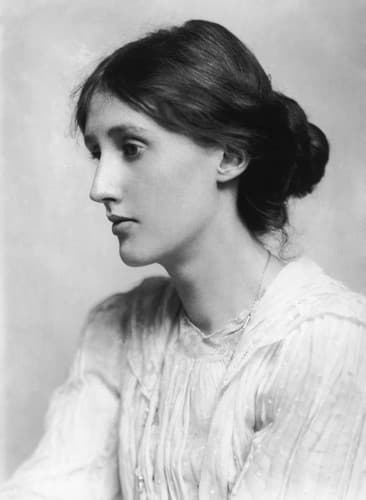
Adeline Virginia Woolf was an English writer. She is considered one of the most important modernist 20th-century authors and a pioneer in the use of stream of consciousness as a narrative device.
Similar books
- Pride and Prejudice
Jane Austen
4.3 (3M) average on GoodreadsHistorical FictionExplores societal expectations, marriage, and intellectual sparring within a romantic framework.
- A Room of One's Own
Virginia Woolf
4.2 (118k) average on GoodreadsCreativityOffers a direct, non-fiction exploration of themes of women's intellectual freedom and societal constraints, echoing the novel's undertones.
- Emma
Jane Austen
3.2 (13k) average on GoodreadsRomanceFeatures a privileged female protagonist navigating social circles, romance, and self-discovery with subtle humor.
- A Room With a View
E.M. Forster
3.9 (152k) average on GoodreadsHistorical FictionForster's novel also critiques societal constraints on women and the search for authentic experience, but Night and Day offers a more introspective and intellectual approach to female liberation, focusing less on external adventure and more on internal psychological struggle. Woolf's characters' rebellion is more cerebral than Forster's direct confrontation.
- The Hunger Games
Suzanne Collins
4.3 (6.4M) average on GoodreadsFantasyIn a future where children fight to the death on live television, Katniss Everdeen volunteers for the arena, turning a death sentence into a fight for survival and a spark of rebellion.
- The Great Gatsby
F. Scott Fitzgerald
3.9 (3.8M) average on GoodreadsHistorical FictionIn the opulent Roaring Twenties, a mysterious millionaire's lavish parties hide his desperate, tragic pursuit of a lost love, exposing the emptiness within the American Dream.




Enjoyed the summary?
A summary gives you the shape of the book. The book itself has the detail, the examples and the voice.
Find Night and Day on AmazonAs an Amazon Associate, BookBrief earns from qualifying purchases. How we're funded