
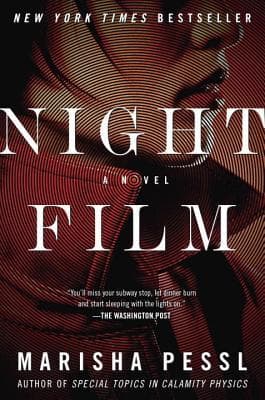
Synopsis
Covers the whole plot, including the ending.
- Difficulty
- Medium
- Pacing
- Moderate
- Mood
- Atmospheric, Suspenseful, Dark, Obsessive, Unsettling
- Read it if
- You enjoy immersive, multimedia thrillers with a deeply atmospheric and unsettling tone, focusing on cults, artistic obsession, and the blurry line between reality and fiction.
- Skip it if
- You prefer straightforward mysteries with clear resolutions, or are sensitive to dark themes and potentially ambiguous endings.
Night Film Plot Summary
Covers the whole plot, including the ending.
The Death of Ashley Cordova
On a rainy October night in lower Manhattan, 24-year-old Ashley Cordova is found dead in an abandoned warehouse. Police quickly rule her death a suicide, but veteran investigative journalist Scott McGrath, who has a long-standing interest in Ashley's reclusive father, cult horror film director Stanislaus Cordova, immediately suspects foul play. McGrath's career ended years earlier when he tried to expose Cordova, leading to a public scandal and the end of his marriage. Despite the official ruling, McGrath believes Ashley's death is connected to the director's dark world, prompting him to restart his own investigation into the Cordova family.
Initial Investigations and New Allies
McGrath begins his new investigation by contacting old sources and following faint leads. He soon meets two other people who were also looking into Ashley's death: Hopper, a young man with a history of drug use who says he knew Ashley, and Nora, a mysterious and seemingly cynical young woman. Hopper reveals that he and Ashley had a complicated relationship, and Nora provides cryptic clues suggesting a deeper conspiracy. The three form an uneasy alliance, each driven by their own reasons, to explore the hidden world around Stanislaus Cordova and his daughter.
The Black Place and Cordova's Cult
The trio's investigation leads them to 'The Black Place,' an isolated, run-down building believed to be a former set or hideout for Stanislaus Cordova and his most loyal followers. They find unsettling artifacts, cryptic messages, and evidence of strange rituals, all pointing to a cult-like devotion around Cordova and his films. The atmosphere is oppressive and disorienting, reinforcing the director's reputation for creating disturbing and psychologically manipulative art. This visit strengthens McGrath's belief that Cordova has a powerful, sinister influence over those who enter his orbit.
Encountering Cordova's Disciples
As they dig deeper, McGrath, Hopper, and Nora meet a series of eccentric and often unsettling individuals who have been affected by Stanislaus Cordova. These include former crew members, actors, and devotees, many of whom speak in riddles or act strangely, seemingly still under the director's spell. Each encounter provides fragmented information, painting a picture of Cordova as a manipulative genius who blurred the lines between art and reality, often at the expense of his collaborators and family. The interviews are often unsettling, hinting at the psychological cost of being close to Cordova.
Ashley's Childhood and Abuse Allegations
The team uncovers disturbing details about Ashley Cordova's childhood, marked by extreme isolation and her father's unconventional, often cruel, artistic methods. There are hints of psychological manipulation and emotional abuse, suggesting that Ashley was a subject in her father's elaborate, real-life experiments. These revelations cast a dark shadow over Stanislaus Cordova, transforming him from a reclusive genius into a potentially malevolent figure who exploited his own daughter for his art. McGrath feels a growing urgency to understand the full extent of this abuse.
The Hidden Film Reels
Following a clue, the trio finds a stash of hidden film reels, different from Cordova's publicly released works. These films are even more disturbing, featuring raw, unedited footage that appears to document not just fictional narratives but actual events, blurring the lines between performance and reality. The content is deeply unsettling, hinting at the psychological torment Ashley endured and the dark rituals associated with Cordova's inner circle. The discovery of these films suggests a meta-narrative, where Cordova's art extends beyond the screen into the lives of his subjects.
The Labyrinthine Hunt
As McGrath and his companions piece together clues, they realize they are not simply investigating a death, but are being drawn into a complex game orchestrated by Stanislaus Cordova himself. The director, though unseen, appears to be manipulating events from afar, leaving a trail of breadcrumbs and misdirections. McGrath recognizes this as a familiar pattern from his previous encounters with Cordova, a psychological trap designed to test and break those who seek to expose him. The line between reality and Cordova's cinematic world becomes increasingly blurred.
Nora's Betrayal and Hopper's Disappearance
The fragile alliance between McGrath, Hopper, and Nora begins to break down. Nora's behavior becomes increasingly erratic and suspicious, leading to a revelation that she has been working for Cordova all along, feeding him information and guiding McGrath into his elaborate trap. Shortly after this betrayal, Hopper, who had become increasingly distressed by the revelations, mysteriously disappears. McGrath is left alone, feeling manipulated and betrayed, questioning the reality of everything he has uncovered and the motivations of everyone he has met, deepening his isolation and resolve.
The Final Confrontation (Indirect)
McGrath, now alone, is led to what appears to be the final stage of Cordova's elaborate game. He finds himself in a meticulously constructed environment, filled with symbols and artifacts from Cordova's films and Ashley's life. It is a psychological trap, designed to evoke maximum dread and confusion. While he never directly confronts Stanislaus Cordova, McGrath experiences a profound, indirect encounter with the director's mind and methods. He realizes that Cordova's true art is not just his films, but the manipulation of reality and the minds of those who dare to investigate him.
The Truth About Ashley's Death
The truth about Ashley Cordova's death is revealed to be far more complex than a simple suicide. It is implied that Ashley, deeply involved in her father's world and perhaps seeking a final act of agency or defiance, orchestrated her own death as a performance, a final 'film' directed by herself, yet undeniably influenced by her father's dark teachings. It is a tragic culmination of her life, a blend of despair, art, and possibly a desperate attempt to break free by becoming the ultimate subject. Her death becomes a final, ambiguous piece of Cordova's work.
McGrath's Lingering Obsession
McGrath emerges from the investigation deeply changed, his understanding of reality and truth shattered. While he has uncovered a version of the truth about Ashley's death and her father's methods, the experience has left him scarred. He has not fully 'exposed' Cordova in the traditional sense, but has instead become another one of his subjects, drawn into his psychological web. The book concludes with McGrath still haunted by Stanislaus Cordova's influence, forever marked by his journey into the night film, his obsession unbroken, though perhaps redefined.
Principal Figures
Scott McGrath
Protagonist
A disgraced investigative journalist obsessed with Stanislaus Cordova.
Scott McGrath is a seasoned investigative journalist whose career and personal life were derailed years prior after a public scandal involving his attempts to expose Stanislaus Cordova. Driven by a deep-seated need for truth, revenge, and a sense of justice, he reopens his investigation into the Cordova family following Ashley's death. He is intelligent, tenacious, and possesses a cynical wit, but is also vulnerable to manipulation and prone to obsession, often blurring the lines between professional inquiry and personal vendetta. His pursuit of Cordova consumes him.
Relationships: Ashley Cordova (Subject of his investigation, object of his morbid fascination); Stanislaus Cordova (Arch-nemesis, object of his obsession); Hopper (Temporary investigative partner, friend); Nora (Temporary investigative partner, eventual betrayer)
Ashley Cordova
Deceased catalyst
The mysterious daughter of Stanislaus Cordova whose death sparks the investigation.
Ashley Cordova is the enigmatic and beautiful 24-year-old daughter of the reclusive director Stanislaus Cordova. Her death, initially ruled a suicide, becomes the central mystery of the novel. She is portrayed through fragmented memories, testimonies, and her own art, revealing a complex personality marked by profound isolation, artistic talent, and deep psychological scars from her upbringing. Ashley was both a victim and a participant in her father's dark world, creating her own art that mirrored his unsettling themes. Her ultimate fate is ambiguous, a blend of tragedy and performance.
Relationships: Stanislaus Cordova (Father, abuser, artistic collaborator); Scott McGrath (Investigator of her death); Hopper (Romantic interest, confidante)
Stanislaus Cordova
Antagonist/Eminence Grise
A legendary, reclusive cult horror film director.
Stanislaus Cordova is the unseen, yet omnipresent, antagonist of the novel. A legendary cult horror film director, he has been reclusive for over thirty years, never appearing in public. His films are renowned for their disturbing psychological depth and ability to blur the lines between fiction and reality, often leading to extreme reactions from audiences. Cordova is a master manipulator, a Svengali figure who exerts immense, almost cult-like control over his followers and family. He is a genius of psychological terror, whose art extends beyond the screen into the lives of those around him, particularly his daughter, Ashley.
Relationships: Ashley Cordova (Daughter, subject, muse); Scott McGrath (Target of his psychological games, investigator); Cordovites (Devoted followers, cult members)
Hopper
Supporting
A young man with a troubled past who knew Ashley Cordova.
Hopper is a young, somewhat naive individual with a history of drug use and a fragile demeanor. He claims to have known Ashley Cordova intimately and was investigating her death independently before joining forces with McGrath. He is genuinely fond of Ashley and deeply affected by her death, providing a more emotional and human perspective to the investigation. Hopper represents the vulnerable individuals drawn into Cordova's orbit and the potential for genuine connection amidst the darkness. His disappearance adds to the novel's sense of dread and uncertainty.
Relationships: Ashley Cordova (Friend, romantic interest); Scott McGrath (Investigative partner, mentor figure); Nora (Investigative partner)
Nora
Supporting/Antagonist
A mysterious and cynical young woman who joins McGrath's investigation.
Nora is a enigmatic young woman who initially appears to be another independent investigator into Ashley's death. She is intelligent, cynical, and often provides a pragmatic, albeit unsettling, perspective. Her true motives are shrouded in mystery for much of the novel, and her actions are often ambiguous. She is revealed to be an agent of Cordova, manipulating McGrath and guiding him through the director's elaborate game. Nora embodies the blurred lines of allegiance and the pervasive influence of Cordova's world, where even allies can be instruments of control.
Relationships: Scott McGrath (Deceptive investigative partner); Hopper (Investigative partner); Stanislaus Cordova (Agent/follower)
Roberto Lucca
Supporting
A former producer for Stanislaus Cordova.
Roberto Lucca is a former producer who worked closely with Stanislaus Cordova during his earlier, less reclusive period. He is one of the few individuals willing to speak about Cordova, though often with a mix of awe, fear, and regret. Lucca provides crucial historical context about Cordova's working methods, his manipulative tendencies, and the profound impact his films had on those involved. He serves as a cautionary tale, illustrating the psychological toll of being entangled with the director's dark vision, and helps McGrath understand the long-term effects of Cordova's influence.
Relationships: Stanislaus Cordova (Former colleague, employer); Scott McGrath (Source of information)
The Cordovites
Supporting/Collective
The fanatically devoted followers of Stanislaus Cordova.
The Cordovites are a collective of individuals who are fanatically devoted to Stanislaus Cordova and his films. They range from former collaborators to obsessive fans, all of whom seem to operate under Cordova's pervasive influence, even decades after his retreat from public life. They often speak in cryptic, cult-like language, and their behavior reinforces the idea that Cordova's art is more than just entertainment – it's a way of life, a philosophy, or even a religion. They serve as a chilling testament to Cordova's power and the psychological grip he holds over people.
Relationships: Stanislaus Cordova (Leader, object of worship); Ashley Cordova (Figure of reverence, fellow subject)
Sam McGrath
Mentioned
Scott McGrath's estranged daughter.
Sam McGrath is Scott's estranged daughter, who lives with his ex-wife. She represents the personal cost of Scott's obsession with Cordova, as his previous investigation led to the dissolution of his family. While she doesn't appear directly in the narrative, her presence is felt through Scott's guilt and his occasional attempts to connect with her, highlighting the human stakes behind his relentless pursuit of the truth. Her well-being is a constant, albeit often subconscious, motivation for Scott, reminding him of what he stands to lose.
Relationships: Scott McGrath (Daughter)
Themes & Insights
The Nature of Reality and Perception
The novel constantly blurs the lines between fiction and reality, challenging the reader (and McGrath) to question what is real. Stanislaus Cordova's films are designed to manipulate perception, and his real-life 'art' extends this manipulation into the lives of his subjects. Events often have multiple interpretations, and characters' testimonies are frequently unreliable. This theme is evident in the ambiguous nature of Ashley's death, the surreal environments McGrath encounters, and the ultimate revelation that the entire investigation might be another of Cordova's elaborate films. The book suggests that reality itself is a construct, easily shaped by powerful narratives.
“What if the world is a film? What if it's all a film?”
Obsession and Its Destructive Power
Obsession is a central driving force for many characters, especially Scott McGrath. His previous fixation on Stanislaus Cordova cost him his marriage and career, and his renewed pursuit threatens to destroy him entirely. Ashley Cordova's life and death are also products of her father's obsessive artistic vision and her own desperate attempts to break free or define herself within it. The novel explores how obsession can consume individuals, warp their judgment, and lead them down dark, self-destructive paths, often becoming indistinguishable from the object of their fixation. McGrath's inability to let go of Cordova is the engine of the entire plot.
“Sometimes the only way to be free is to let go of what you think you are.”
The Cult of Personality and Artistic Control
Stanislaus Cordova holds a cult-like grip over his followers, known as the Cordovites, and even those who simply encounter his work. His reclusive nature only amplifies his mystique, making him an almost mythical figure. The novel explores how a charismatic, manipulative artist can exert psychological control over others, blurring the lines between admiration, devotion, and psychological servitude. This theme is clear in the unquestioning loyalty of the Cordovites, the way Nora acts as Cordova's agent, and the insidious influence Cordova held over Ashley, shaping her entire life as part of his artistic vision. His art is inseparable from his control.
“He didn't make films; he made people.”
Trauma, Abuse, and Legacy
The novel explores the lasting impact of trauma and abuse, particularly through Ashley Cordova's story. Her childhood was marked by severe psychological manipulation and emotional cruelty from her father, who viewed her as a subject for his art rather than a daughter. This abuse shows itself in Ashley's isolation, her dark artistic expressions, and her tragic fate. The novel also examines the idea of a toxic legacy, where the sins of the father are visited upon the child, and how trauma can shape generations. McGrath's own past trauma from his Cordova investigation also fuels his current actions, showing how past wounds never truly heal.
“The past is a foreign country. They do things differently there.”
The Search for Truth vs. Narrative
McGrath's initial goal is to uncover objective truth, but the novel constantly undermines this pursuit. Every piece of information is filtered through unreliable narrators, fragmented documents, and Cordova's own carefully constructed narratives. The 'truth' about Ashley's death and Cordova's life becomes less a factual revelation and more a subjective interpretation within a larger, unfolding story. The novel suggests that in a world dominated by powerful storytellers, the search for truth often leads not to definitive answers, but to a deeper entanglement within a compelling, often terrifying, narrative. The book itself, with its multimedia elements, reinforces this idea.
“We are all the main character in our own movie.”
Plot Devices & Literary Techniques
Found Footage/Multimedia Elements
The narrative is interspersed with various non-traditional text formats.
The novel extensively uses 'found footage' elements, including photographs, newspaper clippings, police reports, interview transcripts, website printouts, and film stills. These multimedia insertions serve to immerse the reader in McGrath's investigation, mimicking the experience of a journalist piecing together evidence. They also reinforce the theme of blurred reality, making the fictional world feel more tangible and 'real.' However, their fragmented nature also highlights the unreliability of information and the difficulty of constructing a cohesive truth, echoing Cordova's own manipulative filmmaking techniques.
Unreliable Narrator
Scott McGrath's perspective is often compromised by his personal biases and the events he experiences.
Scott McGrath serves as the primary narrator, but his perspective is inherently unreliable. His deep-seated obsession with Stanislaus Cordova, his history of mental and emotional strain, and the psychologically disorienting nature of his investigation all contribute to his compromised viewpoint. The reader is constantly forced to question McGrath's interpretations, memories, and even his sanity, as he delves deeper into Cordova's world. This device heightens the suspense and reinforces the theme of subjective reality, as the 'truth' is filtered through a character who is himself being manipulated.
The MacGuffin (Ashley's Death)
Ashley Cordova's death serves as the initial catalyst for the plot.
Ashley Cordova's mysterious death functions as a classic MacGuffin, an initial plot device that sets the story in motion and drives the protagonist's actions. While the investigation into her death is the central focus, the ultimate 'answer' to her demise is less important than the journey it takes McGrath on. The true purpose of the MacGuffin is to propel McGrath into the deeper, more complex world of Stanislaus Cordova and to explore themes of obsession, manipulation, and the nature of reality, rather than simply solving a crime. Her death is a gateway to a larger mystery.
Metafiction
The novel frequently comments on its own nature as a constructed narrative.
Night Film employs metafiction by drawing attention to its own artificiality as a story. The use of 'found footage' and the constant questioning of reality within the narrative itself invite the reader to consider the act of storytelling. Stanislaus Cordova's art blurs fiction and reality, and the entire investigation can be seen as another one of his 'films,' with McGrath as an unwitting actor. This device challenges the reader to analyze the conventions of mystery and thriller genres, and to reflect on how narratives shape our understanding of the world, much like Cordova's films shape his followers.
Symbolism (The Black Place, Birds, Masks)
Recurring symbols enhance thematic depth and foreshadow events.
The novel is rich with recurring symbols that deepen its thematic resonance. 'The Black Place' symbolizes the dark, hidden recesses of Cordova's influence and the psychological abyss. Birds, particularly crows or ravens, often represent surveillance, ill omens, or the spirits of the dead. Masks and disguises frequently appear, symbolizing hidden identities, performance, and the deceptive nature of appearances. These symbols are woven throughout the narrative, subtly foreshadowing events, highlighting character motivations, and reinforcing the pervasive sense of dread and mystery that permeates Cordova's world.
Night Film Quotes
“The past is a master of the present.”
“What is real? What is not? The line blurs when you're dealing with a legend.”
“Every secret has a shelf life.”
“Some doors, once opened, can never be closed.”
“The greatest trick the devil ever pulled was convincing the world he didn't exist. The greatest trick Cordova ever pulled was convincing the world he was just a filmmaker.”
“We are all spectators in the cinema of our own lives.”
“Fear is a storyteller.”
“There are no coincidences, only the illusion of coincidences.”
“The labyrinth of the mind is far more intricate than any physical maze.”
“Every picture tells a story, but not always the truth.”
“Sometimes the most terrifying things are those we cannot see.”
“The world is full of ghosts, if you know where to look.”
“To truly understand a monster, you must walk in its shadow.”
“We all have our monsters, some more visible than others.”
Quiz
10 questions on the plot and the characters. Each answer comes with a short explanation.
Question 1
What is the official ruling on Ashley Cordova's death?
- Accidental overdose
- Murder
- Suicide
- Disappearance
Show answer
C. Suicide The book begins with Ashley Cordova's death being ruled a suicide, though Scott McGrath immediately suspects foul play.
Question 2
Who is Stanislaus Cordova?
- A famous detective investigating Ashley's death
- Ashley Cordova's father, a reclusive cult-horror film director
- Scott McGrath's former editor
- The owner of the abandoned warehouse where Ashley was found
Show answer
B. Ashley Cordova's father, a reclusive cult-horror film director Stanislaus Cordova is the legendary and reclusive cult-horror film director who is Ashley Cordova's father, central to the mystery.
Question 3
What is Scott McGrath's profession?
- A police detective
- An investigative journalist
- A forensic pathologist
- A film critic
Show answer
B. An investigative journalist Scott McGrath is introduced as a veteran investigative journalist who takes an interest in Ashley Cordova's death.
Question 4
What personal cost did McGrath pay the last time he investigated Cordova?
- He was physically injured and hospitalized.
- He lost his marriage and his career.
- He went to prison for defamation.
- He was forced to leave the country.
Show answer
B. He lost his marriage and his career. The synopsis explicitly states that the last time McGrath got close to exposing Cordova, he lost his marriage and his career.
Question 5
Where is Ashley Cordova found dead?
- Her father's secluded estate
- A luxury apartment in Midtown
- An abandoned warehouse in lower Manhattan
- A public park in Brooklyn
Show answer
C. An abandoned warehouse in lower Manhattan Ashley Cordova's body is discovered in an abandoned warehouse in lower Manhattan on a damp October night.
Question 6
For how long has Stanislaus Cordova been reclusive and not seen in public?
- More than ten years
- More than twenty years
- More than thirty years
- More than forty years
Show answer
C. More than thirty years Stanislaus Cordova is described as a man who hasn't been seen in public for more than thirty years.
Question 7
What is the primary motivation for McGrath's renewed investigation into Cordova, besides seeking the truth?
- He wants to write a biography of Cordova.
- He is driven by revenge and curiosity.
- He is hired by the Cordova family.
- He seeks to join Cordova's inner circle.
Show answer
B. He is driven by revenge and curiosity. McGrath is explicitly stated to be 'Driven by revenge, curiosity, and a need for the truth' in his pursuit of Cordova.
Question 8
What specific genre are Stanislaus Cordova's films known for?
- Romantic comedies
- Cult-horror
- Historical dramas
- Science fiction epics
Show answer
B. Cult-horror Stanislaus Cordova is identified as a 'legendary, reclusive cult-horror film director'.
Question 9
Who assists Scott McGrath in his investigation into Cordova?
- His estranged wife
- Two strangers
- A team of police detectives
- Ashley Cordova's friends
Show answer
B. Two strangers McGrath, 'with the aid of two strangers,' is drawn deeper into Cordova's world.
Question 10
What characteristic is used to describe Cordova's world and films?
- Whimsical and fantastical
- Eerie and hypnotic
- Mundane and predictable
- Uplifting and inspiring
Show answer
B. Eerie and hypnotic The text describes McGrath being drawn deeper into Cordova's 'eerie, hypnotic world' and mentions his 'dark and unsettling films'.
Night Film FAQ
What is the central mystery driving the plot of 'Night Film'?
The central mystery revolves around the suspicious death of Ashley Cordova, the daughter of reclusive cult horror film director Stanislaus Cordova. While ruled a suicide, investigative journalist Scott McGrath believes there's more to it, drawing him into the dark legacy of the Cordova family and their unsettling films.
Who is Scott McGrath and what is his personal connection to Stanislaus Cordova?
Scott McGrath is a disgraced investigative journalist who previously attempted to expose Stanislaus Cordova, leading to the collapse of his marriage and career. His renewed investigation into Ashley's death is fueled by a mix of professional curiosity, a personal vendetta against Cordova, and a deep-seated need for the truth about the director's elusive world.
Who are the two strangers who assist Scott McGrath in his investigation?
McGrath is aided by two young strangers: Nora, a mysterious and resourceful woman who claims to have known Ashley, and Hoover, a former drug addict and Cordova super-fan. Their unique perspectives and connections provide crucial, albeit often unreliable, insights as they navigate the director's secretive world.
What is the significance of Stanislaus Cordova's films in the narrative?
Cordova's films are not just background; they are integral to the plot, serving as clues, psychological mirrors, and even potential prophecies. Known for their unsettling, often disturbing content and the mysterious circumstances surrounding their production, they blur the line between fiction and reality, deeply influencing the lives of those who watch them and the narrative itself.
What makes Stanislaus Cordova such an enigmatic figure?
Stanislaus Cordova is enigmatic due to his extreme reclusiveness, having not been seen in public for over thirty years, and the disturbing, cult-like nature of his films. Rumors and urban legends surround his life and work, suggesting a deeper, more sinister reality behind his artistic vision, which McGrath strives to uncover.
What are the 'cordovites' and how do they function within the story?
The 'cordovites' are the obsessive fans and followers of Stanislaus Cordova's work, often forming a cult-like community around his films. They serve as both sources of information and potential obstacles for McGrath, their devotion to Cordova often clouding their judgment and making them unreliable narrators, deeply entrenched in the director's mythology.
How do the various multimedia elements (photos, articles, websites) contribute to the book's atmosphere and plot?
The multimedia elements, such as fabricated articles, photographs, and screenshots of websites, immerse the reader directly into McGrath's investigation, blurring the lines between the novel and reality. They provide a unique, fragmented narrative structure, enhancing the sense of mystery and the 'found footage' aesthetic often associated with horror films.
What is the significance of the Black House in the context of Stanislaus Cordova's history?
The Black House is Stanislaus Cordova's infamous, highly secretive estate where he reportedly lives and produces his films. It is a place of immense psychological and narrative importance, symbolizing his reclusiveness, the dark heart of his creative process, and the potential source of the strange events surrounding the Cordova family.
Are there any subtle hints early in the book that suggest Ashley's death might not be a straightforward suicide?
Yes, early hints include the unusual location of her body in an abandoned warehouse, the lack of a suicide note, and the immediate skepticism of Scott McGrath, who is already familiar with the Cordova family's pattern of strange occurrences. The details surrounding her life also suggest a deeper, more complex struggle than simple despair.
How does Stanislaus Cordova's reclusiveness impact the psychological states of his family and followers?
Cordova's reclusiveness creates an intense psychological vacuum, forcing his family and followers to project their desires, fears, and interpretations onto his absence and his films. This isolation fosters a sense of paranoia, obsession, and a distorted reality among them, making it difficult to discern truth from the elaborate mythology surrounding him.
What psychological toll does the investigation take on Scott McGrath?
The investigation exacts a heavy psychological toll on Scott McGrath, as he becomes increasingly obsessed and entangled in Cordova's world. He experiences paranoia, blurring lines between reality and fiction, and risks losing his remaining relationships, mirroring his past downfall and highlighting the seductive, destructive power of Cordova's influence.
How does the novel explore themes of obsession and its destructive potential?
The novel deeply explores obsession through McGrath's relentless pursuit of Cordova, the cordovites' fervent devotion, and Ashley's own tragic entanglement with her father's legacy. It illustrates how obsession can consume individuals, distort reality, and lead to self-destruction, making it a central psychological force driving the narrative.
In what ways do Ashley Cordova's actions and life reflect the psychological impact of growing up with a figure like Stanislaus Cordova?
Ashley's life and actions are a direct reflection of growing up under Stanislaus Cordova's shadow, marked by emotional manipulation, a blurred sense of reality, and an intense, almost symbiotic connection to his dark art. Her attempts to escape, her artistic pursuits, and her ultimate fate all underscore the profound and often destructive psychological legacy of her father.
Is Stanislaus Cordova a real person within the book's universe, or a carefully constructed myth?
This is a central interpretive question. The novel deliberately blurs the lines, presenting Cordova as both a tangible, influential figure and a meticulously constructed myth. His absence and the power of his films suggest he is more a concept or a force than a conventional person, leaving readers to question the nature of his existence.
Does the ending provide a definitive answer regarding Ashley's death or the true nature of Stanislaus Cordova?
The ending of 'Night Film' intentionally avoids a definitive, clear-cut answer, instead offering a conclusion that is open to interpretation. While certain events are resolved, the true nature of Ashley's death and Stanislaus Cordova's ultimate reality remain ambiguous, leaving readers to grapple with the implications of what they've uncovered.
How does 'Night Film' comment on the nature of truth in the digital age?
'Night Film' heavily comments on the nature of truth in the digital age by showcasing how readily information can be manipulated, fabricated, and spread through online platforms. The constant stream of unverified articles, fan theories, and altered images forces both McGrath and the reader to question the authenticity of everything they encounter.
What is the significance of the book's title, 'Night Film'?
The title 'Night Film' refers to the mysterious, often unseen or deeply disturbing films created by Stanislaus Cordova, which are central to the narrative. It also metaphorically suggests the dark, hidden aspects of human nature, the blurred lines between reality and fiction, and the psychological 'nightmares' that unfold throughout the story, often in darkness.
Could Ashley Cordova have been a willing participant in her own fate, rather than a victim?
This is a strong interpretive possibility. Given her deep, complex relationship with her father and her own artistic inclinations, it's debatable whether Ashley was entirely a victim or if she, to some extent, embraced and even orchestrated her own dramatic exit as a final act of art or defiance within Cordova's world. Her motivations remain ambiguous.
Similar books
- House of Leaves
Mark Z. Danielewski
4.1 (131k) average on GoodreadsThrillerFeatures a complex, multimedia narrative structure and a deep dive into the psychological impact of a mysterious film/art piece.
- The Secret History
Donna Tartt
3.9 (2k) average on GoodreadsPoliticsExplores dark academic/artistic cults, obsession, and the unraveling of a central mystery among a closed group.
- Gone Girl
Gillian Flynn
4.1 (2.3M) average on GoodreadsThrillerBoth 'Night Film' and 'Gone Girl' are dark thrillers exploring complex mysteries and unreliable narratives. However, Flynn's novel is a more tightly focused psychological thriller centered on marital deception and the manipulation within a relationship, using dual perspectives to reveal character motivations. Pessl's 'Night Film' is a broader, postmodern mystery that investigates a collective obsession, the nature of fame, and the elusive quality of truth in an information-saturated world, employing a more experimental, multimedia narrative style rather than intimate psychological portraits.
- Angels & Demons
Dan Brown
3.9 (2.7M) average on GoodreadsThrillerA Harvard symbologist races through Rome's ancient sites, deciphering cryptic clues to unmask the Illuminati and stop a vengeful plot to destroy the Vatican with a stolen antimatter weapon.
- The Girl on the Train
Paula Hawkins
3.9 (2.1M) average on GoodreadsThrillerA woman’s fascination with a seemingly perfect couple she watches from her daily train commute leads her into a dark investigation when she witnesses something that shatters their idyllic image.
- The Da Vinci Code
Dan Brown
3.9 (1.9M) average on GoodreadsThrillerA symbologist and a cryptologist race through European landmarks, deciphering ancient codes and uncovering a conspiracy that could rewrite the foundations of Christianity.





Enjoyed the summary?
A summary gives you the shape of the book. The book itself has the detail, the examples and the voice.
Find Night Film on AmazonAs an Amazon Associate, BookBrief earns from qualifying purchases. How we're funded