
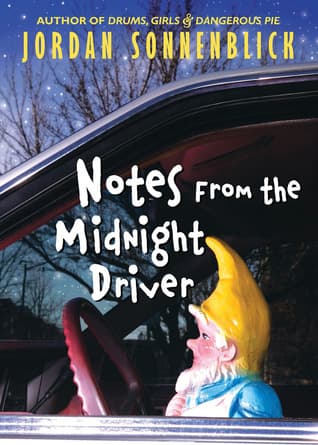
Synopsis
Covers the whole plot, including the ending.
- Difficulty
- Easy
- Pacing
- Moderate
- Mood
- Heartwarming, Reflective, Humorous, Bittersweet
- Read it if
- You enjoy heartwarming stories about unlikely friendships, coming-of-age tales with a touch of humor, and narratives where music plays a significant role in healing and connection.
- Skip it if
- You prefer fast-paced thrillers or stories without emotional depth and character-driven plots.
Notes from the Midnight Driver Plot Summary
Covers the whole plot, including the ending.
The Car Crash and Its Consequences
Sixteen-year-old Alex Gregory, a guitarist, sees his life unravel after he crashes his mom's car into Mrs. Goldfarb's lawn while trying to impress Sarah. This alcohol-fueled incident leads him to juvenile court. His parents, already divorcing (his father is dating Alex's former third-grade teacher, Ms. Beneke), are at their limit. The judge offers Alex a choice: attend a weekly 'rehabilitation' program with other troubled teens or do 100 hours of community service at a local nursing home. Alex, wanting to avoid group therapy, reluctantly picks the nursing home, unaware of how much this decision will change his life.
A Difficult Introduction to Sol
At the Golden Years Retirement Home, Alex is assigned to Sol Lewis, a gruff, elderly man in a wheelchair after a stroke. Sol is known for his sharp wit, sarcastic remarks, and general unpleasantness; he often drives away other volunteers. Their first meeting goes badly, with Sol immediately dismissing Alex and making it clear he wants nothing to do with him. Alex feels overwhelmed and frustrated by Sol's hostility, regretting his choice of community service. He struggles to find common ground with the old man, and his first attempts at conversation are met with scorn or silence, making his mandatory hours feel endless.
The Guitar as a Bridge
During one visit, Alex brings his guitar to the nursing home to practice. Sol, surprisingly, reacts to the music, showing a hidden love for jazz. Alex, a rock guitarist, initially struggles with jazz, but Sol begins to offer criticism and ideas, slowly opening up. This shared love for music becomes their unexpected connection. Sol, it turns out, was once a talented jazz guitarist himself, forced to quit after losing a finger in a factory accident. This news creates a tentative bond between them, as Alex sees a glimpse of the man Sol once was, beyond the grumpy exterior.
Sol's Hidden Past and Alex's Growing Empathy
As their bond grows through music, Sol shares stories from his past. Alex learns about Sol's youth, his dreams as a jazz musician, his struggles, and the accident that ended his music career. He also learns about Sol's late wife, whom he clearly loved deeply. These stories paint a picture of a man who experienced significant loss and disappointment, explaining much of his current bitterness and isolation. Alex begins to see Sol not just as a difficult old man, but as a complex person with a rich, if tragic, history. This new understanding helps Alex approach Sol with more patience and empathy, changing their relationship from an obligation to a real friendship.
Laurie's Support and Parental Struggles
Throughout his time with Sol, Alex relies on his best friend, Laurie, for support and advice. Laurie is a practical and loyal friend, often listening to Alex and offering a dose of reality. Meanwhile, Alex's home life remains difficult. His parents' divorce moves forward, marked by tension and awkward moments, especially with his father's new relationship. Alex struggles to accept his father's new partner and the breakup of his family. He often discusses these personal problems with Laurie, and sometimes they subtly affect his talks with Sol, who offers unexpected thoughts on family and relationships.
The Jazz Concert Idea
Inspired by Sol's love for jazz and his own growing guitar skills, Alex gets an idea to cheer Sol up and celebrate their friendship: he decides to organize a jazz concert at the nursing home, featuring himself and other musicians. Sol is at first doubtful but secretly pleased by the gesture. Alex gets help from Laurie and even convinces his bandmates, who are used to rock music, to learn some jazz songs. This project gives Alex a new goal and helps him put his energy into something positive, away from his earlier destructive habits.
Sol's Declining Health
As the jazz concert date nears, Sol's health declines. He has more frequent periods of confusion and weakness, and his physical condition visibly worsens. Alex worries more, spending extra time with Sol, reading to him and playing music. The concert's urgency grows, as Alex realizes it might be one of Sol's last chances to hear live jazz. The nursing home staff, especially Sol's main nurse, offers support and gently prepares Alex for what is coming, showing how fragile Sol's life is.
The Concert and a Final Gift
Despite Sol's weakening condition, the jazz concert happens. Alex, with Laurie and his bandmates, performs a heartfelt set of jazz songs for Sol and the other residents. Sol is deeply moved by the performance, his eyes shining with a rare joy. After the concert, in a touching moment, Sol gives Alex his most treasured item: his old, worn jazz guitar. This gift symbolizes Sol passing on his legacy and passion to Alex, acknowledging their deep connection and Alex's growth. It is a strong moment of mentorship and love, solidifying their bond.
Sol's Passing and Alex's Grief
Soon after the concert, Sol Lewis dies peacefully in his sleep. Alex is devastated. Despite their difficult start, Sol had become a significant person in his life, a mentor and a friend. Alex deals with grief, feeling loss for the first time in such a personal way. He finds comfort in Laurie's steady support and in playing Sol's old guitar, keeping his memory alive through music. The experience makes Alex face mortality and the deep emotional impact of human connection, marking a turning point in his emotional maturity.
Moving Forward with New Perspective
After Sol's death, Alex thinks about how much the old man changed his life. He realizes that his community service, initially a punishment, became a journey of self-discovery and personal growth. He has learned about empathy, resilience, the power of music, and the importance of friendships across generations. Alex's relationships with his parents also show signs of improving, as he better understands their struggles. With Sol's guitar and the wisdom he shared, Alex looks to the future with new maturity and a deeper appreciation for life's complexities, forever changed by the Midnight Driver.
Notes from the Midnight Driver Characters
Alex Gregory
Protagonist
A rebellious teenage guitarist sentenced to community service at a nursing home.
Alex is a sixteen-year-old high school student with a passion for playing electric guitar, primarily rock music. He's initially portrayed as somewhat self-centered and prone to impulsive decisions, leading to a car crash and subsequent court-ordered community service. Throughout the story, he matures significantly, moving from resentment and cynicism to empathy, responsibility, and a deep appreciation for others. His journey is marked by learning to connect with Sol, navigating his parents' divorce, and discovering the transformative power of friendship and music.
Relationships: Sol Lewis (mentor and close friend); Laurie (best friend); Mom (strained but loving mother); Dad (distant father due to divorce and new relationship)
Sol Lewis
Supporting
A cantankerous, elderly jazz musician residing in a nursing home.
Sol is an elderly resident of the Golden Years Retirement Home, confined to a wheelchair after a stroke. He's known for his sharp wit, sarcasm, and initially, his unpleasant demeanor, which masks deep-seated pain and regret over a lost musical career and the death of his wife. A former talented jazz guitarist, he uses his gruff exterior to push people away. Through his interactions with Alex, he slowly reveals his vulnerability, wisdom, and passion for music, becoming Alex's mentor and friend.
Relationships: Alex Gregory (mentee and close friend); His late wife (deeply beloved, a source of his enduring grief)
Laurie
Supporting
Alex's loyal, pragmatic, and supportive best friend.
Laurie is Alex's best friend and a constant source of support and comic relief. She is intelligent, level-headed, and often provides Alex with a much-needed dose of reality. She is fiercely loyal and encourages Alex throughout his community service, offering advice and helping him navigate his personal struggles, including his parents' divorce and his feelings for Sarah. Her practical nature and unwavering friendship are crucial to Alex's emotional well-being and development.
Relationships: Alex Gregory (best friend)
Alex's Mom
Supporting
Alex's emotionally strained but caring mother, coping with divorce.
Alex's mother is trying to navigate the complexities of her divorce from Alex's father while raising her son. She is often stressed and emotional, particularly regarding Alex's misbehavior and the breakdown of their family unit. Despite her struggles, she deeply cares for Alex and tries her best to provide stability, even if her methods sometimes clash with Alex's teenage angst. Her journey reflects the pain and challenges of a family in transition.
Relationships: Alex Gregory (son); Alex's Dad (ex-husband)
Alex's Dad
Supporting
Alex's father, who is dating Alex's former third-grade teacher.
Alex's father is in the process of divorcing Alex's mother and has moved on to a new relationship with Ms. Beneke, Alex's former third-grade teacher. This new relationship creates significant tension and awkwardness for Alex, who struggles to accept it. He is somewhat detached from Alex's day-to-day life, but still cares for his son, albeit in a way that Alex sometimes perceives as distant or unsupportive.
Relationships: Alex Gregory (son); Alex's Mom (ex-wife); Ms. Beneke (girlfriend)
Ms. Beneke
Supporting
Alex's former third-grade teacher and his father's new girlfriend.
Ms. Beneke is Alex's former third-grade teacher who is now dating his father. Her presence adds an uncomfortable dynamic to Alex's already strained family life, as he finds it difficult to reconcile his past image of her as a teacher with her current role as his father's romantic partner. She is generally portrayed as kind and tries to be friendly with Alex, but her relationship with his father is a source of tension for Alex.
Relationships: Alex's Dad (girlfriend); Alex Gregory (former student, now his father's girlfriend's son)
Sarah
Mentioned
Alex's initial crush, whose presence contributed to his car crash.
Sarah is a girl Alex has a crush on, and his attempt to impress her by driving recklessly leads to the car crash that sets the plot in motion. She represents Alex's initial superficial concerns and teenage impulses. While not a major character in terms of direct interaction, her role in the inciting incident is significant, highlighting Alex's immaturity at the beginning of the story.
Relationships: Alex Gregory (crush)
Mrs. Goldfarb
Mentioned
The neighbor whose lawn Alex crashes into.
Mrs. Goldfarb is the elderly neighbor whose lawn Alex crashes his mom's car into. Her damaged property is the direct cause of Alex's legal troubles and the subsequent community service sentence. She represents the immediate victim of Alex's recklessness and the tangible consequence of his actions.
Relationships: Alex Gregory (neighbor, victim of his car crash)
The Judge
Mentioned
The juvenile court judge who sentences Alex.
The judge is the authority figure who presents Alex with the two options for his punishment: group therapy or community service at a nursing home. He represents the legal system's attempt to rehabilitate Alex, and his unconventional sentencing choice is the pivotal moment that redirects Alex's life path.
Relationships: Alex Gregory (sentencing authority)
Notes from the Midnight Driver Themes
Intergenerational Friendship and Mentorship
This theme explores the deep bond between Alex, a rebellious teenager, and Sol, a bitter elderly man. What starts as a required assignment becomes a deep friendship where Sol mentors Alex in music and life, sharing wisdom and stories from his past. Alex, in turn, brings companionship and purpose back into Sol's isolated life. Their connection goes beyond age and initial dislike, showing how different generations can enrich each other's lives, as seen when Sol gives Alex his treasured jazz guitar.
“You know, for a young punk, you’re not half bad with that guitar.”
Redemption and Personal Growth
The novel focuses on Alex's journey from a self-centered teenager to a compassionate and responsible young man. His community service, a punishment for reckless behavior, becomes a cause for deep personal change. Through his friendship with Sol, Alex learns empathy, patience, and the results of his actions. He moves past his initial anger and resentment, finding purpose in helping others and developing a better understanding of himself and the world, ending with his heartfelt performance at the jazz concert.
“It turned out that the old guy had a lot more to teach me than I ever could have imagined.”
The Healing Power of Music
Music is the main link between Alex and Sol, overcoming their first communication problems. Sol, a former jazz guitarist, reconnects with his passion through Alex's playing, guiding him and sharing his knowledge. Alex, a rock guitarist, broadens his musical tastes and uses his talent to bring joy to Sol. The jazz concert Alex organizes shows music's ability to lift spirits, build connections, and provide a way to express and comfort, especially in times of loneliness and decline.
“It was like the music found a way to talk to him when nothing else could.”
Dealing with Loss and Grief
Loss is central to both Alex and Sol's stories. Sol deals with the loss of his music career due to an accident and the deep sadness over his late wife, which adds to his bitterness. Alex experiences the loss of his intact family because of his parents' divorce and later, the deep grief of losing Sol, his mentor and friend. The book explores how people cope with these losses, finding comfort in connection, memory, and the continuation of legacies, as Alex carries on Sol's musical spirit.
“Grief is a funny thing. It hits you when you least expect it, and it stays with you longer than you think it will.”
Family Dysfunction and Acceptance
Alex's home life is marked by his parents' painful divorce and his father's new relationship with Ms. Beneke, his former third-grade teacher. This family upheaval contributes to Alex's initial anger and recklessness. The theme explores Alex's struggle to accept his parents' changing lives and his own changing role within a broken family. His talks with Sol offer an outside view on family dynamics, helping Alex gradually understand and accept his own family's complexities.
“It was hard to picture my dad with anyone but my mom, even though they’d been fighting for as long as I could remember.”
Plot Devices & Literary Techniques
First-Person Narrative
The story is told entirely from Alex's perspective.
The novel is narrated in the first person by Alex Gregory, allowing readers direct access to his thoughts, feelings, and snarky teenage voice. This perspective is crucial for understanding his initial cynicism, his gradual emotional development, and the profound impact Sol has on him. It provides an intimate look into his internal struggles, his observations of Sol, and his reflections on his family life, making his journey of growth more personal and relatable.
The Guitar as a Symbol
Represents connection, legacy, and personal expression.
Alex's electric guitar initially symbolizes his teenage identity and a source of rebellion. As the story progresses, it becomes a bridge between him and Sol, representing their shared passion for music and the beginning of their unlikely friendship. Sol's old jazz guitar, given to Alex, later symbolizes mentorship, the passing on of a legacy, and the continuation of Sol's spirit through Alex's music. It embodies the deep bond they formed and Alex's growth as both a musician and a person.
The Nursing Home Setting
A confined environment that forces unexpected connections and growth.
The Golden Years Retirement Home serves as a literal and metaphorical setting for Alex's transformation. Initially viewed as a place of punishment and boredom, it becomes a crucible for his personal growth. The confined nature of the nursing home forces Alex to interact with Sol, leading to their unexpected friendship. It symbolizes a space where life's end stages intersect with youthful potential, highlighting themes of aging, mortality, and the value of human connection in unexpected places.
The Jazz Concert
A climactic event symbolizing Alex's dedication and the culmination of his growth.
The jazz concert Alex organizes for Sol is a major plot device that serves multiple functions. It provides a clear goal for Alex, driving much of the latter part of the narrative. It symbolizes his commitment to Sol, his mastery of new musical skills, and his ability to channel his energy into something positive and meaningful. The concert also acts as a poignant climax to their friendship, allowing Sol to experience joy and receive a final tribute before his passing, underscoring the depth of their bond.
Notes from the Midnight Driver Quotes
“I was a criminal. I had broken the law, and I was going to pay for it.”
“Sometimes you have to do the wrong thing for the right reasons.”
“Old people are like onions. They have layers, and sometimes they make you cry.”
“Music is the only thing that makes sense when nothing else does.”
“You don't get to choose your family, but you can choose your friends.”
“The past is a ghost that haunts you until you make peace with it.”
“Growing up isn't about getting older; it's about getting wiser.”
“Sometimes the hardest person to forgive is yourself.”
“Life is a series of accidents, some good, some bad, but all of them teach you something.”
“You can't change the past, but you can change how you let it affect your future.”
“Friendship is the bridge that connects two completely different worlds.”
“The truth is like a puzzle; sometimes you have to look at it from different angles to see the whole picture.”
“Regret is a heavy burden, but it's one you have to carry until you learn to put it down.”
“Sometimes the best way to help someone is to just listen.”
Quiz
10 questions on the plot and the characters. Each answer comes with a short explanation.
Question 1
What is the main reason Alex Gregory is sentenced to community service?
- He vandalized school property
- He stole a car
- He got into a car crash while driving drunk
- He assaulted a police officer
Show answer
C. He got into a car crash while driving drunk Alex's community service sentence stems from a drunk driving incident where he crashed a car into a neighbor's lawn, which is described as 'one measly little car crash' in the book's opening.
Question 2
Who is the 'insane old guy' Alex is assigned to during his community service?
- Mr. Soloway, a retired musician
- Dr. Feinstein, a former professor
- Uncle Harry, a family relative
- Judge Carter, the sentencing judge
Show answer
A. Mr. Soloway, a retired musician Alex is assigned to spend time with Sol Lewis, also known as Mr. Soloway, a cantankerous elderly man in a nursing home who turns out to be a former jazz musician.
Question 3
What musical instrument does Alex play throughout the story?
- Piano
- Drums
- Guitar
- Saxophone
Show answer
C. Guitar Alex is a guitarist, and his guitar playing becomes an important part of his connection with Mr. Soloway and his personal growth throughout the book.
Question 4
Why does Alex initially resent being assigned to Mr. Soloway?
- He thinks Mr. Soloway is boring and uninteresting
- He wanted to work with animals instead
- He views it as punishment and believes Mr. Soloway is crazy
- He is afraid of elderly people
Show answer
C. He views it as punishment and believes Mr. Soloway is crazy Alex sees the assignment as just another unfair consequence of his drunk driving incident and describes Mr. Soloway as 'insane' in his initial thoughts, reflecting his immature perspective.
Question 5
What significant family issue is Alex dealing with alongside his legal troubles?
- His parents are getting divorced
- His sister is seriously ill
- His family is moving to another state
- His father lost his job
Show answer
A. His parents are getting divorced Alex mentions that 'my parents are getting divorced' as one of the multiple problems he's facing, adding to his emotional turmoil throughout the story.
Question 6
How does Mr. Soloway help Alex grow as a musician?
- By giving him formal music lessons
- By teaching him about jazz improvisation and musical expression
- By buying him a new guitar
- By introducing him to famous musicians
Show answer
B. By teaching him about jazz improvisation and musical expression As a former jazz musician, Mr. Soloway teaches Alex about improvisation and playing with feeling rather than just technical perfection, which transforms Alex's approach to music.
Question 7
What is the nature of Alex's relationship with Laurie?
- They are dating exclusively
- She is his best friend who often calls him a moron
- She is his sister
- She is his music teacher
Show answer
B. She is his best friend who often calls him a moron Laurie is Alex's best friend who isn't afraid to call him out on his mistakes (as shown when she calls him a moron), and their friendship provides important support throughout his struggles.
Question 8
What important lesson does Alex learn from his experience with Mr. Soloway?
- That elderly people have valuable wisdom and life experience to share
- That community service is always pointless
- That he should give up music entirely
- That he should avoid all friendships
Show answer
A. That elderly people have valuable wisdom and life experience to share Through his forced friendship with Mr. Soloway, Alex learns to look beyond surface appearances and discovers that even difficult people can become important mentors and friends.
Question 9
What does the 'midnight driver' reference in the title symbolize?
- Alex's late-night guitar practice sessions
- Mr. Soloway's nickname from his jazz days
- Alex's drunk driving incident
- Laurie's habit of driving at night
Show answer
B. Mr. Soloway's nickname from his jazz days 'Midnight Driver' was Mr. Soloway's nickname when he was a jazz musician, representing his past life and the stories he shares with Alex that help bridge their generational gap.
Question 10
How does Alex's perspective on his punishment evolve by the end of the story?
- He comes to see it as a transformative experience rather than just punishment
- He remains bitter and resentful about it
- He successfully appeals the sentence and avoids completing it
- He convinces the judge to change his assignment
Show answer
A. He comes to see it as a transformative experience rather than just punishment Initially viewing his community service as unfair punishment, Alex eventually recognizes how his time with Mr. Soloway helped him mature, improve his music, and gain perspective on his life problems.
Notes from the Midnight Driver FAQ
What is 'Notes from the Midnight Driver' about?
The book follows 16-year-old Alex Gregory, who gets into a drunk driving accident and is sentenced to community service at a nursing home. There, he befriends Sol Lewis, a grumpy, terminally ill jazz musician, and through their unlikely friendship, Alex learns about life, music, and responsibility while dealing with his parents' divorce and his complicated feelings for his best friend Laurie.
Why should I read 'Notes from the Midnight Driver'?
It's a heartfelt, humorous coming-of-age story that tackles serious issues like drunk driving consequences, family breakdown, and terminal illness with sensitivity and wit. The evolving friendship between Alex and Sol provides both laugh-out-loud moments and genuine emotional depth, making it both entertaining and thought-provoking.
What is the background/setting of 'Notes from the Midnight Driver'?
The story is set in contemporary suburban America, primarily at Alex's high school, his home, and the Egbert P. Johnson Memorial Home where he serves his community service. The nursing home setting becomes central as Alex spends time with Sol in his room filled with jazz memorabilia and musical instruments.
What are the most memorable quotes from the book?
Key quotes include Sol's advice 'You don't get to choose your family, but you do get to choose your friends' and Alex's realization 'Sometimes the people who seem the most broken have the most to give.' Laurie's frequent exclamation 'Alex Peter Gregory, you are a moron!' becomes a running refrain that evolves in meaning throughout the story.
What writing style does Jordan Sonnenblick use?
Sonnenblick employs first-person narration from Alex's perspective with a conversational, self-deprecating tone full of teenage sarcasm and humor. The prose is accessible yet emotionally resonant, blending comedic moments with serious themes through Alex's authentic voice as he navigates his complicated circumstances.
What minor details add significant meaning to the story?
Sol's collection of jazz records and his insistence on proper musical terminology reflects his fading connection to his past passion. Alex's guitar, initially just a hobby, becomes symbolic of his emotional growth. The recurring 'moron' insult from Laurie transforms from genuine frustration to affectionate teasing as their relationship deepens.
What are some subtle foreshadowing moments?
Early mentions of Sol's coughing fits and fatigue hint at his terminal illness before it's explicitly revealed. Alex's initial resistance to the nursing home assignment foreshadows how this 'punishment' will become his most meaningful experience. Laurie's protective behavior toward Alex subtly indicates her deeper feelings long before they're acknowledged.
What unexpected character connections exist?
Alex discovers that Sol was once a renowned jazz guitarist who played with famous musicians, connecting to Alex's own musical interests. The revelation that Alex's third-grade teacher (now dating his father) had previously taught Laurie creates an awkward triangular connection that adds complexity to the family dynamics.
What are Alex's unspoken motivations throughout the story?
Beneath his sarcastic exterior, Alex is desperately seeking stability and approval as his family falls apart. His rebellion through the car crash masks a cry for attention, while his growing dedication to Sol represents an unconscious search for the paternal guidance he's missing from his own distracted father.
What psychological complexities do the main characters exhibit?
Alex displays classic adolescent defense mechanisms—sarcasm and denial—to mask vulnerability about his parents' divorce. Sol uses gruffness and musical obsession to cope with his mortality and lost career. Laurie employs bossiness and academic perfectionism to control situations where she feels emotionally insecure, particularly regarding Alex.
What are the major emotional turning points?
Key moments include Alex's first genuine guitar lesson with Sol, his honest conversation with Laurie about the car crash's real causes, witnessing Sol's medical deterioration, and the final hospital scene where Alex plays guitar for Sol. Each represents Alex shedding layers of defensiveness to engage authentically with others.
How do Alex and Laurie's relationship dynamics evolve?
They transition from childhood friends with Laurie as the responsible 'boss' to equals confronting romantic feelings. Alex's community service and friendship with Sol matures him, allowing him to become more reliable, while Laurie learns to be vulnerable and admit she doesn't have everything under control, creating more balanced interdependence.
How does Alex's relationship with his parents change?
Initially resentful of his father's new relationship and his mother's emotional distance, Alex gradually develops empathy for their struggles. Through Sol's perspective on life's imperfections, Alex begins to see his parents as flawed individuals rather than just failed parents, leading to more honest conversations by the story's end.
Which parts of the story remain ambiguous or open-ended?
The book doesn't specify whether Alex and Laurie officially become a couple, leaving their romantic future uncertain. Sol's exact illness is never named, focusing instead on its emotional impact. The long-term effects of Alex's community service on his legal record are also left unresolved, emphasizing personal growth over procedural outcomes.
What makes Alex's community service sentence controversial?
Some readers debate whether assigning a teenager to care for a terminally ill man constitutes appropriate punishment or emotional burden. Others question if the sentence truly addresses the seriousness of drunk driving, though the story argues that the interpersonal consequences teach more than traditional punishment would.
How is Sol's gruff treatment of Alex interpreted differently by readers?
Some see Sol's initial hostility as emotional abuse that Alex shouldn't have to endure, while others interpret it as tough love that ultimately benefits Alex. The ambiguity lies in whether Sol's methods are justified by his circumstances or represent unfair treatment of a teenager already facing consequences.
What is the ending of 'Notes from the Midnight Driver' and what does it mean?
The story concludes with Sol's death and Alex playing guitar at his funeral, having developed genuine musical skill and emotional maturity. Alex reconciles with his parents and acknowledges his feelings for Laurie. The ending suggests that sometimes the most meaningful relationships come from unexpected places, and that facing difficult truths leads to personal growth.
How does music function as a metaphor throughout the story?
Music represents emotional expression that characters struggle with verbally—Alex's guitar playing evolves from technical exercise to heartfelt communication. Sol's jazz background symbolizes improvisation and resilience. Their duets become metaphors for harmony in relationships, showing how disparate elements can create something beautiful together.
What does the title 'Notes from the Midnight Driver' signify?
The title references both Alex's late-night car crash and the musical 'notes' he learns from Sol, blending his mistake with his redemption. 'Midnight' suggests a transitional time—both the literal time of his accident and metaphorically a period of personal darkness before dawn. 'Driver' ironically contrasts Alex's reckless driving with Sol 'driving' his musical education.
About the author

Jordan Sonnenblick is an author known for his works of middle-grade fiction, including "After Ever After," "Notes from the Midnight Driver," "Falling Over Sideways," and "The Boy Who Failed Show and Tell." His stories often explore themes of adolescence, resilience, and personal growth, resonating with young readers. Sonnenblick's engaging writing style and relatable characters have made his books popular in children's literature.
Similar books
- Tuesdays with Morrie
Mitch Albom
4.1 (782k) average on GoodreadsBiographyExplores a profound mentor-mentee relationship between a young man and an elderly, wise figure facing illness.
- The Perks of Being a Wallflower
Stephen Chbosky
4.2 (1.3M) average on GoodreadsPsychologyFeatures a sensitive male protagonist navigating adolescence, family issues, and unexpected friendships.
- Wonder
R.J. Palacio
4.4 (733k) average on GoodreadsChildren'sFocuses on empathy, understanding, and the impact of kindness on those who are different or struggling.
- Stargirl
Jerry Spinelli
3.8 (296k) average on GoodreadsChildren'sStargirl explores themes of individuality and social acceptance within high school dynamics. Sonnenblick's work, in contrast, delves into the often-overlooked demographic of the elderly and forces its protagonist to confront mortality and past mistakes directly through community service, offering a different context for character development.
- Harry Potter and the Sorcerer's Stone
J.K. Rowling
4.5 (7M) average on GoodreadsFantasyRescued from a miserable life under the stairs, an orphaned boy discovers he's a wizard destined for a magical school, where he uncovers a dangerous secret tied to the dark wizard who murdered his parents.
- The Hobbit, or There and Back Again
J.R.R. Tolkien
4.3 (2.9M) average on GoodreadsFantasyA comfort-loving hobbit named Bilbo Baggins is whisked away by a mischievous wizard and a band of dwarves on an unexpected journey to reclaim stolen treasure from a fearsome dragon, discovering courage and a magical ring along the way.





Enjoyed the summary?
A summary gives you the shape of the book. The book itself has the detail, the examples and the voice.
Find Notes from the Midnight Driver on AmazonAs an Amazon Associate, BookBrief earns from qualifying purchases. How we're funded