
Estimated read time: 5 min read
One Sentence Summary
An exploration of the relationship between writing and language, challenging traditional notions of communication and presence.
Table of Contents
Introduction
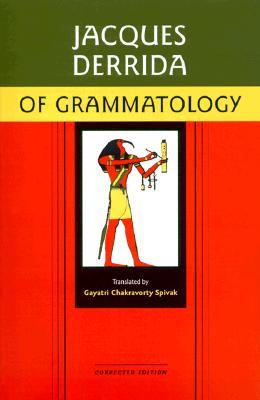
"Of Grammatology" is a groundbreaking philosophical work by Jacques Derrida, a French philosopher and literary critic. Published in 1967, the book challenges traditional Western metaphysics and the concept of writing as a secondary representation of speech. Derrida's deconstructive approach to language and meaning has had a profound impact on literary theory, philosophy, and cultural studies.
Brief Synopsis
"Of Grammatology" explores the relationship between speech and writing, challenging the dominant belief that writing is merely a supplement to speech. Derrida argues that writing is not simply a derivative of speech but has its own distinct structure and power. He examines the history of Western metaphysics and its privileging of speech over writing, deconstructing the binary oppositions that underpin this hierarchy.
The setting of the book is primarily intellectual and theoretical, with Derrida engaging with works by philosophers such as Plato, Rousseau, and Saussure. However, his ideas have far-reaching implications for various disciplines, including literature, linguistics, anthropology, and cultural studies.
Main Characters
As "Of Grammatology" is a philosophical treatise, it does not have fictional characters in the traditional sense. However, the main character in this book is Jacques Derrida himself, as he presents his revolutionary ideas and engages with the works of other philosophers.
Summary of Different Story Points over Chapters
Chapter 1: The End of the Book and the Beginning of Writing
In this chapter, Derrida introduces the concept of "logocentrism," the belief that speech is the primary source of meaning and writing is secondary. He questions this hierarchy and argues that writing is not a mere supplement but has its own inherent power.
Chapter 2: Writing and Difference
Derrida explores the relationship between writing and difference, challenging the idea that writing is a representation of speech. He argues that writing is not only a mode of communication but also a mode of difference and deferral.
Chapter 3: Plato's Pharmacy
Derrida engages with Plato's dialogue "Phaedrus" and examines the role of writing in Plato's philosophy. He deconstructs Plato's hierarchical distinction between speech and writing, highlighting the contradictions within Plato's own texts.
Chapter 4: Rousseau's Dream
In this chapter, Derrida analyzes Jean-Jacques Rousseau's writings on language and writing. He critiques Rousseau's belief in the purity of speech and highlights the violence and exclusion that underlie such notions.
Chapter 5: The Metaphysics of Presence
Derrida explores the Western metaphysical tradition and its privileging of presence over absence, speech over writing. He deconstructs the binary oppositions that underpin this tradition and challenges the notion of a fixed, stable meaning.
Chapter 6: Saussure's Phonocentrism
Derrida engages with Ferdinand de Saussure's structural linguistics and his emphasis on the spoken word. He critiques Saussure's phonocentrism and argues for the equal importance of writing in the production of meaning.
Main Events
"Of Grammatology" does not follow a traditional narrative structure with specific events. Instead, it presents a series of philosophical arguments and engagements with various texts. The main events in this book are the deconstruction of binary oppositions, the critique of logocentrism, and the exploration of the relationship between speech and writing.
Themes and Insights
- Deconstruction: Derrida's work is rooted in the philosophy of deconstruction, a method of analyzing texts and ideas by revealing the contradictions and hierarchies embedded within them. "Of Grammatology" deconstructs the binary oppositions between speech and writing, presence and absence, and challenges the notion of a fixed, stable meaning.
- Logocentrism: Derrida critiques the Western metaphysical tradition's privileging of speech over writing. He argues that this logocentrism has marginalized writing and perpetuated a hierarchy that undervalues the power of text.
- Difference and Deferral: Derrida emphasizes the role of difference in writing and language. He argues that writing introduces a sense of deferral, postponing the presence of meaning and opening up possibilities for interpretation.
- Textuality: Derrida's concept of textuality expands beyond written texts to include all forms of communication. He challenges the idea that meaning is fixed and stable, asserting that it is always subject to interpretation and contextualization.
Reader's Takeaway
"Of Grammatology" is a challenging but rewarding read for anyone interested in philosophy, literary theory, or linguistics. Derrida's deconstructive approach to language and writing forces readers to question deeply ingrained assumptions about meaning and communication. This book encourages a critical engagement with texts and ideas, fostering a more nuanced understanding of language and its complexities.
Conclusion
"Of Grammatology" is a seminal work that has had a lasting impact on literary theory, philosophy, and cultural studies. Derrida's critique of logocentrism and his deconstruction of binary oppositions have reshaped the way we think about language, writing, and meaning. This book invites readers to challenge traditional modes of thought and explore the rich complexities of textuality.
Of Grammatology FAQ
What is 'Of Grammatology' about?
Of Grammatology is a book by Jacques Derrida that explores the relationship between language, writing, and meaning. It challenges traditional theories of language and argues for the deconstruction of hierarchical structures in language.
Who is Jacques Derrida?
Jacques Derrida was a French philosopher and literary theorist. He is known for his development of the philosophical theory of deconstruction and his critique of traditional Western philosophy.
Is 'Of Grammatology' difficult to read?
Yes, 'Of Grammatology' is considered a challenging read. Derrida's writing style is complex and his concepts can be abstract. It is recommended for readers with a background in philosophy and literary theory.
What are some key concepts explored in 'Of Grammatology'?
Some key concepts explored in 'Of Grammatology' include the relationship between speech and writing, the idea of difference and deferral, the critique of logocentrism, and the notion of deconstruction as a method of analysis.
Is 'Of Grammatology' relevant today?
Yes, 'Of Grammatology' continues to be relevant in contemporary literary theory and philosophy. Derrida's ideas on language and meaning have had a significant impact on various academic disciplines and continue to be debated and studied.
Are there any criticisms of 'Of Grammatology'?
Yes, 'Of Grammatology' has received its share of criticisms. Some argue that Derrida's writing is overly complex and difficult to understand. Others question the validity of his deconstructionist approach and its implications for traditional theories of language and meaning.
Is prior knowledge of Derrida's works necessary to understand 'Of Grammatology'?
While prior knowledge of Derrida's works can provide a helpful background, it is not necessary to understand 'Of Grammatology'. The book can be read independently and provides an introduction to Derrida's key concepts and theories.
Are there any recommended companion readings for 'Of Grammatology'?
Yes, some recommended companion readings for 'Of Grammatology' include Derrida's other works such as 'Writing and Difference', 'Speech and Phenomena', and 'Margins of Philosophy'. Additionally, secondary sources and commentaries on Derrida's ideas can provide further insights into his theories.
Is 'Of Grammatology' a foundational text in deconstructionist theory?
Yes, 'Of Grammatology' is considered a foundational text in deconstructionist theory. It is one of Derrida's most influential works and has played a significant role in shaping the field of literary theory and philosophy.
Can 'Of Grammatology' be applied to fields other than literary theory?
Yes, the ideas presented in 'Of Grammatology' can be applied to various fields beyond literary theory. Derrida's concepts of deconstruction and the critique of logocentrism have been explored in disciplines such as anthropology, sociology, cultural studies, and linguistics.