
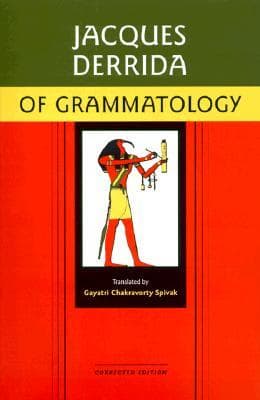
Core Idea
- Difficulty
- Hard
- Read it if
- You are a philosophy student, scholar of literary theory, or anyone deeply interested in post-structuralism, deconstruction, and the foundational critiques of Western metaphysics and linguistics.
- Skip it if
- You are looking for an easy introduction to continental philosophy, prefer clear, linear arguments, or are not prepared for dense, challenging, and often self-referential philosophical prose.
Key Takeaways from Of Grammatology
The Myth of Phonocentrism
Speech is not inherently superior or prior to writing.
Derrida questions the long-held Western philosophical idea of phonocentrism, which sees speech as the direct, authentic, and 'present' expression of thought, while making writing secondary and potentially corrupting. He argues this bias is deep in metaphysics, connecting speech to presence, consciousness, and truth. By examining this hierarchy, Derrida shows how the 'voice' has been favored as the source of pure meaning, free from the 'contamination' of external signs. He demonstrates that writing is not just a way to record speech but a basic condition of language itself, revealing the inherent 'différance' and repetition that speech tries to hide.
“The privilege of the phone… is the privilege of a full meaning, of a meaning that is present to itself, a meaning that is immediately available to consciousness without the mediation of any external signifier.”
In the book: Derrida analyzes the works of Saussure, Rousseau, and Lévi-Strauss, showing how their theories, despite their innovations, ultimately reinforce phonocentric assumptions about the origin and nature of language. He critiques Saussure's emphasis on the 'arbitrariness of the sign' while still granting an unspoken priority to the spoken word as the primary signifier.
Try this: Question any assertion of 'pure' or 'unmediated' presence in communication. Recognize how the medium (speech, writing, digital text) fundamentally shapes meaning rather than merely transmitting it. Be wary of claims that one form of expression is more 'natural' or 'authentic' than another.
Related ideas: phonocentrism, logocentrism, presence
Writing as Primordial Trace
Writing is not secondary but foundational to language and thought.
Derrida states that writing, in a broad sense, is not just a tool for recording speech, but a more fundamental 'arche-writing' or 'trace' that comes before and makes all language possible. This 'trace' means there is inherent delay and difference within any sign, so no sign can ever be fully present or self-sufficient. Every sign carries the trace of other signs and the possibility of its absence. This challenges the idea of a stable, original meaning or a pure origin of language, suggesting that language is always marked by the possibility of its own breakdown and reinterpretation. The 'trace' allows meaning to form, yet prevents it from ever being fully closed or present.
“There is no linguistic sign before writing.”
In the book: He examines the concept of the 'trace' within linguistics and philosophy, arguing that even in spoken language, the 'present' sound is always already marked by its difference from other sounds and its potential for repetition/absence, which are characteristics traditionally attributed to writing. The 'grammē' or mark is inherent to meaning-making.
Try this: When analyzing any text or discourse, look for the 'traces' of other meanings, absences, and deferrals. Understand that meaning is never fully fixed but is always in a state of flux, open to reinterpretation. Embrace the inherent ambiguity and polysemy of language.
Related ideas: arche-writing, trace, différance, origin
Différance: The Unstable Foundation
Meaning is endlessly deferred and constituted by difference.
Derrida uses the term 'différance,' which combines the French words 'différer' (to differ and to defer). This idea is central to deconstruction, showing that meaning is never fully present or fixed but is constantly delayed and created through differences with other signs. It highlights that a sign's meaning is not internal but comes from its relationship to what it is not. This combined act of differing and deferring undermines the idea of a stable 'transcendental signified' or an ultimate, foundational meaning. Différance is not a concept or a word, but the very condition for concepts and language, always unsettling any claim to absolute presence or origin.
“The play of differences, which Saussure describes as the very condition of language, is what makes différance possible.”
In the book: Derrida's analysis of Saussure's structural linguistics, particularly the idea that 'in language there are only differences without positive terms,' serves as a springboard for 'différance.' He extends Saussure's synchronic view to include diachronic deferral, showing how meaning is always already subject to temporal delay and spatial displacement.
Try this: Approach texts with the understanding that definitive, singular interpretations are often elusive. Be open to multiple, even contradictory, meanings. Recognize how context, time, and the interplay of various signifiers constantly shift and reshape understanding. Avoid seeking absolute origins or final meanings in any discourse.
Related ideas: différance, deconstruction, signifier, signified
The Violence of the Proper
Attempts to establish pure origins or proper meanings are inherently violent.
Derrida argues that the philosophical search for a 'proper' meaning, a pure origin, or an uncorrupted presence is not only pointless but inherently forceful. This 'force of the proper' comes from excluding and suppressing what is considered 'improper' or outside the desired purity. By trying to fix meaning and establish a single truth, one inevitably marginalizes, silences, or erases other interpretations and the complexity of language. This desire for control and self-presence, often seen in biases toward speech or foundational truths, overlooks the fundamental 'outside' that always influences and makes up the 'inside.' This force is not physical, but intellectual, shaping what is considered valid knowledge and discussion.
“The desire for the proper, for the full presence of meaning, is a violent desire.”
In the book: He discusses Lévi-Strauss's analysis of the Nambikwara people, particularly the 'lesson in writing,' to show how the introduction of writing (and the associated concepts of property, hierarchy, and power) disrupts an 'innocent' oral culture. Derrida critiques Lévi-Strauss's romanticized view of a pre-writing state, suggesting that even 'oral' cultures are structured by a form of 'arche-writing.'
Try this: Be critical of any discourse that claims absolute authority, pure origins, or singular truths. Recognize how such claims often exclude or suppress alternative perspectives. Actively seek out and value marginalized voices and interpretations. Acknowledge the inherent instability of meaning and resist the urge to impose rigid definitions.
Related ideas: violence, proper, origin, purity
Beyond Structuralism: A Critique
Structuralism's search for stable structures is ultimately deconstructed by its own premises.
While acknowledging structuralism's contributions (especially Saussure's linguistics and Lévi-Strauss's anthropology) in showing the systematic nature of language and culture, Derrida goes beyond its limits. He argues that structuralism, in trying to find stable, underlying structures and systems, unintentionally falls into the trap of seeking a foundational truth. By looking for a 'center' or a 'transcendental signified' that grounds the system, structuralism ultimately tries to stop the play of differences it first identifies. Derrida shows that the very conditions structuralism sets for meaning—difference and relation—inherently destabilize any fixed center, leading to an endless delay of meaning. So, structuralism, despite its revolutionary insights, cannot escape the 'play' it tries to contain.
“The structuralist enterprise, in its very ambition, contains the seeds of its own deconstruction.”
In the book: Derrida meticulously analyzes Saussure's Course in General Linguistics, demonstrating how Saussure's revolutionary concept of the arbitrary sign and the differential nature of language, while groundbreaking, still implicitly privileges the spoken word and seeks a structural closure that 'différance' ultimately denies.
Try this: When encountering structural analyses, appreciate their systematic insights but also look for the points where the system reveals its own internal inconsistencies or relies on an unacknowledged 'center.' Question the stability of any proposed structure and consider how it might be inherently unstable or open-ended.
Related ideas: structuralism, Saussure, Lévi-Strauss, system
The End of the Book
The traditional concept of the book as a bounded, coherent unit is challenged.
Derrida announces 'the end of the book' not literally, but conceptually. He criticizes the idea of the book as a self-contained, complete entity with a single, authorial meaning. For Derrida, a 'book' is never truly closed; it always connects to and references an endless network of other texts and discussions. The margins, footnotes, and even the 'outside' of the book are essential to its meaning, not just extra. This challenges the traditional authority of the author and the idea of a fixed, original intention. The 'end' of the book means opening up reading to an infinite play of meaning, where every text is a mark within a larger, unbounded 'general text' or 'archive.'
“The end of the book is always a beginning of writing.”
In the book: Derrida's own 'Of Grammatology' is a prime example, constantly engaging with, quoting, and deconstructing other philosophical texts (Rousseau, Saussure, Husserl, Lévi-Strauss). Its layered structure, extensive footnotes, and recursive arguments embody the very 'general text' it describes, refusing a linear, singular reading.
Try this: Approach any text not as an isolated artifact but as part of a vast, interconnected web of discourse. Explore its intertextual connections, its historical context, and the ways it references or defers to other texts. Recognize that reading is an active, interpretative process that creates new meanings, rather than passively receiving authorial intent. Consider the 'margins' and what is excluded as equally significant.
Related ideas: intertextuality, authorial intent, general text, archive
Supplementarity: The Apparent Outside is Inside
What appears as a mere addition or external aid is always already constitutive.
The idea of 'supplementarity' is central to Derrida's deconstruction. He shows how what is usually considered a 'supplement'—an addition, an extra, or a secondary element (like writing to speech, or self-pleasure to 'natural' sex in Rousseau)—is not just external but fundamentally makes up what it supplements. It fills a perceived lack, but in doing so, reveals that the 'original' was never complete or self-sufficient to begin with. The supplement is both an 'addition' and a 'replacement,' always at work, disrupting the perceived purity or integrity of the primary term. This reciprocal relationship blurs the lines between inside and outside, essential and accidental, revealing the inherent instability of such categories.
“The supplement is always in the place of…a lack. But the supplement is not simply an addition; it is always already at work.”
In the book: Derrida's extensive analysis of Rousseau's 'Essay on the Origin of Languages' and 'Confessions' is a key example. Rousseau presents writing as a 'dangerous supplement' to speech, and masturbation as a 'perilous supplement' to conjugal sex. Derrida deconstructs these arguments, showing how these 'supplements' reveal the inherent lack and instability within the 'natural' or 'original' states they ostensibly merely add to.
Try this: When analyzing a concept or system, look for what is presented as an 'extra' or 'secondary' element. Investigate how this 'supplement' might actually be essential to the 'primary' concept, revealing its inherent incompleteness or internal contradictions. Challenge any clear distinctions between core and periphery, essential and inessential.
Related ideas: supplement, binary opposition, lack, Rousseau
Deconstruction as Reading
Deconstruction is a rigorous form of critical reading that exposes internal contradictions.
Deconstruction is not destruction or nihilism, but a careful and thorough way of reading. It involves finding the hierarchical binary oppositions (e.g., speech/writing, presence/absence, nature/culture) within a text and showing how the text itself, often against its author's clear intentions, undermines these hierarchies. Deconstruction reveals how the favored term in a binary relies on and is made up by the supposedly secondary or marginalized term. By exposing these internal contradictions, slips, and uncertainties, deconstruction shows that texts are never fully coherent or stable, but are always open to multiple interpretations and resistant to final closure. It is an internal critique, using the text's own logic against itself.
“Deconstruction is not a destruction, but an analysis of the structure of a text, of its internal contradictions.”
In the book: Throughout 'Of Grammatology,' Derrida performs deconstructive readings of major Western philosophers (Rousseau, Saussure, Husserl, Lévi-Strauss), meticulously tracing their arguments and exposing how their own texts inadvertently reveal the instability of their foundational concepts, particularly the privilege of speech over writing.
Try this: When engaging with any text, look for its underlying assumptions, particularly its binary oppositions. Try to 'reverse' these hierarchies and see how the supposedly secondary term might actually be primary or constitutive. Identify moments where the text contradicts itself or where its arguments unravel, revealing an 'undecidability' rather than a clear conclusion.
Related ideas: deconstruction, binary opposition, undecidability, reading
The Impossibility of Closure
Meaning is perpetually open, resisting any final interpretation or totalization.
A key implication of Derrida's work is that absolute closure in language and meaning is impossible. Because of 'différance,' the 'trace,' and the inherent extra nature of signs, no text can ever achieve a definitive, complete interpretation. Every act of reading opens new possibilities, and every attempt to fix meaning only reveals more layers of delay and difference. This challenges the traditional goal of literary criticism or philosophical inquiry to reach a single, authoritative understanding. Instead, Derrida supports an ongoing, active engagement with the text, acknowledging its inherent uncertainty and the endless play of meaning. This does not lead to relativism, but to a deep responsibility in interpretation, recognizing its ethical consequences.
“There is no end to writing, no end to reading, no end to meaning.”
In the book: The very structure of 'Of Grammatology' itself, with its extensive, winding arguments, its self-referentiality, and its constant engagement with previous thinkers without ever arriving at a simple 'conclusion,' embodies this resistance to closure. It's a text that continually unpacks and re-examines itself.
Try this: Resist the urge for definitive answers or 'final' interpretations when analyzing complex ideas. Embrace the ongoing process of questioning and re-evaluation. Understand that meaning is dynamic and context-dependent. Recognize that your own interpretations are also part of this endless play, and engage in dialogue rather than seeking to impose a singular truth.
Related ideas: closure, totalization, undecidability, interpretation
The Ethics of the Unsayable
Deconstruction reveals the limits of language and the ethical imperative to acknowledge them.
While often seen as purely theoretical, Derrida's work has deep ethical implications. By showing the instability and limits of language, deconstruction pushes us to be more responsible in how we use it. Acknowledging 'différance' and the impossibility of absolute presence means we can never fully grasp or express 'truth' or 'justice' in language without something left over. This awareness of the 'unsayable' or the 'unrepresentable'—that which goes beyond our linguistic grasp—is not a weakness but an ethical strength. It encourages humility in communication, a resistance to rigid beliefs, and a greater sensitivity to the marginalized or excluded. The ethical duty lies in constantly questioning our own assumptions and the inherent force of claims that try to be complete.
“The limit of language is not outside language, but within it.”
In the book: Though 'Of Grammatology' is primarily concerned with theoretical linguistics and philosophy, Derrida's later work explicitly develops these ethical dimensions. However, even here, his critique of the 'violence of the proper' and the suppression of 'arche-writing' already lays the groundwork for an ethical stance that values the other, the outside, and the marginalized.
Try this: Cultivate intellectual humility and recognize the limits of your own understanding and expression. Be acutely aware of how language can be used to dominate, exclude, or oversimplify. Strive for precision and nuance, but also accept that some aspects of reality or experience may always exceed linguistic capture. Engage with others' perspectives, especially those that challenge your own, with an open mind and a commitment to understanding the 'unsaid' or 'unsayable.'
Related ideas: ethics, responsibility, unsayable, limits of language
Of Grammatology Quotes
“There is no outside-text.”
“The trace is not only the disappearance of the origin —that is, the not-beginning of the beginning— but also the act of appearing of the origin.”
“Writing is the name of these two things at once: the movement of signifying, and the movement of deferral.”
“The epoch of the logos thus debases writing and attempts to reduce it to a secondary and instrumental function.”
“Differance is the non-full, non-simple, structured and differentiating origin of differences.”
“The sign is always a sign of the fall.”
“The history of metaphysics, like the history of the West, is the history of this repression of writing.”
“The privilege of the phonè is the privilege of the full presence of the voice.”
“What we call presence or absence, life or death, reality or appearance, etc., is always already caught in a network of traces.”
“The meaning of meaning is infinite deferral.”
“The center is not the center.”
“Arche-writing is the condition of all presence, but this condition is always already the condition of its own effacement.”
“Every sign, linguistic or nonlinguistic, spoken or written (in the usual sense of this opposition), as a small or large unity, can be cited, put in quotation marks; in so doing it can break with every given context, engendering an infinity of new contexts in a an absolutely non-saturable fashion.”
Quiz
10 questions on the main ideas. Each answer comes with a short explanation.
Question 1
Which concept does Derrida primarily challenge in 'Of Grammatology' regarding the relationship between speech and writing?
- The idea that writing is a more direct form of expression than speech.
- The phonocentric tradition that privileges speech as original and writing as secondary/derivative.
- The notion that all language originates from pictographic forms.
- The structuralist view that language is a self-contained system.
Show answer
B. The phonocentric tradition that privileges speech as original and writing as secondary/derivative. Derrida critiques the long-standing Western philosophical tradition (phonocentrism) that views speech as primary, natural, and closer to presence, while relegating writing to a secondary, derivative, and potentially corrupting role. He argues this hierarchy is unfounded and inverts it.
Question 2
What does Derrida mean by 'arche-writing' (archi-écriture) in 'Of Grammatology'?
- The earliest known forms of human writing, such as cuneiform.
- A transcendental form of writing that predates and makes possible both speech and empirical writing.
- The original, pure form of language before its corruption by spoken dialects.
- The study of ancient manuscripts and their historical development.
Show answer
B. A transcendental form of writing that predates and makes possible both speech and empirical writing. Arche-writing is a crucial concept where Derrida argues that the fundamental characteristics traditionally attributed to writing (difference, deferral, iterability) are not external to speech, but rather constitute the very possibility of language itself, including speech. It's a condition of possibility for all signification.
Question 3
Which philosopher's work on phenomenology, particularly regarding the 'living present' and the concept of 'presence,' is a major target of Derrida's critique in 'Of Grammatology'?
- Ferdinand de Saussure
- Claude Lévi-Strauss
- Edmund Husserl
- Jean-Jacques Rousseau
Show answer
C. Edmund Husserl Derrida dedicates significant attention to Husserl's phenomenology, particularly his attempt to establish a realm of pure, self-present meaning in speech, free from the 'exteriority' of writing. Derrida deconstructs this notion of pure presence.
Question 4
In his analysis of Jean-Jacques Rousseau, Derrida argues that Rousseau, despite his explicit denunciations of writing, implicitly acknowledges what about writing?
- Its superior ability to convey universal truths.
- Its role as a dangerous supplement that both completes and corrupts presence.
- Its natural origin in the cries of primitive humans.
- Its aesthetic beauty in calligraphic forms.
Show answer
B. Its role as a dangerous supplement that both completes and corrupts presence. Derrida's reading of Rousseau's 'Essay on the Origin of Languages' is a key part of 'Of Grammatology.' He argues that Rousseau, while condemning writing as a 'dangerous supplement,' inadvertently reveals that this supplement is not merely external but structurally necessary, filling a lack in speech and presence itself.
Question 5
What is the primary implication of deconstruction as applied in 'Of Grammatology'?
- To reveal the single, true meaning of a text.
- To dismantle hierarchical oppositions and expose their instability and interdependence.
- To reconstruct the author's original intentions.
- To advocate for a return to pre-linguistic forms of communication.
Show answer
B. To dismantle hierarchical oppositions and expose their instability and interdependence. Deconstruction, as exemplified in 'Of Grammatology,' aims to expose the internal contradictions and unacknowledged assumptions within philosophical texts, particularly those built upon binary oppositions (like speech/writing, presence/absence), showing how the supposedly secondary term is often a condition of possibility for the primary one.
Question 6
Derrida criticizes structural linguistics, particularly Saussure, for what specific reason?
- Its failure to acknowledge the importance of historical change in language.
- Its overemphasis on the spoken word and its subordination of writing.
- Its rejection of the concept of the signifier and signified.
- Its focus on individual utterances rather than the linguistic system.
Show answer
B. Its overemphasis on the spoken word and its subordination of writing. While acknowledging Saussure's contributions, Derrida critically examines Saussure's phonocentrism, where Saussure defines language primarily in terms of the spoken word (parole) and positions writing as a mere 'representation of the word,' thus reinforcing the traditional hierarchy that Derrida seeks to dismantle.
Question 7
The concept of 'différance' is central to 'Of Grammatology.' Which of the following best describes 'différance'?
- The inherent difficulty in translating texts between different languages.
- A neologism combining 'to differ' and 'to defer,' indicating spatial difference and temporal deferral in meaning.
- The idea that all philosophical texts are fundamentally different from one another.
- A method for resolving philosophical disagreements through logical argumentation.
Show answer
B. A neologism combining 'to differ' and 'to defer,' indicating spatial difference and temporal deferral in meaning. Différance encapsulates the core Derridean idea that meaning is never fully present or identical to itself, but is always constituted by a play of differences (spatial) and deferrals (temporal). It is not a concept but rather a condition of possibility for concepts, showing how meaning is always contingent and unstable.
Question 8
Gayatri Spivak's role in the dissemination of 'Of Grammatology' is primarily recognized for what contribution?
- Writing a critical response that refuted Derrida's main arguments.
- Providing the widely acclaimed English translation and a significant preface.
- Organizing the first international conference on deconstruction.
- Collaborating with Derrida on the original French text.
Show answer
B. Providing the widely acclaimed English translation and a significant preface. Gayatri Chakravorty Spivak's English translation of 'Of Grammatology' is highly influential and includes a substantial translator's preface that not only clarifies Derrida's complex arguments but also provides critical context and further theoretical insights, greatly increasing the book's accessibility and impact in the English-speaking world.
Question 9
Derrida's analysis of Lévi-Strauss's 'Tristes Tropiques' focuses on which specific aspect?
- Lévi-Strauss's ethnographic descriptions of Amazonian rituals.
- The 'writing lesson' episode, where Lévi-Strauss describes a chief mimicking writing, and the implications of this event for the origin of writing and power.
- Lévi-Strauss's structuralist methodology in classifying kinship systems.
- The role of myths in pre-literate societies according to Lévi-Strauss.
Show answer
B. The 'writing lesson' episode, where Lévi-Strauss describes a chief mimicking writing, and the implications of this event for the origin of writing and power. Derrida critically examines Lévi-Strauss's account of the 'writing lesson' among the Nambikwara, arguing that Lévi-Strauss's interpretation inadvertently reinforces the Western logocentric bias by presenting writing as a tool of domination and corruption introduced from the outside, rather than acknowledging its inherent presence in the structure of language itself.
Question 10
How does 'Of Grammatology' fundamentally challenge the traditional philosophical project of seeking 'origins' and 'foundations'?
- By proposing new, more stable origins for language and meaning.
- By demonstrating that such origins are always already deferred and constituted by difference, making any 'pure' origin impossible to locate.
- By advocating for a return to pre-Socratic philosophy that did not prioritize origins.
- By focusing exclusively on the practical applications of language rather than its theoretical underpinnings.
Show answer
B. By demonstrating that such origins are always already deferred and constituted by difference, making any 'pure' origin impossible to locate. A core argument throughout 'Of Grammatology' is that the search for a pure origin of language, meaning, or presence is a futile logocentric desire. Derrida shows how what is posited as an origin (like speech) is always already structured by the very 'supplement' it seeks to exclude (like writing), making the origin itself a product of differentiation and deferral.
Of Grammatology FAQ
What is grammatology according to Derrida?
Grammatology, as introduced by Derrida in this work, is not simply the study of writing systems but a fundamental inquiry into the nature of writing itself, arguing for its primacy over speech in Western metaphysics. It challenges the traditional logocentric view that speech is a direct expression of thought, while writing is merely a secondary representation.
Does deconstruction offer a method for interpreting texts?
Deconstruction, as presented in 'Of Grammatology,' is less a methodical approach and more a critical engagement that exposes the inherent contradictions and unstable hierarchies within philosophical and literary texts. It aims to reveal how texts undermine their own claims to stable meaning, rather than providing a new interpretive framework.
How does Derrida's 'Of Grammatology' relate to structuralism?
'Of Grammatology' critically engages with structuralism, particularly the work of Ferdinand de Saussure, by questioning its foundational assumptions about language and signs. While acknowledging structuralism's insights into linguistic systems, Derrida deconstructs its logocentric biases and its privileging of speech over writing.
What is 'logocentrism' and why does Derrida criticize it?
Logocentrism is the Western philosophical tradition of privileging speech, presence, and immediate meaning over writing and absence. Derrida criticizes logocentrism for systematically marginalizing writing and for its underlying metaphysical assumptions that seek a stable, transcendent origin for meaning, which he argues is inherently flawed.
How is 'Of Grammatology' different from other works on linguistics or semiotics?
'Of Grammatology' distinguishes itself by not merely analyzing language or signs but by deconstructing the very philosophical foundations upon which such analyses are built. It challenges the traditional hierarchy that places speech above writing, arguing for writing's fundamental role in shaping thought and meaning, unlike many conventional linguistic studies.
What is the significance of Gayatri Spivak's translation of 'Of Grammatology'?
Gayatri Spivak's translation is highly significant for its scholarly rigor and its ability to capture the complex philosophical nuances of Derrida's original French text, making it accessible to English-speaking audiences. Her extensive translator's preface also provides crucial interpretive insights and contextualization for Derrida's challenging ideas.
Does 'Of Grammatology' argue that meaning is entirely subjective?
Derrida's work does not assert that meaning is entirely subjective, but rather that it is perpetually deferred and never fully present or stable. He argues against the idea of a fixed, ultimate meaning, suggesting that meaning is always caught in a play of differences and traces, making it inherently undecidable rather than purely arbitrary.
What impact did 'Of Grammatology' have on literary criticism?
'Of Grammatology' profoundly impacted literary criticism by introducing deconstruction as a powerful tool for analyzing texts beyond traditional interpretive frameworks. It encouraged critics to question inherent assumptions, expose hidden hierarchies, and explore the unstable nature of meaning within literary works, sparking new debates across the humanities.
About the author
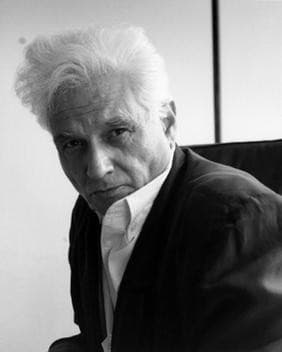
Jacques Derrida was a French philosopher known for his work in deconstruction and literary theory. His notable works include "Of Grammatology," which explores the relationship between language and writing, and "Deconstruction in a Nutshell," which provides an overview of his philosophical approach. Derrida's ideas have significantly influenced contemporary thought in various fields, including philosophy, literature, and cultural studies.
Similar books
- Course in General Linguistics
Ferdinand de Saussure
4.0 (3k) average on GoodreadsReferenceWhile Saussure established the structuralist understanding of language as a system of differences, Derrida critiques Saussure's implicit phonocentrism and argues that even within his framework, the concept of a stable signifier/signified relationship is undermined by the very nature of the trace and différance. Derrida shows that Saussure's system, despite its innovations, still privileges the spoken word and attempts to contain writing as a mere supplement.
- Brave New World
Aldous Huxley
4.0 (1.4M) average on GoodreadsFantasyIn a future where happiness comes from chemicals and individuality is gone, one man's desire for real experience threatens the calm, controlled society.
- Life of Pi
Yann Martel
3.9 (1.3M) average on GoodreadsFantasyStranded in the vast Pacific, a young Indian boy forms an unlikely bond with a Bengal tiger, questioning belief and survival.
- The Picture of Dorian Gray
Oscar Wilde
4.1 (966k) average on GoodreadsFantasyA beautiful young man's soul decays within a cursed portrait, mirroring the grotesque cost of his hedonistic pursuit of eternal youth and illicit pleasure.
- Tuesdays with Morrie
Mitch Albom
4.1 (782k) average on GoodreadsBiographyA dying professor's weekly lessons from his bedside change a former student, giving him ideas on life, love, and letting go.
- The Tipping Point: How Little Things Can Make a Big Difference
Malcolm Gladwell
4.0 (690k) average on GoodreadsBusinessMalcolm Gladwell explains how small, targeted actions can start widespread changes in trends, behaviors, and ideas.






Enjoyed the summary?
A summary gives you the shape of the book. The book itself has the detail, the examples and the voice.
Find Of Grammatology on AmazonAs an Amazon Associate, BookBrief earns from qualifying purchases. How we're funded