

Synopsis
Covers the whole plot, including the ending.
- Difficulty
- Easy
- Pacing
- Moderate
- Mood
- Uplifting, Inspirational, Hopeful, Whimsical
- Read it if
- You are graduating, starting a new chapter, or need an uplifting reminder about life's journey and overcoming challenges.
- Skip it if
- You are looking for a complex narrative with deep character development or intricate world-building.
Oh, the Places You'll Go! Plot Summary
Covers the whole plot, including the ending.
The Start of the Great Journey
The book starts by talking directly to a young, unnamed character, wishing them well as they get ready for a big journey. The narrator immediately sets a tone of encouragement and endless possibilities, saying the character is 'off to Great Places!' and has 'brains in your head' and 'feet in your shoes.' The first scene is bright and full of promise, with the character at a crossroads, ready to pick a path. The narrator stresses the power of choice and the excitement of taking the first step into the unknown, urging the character to decide which way to go without delay, as the world waits to be explored.
Navigating the Good Times
As the journey begins, the character has times of easy progress and quick success. They find themselves on 'high-flying Spleeds' and 'up-a-long streets,' where everything seems to go right. The narrator describes these times as when the character will easily 'win the race' and be 'ahead of the game.' These early successes are shown as joyful and easy, with the character flying above crowds and getting much praise. This part shows the first excitement and confidence that often come with new starts, supporting the idea that skill and effort can lead to early wins.
The First Encounter with Challenges
After the first successes, the story moves to show the sure challenges and problems that come up on any life journey. The character is warned about 'bumpy rides' and 'lonely roads.' The narrator describes times when paths might become confusing, leading to 'confused' situations where 'you can get all hung up in a prickle-ly perch.' These problems are not shown as failures but as important parts of the journey, needing strength and careful choices. The tone stays encouraging, but with a real understanding that not all paths will be smooth.
The Waiting Place
A big problem shown is the "Waiting Place," a symbolic spot where people get stuck, waiting for things to happen to them instead of making things happen. The narrator describes different kinds of waiting: 'waiting for a train to go or a bus to come,' 'waiting for the wind to fly a kite,' or 'waiting around for a Yes or No.' This part clearly shows the frustration and lack of movement of being in limbo, a place where 'everyone is just waiting.' It gives a strong warning against doing nothing and tells the character to actively look for answers instead of just accepting things.
Breaking Free from the Waiting Place
The narrator strongly advises the character to leave the "Waiting Place." This escape needs bravery and self-reliance, as the character must decide to go forward even when the path is unclear or scary. The message is clear: 'NO! That's not for you!' The character is reminded of their natural abilities and encouraged to make their own choices, even if it means going into 'more un-lonesome-some places.' This turning point shows the importance of taking action and wanting to overcome inaction, telling the character to take back control of their future.
Facing Fear and Loneliness
As the journey goes on, the character is warned about finding 'lonely places' and 'frightening places.' These are times when 'things can happen that just aren't much fun.' The pictures show dark, winding paths and isolated settings, symbolizing feelings of fear, doubt, and being alone. The narrator admits that the character might feel 'all alone,' a common human feeling. Despite these possible feelings, the main message stays one of strength, reminding the character that even in the darkest times, they have the inner power to keep going and find their way out.
The Importance of Decision-Making
Through the journey, the narrator stresses the constant need to make choices. The character will find many forks in the road, some leading to easy paths, others to hard ones. The advice is to 'step with care and great tact' and 'remember that Life's a Great Balancing Act.' This shows the responsibility that comes with freedom, as each choice has results. The character is told to consider options, trust their feelings, and be ready for what happens, good or bad, knowing that every choice shapes their path forward.
The Power of Inner Strength and Resilience
Despite outside problems and inner doubts, the main message is about the character's natural strength. The narrator repeats that the character has 'brains in your head' and 'feet in your shoes' and can 'steer yourself any direction you choose.' This supports the idea that real success comes from inside, from using one's own wisdom, courage, and effort. The journey shows the character's growing strength as they learn to deal with the world on their own and with confidence.
Reaching New Heights and Continued Success
Near the end of the journey, the narrator happily says the character will succeed. 'And will you succeed? Yes! You will, indeed! (98 and ¾ percent guaranteed).' The character is imagined reaching 'high-flying Kites' and 'getting up high' with a feeling of achievement and happiness. This part goes back to the first promise of great places, confirming that despite all the ups and downs, the character's hard work will lead to great accomplishments. The journey continues, with new goals always possible, meaning a life of ongoing growth and discovery.
The Never-Ending Journey of Life
The book ends by saying that life's journey never stops, full of endless chances and ongoing adventures. The character is left understanding that they will keep facing new problems and finding new places. The last lines repeat the message of self-reliance and life's exciting, unexpected nature: 'So be your name Buxbaum or Bixby or Bray / Or Mordecai Ali Van Allen O'Shea, / You're off to Great Places! Today is your day! / Your mountain is waiting. So... get on your way!' It's a strong goodbye, celebrating each person's unique path and the promise of a life well-lived.
Oh, the Places You'll Go! Characters
The Protagonist (Unnamed)
Protagonist
A young, hopeful individual embarking on life's journey.
The protagonist is a generic, unnamed character, representing any individual at the threshold of a new phase in life, such as graduation or a significant transition. They are depicted as having 'brains in your head' and 'feet in your shoes,' symbolizing their inherent intelligence and capacity for action. The entire narrative is addressed directly to this character, making them relatable to readers of all ages. Their journey is one of self-discovery, resilience, and navigating the complexities of the world, embodying the universal human experience of growth and exploration.
The Narrator
Supporting
The encouraging, wise voice guiding the protagonist through life's challenges.
The narrator is an omniscient, benevolent, and highly encouraging voice that directly addresses the protagonist. This voice serves as a mentor, offering advice, warnings, and unwavering support. The narrator uses rhythmic, rhyming verse to convey profound life lessons, from celebrating successes to acknowledging inevitable failures and periods of doubt. While never explicitly identified, the narrator embodies the wisdom and optimism of Dr. Seuss himself, guiding the reader through the metaphorical landscapes of life with a blend of realism and inspiring hope.
Relationships: The Protagonist (mentor/mentee)
The Waiting Place Inhabitants
Mentioned
Symbolic figures representing those stuck in inaction and indecision.
These are not individual characters but a collective group of people depicted as being 'just waiting' in the 'Waiting Place.' They are waiting for various external factors—a train, a bus, a Yes or No, the wind to fly a kite. They symbolize the dangers of passivity, procrastination, and relying on external circumstances rather than taking initiative. Their presence serves as a cautionary tale for the protagonist, illustrating a path to be avoided if one wishes to live a fulfilling and active life.
Oh, the Places You'll Go! Themes
Identity and Self-Discovery
The book is about finding out who you are and what you can do as you go through life. The character, who starts with no clear identity, is told to use their 'brains in your head' and 'feet in your shoes' to make their own way. This idea shows up as the character learns to make choices, get past problems, and trust their own judgment, finally creating their unique path. The focus on individual action and going into the unknown highlights how identity is formed through experience.
“You have brains in your head. You have feet in your shoes. You can steer yourself any direction you choose.”
Resilience and Perseverance
A main idea is the importance of continuing through hard times. The book does not avoid talking about 'lonely places' or 'frightening places' and the scary 'Waiting Place.' But it always tells the character to push through these problems, reminding them, 'you'll find the bright places where the Boom Bands are playing.' This idea is important for getting the reader ready for life's sure difficulties, showing that success often comes after getting past trouble and not giving up.
“You'll get mixed up, of course, as you already know. You'll get mixed up with many strange birds as you go. So be sure when you step. Step with care and great tact and remember that Life's a Great Balancing Act.”
The Journey of Life and Its Choices
Life is shown as a big, unexpected journey with many paths and decisions. The narrator constantly reminds the character about the choices they will face, from 'up-a-long streets' to 'bumpy rides.' This idea highlights that life is an active process of choosing, navigating, and changing. The book celebrates the freedom to pick one's direction while also acknowledging the responsibility and possible difficulties that come with those choices, making the journey itself the main symbol for existence.
“You're on your own. And you know what you know. And YOU are the guy who'll decide where to go.”
Optimism and Hope
Despite talking about possible dangers and sad moments, the book keeps a very hopeful tone. It tells the character that they will succeed ('98 and ¾ percent guaranteed') and encourages a positive view of the future. This idea is clear in the bright pictures and the happy words used to describe wins, supporting the belief that with courage and effort, a good and successful life is possible. It's a message meant to give confidence and a positive attitude toward what's next.
“And will you succeed? Yes! You will, indeed! (98 and ¾ percent guaranteed.)”
Plot Devices & Literary Techniques
Direct Address
Engaging the reader personally through a direct conversational tone.
The entire book is written in the second person, directly addressing the reader with 'You.' This device creates an immediate and intimate connection, making the advice and narrative feel personal and relevant to each individual reading it. It positions the narrator as a wise, encouraging mentor speaking directly to the reader, fostering a sense of involvement and ownership over the journey described. This technique makes the universal themes feel specifically tailored to the reader's own life experiences and future endeavors.
Metaphorical Journey
Life's progression represented as a literal travel experience.
The central plot device is the metaphor of a physical journey to represent the entire course of one's life. 'Great Places,' 'up-a-long streets,' 'bumpy rides,' 'the Waiting Place,' and 'frightening places' are all symbolic locations and experiences that stand for life's successes, challenges, stagnation, and fears. This extended metaphor allows complex abstract concepts about life, choices, and perseverance to be understood through concrete, imaginative imagery, making them accessible to a wide audience, particularly children.
Rhyme and Rhythm
Using consistent poetic structure to enhance memorability and engagement.
Dr. Seuss's signature use of anapestic tetrameter (two unstressed syllables followed by a stressed syllable) and consistent AABB rhyme scheme is a core plot device. This rhythmic and rhyming structure makes the text highly engaging, memorable, and fun to read aloud. Beyond entertainment, it helps to convey complex ideas simply and effectively, embedding the life lessons within a catchy, almost chant-like narrative that resonates with readers long after the book is closed. It also contributes to the whimsical and encouraging tone.
The Waiting Place
A symbolic location representing periods of inaction and stagnation.
The 'Waiting Place' serves as a powerful symbolic setting within the metaphorical journey. It is a specific, detailed description of a state of being rather than a physical location, where individuals are stuck in inertia, waiting for external forces to dictate their next move. This device functions as a cautionary tale, highlighting the dangers of passivity and the importance of taking initiative. Its vivid portrayal makes the abstract concept of procrastination and indecision tangible and impactful, urging the protagonist (and reader) to actively choose their path.
Oh, the Places You'll Go! Quotes
“You have brains in your head. You have feet in your shoes. You can steer yourself any direction you choose.”
“You're off to Great Places! You're off and away!”
“And when things start to happen, don't worry. Don't stew. Just go right along. You'll start happening too.”
“You'll get mixed up, of course, as you already know. You'll get mixed up with many strange birds as you go.”
“And will you succeed? Yes! You will, indeed! (98 and 3/4 percent guaranteed.)”
“I'm sorry to say so but, sadly, it's true that Bang-ups and Hang-ups can happen to you.”
“You can get so confused that you'll start in to race down long wiggled roads at a break-necking pace.”
“All alone! Whether you like it or not, alone will be something you'll be quite a lot.”
“On and on you will hike. And I know you'll hike far and face up to your problems whatever they are.”
“You'll come down from the Lurch with an unpleasant bump. And the chances are, then, that you'll be in a Slump.”
“Un-slumping yourself is not easily done.”
“Kid, you'll move mountains!”
“So be sure when you step. Step with care and great tact and remember that Life's a Great Balancing Act.”
“And never mix up your right foot with your left.”
Quiz
10 questions on the plot and the characters. Each answer comes with a short explanation.
Question 1
What does Dr. Seuss guarantee about your success in 'Oh, the Places You'll Go!'?
- 100% guaranteed success
- 98 and ¾ percent guaranteed success
- 50% chance of success
- Success is not guaranteed at all
Show answer
B. 98 and ¾ percent guaranteed success In the book, Dr. Seuss famously declares, 'And will you succeed? Yes! You will indeed! (98 and ¾ percent guaranteed.)' This humorous statistic emphasizes that success is highly probable but acknowledges life's uncertainties.
Question 2
What is the 'Great Balancing Act' that Dr. Seuss addresses in the book?
- Balancing work and play
- Life itself, with its ups and downs
- Balancing friendships and family
- Managing time and money
Show answer
B. Life itself, with its ups and downs The book describes life as the 'Great Balancing Act,' referring to the inevitable highs and lows, successes and challenges that everyone experiences on their journey.
Question 3
For whom is 'Oh, the Places You'll Go!' described as the perfect send-off?
- Only for young children starting school
- Only for college graduates
- For people of all ages starting new phases in life
- Only for elderly readers reflecting on life
Show answer
C. For people of all ages starting new phases in life The book is noted as being ideal for 'children starting out in the maze of life, be they nursery school grads or newly-minted PhD's,' emphasizing its universal appeal across ages and milestones.
Question 4
How does Dr. Seuss describe the places you'll go in the book?
- As predictable and safe destinations
- As a maze full of challenges and opportunities
- As fictional lands with magical creatures
- As specific cities and countries to visit
Show answer
B. As a maze full of challenges and opportunities The book uses metaphorical language, describing life's journey as going through a 'maze' with various paths, representing the unpredictable mix of obstacles and chances for growth.
Question 5
What year was 'Oh, the Places You'll Go!' published relative to Dr. Seuss's death?
- Five years before his death
- One year before his death
- The same year as his death
- Ten years after his death
Show answer
B. One year before his death The book was first published in 1990, one year before Dr. Seuss (Theodor Geisel) died in 1991 at age 87, making it one of his final works.
Question 6
What is the primary tone of 'Oh, the Places You'll Go!'?
- Pessimistic and warning about life's dangers
- Humorous and encouraging
- Scientific and factual
- Mysterious and suspenseful
Show answer
B. Humorous and encouraging Dr. Seuss uses his signature humorous verse and whimsical illustrations to deliver an uplifting, motivational message that encourages readers to embrace life's journey with confidence.
Question 7
How many pages does 'Oh, the Places You'll Go!' contain?
- 56 pages
- 100 pages
- 32 pages
- 87 pages
Show answer
A. 56 pages The book is noted for being 'blessedly brief' at 56 pages, yet it packs a lifetime of wisdom into this concise format, typical of Dr. Seuss's impactful style.
Question 8
What does Dr. Seuss encourage readers to find within themselves?
- The secret to eternal happiness
- The success that lies within
- A map to all the places they'll go
- The answers to all life's questions
Show answer
B. The success that lies within A central theme of the book is self-empowerment; Dr. Seuss motivates readers to discover and harness their inner potential to achieve success on their unique paths.
Question 9
In what style is 'Oh, the Places You'll Go!' written?
- Prose narrative
- Inimitable humorous verse and pictures
- Formal essay format
- Dialogue-only script
Show answer
B. Inimitable humorous verse and pictures The book is characterized by Dr. Seuss's unique blend of playful, rhyming verse and vibrant illustrations, making it accessible and engaging for all ages.
Question 10
What broader concept does 'Oh, the Places You'll Go!' serve as, according to its description?
- A detailed autobiography of Dr. Seuss
- A graduation speech for life's journeys
- A guide to traveling the world
- A collection of unrelated short stories
Show answer
B. A graduation speech for life's journeys The book is described as a 'wonderfully wise and blessedly brief graduation speech' from Dr. Seuss, offering inspirational advice for navigating life's transitions and adventures.
Oh, the Places You'll Go! FAQ
What is 'Oh, the Places You'll Go!' about?
The book follows a young protagonist, depicted as a boy in a yellow jumpsuit, as he embarks on a journey through life's various landscapes. It portrays the highs of success and adventure alongside the lows of waiting, confusion, and fear, ultimately encouraging perseverance and self-belief.
Why should I read 'Oh, the Places You'll Go!'?
It offers timeless, uplifting wisdom about navigating life's challenges and opportunities in a playful, accessible way. Its rhythmic verses and whimsical illustrations make it enjoyable for all ages, serving as a motivational gift for graduations or new beginnings.
What is the background/setting of 'Oh, the Places You'll Go!'?
The setting is a fantastical, ever-changing landscape that metaphorically represents life's journey. It includes bright, bustling cities like the 'Bright Places' where 'Boom Bands are playing,' as well as lonely, confusing spaces like the 'Waiting Place' where people are stuck in indecision.
What are the most memorable quotes from 'Oh, the Places You'll Go!'?
Key quotes include: 'You have brains in your head. You have feet in your shoes. You can steer yourself any direction you choose,' and 'And will you succeed? Yes! You will indeed! (98 and ¾ percent guaranteed.)' These lines emphasize self-reliance and optimism.
What writing style does Dr. Seuss use in this book?
Dr. Seuss employs his signature anapestic tetrameter verse—a bouncy, rhythmic pattern—with playful rhymes and neologisms like 'slump' and 'lurch.' The style is humorous and whimsical yet profound, blending simple language with deep life lessons.
What minor details add significant meaning to 'Oh, the Places You'll Go!'?
The protagonist's yellow jumpsuit symbolizes brightness and readiness for adventure, while the ever-present 'you' directly engages the reader. Small visual details, like the changing backgrounds from vibrant to gloomy, mirror emotional states without explicit text.
What are some subtle foreshadowing moments in the book?
Early pages show the protagonist confidently striding, foreshadowing eventual success, but also include hints of obstacles like 'bang-ups and hang-ups.' The mention of 'slumps' early on subtly prepares readers for the later 'Slump' section where progress stalls.
What unexpected character connections exist in 'Oh, the Places You'll Go!'?
The protagonist encounters various archetypal figures—like those in the 'Waiting Place'—who represent common human experiences. Though not named, these characters connect to universal struggles, making the journey relatable to anyone facing life's uncertainties.
What are the unspoken character motivations in 'Oh, the Places You'll Go!'?
The protagonist's motivation is an innate drive to explore and achieve, reflecting a universal human desire for purpose and fulfillment. This is implied through actions like leaving home and persisting through challenges, rather than stated directly.
What psychological complexities do characters exhibit?
The protagonist shows resilience by bouncing back from setbacks like the 'Slump,' while side characters in the 'Waiting Place' display paralysis from fear or indecision. These contrasts highlight the psychological battle between proactive courage and passive anxiety in life.
What are the major emotional turning points in the book?
Key turning points include: the initial excitement of departure, the frustration of the 'Waiting Place,' the despair of the 'Slump,' and the triumphant resurgence where the protagonist 'moves mountains.' Each shift mirrors emotional highs and lows in personal growth.
How do relationship dynamics evolve in 'Oh, the Places You'll Go!'?
The protagonist starts alone, emphasizing self-reliance, but interacts with crowds in success and isolation in struggle. Relationships are fleeting—like passing others in the 'Bright Places'—symbolizing how life's journey is personal yet shared through common experiences.
Which parts of 'Oh, the Places You'll Go!' remain ambiguous or open-ended?
The exact destinations and outcomes are left vague—readers never learn where the protagonist ends up. This ambiguity encourages personal interpretation, allowing each reader to project their own dreams and challenges onto the journey.
What are controversial scenes or decisions in the book?
Some readers debate the '98 and ¾ percent guaranteed' success rate—whether it's overly optimistic or acknowledges life's uncertainties. Others question if the focus on individual triumph overlooks the importance of community support in real-world struggles.
'Oh, the Places You'll Go!' ending explained: how it ends & what it means
The book ends with the protagonist soaring ahead, declaring 'You're off to Great Places! Today is your day! Your mountain is waiting. So...get on your way!' This signifies ongoing journey and potential, emphasizing that life's adventures continue with optimism and agency.
About the author
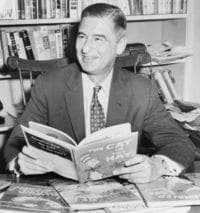
Dr. Seuss, born Theodor Seuss Geisel, was a beloved American children's author and illustrator. He is renowned for his imaginative tales and whimsical rhymes, including iconic works like 'The Cat in the Hat,' 'Green Eggs and Ham,' and 'Oh, the Places You'll Go!'. His unique style and memorable characters have made him a staple in children's literature for generations.
Similar books
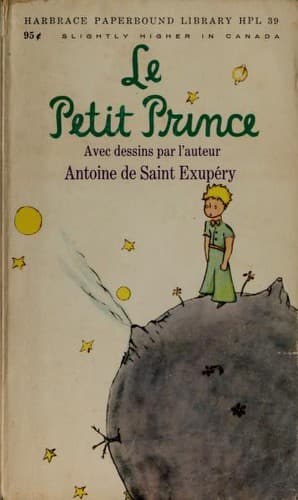
- The Little Prince
Antoine De Saint Exupéry
Both are allegorical tales offering life lessons with simple language and profound meaning.
- THE ALCHEMIST
Paulo Coelho
3.6 (3k) average on GoodreadsFictionBoth focus on a journey of self-discovery, pursuing one's destiny, and overcoming obstacles.
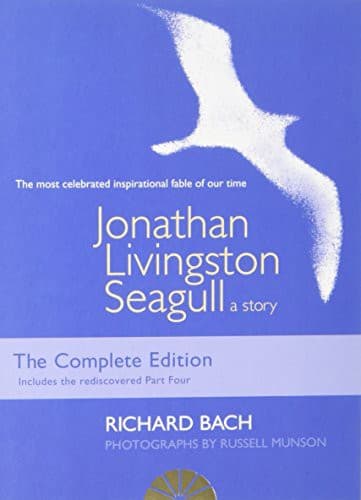
- Jonathan Livingston Seagull
Richard Bach
3.8 (202k) average on GoodreadsFantasyBach's book also explores self-improvement and striving beyond limits, but delves into more spiritual and philosophical depths for a slightly older audience. Seuss is more whimsical and accessible for children, with a focus on a metaphorical life journey rather than abstract ideals.
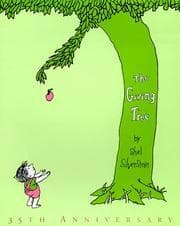
- The Giving Tree
Shel Silverstein
4.4 (906k) average on GoodreadsFantasyBoth address life's passage and growth, but Silverstein's work presents a more melancholic and arguably darker view of relationships and sacrifice. Seuss maintains an unwavering tone of hopeful agency, emphasizing individual power, whereas Silverstein evokes bittersweetness and potentially problematic depictions of selfless giving.
- Harry Potter and the Sorcerer's Stone
J.K. Rowling
4.5 (7M) average on GoodreadsFantasyRescued from a miserable life under the stairs, an orphaned boy discovers he's a wizard destined for a magical school, where he uncovers a dangerous secret tied to the dark wizard who murdered his parents.
- The Hunger Games
Suzanne Collins
4.3 (6.4M) average on GoodreadsFantasyIn a future where children fight to the death on live television, Katniss Everdeen volunteers for the arena, turning a death sentence into a fight for survival and a spark of rebellion.



Enjoyed the summary?
A summary gives you the shape of the book. The book itself has the detail, the examples and the voice.
Find Oh, the Places You'll Go! on AmazonAs an Amazon Associate, BookBrief earns from qualifying purchases. How we're funded