

Synopsis
Covers the whole plot, including the ending.
- Difficulty
- Medium
- Read it if
- You are a serious runner or athlete looking for an immersive, almost spiritual exploration of the dedication required for peak performance, or if you appreciate stories of intense personal struggle and triumph in sports.
- Skip it if
- You prefer practical training guides over narrative fiction, or if you are not interested in the highly specific subculture and mindset of competitive distance running.
Once a Runner Quotes
“The gun went off. And Quenton Cassidy, the greatest runner of his generation, was not there.”
“The real purpose of running isn't to win a race, it's to test the limits of the human heart.”
“The only good race is the one you win. The only good life is the one you live.”
“Don't be a slave to your training log. Be a master of your body.”
“There is no finish line. There are only plateaus.”
“He knew that the only way to beat the pain was to run through it, to embrace it, to make it his own.”
“The greatest race is not always the one with the fastest time, but the one with the most heart.”
“Every day you don't run, you lose a little bit of yourself.”
“Running is a form of meditation, a way to clear the mind and connect with the self.”
“The human body is capable of far more than the mind believes.”
“To be a runner is to be an artist of the body, a poet of motion.”
“There are no shortcuts to any place worth going.”
“He ran not to escape life, but to embrace it.”
“The track was his canvas, and his strides were the brushstrokes.”
Quiz
10 questions on the plot and the characters. Each answer comes with a short explanation.
Question 1
What is Quenton Cassidy's ultimate running goal that he is training to achieve?
- Win an Olympic gold medal
- Break the world record in the mile
- Run a four-minute mile
- Defeat his rival in a championship race
Show answer
C. Run a four-minute mile The book explicitly states that Quenton Cassidy's lifelong dream is to run a four-minute mile, a significant benchmark in distance running.
Question 2
Why is Quenton Cassidy suspended from his track team at Southeastern University?
- Academic probation due to poor grades
- Injury preventing him from competing
- Involvement in an athletes' protest related to the Vietnam War era
- Violation of team rules regarding training regimens
Show answer
C. Involvement in an athletes' protest related to the Vietnam War era Cassidy's suspension is a pivotal plot point, driven by his involvement in an athletes' protest against the backdrop of the Vietnam War era, which disrupts his collegiate running career.
Question 3
Who is Bruce Denton in relation to Quenton Cassidy?
- His primary rival in mile races
- His coach at Southeastern University
- His friend and mentor, a former Olympic gold medalist
- His girlfriend who he eventually leaves
Show answer
C. His friend and mentor, a former Olympic gold medalist Bruce Denton serves as Quenton's crucial friend and mentor, guiding him through his intense training, and is identified as a graduate student and former Olympic gold medalist.
Question 4
What significant personal sacrifices does Cassidy make to pursue his running dream after his suspension?
- He moves to a different country to train in solitude.
- He gives up his scholarship, his girlfriend, and withdraws to a monastic retreat.
- He stops attending classes and dedicates all time to part-time jobs.
- He severs ties with his family to avoid distractions.
Show answer
B. He gives up his scholarship, his girlfriend, and withdraws to a monastic retreat. The narrative highlights Cassidy's extreme dedication, noting that he 'gives up his scholarship, his girlfriend, and possibly his future to withdraw to a monastic retreat in the countryside' for training.
Question 5
The book is described as 'a rare insider’s account of the incredibly intense lives of elite distance runners.' What aspect of the runner's life does it primarily emphasize?
- The social benefits and team camaraderie.
- The financial rewards and sponsorship deals.
- The single-minded pursuit of excellence and monastic dedication.
- The importance of cross-training and varied athletic pursuits.
Show answer
C. The single-minded pursuit of excellence and monastic dedication. The book's description explicitly mentions 'to devote your entire existence to a single-minded pursuit of excellence' and Cassidy's 'monastic retreat,' underscoring the intense dedication required.
Question 6
What is the nature of the 'race of his life' that Cassidy trains for under Bruce Denton's tutelage?
- The NCAA championship final
- A qualifying trial for the Olympic team
- A head-to-head match with the greatest miler in history
- A marathon race to test his endurance
Show answer
C. A head-to-head match with the greatest miler in history The climax of Cassidy's training is geared towards 'a head-to-head match with the greatest miler in history,' a highly personal and ultimate test of his dedication.
Question 7
The book was originally self-published in 1978. What was its initial distribution method?
- Sold in major bookstores across the country.
- Distributed through a small, independent publishing house.
- Sold at road races out of the author’s car trunk.
- Given away for free to generate word-of-mouth interest.
Show answer
C. Sold at road races out of the author’s car trunk. The book's unique origin story notes it was 'originally self-published in 1978 and sold at road races out of the trunk of the author’s car,' contributing to its cult status.
Question 8
What does the phrase 'reading the book became a rite of passage for many runners' imply about its impact?
- It was required reading in university athletic programs.
- It marked a significant, shared experience or transition for serious runners.
- It was considered a religious text by running communities.
- It was a popular gift given at running events.
Show answer
B. It marked a significant, shared experience or transition for serious runners. A 'rite of passage' signifies an important, often challenging, transition or initiation. For runners, reading this book became a shared experience that resonated with their dedication, similar to how 'tattered copies were handed down like sacred texts.'
Question 9
The book describes the 'political and cultural turmoil of the Vietnam War era' intruding into the university's athletic department. How does this historical context specifically affect Quenton Cassidy?
- It causes the cancellation of his athletic scholarship.
- It leads to his involvement in protests and subsequent suspension from the team.
- It forces him to enlist in the military, ending his running career.
- It creates a shortage of training facilities and equipment.
Show answer
B. It leads to his involvement in protests and subsequent suspension from the team. The turmoil of the Vietnam War era is directly linked to Cassidy's participation in an athletes' protest, which then results in his suspension from the track team, fundamentally altering his path.
Question 10
What is the primary theme or 'essence' that 'Once a Runner' is said to capture about being a competitive runner?
- The importance of natural talent over hard work.
- The balance between athletic pursuits and a normal social life.
- The devotion of one's entire existence to a single-minded pursuit of excellence.
- The financial struggles faced by collegiate athletes.
Show answer
C. The devotion of one's entire existence to a single-minded pursuit of excellence. The introductory text clearly states the book 'captures the essence of what it means to be a competitive runner; to devote your entire existence to a single-minded pursuit of excellence.' This is the core message.
Once a Runner FAQ
What is 'Once a Runner' about?
'Once a Runner' by John L. Parker Jr. is a classic sports novel that delves into the intense world of competitive running. It follows Quenton Cassidy, a collegiate runner striving to achieve a four-minute mile amidst the challenges of his personal life and the Vietnam War era.
Does 'Once a Runner' offer practical training advice?
While the book vividly describes rigorous training regimens and the mindset of elite runners, it is a fictional narrative rather than a training manual. Its primary focus is on the psychological and emotional journey of a dedicated athlete, not prescriptive workout plans.
What is the significance of the 'four-minute mile' in 'Once a Runner'?
The four-minute mile represents the ultimate athletic benchmark and Quenton Cassidy's lifelong dream. It symbolizes the pinnacle of human endurance and the singular focus required to achieve an extraordinary goal in the world of distance running.
Who is Quenton Cassidy in 'Once a Runner'?
Quenton Cassidy is the protagonist of 'Once a Runner,' a determined collegiate runner at fictional Southeastern University. His journey through intense training, personal sacrifice, and a head-to-head race forms the core of the novel's exploration of athletic pursuit.
How does 'Once a Runner' differ from other sports fiction?
'Once a Runner' distinguishes itself through its deep, almost spiritual immersion into the runner's psyche and the monastic dedication required for elite performance. It's less about the glory of victory and more about the profound personal transformation and struggle inherent in the pursuit of excellence.
Is 'Once a Runner' based on a true story?
No, 'Once a Runner' is a work of fiction. While it captures the authentic experiences and mindset of competitive runners, the characters and specific events are products of the author's imagination.
What role does Bruce Denton play in Cassidy's journey?
Bruce Denton serves as Quenton Cassidy's mentor and friend. A former Olympic gold medalist, Denton guides Cassidy through his intense training, offering wisdom and support as Cassidy dedicates himself to achieving his running ambitions.
Why is 'Once a Runner' considered a 'rite of passage' for many runners?
The book's raw and honest portrayal of the dedication, pain, and solitary nature of competitive running resonates deeply with athletes. It articulates the unspoken truths of the sport, making it a foundational text that many runners feel compelled to read and share.
Similar books
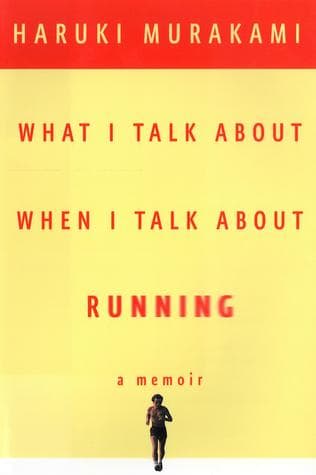
- What I Talk About When I Talk About Running
Haruki Murakami
3.9 (106k) average on GoodreadsBiographyExplores the philosophical and personal aspects of running, though from a more reflective, non-fictional perspective.
- Born to Run: A Hidden Tribe, Superathletes, and the Greatest Race the World Has Never Seen
Christopher McDougall
4.3 (168k) average on GoodreadsLifestyleExplores the joy and essence of running, though with a focus on ultra-running and natural running.
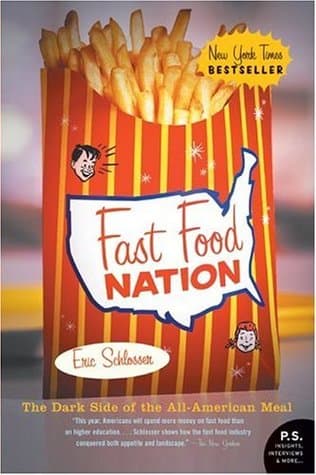
- Fast Food Nation: The Dark Side of the All-American Meal
Eric Schlosser
3.8 (198k) average on GoodreadsBusinessThis book exposes how fast food's pursuit of convenience has reshaped our landscapes, health, economy, and culture with lasting impact.
- The Omnivore's Dilemma: A Natural History of Four Meals
Michael Pollan
4.2 (182k) average on GoodreadsPolitics - The Man Who Mistook His Wife for a Hat and Other Clinical Tales
Oliver Sacks
4.1 (166k) average on GoodreadsPsychologyExplore the astonishing minds of patients with neurological disorders, where lost selves, phantom limbs, and sudden artistic genius reveal the strange world of human consciousness.
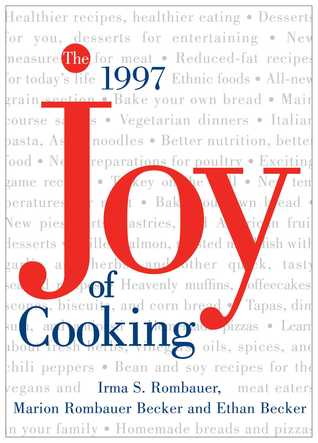
- The Joy of Cooking
Irma S. Rombauer
4.1 (149k) average on GoodreadsLifestyle



Enjoyed the summary?
A summary gives you the shape of the book. The book itself has the detail, the examples and the voice.
Find Once a Runner on AmazonAs an Amazon Associate, BookBrief earns from qualifying purchases. How we're funded