

Core Idea
- Difficulty
- Medium
- Read it if
- You are fascinated by the human brain, the mysteries of perception, and how neurological conditions can illuminate the essence of human identity and experience. Read this if you appreciate nuanced, empathetic explorations of science and the human spirit.
- Skip it if
- You prefer conventional medical textbooks with dry, clinical descriptions, or if you are uncomfortable with detailed accounts of neurological disorders and the associated human struggles. Skip if you seek a self-help guide or a quick-fix solution.
Key Takeaways from The Man Who Mistook His Wife for a Hat and Other Clinical Tales
The Brain's Creative Compensations
When one function is lost, the brain often finds extraordinary ways to adapt or reallocate resources.
Sacks shows that the brain is not fixed. It is dynamic and can adapt in surprising ways. Patients with neurological issues often develop new, sometimes strange, ways to live in their world. This is not just coping; it is the creation of new brain pathways and thought structures. For example, people who cannot recognize faces might become very good at recognizing voices, walks, or even a person's unique smell. This re-mapping challenges the old idea that brain function is in one place. It suggests a more fluid system where losing one ability can sometimes open up or improve others, leading to a unique 'neurological creativity.'
“For if a man would understand a science, he must know the things that are the subject of it.”
In the book: The case of Dr. P., 'The Man Who Mistook His Wife for a Hat,' who, despite profound visual agnosia, could still function as a music teacher and recognize people by their voices or musical qualities.
Try this: When faced with a significant personal limitation or challenge, explore unconventional solutions. Instead of fixating on the lost capacity, actively seek out and cultivate alternative strengths or sensory inputs to achieve your goals.
Related ideas: neuroplasticity, agnosia, compensation
The Peril of Pure Abstraction
Without the grounding of concrete experience and emotion, cognition can become meaningless.
Sacks argues that true understanding needs more than just simple categories. It needs a full range of sensory, emotional, and personal details. Dr. P., for example, could identify shapes and even break down faces into parts, but he did not grasp the 'wholeness' or 'meaning' of a face as a person. His world became a collection of abstract features, without the integrated experience that defines human perception. This suggests that thinking without emotional and experiential roots becomes dull and ineffective. It highlights the important role of embodied experience in creating a consistent reality.
“Dr. P. was a man of great cultivation and charm, but he had a profound disorder of visual cognition: he could not interpret what he saw.”
In the book: Dr. P.'s inability to recognize his own wife's face, instead perceiving her as a 'hat,' or confusing his foot for a shoe. He recognized visual patterns but failed to integrate them into meaningful wholes.
Try this: When learning or problem-solving, always strive to connect abstract concepts to concrete examples, personal experiences, and emotional resonance. Avoid purely theoretical approaches that lack practical or sensory anchors.
Related ideas: visual-agnosia, embodied-cognition, holistic-perception
The Self as a Narrative Construct
Our sense of self is deeply intertwined with our ability to construct and maintain a coherent life story.
Sacks explores the frightening experience of losing one's self due to a neurological disorder. He shows that identity is not fixed but is a changing, constantly updated story. Patients with memory disorders, like Jimmie G. ('The Last Hippie'), live in a constant present. They lose their own story and, with it, their sense of self. Without the ability to connect past, present, and future into a continuous story, the 'I' breaks into disconnected moments. This shows how important memory, continuity, and self-reflection are for keeping personal identity and feeling like a unique individual.
“If a man has lost a leg or an eye, he knows he has lost a leg or an eye; but if he has lost a self—himself—he cannot know it, because he is no longer there to know it.”
In the book: The case of Jimmie G., who suffered from severe anterograde amnesia, believing he was still a young man in the 1940s and unable to form new memories, thus losing his 'self' in the present.
Try this: Regularly reflect on your personal journey, journaling, or engaging in conversations that help you connect past experiences to your present identity and future aspirations. Actively maintain your personal narrative.
Related ideas: amnesia, identity-formation, autobiographical-memory
Beyond the Deficit: The Human Spirit
Despite profound neurological impairments, the human spirit often finds ways to assert itself and thrive.
Sacks always stresses looking past the diagnosis to see the whole person. Many of his patients, though severely disabled, show great strength, creativity, and a deep desire for connection and meaning. Autistic savants, for example, show amazing artistic or mathematical talents alongside their social challenges. This view challenges the medical model's tendency to reduce people to their illnesses. It highlights the human drive to find purpose and connection, even when the brain is greatly changed. It reminds us that 'being human' is more complex and lasting than the sum of our mental functions.
“The most important thing about the patient is that he is a human being, with a life, a history, a personality.”
In the book: The 'autistic artist' Stephen Wiltshire, who could draw entire cityscapes from memory after a single helicopter ride, demonstrating extraordinary talent despite his diagnosis.
Try this: When encountering individuals with disabilities, seek to understand their unique strengths, passions, and contributions, rather than focusing solely on their limitations. Foster environments that allow for diverse expressions of human potential.
Related ideas: savant-syndrome, human-resilience, holistic-care
The Uncanny Valley of Perception
Neurological disorders can reveal the fragility and constructed nature of 'normal' perception, creating unsettling realities.
Sacks's cases often take the reader into worlds where the familiar becomes terrifyingly strange. Patients experience phantom limbs, see inanimate objects as alive, or cannot tell the difference between dreams and reality. These experiences show that our 'normal' perception is not a direct reflection of reality. It is a complex, often unconscious, process of interpretation. When this process breaks down, the world can become a strange and scary place. This reveals the 'uncanny valley' where the almost-familiar is unsettling. This makes us question the solidity of our own sensory experiences and appreciate the complex system that creates our consistent reality.
“Our perception is not merely a reception of sensory data, but an active construction, a making of meaning.”
In the book: The patient who perceived his leg as a foreign, detached object and tried to throw it out of bed, illustrating a breakdown in body schema and proprioception.
Try this: Cultivate empathy by trying to imagine perspectives radically different from your own. Recognize that your perception of reality is subjective and constructed, leading to greater openness and less judgment of others' experiences.
Related ideas: phantom-limb, proprioception, reality-construction
Music as a Neurological Anchor
For some, music provides a unique pathway for organization, identity, and connection when other cognitive functions fail.
Sacks often notes music's power to get past neurological problems. For patients like Dr. P., who struggled with visual recognition, music gave a stable, meaningful way to understand and interact with the world. It could organize chaotic perceptions, bring back forgotten memories, and even restore a sense of self and control. This suggests that music, perhaps because it is not based on facts and engages many brain areas at once, offers a unique therapeutic path. It acts as a strong anchor, showing that even when logic and visual processing fail, the ability for musicality and emotional response can remain intact.
“Music, in some ways, is the most powerful of all the arts, for it touches the deepest parts of us.”
In the book: Dr. P.'s ability to recognize and respond to music, and even conduct imaginary orchestras, despite his severe visual agnosia. Also, patients with Parkinson's who can walk steadily only when listening to rhythmic music.
Try this: Incorporate music into daily routines, especially for those experiencing cognitive decline or disorientation. Use music to aid memory, improve mood, and facilitate social connection.
Related ideas: music-therapy, neurological-rehabilitation, cognition-and-music
The Tyranny of the Homunculus
Our internal maps of the body can become distorted or 'possessed,' leading to bizarre and uncontrollable movements.
Sacks introduces patients whose own bodies seem to betray them, controlled by an outside force or showing involuntary movements. This highlights the 'homunculus' – the brain's internal map of the body – and how its malfunction can lead to a sense of disownership or loss of motor control. From Tourette's syndrome, where people are forced to shout or make complex movements, to the woman whose leg felt foreign, these cases show the fragile line between self and body. They stress how much our sense of control is tied to the accurate working of these internal body maps, and the deep distress when they become 'tyrannical.'
“The brain builds up an internal map of the body, a 'homunculus,' but this map is not infallible.”
In the book: Cases of Tourette's syndrome, where individuals experience uncontrollable tics and vocalizations, feeling compelled by an internal force. Also, the woman with alien hand syndrome.
Try this: Cultivate mindfulness and body awareness practices (like yoga or meditation) to strengthen the connection between mind and body, enhancing your sense of control and reducing feelings of alienation from your physical self.
Related ideas: homunculus, tourettes-syndrome, alien-hand-syndrome, motor-control
The Power of Context and Meaning
Meaning-making is fundamental to human experience; without it, even sensory richness can be chaotic.
Sacks repeatedly shows that raw sensory data, no matter how clear, is not enough for a consistent reality. It is the brain's ability to give meaning, context, and story that turns sensation into perception, and perception into understanding. Patients who experience many sensory inputs without being able to organize or interpret them often live in overwhelming chaos. On the other hand, even with major sensory deficits, the human mind tries to create meaning. This highlights that our main drive is not just to perceive, but to understand, to create a story, and to find meaning in our experiences. It stresses that meaning is not found, but actively made.
“To be ourselves, we must have ourselves—possess, if need be re-possess, our life-stories. We must 're-collect' ourselves.”
In the book: The cases of patients who, after regaining sight, struggled immensely to make sense of the visual world, finding it a confusing, overwhelming jumble of colors and shapes rather than a coherent landscape.
Try this: Actively seek to understand the 'why' behind events and information. Don't just absorb facts; integrate them into a larger narrative or conceptual framework to enhance comprehension and retention.
Related ideas: meaning-making, sensory-integration, narrative-cognition
The Symbiotic Relationship of Mind and Brain
The book reveals the intimate and often unsettling interdependence between our physical brain and our subjective mind.
Sacks's clinical tales explore the mind-brain problem. He shows that changes in brain structure or function directly lead to big shifts in consciousness, personality, and perception. Yet, he avoids a purely reductionist view, always focusing on the patient's subjective experience, their struggle, and their unique ways of adapting. The book shows that while the mind comes from the brain, it is not simply the same thing. There is a dynamic interaction where the 'mind' (our subjective self, will, and story) can influence and even make up for 'brain' deficits. This relationship challenges us to consider both biological foundations and lived, conscious experience as equally important to understanding what it means to be human.
“The patient's experience is the ultimate criterion of truth.”
In the book: Across all cases, the direct correlation between specific brain lesions or dysfunctions and the resulting alterations in perception, memory, or personality, while simultaneously showcasing the individual's mental efforts to cope and adapt.
Try this: Adopt a holistic view of well-being, recognizing that mental health profoundly impacts physical health, and vice-versa. Prioritize practices that nurture both your cognitive functions and your emotional, subjective experience.
Related ideas: mind-body-connection, consciousness, neurology-and-philosophy
Compassion as a Diagnostic Tool
Understanding and empathy are crucial for effective diagnosis and treatment, transcending mere clinical observation.
Sacks's approach to his patients is deeply human. He does not just list symptoms; he tries to understand the lived experience of neurological disorder. He often spends hours observing, listening, and trying to enter his patients' unique worlds. This compassionate curiosity often leads to insights that purely objective clinical assessments might miss. By validating their subjective realities, however strange, he not only offers better care but also helps his patients feel seen and understood. This shows that true diagnostic power comes not just from scientific accuracy, but from empathy, recognizing the individual's humanity and their unique struggle within their changed neurological state.
“To restore the afflicted, we must go beyond the mere diagnosis of disease and understand the suffering human being.”
In the book: Sacks's detailed, often personal, interactions with his patients, allowing them to tell their stories in their own words, rather than simply presenting clinical data. His willingness to observe them in their natural environments, not just in a clinic.
Try this: In any professional or personal interaction, prioritize active listening and empathetic understanding. Seek to grasp the subjective experience of the other person before offering solutions or judgments.
Related ideas: medical-humanities, patient-centered-care, empathy-in-medicine
The Man Who Mistook His Wife for a Hat and Other Clinical Tales Quotes
“To be ourselves we must have ourselves—possess, if need be re-possess, our life, body, and mind.”
“The most important thing for me is to see my patients in their own world, in their own context.”
“We have to be able to find the person in the patient.”
“A man may lose his leg or his eyes and still be a man, but he cannot lose his person.”
“The patient, in this case, had not only lost the world but had lost himself.”
“He saw nothing but features, and features that were constantly changing, as the expressions of people changed.”
“There is no way to predict the full range of human potential, or the full range of human pathology.”
“If a man has lost a leg or an eye, he knows he has lost a leg or an eye; but if he has lost a self—himself—he cannot know it, because he is no longer there to know it.”
“The brain is an organ of immense complexity and subtlety, and its disorders are equally complex and subtle.”
“I have been called a 'naturalist of the soul,' and I like to think of myself as such.”
“We are not dealing with machines, but with living beings, with unique individuals.”
“Neurology, as a science, should be concerned not only with the diseases of the brain but also with the diseases of the person.”
“Life is always a struggle, and the struggle itself is a joy.”
“He had no sense of the concrete, of the actual; he inhabited a world of elegant, but abstract, schemata.”
Quiz
10 questions on the main ideas. Each answer comes with a short explanation.
Question 1
In the case of Dr. P., 'The Man Who Mistook His Wife for a Hat,' what was his primary neurological deficit?
- Prosopagnosia (inability to recognize faces)
- Visual agnosia (inability to interpret visual information despite intact vision)
- Aphasia (loss of ability to understand or express speech)
- Amnesia (memory loss)
Show answer
B. Visual agnosia (inability to interpret visual information despite intact vision) Dr. P. suffered from visual agnosia, specifically an inability to perceive things as wholes, instead seeing only isolated features. This led to his famous mistake of trying to 'hat' his wife's head.
Question 2
What common theme does Sacks emphasize regarding patients with neurological disorders, particularly those with profound deficits?
- The importance of surgical intervention as a primary cure.
- The remarkable adaptability and resilience of the human spirit.
- The inevitable decline in all cognitive functions.
- The purely mechanical nature of brain function.
Show answer
B. The remarkable adaptability and resilience of the human spirit. Sacks consistently highlights how patients find ways to adapt, often developing new strategies or utilizing preserved faculties, even in the face of severe neurological impairments, showcasing human resilience.
Question 3
In the chapter 'The Disembodied Lady,' what was Christina's primary neurological condition?
- Complete paralysis of her limbs.
- Loss of proprioception (sense of body position and movement).
- Severe visual hallucinations.
- An inability to recognize her own reflection.
Show answer
B. Loss of proprioception (sense of body position and movement). Christina lost her proprioception, the 'sixth sense' that tells us where our body parts are in space without looking. This left her feeling 'disembodied' and unable to move or maintain posture without constant visual feedback.
Question 4
What is the primary argument Sacks makes against a purely reductionist view of the brain and neurological disorders?
- That all neurological disorders are purely psychological in origin.
- That understanding the 'human being' behind the 'disease' is crucial, as the patient actively constructs a new self in response to the disorder.
- That pharmaceutical interventions are always superior to other forms of treatment.
- That the brain is an entirely static organ incapable of change.
Show answer
B. That understanding the 'human being' behind the 'disease' is crucial, as the patient actively constructs a new self in response to the disorder. Sacks consistently emphasizes the individual's unique experience and adaptation to their condition, arguing that the patient is not just a collection of symptoms but a person actively constructing meaning and a new identity amidst their neurological challenges.
Question 5
In the case of the 'Lost Mariner,' Jimmie G., what was his specific form of amnesia?
- Retrograde amnesia, forgetting events before his illness.
- Anterograde amnesia, an inability to form new memories after a certain point.
- Transient global amnesia, temporary memory loss.
- Childhood amnesia, forgetting early life events.
Show answer
B. Anterograde amnesia, an inability to form new memories after a certain point. Jimmie G. suffered from severe anterograde amnesia, meaning he was stuck in 1945 and could not form any new enduring memories, constantly forgetting what had just happened.
Question 6
How did Sacks primarily help patients like Jimmie G., who suffered from profound memory loss, find meaning or connection?
- Through constant repetition of factual information.
- By encouraging engagement in activities that tapped into preserved emotional, artistic, or spiritual capacities.
- By prescribing high doses of memory-enhancing drugs.
- By focusing solely on their past memories from before their illness.
Show answer
B. By encouraging engagement in activities that tapped into preserved emotional, artistic, or spiritual capacities. Sacks found that engaging Jimmie and others in activities like music, church, or gardening, which accessed deeper, non-declarative memory systems and emotional responses, allowed them to experience a sense of self and meaning, even without forming new explicit memories.
Question 7
What does Sacks imply about the nature of 'normalcy' by presenting cases of individuals with extraordinary deficits and sometimes extraordinary gifts?
- That 'normalcy' is an objective, scientifically measurable state.
- That 'normalcy' is a fluid and often arbitrary concept, and that neurological differences can reveal fundamental aspects of human experience.
- That individuals with neurological disorders can never truly be integrated into society.
- That the brain is designed to always compensate perfectly for any damage.
Show answer
B. That 'normalcy' is a fluid and often arbitrary concept, and that neurological differences can reveal fundamental aspects of human experience. Sacks's cases challenge the notion of a single 'normal,' showing how diverse neurological organizations lead to different ways of experiencing the world, and that these differences can illuminate the complexities of being human.
Question 8
The concept of 'eidetic imagery' (photographic memory), particularly in patients like the autistic twins John and Michael, highlights what about certain neurological conditions?
- That all autistic individuals possess extraordinary mental calculation abilities.
- The potential for highly specific, isolated intellectual or artistic talents ('splinter skills') to coexist with significant developmental challenges.
- That such abilities are always a result of intense, deliberate practice.
- That these abilities are easily transferable to other cognitive domains.
Show answer
B. The potential for highly specific, isolated intellectual or artistic talents ('splinter skills') to coexist with significant developmental challenges. The twins demonstrated incredible, almost automatic, numerical and calendrical abilities, which Sacks termed 'idiot savant' phenomena (now more commonly 'savant syndrome'), illustrating how profound deficits can coexist with astonishing, specific talents.
Question 9
What is the overarching ethical stance Sacks adopts in his clinical tales?
- To objectify patients as mere examples of neurological pathology.
- To emphasize the humanity, individuality, and subjective experience of each patient, viewing them as unique 'case histories' rather than just 'cases.'
- To advocate for the complete isolation of patients with severe disorders.
- To prioritize statistical data and group studies over individual narratives.
Show answer
B. To emphasize the humanity, individuality, and subjective experience of each patient, viewing them as unique 'case histories' rather than just 'cases.' Sacks's work is characterized by his profound respect for the individual, striving to understand each patient's unique world, their struggles, and their adaptations, rather than reducing them to a diagnostic label.
Question 10
In the chapter 'Reminiscence,' patients suffering from temporal lobe epilepsy sometimes experienced vivid, involuntary musical hallucinations. What did Sacks conclude about the nature of these experiences?
- They were purely random sounds with no personal significance.
- They were often highly organized, personally meaningful, and sometimes triggered by specific stimuli, suggesting the brain's capacity to 're-play' vivid memories.
- They were always a symptom of psychosis and required immediate antipsychotic medication.
- They were only experienced by patients who were professional musicians.
Show answer
B. They were often highly organized, personally meaningful, and sometimes triggered by specific stimuli, suggesting the brain's capacity to 're-play' vivid memories. Sacks observed that these musical 'seizures' were not random noise but often perfectly reproduced pieces of music, frequently from the patient's past, suggesting an involuntary activation of memory circuits in the temporal lobes.
The Man Who Mistook His Wife for a Hat and Other Clinical Tales FAQ
What is 'The Man Who Mistook His Wife for a Hat' about?
The book is a collection of case studies by neurologist Oliver Sacks, detailing the experiences of patients with various neurological disorders. It explores how these conditions affect perception, identity, memory, and the very essence of what it means to be human.
Does Dr. Sacks offer cures for the conditions described in the book?
While Dr. Sacks meticulously documents the symptoms and impacts of these neurological disorders, the book primarily focuses on understanding the human experience within these conditions rather than offering definitive cures. He often explores adaptations and unique ways patients navigate their altered realities.
What is prosopagnosia, as illustrated in the title story?
Prosopagnosia, or face blindness, is a neurological condition where a person is unable to recognize faces, even those of close friends or family. In the title story, Dr. P mistook his wife for a hat due to a profound inability to perceive and interpret visual information correctly.
How is this book different from a standard medical textbook?
Unlike a standard medical textbook that focuses on clinical diagnoses and treatments, Sacks's book delves into the subjective, human experience of neurological illness. It uses narrative storytelling to illuminate the inner lives and adaptations of his patients, making complex conditions accessible and deeply moving.
What kind of neurological disorders are discussed in the book?
The book covers a wide range of neurological disorders, including visual agnosia, Tourette's syndrome, phantom limb syndrome, autism with savant abilities, and various forms of amnesia and memory loss. Each case highlights a unique aspect of brain function and dysfunction.
Is 'The Man Who Mistook His Wife for a Hat' suitable for non-medical readers?
Absolutely. Dr. Sacks's writing is highly accessible and engaging, making complex neurological concepts understandable for a general audience. The book's focus on human stories and experiences resonates with anyone interested in psychology, the brain, and what it means to be human.
Does the book explore the concept of a 'lost self'?
Yes, a central theme of the book is the profound impact of neurological disorders on a person's sense of self and identity. Sacks explores cases where individuals lose the ability to recognize aspects of themselves or their world, posing deep questions about what constitutes personal identity.
How does Oliver Sacks approach his patients?
Sacks approaches his patients with deep empathy, curiosity, and a profound respect for their individual experiences. He views them not merely as collections of symptoms but as unique individuals navigating extraordinary circumstances, seeking to understand their subjective realities.
About the author
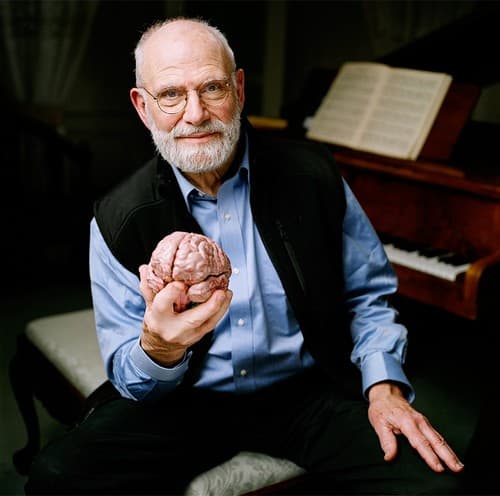
Oliver Sacks was a British neurologist and author known for his explorations of the human brain and its complexities. His notable works include "The Man Who Mistook His Wife for a Hat and Other Clinical Tales," "Awakenings," and "Uncle Tungsten," which blend medical case studies with personal narrative. Sacks's writing often reflects on the intersection of neurology and human experience.
Similar books
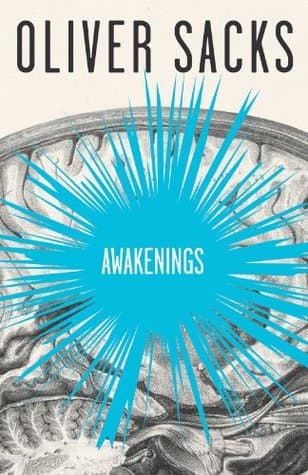
- Awakenings
Oliver Sacks
4.1 (11k) average on GoodreadsBiographyWhile both books by Sacks explore neurological conditions with a humanistic lens, Awakenings (1973) focuses on a specific cohort of post-encephalitic patients and their profound, albeit temporary, reawakening with L-DOPA. The Man Who Mistook His Wife for a Hat is broader in scope, presenting a diverse collection of neurological tales that explore various deficits and compensations, offering a more comprehensive philosophical inquiry into the nature of self and perception. Awakenings is more concentrated on the efficacy and implications of a specific drug intervention, whereas Hat delves into the inherent adaptations of the brain itself.
- The Perks of Being a Wallflower
Stephen Chbosky
4.2 (1.3M) average on GoodreadsPsychologyThrough letters, a shy high school freshman learns to navigate first love, trauma, and self-discovery, stepping off the sidelines and into life.
- Eleanor Oliphant Is Completely Fine
Gail Honeyman
4.3 (708k) average on GoodreadsLiterary FictionA lonely woman's structured life changes when an IT guy and an elderly man help her learn to open her heart.
- One Flew Over the Cuckoo's Nest
Ken Kesey
4.2 (631k) average on GoodreadsPsychologyIn a mind-bending asylum, the boisterous Randle McMurphy wages a defiant war against the tyrannical Nurse Ratched, inspiring his fellow inmates, including the seemingly catatonic Chief Bromden, to reclaim their lost humanity.
- The Bell Jar
Sylvia Plath
4.0 (591k) average on GoodreadsPsychologyIn the suffocating grip of 1950s expectations, a brilliant young woman's descent into mental illness is painted with such vivid, internal clarity that her 'insanity' feels terrifyingly rational and inevitable.
- The Subtle Art of Not Giving a F*ck: A Counterintuitive Approach to Living a Good Life
Mark Manson
3.9 (530k) average on GoodreadsBusinessEmbrace your flaws and stomach life's lemons, because true happiness isn't about relentless positivity, but about choosing what truly matters to give a f*ck about.





Enjoyed the summary?
A summary gives you the shape of the book. The book itself has the detail, the examples and the voice.
Find The Man Who Mistook His Wife for a Hat and Other Clinical Tales on AmazonAs an Amazon Associate, BookBrief earns from qualifying purchases. How we're funded