
Core Idea
- Difficulty
- Easy
- Read it if
- You are a writer, artist, or creative professional seeking inspiration on discipline and endurance, or a runner interested in the philosophical and psychological dimensions of the sport.
- Skip it if
- You are looking for a traditional running guide with training tips, or a deep dive into Murakami's fiction writing process.
Key Takeaways from What I Talk About When I Talk About Running
The Genesis of a Writer-Runner
How a decision to write led directly to a commitment to running.
Murakami's running journey was not a separate hobby but part of his shift to being a full-time writer. After closing his jazz bar, Peter Cat, to write, he realized that a novelist's sedentary life needed a physical balance. Running became the way to stay fit, which he quickly saw as essential for mental stamina and consistent creative work. This link between physical effort and intellectual work is a main theme, showing how a planned lifestyle change can support professional success in surprising ways. His decision was less about becoming a runner and more about becoming a sustainable writer, understanding that body and mind are connected in creative work.
“The most important thing we ever learn at school is the fact that the most important things can't be learned at school.”
In the book: Murakami recounts closing his jazz bar, Peter Cat, in 1981 and deciding to take up running shortly after, specifically to stay in shape for the demanding life of a writer. He notes he bought a tracksuit and running shoes and started running every day, initially just to maintain his weight.
Try this: Identify the physical demands of your chosen profession or passion. Proactively integrate a complementary physical discipline that supports your mental and creative longevity. Don't view exercise as separate from your work, but as an essential component of sustained high performance.
Related ideas: creative-longevity, mind-body-connection, lifestyle-design
Discipline as a Creative Catalyst
The repetitive nature of running mirrors and enhances the disciplined craft of writing.
Murakami suggests that the discipline needed for long-distance running — daily commitment, pushing through discomfort, steady progress — directly applies to writing. Both activities demand focus, tolerance for routine, and a commitment to showing up every day, regardless of inspiration. He believes that the physical endurance built from running becomes mental endurance for the hard work of writing novels. Running becomes a metaphor and a training ground for the solitary, often tough, work of a writer, building the mental strength needed to complete long projects and overcome creative blocks.
“Pain is inevitable. Suffering is optional. Say you're running and you think, 'I can't take this anymore.' But what you mean is, 'I can't take this *now*.'”
In the book: He describes his daily routine of running and writing, noting that his ability to endure long runs directly correlates with his ability to sit at a desk for extended periods and produce consistent prose. He often sets daily word counts or page goals for writing, much like setting mileage goals for running.
Try this: Cultivate a daily ritual that demands consistent effort, even when motivation wanes. Whether it's writing, coding, or learning an instrument, treat it like a marathon: focus on showing up consistently and pushing through the 'inevitable pain' to reach the finish line.
Related ideas: creative-discipline, endurance, daily-rituals
The Solitude of Self-Improvement
Running offers a profound space for introspection and self-dialogue, vital for a writer.
Distance running is a solitary activity, and Murakami uses this solitude as a key part of his creative process. The repetitive rhythm of running, with no outside distractions, creates a unique mental space for thought, problem-solving, and developing ideas. This is not just about clearing the mind, but actively engaging in a meditative thought process that allows stories to unfold and characters to grow. For a writer, this uninterrupted internal dialogue is very valuable, acting as a mental workshop where stories can be refined and complex ideas untangled, away from the demands of the outside world.
“I'm not a runner who writes, but a writer who runs.”
In the book: Murakami describes his long runs as a time for 'thinking' or 'not thinking,' allowing his mind to wander freely, processing ideas for his novels or simply observing his own thoughts and physical sensations. He notes that many of his ideas solidify during these solitary excursions.
Try this: Schedule dedicated, uninterrupted time for solitary activities that allow for deep reflection, whether it's long walks, meditation, or a focused hobby. Use this time not just for relaxation, but as an active space for creative problem-solving and self-discovery.
Related ideas: introspection, solitary-pursuits, creative-incubation
Embracing the Mundane, Finding the Profound
The beauty of running lies in its unglamorous, consistent effort.
Murakami simplifies both running and writing, showing them as consistent, often routine, efforts rather than bursts of inspiration. He openly discusses the discomfort, boredom, and ordinariness of daily training. Yet, in this commitment to the unglamorous, he finds deep satisfaction and meaning. The book promotes the idea that true achievement comes from showing up consistently and doing the work, rather than waiting for grand insights. This view counters romanticized ideas of creative genius, emphasizing the quiet value of steady effort over occasional brilliance.
“I'm not a great runner, but I'm a good one. I'm not a great writer, but I'm a good one. I'm not a great anything, but I'm good at staying in the race.”
In the book: He details his training logs, including the specific mileage, times, and often the sheer lack of excitement on many runs. He recounts the repetitive nature of training for marathons and triathlons, highlighting the consistent, unspectacular effort required over months and years.
Try this: Shift your focus from striving for 'peak' moments to valuing consistent, incremental effort. Find joy and meaning in the daily grind of your work or hobbies, understanding that true mastery is built brick by brick, not in a single leap.
Related ideas: consistent-effort, daily-practice, anti-glamour
Beyond Talent: The Primacy of Endurance
Talent is secondary to the capacity for sustained effort in both art and sport.
Murakami admits he does not believe he is exceptionally talented as either a runner or a writer, especially compared to prodigies. Instead, he highlights endurance and concentration as the most important qualities. He argues that while talent might offer an initial advantage, it is the ability to keep going, to persist through challenges, and to stay focused over long periods that ultimately leads to major accomplishments. This perspective is empowering, suggesting that sustained effort and mental toughness are more critical than natural gifts, making success possible for anyone willing to put in the work.
“The most important quality for a novelist is the ability to concentrate for long periods of time. The second most important quality is the ability to endure.”
In the book: He frequently compares himself to naturally faster runners and more 'gifted' writers, concluding that his success stems from his ability to simply keep going, day after day, year after year. He describes his own physical limitations and how he overcomes them through sheer willpower and consistent training.
Try this: Reframe your understanding of success: prioritize building endurance and concentration in your chosen field over chasing elusive 'talent.' Focus on developing habits that allow you to consistently show up and persist, even when the work is challenging.
Related ideas: perseverance, mental-toughness, sustained-effort
The Body as a Philosophical Tool
Physical exertion offers a unique pathway to understanding the self and the world.
For Murakami, running is more than just exercise; it is a philosophical pursuit. The physical sensations of pain, tiredness, and excitement become points for self-analysis, offering insights into his limits, motivations, and the nature of existence. Pushing his body to its limits in marathons and triathlons forces him into a direct confrontation with himself, removing pretenses and revealing core truths. This engagement with the physical world through sport allows him to explore themes of resilience, impermanence, and the human condition, which then influence his literary work, making it deeper and more authentic.
“Sometimes in my more philosophical moments I think that running is a kind of metaphor for life.”
In the book: He describes specific moments during races where he grapples with extreme physical discomfort, often entering a meditative state or having profound realizations about life and his writing. The Athens-Marathon run, in particular, is presented as a deeply introspective and physically challenging experience.
Try this: Engage in physical activities that push your boundaries, not just for fitness, but as a means of self-discovery. Pay attention to the mental and emotional landscape that emerges during these challenges, using them as opportunities for introspection and personal growth.
Related ideas: embodied-cognition, self-reflection, existentialism
Age, Decline, and Acceptance
Coming to terms with the inevitable ebb and flow of physical and creative abilities.
Murakami reflects on aging through his running performance. He openly discusses how his race times improved in his fifties, only to eventually decline. This is not shown as a tragedy, but as a natural, unavoidable process. His acceptance of physical decline mirrors a mature understanding of creative evolution: while raw speed or output might lessen, depth, wisdom, and a different kind of strength can emerge. The book encourages a view where value is not just tied to peak performance, but to the ongoing process, sustained effort, and lasting passion for the activity itself, regardless of objective measures.
“For me, running is a way of life, not a sport.”
In the book: He meticulously tracks his marathon and triathlon times over decades, noting the specific years when his performance peaked and subsequently began to fall. He reflects on these changes without bitterness, but with a philosophical acceptance of the body's natural trajectory.
Try this: Embrace the natural progression of age and skill development in your own pursuits. Focus on the intrinsic joy and process of your activities, rather than solely on external metrics of performance, recognizing that different stages of life bring different strengths and satisfactions.
Related ideas: aging-gracefully, acceptance, lifelong-learning
The Writer's Physical Foundation
Physical health is not a luxury for a writer, but a prerequisite for endurance.
Murakami argues for the necessity of physical fitness for writers. He sees a direct link between his physical stamina and his ability to maintain the demanding, solitary work of writing novels. Without the physical strength and mental clarity from running, he believes his creative output would significantly decrease. This challenges the romanticized image of the struggling, unhealthy artist, suggesting instead that a strong physical foundation is essential for long-term creative productivity. It emphasizes that caring for the body is a basic act of self-care that directly supports intellectual and creative work.
“If I stop running, I'll stop writing.”
In the book: He explicitly states that his running routine is not just for health but for the specific purpose of maintaining the physical and mental stamina required to write novels. He connects periods of intense writing directly to his consistent training regimen.
Try this: Prioritize physical health as a foundational element of your professional and creative life. Identify and commit to a regular exercise routine that supports your specific demands, recognizing it as an investment in your mental acuity and long-term productivity.
Related ideas: writer-health, physical-wellbeing, creative-productivity
Finding Your Own Pace
Comparison is a distraction; focus on your personal journey and unique rhythm.
Throughout the memoir, Murakami stresses the importance of finding and keeping one's 'own pace' in both running and writing. He often sees faster runners and acknowledges their speed without envy, understanding that his journey is different. This philosophy extends to his creative process, where he avoids comparing his work or style to other writers. This focus on internal measures and self-awareness, rather than outside approval or competition, is key for sustained effort and genuine creative expression. It is a strong lesson in self-acceptance and resilience against the common pressure to conform or compete.
“The most important thing for me in running is to keep my own pace. Not too fast, not too slow. Just my own pace. And in writing, too, it's important to keep your own pace.”
In the book: He often describes running alongside younger, faster runners during his training and races, noting their speed but remaining focused on his own consistent effort and internal rhythm. He applies this same principle to his writing, emphasizing his unique voice and process.
Try this: In your pursuits, define success based on your personal goals and progress, rather than comparing yourself to others. Cultivate an awareness of your own natural rhythm and working style, and build a routine that honors it, allowing for authentic growth and expression.
Related ideas: self-acceptance, personal-growth, anti-comparison
The Imperative of Focus and Elimination
To achieve depth, one must choose what to exclude from life.
Murakami's decision to leave his successful jazz bar to become a full-time writer, and then to embrace the disciplined, solitary life of a runner, highlights a key principle: major achievement often requires significant elimination. To truly excel, one must prioritize and remove distractions, even enjoyable or profitable ones. His story shows that focus is not just about what you do, but, importantly, about what you don't do. This deliberate narrowing of his life allowed him to put all his energy into his chosen crafts, suggesting that mastery demands not just adding more, but strategically removing elements that dilute focus.
“What I talk about when I talk about running is what I talk about when I talk about writing.”
In the book: He explicitly details the decision to sell his jazz bar, Peter Cat, a successful venture, to dedicate himself entirely to writing. This was a conscious act of 'elimination' to create space and focus for his true passion.
Try this: Identify areas in your life where you might be spread too thin. Be willing to make difficult choices to eliminate commitments, distractions, or even successful but ultimately unfulfilling ventures, to create space for your highest priorities and deepest passions.
Related ideas: prioritization, focus, strategic-elimination
What I Talk About When I Talk About Running Quotes
“I’m not a human being, I’m a thinking reed.”
“Pain is inevitable. Suffering is optional. Say you're running and you think, 'I can't take this anymore.' Your body is saying, 'No, but I can.'”
“I don't think it's an exaggeration to say that my physical stamina has been a great help in the writing life.”
“All I do is keep on running in my own cozy, homemade void, my own nostalgic solitude. And at some point the void and solitude start to feel like an oddly comfortable home.”
“The most important thing we learn at school is the fact that the most important things can't be learned at school.”
“The reason I started running was simple. I wanted to be able to write novels.”
“No matter how mundane some action might appear, keeping at it day after day, year after year, can give it a special glow.”
“Basically, I train my body every day, and I also train my mind every day. It's like a dual training.”
“Even when I'm writing fiction, I'm writing about myself. The only difference is that when I write fiction, I'm writing about myself in disguise.”
“What does it take to get to the top? In the end, it all comes down to the same thing: strong will, and a lot of luck.”
“For me, running is both exercise and a metaphor. Running day after day, piling up the races, I feel like I'm gradually peeling off one self after another and approaching the true core.”
“If you're going to while away the years, it's a better thing to do it running, and thinking, than eating and drinking.”
“As I run, I don't think about anything in particular. I just run.”
“I'm not a natural-born runner. I don't have the physique or the talent for it. But I've learned that if you keep going, you can get better.”
Quiz
10 questions on the main ideas. Each answer comes with a short explanation.
Question 1
What significant life change prompted Murakami to start running regularly?
- He moved to a new city with better running trails.
- He sold his jazz bar to become a full-time writer.
- His doctor recommended it for health reasons.
- He was inspired by a friend who was a marathon runner.
Show answer
B. He sold his jazz bar to become a full-time writer. Murakami started running in 1982, the same year he sold his jazz bar to dedicate himself entirely to writing. He needed a way to keep fit and manage the sedentary lifestyle of a writer.
Question 2
Which of the following events did Murakami complete a year after he started running?
- The Boston Marathon
- A solo course from Athens to Marathon
- His first triathlon
- The Tokyo Marathon
Show answer
B. A solo course from Athens to Marathon A year after he began running, Murakami completed a challenging solo course from Athens to Marathon, a significant early achievement in his running journey.
Question 3
What primary connection does Murakami draw between running and writing in his memoir?
- Running provides material for his fictional plots.
- Running helps him maintain the discipline and stamina required for sustained creative work.
- He often plans his novel's structure while running.
- Running introduces him to interesting characters for his stories.
Show answer
B. Running helps him maintain the discipline and stamina required for sustained creative work. Murakami emphasizes that running provides him with the physical and mental stamina, discipline, and focus necessary to endure the solitary and demanding nature of writing long novels.
Question 4
What specific marathon does the memoir largely cover in terms of preparation?
- The Boston Marathon
- The London Marathon
- The 2005 New York City Marathon
- The Honolulu Marathon
Show answer
C. The 2005 New York City Marathon The memoir details Murakami's four-month preparation for the 2005 New York City Marathon, offering a structured look into his training regimen.
Question 5
Murakami frequently uses the analogy of a 'blank slate' or 'empty vessel' in relation to running and writing. What does this concept primarily represent for him?
- The need to clear his mind of external distractions before a race or writing session.
- The feeling of exhaustion after a long run.
- The initial lack of ideas before starting a new novel.
- His desire to forget past failures and start anew.
Show answer
A. The need to clear his mind of external distractions before a race or writing session. For Murakami, clearing his mind to an 'empty vessel' state is crucial for both running and writing. It allows him to focus purely on the task at hand, whether it's the rhythm of his steps or the flow of his words, without being burdened by extraneous thoughts.
Question 6
What does Murakami describe as a 'eureka moment' related to his decision to become a writer?
- While listening to a specific jazz record in his bar.
- During a baseball game, watching a ball fly into the outfield.
- After completing his first solo long-distance run.
- Reading a particularly inspiring novel by another author.
Show answer
B. During a baseball game, watching a ball fly into the outfield. Murakami recounts the moment he decided to try writing a novel while watching a baseball game, specifically when Dave Hilton hit a double. He felt a sudden, clear impulse to write.
Question 7
Murakami often reflects on the physical changes and challenges of aging as a runner. What particular observation does he make about his race times after turning fifty?
- They consistently improved due to increased experience.
- They remained surprisingly consistent for several years.
- They improved and then fell back, reflecting the natural progression of aging.
- He stopped caring about his times and focused solely on completion.
Show answer
C. They improved and then fell back, reflecting the natural progression of aging. The memoir notes his experience, after fifty, of seeing his race times improve for a period before inevitably falling back, a realistic reflection on the impact of age on athletic performance.
Question 8
Beyond physical fitness, what is a key psychological benefit Murakami attributes to running, particularly for a writer?
- It consistently provides new ideas for plots and characters.
- It helps him confront and accept his limitations and weaknesses.
- It offers an escape from the solitude of writing.
- It connects him with a community of like-minded individuals.
Show answer
B. It helps him confront and accept his limitations and weaknesses. Murakami often reflects on how running, especially during difficult moments in a race, forces him to confront his mental and physical limits, building resilience and a deeper understanding of himself, which he finds invaluable for the solitary and challenging work of writing.
Question 9
Murakami describes his writing process as similar to a physical activity. Which of the following best captures this analogy?
- It's like playing a musical instrument, requiring rhythm and harmony.
- It's like digging a deep well, requiring sustained effort and patience to reach the source.
- It's like constructing a complex building, needing careful planning and diverse materials.
- It's like sailing a boat, adapting to changing winds and currents.
Show answer
B. It's like digging a deep well, requiring sustained effort and patience to reach the source. Murakami frequently compares the act of writing a long novel to digging a deep well. It requires consistent, solitary effort, going deeper and deeper to find the 'source' of the story, much like a long-distance runner must consistently push through physical and mental barriers.
Question 10
When Murakami mentions sharing a running course with an Olympian in Tokyo's Jingu Gaien gardens, what is the underlying point he subtly conveys about his own running?
- His ambition to compete at an Olympic level.
- The humbling reality of his own amateur status compared to elite athletes.
- His belief that anyone can achieve greatness with enough training.
- His desire to learn specific training techniques from professionals.
Show answer
B. The humbling reality of his own amateur status compared to elite athletes. By mentioning sharing a course with an Olympian and also being outpaced by young women on the Charles River, Murakami subtly highlights his grounded, realistic perspective on his own running. He acknowledges his limitations and the vast difference between his amateur pursuit and professional athleticism, emphasizing the personal, introspective value of running over competitive achievement.
What I Talk About When I Talk About Running FAQ
What is 'What I Talk About When I Talk About Running' about?
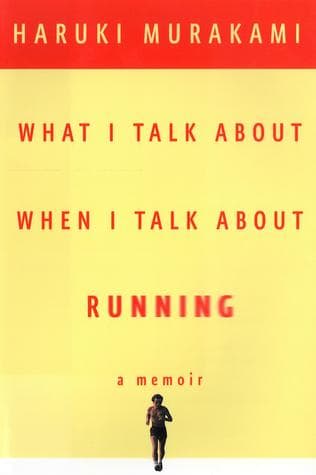
This book is a memoir by acclaimed author Haruki Murakami, reflecting on his relationship with long-distance running and how it has influenced his writing career and personal life since he began the sport in 1982.
Does running improve writing, as suggested by Murakami?
Murakami strongly suggests that running cultivates the discipline, endurance, and mental fortitude essential for the solitary and demanding work of writing. He views it as a crucial parallel practice that underpins his creative output.
What is the 'eureka moment' Murakami describes in the book?
The book recounts the pivotal moment when Murakami decided to become a writer, an insight that emerged during a baseball game. This decision marked a significant turning point in his life, leading him to sell his jazz bar and pursue writing full-time.
Is this book only for runners or Murakami fans?
While it appeals to both runners and Murakami's existing readership, the book's universal themes of discipline, aging, creativity, and self-reflection make it accessible and insightful for anyone interested in personal growth and the creative process.
How does Murakami's approach to memoirs differ from other authors?
Murakami's memoir is distinct in its blend of training log, travelogue, and philosophical reminiscence, using the lens of running to explore deeper insights into his life and writing process, rather than a straightforward chronological autobiography.
What kind of races does Murakami discuss in the book?
Murakami details his experiences in various long-distance events, including marathons, such as his preparation for the 2005 New York City Marathon, and triathlons, reflecting on both his triumphs and disappointments.
Does the book offer practical running advice?
While not a running guide, the book provides insights into Murakami's personal training routines, mental strategies for endurance, and his philosophy on consistency, which can be inspiring for runners.
What role do music and LPs play in Murakami's life as depicted in the memoir?
Murakami expresses his passion for vintage LPs and music, which serve as a backdrop and source of inspiration in his life and writing, often intertwined with his reflections on running and memory.
How does Murakami handle the topic of aging in relation to running?
He candidly discusses the experience of aging, observing his race times improve initially after fifty, and then inevitably decline. This provides a poignant reflection on physical limits and the passage of time.
About the author

Haruki Murakami is a Japanese writer. His novels, essays, and short stories have been bestsellers in Japan and internationally, with his work translated into 50 languages and having sold millions of copies outside Japan. He has received numerous awards for his work, including the Gunzo Prize for New Writers, the World Fantasy Award, the Frank O'Connor International Short Story Award, the Franz Kafka Prize, and the Jerusalem Prize.
Similar books
- On Writing: A Memoir of the Craft
Stephen King
4.3 (222k) average on GoodreadsBiographyExplores the intersection of a writer's life and their craft, emphasizing discipline and routine.
- Zen and the Art of Motorcycle Maintenance: An Inquiry Into Values
Robert M. Pirsig
3.8 (200k) average on GoodreadsPsychologyA philosophical journey intertwining a physical quest with deeper reflections on quality, discipline, and self-discovery.
- The Diary of a Young Girl
Anne Frank
4.2 (2.7M) average on GoodreadsBiographyDuring the Nazi occupation, a teenage girl's diary, written from a secret annex, shares observations on humanity, hope, and the wait for freedom.
- Eat, Pray, Love
Elizabeth Gilbert
3.6 (1.5M) average on GoodreadsLifestyleA heartbroken writer leaves her conventional life for a year-long global search for pleasure in Italy, spiritual devotion in India, and unexpected love and balance in Bali.
- Night
Elie Wiesel
4.3 (970k) average on GoodreadsBiographyIn the darkness of Auschwitz and Buchenwald, a teenage Elie Wiesel faces the extermination of his family, the loss of his faith, and the lasting scars of humanity's deepest cruelty.
- Steve Jobs
Walter Isaacson
4.1 (957k) average on GoodreadsBusinessSteve Jobs was a visionary who fused creativity and technology to revolutionize six industries and shape our digital world.





Enjoyed the summary?
A summary gives you the shape of the book. The book itself has the detail, the examples and the voice.
Find What I Talk About When I Talk About Running on AmazonAs an Amazon Associate, BookBrief earns from qualifying purchases. How we're funded