
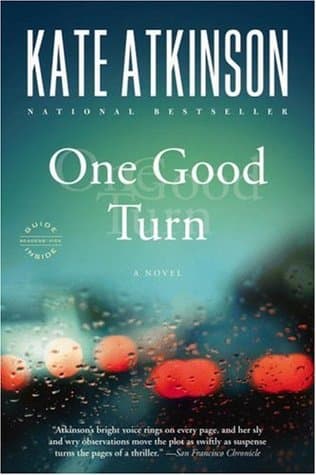
Synopsis
Covers the whole plot, including the ending.
- Difficulty
- Medium
- Pacing
- Variable
- Mood
- Intriguing, Suspenseful, Darkly Humorous, Interconnected
- Read it if
- You enjoy complex, character-driven mysteries with multiple interwoven plotlines and a touch of dark humor, set against a vibrant backdrop.
- Skip it if
- You prefer straightforward, linear narratives without many subplots or a large cast of characters, or if you dislike stories with themes of human trafficking.
One Good Turn Plot Summary
Covers the whole plot, including the ending.
The Road Rage Incident at the Edinburgh Festival
During the Edinburgh Festival, Jackson Brodie, a former private detective, is at a children's show with his son, Nathan, when he sees a road rage incident. Martin Canning, a writer, violently assaults a woman named Graham, who cut him off in traffic. Jackson steps in, pulling Martin away and becoming involved in the increasing chaos. This event also brings in Louise Monroe, an off-duty detective inspector, and Joanna Hunter, a wealthy woman whose dog is killed in the incident. The event starts a chain of connections between these individuals and others, all set against the crowded festival.
Martin's Descent and the Arrival of Gloria
After the road rage incident, Martin Canning's life begins to fall apart. His wife, Michelle, becomes distant, frustrated by his failures and his unfinished novel. Martin, a crime writer, finds himself increasingly involved in real crime. At the same time, a manipulative woman named Gloria Haggerty, claiming to be a distant relative, arrives at his door. Gloria knows unsettling details about Martin's past and uses veiled threats to influence him, hinting at dark secrets and old grievances involving Martin's deceased father and a hidden inheritance.
Jackson Investigates and the First Murder
Jackson Brodie, initially trying to stay out of it, is drawn back into the unfolding drama when he finds the body of a young prostitute named Tatiana near the canal. Because of his earlier involvement in the road rage incident and his past as a private detective, he becomes a person of interest to Detective Inspector Louise Monroe, who is now investigating the murder. Jackson, driven by a sense of justice, starts his own unofficial investigation, using his skills to find clues, which annoys Louise but also earns her reluctant respect. He soon realizes Tatiana's death is part of a larger, more complex crime.
Louise's Personal Life and Professional Challenges
Detective Inspector Louise Monroe handles a demanding murder investigation and a complicated personal life. She is in a relationship with her married superintendent, Marcus, which adds stress and ethical problems to her work. Her job is also complicated by her colleagues and the complex cases she pursues. Despite distractions, Louise is a dedicated and sharp investigator, determined to find Tatiana's killer. She repeatedly encounters Jackson Brodie, at first seeing him as a nuisance, but slowly recognizing his investigative skill and good intentions, despite his unusual methods.
Joanna Hunter's Hidden Past and Vulnerability
Joanna Hunter, the wealthy woman whose dog was killed in the road rage incident, appears to have a good life. However, she has a dark secret from her past. She is being blackmailed by a man named Graham, the person involved in the road rage incident, who knows about a crime she committed years ago. Joanna wants to protect her reputation and her family, especially her son, Patrick. Her attempts to resolve the blackmail lead her into dangerous situations, forcing her to face the results of her past actions and how far she will go to protect herself.
Gloria's Manipulation and Martin's Growing Involvement
Gloria Haggerty, having entered Martin Canning's life, manipulates him with increasing skill. She convinces him that his father, a respectable lawyer, was involved in illegal dealings and left a hidden fortune. Gloria pressures Martin to help her get this 'inheritance,' which she claims is hers. Martin, needing money and validation, and growing paranoid, allows himself to be drawn into Gloria's plans. He starts to suspect that Gloria is involved in more sinister activities, possibly connected to the murders, but he cannot escape her influence, fearing exposure of his own past misdeeds and the ruin of his family.
The Network of Prostitution and Human Trafficking
As Jackson and Louise continue their separate and combined investigations, they begin to uncover a large and brutal network of prostitution and human trafficking in Edinburgh. Tatiana, the murdered prostitute, was one victim in this system. The investigation leads them to various unsavory characters, including shady club owners, corrupt individuals, and ruthless enforcers. The network's complexity and danger become clear as more bodies are found, suggesting the criminals are desperately trying to cover their tracks and silence anyone who might expose them. The crimes are not isolated but part of a larger, organized enterprise.
The Second Murder and Intersecting Fates
The body of another young woman, also a prostitute, is found, further complicating the investigation and confirming a pattern. This murder directly affects several characters, drawing them deeper into the crime. Jackson's investigation leads him to suspect a connection between the road rage incident, Gloria's motives, and the murders. Louise faces increasing pressure from her superiors, while her personal life with Marcus becomes more strained. The various plot threads begin to connect more tightly, revealing hidden links between Martin, Joanna, Gloria, and the victims, suggesting the initial road rage incident was just the first event in a series.
Confrontations and Revelations
The climax involves multiple confrontations and revelations. Jackson, after putting together important clues, confronts Gloria, revealing her true identity and her long-standing vendetta against Martin's family, which stems from an old injustice and a hidden will. Martin, realizing Gloria's manipulation and the danger he is in, tries to escape her control. Joanna, cornered by her blackmailer and fearing for her son, makes a desperate move to protect her secret. Louise, connecting the dots from her official investigation, closes in on the perpetrators of the human trafficking ring and the murders, leading to a dangerous showdown where lives are at stake and the full truth about several characters' hidden pasts comes out.
Aftermath and Lingering Consequences
Afterward, the main perpetrators of the human trafficking ring and the murders are caught. Gloria Haggerty's plans are stopped, and her true identity and motives are revealed. Martin Canning faces the results of his actions and his involvement, dealing with the destruction of his family and reputation. Joanna Hunter finds some peace, having confronted her past, though the trauma remains. Jackson Brodie, having played a key role, decides to leave Edinburgh, seeking a fresh start and a more stable life with his son. Louise Monroe, successful in her investigation, is left to navigate her complicated personal life, her relationship with Marcus permanently changed by the events.
One Good Turn Characters
Jackson Brodie
Protagonist
Ex-army, ex-police, ex-private detective, and accidental hero.
Jackson Brodie is a former police inspector and private detective, now somewhat adrift in his personal life, primarily focused on being a father to his son, Nathan. He is a man of strong moral convictions, often drawn into situations where he feels compelled to act, even when it puts him in danger. He possesses a keen observational mind and a natural talent for investigation, which he uses to connect seemingly disparate events. Despite his gruff exterior, he is deeply empathetic and protective, especially towards the vulnerable. His past experiences, particularly the loss of his sister, drive his desire for justice.
Relationships: Nathan (Son, primary focus of his life); Louise Monroe (Professional rival and reluctant ally); Julia (Ex-wife, co-parent of Nathan)
Louise Monroe
Protagonist
Dedicated Detective Inspector juggling a complex career and personal life.
Detective Inspector Louise Monroe is a sharp, ambitious, and highly competent police officer. She is dedicated to her work, often putting it before her personal life, which is complicated by her affair with her married superintendent, Marcus. Louise is pragmatic and intelligent, initially viewing Jackson Brodie with suspicion and annoyance, but gradually coming to respect his investigative skills. She is driven by a strong sense of justice and a desire to bring perpetrators to account, even when facing institutional obstacles. Her personal struggles often mirror the moral ambiguities she encounters in her cases.
Relationships: Marcus (Married superintendent, her lover); Jackson Brodie (Investigative rival and eventual ally); Her Mother (Distant and critical relationship)
Martin Canning
Supporting/Antagonist
A struggling crime writer whose life spirals out of control after a road rage incident.
Martin Canning is a frustrated and somewhat pathetic crime writer, living in the shadow of his deceased, seemingly respectable father. He is prone to fits of temper, as evidenced by the road rage incident, and is easily manipulated. Martin's life is characterized by a sense of failure and inadequacy, both professionally and personally. He becomes increasingly entangled in Gloria Haggerty's schemes, driven by a desperate hope for financial gain and validation, leading him down a dark path of paranoia and complicity. He represents the ordinary man capable of extraordinary bad decisions when under pressure.
Relationships: Michelle Canning (Wife, increasingly estranged); Gloria Haggerty (Manipulative 'relative' who exploits him); His Father (Deceased, source of his deep-seated issues and Gloria's vendetta)
Gloria Haggerty (aka Gloria Jones)
Antagonist
A mysterious and vengeful woman with a hidden agenda connected to Martin's past.
Gloria Haggerty is a highly manipulative and cunning woman who inserts herself into Martin Canning's life, claiming to be a long-lost relative. She is driven by a deep-seated desire for revenge and a perceived inheritance, stemming from an injustice committed against her family by Martin's father decades ago. Gloria is ruthless and calculating, expertly playing on Martin's weaknesses and fears to achieve her goals. She has a dark past, having been involved in various criminal activities, and is capable of extreme violence. Her character embodies the theme of long-buried secrets resurfacing with destructive force.
Relationships: Martin Canning (Her primary target for manipulation and revenge); Her Mother (Victim of Martin's father's injustice, driving Gloria's vendetta)
Joanna Hunter
Supporting
A wealthy woman haunted by a past crime and entangled in blackmail.
Joanna Hunter is a seemingly poised and affluent woman whose life is disrupted by the road rage incident. She carries a heavy secret from her past: she was involved in an accidental death years ago, which she covered up. This secret makes her vulnerable to blackmail by Graham. Joanna is fiercely protective of her son, Patrick, and her carefully constructed life, leading her to make increasingly desperate decisions to maintain her facade. She represents the idea that even those who appear to have everything can be deeply flawed and haunted by their histories, highlighting the ripple effects of past actions.
Relationships: Patrick (Son, her primary motivation for secrecy); Graham (Her blackmailer and victim of road rage); Her Husband (Unaware of her dark secret)
Graham
Supporting/Antagonist
The victim of the road rage incident and Joanna Hunter's blackmailer.
Graham is the man involved in the initial road rage incident, where he is violently assaulted by Martin Canning. He is also the individual blackmailing Joanna Hunter, knowing about her past involvement in a fatal accident. Graham is a petty criminal and opportunist, using his knowledge to extract money from Joanna. His role highlights the interconnectedness of the various characters and their hidden lives. He is a catalyst for many of the plot's developments, linking the seemingly separate storylines of Martin and Joanna.
Relationships: Joanna Hunter (His blackmail victim); Martin Canning (His attacker in the road rage incident)
Nathan Brodie
Supporting
Jackson Brodie's young son, whose innocence often provides perspective.
Nathan is Jackson Brodie's young son, who accompanies his father to the Edinburgh Festival. He is a bright, observant, and often philosophical child, whose innocent questions and observations sometimes inadvertently provide Jackson with insights into his cases. Nathan represents Jackson's primary connection to a 'normal' life and is a constant reminder of the stakes involved in Jackson's dangerous pursuits. His presence emphasizes Jackson's role as a father and his desire to protect his child from the harsh realities of the world.
Relationships: Jackson Brodie (Father, with whom he has a close bond); Julia (Mother)
Michelle Canning
Supporting
Martin Canning's long-suffering wife, increasingly disillusioned with his failures.
Michelle Canning is Martin's wife, a woman who has grown weary of his professional failures, his temper, and his general lack of ambition. She works to support their family and is increasingly frustrated by Martin's obsession with his unfinished novel and his inability to provide stability. Michelle represents the domestic cost of Martin's spiraling life, and her growing disillusionment pushes him further into Gloria's manipulative grasp. She is a practical and grounded character, contrasting sharply with Martin's escapism and paranoia.
Relationships: Martin Canning (Husband, their relationship is strained and failing)
Tatiana
Mentioned
A murdered prostitute whose death triggers the central murder investigation.
Tatiana is a young prostitute whose body is discovered by Jackson Brodie. Her murder is the catalyst for the main police investigation led by DI Louise Monroe and Jackson's unofficial inquiries. Although she is a victim and her story is told posthumously through the investigation, her death exposes the dark underbelly of human trafficking and organized crime in Edinburgh. She represents the vulnerable and exploited individuals caught within the criminal network that the protagonists work to dismantle.
One Good Turn Themes
Justice and Injustice
The novel explores different forms of justice, from Louise Monroe's official police investigation to Jackson Brodie's personal search for moral justice. It looks at past injustices, like the one that drives Gloria Haggerty's revenge, and current injustices, like the human trafficking ring. The characters consider whether justice is always served by law and the personal costs of pursuing it. Jackson often acts because he feels a wrong needs to be corrected, even when it puts him in danger, as seen when he intervened in the road rage incident and pursued Tatiana's killer.
“Justice was a rare commodity, and when it showed its face, it was often accidental, or the result of someone else's misguided efforts.”
Secrets and the Past's Persistence
A central theme is how past secrets inevitably return and affect the present. Joanna Hunter's hidden crime, Martin Canning's father's secret dealings, and Gloria Haggerty's long-held grudge all show how unresolved issues from the past can control current events and relationships. The novel uses a layered structure to reveal secrets, where each character's hidden history connects to others. These secrets drive blackmail, revenge, and murder, showing that denying or hiding the past only gives it more power.
“The past was never really past, was it? It was always waiting, lurking in the shadows, ready to spring out and bite you.”
Identity and Self-Deception
Many characters struggle with their true selves versus the roles they present to the world. Martin Canning, the 'writer,' is a failure, constantly deceiving himself about his talent and ambition. Joanna Hunter maintains a wealthy, composed image while hiding a dark past. Gloria Haggerty uses multiple identities to achieve her goals. Jackson Brodie also grapples with his identity as a former detective and a father. The Edinburgh Festival, with its theatricality, acts as a metaphor for the masks people wear, showing the difference between outward appearances and inner realities. The events force characters to face who they truly are.
“Everyone was performing in Edinburgh, even the ones who weren't on a stage.”
The Interconnectedness of Lives
The novel shows how seemingly random events and different people are closely connected. The initial road rage incident starts a chain of events, drawing Jackson, Martin, Louise, and Joanna into a shared web of crime and personal revelation. Atkinson uses a layered narrative structure to emphasize this, showing how one story contains the beginning of another. A casual encounter, a chance sighting, or a forgotten past connection ultimately brings all the characters' stories together, illustrating that no one lives in isolation and that our actions have far-reaching, often unforeseen, effects on others.
“One good turn deserved another, and so did one bad turn, it seemed. Everything was connected.”
Morality and Compromise
The characters in 'One Good Turn' constantly face moral choices and must make compromises. Louise Monroe navigates the ethical challenges of her affair with her married boss while upholding the law. Jackson Brodie often acts outside the law to achieve a greater good. Martin Canning compromises his integrity, and Joanna Hunter compromises her morality to protect her secrets. The novel explores the complex aspects of human behavior, questioning what people will do when pushed to their limits, and the long-term effects of those choices, often blurring the lines between victim and perpetrator, good and bad.
“The world wasn't black and white, it was a messy, complicated shade of grey.”
Plot Devices & Literary Techniques
Russian Doll Narrative Structure
Interlocking storylines where one character's plot reveals another's.
Atkinson employs a 'Russian doll' or nested narrative structure, where the story of one character often contains or leads directly into the story of another. The initial road rage incident, for example, is the catalyst that introduces Jackson, Martin, Louise, and Joanna, and their individual, seemingly separate plots then begin to intertwine and reveal deeper connections. This device emphasizes the interconnectedness of the characters' lives and the pervasive nature of secrets and consequences, creating a complex, multi-layered mystery that gradually unpacks itself.
Omniscient, Shifting Point of View
Narrative perspective that moves between multiple characters' thoughts and experiences.
The novel utilizes an omniscient narrator who frequently shifts perspective, delving into the thoughts and experiences of various characters, sometimes within the same chapter or even paragraph. This allows the reader to gain a comprehensive understanding of the complex web of relationships and motivations, providing insights into characters like Jackson, Louise, Martin, and Joanna. This shifting viewpoint enhances the 'Russian doll' effect, revealing how each character's internal world contributes to the larger plot, and often creates dramatic irony as the reader knows more than individual characters.
The Edinburgh Festival as a Backdrop
The vibrant, theatrical festival setting mirrors the themes of performance and hidden realities.
The Edinburgh Festival serves as more than just a setting; it acts as a symbolic backdrop that mirrors the novel's themes. The festival's atmosphere of performance, disguise, and temporary identities reflects the characters' own facades and hidden lives. The crowds and chaos of the festival provide both cover for criminal activities and opportunities for chance encounters that drive the plot. The contrast between the festive, public face of Edinburgh and the dark, secret underworld of crime and personal anguish is a powerful thematic element.
Coincidence and Serendipity
Unlikely chance encounters and fortunate discoveries propel the plot forward.
The plot is heavily driven by coincidence and serendipity, often in a darkly humorous way. Jackson Brodie is an 'innocent bystander' who repeatedly finds himself in the right (or wrong) place at the right time to uncover crucial clues or witness pivotal events. Characters frequently cross paths unexpectedly, leading to revelations or further complications. While some might see this as contrived, Atkinson uses it to highlight the unpredictable nature of life and the idea that seemingly random events are often connected in unforeseen ways, reinforcing the theme of interconnectedness.
One Good Turn Quotes
“It was a typical Edinburgh day, the kind that made you want to kill yourself.”
“He was a man who had spent his life avoiding trouble, and now trouble had found him.”
“The past was a foreign country, but it was one she visited frequently.”
“Sometimes the universe gives you a nudge, and sometimes it gives you a shove.”
“He had the kind of face that made you want to confess your sins.”
“In Edinburgh, the ghosts were not just in the castles; they were in the streets, in the very air.”
“She had a talent for seeing the truth in people, even when they were lying to themselves.”
“Violence was a language, and some people were fluent in it.”
“The city was a puzzle, and every crime was a piece that didn't quite fit.”
“He carried his past like a heavy suitcase, never quite able to set it down.”
“In the end, it was the small decisions that changed everything.”
“She had a smile that could disarm a bomb, or a man.”
“The truth was a slippery fish, always wriggling out of your grasp.”
“Edinburgh was a city of secrets, and everyone had one to hide.”
“He was a good man in a bad situation, trying to do the right thing.”
Quiz
10 questions on the plot and the characters. Each answer comes with a short explanation.
Question 1
What event triggers the interconnected stories in 'One Good Turn'?
- A bank robbery during the Edinburgh Festival
- A road-rage incident witnessed by people queuing for a lunchtime show
- A mysterious disappearance of a festival performer
- A terrorist threat at the Edinburgh Castle
Show answer
B. A road-rage incident witnessed by people queuing for a lunchtime show The novel opens with a violent road-rage attack that sets off a chain of events affecting multiple characters, establishing the interconnected 'nesting Russian dolls' structure described in the book summary.
Question 2
What is Jackson Brodie's professional background at the start of the novel?
- A current police detective in Edinburgh
- A journalist covering the Edinburgh Festival
- Ex-army, ex-police, ex-private detective
- A full-time festival organizer
Show answer
C. Ex-army, ex-police, ex-private detective Jackson Brodie is described as having a layered past: ex-army, ex-police, and ex-private detective, making him an experienced but currently uninvolved bystander who becomes entangled in the mystery.
Question 3
Why does Jackson Brodie become a murder suspect in the story?
- He is found with the murder weapon at the crime scene
- His fingerprints are discovered on the victim's belongings
- He was an innocent bystander who gets implicated through circumstances
- He confesses to the crime to protect someone else
Show answer
C. He was an innocent bystander who gets implicated through circumstances As an innocent bystander to the initial road-rage incident, Jackson becomes entangled in subsequent events that lead to him being suspected of murder, highlighting how chance encounters can spiral into serious consequences.
Question 4
What literary device is used to describe the interconnected stories of the characters?
- A set of nesting Russian dolls
- A tangled web of lies
- A domino effect of coincidences
- A patchwork quilt of narratives
Show answer
A. A set of nesting Russian dolls The book summary explicitly compares the characters' stories to 'a set of nesting Russian dolls,' where each story contains elements leading to the next, emphasizing the layered and interconnected plot structure.
Question 5
What are the primary motivations driving the characters in 'One Good Turn,' according to the book summary?
- Fame and recognition during the Edinburgh Festival
- Revenge for past wrongs
- Love, money, redemption, or escape
- Political power and influence
Show answer
C. Love, money, redemption, or escape The summary states that characters are 'looking for love or money or redemption or escape,' reflecting their diverse personal quests that intertwine through the central mystery.
Question 6
How does the setting of the Edinburgh Festival contribute to the novel's atmosphere?
- It provides a quiet, isolated backdrop for the mystery
- It creates a chaotic, crowded environment where crimes can go unnoticed
- It focuses solely on cultural performances unrelated to the plot
- It serves as a historical setting for a period piece
Show answer
B. It creates a chaotic, crowded environment where crimes can go unnoticed The Edinburgh Festival brings teeming crowds and distractions, allowing violent incidents like the road-rage attack to occur amidst chaos and enabling the interconnected stories to unfold in a bustling urban setting.
Question 7
What do the characters ultimately discover through their interconnected journeys?
- Hidden treasures buried in Edinburgh
- Their own true selves
- A conspiracy within the festival organization
- The identity of a serial killer from the past
Show answer
B. Their own true selves The summary concludes that while characters seek external goals like love or money, 'what each actually discovers is their own true self,' highlighting themes of self-discovery amidst crisis.
Question 8
Which term from the book summary best describes the large cast of characters?
- A minimalist ensemble
- A teeming Dickensian cast
- A group of solitary figures
- A futuristic collective
Show answer
B. A teeming Dickensian cast The summary uses 'Dickensian' to evoke Charles Dickens' style of rich, numerous characters with intricate lives, fitting the novel's complex web of personalities and stories.
Question 9
In what way does the 'body count mount' affect the plot's progression?
- It slows down the investigation as police become overwhelmed
- It increases the stakes and deepens the mystery, linking more characters
- It leads to the cancellation of the Edinburgh Festival
- It causes Jackson Brodie to flee the country
Show answer
B. It increases the stakes and deepens the mystery, linking more characters As deaths accumulate, the mystery intensifies, drawing more characters into the investigation and revealing connections that drive the nested story structure forward.
Question 10
What role does chance play in the novel's events, based on the summary?
- It is irrelevant; all events are carefully planned by villains
- It serves as a minor backdrop without impacting the core plot
- It is central, as a random road-rage incident sets off the entire chain of events
- It only affects secondary characters, not the main protagonist
Show answer
C. It is central, as a random road-rage incident sets off the entire chain of events The summary emphasizes how a chance road-rage attack witnessed by bystanders initiates the plot, illustrating how random encounters can dramatically alter lives and interconnect diverse characters.
One Good Turn FAQ
What is 'One Good Turn' about?
'One Good Turn' follows multiple characters whose lives intersect after a violent road-rage incident during the Edinburgh Festival. Ex-soldier and ex-private detective Jackson Brodie becomes embroiled as a murder suspect while investigating the case, uncovering connections between a diverse cast including a crime novelist, a corrupt businessman, and a mysterious Russian woman. The plot unfolds through interlocking narratives where each character's story reveals clues to the next, leading to unexpected resolutions about identity and redemption.
Why should I read 'One Good Turn'?
This book offers a cleverly constructed mystery with rich character development and dark humor, set against the vibrant backdrop of the Edinburgh Festival. Kate Atkinson's intricate plotting, where each character's story nests into the next like Russian dolls, provides a satisfying puzzle for readers who enjoy literary thrillers. The exploration of themes like self-discovery, chance, and redemption adds depth beyond typical crime fiction.
What is the background/setting of 'One Good Turn'?
The story is set during the Edinburgh Festival in summer, where the city is teeming with tourists, performers, and locals. This chaotic, festive atmosphere heightens the tension as the road-rage incident and subsequent murders unfold in public spaces like queues and streets. The setting mirrors the characters' internal turmoil and the interconnectedness of their lives in a crowded, transient environment.
What are the most memorable quotes?
Notable quotes include Jackson Brodie's reflection, 'The past is never dead. It's not even past,' highlighting the novel's theme of unresolved histories, and a character's observation that 'Everyone is looking for something—love, money, redemption—but they usually find themselves instead.' These lines encapsulate the book's focus on self-discovery amid chaos.
What writing style does the author use?
Kate Atkinson employs a multi-perspective, non-linear narrative style with sharp wit and dark humor, blending thriller elements with literary depth. Her prose is descriptive yet economical, using the 'nesting Russian dolls' structure to reveal connections gradually. The tone shifts between suspenseful and introspective, reflecting the characters' psychological journeys.
What minor details add significant meaning?
Small details like the Russian matryoshka dolls symbolize the nested stories and hidden identities, while recurring references to Edinburgh's history hint at the characters' buried pasts. The road-rage incident's initial triviality contrasts with its catastrophic ripple effects, emphasizing how minor events can unravel lives.
What are some subtle foreshadowing moments?
Early mentions of Jackson Brodie's ex-police background foreshadow his investigative role, while casual encounters between characters like the crime novelist and the Russian woman hint at later revelations. The chaotic festival setting subtly foreshadows the interconnected chaos of the murders and personal crises.
What unexpected character connections exist?
Unexpected links include the corrupt businessman's ties to the Russian woman's past, and how the crime novelist's fictional plots mirror real events involving Jackson Brodie. These connections emerge slowly, showing how seemingly random bystanders are bound by shared histories or hidden agendas.
What are unspoken character motivations?
Jackson Brodie is driven by a deep-seated need for justice and redemption from past failures, while the Russian woman seeks escape from a traumatic history she conceals. The corrupt businessman's greed masks a fear of irrelevance, and other characters hide desires for love or validation beneath surface actions.
What psychological complexities do characters exhibit?
Jackson Brodie grapples with PTSD from his military past and cynicism from his police work, making him both resilient and vulnerable. The crime novelist uses fiction to process real-life anxieties, and the Russian woman's mysterious demeanor hides trauma and resilience. These complexities drive their decisions and interactions.
What are the major emotional turning points?
Key moments include Jackson realizing he's a murder suspect, forcing him to confront his own demons; the Russian woman's backstory revelation, which shifts her from enigma to sympathetic figure; and the climax where characters' intertwined fates lead to confrontations about truth and self-identity.
How do relationship dynamics evolve?
Relationships shift from suspicion to uneasy alliances, such as Jackson's interactions with the crime novelist moving from distrust to collaboration. The Russian woman's connections with other characters reveal hidden dependencies, and familial or romantic ties are tested as secrets surface, leading to reconciliations or ruptures.
Which parts remain ambiguous or open-ended?
The ultimate fates of some minor characters are left unresolved, and the full extent of the corrupt businessman's network is hinted at but not fully exposed. The ending suggests ongoing personal journeys for characters like Jackson, leaving room for interpretation about their future redemption or struggles.
What are controversial scenes or decisions?
Jackson's decision to take justice into his own hands at times blurs moral lines, sparking debate about vigilante ethics. The portrayal of the road-rage attacker's psychology may be seen as sympathetic or problematic, and some characters' deceptive actions raise questions about accountability in pursuit of self-interest.
'One Good Turn' ending explained: how it ends & what it means
The ending resolves the murders with Jackson uncovering the truth, exonerating himself while exposing the corrupt businessman's role. Characters achieve varying degrees of closure, with some finding self-awareness or redemption, like Jackson embracing his detective instincts anew. It signifies that in chaos, self-discovery is the ultimate 'good turn,' tying back to the title's theme of interconnected fates.
About the author
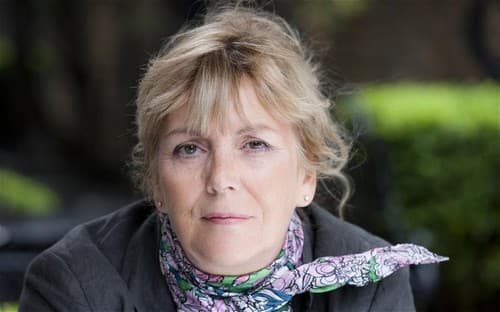
Kate Atkinson is a British author known for her fiction, particularly her exploration of themes such as time and memory. Her notable works include "Life After Life," which examines multiple lives lived by the same character, and "Case Histories," a detective novel featuring private investigator Jackson Brodie. Other significant titles include "One Good Turn," "Behind the Scenes at the Museum," and "Human Croquet."
Similar books
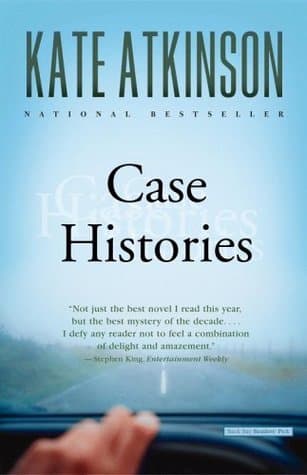
- Case Histories
Kate Atkinson
3.8 (88k) average on GoodreadsThrillerFeatures the same detective, Jackson Brodie, and shares a similar intricate, character-focused mystery style.
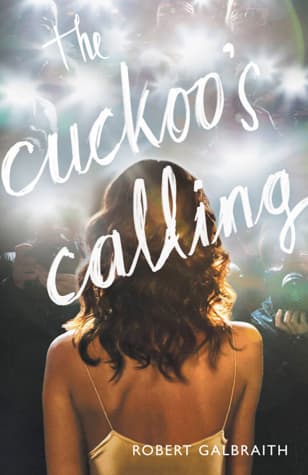
- The Cuckoo's Calling
Robert Galbraith
3.9 (482k) average on GoodreadsThrillerA character-rich detective novel with unexpected twists and a focus on the personal lives of the investigators.
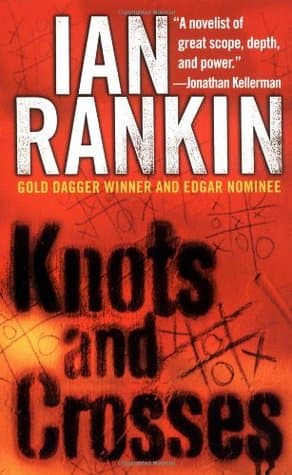
- Knots and Crosses
Ian Rankin
3.8 (42k) average on GoodreadsThrillerSet in Edinburgh and features a detective navigating complex criminal cases with a strong sense of place.
- Gone Girl
Gillian Flynn
4.1 (2.3M) average on GoodreadsThrillerOne Good Turn shares with Gone Girl a focus on the dark undercurrents of human relationships and unexpected twists, but their approaches differ significantly. Flynn's novel relies heavily on unreliable narrators and a single, shocking central mystery designed to subvert reader expectations. Atkinson, conversely, builds her mystery through a gradual accumulation of seemingly disparate events and perspectives, exploring the ripple effects of a single incident across multiple lives rather than focusing on the psychological games of a primary couple. Atkinson's tone is also generally more darkly humorous and reflective, while Flynn's is often more viscerally unsettling.
- Angels & Demons
Dan Brown
3.9 (2.7M) average on GoodreadsThrillerA Harvard symbologist races through Rome's ancient sites, deciphering cryptic clues to unmask the Illuminati and stop a vengeful plot to destroy the Vatican with a stolen antimatter weapon.
- The Girl on the Train
Paula Hawkins
3.9 (2.1M) average on GoodreadsThrillerA woman’s fascination with a seemingly perfect couple she watches from her daily train commute leads her into a dark investigation when she witnesses something that shatters their idyllic image.



Enjoyed the summary?
A summary gives you the shape of the book. The book itself has the detail, the examples and the voice.
Find One Good Turn on AmazonAs an Amazon Associate, BookBrief earns from qualifying purchases. How we're funded