

Synopsis
Covers the whole plot, including the ending.
- Difficulty
- Easy
- Pacing
- Moderate
- Mood
- Whimsical, Romantic, Humorous, Hopeful, Bittersweet
- Read it if
- You love queer romance with a unique, fantastical twist, charming found families, and a blend of humor and heartfelt emotion.
- Skip it if
- You prefer strictly realistic romance or don't enjoy stories with elements of time travel/magical realism.
One Last Stop Plot Summary
Covers the whole plot, including the ending.
New Beginnings in Brooklyn
August Landry, a cynical and observant 23-year-old, moves to Brooklyn. She wants to escape her past and the shadow of her mother's lifelong obsession with solving her brother's disappearance. She finds an apartment in a quirky Bushwick building, sharing it with a diverse group of housemates: the psychic Myla, the drag queen and aspiring performer Nico, and the quiet, mysterious Isaiah. August wants to keep to herself, focusing on her diner job and avoiding deep connections. She observes her new surroundings with detached curiosity, slowly settling into her new, independent life, though always with a sense of underlying melancholy and a fear of getting too close to anyone.
The Subway Girl
During her daily commute on the Q train, August repeatedly sees the same stunning woman with long dark hair and a leather jacket. This woman, Jane Su, is always there, always observing, and always seems bewildered. August is drawn to Jane's mysterious aura, eventually striking up a conversation. Jane is charming, witty, and surprisingly old-fashioned, making August laugh and feel a connection she hadn't anticipated. Their interactions become the highlight of August's day, a comforting routine amidst the chaos of the subway. August begins to feel an undeniable pull towards Jane, despite her usual reluctance to form attachments.
A Time-Displaced Revelation
August's initial infatuation with Jane deepens, but she also notices strange things about her. Jane doesn't seem to understand modern technology, uses outdated slang, and expresses confusion about the current world. One day, Jane reveals the truth: she is from 1970s Brooklyn, specifically 1977, and has been stuck on the Q train for decades, unable to leave the subway system. She doesn't age, and the world outside the train is a blur to her. This shocks August, but instead of pushing her away, it fuels her desire to help Jane, tapping into her latent detective skills inherited from her mother.
The Search for Answers
Determined to help Jane, August confides in her housemates, Myla and Nico. They, surprisingly, are open to the fantastical explanation. Myla, with her psychic abilities, senses a powerful energy around Jane. Nico, ever the performer, is intrigued by the mystery. Together, they begin to research Jane's past, looking for clues about what might have caused her displacement. They scour historical archives, old newspapers, and online databases, often meeting Jane on the Q train to gather more information about her life in the 70s. Isaiah, August's quiet housemate, also subtly offers his tech-savvy assistance, proving to be a valuable, if understated, asset to their investigation.
Deeper Connections
As August and her friends look deeper into Jane's past, August and Jane's relationship intensifies. Their meetings on the Q train become a sanctuary where they share stories, dreams, and vulnerabilities. August introduces Jane to aspects of modern life through stories and descriptions, while Jane shares tales of 1970s Brooklyn, its music, culture, and activism. They fall deeply in love, their connection transcending the impossible circumstances. August opens up in ways she never thought possible, sharing her own guarded past. Jane, for the first time in decades, feels truly seen and loved, gaining a renewed sense of hope despite her temporal prison.
Unraveling Jane's Past
The investigation reveals that Jane was an activist in the 1970s, involved in fighting for LGBTQ+ rights and other social justice causes. They learn about her close-knit group of friends, including Annie, a fellow activist. August and her housemates piece together that Jane was last seen after a protest, and her disappearance was largely overlooked by authorities due to the social climate of the time. They track down surviving members of Jane's old activist group, now elderly, hoping they might hold a key to her predicament, and discover the impact Jane had on her community.
The Missing Piece: Annie
After much searching, the team discovers that Annie, Jane's closest friend from the 70s, is still alive and living in Brooklyn. They learn that Annie was also involved in the protest where Jane disappeared and was the last person to see her. The housemates realize that Annie's memories, and perhaps her direct involvement, might be crucial to understanding what happened to Jane. August feels the urgency, knowing they must connect with Annie to unlock the mystery of Jane's temporal displacement. This discovery brings both hope and a renewed sense of pressure, knowing that time is of the essence for Jane to return to her rightful place.
The Truth Revealed
August, accompanied by Myla and Nico, finally meets Annie, now an older woman. Annie initially struggles with the memories but eventually recounts the night Jane disappeared. She explains that Jane, exhausted and emotionally drained after a particularly intense protest, had fallen asleep on the Q train. Annie, intending to wake her, stepped off the train for a moment, and when she turned back, Jane and the train were gone. Annie reveals that a powerful, almost magical, surge of energy had been present that night, related to a specific intersection of time, space, and a unique electrical storm. This was not a simple disappearance; it was an extraordinary event.
The Plan to Bring Jane Back
With Annie's fragmented memories and Myla's intuitive understanding of the energy, August and her housemates devise a plan. They theorize that a similar set of circumstances – the same subway station, the same time of night, a specific electrical storm, and the presence of someone who deeply understands Jane's connection to that moment – might be able to reverse the displacement. They decide to recreate the conditions of Jane's disappearance, with August taking Annie's place, hoping to ground Jane back into her original timeline. The plan is dangerous and uncertain, relying on a combination of scientific theory, mystical intuition, and sheer hope.
The Final Stand
On the night of a predicted electrical storm, August, Myla, Nico, and Isaiah gather at the designated subway station. Annie is also present, providing emotional support and a grounding connection to the past. As the Q train arrives and Jane steps onto the platform, the storm intensifies, and a powerful, shimmering energy fills the air. August, holding a significant object from Jane's past, confronts the temporal barrier, pouring all her love and understanding into the moment. It is a tearful, desperate attempt to bridge the gap, a test of their bond against the forces of time itself, with the fate of their love hanging in the balance.
A Bittersweet Goodbye
In a flash of light and energy, the plan works. Jane is pulled back into her original timeline, disappearing from the modern subway platform. August feels a profound sense of loss and emptiness, but also a deep peace, knowing she helped Jane return home. The housemates comfort August, acknowledging the extraordinary journey they've shared. August is left with the bittersweet reality of having loved someone she could not keep, but also with the knowledge that she finally allowed herself to connect deeply with others. She understands that while Jane is gone, the love they shared has fundamentally changed her, making her less cynical and more open to the world.
Life After Jane
Months pass, and August, though still missing Jane, begins to truly live her life in Brooklyn. Her relationships with Myla, Nico, and Isaiah have deepened into a true found family. She continues working at the diner, but now with a renewed sense of purpose and connection. She even begins to explore her own interests, including photography, a hobby she'd neglected. August realizes that Jane's love, though brief and impossible, taught her the importance of living fully, loving openly, and embracing the unexpected. She finds peace in the knowledge that she saved Jane, and in doing so, saved a part of herself, finally moving past the shadow of her past and embracing her future.
One Last Stop Characters
August Landry
Protagonist
A cynical 23-year-old who moves to Brooklyn to escape her past.
August is an observant, guarded, and initially cynical young woman. Haunted by her mother's lifelong obsession with her missing brother, August has built walls around herself, preferring to observe life from a distance rather than participate. She is intelligent, resourceful, and possesses a latent detective instinct. Despite her tough exterior, she craves connection and belonging, which she slowly finds in her housemates and, profoundly, in Jane. Her journey is about learning to open her heart and embrace vulnerability.
Relationships: Jane Su (Love interest, the catalyst for August's emotional growth.); Myla (Housemate and friend, offers intuitive and emotional support.); Nico (Housemate and friend, provides humor and practical assistance.); Isaiah (Housemate and friend, offers quiet, tech-savvy support.); Sarah Landry (Her mother, whose obsession with her missing brother shaped August's early life.)
Jane Su
Love Interest / Time-Displaced Character
A captivating woman from 1970s Brooklyn, trapped on the Q train.
Jane is vibrant, witty, and fiercely passionate, a queer Chinese-American activist from 1977 Brooklyn. Despite being displaced in time for decades, she maintains her sharp intellect, her sense of humor, and her deep empathy. She is initially bewildered by the modern world but quickly adapts through August's descriptions. Her longing for her past life and the people she left behind is palpable, but she finds solace and love with August. She represents a lost era of activism and a resilient spirit.
Relationships: August Landry (Love interest, the person who helps her return home.); Annie (Best friend from the 1970s, key to understanding her disappearance.)
Myla
Supporting
August's psychic housemate, offering spiritual guidance.
Myla is one of August's eccentric housemates, a practicing psychic and a warm, nurturing presence. She is intuitive, empathetic, and often speaks in cryptic but ultimately helpful ways. Myla is the most open to the supernatural explanation of Jane's situation and uses her abilities to help August understand the temporal energies at play. She acts as a spiritual anchor for the group, providing emotional support and a sense of calm amidst the extraordinary circumstances.
Relationships: August Landry (Housemate and friend.); Nico (Housemate and friend.); Isaiah (Housemate and friend.)
Nico
Supporting
August's housemate, a drag queen and aspiring performer.
Nico is August's flamboyant and outspoken housemate, a drag queen with a big personality and an even bigger heart. He is fiercely loyal, protective of his friends, and provides much of the comic relief. Beneath the glitter and wit, Nico is a kind and supportive friend, always ready to offer advice or a listening ear. He is initially skeptical of Jane's story but quickly becomes a dedicated member of the team, using his theatrical flair and resourcefulness to aid the investigation.
Relationships: August Landry (Housemate and friend.); Myla (Housemate and friend.); Isaiah (Housemate and friend.)
Isaiah
Supporting
August's quiet, tech-savvy housemate.
Isaiah is the quietest of August's housemates, a reserved and intelligent individual with a knack for technology and research. He often stays in his room but emerges when his skills are needed, providing crucial technical assistance for their investigation into Jane's past. Despite his introverted nature, Isaiah is deeply caring and supportive of his friends, offering a grounding presence to the more boisterous personalities in the apartment. His quiet observations often prove insightful.
Relationships: August Landry (Housemate and friend.); Myla (Housemate and friend.); Nico (Housemate and friend.)
Annie
Supporting
Jane's best friend from the 1970s.
Annie is Jane's closest friend from her life in 1977. She was a fellow activist and was present on the night Jane disappeared. Now an older woman, Annie carries the weight of Jane's disappearance, having spent decades wondering what happened. Her memories, though fragmented, are crucial to understanding the circumstances of Jane's temporal displacement. She represents the enduring impact of lost connections and the importance of remembering history.
Relationships: Jane Su (Best friend from the 1970s.)
Sarah Landry
Mentioned
August's mother, obsessed with a missing person case.
Sarah Landry is August's mother, whose life has been consumed by the unsolved disappearance of August's Uncle Augie. Her relentless, almost obsessive, search for answers has profoundly impacted August, instilling in her both a fear of attachment and a latent detective's sensibility. Though she doesn't appear directly in the story, her influence is a constant presence, shaping August's initial worldview and her eventual drive to help Jane.
Relationships: August Landry (Her daughter.); Augie Landry (Her missing brother, whose disappearance drives her life's work.)
One Last Stop Themes
The Power of Found Family
August initially isolates herself, but her housemates—Myla, Nico, and Isaiah—become her chosen family. They offer unconditional support, humor, and practical help in her quest to save Jane. This theme is evident when August confides in them about Jane's impossible situation, and they not only believe her but actively participate in the complex investigation, creating a safe and loving home for August. Their collective efforts show how shared purpose and genuine care can forge bonds stronger than blood.
“Home isn’t a place, it’s a feeling. And I found it here, with you guys.”
Love Transcending Time and Barriers
The central romance between August and Jane defies logic, spanning decades and the physical confines of the subway. Their love story shows that deep connection and emotional intimacy can overcome seemingly insurmountable obstacles. Their shared moments on the Q train, filled with laughter, vulnerability, and mutual understanding, illustrate how love can create a sanctuary regardless of external circumstances. This theme challenges the notion that love must conform to conventional boundaries, proving its power to thrive even when faced with temporal displacement.
“It wasn’t a crush. It was a gravitational pull. And I was falling, hard.”
The Importance of History and Activism
Jane's background as a queer activist in the 1970s grounds the fantastical element of time travel in a significant historical context. The story highlights the struggles and triumphs of the LGBTQ+ rights movement, reminding readers of the sacrifices made for the freedoms enjoyed today. August and her friends' research into Jane's past uncovers the often dangerous world of 70s activism, emphasizing how past movements shape the present. This theme shows that understanding history, particularly the fight for social justice, is crucial for appreciating progress and continuing the work.
“We were making history, even if no one knew it yet.”
Embracing Vulnerability and Connection
August begins the story as a guarded, cynical individual, scarred by her past. Her journey with Jane forces her to dismantle her emotional walls and embrace vulnerability. By opening up to Jane and her housemates, August learns to trust, love, and rely on others, transforming her from an isolated observer into an active participant in life. This theme is evident in her willingness to risk heartbreak to help Jane and in the genuine connections she forms with her found family, showing that true strength is allowing oneself to be seen and loved.
“I wasn't just saving her; I was saving myself.”
The Search for Home and Belonging
Both August and Jane are searching for a place to belong. August, having drifted for years, seeks a stable home and a sense of community in Brooklyn. Jane, displaced from her own time, yearns for the familiarity of her past and a place where she truly fits. Their shared quest for belonging forms a powerful bond between them. Ultimately, August finds her 'home' not just in a physical apartment but in the loving connections she builds with her housemates, while Jane's journey is about returning to her original home and time. This theme explores how 'home' is often more about people and emotional safety than a physical location.
“Maybe home wasn’t a place you found, but a place you made.”
Plot Devices & Literary Techniques
Time Displacement / Temporal Anomaly
Jane is physically present in the modern era but temporally anchored to the 1970s Q train.
This is the central fantastical element of the story. Jane Su is trapped on the Q train, unable to leave the subway system, and exists outside of normal time progression, remaining the same age since 1977. This device creates the core mystery and the central conflict, driving August's investigation and the urgency of their mission. It serves as a metaphor for being stuck in the past, unable to move forward, and allows for the exploration of themes like lost history and the impact of the past on the present. The anomaly's specific rules (e.g., Jane can only interact within the train, doesn't age) dictate the limitations and possibilities of the plot.
Found Family Trope
August's quirky housemates form a supportive, non-biological family.
The found family trope is essential to August's emotional journey. Her housemates—Myla, Nico, and Isaiah—provide the emotional and practical support system August desperately needs but initially resists. They believe her fantastical story about Jane, pool their resources, and offer unwavering friendship, becoming the bedrock of her new life. This device contrasts with August's strained relationship with her biological family, highlighting the power of chosen connections and providing a safe space for August to open up and grow, ultimately enabling her to help Jane.
The Unsolved Mystery (August's Uncle)
The lingering disappearance of August's uncle fuels her detective instincts.
The unresolved disappearance of August's Uncle Augie, and her mother's lifelong obsession with finding him, serves as a crucial backstory element. This device explains August's initial cynicism, her guarded nature, and her inherent, almost compulsive, detective skills. It provides a personal motivation for her desire to help Jane, as she sees a parallel between Jane's situation and her own family's past trauma. It also sets up a thematic resonance, suggesting that by solving Jane's mystery, August can indirectly find some form of closure for her own family's unresolved pain.
The Q Train as a Liminal Space
The subway acts as a physical and temporal boundary for Jane.
The Q train itself functions as more than just a setting; it's a liminal space, a boundary between Jane's past and August's present, and a prison for Jane. It represents the temporal barrier that holds Jane captive and the only place where she and August can consistently interact. Its constant movement symbolizes Jane's inability to settle, while its enclosed nature emphasizes her confinement. The train becomes a sacred, intimate space for their relationship, contrasting with the chaotic outside world and underscoring the extraordinary nature of their connection.
One Last Stop Quotes
“Maybe this is what being a grown-up is. Not knowing what you're doing, but doing it anyway.”
“Love isn't a straight line. It's a series of detours and U-turns and sometimes, if you're lucky, a one-way trip to somewhere beautiful.”
“You don't have to be a hero to save someone. Sometimes you just have to be a person who cares.”
“The past isn't a place you can live, but it's a place you can learn from.”
“Sometimes the most extraordinary things are hidden in plain sight.”
“It’s not about being perfect. It’s about being real.”
“You don't have to understand everything to believe in it.”
“The world is big and strange and beautiful, and you're allowed to be a part of all of it.”
“Home isn't a place, it's a feeling. It's the people you choose to share your life with.”
“Sometimes the best way to help someone is to let them help themselves.”
“Every single person you meet has a universe inside them.”
“The future isn't set in stone. It's a canvas, and you're holding the brush.”
“You can't rewind time, but you can always press play on a new beginning.”
“Being seen, truly seen, is a kind of magic.”
“It's never too late to find your people, even if you thought you were done looking.”
Quiz
10 questions on the plot and the characters. Each answer comes with a short explanation.
Question 1
What is August's initial reason for moving to New York City?
- To pursue a career in fashion.
- To escape her mother's obsession with a cold case.
- To attend a prestigious university.
- To find her long-lost father.
Show answer
B. To escape her mother's obsession with a cold case. August moves to New York hoping to find a mundane, uneventful life, primarily to distance herself from her mother's lifelong obsession with the disappearance of her Uncle Augie.
Question 2
What specific item of clothing does Jane wear that first catches August's attention on the Q train?
- A leather jacket.
- A denim jacket.
- A brightly colored scarf.
- A vintage band t-shirt.
Show answer
B. A denim jacket. August is consistently drawn to Jane, who is often described wearing a distinctive denim jacket.
Question 3
What is the name of the diner where August works?
- The Comet Cafe
- The Night Owl Diner
- The Pancake Palace
- Pancake Paradise
Show answer
D. Pancake Paradise August works as a waitress at Pancake Paradise, a 24-hour diner, which provides a backdrop for many interactions with her roommates and other characters.
Question 4
What is the name of the drag queen who lives in August's apartment building?
- Margo
- Niko
- Isaiah
- Myla
Show answer
D. Myla Myla is one of August's eccentric and supportive roommates, and she is a drag queen.
Question 5
What is Jane's primary goal or mission that she was trying to accomplish before she became displaced in time?
- To become a famous musician.
- To find her sister.
- To help organize a protest for LGBTQ+ rights.
- To open her own restaurant.
Show answer
C. To help organize a protest for LGBTQ+ rights. Jane was a passionate activist in the 1970s, deeply involved in organizing protests and advocating for queer rights, which is central to her character and her past.
Question 6
What unique physical characteristic does Jane exhibit due to her temporal displacement?
- She glows faintly in the dark.
- She fades in and out of visibility.
- She occasionally speaks in an archaic dialect.
- She doesn't cast a reflection.
Show answer
B. She fades in and out of visibility. As Jane spends more time in the wrong era, her physical form becomes unstable, causing her to flicker and become transparent, particularly when she's stressed or the connection to her time weakens.
Question 7
Who is the 'cold case' August's mother has been obsessed with her entire life?
- A missing person from their hometown.
- August's grandmother.
- August's Uncle Augie.
- A famous unsolved mystery from the 1970s.
Show answer
C. August's Uncle Augie. August's mother has spent decades trying to solve the disappearance of her brother, August's Uncle Augie, which is a major source of conflict and eventually connection between August and her mother.
Question 8
What is the specific event or mechanism that allows Jane to travel through time, or more accurately, become stuck in the future?
- A magical amulet she was wearing.
- A scientific experiment gone wrong.
- A unique electrical surge on the Q train during a specific moment.
- She accidentally walked through a portal in a vintage shop.
Show answer
C. A unique electrical surge on the Q train during a specific moment. It is revealed that Jane became displaced during a specific electrical anomaly on the Q train in the 1970s, which effectively 'froze' her in time on that particular train line, making her appear in the future.
Question 9
What significant personal item does Jane possess that becomes a crucial clue in solving her temporal predicament?
- A diary from the 1970s.
- A photograph of her family.
- A matchbook from a specific club.
- A vintage concert ticket.
Show answer
C. A matchbook from a specific club. Jane carries a matchbook from a specific queer club from the 1970s, which August and her friends use to research Jane's past and the events surrounding her disappearance.
Question 10
What is the ultimate resolution for Jane's temporal displacement?
- She decides to stay in the present with August, accepting her new life.
- She is able to return to her original time, but with no memory of August.
- August and her friends recreate the original electrical surge on the Q train to send Jane back.
- A mysterious figure from the past arrives to retrieve her.
Show answer
C. August and her friends recreate the original electrical surge on the Q train to send Jane back. August and her friends, with the help of the transit authority engineer, orchestrate a plan to recreate the specific electrical conditions on the Q train that caused Jane's displacement, allowing her to return to her own time.
One Last Stop FAQ
What is the central premise of 'One Last Stop'?
'One Last Stop' follows August Landry, a cynical 23-year-old who moves to Brooklyn. She encounters a mysterious, anachronistic girl named Jane Su on the Q train, only to discover Jane is displaced from 1970s Brooklyn and is physically stuck on the subway line.
Who is August Landry and what are her initial motivations?
August Landry is a cynical, observant 23-year-old who moves to New York City to prove she can make it on her own, away from her mother's obsessive cold case investigations. She initially wants to remain uninvolved and detached, reflecting her past experiences and her desire for a normal, anonymous life.
Who is Jane Su and what is her initial situation?
Jane Su is a punk rock Chinese-American girl from 1970s Brooklyn, specifically from a band called 'Bad Decisions.' She is mysteriously displaced in time, appearing only on the Q train, and is slowly fading, unable to leave the subway line or interact fully with the modern world.
What kind of romance develops between August and Jane?
A slow-burn, emotional romance develops between August and Jane, as August becomes determined to help Jane return to her own time. Their connection deepens through shared vulnerability, witty banter, and a growing understanding of each other's pasts, despite the impossible circumstances of their relationship.
What specific clues does August initially notice about Jane that hint at her anachronism?
August initially notices Jane's outdated clothing, her use of 'groovy' slang, her surprise at modern technology like smartphones, and her genuine confusion when August mentions contemporary events or concepts. These small details accumulate, making August realize Jane isn't just quirky, but truly out of place.
How does August's mother's past influence August's actions regarding Jane?
August's mother spent years obsessively investigating a cold case involving a missing person, which August resented for consuming her mother's life. Ironically, August's own deep dive into Jane's mystery mirrors her mother's dedication, showing how she ultimately embraces her investigative nature to help someone she cares about, despite her initial resistance.
What role do August's roommates and neighbors play in uncovering Jane's past?
August's diverse group of roommates and neighbors—Mavis, Niko, and Isaiah—provide crucial support and resources. Mavis, with her psychic abilities, and Niko, with his drag queen network, offer unique perspectives and connections that help August piece together clues about Jane's life in the 1970s, including finding old newspaper clippings and contacting former band members.
What is the significance of the 'Q train' in the narrative?
The Q train is not just a setting but a central plot device; it's the specific temporal anomaly that traps Jane. Its route, its history, and its physical structure become key to understanding Jane's displacement and finding a way to send her back, making it an active participant in their story.
How does August's experience with her mother's cold case inform her approach to solving Jane's predicament?
August's upbringing around her mother's cold case investigation provides her with an unconscious skillset for research, deduction, and pattern recognition. Although she initially resists this part of herself, she applies these learned skills to Jane's situation, meticulously gathering clues and interviewing people, demonstrating a hidden talent for solving mysteries.
What psychological journey does August undergo regarding her cynicism and detachment?
August begins as deeply cynical and detached, a defense mechanism developed from her unconventional childhood. Through her connection with Jane and the found family she builds, August gradually sheds her cynicism, learns to trust, and allows herself to be vulnerable and open to love, fundamentally changing her outlook on life and human connection.
How does Jane's experience of being displaced affect her identity and sense of self?
Jane's displacement forces her to confront the loss of her past, her band, and her future. Initially, she is disoriented and fearful, but her resilience and punk spirit shine through as she adapts to her strange reality. She grapples with the idea of fading away, which strengthens her desire to find a way back to her original timeline and identity.
In what ways do August and Jane challenge each other's preconceived notions?
August challenges Jane's understanding of the future, showing her how much society has changed, particularly regarding queer acceptance. Jane, in turn, challenges August's cynicism, showing her the beauty of passion, connection, and living authentically, inspiring August to open up and embrace life's uncertainties.
Is the 'time travel' in 'One Last Stop' ever fully explained scientifically, or is it more metaphorical?
The 'time travel' in 'One Last Stop' is never fully explained with hard science; it's presented as a unique, localized anomaly tied specifically to the Q train and Jane's circumstances. It leans more into magical realism, serving as a powerful metaphor for being stuck in the past, the arbitrary nature of fate, and the profound impact of connection.
How does the book explore themes of found family and community?
The book heavily emphasizes found family through August's diverse and supportive roommates and neighbors. They become her rock, offering emotional support, practical help, and a sense of belonging that August has long craved. This community is crucial not only for August's personal growth but also in their collective effort to help Jane.
What is the significance of the ending, particularly regarding Jane's return?
The ending sees Jane successfully returned to her proper time, but with her memories of August intact, creating a poignant and bittersweet resolution. It signifies that their love transcended time and that true connection can leave a lasting impact, even if the circumstances are impossible. It suggests that Jane's life will be changed by knowing August, just as August's was changed by knowing Jane.
How does the book use the setting of New York City, particularly Brooklyn, to enhance the story?
New York City, especially Brooklyn, acts as a vibrant character itself, grounding the fantastical elements in a tangible, historical place. The contrast between 1970s and modern Brooklyn highlights the changes Jane experiences, while the city's diverse communities and hidden histories provide the backdrop for August's investigations and the formation of her found family.
What message does the novel convey about living in the present versus being stuck in the past?
The novel powerfully conveys the message that while understanding the past is important, one must ultimately live and engage with the present. Jane is literally stuck in the past, while August is emotionally stuck due to her past experiences. Both characters learn the importance of moving forward, embracing change, and finding joy and connection in the now.
How does 'One Last Stop' contribute to contemporary queer romance literature?
'One Last Stop' offers a unique, fantastical spin on queer romance, presenting a love story that transcends time and societal expectations. It normalizes queer relationships while exploring themes of identity, belonging, and the enduring power of love, further diversifying the landscape of LGBTQ+ narratives with its imaginative premise and heartfelt execution.
About the author

Casey McQuiston is a "New York Times" bestselling author of contemporary romance novels. They are best known for their critically acclaimed debut novel, "Red, White & Royal Blue," which won the "Goodreads Choice Award" for Best Debut Novel. McQuiston's work often explores themes of LGBTQ+ identity, love, and found family, delivered with sharp wit and heartfelt emotion.
Similar books
- The Time Traveler's Wife
Audrey Niffenegger
4.0 (1.6M) average on GoodreadsFantasyFeatures a central romance complicated by the unique challenges of time displacement.
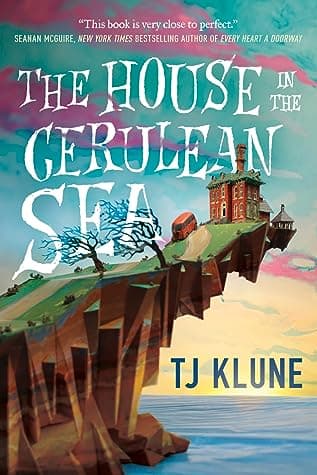
- The House in the Cerulean Sea
T.J. Klune
4.5 (22k) average on GoodreadsFantasyBoth "One Last Stop" and "The House in the Cerulean Sea" are celebrated for their heartwarming portrayals of found family and the acceptance of 'otherness.' Klune's novel creates a magical, isolated setting for its characters to find belonging, while McQuiston integrates her fantastical elements directly into a contemporary urban environment. While both feature queer romance, Klune's narrative leans more into allegory and a gentler, almost fable-like quality, whereas McQuiston maintains a more direct, contemporary romantic comedy tone with speculative elements.
- The Hunger Games
Suzanne Collins
4.3 (6.4M) average on GoodreadsFantasyIn a future where children fight to the death on live television, Katniss Everdeen volunteers for the arena, turning a death sentence into a fight for survival and a spark of rebellion.
- The Great Gatsby
F. Scott Fitzgerald
3.9 (3.8M) average on GoodreadsHistorical FictionIn the opulent Roaring Twenties, a mysterious millionaire's lavish parties hide his desperate, tragic pursuit of a lost love, exposing the emptiness within the American Dream.
- The Fault in Our Stars
John Green
4.2 (3.6M) average on GoodreadsYoung AdultA girl with a terminal illness finds her story rewritten when a charming boy with a similar past enters her life at a cancer support group, leading to a star-crossed romance.
- Pride and Prejudice
Jane Austen
4.3 (3M) average on GoodreadsHistorical FictionIn a society focused on status and money, Elizabeth Bennet navigates love and pride, challenging Mr. Darcy and social expectations to find true affection.





Enjoyed the summary?
A summary gives you the shape of the book. The book itself has the detail, the examples and the voice.
Find One Last Stop on AmazonAs an Amazon Associate, BookBrief earns from qualifying purchases. How we're funded